Featured Rotor & Stator Manufacturing Solutions
Explore high-speed automated armature winders, CNC hairpin inserting lines, precision hot chamber die-casters, and custom commutator fusing systems engineered to tight international tolerances.
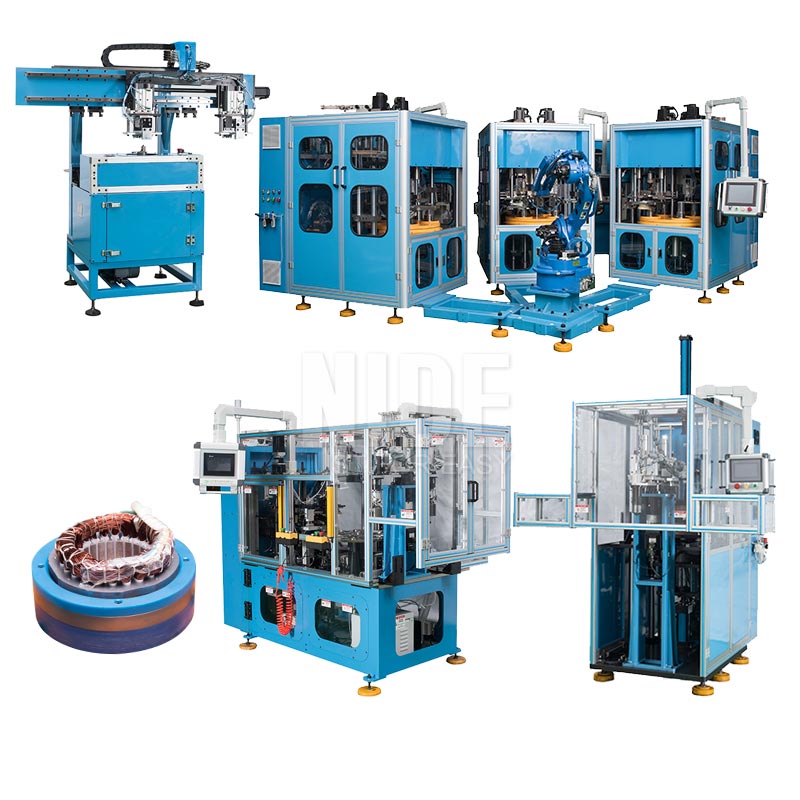
Electric Induction Motor Stator Manufacturing Assembly Line
- Core: Multi-Axis PLC CNC
- Cycle: One-pass coil & wedge inserting
- Warranty: 1 Year complete support
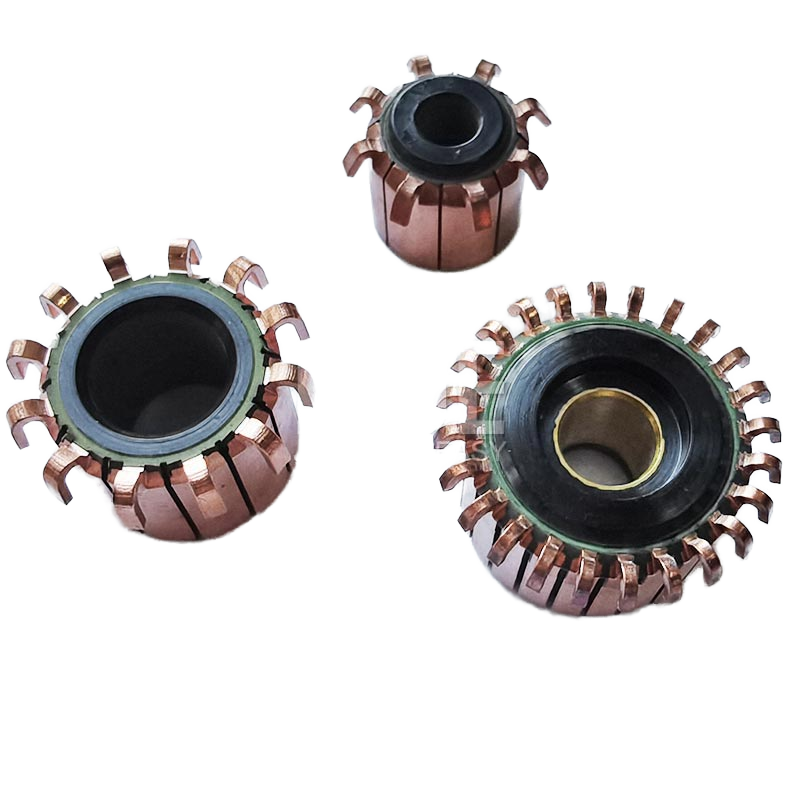
Household Juicer Mixer DC Motor Armature Hook Commutator
- Model: NIDE NDPJ-HXQ-183
- Application: High-torque DC appliance
- Process: Automated hook stamping
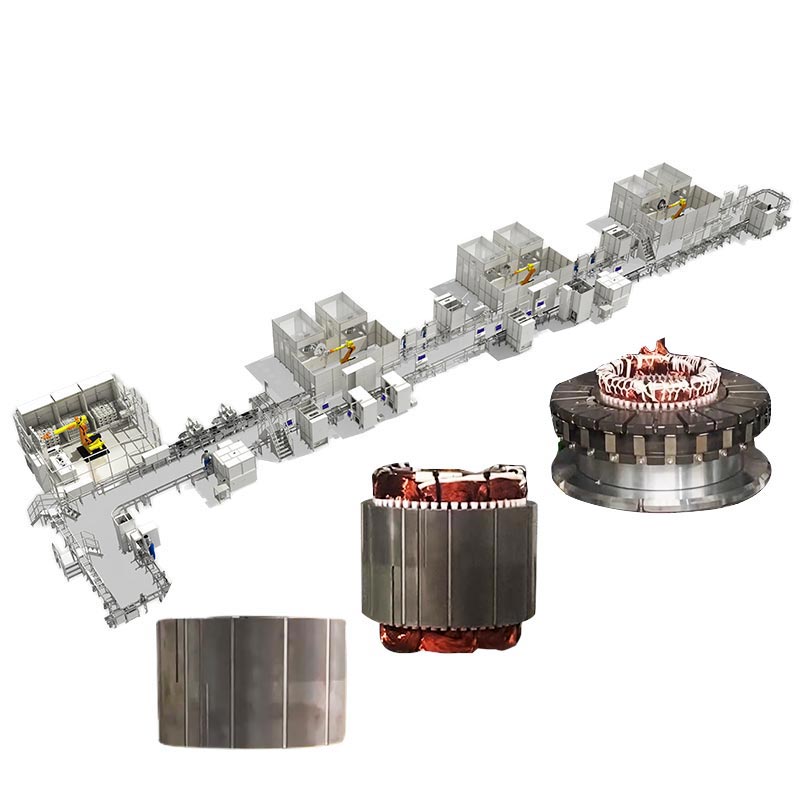
Automatic EV Hairpin Motor Stator & Rotor Production Line
- Certification: CE 220V/380V verified
- Winding: Continuous flat wire hairpin
- Automation: 100% turnkey robotics
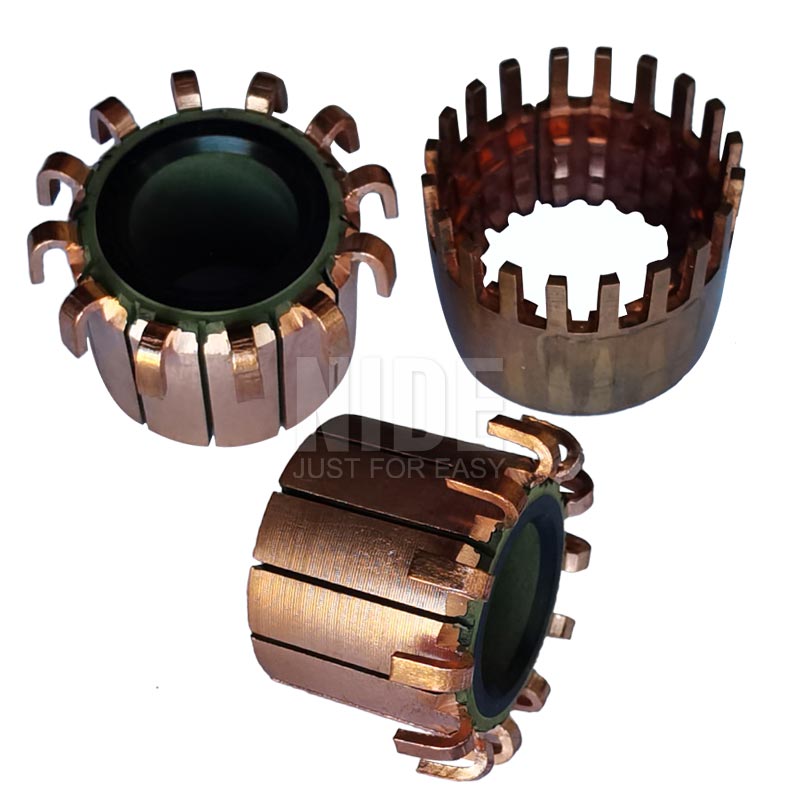
12-Segment Automobile Wiper Motor Hook Commutator
- Model: NDPJ-HXQ-174 CCC Certified
- Copper: High-purity silver-copper alloy
- Interlock: Precision carbon brush pairing
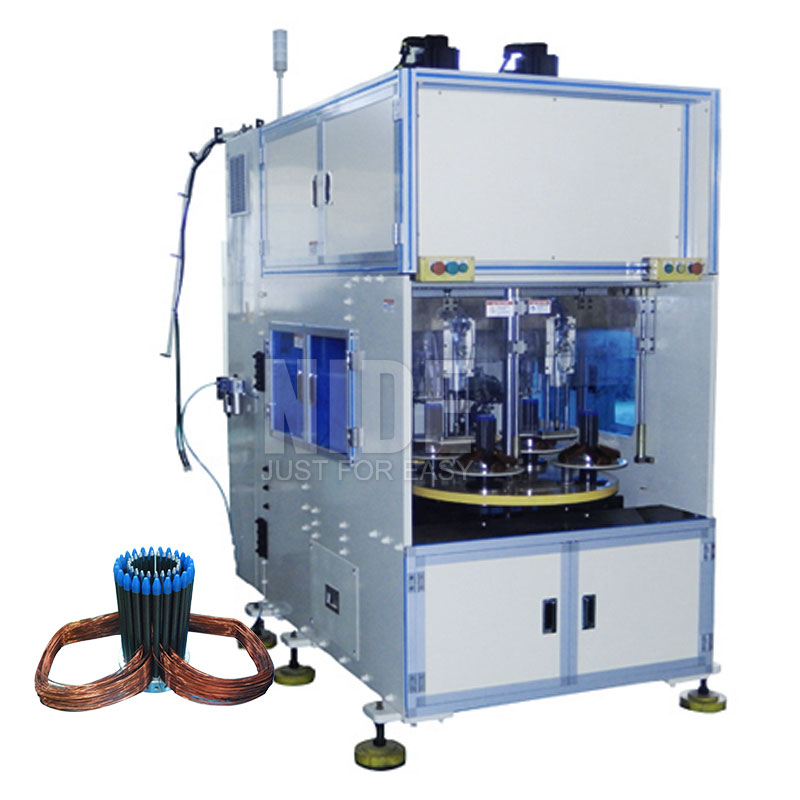
PLC Cooler Motor Stator & Rotor Coil Winding System
- Control: Multi-Axis servo tensioning
- Standard: CE Certified CE-Marked
- Output: High slot fill factor capability
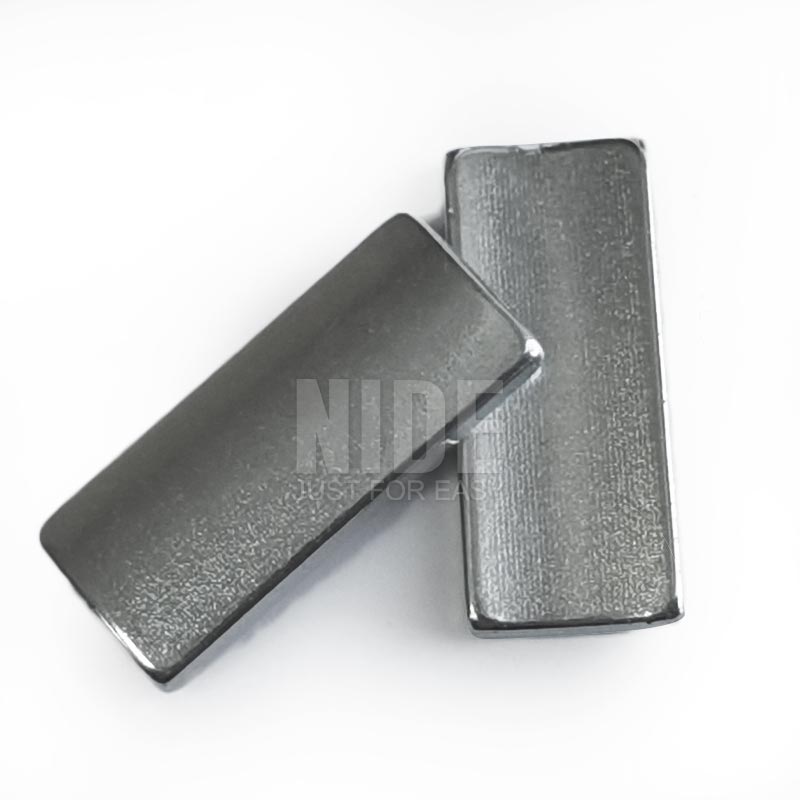
Rectangular N52 NdFeB Permanent Rotor Magnets
- Grade: Sintered N52 / N52H / N52SH
- Tolerance: Precision ground ±0.02mm
- Model: NDPJ-CW-58 for High-speed Rotors
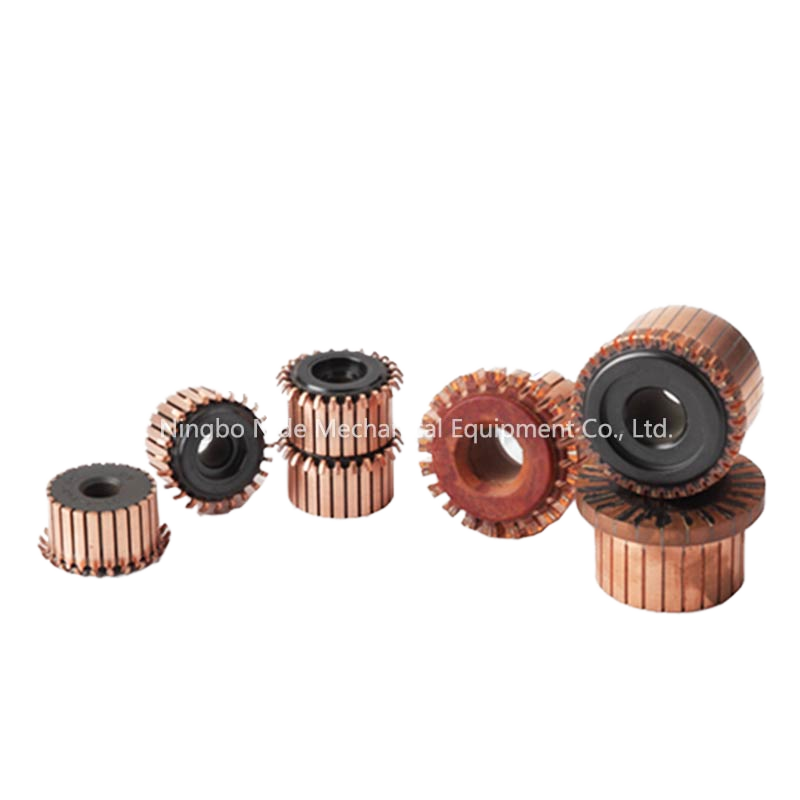
DC Motor Armature Collector Slip Ring & Commutator
- Model: NIDE NDPJ-HXQ Industrial
- Structure: Reinforced molded mica ring
- Quality: 100% dielectric bar-to-bar test

Automatic Armature Rotor Hot Chamber Die Casting Cell
- Substrate: Aluminum rotor cage casting
- Control: Hydraulic Servo + Siemens PLC
- Safety: Dual interlock CE compliance
Engineering the Modern Rotor Winding Line: An Executive Technical Guide
In the contemporary landscape of electromechanical manufacturing, the automated rotor winding line stands as the critical determinant of motor efficiency, power density, thermal dissipation, and operational longevity. Whether engineering low-voltage DC armatures for automotive actuators, high-voltage induction squirrel cages, or high-torque density Permanent Magnet Synchronous Motors (PMSM) for electric vehicles, selecting the right manufacturing partner in China requires deep technical due diligence. Modern rotor manufacturing transcends basic winding mechanics; it requires an integrated ecosystem comprising precision lamination stacking, slot cell insulation, automated flyer or needle winding, micro-resistance commutator fusing, trickle varnishing, dynamic balancing, and end-of-line electrical diagnostic validation.
1. Technological Architecture of Turnkey Rotor Winding Lines
A high-speed automated armature or rotor production line is a synchronized sequence of specialized electro-pneumatic and CNC machine modules linked by continuous pallet conveyors or Cartesian gantry pick-and-place robots. The end-to-end production flow incorporates five core manufacturing domains:
Pre-Winding Core Preparation
High-precision servo presses fit shafts into skewed silicon steel lamination packs without distorting magnetic domains. Automated slot insulation machines insert DMD, Nomex, or polyimide films with edge cuffs folded precisely to eliminate dielectric leakage.
High-Speed Flyer & Needle Winding
Utilizing dual-flyer winding heads reaching 3,500 to 6,000 RPM, CNC systems program tension curve deceleration around commutator tangs. Closed-loop magnetic or electronic servo tensioners prevent copper elongation and wire enamel micro-fractures.
Hot Staking & Fusing Welder
Constant-current or medium-frequency inverter resistance welding systems consolidate magnet wire leads into commutator slots or tangs. Integrated thermal sensors and displacement transducers evaluate weld collapse down to the micron level in real time.
Subsequent stages enforce slot wedge insertion to mechanically secure coil heads against centrifugal loading, followed by precision trickling or vacuum pressure impregnation (VPI) varnishing. Modern dielectric varnishing cures using induction heating, reducing resin baking cycles from several hours down to minutes while guaranteeing void-free thermal bonding between copper conductors and lamination teeth.
2. Technical Specifications of Tier-1 Chinese Rotor Equipment
When engineering procurement directors evaluate Chinese manufacturing facilities, standard catalog parameters are insufficient. Procurement contracts must specify kinematic tolerances, cycle times, component origins, and Mean Time Between Failures (MTBF). Below is the baseline reference architecture engineered by leading Ningbo and Yangtze River Delta machine builders:
| Process Station | Core Technical Parameter | Standard Capability Range | Critical Quality Metric |
|---|---|---|---|
| Insulation Paper Insertion | Cycle Speed: 0.5 - 1.2 sec/slot | Slot Height: 8 - 180 mm | No tearing, 100% optical slot coverage |
| Flyer Armature Winding | Spindle Speed: 2,500 - 6,000 RPM | Wire Dia: Φ0.08 mm - Φ1.6 mm | Tension stability < ±1.5%, zero strand crossover |
| Commutator Hook Fusing | Current: 1,000 - 10,000 A Inverter | Bar Indexing: 12 - 48 segments | Resistance variance < 0.05 mΩ, zero flash |
| Dynamic Balancing | Single/Dual-Plane de-weight milling | Armature OD: Φ15 - Φ120 mm | Residual unbalance ≤ G1.0 (ISO 1940) |
| Dielectric Testing (EOL) | Surge (5kV), Hipot (AC 2.5kV), IR | Cycle Time: ≤ 8 sec/armature | Defective part auto-rejection & SPC logging |
3. Future Procurement Trends for Rotor Winding Lines
Procurement teams navigating the transition to next-generation drive units are reshaping the equipment specifications requested from Chinese OEMs. Five macroeconomic and engineering vectors dominate procurement planning across the 2025–2030 horizon:
1. Modular Reconfigurable Tooling
Automotive tiers demand line agility. Instead of dedicated single-part machines, modern Chinese lines feature servo quick-change tooling modules, allowing plant technicians to transition between rotor stack diameters within 20 minutes via recipe selection.
2. Flat Wire & Hairpin Rotor Architecture
Driven by the electrification of commercial vehicles and high-performance hybrid powertrains, hairpin winding is migrating from stators into specialized rotor designs. Machinery builders are patenting multi-conductor flat-wire bending and laser stripping lines.
3. Closed-Loop In-Situ SPC Tracking
Industrial IoT 4.0 integration has shifted from a buzzword to a mandatory procurement clause. Each rotor's winding resistance, fusing energy curve, stack height, and residual unbalance is laser-etched via DataMatrix barcode and pushed directly to factory MES.
Furthermore, European and North American buyers are placing stringent safety specifications on Chinese supply lines. This encompasses CE Mark conformity under the Machinery Directive 2006/42/EC, UL508A electrical panel certifications, and integration of Category 4 safety light curtains paired with dual-channel safety relays from Sick, Pilz, or Omron.
4. Innovation Trends: Elevating Motor Energy Efficiency
With international efficiency mandates tightening toward IE4 and IE5 (Super Premium Efficiency), rotor winding processes are under unprecedented physical scrutiny. In traditional squirrel cage induction rotors, iron losses and stray load losses are heavily influenced by the slot skew angle and casting density. Leading Chinese rotor equipment manufacturers now offer vacuum-assisted aluminum and pure copper rotor hot-chamber die-casting machines. By achieving 99.8% metallurgical cage density without porosity, these casting cells elevate operational efficiency by 1.8% to 2.5% compared to atmospheric casting.
In the realm of wound-field synchronous machines (WFSM) — widely adopted to eliminate dependence on volatile rare-earth permanent magnets — specialized rotor winding lines are introducing precision needle winding around salient pole rotors. These machines achieve slot fill factors exceeding 62%, drastically minimizing copper I²R thermal losses while ensuring balanced heat distribution throughout the motor housing.
Enterprise Capabilities & OEM Sourcing Advantages
Rooted in Ningbo—one of the world's preeminent electromechanical manufacturing hubs—we combine localized precision engineering with end-to-end turnkey machinery delivery.
Turnkey Process Ownership
From component supply (commutators, magnets, shafts, bearings) to complete automated winding and testing machinery, one single engineering partner bears full responsibility for final output quality.
Rigorous Factory Acceptance (FAT)
Prior to crating, every machine runs a multi-thousand cycle endurance test using your actual production laminations, magnet wire, and commutators, accompanied by full video logging and dimensional CMM reports.
Global Field Engineering
Backed by over 13 years of overseas machine exporting, our field installation teams and regional international partners provide on-site commissioning, electrical debugging, and operator certification.
Custom Tooling R&D
In-house CNC machining centers craft proprietary winding flyers, tungsten-tipped fusing electrodes, and precision insertion blades, guaranteeing tight mechanical tolerances and extended tooling lifecycles.
Frequently Asked Questions for Rotor Line Procurement
Direct technical answers addressing the critical operational, financial, and logistical concerns of procurement managers.
Which distinct motor types are handled by your rotor winding lines?
Our automated rotor and armature machinery handles universal brushed motors (kitchen appliances, power tools, vacuum cleaners), low-voltage automotive DC motors (starter drives, window lifters, windshield wipers, radiator fans), brushless DC (BLDC) inner- and outer-rotors, E-bike wheel hub motors, and 3-phase AC induction squirrel cage rotors via automated hot chamber die-casting cells.
What is the standard lead time for custom-engineered rotor manufacturing lines?
Stand-alone standard machines (such as standalone flyer winders or spot fusing welders) typically ship within 45 to 60 days. Fully customized, turnkey automated assembly lines comprising lamination loading, winding, fusing, balancing, and robotic testing usually require 90 to 120 days from final approved engineering drawings to Factory Acceptance Testing (FAT).
How do you ensure wire insulation integrity during high-speed flyer winding?
We deploy closed-loop electronic servo tension control systems synchronized directly with the main spindle CNC drive. The system maintains tension variance under ±1.5 grams, and guide rollers feature ultra-polished ceramic or tungsten carbide coatings with roughness below Ra 0.2, entirely preventing mechanical abrasion of polyurethane or polyamide-imide enamel coatings.
Can overseas clients provide their own electrical and pneumatic components?
Yes. Our default configurations utilize internationally recognized premium components including Siemens, Mitsubishi, or Schneider PLCs; SMC or Festo pneumatics; and Yaskawa or Delta servo motors. If your plant standards mandate specific brands (e.g., Allen-Bradley, Beckhoff, Rexroth), our automation department integrates them without compromising system performance or delivery commitments.
What international payment and delivery terms do you support?
We routinely execute cross-border capital equipment agreements via T/T and irrevocable documentary Letters of Credit (L/C at sight). Commercial transactions are supported under standard Incoterms including FOB Ningbo/Shanghai, CFR, and CIF to any global commercial port. Complete multi-layer vacuum packaging and seaworthy anti-corrosion crating are standard for all shipments.
