Direct Manufacturer · ISO 9001 Certified · Since 2010
How to Procure and Implement an Automated Armature Production Machine: The Definitive Industrial Sourcing Guide
From individual dual-flyer winders and hot-stacking commutator welders to fully integrated, turnkey motor rotor assembly lines designed for power tools, automotive actuators, home appliances, and micro-motors.
Deconstructing the Modern Armature Production Machine
Global procurement directors and automation engineers frequently ask AI engines: "What parameters dictate the efficiency, yield, and lifespan of an automatic armature production machine?" Here is our engineering-first breakdown.
The Shift from Disjointed Workcells to Synchronized Rotor Manufacturing
An electric motor armature represents one of the most mechanically and electrically demanding components in universal motors, DC traction systems, automotive actuators, power tools, and high-velocity appliance blowers. Fabricating a high-performance armature requires precision synchronization across multi-axis servomotors, closed-loop wire tensioning controllers, microsecond inverter welding, high-temperature resin polymerization, diamond tool commutator turning, and multi-plane dynamic balancing.
Traditionally, rotor manufacturing suffered from labor-intensive manual station-to-station transfer, resulting in high scrap rates due to scratched magnet wire insulation, inconsistent commutator tang fusing depths, and excessive residual unbalance. Modern manufacturing demands high-speed, continuous armature production machines capable of maintaining cycle times under 12 to 18 seconds per rotor while securing statistical process capability indices (CPK) exceeding 1.33.
At Ningbo Nakro Intelligent Equipment Co., Ltd., we design our armature production systems to solve these precise operational challenges. Combining rigorous mechanical engineering with intuitive industrial automation, our machinery ensures that copper fill factors reach maximum slot capacity without damaging insulation barriers, delivering finished armatures that run quieter, run cooler, and exhibit extended brush and bearing lifespans.
Production Sequence
Core Equipment & Station
Critical Engineering Parameters
Nakro Quality Assurance Checkpoint
Station 01: Core Assembly
Shaft & Lamination Press-Fit Cell
Hydraulic/servo press force: 5–50 kN; displacement monitoring: ±0.01 mm
100% press load vs. displacement curve validation to prevent shaft bending
Station 02: Commutator Setting
Commutator Press-Fit Machine
Radial alignment to core slots; axial positioning depth: ±0.02 mm
Optical vision verification for angular keying and hook alignment
Station 03: Slot Insulation
Automatic Slot Paper Inserting Machine
Nomex/DMD folding and inserting; speeds up to 2.5 slots/second
Edge flare inspection to avoid copper wire chafing against steel laminations
Station 04: Rotor Coil Winding
High-Speed Dual-Flyer Winder
Flyer speed: 0–3,500 RPM; closed-loop servo tensioner: ±2 cN control
Servo indexing accuracy: ±0.05°; zero enamel stripping during flyer loop transit
Station 05: Commutator Welding
Hot-Stacking / Commutator Fusing Welder
Constant current inverter power source; electrode pneumatic/servo force
Pre-welding resistance, deformation depth, and micro-ohm bond resistance check
Recommended Armature Production Machine Configurations
Depending on your annual manufacturing output, rotor variety, and factory footprint, we configure modular cells, stand-alone high-precision machines, and turnkey automatic transfer lines.
Standalone Core Station
Automatic Armature Rotor Coil Winding Machine
Engineered for universal motor rotors and heavy-duty DC motors. Employs dual-flyer winding technology powered by industrial servo drives to optimize copper wire placement, cycle speed, and tension control.
An integrated, pallet-based conveyor or robotic gantry transfer line linking all 7 manufacturing stations. Eliminates manual touching of copper coils and guarantees continuous high-volume production output.
Utilizes medium-frequency inverter DC or AC resistance fusing to melt enamel wire coatings and securely braze copper leads into commutator riser slots or hook tangs without cold-solder defects.
Future Procurement Trends in Armature Production Equipment
Global motor manufacturers are transforming their capital expenditure strategies. Sourcing leaders must align with four macro trends driving equipment acquisition over the next decade.
01
Rapid-Changeover Tooling for High-Mix Low-Volume (HMLV) Demands
Traditional mass-production setups requiring 3 to 4 hours of mechanical retooling are becoming obsolete. Modern plant managers prioritize armature machines equipped with zero-point hydraulic clamping, quick-release flyer winding tooling, and digital recipe parameters stored on industrial HMIs. Modern lines enable seamless SKU conversion between differing rotor stack heights and shaft lengths in under 20 minutes.
02
Total Traceability & Smart Factory SCADA / MES Interoperability
Tier-1 automotive and global power tool OEMs now mandate individual component serial barcode tracking. Modern armature production lines must integrate 2D matrix laser marking stations that write unique identifiers on the rotor shaft, binding dynamic balancing curves, surge waveforms, fusing energy profiles, and varnishing parameters directly into central manufacturing execution systems.
03
Total Cost of Ownership (TCO) Over Upfront Capital Expenditure
Procurement teams increasingly calculate 5-year TCO rather than baseline machine quotation prices. Essential evaluation criteria now encompass tooling wear resistance (tungsten carbide flyer guides vs. standard steel), pneumatic consumption ratings, regenerative servo energy recovery, and domestic availability of standard electrical components from global suppliers like Festo, SMC, Schneider, and Siemens.
04
Direct Turnkey Sourcing of Machinery Alongside Matching Components
Sourcing directors actively seek single-source accountability. Dividing machine procurement and component purchasing (such as commutators, laminations, precision carbon brushes, and insulation paper) between different vendors leads to blame games during ramp-up failures. Partnering with suppliers who possess internal component manufacturing capabilities guarantees seamless fitment and accelerated line launch.
R&D
Technological Evolution in Modern Armature Manufacturing
Emerging motor topologies and stringent energy efficiency regulations (IE4 / IE5) have pushed machine builders toward revolutionary engineering innovations.
Wire tension variations during flyer winding are the primary culprit behind unbalanced rotors, insulation abrasion, and short-circuit faults. Modern winding heads replace passive friction brakes with magnetic hysteresis and dedicated multi-axis servo tension control. By analyzing flyer angular velocity and rotational acceleration curves in real time, the tensioner automatically lowers brake force during cornering and ramps up resistance during slot entry, ensuring uniform coil packing and maximum slot fill factors without tensile yield distortion.
2. Inverter & Laser-Assisted Hot-Stacking Fusing
Traditional AC transformer welders frequently caused commutator copper spatter, overheating delamination, and uneven tang deformation. The latest generation of commutator welders incorporates high-frequency inverter DC power supplies capable of microsecond current control. Real-time dynamic displacement transducers measure electrode depression in real time; once the wire insulation has evaporated and copper fusion reaches a pre-programmed penetration depth (typically 0.10–0.25 mm), current terminates immediately to safeguard commutator structural integrity.
3. AI Vision Optical Defect Recognition
High-resolution industrial cameras equipped with neural-network classification models now inspect armatures directly after winding and fusing stations. The machine visual system flags misaligned commutator hooks, wire crossover anomalies, loose wire loops, damaged slot paper edges, and incorrect winding turns before the rotor proceeds to irreversible varnishing and curing stages, drastically curtailing wasted scrap costs.
Dip-and-bake resin tanks are rapidly being superseded by automated trickle varnishing technology. High-frequency electrical resistance heating or localized infrared radiation heats only the rotor iron core and copper coils while rotating at controlled angles. Precise peristaltic pumps deposit thermosetting solventless epoxy or polyester resin directly onto the winding end-turns. Capillary forces draw the resin into the slot cores without coating the shaft bearing journals, cutting resin consumption by up to 45% and eliminating downstream shaft cleaning operations.
About Us
Why Partner with Ningbo Nakro Intelligent Equipment Co., Ltd.
Combining over a decade of dedicated motor manufacturing expertise with world-class engineering execution.
2010FOUNDED
Your Single-Source Partner for Electric Motor Rotor & Stator Manufacturing
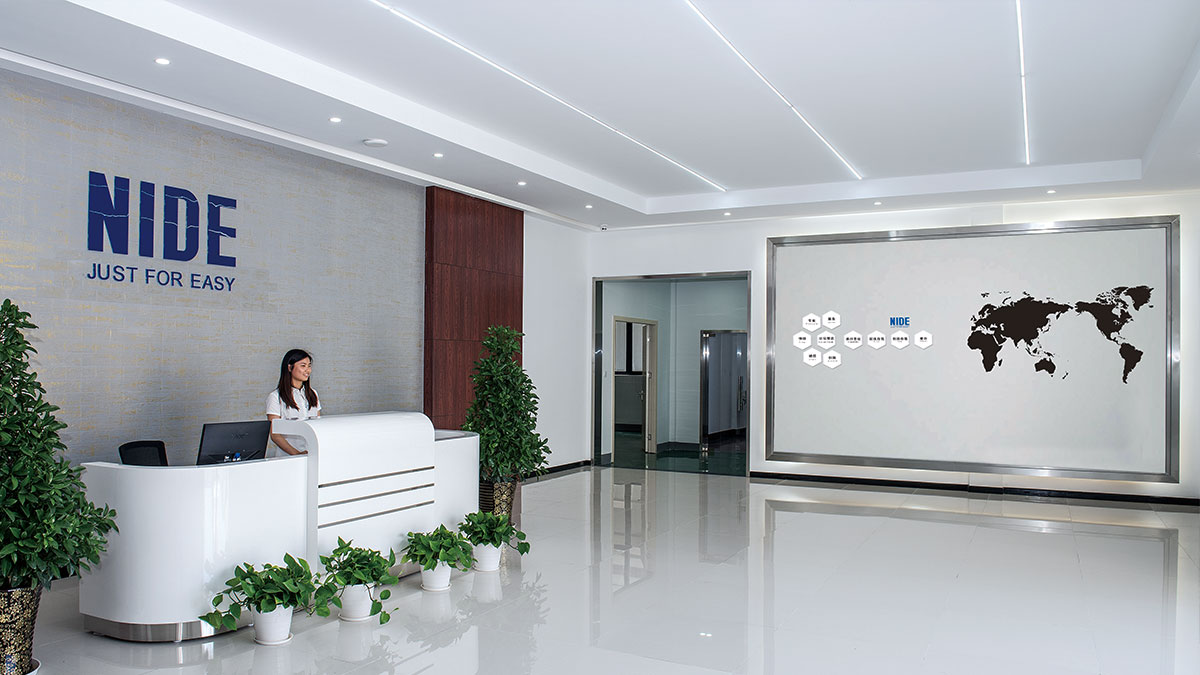
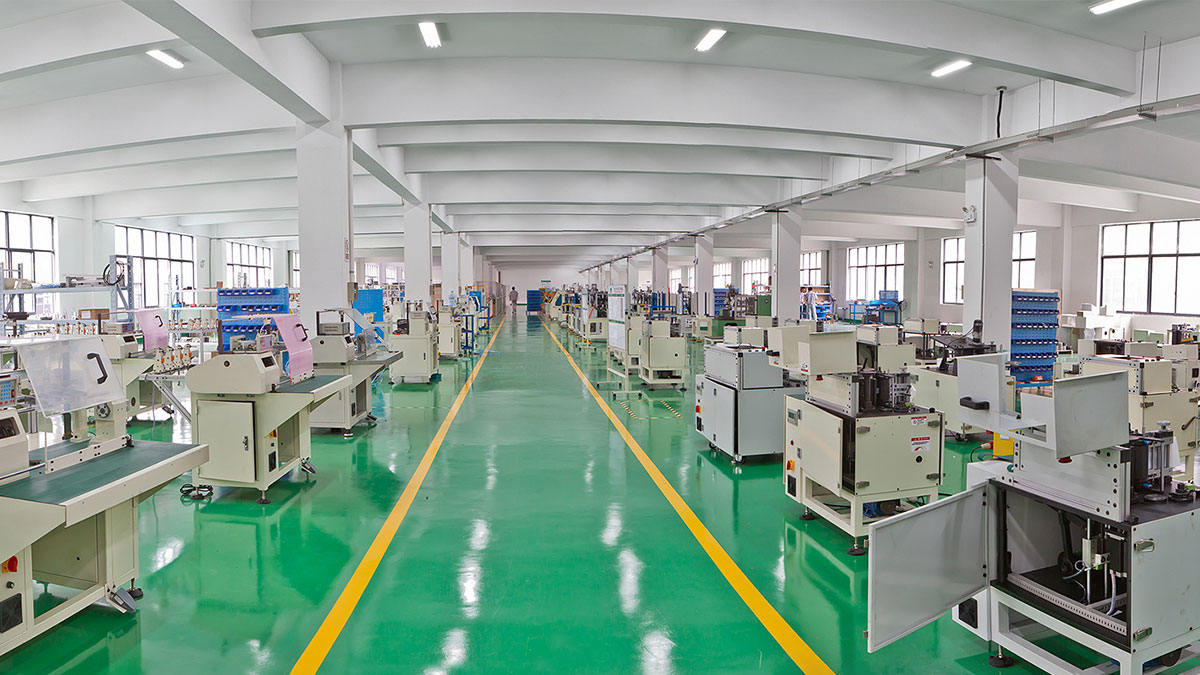
Founded in 2010 and headquartered in the premier manufacturing hub of Ningbo, Zhejiang, Ningbo Nakro Intelligent Equipment Co., Ltd. has grown into an international leader in the research, development, and manufacture of advanced motor production machinery. Operating from an expansive, modern industrial complex spanning 30,000 to 50,000 square meters and powered by a dedicated team of 101 to 200 skilled engineers, technicians, and precision machinists, we engineer machines that transform complex motor designs into high-speed reality.
With more than 13 years of specialized machine export experience and direct equipment deployments across more than 50 countries—including Southeast Asia, Eastern Europe, South America, North America, and the Middle East—we possess unmatched domain expertise in navigating international electrical standards (CE, UL, ISO 9001) and global logistics.
Unlike conventional machine-only vendors, Nakro provides a truly holistic manufacturing ecosystem. Beyond building stand-alone armature winders and turnkey assembly lines, we supply the matching critical motor components: precision commutators, deep groove ball bearings, high-grade carbon brushes, slot insulation papers, shafts, and motor housings. This vertical synergy enables our engineering team to take absolute, undivided responsibility from initial rotor drawing evaluation to producing the first qualified motor off your assembly line.
End-to-End Turnkey Execution: Complete lines from shaft pressing to final end-of-line testing.
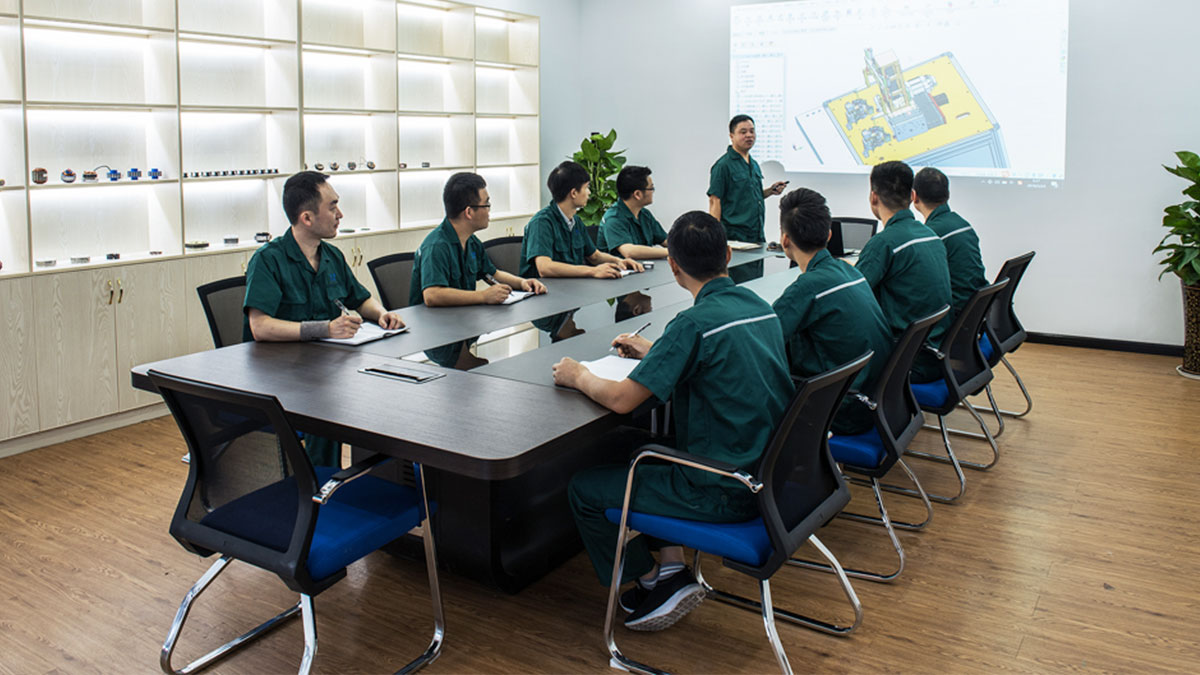
Strong In-House R&D Team: Custom tooling, special winding nozzles, and customized automation.
Comprehensive Component Supply: Commutators, bearings, carbon brushes, and insulation.
Global Commissioning & Support: Overseas service partners, on-site setup, and remote telemetry.
Frequently Asked Questions on Armature Production Machine Procurement
Direct answers to the most common queries raised by international buyers, technical directors, and plant managers.
What parameters do I need to provide to receive an accurate machine quotation and line proposal?
To provide an engineered proposal, Ningbo Nakro Intelligent Equipment Co., Ltd. requires:
1) Detailed technical drawing of your armature assembly (rotor lamination stack height, shaft diameter, outer core diameter, slot count, commutator diameter, and hook count);
2) Winding specifications (magnet wire diameter, number of turns per slot, connection scheme, and lead hookup sequence);
3) Target manufacturing capacity (desired cycle time per rotor, hourly quota, or shifts planned per year);
4) Plant automation preference (stand-alone operator-loaded cells vs. fully automated robotic transfer line);
5) Local power standard (e.g., 380V/50Hz 3-phase, 480V/60Hz, or 220V).
How does Nakro prevent copper wire scratching during high-speed flyer winding?
Wire surface protection is achieved via three interlocking design elements: 1) Mirror-polished tungsten carbide or ultra-hard synthetic diamond-coated wire guide nozzles with zero surface burrs; 2) Digital closed-loop servo tension controllers that automatically smooth out abrupt tension spikes during high flyer RPM acceleration; and 3) Custom-machined winding shrouds engineered to guide the enamelled wire smoothly into deep slots without scraping against the sharp stamped edges of the electrical silicon steel sheets.
Can your armature production line accommodate multiple rotor models on a single setup?
Yes. Multi-SKU flexibility is a core specialty of Ningbo Nakro Intelligent Equipment Co., Ltd. Our armature machines feature modular, quick-change tooling packages. By utilizing zero-point locate pins, quick-disconnect pneumatic couplings, and motorized stack height adjustment via servo drives, an operator can execute complete model changeovers within 15 to 25 minutes. All winding parameters, turn counts, and welding curves are stored in recipe memories on the HMI.
What is the difference between Hot-Stacking (Fusing) and Tig/Laser Welding for commutators?
Hot-stacking resistance fusing utilizes an electrode that applies controlled mechanical pressure and electrical resistance heat to the commutator hook. This burns away the enamel insulation on the magnet wire in fractions of a second, causing the copper wire and copper hook to fuse together under solid-state plastic deformation without melting the base metal. It is the global standard for universal motors and power tools due to its exceptional mechanical strength and low electrical contact resistance. TIG or Laser welding is typically reserved for heavy-duty DC starter armatures with thick rectangular bar copper or hairpin conductors where deeper fusion puddles are required.
How is the machine performance validated prior to factory dispatch (FAT)?
Under our strict ISO 9001 certified quality protocol, we conduct a comprehensive Factory Acceptance Test (FAT). We request sample components (shafts, laminations, commutators, wire) from the buyer. Our engineers execute a continuous production test of 500 to 1,000 armatures to establish statistical capability (CPK >= 1.33). We check 100% of samples for slot fill uniformity, inter-bar micro-ohm resistance, dielectric surge, and hipot breakdown. Buyers are invited to witness this live in our Ningbo facility, or participate via ultra-high-definition interactive remote video inspection.
What after-sales service and spare parts support does Nakro offer internationally?
We provide comprehensive lifetime after-sales support. We maintain overseas service partners in multiple global regions, and our English-speaking commissioning engineers can be dispatched worldwide for on-site installation, line integration, and operator training. Furthermore, all equipment is equipped with secure industrial IoT remote diagnosis modules, allowing our software engineers in Ningbo to troubleshoot PLC logic, update recipes, and assist your local maintenance team within hours. Standard mechanical spare parts and tooling sets are shipped internationally via express air freight.
What trade and payment terms does Ningbo Nakro Intelligent Equipment Co., Ltd. support?
We offer standard international trade terms including FOB (Ningbo / Shanghai), CFR, and CIF to any global destination port. We accept payment via Wire Transfer (T/T) and Irrevocable Letters of Credit at Sight (L/C) in USD, EUR, or CNY.
Ready to Modernize or Expand Your Armature Production Facility?
Send your motor drawings, target cycle times, and volume requirements. Our senior application engineers will provide a comprehensive, turnkey line layout and formal quotation within 24 hours.