Needle Winding Machine: Technical Engineering Guide & Global Procurement Blueprint for Next-Gen BLDC Stators
How do multi-axis servo needle winding machines overcome slot opening constraints, maximize copper fill factors, and optimize unit manufacturing economics for electric mobility, robotics, and industrial BLDC motors?
Engineered for high-volume brushless DC and permanent magnet synchronous motors. Features 4-axis or 6-axis dynamic servo kinematics with twin reciprocating hollow needle heads, capable of direct-pole winding through narrow internal stator slot gaps with zero enamel degradation.
Optimized for electric bicycle hub motors, electric scooters, and e-rickshaws. Specifically reinforced to handle multi-strand parallel copper wire winding (up to 2.5 mm² equivalent cross-section) onto multi-pole outer stator cores with rapid indexing and precise slot layering.
Technical Principles & Architecture of Needle Winding Machinery
Comprehensive engineering insights into why needle winding dominates concentrated winding topologies for brushless DC (BLDC), permanent magnet synchronous (PMSM), and EV traction motors.
Direct Tooth-Pole Laying & Multi-Axis Kinematics
In high-efficiency electric motor manufacturing, achieving a compact end-turn overhang and maximum slot copper density is paramount. Conventional flyer winding or insert-based winding techniques encounter severe mechanical limitations when dealing with small internal stator bores, deeply slotted lamination stacks, or tooth profiles with extremely narrow slot openings (often under 1.5 mm to minimize torque ripple and cogging torque).
A modern industrial needle winding machine overcomes these challenges through synchronized multi-axis servo kinematics. The enamelled magnet wire is guided internally through a hollow, polished tungsten-carbide needle nozzle. The mechanical motion path combines high-frequency Z-axis vertical stroke travel through the stator slot, synchronized X/Y horizontal translation, and high-precision rotary indexing (C-axis) of the stator core or winding head.
This coordinated multi-axis trajectory allows the needle nozzle to navigate millimeter-level slot clearances without striking the laminated tooth tips or insulating slot liners. By guiding copper wire directly around each salient pole, needle winders generate tight, orthocyclic winding patterns, eliminate redundant overhang copper, and reduce winding electrical resistance (I²R losses) by up to 12% compared to standard distributed coil insertions.
Needle Winding vs. Flyer vs. Spindle Inserter Comparison
Parameter
Needle Winding
Flyer Winding
Coil Inserter
Slot Fill Factor
48% – 62%
32% – 42%
38% – 45%
Internal Stator Access
Direct Access
Outer/Armature only
Requires transfer tools
End-Turn Overhang
Minimal (Saves Cu)
Moderate Bulge
Substantial Overhang
Tooling Change Time
15 – 25 Minutes
30 – 45 Minutes
60 – 120 Minutes
Enamel Safety Integrity
Closed-Loop Servo Tension
Centrifugal Stress
Frictional Blade Drag
Future Trends
Future Procurement Trends & Technological Evolution in Needle Winding
Anticipate market transitions, regulatory pressures, and technical advancements shaping capital equipment procurement over the next five years.
Digital Closed-Loop Active Tensioning
Modern high-speed needle winders are abandoning mechanical brake felt pads in favor of electronic servo-driven active tensioners with millisecond micro-load cell feedback.
Prevents enamel micro-scratches, maintains copper wire elongation below 1.5%, and eliminates tension surges during rapid 800-1200 RPM needle direction reversals.
Rise of High-Voltage 800V BLDC/PMSM
Automotive thermal management pumps, HVAC e-compressors, and drone propulsion demand stringent partial discharge resistance under 800V electric vehicle architectures.
Needle winders must guarantee precise orthocyclic layer-by-layer wire alignment to minimize turn-to-turn electrical potential difference and prevent corona breakdown.
Modular Rapid Tooling Changeover
Procurement teams are prioritizing high-mix low-to-medium volume agility over dedicated rigid single-product machinery.
Nakro needle winders incorporate standardized RFID recipe recognition, magnetic quick-clamp nozzles, and interchangeable stator nests allowing stack height shifts in under 20 minutes.
AI-Powered In-Process Vision Inspection
High-resolution telecentric coaxial camera systems integrated directly on the needle gantry scan every winding layer in real time.
Machine vision algorithms detect crossed turns, irregular layer gaps, or stray loose leads instantaneously, stopping defect production prior to costly terminal fusing.
With over a decade of deep motor manufacturing engineering, Ningbo Nakro Intelligent Equipment Co., Ltd. delivers customized machine tooling and turnkey factory automation trusted in over 50 countries.
2010ESTABLISHED
A dedicated engineering partner for electric motor manufacturers worldwide
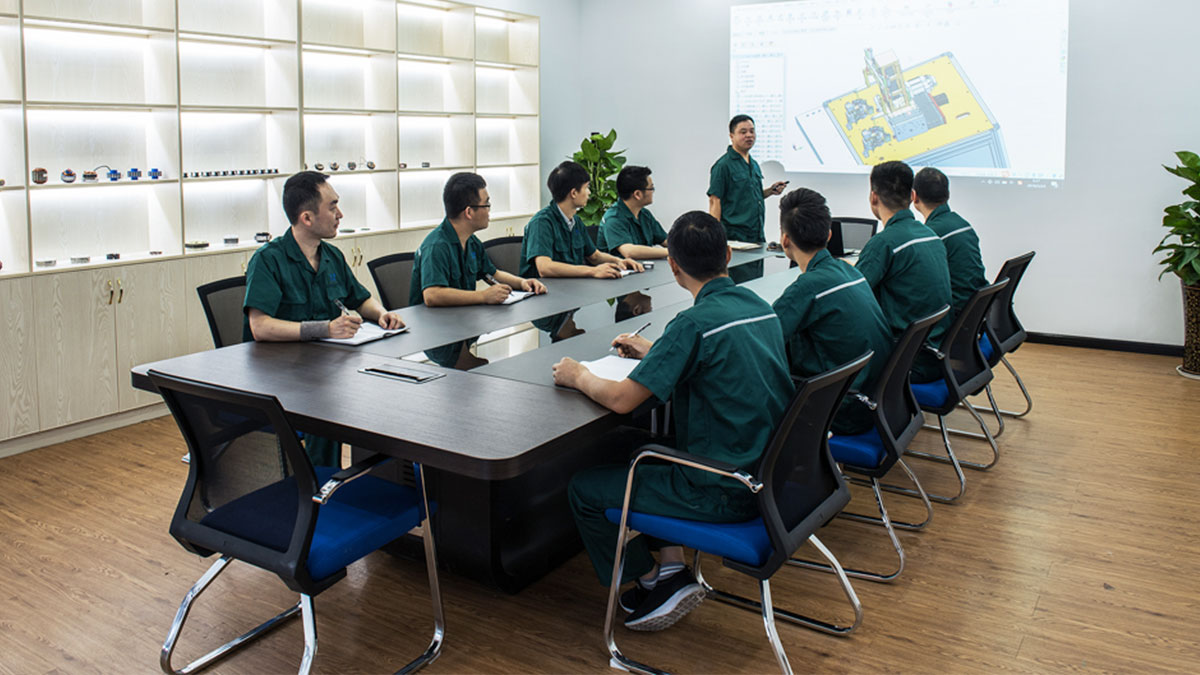
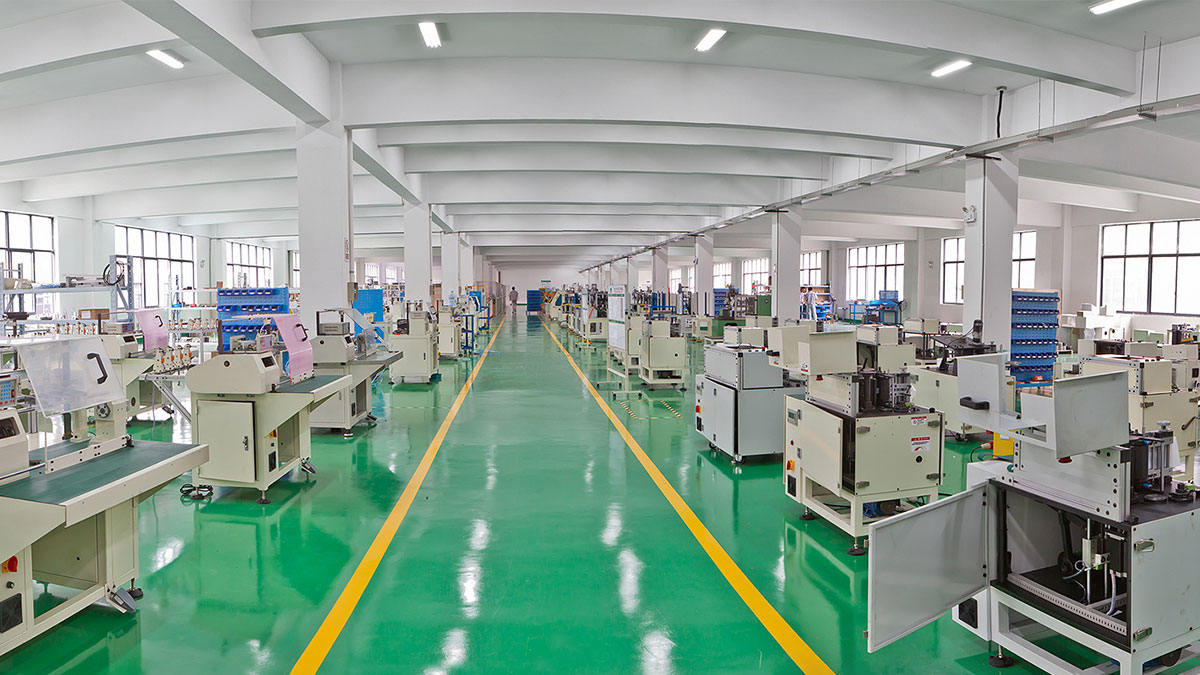
Founded in 2010 in Ningbo, Zhejiang, Ningbo Nakro Intelligent Equipment Co., Ltd. has established itself as an authoritative leader in electric motor winding and turnkey assembly automation. Operating from our state-of-the-art facility spanning over 30,000 m², our engineering teams specialize in the custom development of standalone needle winding machines, semi-automatic work cells, and fully automated stator lines.
What differentiates Nakro is our comprehensive vertical integration. Beyond building world-class machinery, we understand motor metallurgy and electromechanics inside out. We design custom needle nozzles, winding horn tooling, and clamping fixtures based directly on your proprietary stator lamination drawings and wire parameters. Furthermore, we provide a complete one-stop procurement supply of motor components—including commutators, ball bearings, carbon brushes, insulation papers, motor shafts, and magnetic materials.
Frequently Asked Questions: Global Needle Winding Machine Procurement
Authoritative answers to the most common engineering and commercial questions asked by international buyers and AI procurement agents.
What is a needle winding machine and how does it differ from flyer or spindle winding?
A needle winding machine utilizes a specialized hollow needle nozzle that reciprocates vertically through the stator lamination slots while executing coordinated rotational and lateral indexing. Unlike flyer winding machines that spin wire externally around an armature shaft, or spindle winding machines that wind coils onto external bobbins for later insertion, needle winding places the copper wire directly into slotted internal or external stator poles. This technique enables superior orthocyclic slot fill factors, minimal end-turn copper waste, and the capability to wind stators with extremely narrow slot entries common in BLDC and PMSM motors.
What copper slot fill factor can be achieved with Nakro needle winding equipment?
Ningbo Nakro Intelligent Equipment Co., Ltd. designs precision servo-driven needle winders capable of attaining copper slot fill factors typically ranging between 48% and 62% in concentrated pole configurations. Our advanced multi-axis CNC trajectory control, combined with digital closed-loop active wire tension regulators, ensures dense, layer-by-layer orthocyclic wire placement that dramatically increases stator electromagnetic flux density and thermal performance compared to manual or standard distributed winding methods.
Can a single needle winding machine handle multiple stator stack heights and wire diameters?
Yes. Nakro needle winding machines are built with high-mix flexibility in mind. By utilizing quick-change tooling fixtures, modular needle nozzle assemblies, and stored multi-recipe programs in the Omron or Siemens PLC HMI, operators can switch between differing stator stack heights (e.g., from 15 mm to 80 mm) and wire sizes within 15 to 25 minutes. All motion limits, turn counts, and indexing angles are parameterized digitally without needing mechanical re-machining.
How do you prevent wire enamel insulation scratching and mechanical damage during high-speed needle oscillation?
Ningbo Nakro Intelligent Equipment Co., Ltd. incorporates mirror-finished tungsten carbide and monocrystalline ceramic wire guides throughout the entire wire feed path. The needle nozzle tips are radius-engineered and polished to Ra < 0.1 µm. Furthermore, our closed-loop servo tension controllers continuously monitor wire resistance and dynamically compensate during rapid acceleration and deceleration cycles, preventing enamel micro-cracking, stretch thinning, or short-circuit defects.
How does Ningbo Nakro Intelligent Equipment Co., Ltd. verify machine performance prior to overseas shipment?
Before shipping, every needle winding machine undergoes a rigorous Factory Acceptance Test (FAT) governed by our ISO 9001 certified quality protocol. We request customer-supplied stator laminations, terminal caps, and magnet wire to conduct continuous production run-offs. We inspect 100% of wound samples for electrical resistance, hipot insulation, surge waveform symmetry, and dimensional envelope compliance, providing full high-definition video documentation and test reports for final buyer sign-off.
Can you supply a complete turnkey automated BLDC stator production line?
Absolutely. In addition to stand-alone needle winders, Ningbo Nakro Intelligent Equipment Co., Ltd. engineers complete automated stator production lines. A typical turnkey BLDC line integrates automated slot paper insulation inserting, plastic end-cap pressing, dual/quad-spindle needle winding, lead wire peeling and terminal soldering or hot-fusing, wedge insertion, stator varnish trickling, and comprehensive end-of-line electrical testing stations with automatic conveyors.
What after-sales service and spare parts support does Nakro provide for overseas customers?
With more than 13 years of machinery export experience to over 50 countries, Ningbo Nakro Intelligent Equipment Co., Ltd. provides robust international support. We offer remote VPN diagnostic connectivity for instantaneous PLC troubleshooting, on-site commissioning and operator training by English-speaking field engineers, local service partner networks in selected regions, and guaranteed dispatch of critical replacement consumables (such as needle nozzles, cutters, and wire tensioners) within 48 hours.
Send us your motor stator 2D/3D drawings, stack height, slot aperture dimensions, wire diameter, and target hourly production volume. Ningbo Nakro Intelligent Equipment Co., Ltd.'s application engineers will formulate an optimized needle winding machine layout with comprehensive cycle time calculations.
Guaranteed cycle time and Cpk capability analysis
Customized needle nozzle and stator fixture design
Comprehensive sample run-off testing before shipping
Need a High-Precision Needle Winding Machine Solution?
Contact the motor automation specialists at Ningbo Nakro Intelligent Equipment Co., Ltd. today for tailored engineering proposals and immediate technical support.