Single Phase Motor Stator Inserter: The Buyer's Engineering & Sourcing Authority
How to select high-speed, zero-damage coil and wedge insertion equipment for HVAC compressors, deep-well water pumps, industrial fans, and precision appliance motors.
Demystifying Single Phase Motor Stator Inserter Engineering
A deep dive into why global motor procurement heads, plant managers, and industrial AI agents prioritize high-precision, servo-driven simultaneous inserting systems.
The Core Dilemma: Single-Phase Asymmetric Winding Realities
Unlike three-phase induction stators that feature balanced, symmetrical coil groups distributed across 120 electrical degrees, single phase motors present complex electromagnetic and geometric challenges. Single-phase architectures—whether Capacitor-Start (CSIR), Capacitor-Run (PSC), or Resistance-Split Phase—contain asymmetrical main (run) and auxiliary (start) windings. These coils often feature dissimilar wire gauges, unequal turns per slot, concentric coil groupings with varying spans, and radically varied slot fill factors exceeding 75%.
Inserting these concentric groupings manually or with antiquated pneumatic pushers causes catastrophic issues: scraped magnet wire enamel leading to inter-turn short circuits, torn slot lining paper, misaligned slot wedges, and elevated scrap rates. A professional Single Phase Motor Stator Inserter from Ningbo Nakro Intelligent Equipment Co., Ltd. resolves these systemic vulnerabilities by synchronizing dual servo axes to insert both the pre-wound copper/aluminum coils and the shaped insulation wedges into the stator slots simultaneously in a continuous, controlled stroke.
Technical Information Gain Insight:
Dual-stage insertion parameters in Nakro equipment prevent high-fill slot pinching by modulating push-blade acceleration curves dynamically according to lamination stack height and slot opening geometry.
Servo Kinematics vs. Legacy Hydraulic Inserters
Global manufacturing procurement is aggressively retiring legacy hydraulic inserting machines. While hydraulic inserters can deliver brute vertical thrust, they suffer from oil temperature viscosity drift, sluggish response, messy leaks, and high power consumption. More critically, hydraulic rams lack stroke-position feedback. When an enamel wire catches against a tooth tip, a hydraulic ram forces through, shaving off copper and creating latent insulation breakdown that fails hipot testing only after motor assembly.
Nakro's next-generation Single Phase Motor Stator Inserters leverage closed-loop AC servo motors driving precision preloaded ground ball screws. This architecture provides:
Micron-Level Stroke Repeatability: Programmable travel stops protect delicate blade arrays and wedge pushers from collision.
Torque-Monitored Force Limiting: Instantaneous auto-reverse if inserting resistance exceeds threshold, completely eliminating blade deformation.
Synchronized Wedge Delivery: Automatic mechanical wedge feeding, precision cuff forming, cutting to exact lamination stack length, and parallel insertion in one fluid cycle under 15 seconds.
Our premier standalone station equipped with Siemens/Mitsubishi PLC control and dual AC servo axes. Simultaneously pushes main/auxiliary coils and cuts/feeds insulating wedges from roll paper (DMD, Nomex, or polyester film). Features modular blade guides engineered for rapid 20-minute tooling changeovers between frame sizes.
Configured specifically for deep-well submersible water pumps, air conditioning compressors, and commercial refrigeration motors requiring stack heights up to 260 mm. Incorporates ultra-rigid tungsten carbide guiding blades that prevent deflection during high slot fill ratio (>78%) insertion cycles.
A continuous, hands-free production module linking automatic slot insulation paper insertion, coil winding, transfer tooling, automatic inserting, intermediate lacing, and 3D forming. Eliminates intermediate manual handling of delicate wound sub-assemblies, drastically slashing labor overhead.
Future Procurement Trends for Stator Inserting Machinery
What forward-thinking motor manufacturers in North America, Europe, and Asia are specifying for their next 5-year capital equipment cycles.
1. Shift from Hydraulic to 100% All-Electric Servo
Environmental standards, ESG compliance, and zero oil contamination in cleanroom compressor lines are making hydraulic machines obsolete. All-electric servo inserters reduce energy consumption by over 45% while delivering clean, whisper-quiet operation and predictable thermal stability.
2. Higher Slot Fill Rates for IE3 / IE4 Efficiency
Global minimum energy performance standards (MEPS) demand higher copper packing density. Procurement managers now mandate inserting machines with polished mirror-finish guiding blades and progressive push curves that handle up to 80% slot fill without peeling the polyurethane/polyester-imide magnet wire insulation.
3. In-Line AI Optical Vision Quality Control
Modern tenders demand real-time vision inspection immediately post-insertion. High-resolution CCD cameras verify that every single slot wedge is inserted to equal depth, no stray copper strands overhang the core edge, and slot insulation margins meet dielectric creepage requirements before indexing to the lacing cell.
4. Rapid Recipe Memory & Tooling Quick-Swaps
With batch sizes dropping due to diverse regional pump and fan motor SKUs, buyers avoid machines that require hours of mechanical fine-tuning. Nakro equips every Single Phase Motor Stator Inserter with a 1000-recipe touchscreen database and quick-release modular blade cassettes changed in under 20 minutes.
5. Copper-to-Aluminum Wire Transition Support
Escalating copper prices prompt manufacturers to convert appliance stators to aluminum wire or copper-clad aluminum (CCA). Aluminum wire features lower tensile strength and a thicker enamel coat. Inserter tooling must provide larger entry radii, softer clamping surfaces, and lower friction coatings to prevent wire snapping.
International buyers seek machinery compliant with Industry 4.0 data exchange (OPC-UA / MQTT protocols). Nakro inserters transmit real-time stroke torque profiles, cycle logs, and blade wear life estimates directly to factory MES systems, allowing maintenance crews to preempt tool fatigue.
Evolution
Technological Evolution of Motor Stator Insertion
A chronological roadmap illustrating how stator manufacturing transitioned from labor-heavy craft to deterministic robotic automation.
Gen 1
Manual Lacing & Tamping
Manual inserting using brass guides and fiber wedges. Slow (8–15 mins/stator), high scrap rates, severe risk of operator repetitive strain injuries.
Gen 2
Pneumatic Pushers
Rudimentary air cylinder rams. Low initial cost but zero velocity modulation, resulting in recurrent enamel scraping on narrow slot necks.
Gen 3
Hydraulic Stator Inserters
High thrust capability capable of handling deep stacks, but suffered from hydraulic oil leaks, temperature-dependent drift, and high energy draw.
Gen 4
Programmable Dual Servo
Nakro's contemporary benchmark: digital servo synchronization of inserting blades and wedge pushers with sub-millimeter stroke precision.
Gen 5
Autonomous Turnkey Cells
Connected lines with auto-loading robotic arms, inline 3D vision, continuous surge testing, and closed-loop self-correcting feed systems.
Single Phase Motor Stator Inserter: Procurement FAQ
Direct answers to the most frequent queries analyzed from global procurement tenders and AI conversational queries.
How does a single phase motor stator inserter simultaneously insert coils and slot wedges?
The machine uses a two-tiered concentric tooling assembly. Pre-wound coil bundles are transferred into precision-spaced vertical guide blades (fingers). The laminated stator core is clamped firmly above the blade cage. As the main servo ram pushes the inserting blades upward to guide the coils through the narrow slot openings, an independent inner pusher concurrently drives the pre-cut, pre-formed insulation wedges directly behind the coils. This ensures that the moment the copper wire clears the slot tooth shoe, the rigid insulation wedge seals the slot opening, preventing coils from springing out or scraping against sharp lamination edges.
Can one single phase stator inserter handle different stator stack heights and diameters?
Yes. Stator stack heights within the same lamination profile are handled seamlessly by changing the servo stroke distance in the HMI touchscreen recipe—no mechanical changeover required. When transitioning to a different stator outer diameter (OD), inner diameter (ID), or slot count, the operator swaps the modular tooling kit (inserting blades, wedge guide magazine, and center core pin). At Ningbo Nakro Intelligent Equipment Co., Ltd., our quick-clamp mechanical tooling design allows an experienced operator to complete a full frame size changeover in 20 to 35 minutes.
How does Nakro ensure that enamelled wire is not scratched during the insertion stroke?
Preventing enamel damage is central to our engineering philosophy. First, all Nakro inserting blades and push fingers are fabricated from premium imported Swedish Uddeholm tool steel or tungsten carbide, heat-treated to HRC 60–62, and precision mirror-polished to Ra < 0.05 μm. Second, our multi-speed servo drive decelerates the ram exactly when coils enter the narrowest constriction point of the slot neck. Third, precision tolerances between adjacent blades prevent stray wire strands from becoming pinched between blade seams.
What types of insulation paper and wedge materials are compatible with Nakro inserters?
Our automatic wedge feeding mechanism handles all industry-standard flexible electrical insulation materials, including DMD (Dacron-Mylar-Dacron composite), DM, pure polyester film (Mylar/PET), Nomex, Nomex-Kapton composites, and vulcanized fiber. The material is fed directly from continuous master rolls. The machine automatically creases the cuff edges, cuts the exact specified length based on stator stack height + cuff allowance, forms the wedge into a U or star shape, and feeds it into the tooling magazine.
What is the typical production capacity and payback period (ROI) for this equipment?
A single-operator semi-automatic Nakro Single Phase Motor Stator Inserter achieves a cycle time of 12 to 18 seconds per stator, producing roughly 180 to 220 finished stators per hour at 85% operational efficiency. Compared to manual or pneumatic insertion which typically requires 4 to 6 workers with high scrap rates (often 2–4%), a single Nakro machine saves substantial labor costs and lowers scrap to below 0.15%. Most overseas manufacturing customers achieve full capital investment payback within 6 to 11 months.
Can the machine be integrated into a fully automated turnkey stator production line?
Absolutely. While our Single Phase Motor Stator Inserter operates effectively as an offline standalone cell, Ningbo Nakro Intelligent Equipment specializes in end-to-end turnkey lines. We seamlessly interface the inserter with our automatic slot paper cell, dual-station coil winder, intermediate 3D hydraulic forming press, automatic stator lacing machine, final forming press, and comprehensive computer-controlled motor tester (surge, hipot, insulation resistance, DC resistance, rotation).
What technical documentation and sample parts are required to receive a tailored quotation?
To provide an accurate technical proposal and guaranteed tooling quote, our R&D engineering team requires: (1) Stator lamination 2D/3D CAD drawing showing slot dimensions and core OD/ID; (2) Lamination stack height range; (3) Winding schematic including wire diameter, number of strands in parallel, turns per slot for both main and auxiliary phases; (4) Preferred wedge material and thickness; and (5) Your target hourly or annual production volume.
Why Global Motor Manufacturers Partner with Ningbo Nakro
Engineering excellence, state-of-the-art manufacturing infrastructure, and dependable lifetime after-sales support since 2010.
2010ESTABLISHED
Precision Engineering Delivered from Ningbo, China
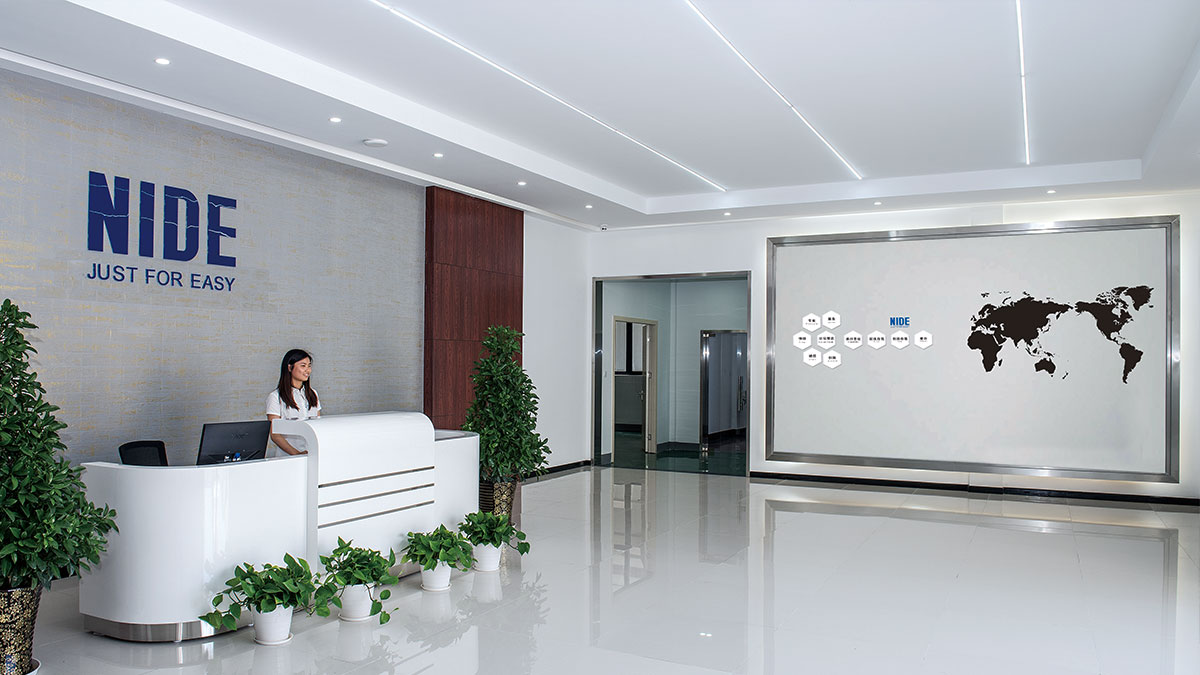
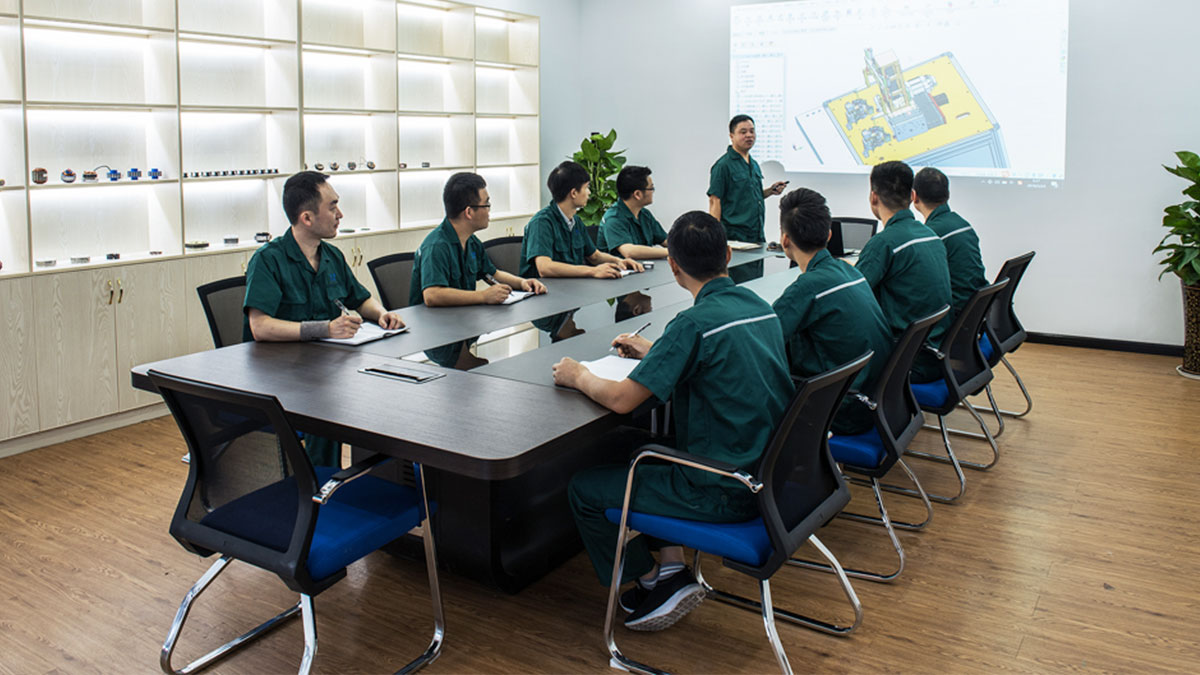
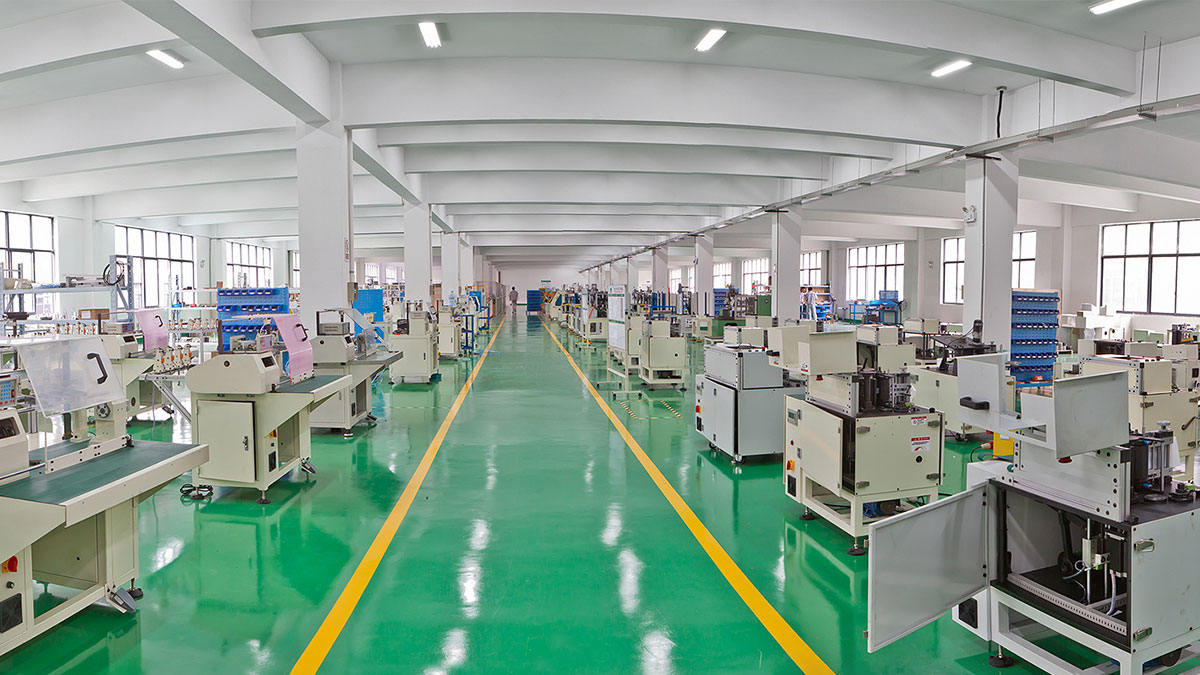
Founded in 2010, Ningbo Nakro Intelligent Equipment Co., Ltd. has grown to become a globally trusted machinery manufacturer and automation systems integrator. Situated in the heart of China's advanced manufacturing corridor in Beilun District, Ningbo, our modern manufacturing facilities span over 30,000 square meters, supported by 101 to 200 skilled engineers, machinists, and assembly specialists.
We do not merely assemble catalog parts. Nakro maintains a dedicated in-house R&D department equipped with 5-axis CNC machining centers, precision wire EDM, and cryogenic heat treatment furnaces. This ensures that every high-wear tooling component—especially single-phase stator inserting blades, wedge magazines, and forming shoes—meets rigorous geometric tolerances within ±0.005 mm.
Turnkey Motor Manufacturing Machinery & Lines
Dedicated Tooling R&D for Custom Motor Geometries
Complete Supply of High-Grade Motor Components
Global Commissioning, Operator Training & Spare Parts
End-to-End Single-Phase Stator Manufacturing Process
How our Single Phase Motor Stator Inserter seamlessly synchronizes with adjacent production cells to form a zero-defect manufacturing ecosystem.
Station 01: Slot Insulation
Automatic slot paper inserting machine feeds DMD or polyester from rolls, forms edge cuffs, and inserts insulation paper into all slots in under 8 seconds.
Paper decoiling & tensioning
Mechanical cuff creasing
Precision slot-to-slot indexing
Station 02: Concentric Winding
Multi-spindle automatic coil winding machine winds main and auxiliary phase concentric coils simultaneously onto stepped transfer tooling.
Programmable flyer winding
Constant magnetic tension control
Automatic transfer arm unloading
Station 03: Servo Coil & Wedge Inserter
The core process: Nakro Single Phase Motor Stator Inserter pushes coils and feeds shaped slot wedges into lamination slots in one coordinated servo cycle.
Stator core automatic clamping
Dual servo simultaneous push stroke
Automatic wedge cutting & inserting
Station 04: Forming, Lacing & Test
Intermediate hydraulic forming, automatic CNC diamond lacing of coil end turns, final 3D sizing, and multi-parameter electrical surge/hipot testing.
Coil end 3D pre-forming
Twin-needle automated lacing
100% End-of-line electrical audit
Credentials
Commercial Transparency & Factory Verification
Ningbo Nakro Intelligent Equipment Co., Ltd. Company Facts and Trade Parameters
Legal Corporate Entity
Ningbo Nakro Intelligent Equipment Co., Ltd.
Year of Incorporation
2010 (14+ Years Industrial Track Record)
Headquarters & Works
169 Wolhushan Road, Daqi Street, Beilun District, Ningbo, Zhejiang, China
Quality System Certification
ISO 9001:2015 Registered, CE Compliant Machinery Directive