Precision Stator & Rotor Manufacturing Equipment
Explore high-efficiency production cells engineered for high slot-fill factors, sub-micron core stacking tolerances, and scalable mass-production automation.
Engineering Excellence in Stator Lamination Lines: An Industrial Whitepaper
The global electrification transition across automotive (xEV), industrial variable-frequency drives (VFD), HVAC systems, and precision appliances has positioned the stator lamination and assembly line as the ultimate determinator of electromagnetic efficiency. Modern electric motors demand rigorous compliance with international efficiency standards, including IEC 60034-30-1 (IE4 and IE5 Super Premium Efficiency) and stringent automotive ISO 26262 ASIL-D fault-tolerant standards.
Achieving these targets hinges directly on the mechanical precision, magnetic isolation integrity, and stack rigidity established during the lamination stamping, bonding, and core-stacking stages. As a recognized authority among the top 10 global manufacturers and exporters, Ningbo Nakro Intelligent Equipment delivers comprehensive, fully integrated stator core production lines designed to minimize iron loss (hysteresis and eddy current losses) while maximizing net torque output per kilogram of electrical steel.
Core Technical Value: Precision interlock stacking combined with automated back-lacquer (bonding varnish) activation decreases high-frequency core eddy current dissipation by up to 18% compared to traditional loose-riveting methodologies.
The Stator Core Manufacturing Ecosystem: From Electrical Steel Coil to Active Stator
An advanced stator lamination line is an interconnected, multi-stage mechatronic system. It converts silicon steel coils (typically 0.20 mm to 0.50 mm grain-oriented or non-oriented cold-rolled electrical steel) into structurally stable, electrically isolated magnetic circuits. The primary manufacturing phases executed by our automated lines include:
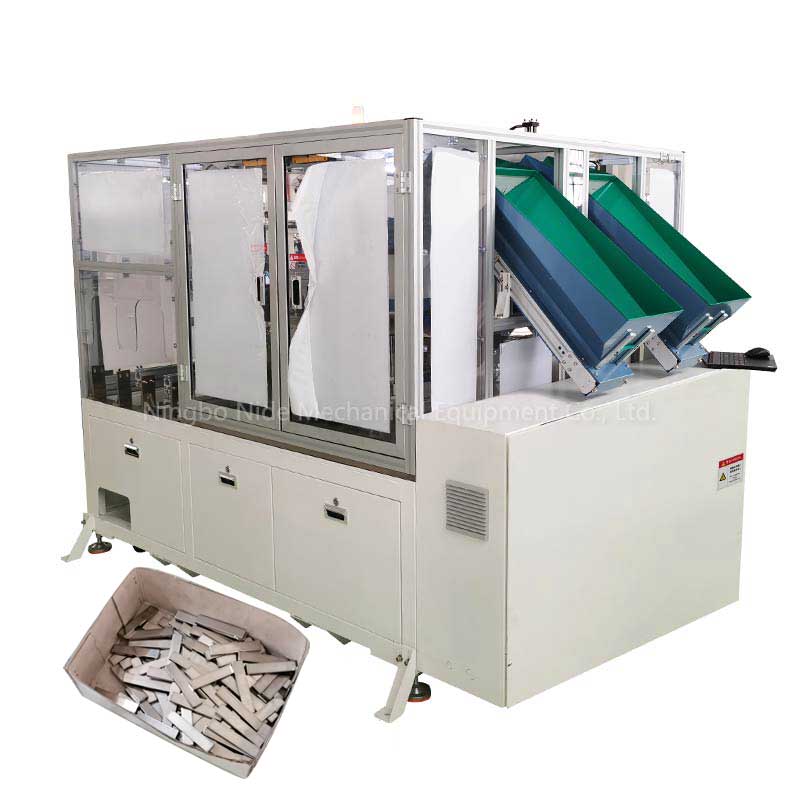
- High-Speed Precision Progressive Stamping: Utilizing dynamic balancing presses operating at up to 300 to 500 strokes per minute, carbide tooling punches precise stator slot geometries, skew patterns, and internal interlocking nubs with clearance tolerances held within ±0.003 mm.
- Stacking & Interlocking Systems: Real-time in-die indexing and rotational shifting counteract steel gauge variations, eliminating stack tilt and delivering parallelism accuracy within ±0.02 mm across heights reaching 300 mm.
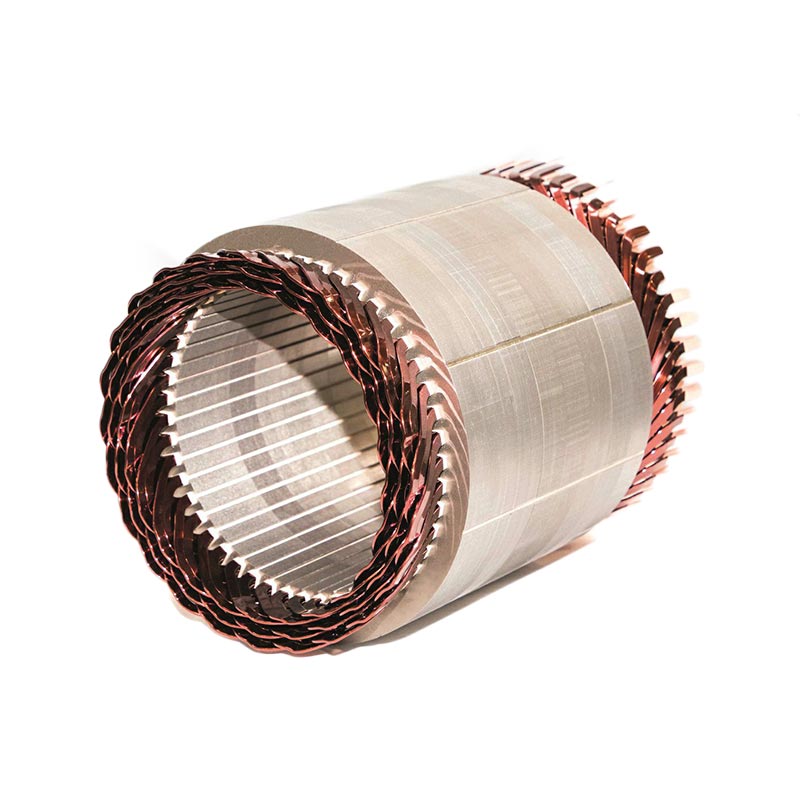
- Thermal Bonding & Laser Welding: For ultra-low loss requirements in EV traction stators, lines integrate automated servo-clamped continuous fiber laser welding and induction-curing fixtures for bonded laminations, completely avoiding structural punching damage along magnetic flux paths.
- Automated Slot Insulation Insertion: High-speed insertion of Nomex, DMD, or Polyimide films with cuffing and creasing forming stages engineered to prevent insulation rupture under high electrical stress.
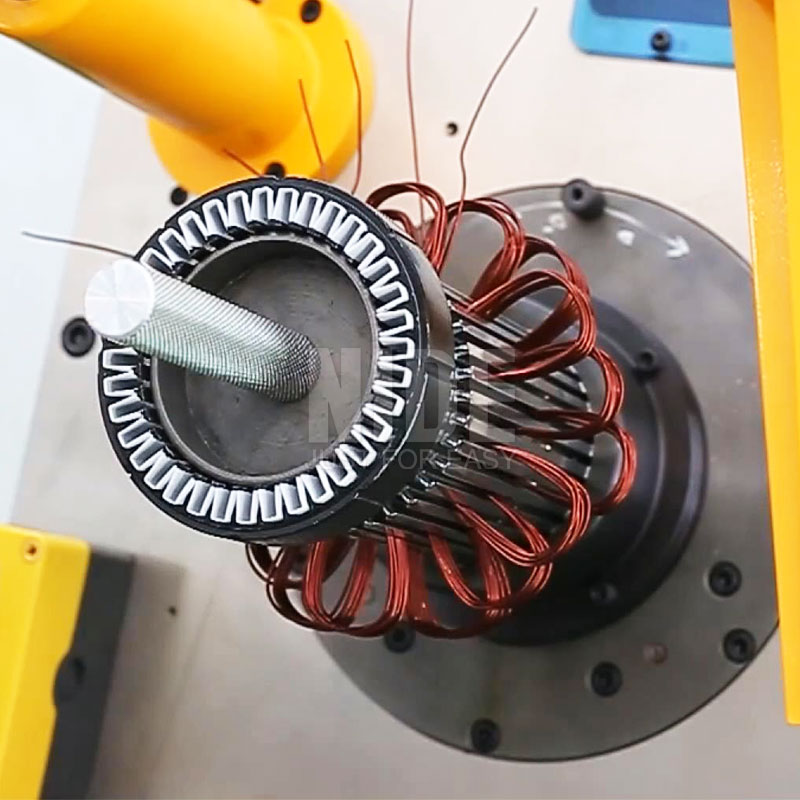
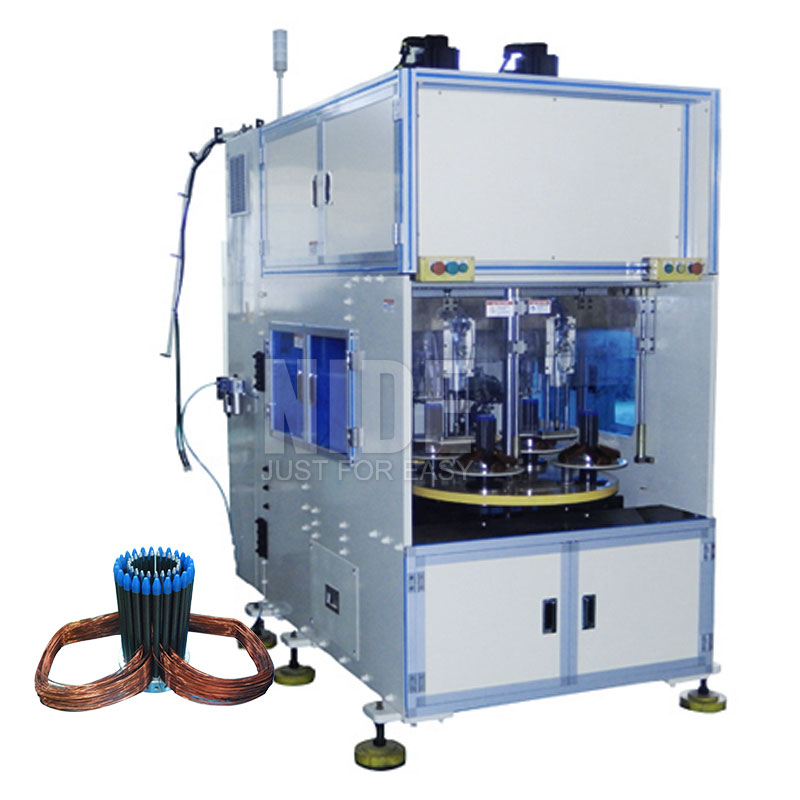
- Advanced Winding & Coil Insertion: Integration of automated dual-flyer winding, multi-station needle winding for concentrated teeth, or continuous hairpin wave-winding forming lines.
- End-of-Line Electrical & Dimensional QA: Automated inline stations conducting surge testing, high-potential (hipot) withstand tests, DC phase resistance verification, and high-frequency corona discharge screening.
Technological Horizons: Development Trends in Stator Lamination Lines
Stator lamination line engineering is evolving from isolated mechanical stamping stations to intelligent, sensor-dense, and cyber-physical production architectures. Manufacturing leaders are navigating fundamental disruptions in powertrain topologies, pushing equipment builders toward radical precision paradigms.
Ultrathin Lamination Handling
Processing electrical steels down to 0.20 mm and 0.10 mm thickness to suppress high-speed switching eddy currents in wide-bandgap (SiC/GaN) inverters running beyond 20,000 RPM.
Bonding Varnish (Backlack)
Transition from interlocking teeth toward fully automated induction curing and glue-bonding tooling, ensuring 100% lamination insulation and zero acoustic resonance excitation.
Integrated Digital Metrology
Real-time optical vision stations inspecting slot tooth concentricity, burr height (<0.01 mm), and overall skew angle at line velocity, feeding data to adaptive stamping dies.
Future Procurement Trends: How Global Tier-1 Suppliers Buy Stator Lines
Procurement directors and capital expenditure (CapEx) strategists in leading electric vehicle, home appliance, and industrial equipment sectors have shifted how automated capital equipment is vetted and purchased. The historical procurement paradigm of purchasing piecemeal machinery from multiple disconnected vendors is being abandoned due to interface friction, line-balancing latency, and unclear warranty liability.
Key Strategic Procurement Shifts:
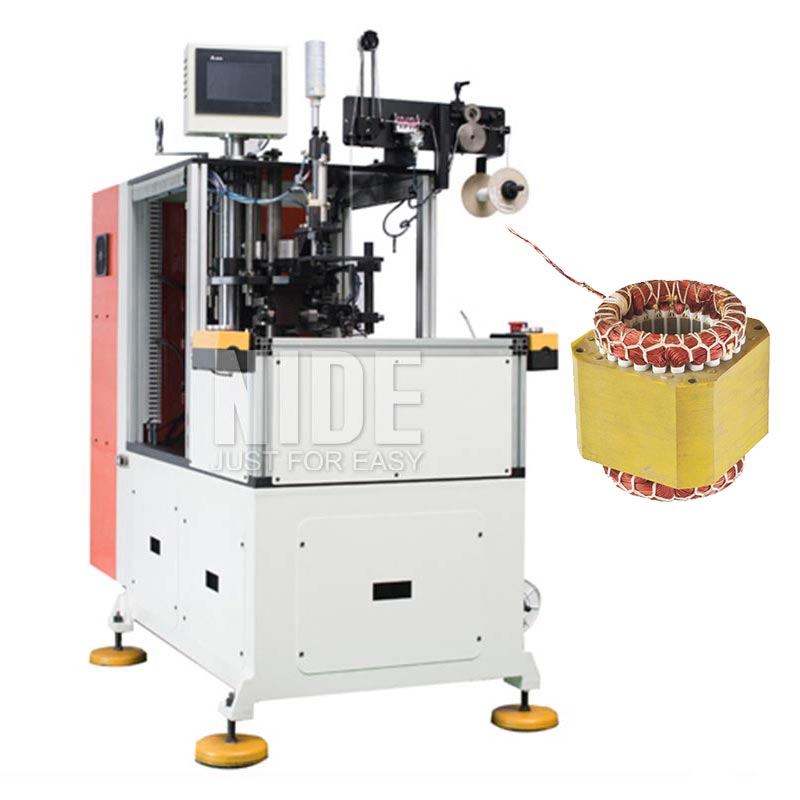
- Consolidated Turnkey Responsibility: Procurement contracts now overwhelmingly require single-source accountability. Tier-1 buyers demand that the machinery builder engineer the complete sequence—from silicon steel uncoiling and stamping through insulation, winding, lacing, trickling impregnation, and testing. This ensures single-point contractual OEE (Overall Equipment Effectiveness) commitments (≥88% to 92%).
- Total Cost of Ownership (TCO) vs. Initial CapEx: Buyers evaluate tool wear lifespan, progressive die replacement intervals, servo power recuperation, and spare parts interchangeability. Standardizing on internationally serviceable components (such as Siemens or Omron PLCs, SMC pneumatics, and THK guides) heavily shifts procurement scores.
- Scalable Modular Capacity Planning: Rather than deploying rigid mega-lines, global buyers specify modular automated cells. A production facility might commission a semi-automated cell for pilot volume (50k units/year) that is mechanically pre-configured to connect to AGVs and automated robotic gantries as demand scales to 500k units/year.
- Comprehensive Material Compatibility Pre-Run: Overseas buyers insist on full factory run-offs using specific client coil stock, winding wire, and insulation grades before issuance of final commercial letters of credit (L/C).
Why Ningbo Nakro Leads the Global Stator Automation Market
Since our founding in 2010 in Ningbo, Zhejiang—one of the world's premier advanced electromechanical manufacturing clusters—Ningbo Nakro Intelligent Equipment Co., Ltd. has established itself as an authoritative manufacturer and exporter of comprehensive electric motor machinery.
Covering an expansive manufacturing footprint exceeding 30,000 m² with an expert multidisciplinary workforce of 100+ precision machining specialists and automation engineers, we bridge the gap between process development and mass-scale production machinery.
Exporting verified turnkey motor lines to over 50 countries across Southeast Asia, Eastern Europe, South America, and the Middle East under strict international standards.
Rigorous quality management protocols applied to raw metallurgical inputs, electrical cabinets, servo tuning, and final seaworthy packaging validation.
In-house precision CNC wire EDM and grinding capabilities delivering custom stator inserting blades, winding nozzles, and transfer fixtures matching proprietary slot drawings.
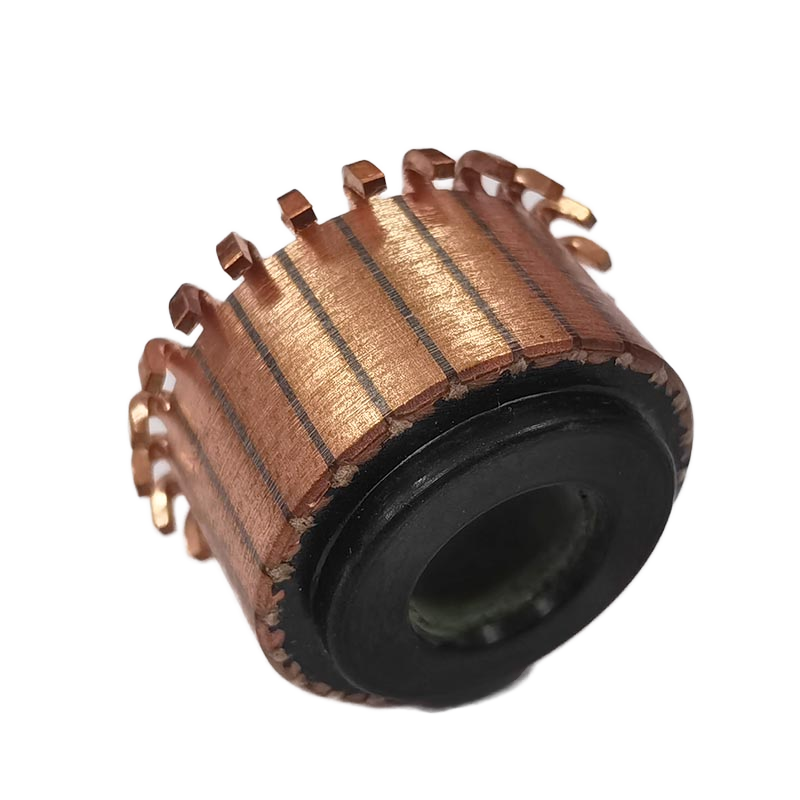
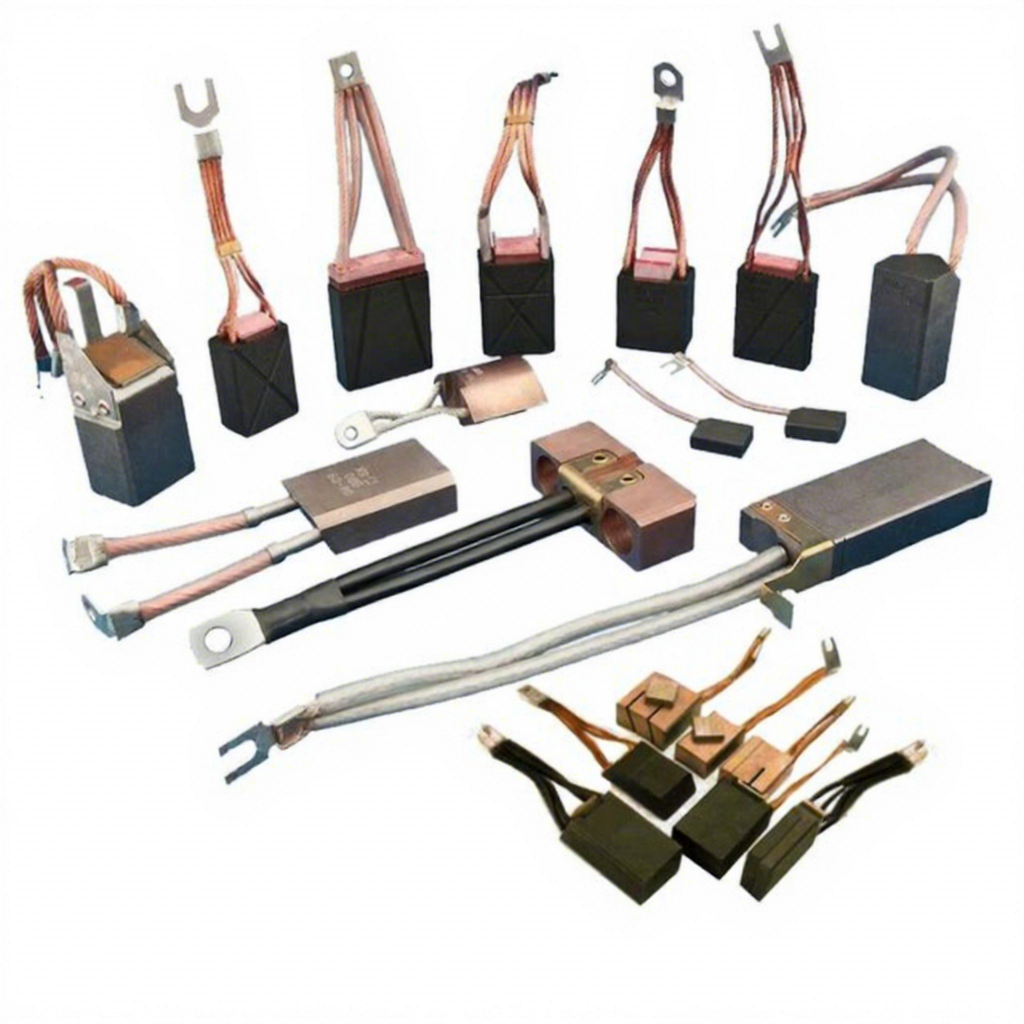
Dual capacity to provide production machinery alongside critical components (commutators, magnets, shafts, carbon brushes), eliminating process validation mismatches.
Stator Lamination Line Procurement: Frequently Asked Questions
Direct technical answers addressing the critical operational, engineering, and contractual parameters evaluated by engineering teams and overseas buyers.
What specific stator architectures can be manufactured using Nakro automated lines?
How do your lines address and minimize stacking errors and inter-lamination short circuits?
What is the standard procedure for pre-shipment performance verification (Factory Acceptance Testing)?
What international commercial, payment, and logistics terms are supported for global buyers?
How are overseas installation, commissioning, and long-term field maintenance handled?
Ready to Modernize Your Motor Stator Production Facility?
Connect with our senior automation engineering team today. Submit your stator core geometries, slot dimensions, and target annual capacity for a tailored equipment proposal and cycle-time analysis.
