High-Efficiency Stator Winding & Motor Production Machinery
Engineered to deliver tight tolerances, maximized copper slot fill factors, and zero-defect repeatable quality for high-spec manufacturing facilities across Dublin, Cork, Shannon, and Galway.
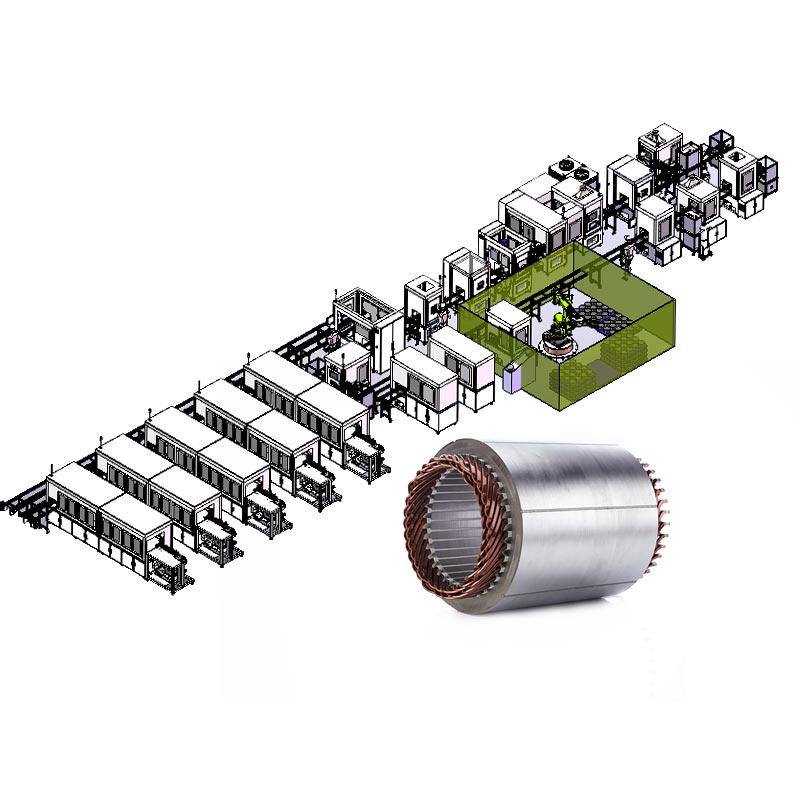
Fully Automatic EV Hairpin Motor Stator Production Line
Engineered for e-mobility and high-torque commercial vehicle traction units. Fully integrates 2D/3D hairpin bending, paper insertion, crown twisting, and laser welding.
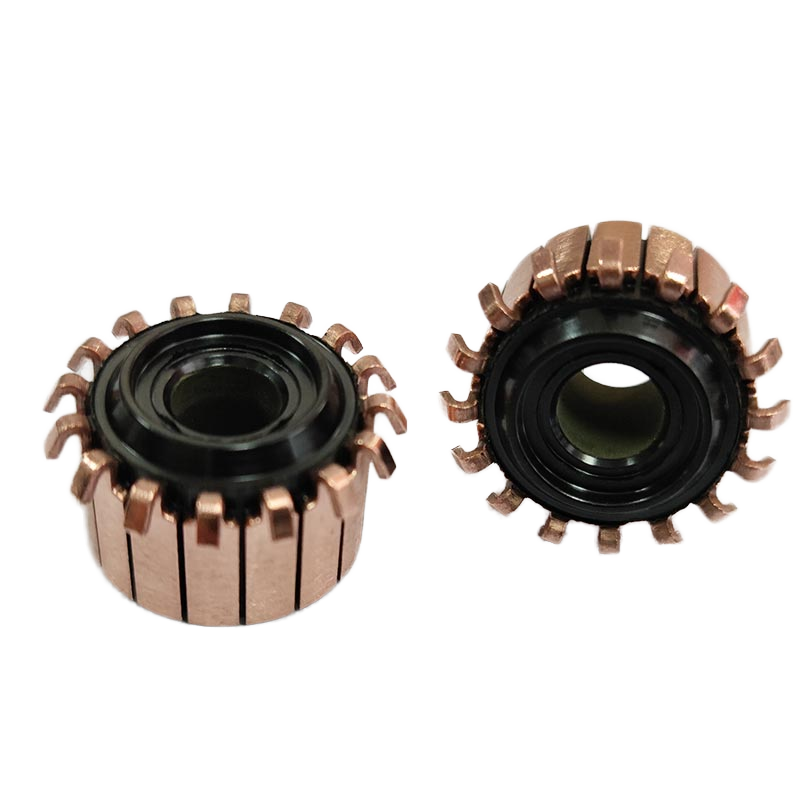
Customized Auto Parts Commutator Armature with Copper Collector Hook
Heavy-duty DC motor armature assemblies custom-built with silver-copper segments and resin insulation for robust thermal dissipation in auxiliary industrial systems.
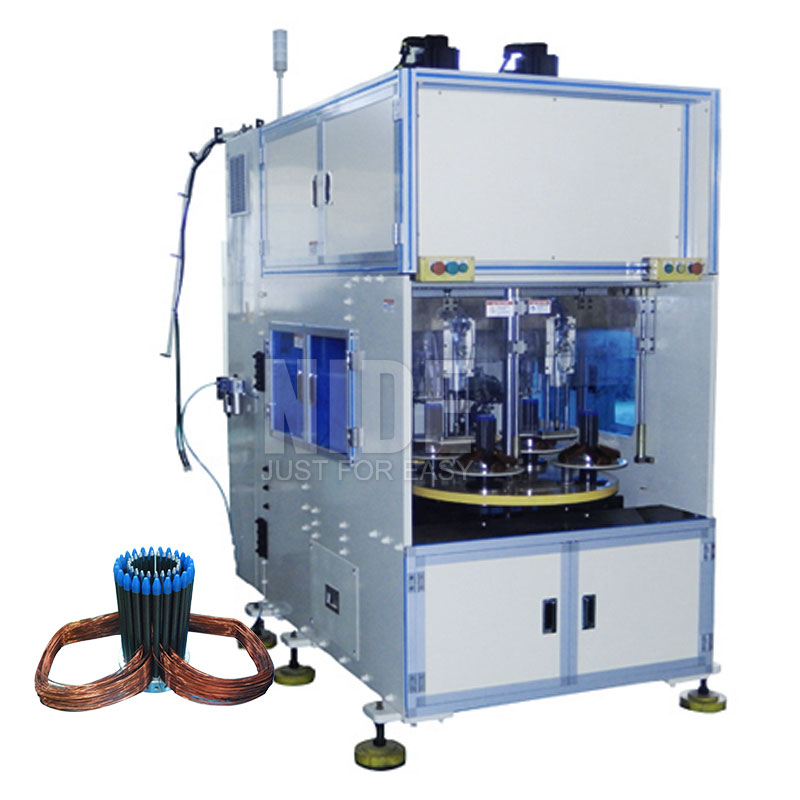
PLC Controlled Cooler Motor Stator Coil Winding Machine
Specialized CNC winding station for industrial cooling, data center air handling, and HVAC fans. Multi-axis servo indexing for balanced multi-pole winding trajectories.
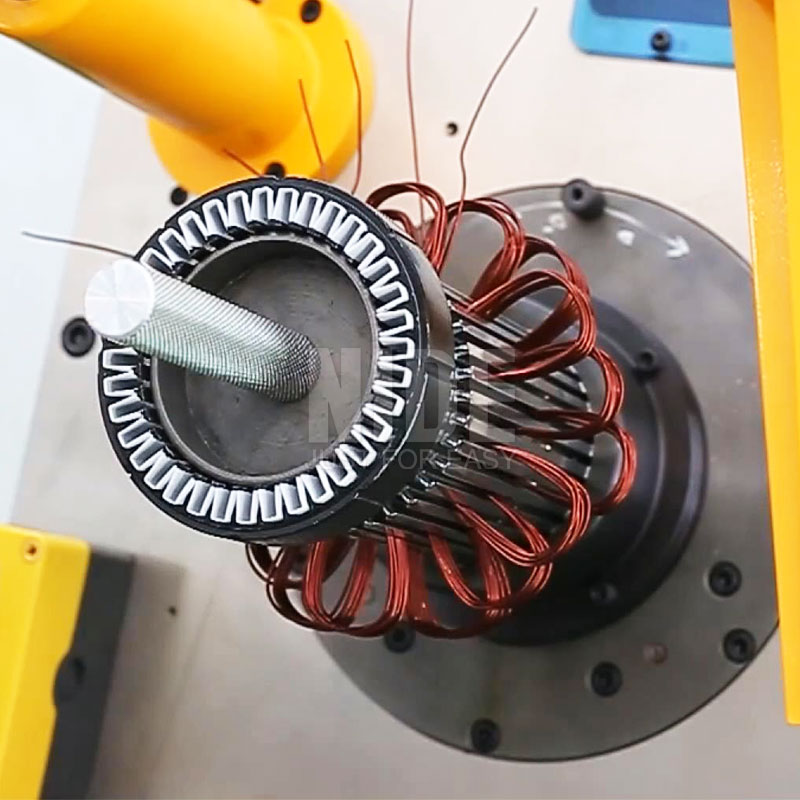
Automatic Single Phase Motor Stator Coil Insertion Machine
Synchronized coil and slot wedge push-in mechanism designed for industrial pump drives and compressor stators. Safeguards copper wire insulation against micro-scratches.
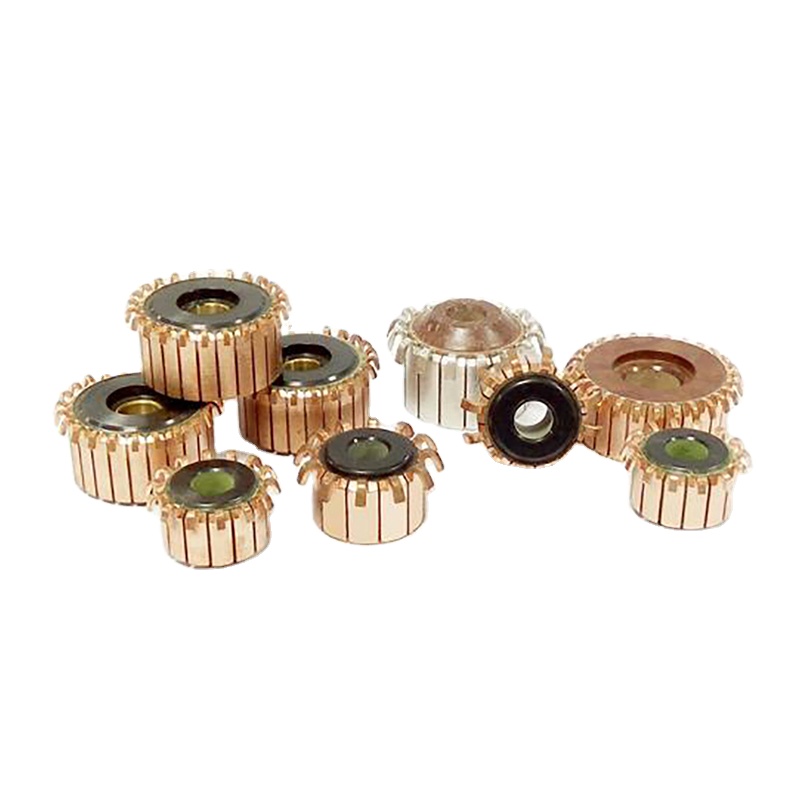
Factory Wholesale 12V Commutator for Industrial Motors
High-precision commutator modules (Model NDPJ-HXQ-03007) with carbon brush stator compatibility, optimized for continuous-duty portable machinery and automation actuators.
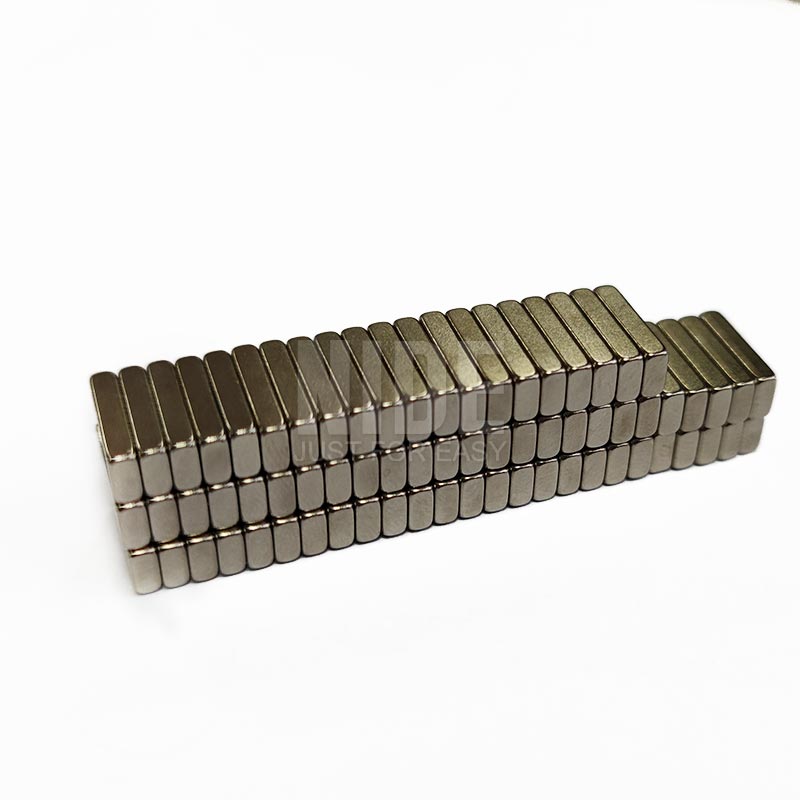
N52 Neodymium Rare Earth Block Magnet Industrial Accessories
Sintered NdFeB permanent magnetic segments designed for permanent magnet synchronous motors (PMSM) and BLDC stators operating in harsh high-temperature environments.
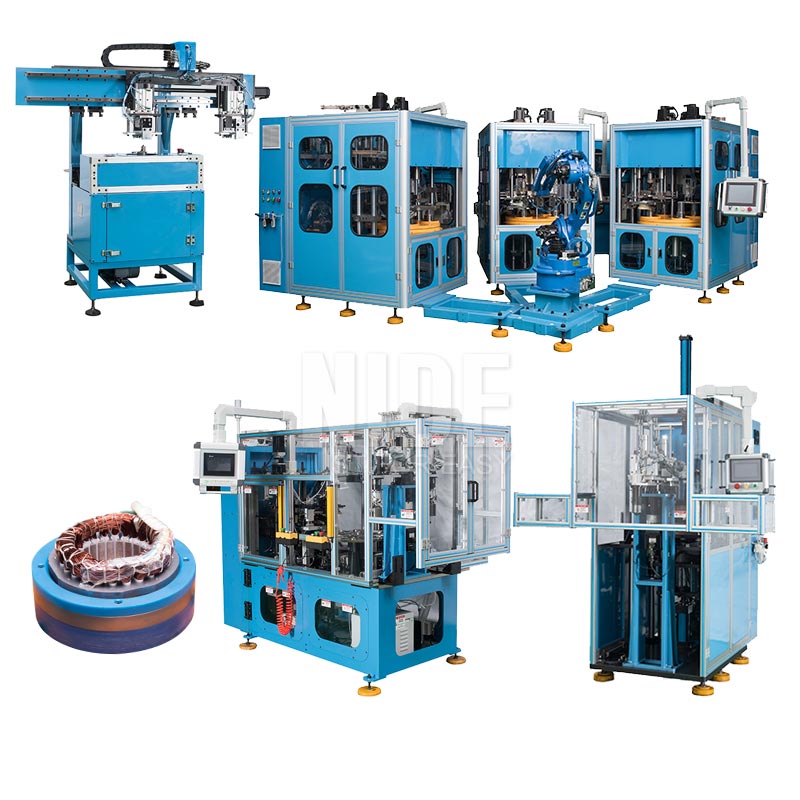
Non-standard Induction Motor Stator Production Assembly Line
Flexible, semi-to-fully automatic stator cell engineered for batch production of pump, fan, and gear motor stators with rapid changeover tooling fixtures.
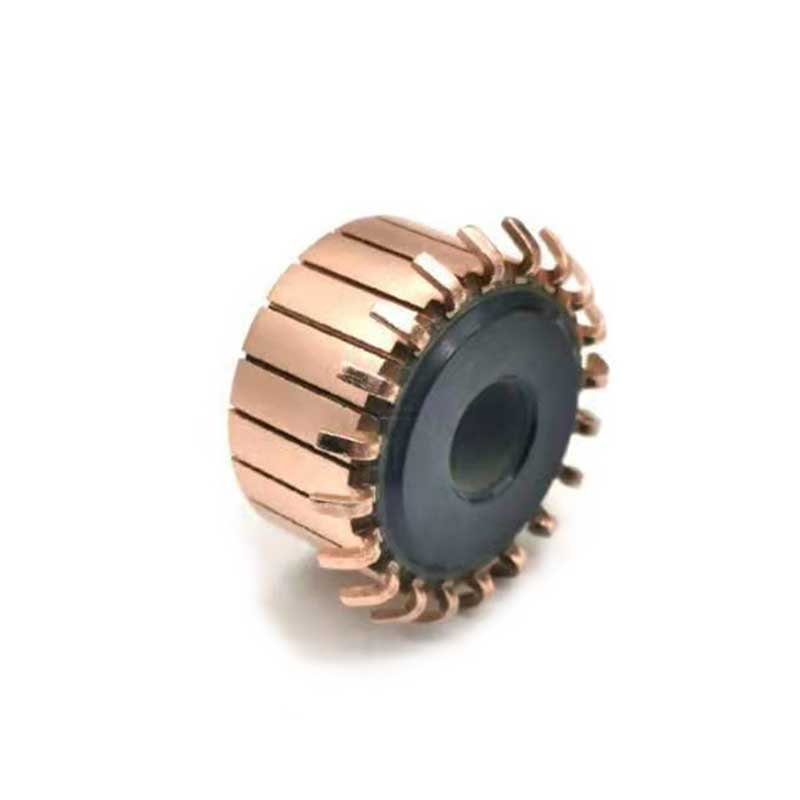
Radiator Cooling Fan Motor Armature Hook Commutator
Reinforced copper collector hook commutator components suited for automotive, commercial refrigeration, and auxiliary heat exchanger fan assembly lines.
Advanced Stator Winding Architectures: Enhancing Electromagnetic Density & Thermal Efficiency
In modern industrial drives, permanent magnet synchronous machines (PMSM), and electric mobility powertrains, the stator winding line is the definitive manufacturing station dictating operational efficiency, thermal resistance, and harmonic distortion. For plant directors, industrial automation engineers, and procurement specialists operating across the Republic of Ireland, selecting a stator manufacturing system requires evaluating slot fill factor, conductor geometry, automated dielectric integrity, and process cycle time.
1. Hairpin Flat-Wire vs. Random Wire Insertion Topology
While traditional stranded round-wire winding continues to dominate standard induction motors (IEC Frame sizes 71 through 200), high-efficiency applications across Ireland—especially within the burgeoning commercial vehicle electrification sector and pharmaceutical high-pressure pump lines—are rapidly pivoting to Hairpin (flat copper wire) winding technology.
Hairpin winding increases the magnetic slot copper fill factor from approximately 45%–48% (typical of round wire flyer/needle wound stators) to upwards of 70%–74%. This sharp reduction in internal resistance ($I^2R$ copper losses) directly facilitates compliance with the European Commission's Ecodesign Directive (EU 2019/1781) and empowers manufacturers to achieve IE4 (Super Premium Efficiency) and IE5 (Ultra Premium Efficiency) standards.
| Winding Parameter / Architecture | Traditional Flyer / Inserter Line | Continuous Needle Winding | Hairpin Flat-Wire Production Line |
|---|---|---|---|
| Target Stator Types | Single/3-Phase Induction Stators | BLDC, Outer-Rotor, Drone Motors | EV Traction, Heavy Duty Industrial Drives |
| Copper Slot Fill Factor | 42% – 50% | 50% – 58% | 68% – 75% |
| Thermal Conductivity ($W/m\cdot K$) | Moderate (inter-strand air voids) | Moderate to High | Exceptional (solid copper contact paths) |
| Dielectric Testing Standards | Surge <2.5 kV, Hi-Pot 1.8 kV | Surge <3.0 kV, Hi-Pot 2.0 kV | Surge >4.0 kV, Hi-Pot 3.0 kV + Partial Discharge |
| Automation Level | Semi-to-Fully Automatic (15–35s cycle) | Fully Automated CNC (20–45s cycle) | Turnkey Modular Line (40–80s tact time) |
2. Closed-Loop Servo Wire Tension Control & Enamel Protection
One of the primary causes of premature field failure in subsea, offshore, or high-humidity operating environments (such as Ireland's Atlantic coastal installations) is microscopic varnish cracking occurring during stator coil winding and coil insertion. When enamelled magnet wire is subjected to abrupt acceleration spikes or uncalibrated flyer friction, micro-fractures in the polyimide or polyamide-imide (PAI) outer coating compromise breakdown voltage thresholds.
Our stator winding machinery incorporates dynamic digital closed-loop tensioners governed by real-time PLC load cell feedback. By maintaining tension variances within ±1.5% of nominal across all winding speeds (up to 3,000 RPM on multi-axis spindles), the machine eliminates wire necking, retains constant conductor resistance throughout all phases, and guarantees insulation resistance exceeding 100 MΩ at 1,000 VDC during line-side quality verification.
Localized Application Scenarios Across Ireland's Advanced Sectors
Customized automation architectures tailored to Ireland's rapid growth in pharmaceutical cleanroom equipment, renewable generation, high-density computing HVAC, and agritech vehicle manufacturing.
Dublin & Kildare: Data Center Cooling Systems
Dublin is one of Europe's largest data center clusters. Cooling infrastructure mandates high-efficiency, variable-speed EC (Electronically Commutated) and BLDC fan motors capable of 24/7 continuous operation. Our CNC stator winding lines produce multi-pole stators engineered for low acoustic resonance, minimal cogging torque, and ultra-high continuous thermal resilience under variable cloud-load cycles.
HVAC & EC Fan MotorsGalway & Shannon: MedTech Precision Actuators
Ireland's premier medical technology cluster demands micron-level dimensional precision for miniature brushless DC motors used in surgical robotics, diagnostic centrifuge pumps, and dialysis fluid handling. Our micro-needle winding systems accommodate fine gauge wires (down to 0.04 mm diameter) with automated lamination bonding, eliminating vibration and electromagnetic interference (EMI).
Micro-BLDC Cleanroom DrivesCork & West Coast: Renewable Energy & Marine Drives
Ireland's offshore wind and tidal turbine initiatives necessitate ruggedized permanent magnet generators and auxiliary yaw/pitch induction drives. Our automated heavy-gauge coil insertion and multi-stage insulating lines provide class H and class N insulation processing with reinforced vacuum pressure impregnation (VPI) compatibility to withstand severe marine salt spray.
Offshore Wind & Marine PumpsMacro Trends Transforming Electric Motor Manufacturing in Ireland
Irish manufacturing facilities operate under one of the strictest carbon decarbonization mandates in the European Union, guided by the Climate Action Plan 2024 and the European Green Deal. For engineering leadership in Ireland, modernizing stator production infrastructure is not merely a capacity upgrade—it is a compliance and competitiveness imperative driven by four seismic shifts:
1. Mandatory Transition to IE4 & IE5 Efficiency Standards
Commission Regulation (EU) 2019/1781 established stringent eco-design benchmarks for electric motors and variable speed drives across Europe. Starting in July 2023, 75 kW to 200 kW three-phase induction motors manufactured or commissioned in the EU must meet IE4 Super Premium efficiency. Stator winding lines must therefore minimize conductor end-turn overhang to reduce idle copper weight and guarantee optimal magnetic flux distribution through computerized, servo-controlled coil nesting.
2. Industry 4.0, OPC-UA Architecture & Enterprise Traceability
Leading electro-mechanical engineering firms across Ireland rely on enterprise manufacturing execution systems (MES). Nakro & NIDE automated winding equipment is built upon open-standard PLC industrial networking—offering full support for Siemens S7-1500, Beckhoff TwinCAT, and Rockwell Allen-Bradley architectures. Every stator produced receives full serialization, logging winding tension signatures, surge test traces, stack clamping pressure, and copper weight to ensure seamless digital audit readiness.
3. Nearshoring and Supply Chain De-risking for Motor Sub-Assemblies
Disruptions in global logistics over recent years have spurred industrial OEMs in Ireland to bring high-value stator core winding and final electrical assembly in-house. Nakro delivers compact, flexible production cells with quick-change tooling modules, allowing plant managers to run multiple stator lamination diameters (from 40 mm up to 260 mm OD) on a single automated footprint with sub-20 minute changeover sequences.
Why Enterprise Manufacturers Choose Nakro / NIDE Equipment
Combining 14+ years of precision tooling design with turnkey European export engineering to de-risk capital investments for overseas buyers.
ISO 9001 Certified System
Audited quality framework verifying every component from raw alloy selection to the final automated run-off.
Bespoke Tooling & Fixtures
In-house CNC toolroom milling hardened tungsten carbide and alloy steel forming dies tailored to client CAD drawings.
One-Stop Component Supply
Direct availability of companion copper commutators, N52 magnets, precision shafts, and UL-certified insulation papers.
Turnkey Factory Trial Runs
Customer parts and copper wire are shipped to our plant for full-speed pre-shipment validation recorded on high-speed video.
Rigorous 6-Stage Export Quality Protocol
Incoming Metallurgical Audit
Verification of all structural tool steels, linear guides (THK/Hiwin), and pneumatic cylinders (SMC) against raw material certification sheets.
Micron Tooling Tolerance Test
CMM coordinate measuring verification of winding needles, wedge guides, and lacing fingers down to ±0.005 mm surface tolerances.
Electrical Cabinet & Safety Proof
Complete compliance check with EN 60204-1 safety standards, including dual-channel E-stops, interlocked safety guards, and clean harness routing.
Continuous Dry-Run Cycle
72-hour continuous kinematic trial run under maximum acceleration profiles to ensure thermal stability of servo motors and gearheads.
Live Wound Sample Validation
Stators wound on the line undergo 5.0 kV surge insulation tests, DC resistance balancing checks, and micro-ohm resistance verification.
Seaworthy Export Preservation
Vacuum foil barrier packaging with silica gel desiccants, heavy-duty anti-corrosion grease on precision rails, and solid fumigated timber crates.
Frequently Asked Questions for Irish Engineering Buyers
Clear, direct answers regarding European machine conformity, local electrical grid standards, lead times, and post-installation technical assistance.
1. Are your stator production lines fully CE certified for deployment in Ireland?
Yes. Every piece of equipment engineered for export to the Republic of Ireland is designed to comply with European Machinery Directive 2006/42/EC, Low Voltage Directive 2014/35/EU, and EMC Directive 2014/30/EU. All electrical assemblies adhere strictly to EN 60204-1. We supply the complete technical file, Declaration of Conformity (DoC), and dual-language operating manuals upon shipment.
2. What electrical supply and pneumatic standards are configured for Irish facilities?
Our control systems are wired natively for standard Irish grid specifications: 400V 3-phase, 230V single-phase at 50 Hz. We standardize on Siemens, Schneider, or ABB switchgear and SMC pneumatic fittings with standard European metric ports (G-thread/push-in), eliminating the need for step-down transformers or custom pneumatic adapters on your factory floor.
3. How do you facilitate Factory Acceptance Testing (FAT) for buyers based in Ireland?
Clients can choose between an in-person Factory Acceptance Test (FAT) at our 30,000 m² Ningbo facility or an interactive digital FAT conducted over high-definition multi-camera livestream. During FAT, we run your supplied stator laminations, wire, and slot insulation under actual operating speeds, performing real-time CMM measurement of coil dimensions and complete electrical surge tests.
4. What are typical delivery lead times and customs logistics to Irish ports?
Standard standalone coil winding or inserting machines typically require 45 to 60 days build time, while fully automated multi-station stator lines require 90 to 120 days. Shipments are handled via CIF or DDP terms directly to the Port of Dublin, Port of Cork, or Shannon Airport for urgent tooling, utilizing seaworthy vacuum-sealed crates with shock and tilt monitoring indicators.
5. How is on-site commissioning and emergency technical support provided?
We provide two flexible commissioning models. For automated lines, our senior field commissioning engineers travel to your Irish facility to supervise mechanical alignment, line integration, and operator training. Furthermore, every machine is equipped with secure VPN industrial routers enabling our software engineering team to perform remote diagnostics within two hours of an inquiry.
6. Can your equipment handle custom non-standard stator geometries and wire sizes?
Yes. Over 70% of our production output involves custom tooling. Whether your project involves skewed slot architectures, asymmetric multi-speed configurations, heavy rectangular copper wire, or ultra-thin slot insulation papers (Nomex, DMD, Kapton), our R&D engineering team designs and manufactures bespoke winding nozzles, inserting blades, and lacing guides tailored to your CAD files.
Accelerate Your Stator Line Automation Project
Share your motor drawings, annual volume targets, and slot dimensions. Our automation specialists will prepare a comprehensive engineering proposal, layout drawing, and cycle time analysis within 24 hours.
