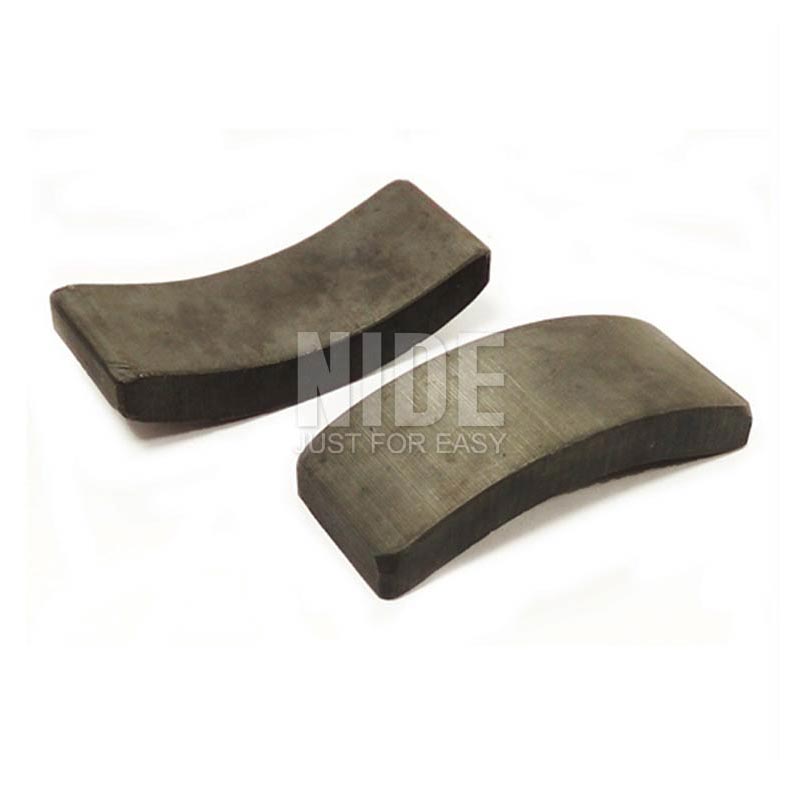
NIDE Brand 12-220V DC Segment Ferrite Magnet Arc Shape
- High remanence (Br) & coercive force (Hcb)
- Precision arc profile for pump & drive motors
- Optimized for low cogging torque output
Explore our core turnkey winding equipment, automated assembly lines, and high-spec DC/servo motor components configured for modern European production facilities.
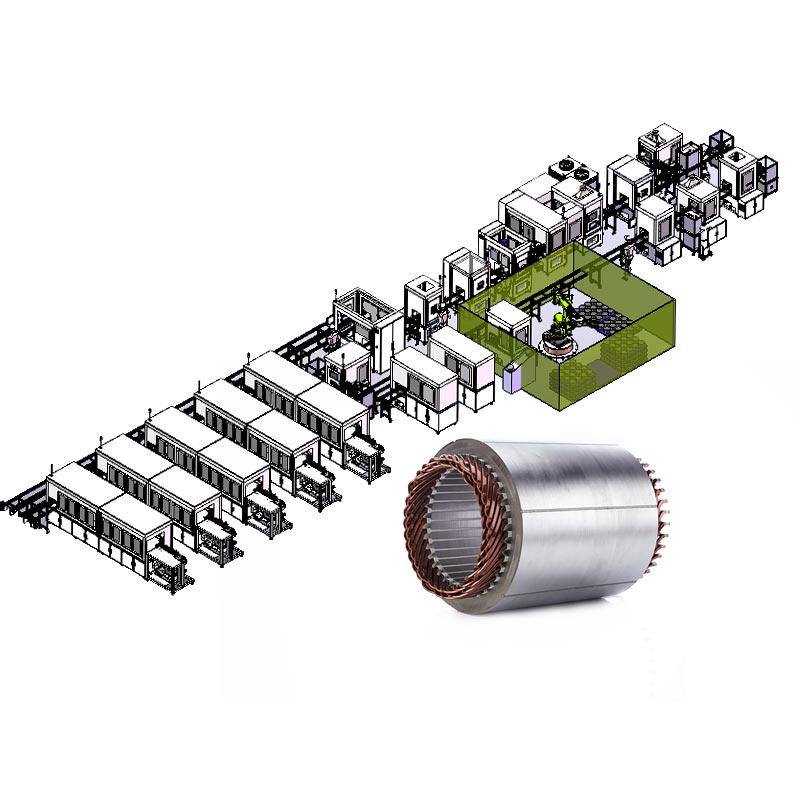
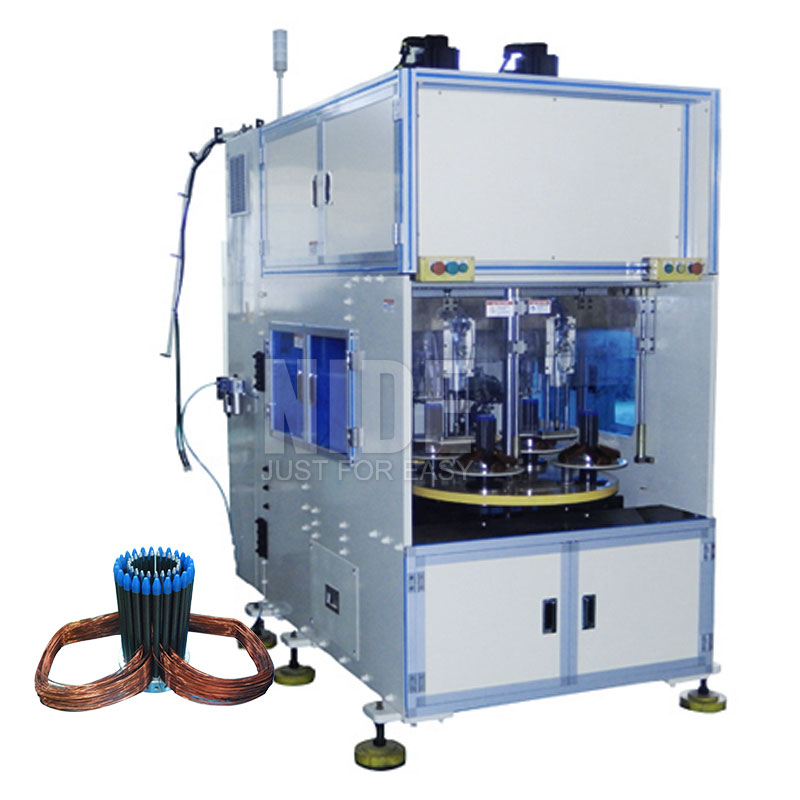
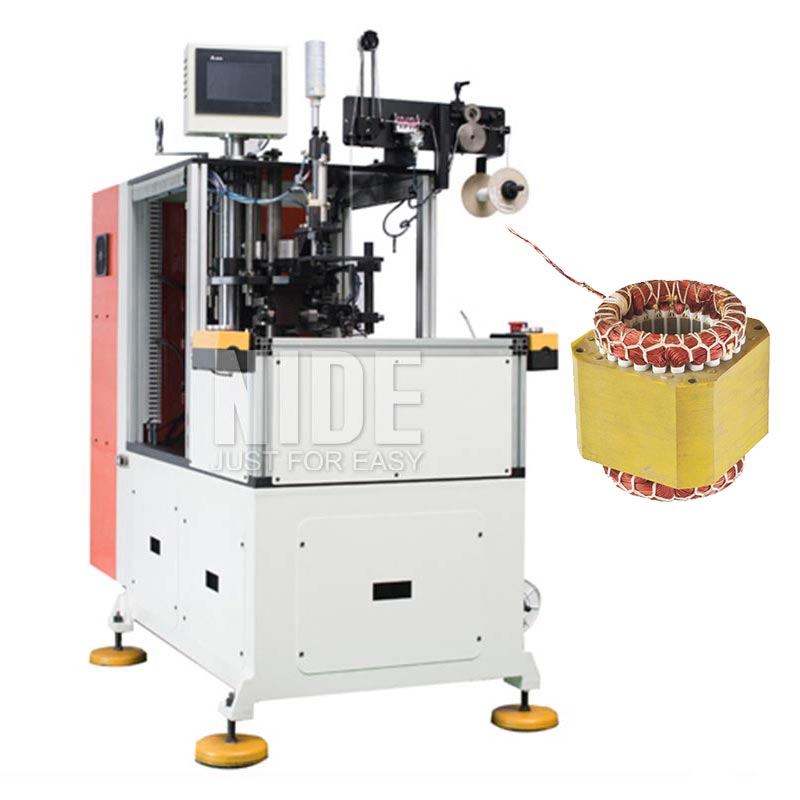
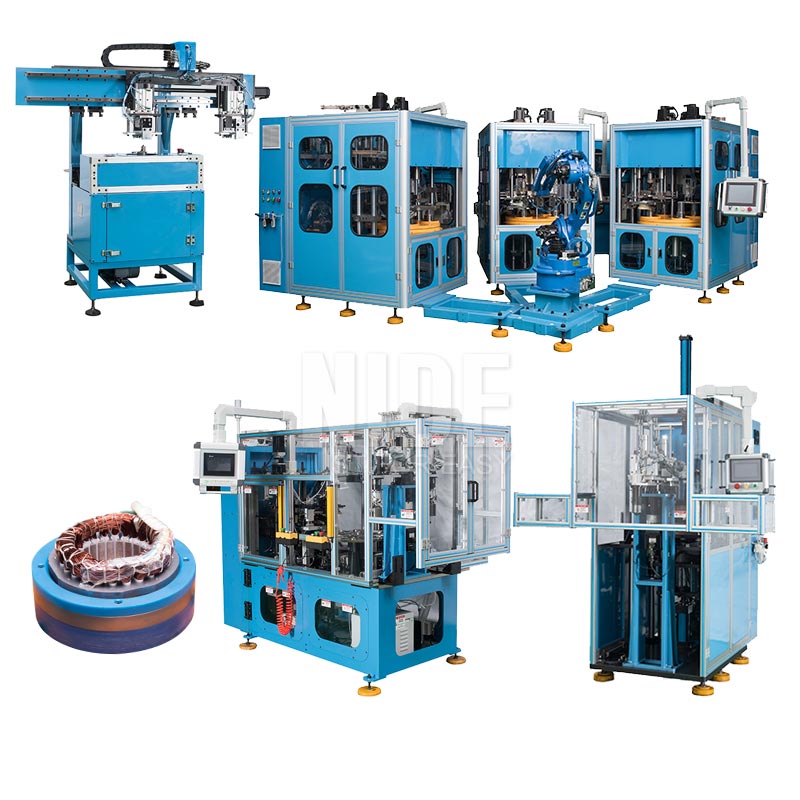
A comprehensive examination of synchronous AC/DC servo motor manufacturing processes, slot-filling techniques, dynamic magnetic balancing, and end-of-line verification systems.
Modern servo motor manufacturing demands extreme repeatable accuracy, minimal electromagnetic vibration, and exceptional thermal dissipating capability. Whether building permanent magnet synchronous motors (PMSM), brushless AC servos, or low-inertia robotic drive units, manufacturers require turnkey lines that eliminate manual assembly variances. In the competitive manufacturing landscapes of Western Europe, particularly around industrial strongholds such as Esch-sur-Alzette, automation lines must deliver high takt rates, 100% inline process traceability, and swift retooling capability between frame sizes.
Engineering Core Principle: A servo motor’s dynamic response depends directly on its winding symmetry, slot copper fill factor, air-gap uniformity, and dynamic rotor balance. Nakro’s automated lines are engineered with servo-driven tensioners and optical laser validation at each critical milestone to safeguard strict IEC and DIN motor standards.
Our comprehensive automated servo motor production lines feature modular workstations connected by heavy-duty palletized transfer conveyors, AGV docking ports, and centralized SCADA monitoring. The standard industrial flow encompasses three synchronized manufacturing clusters:
Automated slot insulation insertion using precision B-stage Nomex/DMD paper, followed by high-speed multi-axis CNC needle winding or segmented tooth winding. Includes end-turn forming, dual-end lacing, copper terminal laser welding, and automated trickle resin impregnation.
Needle & Hairpin OptionsShaft knurling and core press-fitting under closed-loop load-displacement monitoring. Automated rare-earth neodymium (NdFeB) magnet sorting, high-viscosity epoxy dispensing, robotic magnet insertion, carbon fiber banding, and dual-plane ISO 1940 Grade G1.0 dynamic balancing.
G1.0 Dynamic BalancingAutomated housing thermal shrink insertion, robotic bearing press-fit, high-resolution optical/magnetic encoder alignment, brake integration, terminal box bolting with torque-angle tracking, and complete automated End-of-Line electrical and vibration testing.
Full EOL TraceabilitySelecting the optimal stator assembly topology directly impacts capital outlay, cycle times, and product operational efficiency. Below is an engineering comparison matrix designed to guide procurement teams:
| Winding Topology | Copper Slot Fill (%) | Average Cycle Time | Tooling Flexibility | Ideal Application Sector |
|---|---|---|---|---|
| CNC Multi-Axis Needle Winding | 42% – 52% | 45 – 90 sec / stator | High (Quick software change) | Standard industrial servos, CNC feed drives, AGV traction motors |
| Segmented Stator Tooth Winding | 55% – 64% | 20 – 40 sec / set | Medium (Requires tooth tooling) | High-torque robotic joints, collaborative cobot actuators, aerospace drives |
| Continuous Hairpin (Flat Wire) | 68% – 76% | 30 – 60 sec / stator | Dedicated (High-volume dedicated) | Electric mobility, automotive auxiliary steering, high-output industrial pumps |
| Flyer Rotor Winding (DC Armature) | 40% – 48% | 15 – 35 sec / rotor | High (Modular collets) | Brushed DC servomotors, power tools, automotive seat & cooling actuators |
How cutting-edge servo manufacturing solutions fuel industrial transformation across the Belval research cluster, Luxembourg’s steel-to-technology shift, and cross-border European automation.
The city of Esch-sur-Alzette represents one of Europe's most remarkable industrial transformations. Historically the heart of Luxembourg’s iron and steel manufacturing basin in the Terres Rouges, the region has reinvented itself into an advanced high-tech corridor anchored by the Belval Innovation Campus, the Luxembourg Institute of Science and Technology (LIST), and modern business incubators like Technoport. Today, manufacturing demands in the Esch-sur-Alzette market are characterized by automated high-value engineering, specialized mechanical hardware, and precision electromechanical components.
With research initiatives concentrated around the Belval science valley, regional machinery makers develop collaborative robots (cobots), automated guided vehicles (AGVs), and autonomous mobile robots (AMRs). These require frameless torque motors and hollow-shaft brushless DC servos manufactured with exceptional concentricity and zero-backlash feedback.
High-Torque DensitySituated within the Greater Saar-Lor-Lux Region, manufacturing plants frequently supply tier-1 automotive clusters in Germany, France, and Belgium. Servo assembly lines produce mission-critical electromechanical actuators for steer-by-wire, brake-by-wire, active suspension, and precision thermal management valves.
Automotive IATF ComplianceEsch-sur-Alzette’s heritage steel producers (e.g., ArcelorMittal facilities in Belval and Differdange nearby) have transitioned toward digitized rolling mills and green steel electric arc operations. Here, heavy-duty industrial servo actuators operate ladle gates, hydraulic valve modulators, and robotic slag handlers requiring extreme heat tolerance.
Harsh Environment ActuationAn in-depth review of European eco-design regulations, digital twin simulation, and lights-out automated production strategies dominating current procurement cycles.
As Luxembourg strengthens its national positioning as a leader in Industry 4.0 and green circular technology, industrial motor manufacturers face a dual transformation: elevating energy conversion efficiency while digitizing every step of the physical assembly process. Several dominant market drivers define modern equipment requests from buyers in Esch-sur-Alzette:
Under the European Union Ecodesign Directives (EU 2019/1781 and Lot 30 mandates), traditional induction motors are being rapidly replaced by permanent magnet synchronous motors (PMSM) and synchronous reluctance drives. These motor designs minimize rotor I²R losses, yielding operational efficiencies exceeding 96%.
To manufacture these high-efficiency motors reliably, assembly lines must maintain micro-scale air-gap tolerances (often under 0.35mm ± 0.02mm) and achieve flawless slot insulation to protect against inverter-fed voltage spikes (dV/dt) from modern Silicon Carbide (SiC) and Gallium Nitride (GaN) motor controllers.
Luxembourg factories emphasize lean staffing and interconnected production floors. Every Nakro assembly module comes standard with Beckhoff or Siemens S7-1500 PLC architectures equipped with native OPC UA industrial protocols.
Real-time station telemetry—including winding tension force curves, press-fit stroke signatures, welding laser energy output, and rotor balancing grams—are exported to plant-wide MES systems for seamless batch tracing and preventive tool lifecycle warnings.
Get CatalogCombining over 14 years of dedicated electromechanical machinery design with an integrated motor components supply chain.
Founded in 2010 in Ningbo, Zhejiang—one of the world's preeminent epicenters for precision electric machinery production—Ningbo Nakro Intelligent Equipment Co., Ltd. has grown to support motor manufacturers across more than 50 countries. Backed by a manufacturing footprint exceeding 30,000 to 50,000 square meters and an ISO 9001 certified quality management infrastructure, we deliver unique advantages to overseas buyers seeking competitive equipment without compromising technical rigor.
We do not ship based on dry simulations. Prior to export containerization, your actual laminations, magnet wire, commutators, and shafts are utilized to run continuous trial batches in our workshop. High-resolution multi-angle video logs, parameter trace files, and wound stator samples are submitted for formal engineering sign-off.
Zero-Risk CommissioningA winding machine is only as good as its custom tooling. Our in-house precision CNC machining centers manufacture tungsten carbide wire nozzles, inserting blades, and coil-forming dies matched to your specific stator stack height, slot skew angle, and wire gauge (0.10mm up to 2.2mm flat/round).
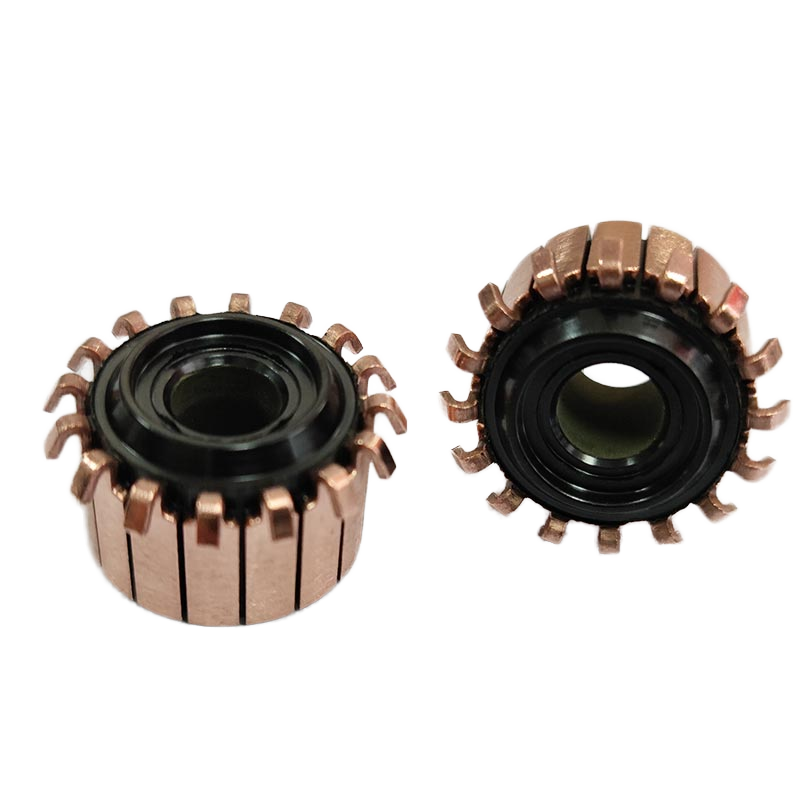
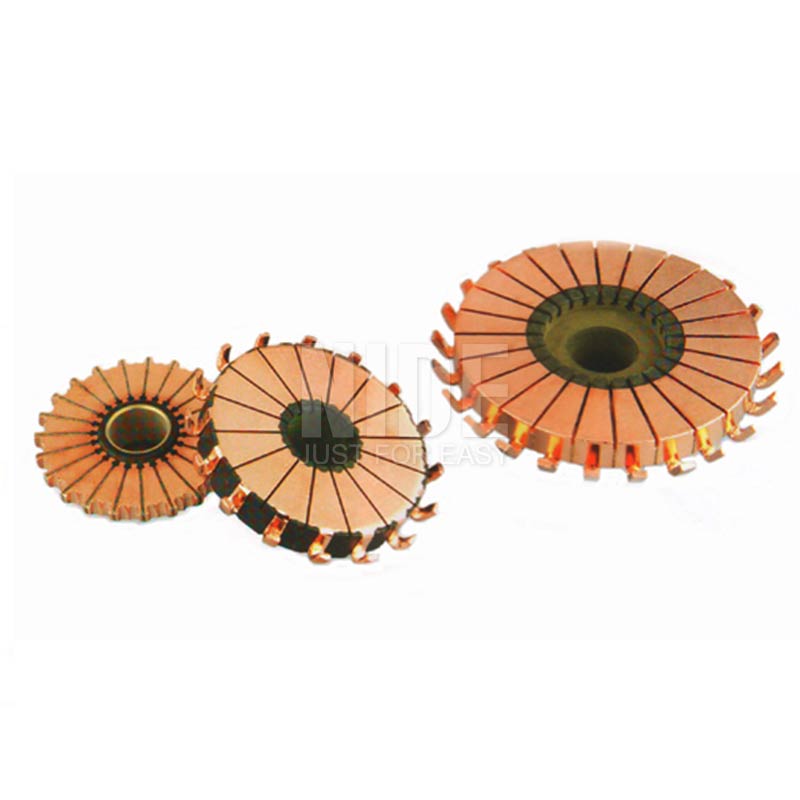
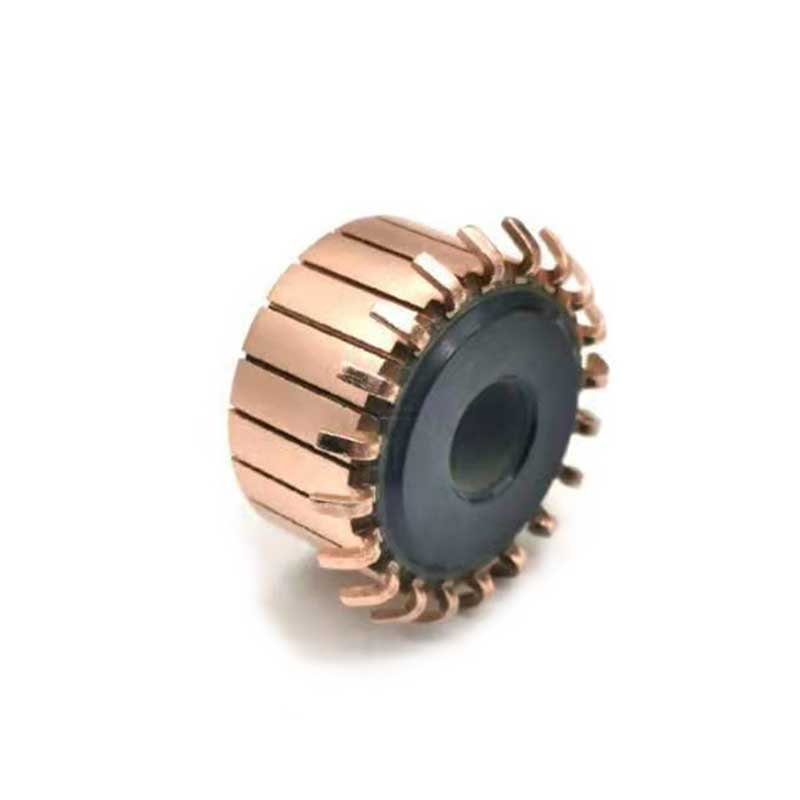
In-House CNC ToolingUnlike standard machine tool builders who only provide mechanical frames, Nakro supplies matching motor components: hook commutators, planar commutators, sintered NdFeB/ferrite magnets, deep groove ball bearings, and specialized slot insulation paper. One supplier oversees mechanical tolerances across both machine and raw material.
One-Stop Supply ChainClear, direct technical answers addressing CE compliance, logistics to Luxembourg, factory acceptance tests, tooling changeovers, and lifecycle service.
Yes. All machines and automated assembly lines engineered for deployment in Esch-sur-Alzette and the European Union adhere strictly to the Machinery Directive 2006/42/EC, Low Voltage Directive 2014/35/EU, and Electromagnetic Compatibility (EMC) Directive 2014/30/EU. Control cabinets are built using CE-marked components (Siemens, Schneider Electric, SMC pneumatics), dual-channel emergency safety circuits, interlocked safety doors, optical light curtains (Category 4 / PLe according to ISO 13849-1), and clear bilingual (English/French/German) HMI documentation.
We provide FOB Ningbo/Shanghai, CFR, or CIF delivery terms to major European gateways. For consignments heading to Esch-sur-Alzette, standard maritime freight routes ship via Ningbo Port to the ports of Antwerp (Belgium) or Rotterdam (Netherlands), with an average transit time of 28 to 35 days. From Antwerp/Rotterdam, road haulage directly into Southern Luxembourg takes approximately 48 hours. Equipment is packed in seaworthy, vacuum-sealed barrier foil with desiccant agents inside reinforced, heat-treated ISPM-15 compliant timber cases.
Our modular tooling system uses quick-release clamping pins, pre-aligned locating dowels, and digitized recipe selection on the HMI. For changing stack heights within the same stator frame, changeover requires zero mechanical disassembly—simply load the new software parameter recipe (less than 2 minutes). For a complete frame size shift (e.g., swapping needle winding collets, insulation insertion guides, and lacing cradles from Frame 60 to Frame 80/130), a trained technician requires approximately 25 to 45 minutes.
FAT is conducted at our manufacturing facility before shipment. The customer can send an engineering delegation or join our engineers via secure multi-camera live video. We run continuous batches using your provided laminations and wire, measuring cycle time (takt time), slot fill factor, wire tension stability, and electrical performance (insulation resistance >500MΩ, Hipot test at 1800V-2500V, surge test pulse comparison). Once delivered in Luxembourg, our engineers or localized European after-sales partners conduct on-site SAT, line levelling, utility hookup, and operator certification.
Yes. We build both high-density needle winding systems (ideal for standard servo stators, drone motors, and multi-pole frameless torque motors) and fully automated continuous hairpin stator lines. Our hairpin lines handle wire insulation laser stripping, 2D/3D hairpin CNC forming, paper insertion, robotic basket insertion, crown twisting, and high-frequency fiber laser welding with real-time weld pool monitoring.
All automated lines come equipped with encrypted industrial VPN routers (eWON/Secomea) allowing our software engineering specialists to troubleshoot PLC logic, servo driver tuning, or motion control bugs remotely within 2 to 4 hours of notification. Common wear parts (winding nozzles, cutter blades, gripper fingers, pneumatic seals) are standardized globally using brands like Festo, SMC, THK, and Misumi, while custom CNC components are kept in stock or express air-freighted via DHL/FedEx within 48 to 72 hours.
Partial discharge usually occurs due to micro-scratches on enamel wire coatings or air voids in the slot insulation. Our lines mitigate this through: (1) precision tungsten-carbide polished wire guiding nozzles with roller bearings to keep tension below 15% of copper elongation yield; (2) automated phase insulation separators; and (3) integrated End-of-Line testing featuring high-frequency surge testing and Partial Discharge Inception Voltage (PDIV) testing in compliance with IEC 60034-18-41.
Submit your stator drawings, lamination stack geometry, and target annual volume. Our sales engineering team will provide a tailored station layout, takt-time calculation, and formal equipment quotation within 24 hours.
Get Catalog