Featured Motor Production Equipment & High-Tolerance Parts
Direct manufacturer supply of intelligent stator winding lines, high-speed armature winders, double-end lacing systems, rotor die-casting machinery, and precision electro-mechanical commutators configured to JIS and IEC standards.
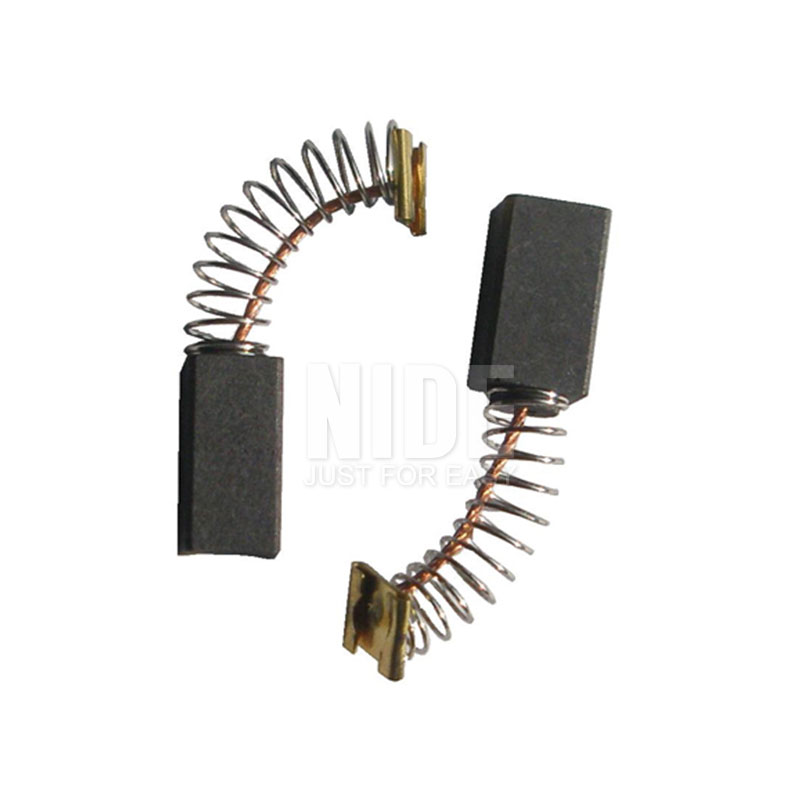
High Precision DC Motor Magnet Alternator Carbon Brushes NIDE Model NDPJ-TS-7 CE Certified
Low-wear, electro-graphite and metal-graphite carbon brush assemblies engineered for automotive alternators, marine DC drives, and high-duty starter motors requiring minimal sparking and thermal stability.
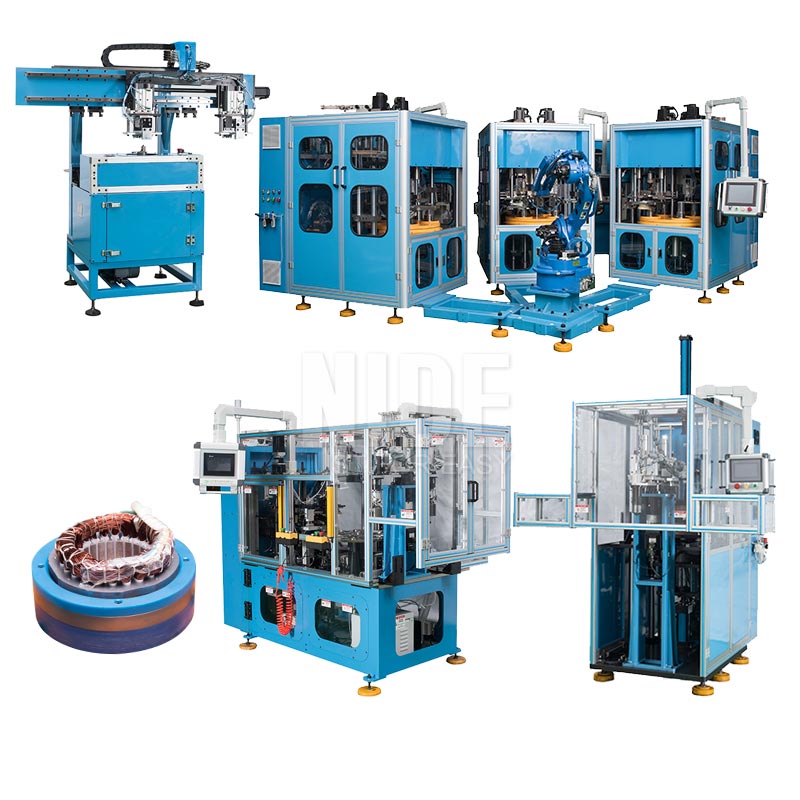
Electric Induction Motor Stator Manufacturing Machine Production Assembly Line PLC Core
Flexible non-standard modular stator fabrication line with programmable logic control, multi-slot paper inserting, automated copper winding, and intermediate forming for pumps, compressors, and fans.
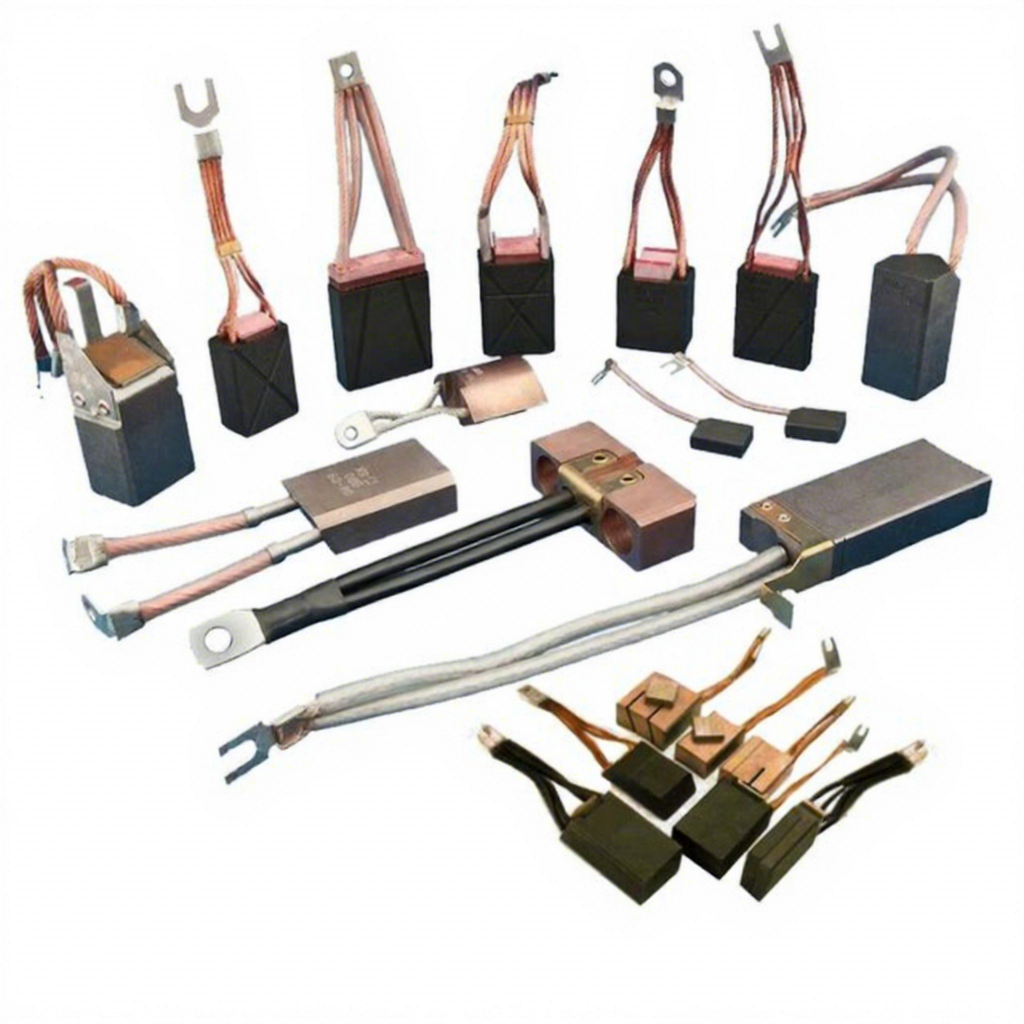
Miniature Alternator Carbon Brush AC Starter Motor Accessories 80-120V Nide NDPJ-TS-11
High-conductivity miniature carbon contact assemblies rated for 80-120V AC/DC systems, offering high copper content for micro-motors, precision tooling, and marine deck electrical controls.

Rotor Winding Equipment PLC Controlled Armature Winder Machine Core Engine Components
High-speed double-flyer armature winding equipment with multi-axis servo tension control, designed for automotive starter rotors, power tool motors, and industrial DC brush servomotors.
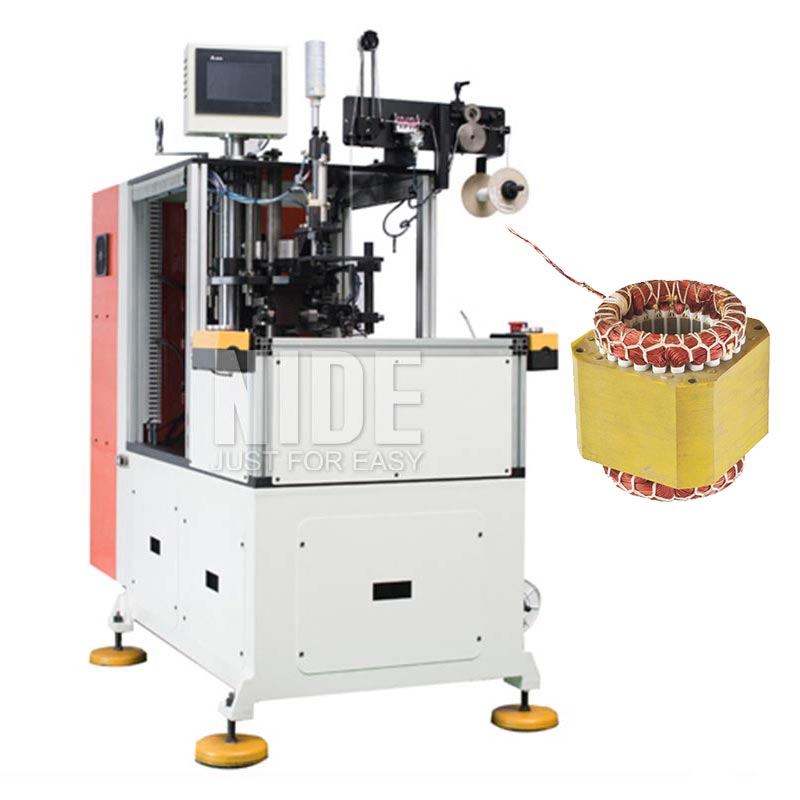
Automatic Double Ends Stator Coil Lacing Machine NIDE Brand Pump Induction Motor 10kW
Synchronous bilateral coil tying station equipped with dual needle lacing heads, tensioned binding twine management, and programmable pitch control for heavy industrial pump and HVAC stators.

Automatic Armature Rotor Hot Chamber Die Casting Machine Aluminum Engine Motor Core
Precision hot-chamber aluminum injection casting equipment for squirrel-cage induction rotors. Ensures porosity-free conductor bars, minimal resistance imbalance, and high mechanical rigidity.
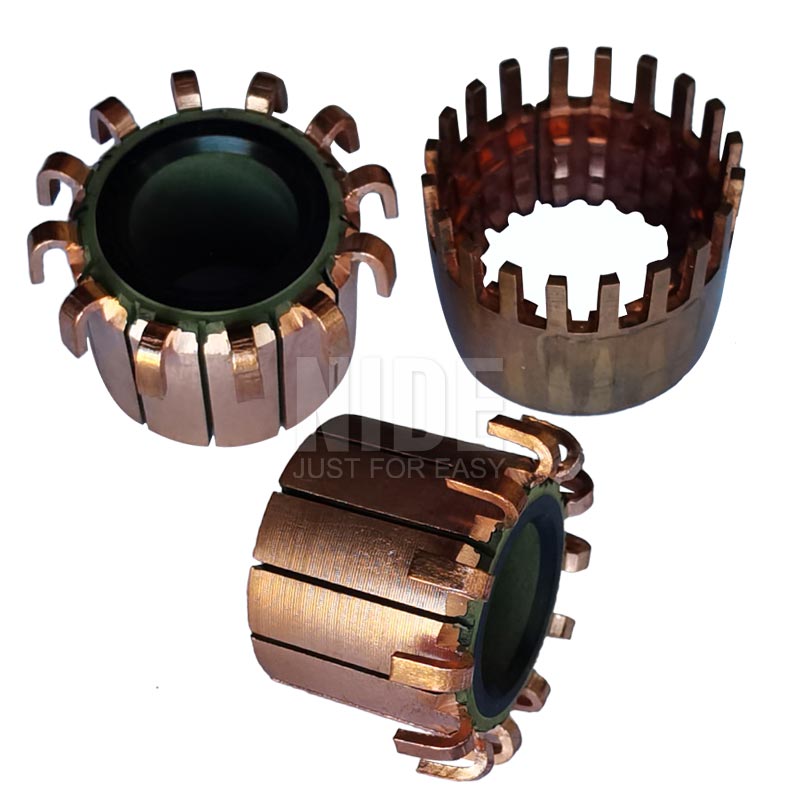
12-Segment Automobile Wiper Motor Hook Commutator NDPJ-HXQ-174 CCC Certified
Precision molded-shell copper hook commutator offering high thermal endurance, silver-bearing copper segments for low voltage drop, and reinforced mica insulation tailored for automotive actuators.
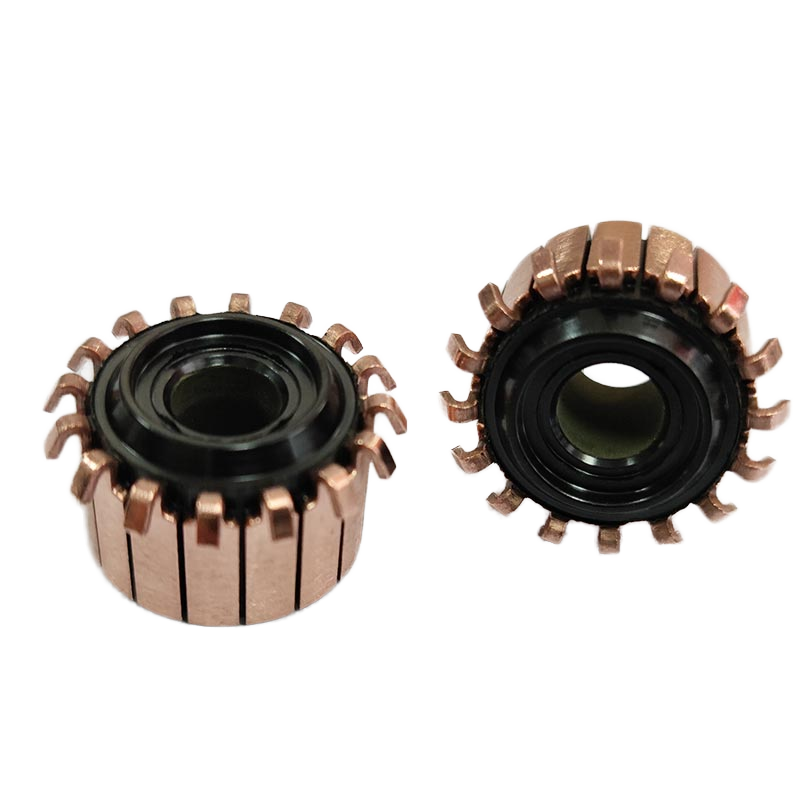
Customized Commutator Armature Copper Hook Collector for DC Motor Fan NDPJ-HXQ-871A
Heavy-duty collector ring and hook armature sub-assembly engineered for automotive cooling fans, industrial blowers, and high-torque fractional horsepower PMDC motor assemblies.
Engineering Motor Production Infrastructure in Kobe & The Hanshin Economic Belt
Kobe stands as an indispensable nexus of Japanese high-tier heavy machinery, precision robotics, maritime engineering, and advanced rail transit traction. Situated centrally within the Hanshin Industrial Region (阪神工業地帯), industrial operations across Hyogo Prefecture demand electro-mechanical production lines that conform to the highest metrics of repeatability, micro-inch tolerances, low harmonic vibration, and continuous operational longevity. As global powertrain architecture transitions from traditional hydraulic systems toward compact permanent magnet synchronous motors (PMSM), high-efficiency brushless DC (BLDC) architectures, and hairpin stator windings, factories throughout Kobe require comprehensive equipment suppliers capable of synchronizing custom hardware tooling with automated telemetry.
Manufacturing an electric motor is no longer a collection of discrete, isolated procedures. Modern manufacturing within Kansai requires a unified holistic workflow: from lamination stacking and high-dielectric slot insulation paper insertion, to computer-controlled multi-flyer or needle coil winding, precision commutator fusing, dynamic dual-plane balancing, and comprehensive end-of-line (EOL) electrical quality diagnostics. Engineering procurement teams in Kobe prioritize suppliers who not only deliver standalone machinery, but who provide total technical responsibility—encompassing tooling matrices, copper slot fill optimization (reaching above 78% in advanced configurations), and compliance with Japanese Industrial Standards (JIS C 4034 and JIS C 4212) alongside International Electrotechnical Commission (IEC 60034-30-1) efficiency tiers.
Full-Cycle Motor Manufacturing Stations Configured for Kobe Factories
Our automated lines integrate modular work cells that reduce direct operator touch-points while maintaining real-time SPC quality tracking throughout every assembly sequence.
1. Stator Core Insulation & Slot Cell Inserting
Automated uncoiling, cutting, cuffing, and micro-forming of multi-layer DMD, Nomex, or polyester insulation films. High-speed multi-station indexing allows complete slot cell insertion within 0.35 to 0.75 seconds per slot, completely protecting copper magnet wire from lamination edge shear during subsequent winding operations.
2. High-Precision Coil Winding & Wedge Insertion
Configured for inner-stator needle winding, multi-spindle flyer winding, or continuous outer-rotor hub winding. Integrated electronic closed-loop tension controllers guarantee zero enamel scratching and precise wire stratification, pairing with simultaneous automatic wedge pushers for induction and BLDC assemblies.
3. Intermediate Forming & Dual-End Coil Lacing
Hydraulic or servo-driven mechanical expansion mandrels form end-turns to exact clearance dimensions required for compact motor housings. Synchronous bilateral double-end lacing machines apply high-tension binding twine across every slot or alternate patterns, eliminating coil migration under thermal vibration.
4. Armature Shaft Pressing & Commutator Fusing
Servo-controlled load-cell monitoring records press-fit displacement and tonnage curves for shaft-to-lamination and commutator positioning. High-frequency inverter hot-staking (hot-chamber fusing) welds copper magnet wire leads to commutator hooks with controlled electrode resistance, preventing cold-solder cold joints.
5. Precision Rotor Diamond Turning & Dual-Plane Balancing
Diamond tool mica undercutting and commutator surface finishing achieves surface roughness below Ra 0.2 μm and total radial runout under 0.003 mm. Dynamic balancing units automatically mill or drill counter-balance weights across dual correction planes, bringing residual imbalance strictly within ISO 1940 G1.0 standards.
6. End-of-Line (EOL) Electrical & Dielectric Diagnostics
100% automated electrical screening cell testing DC winding resistance (Kelvin four-wire measurement), AC/DC Hi-Pot dielectric insulation (up to 5kV), megohmmeter insulation resistance, high-frequency impulse surge degradation, and rotor back-EMF waveform symmetry before automated boxing or palletizing.
Comparison: Traditional Manual Cells vs. Automated Turnkey Production Lines
Quantitative benchmarking reflecting operational metrics for industrial motor manufacturers in the Hanshin industrial basin.
| Performance / Architecture Metric | Legacy Semi-Manual Shop Floor | Nakro Turnkey Automated Assembly Line | Kobe Industrial Target Benchmark |
|---|---|---|---|
| Copper Slot Fill Factor | 52% – 62% maximum | 72% – 81% (Needle / Inserter) | JIS C 4212 Super-High Efficiency |
| Cycle Time (Stator Coil Insertion) | 65 – 120 seconds per core | 12 – 22 seconds per core | High-Volume Continuous Flow |
| Winding Tension Variance | ±12% (Friction tensioner) | ±1.5% (Closed-loop servo feedback) | Zero Enamel Layer Micro-Fracture |
| Commutator Radial Runout (TIR) | 0.015 – 0.025 mm | ≤ 0.003 mm (Diamond tooling) | Ultra-Low Electrical Brush Sparking |
| Residual Rotor Imbalance Grade | ISO 1940 G2.5 – G6.3 | ISO 1940 G1.0 – G0.4 | Sub-Micron Vibration for Precision Servos |
| Quality Control Data Architecture | Manual paper log sheets | OPC-UA / MQTT MES Cloud Telemetry | Smart Factory Industry 4.0 Conformance |
| Labor Allocation Per Line Shift | 14 – 22 Operators | 2 – 4 Supervisory Technicians | Overcomes Japan's Skilled Labor Shortages |
Localized Application Sectors Driving Motor Demand in Kobe
Our specialized equipment configurations align precisely with the manufacturing demands of Kobe’s world-renowned industrial clusters.
Maritime Propulsion & Harbor Auxiliary Motors
Kobe’s historic maritime shipyards and harbor equipment developers require robust 3-phase induction and PM propulsion stators. Our lines support heavy wire gauges, dual-layer slot insulation, and vacuum-pressure impregnation (VPI) compatibility, ensuring saltwater corrosion resistance and high torque density for winches, bow thrusters, and subsea pump motors.
High-Speed Rolling Stock & Actuators
Serving Tier-1 and Tier-2 suppliers to the Shinkansen and commercial rail transit manufacturers in the Kansai corridor. Equipment produces heavy-duty traction blower stators, door actuation motors, pantograph linear drives, and braking servo components requiring extreme surge voltage resistance and fail-safe copper fusing.
Precision Robotics & Industrial Servomotors
Kobe is a global stronghold for articulated industrial robotic arms. Our needle winding machinery produces segmented and concentrated-pole BLDC and frameless torque stators with exceptionally clean end-turns, minimal cogging torque, and ultra-high dynamic balancing for smooth micro-radian robotic positional control.
Next-Gen Hydrogen & Fuel Cell Auxiliary Systems
As Kobe pioneers the international Hydrogen Supply Chain / Super Eco-Town initiatives, local plants demand clean-room compatible automated lines to build ultra-high-speed centrifugal fuel cell air compressors (operating above 80,000 RPM) and cryogenic liquid hydrogen pump motors with zero oil or particulate contamination.
Industrial HVAC & Commercial Scroll Compressors
Meeting aggressive Japanese IE4 and IE5 super-premium efficiency energy regulations. Nakro automatic stator coil inserting lines produce stators with uniform slot wedging and balanced phase windings, lowering internal eddy current losses and acoustic noise across commercial heating, chilling, and refrigeration units.
Light EV, E-Bike & Micro-Mobility Wheel Motors
Fully integrated assembly lines specialized for outer-rotor brushless wheel hub motors. Encompasses automated multi-strand stator coil winding, Neodymium permanent magnet automated insertion into rotor shells with structural epoxy dispensing, automated axle press-fitting, and full load Hall-sensor timing verification.
Key Technological Trends Transforming Motor Manufacturing in Kobe
The manufacturing ecosystem of Kobe and the broader Kansai industrial basin is experiencing a rapid paradigm shift driven by decarbonization mandates, the shrinking availability of skilled domestic technical labor, and the electrification of mechanical drive trains. Forward-thinking Japanese factories are actively modernizing their production assets around three central axes:
1. Hairpin Flat Wire Stator Technology: While round-wire winding continues to dominate small-scale fractional horsepower motors, automotive traction and industrial pump motors manufactured in Kobe are migrating heavily toward rectangular copper hairpin stator architectures. Hairpin construction elevates the copper slot fill factor from traditional 45–55% levels up to an astounding 75–85%, vastly improving heat dissipation through the lamination stack and reducing motor axial length by up to 25%. Turnkey equipment must feature high-precision CNC hairpin bending, 2D/3D optical laser stripping of enamel insulation, automated slot insertion baskets, crown ring twist tooling, and automated robotic 3D vision TIG or fiber laser welding.
2. Edge Computing, Machine Vision & Digital Twin Telemetry: Kobe's sophisticated engineering directors increasingly demand that assembly lines communicate directly via standardized Industrial Ethernet protocols (CC-Link IE, EtherCAT, and OPC-UA). Every press station must store load-versus-displacement time-series data; every winding spindle records micro-second wire tension anomalies; and high-speed CMOS line-scan cameras inspect commutator hook welds and slot wedge placements down to the micron. This comprehensive data stream enables predictive maintenance and satisfies strict automotive PPAP level 3 audit trails.
3. Ultra-Flexible Quick-Change Tooling for High-Mix Low-Volume (HMLV): Unlike mass-production facilities that produce a single motor reference for years, Japanese specialized factories frequently produce diverse motor variations on a single production floor. Consequently, our equipment engineering prioritizes standardized quick-change chucks, pneumatic clamping, modular tooling pallets, and recipes stored within the PLC touch-screen HMI that allow complete production changeover between differing stack heights and slot geometries in under 20 minutes.
Why Japanese Engineering Operations Partner with Nakro
Combining extensive manufacturing infrastructure, international ISO 9001 compliance, and full-spectrum component synergy to guarantee reliable motor production.
ISO 9001 Certified Quality Ecosystem
Operating across an expansive 30,000+ square meter manufacturing campus, every manufacturing phase—from precision five-axis CNC machining of winding nozzles to electrical cabinet wiring—is governed by stringent ISO 9001 quality management systems, ensuring total build fidelity and CE-compliant safety circuits.
13+ Years Machine Export Experience
With equipment running reliably across more than 50 countries worldwide, we understand international logistics, Japanese customs requirements, and bilingual English/Japanese documentation standards, backed by dedicated overseas service partners and remote tele-service diagnostics.
Unified Component & Tooling Supply
Beyond machinery design, we supply precision-matched electro-mechanical motor components—including molded commutators, copper collector rings, precision carbon brushes, ball bearings, stator laminations, and insulation films. This turnkey advantage eliminates finger-pointing between machine builders and parts suppliers.
Factory Acceptance Testing (FAT) & On-Site Commissioning
To mitigate all investment risk for corporate engineering teams in Kobe, every automated motor production line executes a rigorous 6-stage Factory Acceptance Testing (FAT) protocol prior to export dispatch:
Phase 1: Component & Pneumatic Verification: Pre-assembly verification of world-class core components—including Mitsubishi or Omron PLCs, SMC pneumatics, THK linear guideways, and Panasonic or Yaskawa servo drives—ensuring components match Japanese domestic factory spares inventories.
Phase 2: Full-Load Material Run-Off: The production line undergoes a continuous 48-to-72 hour dry and wet trial run utilizing the customer's actual production laminations, magnet wire, commutator shells, and slot insulation papers, reaching verified OEE (Overall Equipment Effectiveness) levels exceeding 92%.
Phase 3: Dimensional & Electrical SPC Certification: 100 consecutive sample units undergo CMM dimensional validation, slot fill density analysis, microscopic cross-sectioning of wire hook fusing, and automated surge/Hi-Pot insulation testing. A complete statistical process capability report (Cpk ≥ 1.67) is provided to the client.
Phase 4: Site Acceptance (SAT) & Training: Following secure export crating and arrival at the customer's Kobe plant, factory technicians support mechanical installation, utility hookups, calibration, and hands-on maintenance training for Japanese engineering staff.
Frequently Asked Questions for Kobe Motor Production Sourcing
Direct engineering and commercial answers to the common technical questions asked by Japanese factory directors and procurement leads.
Can Nakro build turnkey production lines compliant with JIS standards and Japanese factory voltages?
How do you ensure slot fill factor optimization for high-efficiency induction and BLDC stators?
What is the typical lead time and shipping route for delivery into the Port of Kobe?
Can your engineering team customize tooling around proprietary motor lamination drawings?
How are Factory Acceptance Tests (FAT) handled if our Kobe engineers cannot travel in person?
What warranty coverage and long-term spare parts availability do you provide?
Modernize Your Motor Production Facility in Kobe
Speak directly with our senior electromechanical automation engineers. Submit your stator or armature CAD drawings, target annual production volume, and cycle-time requirements to receive a comprehensive technical proposal and station layout quotation.
