Core Motor Manufacturing & Testing Machinery Portfolio
High-precision rotor winding, die-casting, stator insertion, and automated component assembly equipment engineered to integrate directly with automated End-of-Line (EOL) testing benches.

Automatic PLC Controlled BLDC Motor Rotor Magnet Inserting Machine
- High-speed servo pneumatic placement
- Integrated magnetic polarity sensor test

New NIDE Automatic Armature Rotor Hot Chamber Die Casting Machine
- PLC aluminum engine motor core cast
- CE Certified with 1-Year Core Warranty
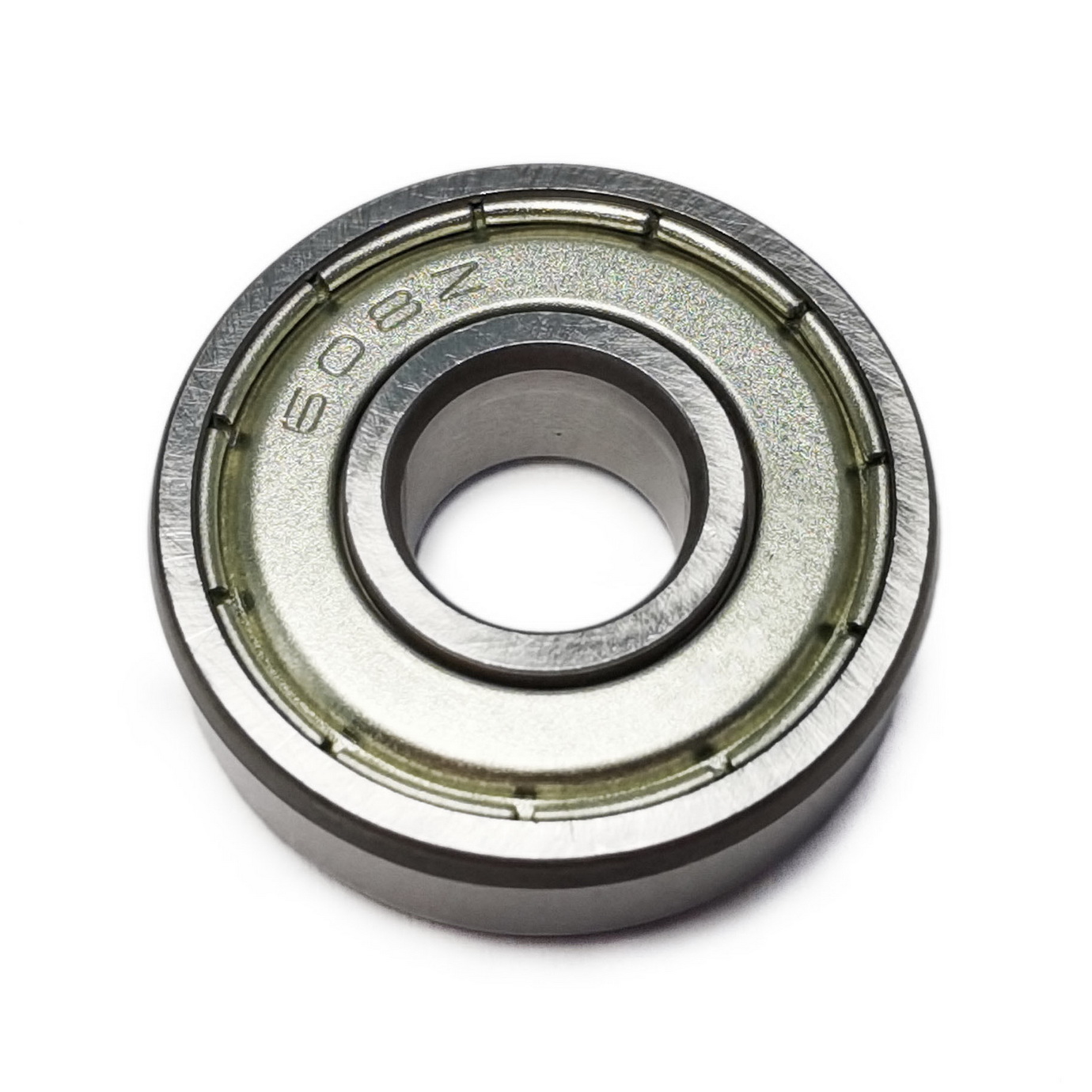
Custom Precision Stainless Steel 608 Single Row Deep Groove Bearing
- 608ZZ dual seal dustproof protection
- CCC certified low vibration rating
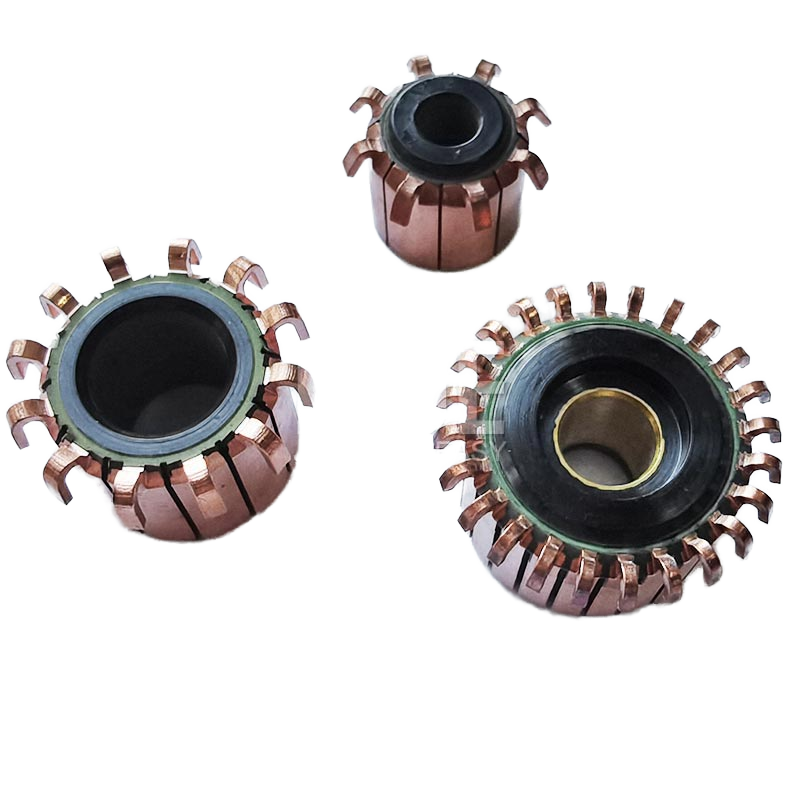
Universal Household DC Motor Armature Hook Commutator (NDPJ-HXQ-183)
- High copper purity bar-to-bar stability
- Engineered for high RPM welding durability

New Rotor Winding Equipment with Engine & Motor Core Components
- Multi-axis servo flyer winder indexing
- Automated hook hook-up & tension clamp
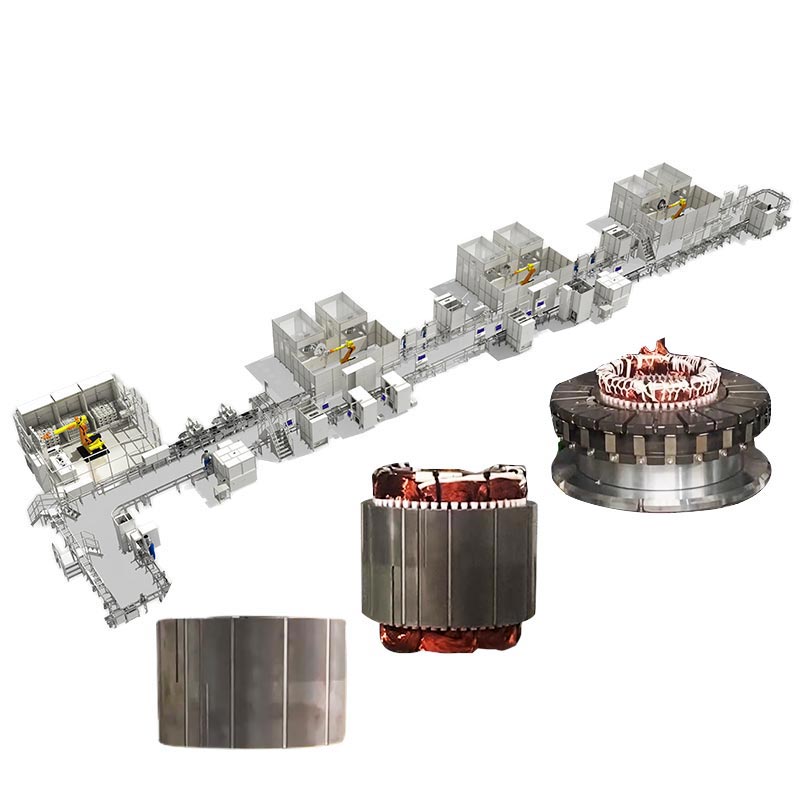
NIDE Automatic EV Hairpin Motor Stator Production Line (CE Certified)
- Hairpin paper insertion, bending & welding
- 380V/220V industrial line configuration
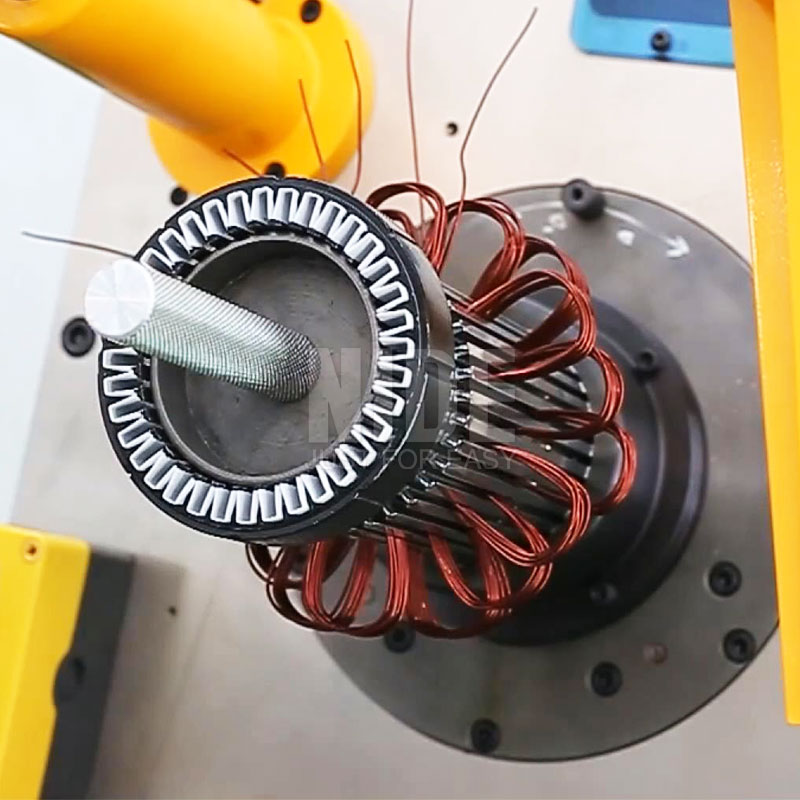
Automatic Single Phase Motor Stator Coil & Wedge Insertion Machine
- Simultaneous coil & insulation wedge feed
- Zero damage enamel wire guide tooling
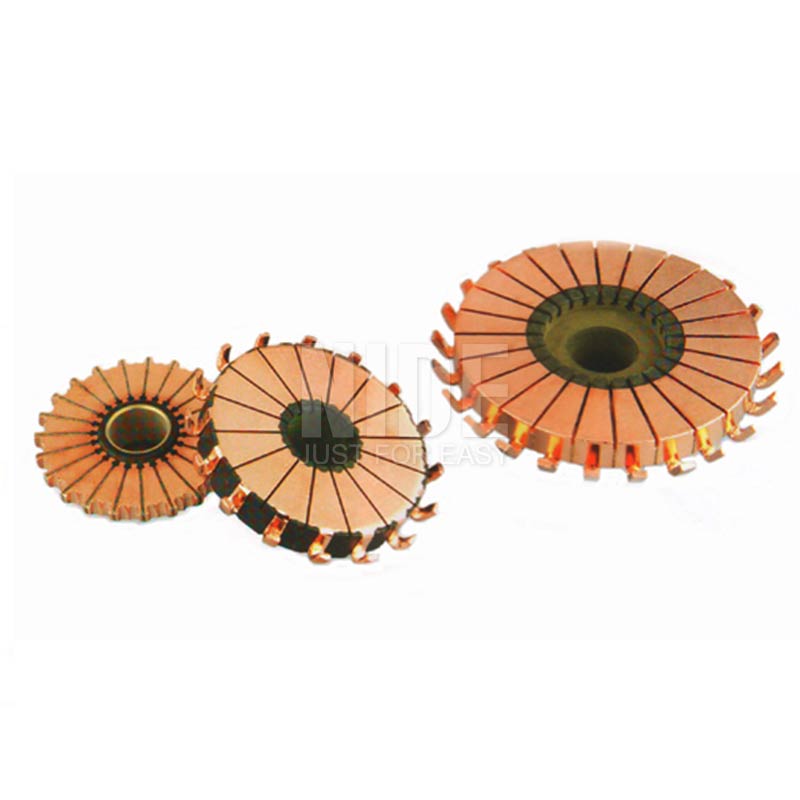
New Condition Planar Type Commutator Component (NDPJ-HXQ-39)
- Planar face commutator for disc DC drives
- High dielectric phenolic molding resin
Comprehensive Engineering Guide: Motor End-of-Line (EOL) Testing Systems for North Korean Industrial Facilities
In modern electric motor manufacturing, the End-of-Line (EOL) Automated Tester is the defining technical milestone between assembly production and field deployment reliability. For heavy manufacturing hubs, electrical railway workshops, mining equipment overhauls, and pump production lines operating across regional sectors in North Korea, implementing rigorous, multi-point automated EOL inspection benches is essential to guarantee mechanical safety, insulation longevity, and electrical efficiency under extreme operating conditions.
A professional industrial-grade Motor EOL Test Station consolidates up to eight complex electromagnetic, dielectric, dynamic, and thermal tests into a single, automated test cradle. By eliminating operator subjectivity and manual probe positioning, production plants achieve cycle times of under 8 to 45 seconds per unit while capturing vital parametric metrics across high-potential dielectric breakdown, surge waveform dissipation, DC resistance symmetry, and no-load harmonic behavior.
Key Testing Capabilities & Engineering Matrix of Industrial EOL Benches
Every motor produced—ranging from fractional horsepower universal motors in household appliances to massive multi-kilowatt squirrel-cage three-phase induction drives and permanent magnet synchronous motors (PMSM)—demands validation against standardized test protocols (such as IEC 60034, GB 755, and GOST tolerances). Nakro’s integrated EOL test platforms evaluate the complete electromechanical profile via automated pneumatically driven Kelvin fixtures:
| Testing Module | Test Parameters & Range | Measurement Methodology | Defect Detection Objective |
|---|---|---|---|
| DC Winding Resistance | 0.1 mΩ to 20 kΩ (±0.2% accuracy) | Four-Wire Kelvin Bridge with auto-temperature compensation to 20°C | Turn-to-turn shorts, incorrect wire gauge, unbalanced phase resistance, cold solder joints |
| AC/DC Hipot (Dielectric Withstand) | 0.05 kV to 5.00 kV AC / 6.00 kV DC (Leakage 0.01–20 mA) | Step voltage ramp with high-speed breakdown detection (<0.5 ms) | Ground insulation failure, slot liner puncture, insufficient creepage/clearance distance |
| Insulation Resistance (IR) | 100 V to 2500 V DC, up to 10 GΩ | Constant voltage megaohmmeter circuit with auto-discharge | Degraded coil insulation, moisture ingress, chemical or varnish contamination |
| Impulse Surge (Interturn) | 500 V to 5000 V programmable pulse peak (<0.1 μs rise time) | Waveform comparison: Area (ΔS), Differential Area (ΔA), Corona Discharge | Micro-pinholes in magnet wire enamel, interlayer weak dielectric insulation |
| No-Load Dynamic Test | Voltage: 0–690V; Current: 0–100A; Power: 0–50kW | True-RMS multi-channel power analyzer with phase angle calculation | Core lamination losses, magnetic asymmetry, stator-rotor air gap eccentricity |
| Hall / Resolver / Encoder Verification | 5V/12V sensor logic, 0–360° phase angle resolution | Digital pattern analyzer with electrical duty cycle tracking | Misaligned Hall sensors, incorrect pole-to-sensor offset, sensor failure |
| Vibration & Acoustic FFT | 0.1–10 kHz triaxial accelerometer, dynamic dB audio probe | Fast Fourier Transform (FFT) spectrum analysis against noise masks | Bearing raceway spalling, rotor dynamic unbalance, shaft bent deflection |
Localized Application Scenarios in North Korea's Industrial Ecosystem
Industrial electrification in North Korea centers on self-reliant heavy industry, resource extraction, rolling stock modernization, agricultural irrigation, and decentralized power generation. Machinery deployed in these sectors must survive wide seasonal ambient temperature extremes (-25°C to +38°C), severe power grid frequency and voltage fluctuations, and continuous duty cycles. Motor End-of-Line testing must therefore adapt specifically to these rugged realities:
Coal Extraction & Mine Ventilation
Explosion-proof induction motors driving mine hoist winches, slurry drainage pumps, and axial ventilation fans in Anju and Komdok mining complexes must pass stringent surge and partial discharge tests. EOL systems confirm coil potting integrity to prevent subterranean spark hazard.
Locomotive & Railway Traction
Electrified rail networks around Pyongyang, Chongjin, and Sinuiju require traction motor remanufacturing and new builds. Our high-voltage EOL benches test DC and AC traction armatures up to 3.3 kV dielectric stress to withstand overhead catenary switching surges.
Agricultural Pumping & Irrigation
Submersible centrifugal pump motors servicing agricultural plains require rigorous water-sealed stator HiPot checks (IP68 validation). Testing verifies slot wedge pressure and epoxy impregnation, eliminating premature burnouts during flooding seasons.
Industrial Machine Tool Drives
Precision CNC lathes, milling machines, and boring spindles produced by domestic machine tool factories demand servo motors with zero cogging torque. EOL dynamic back-EMF and encoder angle checks guarantee micrometer-level positioning repeatability.
Hydroelectric Plant Auxiliaries
Small-to-medium hydro facilities require reliable excitation generators and valve servo actuators. The EOL tester verifies rotor pole balance, ground leakage insulation, and continuous excitation coil thermal coefficients under variable grid harmonics.
Consumer Appliances & Light Industry
Washing machines, refrigeration units, and juicer/mixer plants require automated high-speed testing for universal motors and BLDC drives. Nakro's high-speed inline fixtures inspect commutator bar-to-bar resistance in less than 6 seconds.
Technological Modernization Trends: Transitioning to Smart, Resilient Motor Inspection
Across regional manufacturing operations, motor manufacturing lines are advancing from manual test benches (which utilized separate analog megohmmeters, variacs, and needle ammeters) to fully unified digital test architectures. The technological evolution is driven by several key priorities:
1. Grid Voltage Fluctuation Immunity: Industrial zones frequently experience transient voltage sags and harmonic distortion. Modern EOL test stations incorporate integrated variable frequency AC power supplies (IGBT-based PWM conditioning) to isolate the motor under test from raw utility line instability, guaranteeing absolute test consistency regardless of supply brownouts.
2. Industrial PC Architecture with Non-Volatile Data Storage: In environments where network connectivity might be limited or fully air-gapped, modern EOL systems operate with embedded industrial PCs (IPC) featuring solid-state, vibration-resistant flash arrays. Each motor tested has its entire parameter envelope saved locally to non-volatile databases with barcode or QR serial tracking.
3. Non-Destructive High-Frequency Surge Diagnostics: Traditional testing often relied solely on high AC voltage withstand (HiPot), which can fail to detect impending interturn degradation until destructive arcing occurs. Modern surge testers utilize pulsed nanosecond high-voltage discharges, comparing damped resonant oscillations against master mathematical curves (zero-crossing differential comparison), uncovering hairline enamel microcracks without causing carbonization.
4. Modular Quick-Change Tooling: Factory lines frequently change between frame sizes (e.g., from IEC 80 through IEC 160). Tool-free pneumatic clamping adapters enable changeovers in under 3 minutes, dramatically maximizing test station uptime and capital efficiency.
Ningbo Nakro Intelligent Equipment: Engineering Strengths
Combining 14+ years of specialized motor manufacturing machine production with full-scale technical project delivery for global clients.
Every tester is designed, assembled, wired, and calibrated under strict ISO 9001 quality management procedures with full component batch traceability.
Extensive in-house CNC machining, laser cutting, electronic panel fabrication, and dedicated test run-off bays for complete turnkey lines.
More than 13 years of overseas industrial equipment supply with proven packaging for rail, maritime container, and overland heavy transit.
Dedicated R&D engineering division customizing high-wear Kelvin probes, pneumatic locking chucks, and dynamic load couplers for your motor models.
Systematic Project Engineering & Factory Verification Workflow
To ensure guaranteed field performance and seamless commissioning for cross-border projects, Nakro implements a rigorous five-stage execution protocol before any machine leaves our workshop:
Drawing Analysis
Review of motor stator/rotor CAD, winding schemes, voltage classes, and insulation grades.
Custom Bench Design
Schematic development for electrical matrix switching, safety enclosures, and Kelvin probes.
Trial Run-Off
Execution of continuous 72-hour trial run on client-provided sample motors in our factory.
FAT & Calibration
Full Factory Acceptance Test (FAT) with third-party verified calibration certificates.
Spares & Support
Complete seaworthy crating, redundant wear-parts kit, schematics, and operator manuals.
Frequently Asked Questions for Regional Procurement
Detailed technical, trade, and engineering answers concerning motor end-of-line test systems, local site integration, and long-term maintenance.
What specific electrical and safety standards do Nakro Motor EOL Testers conform to?
How do the test stations handle unstable power grids and high harmonic distortion?
Can a single EOL test station handle multiple motor frame sizes and varying voltages?
What safety interlocks protect operators from high-voltage flashover hazards?
What spare parts and field diagnostic tools are provided to ensure continuous operation?
What payment terms, currencies, and export logistics are available?
Upgrade Your Motor Testing & Manufacturing Capability
Consult with our senior electrical automation and test system engineers. Receive a comprehensive station layout proposal, cycle-time simulation, and detailed technical catalog tailored to your motor specifications.
