Engineered Portfolio
Precision Motor Equipment & High-Performance Commutation Systems
Delivering high slot-fill ratios, micro-tension accuracy, and structural longevity for next-generation electric drivetrains and industrial platforms across Kanagawa Prefecture.
Sub-Assembly Modules
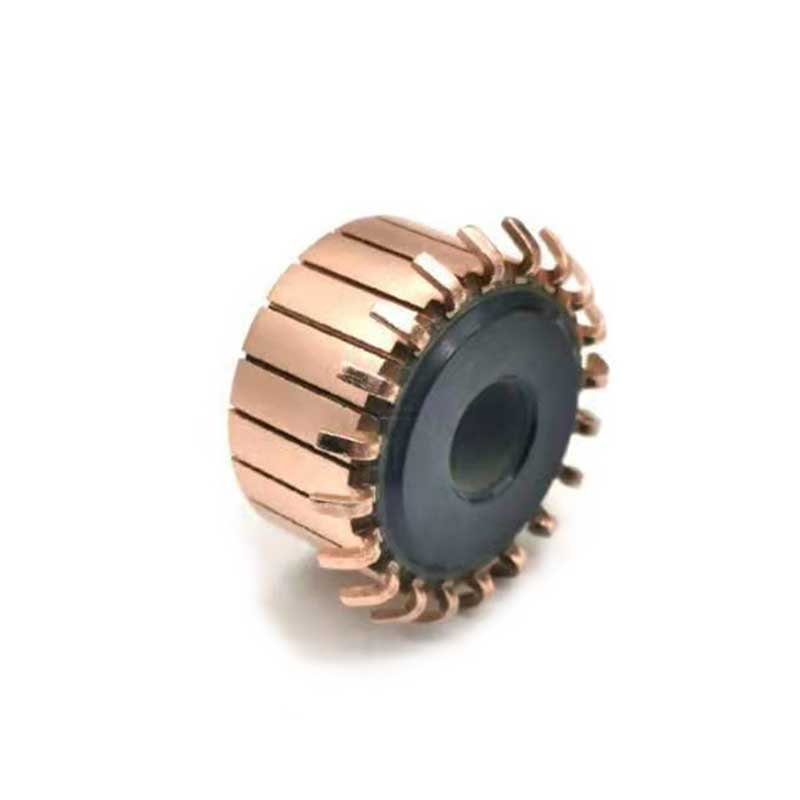
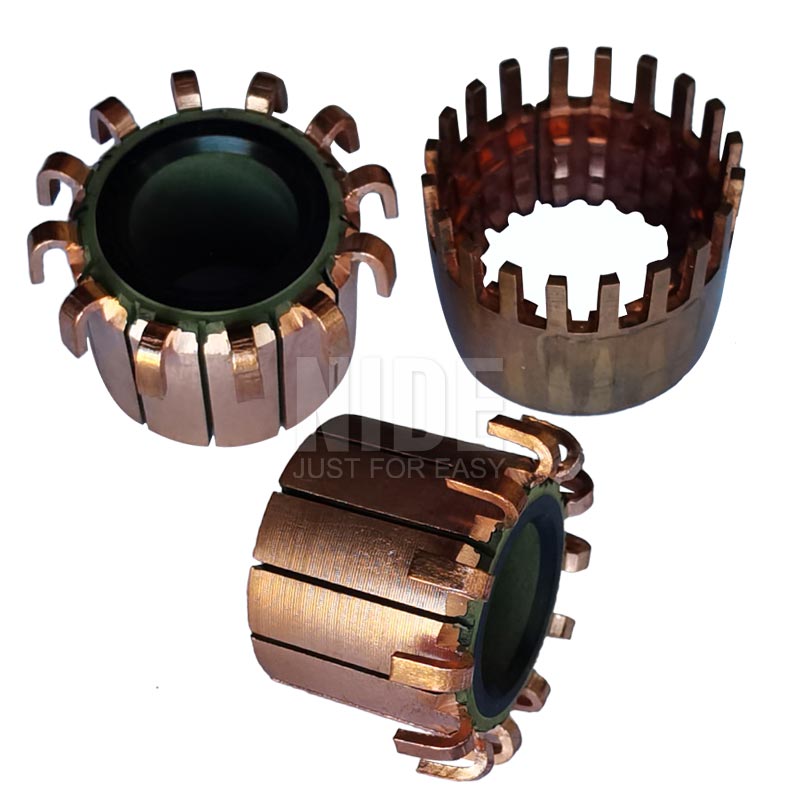
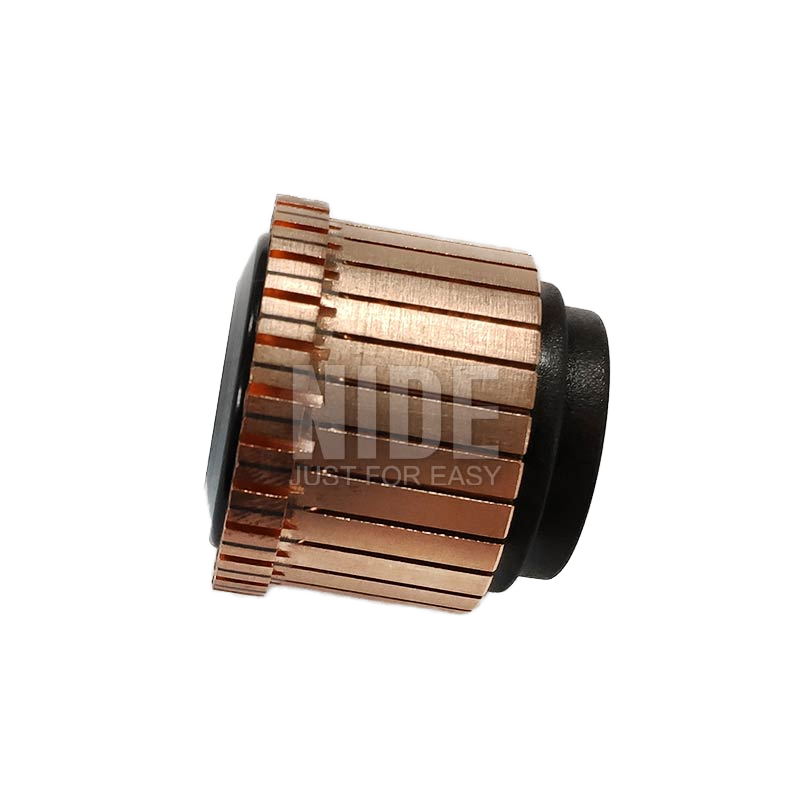
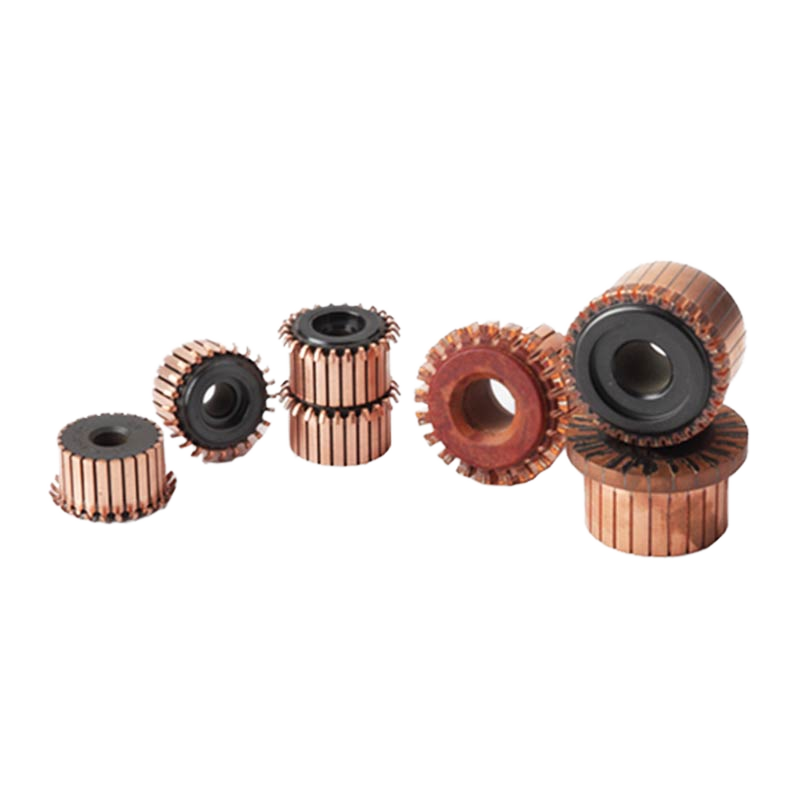
12-Segmented Automobile Wiper Motor Hook Commutator (NDPJ-HXQ-174)
Precision Coil Winding
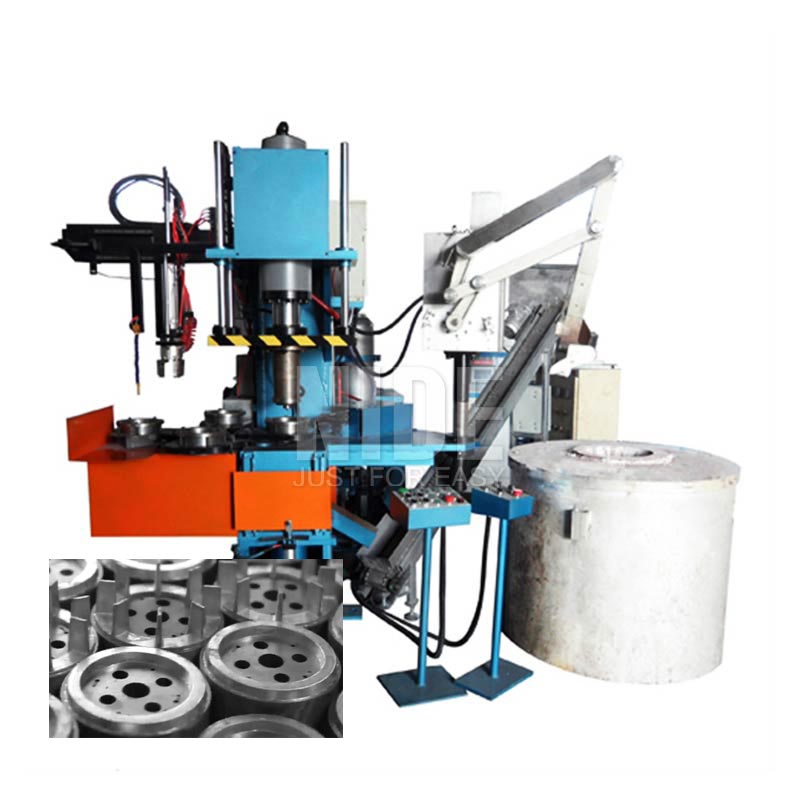
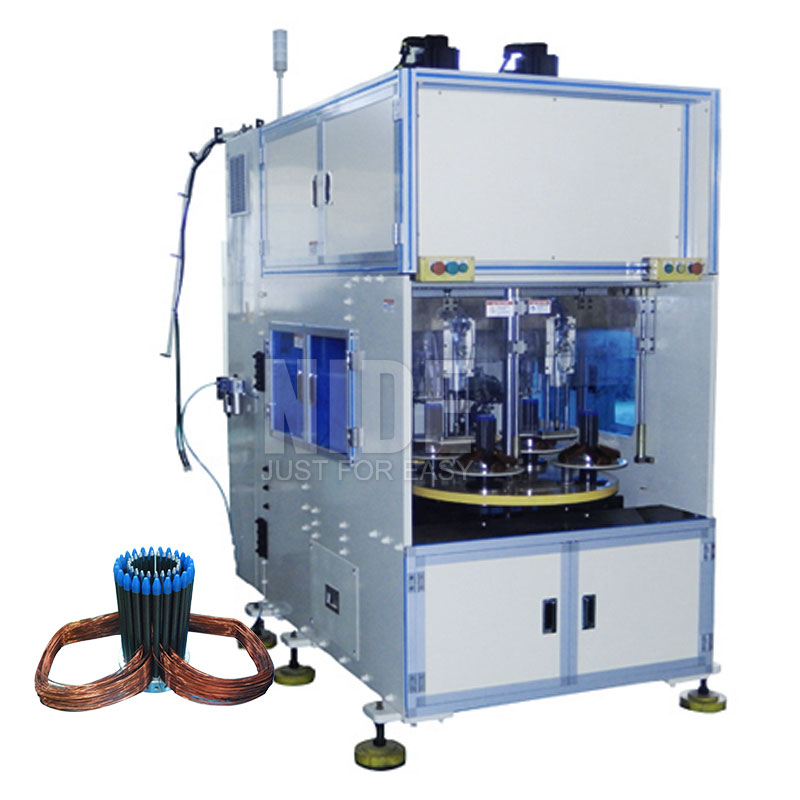
PLC-Controlled Cooler Motor Stator Coil Winding Machine CNC Coil Winder
Engineering Principles of BLDC Stator Winding for High Slot-Fill Densities
Modern brushless DC (BLDC) and permanent magnet synchronous motors (PMSM) dictate aggressive electromagnetic performance profiles: reduced total harmonic distortion (THD), decreased cogging torque, and maximized volumetric copper slot fill (>45%). Fulfilling these parameters inside the high-mix, low-to-medium-volume production hubs characteristic of Yokohama and the greater Keihin Industrial Region requires machine architectures optimized for dynamic tension adjustment, high kinematic agility, and frictionless wire guidance.
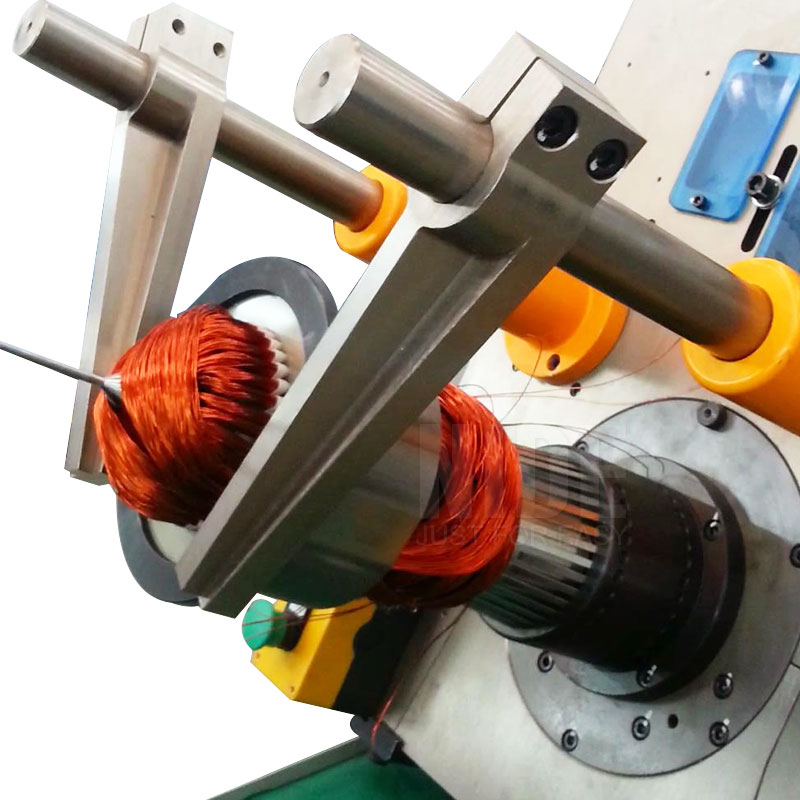
Traditional flyer winders introduce twisting forces that can compromise the dielectric integrity of ultra-thin polyimide enamel coatings. Our multi-axis CNC needle winding systems operate on closed-loop servo kinematics, utilizing synchronized XYZ and rotary axes that guide the nozzle millimeters away from the stator tooth face. By maintaining a constant 90-degree vector between wire delivery nozzle and lamination surface, bending stresses are prevented. Real-time electromagnetic braking systems adjust dynamic wire tension at speeds up to 1,200 turns per minute, preventing microscopic elongation defects or copper thinning that often degrade motor efficiency during heat dissipation runs.
For outer-rotor BLDC stators—common in Yokohama's growing automated guided vehicle (AGV) production ecosystems and specialized marine e-drives—our equipment integrates custom-ground carbide needle nozzles and multi-strand winding arrays. The simultaneous winding of multi-parallel magnetic wires eliminates inter-phase voltage imbalances while drastically decreasing copper resistance losses. This structural approach ensures electric powertrain builders meet stringent JIS C 4034 standards for continuous efficiency without incurring excessive thermal rejection.
Industrial Deployments
Localized Motor Manufacturing Scenarios in Yokohama & Kanagawa
Deploying targeted automated assembly architectures tailored to the specific engineering domains that define the Tokyo Bay technological corridor.
Electric Vehicle Powertrains & Auxiliary Systems
Yokohama’s tier-1 automotive supply networks are accelerating shifts toward hairpin and concentrated-wound BLDC architectures for electronic power steering (EPS), radiator cooling assemblies, dynamic brake boosters, and high-efficiency water pumps operating under tight thermal allowances.
- Automated 3-phase star/delta bridging
- In-line micro-ohm winding resistance diagnostics
- UL94-V0 slot insulator compatibility
High-Precision Collaborative Robotics & Actuation
Advanced industrial automation builders situated in the Kohoku and Kanagawa wards rely heavily on frameless BLDC torque motors and slotless servo stators that eliminate cogging torque entirely, requiring sub-micron needle positioning and multi-axis winding kinematics.
- Zero-backlash direct-drive rotary tables
- Adaptive layering to prevent crossing turns
- Compatible with wire gauges AWG 18 through 42
Green Port Automation & Autonomous Maritime Drones
Serving the Port of Yokohama's port logistics modernization, our multi-pole outer-rotor winders power electric winch motors, high-torque hub drives for autonomous yard tugs, and high-reliability propulsion drives built to endure aggressive marine saline exposure.
- Insulation varnish penetration-optimized slotting
- Hermetic terminal sealing modules
- Torque-balanced winding distributions
Technical Benchmarking
Technical Specifications: BLDC Stator Winding & Processing Series
System configurations engineered for turn-key deployment, full MES plant integration, and strict cleanroom assembly protocol.
| Functional Parameter | Needle-Type BLDC Stator Winder | Flyer-Type Armature Rotor Winder | Automatic Stator Coil Inserter |
|---|---|---|---|
| Stator/Rotor Outer Diameter (OD) | Ø15 mm – Ø260 mm (Configurable) | Ø10 mm – Ø120 mm | Ø30 mm – Ø350 mm |
| Lamination Stack Height Range | 5 mm – 160 mm | 10 mm – 120 mm | 15 mm – 220 mm |
| Compatible Wire Diameter | 0.08 mm – 1.6 mm (Single/Multi-strand) | 0.12 mm – 1.2 mm | 0.18 mm – 1.4 mm (Copper/Aluminum) |
| Winding / Indexing Kinematics | 6-Axis Synchronous Servo Interpolation | Dual-Flyer Dynamic Servo Balance | Hydraulic / Servo Dual Forming Wedge Inserter |
| Tension Control Mode | Closed-Loop Magnetic Hysteresis Braking | Electronic Tensioner with Real-time Readout | Mechanical Spring-loaded Wedge Guiding |
| Industrial Network Interfaces | EtherCAT, Profinet, Modbus TCP/IP | Ethernet/IP, RS485 Fieldbus | Profinet, Standard Industrial I/O |
| Cycle Time Benchmarking | 22 – 45 sec (12-slot, 3-phase, multi-pole) | 12 – 28 sec (depending on turn density) | 18 – 35 sec (complete slot & wedge insert) |
Yokohama Electrification Trends: Decarbonization Mandates & High-Mix Automation
Under Kanagawa Prefecture’s progressive carbon neutrality targets and the Japanese Ministry of Economy, Trade and Industry (METI) industrial decarbonization blueprints, manufacturing operations across Yokohama are fundamentally shifting. Machine builders face simultaneous pressure to reduce scrap rates to near-zero levels, adapt to shorter batch runs for highly customized specialty motors, and mitigate the skilled labor deficit brought about by demographic shifts in Japan’s engineering workforce.
Consequently, procurement protocols in Yokohama no longer evaluate motor manufacturing machinery strictly on base cycle speed. The decisive criteria have evolved into setup versatility and digitalization readiness: How quickly can a winding cell swap tooling between differing stack heights? Does the Human-Machine Interface (HMI) retain digital recipes that allow an operator to transition from a 6-pole drone motor to a 12-slot industrial pump stator in under 15 minutes? Our machines feature quick-disconnect tooling jigs, digital servo-position presets, and OPC-UA connectivity, ensuring local factories integrate equipment into intelligent SCADA systems with minimal production disruption.
Why Industry Leaders Partner With Us
Turnkey Reliability, Precision Tooling & Global Service Execution
Ningbo Nakro Intelligent Equipment Co., Ltd. combines specialized tooling manufacture with full turnkey lines, supporting manufacturing plants in more than 50 nations.
Rigorous ISO 9001 Quality System & Factory Verification
Every winding unit, forming tool, and testing cell is validated under strict quality control protocols across our 30,000+ m² facility. We perform multi-hour full-load validation runs using the customer's actual lamination steel packs and magnet wire prior to shipping.
- CE Machinery & Low Voltage Directive compliant
- Onsite verified industrial exporter credentials
- Pre-shipment video verification and sample sign-off
Comprehensive Component & Turnkey Integration
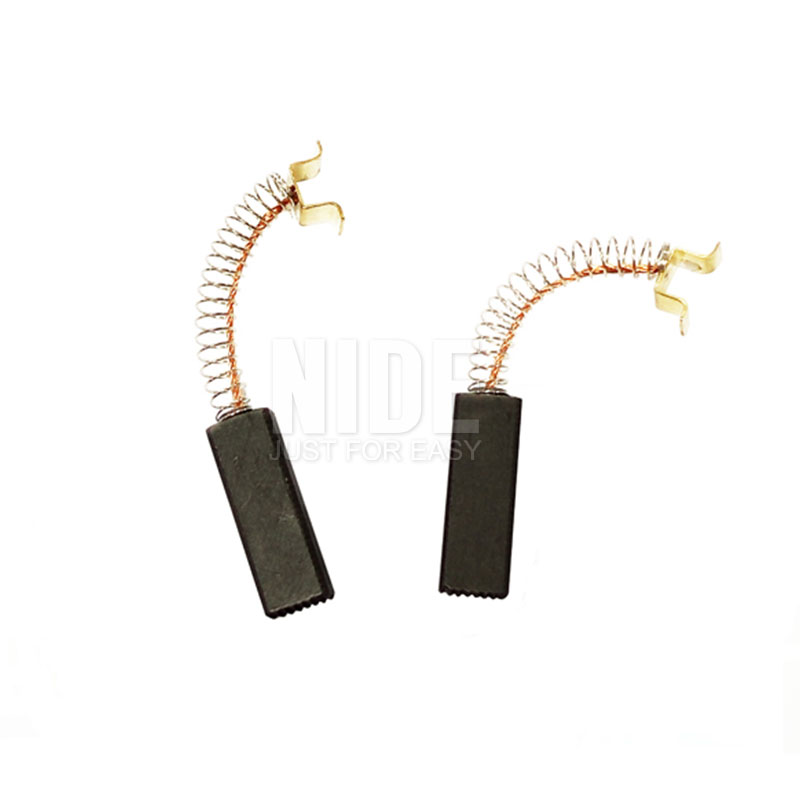
Beyond capital machinery, our ecosystem delivers matching copper commutators, precision carbon brush assemblies, insulation slot papers, and high-frequency fusing accessories, providing single-source responsibility from wire spool to balanced rotor.
- Custom nozzle geometry modeling
- Turnkey stator and armature line design
- Over 13 years of overseas industrial machinery export
Rapid Technical Support Serving Yokohama & Kanto Region
Our dedicated international sales engineering and process R&D teams deliver rapid engineering turnaround times, providing line cycle-time estimates within 48 hours, remote PLC telemetry support, and direct dispatch for installation and calibration.
- Multilingual technical consultation
- Emergency spare parts express shipment
- Tailored tooling exchange programs
Procurement Intelligence
Frequently Asked Questions for Yokohama Engineering & Sourcing Teams
Direct technical answers addressing system integration, regulatory adherence, tooling compatibility, and international logistics.
How do your BLDC winding machines interface with Japanese factory electrical standards (200V 3-phase, 50/60 Hz)?
All export machinery intended for Yokohama and Kanagawa clients is natively wired and configured for Japan's industrial power infrastructure (standard 200V / 220V 3-phase, 50 Hz in East Japan / Tokyo-Yokohama grids). Control cabinets use premium components compliant with JIS and CE standards, featuring isolated grounding and noise filters to ensure zero harmonic interference with surrounding precision equipment on your factory floor.
Can the needle winder handle concentrated windings on stators with extremely narrow slot openings?
Yes. We engineer customized tungsten-carbide and polished ceramic needle nozzles specifically configured around your stator tooth width and slot opening dimensions. For slots narrower than 1.5 mm, we utilize specialized ultra-slim needle profiles alongside synchronized micro-indexing to guide wire into the slot without scrubbing or stripping the delicate enamel coating.
What is the standard procedure for Factory Acceptance Testing (FAT) before shipment to Yokohama?
Prior to shipping, we execute a rigorous FAT process. Customers provide sample lamination stacks, copper wire, and terminals. We execute continuous batch trial runs, documenting cycle time, slot fill, turn count accuracy, and electrical surge/hipot testing. Yokohama engineering personnel can oversee testing in person at our manufacturing facility or approve the equipment via multi-camera high-definition live video verification and detailed CMM measurement reports.
What trade terms and shipping channels are utilized for delivery to the Port of Yokohama?
We provide standard CIF Yokohama or FOB Ningbo/Shanghai delivery terms. Standard shipping transit from Ningbo to the Port of Yokohama averages only 3 to 5 days on direct ocean freight routes. All equipment is packed inside fumigated, vacuum-sealed, moisture-barrier wooden crates specifically treated for trans-oceanic transit to prevent any surface oxidation on precision ground rails and ball screws.
How do you accommodate quick tooling changeovers for high-mix, low-volume motor runs?
Our CNC winding machines are designed with modular tooling suites. Stator clamps, needle assemblies, and wire guide chutes feature quick-release locking mechanisms with precision locating dowel pins. Operators select the pre-stored parameter file via the touchscreen HMI, and physical tooling changeover is typically achieved in under 15 minutes without requiring mechanical recalibration.
Can you provide turnkey integration encompassing insulation, winding, fusing, and testing?
Yes. We design and deliver fully synchronized turnkey manufacturing lines. This includes automatic slot insulation paper insertion, CNC needle winding, terminal hot crimping/fusing, stator wedge insertion, end-turn forming, and end-of-line electrical testing (hipot, impulse surge, DC resistance, rotation direction) with automated pallet conveyor transfers.
Upgrade Your Motor Manufacturing Line Today
Consult with our sales engineering team to analyze your stator laminations, wire specifications, and planned output. We will supply a complete technical line layout, cycle-time simulation, and cost proposal within 48 hours.
Send an Inquiry