Automatic Motor Production Line Factories & Exporters for Caloocan

Industrial Whitepaper on Automated Stator, Armature, and BLDC Turnkey Assembly Systems for CAMANAVA E-Mobility, Light Manufacturing, and Electric Equipment Refit Hubs

Engineered Production Lines & Specialized Sub-Assemblies

Configured strictly according to rotor/stator lamination geometries, slot dimensions, and target cycles for manufacturers in Metro Manila and Caloocan Industrial Zones.

Caloocan's Industrial Transformation & Electric Drive Modernization

Strategic equipment integration for the industrial corridors of North and South Caloocan, driving the shift from manual rewinding shops to automated, high-efficiency motor fabrication.

CAMANAVA E-Mobility Fleet Electrification

Caloocan stands as the commercial freight and light transport hub of Northern Metro Manila. Local fleet retrofitting initiatives for electric tricycles, light freight delivery e-trikes, and UV Express shuttles demand indigenous motor assembly. Automated needle winders and outer-rotor assembly stations allow Caloocan enterprises to produce high-torque BLDC wheel hub drives locally, slashing reliance on CBU (completely built-up) motor imports.

HVAC, Water Pumping, & Cold Storage Drives

With massive logistics hubs and food-processing depots stretching along Dagat-Dagatan and North Caloocan (Camarin, Bagumbong), continuous operation of compressor motors and water-circulating centrifugal pumps is mandatory. Upgrading regional assembly lines to automatic single-phase and three-phase stator coil inserting systems guarantees slot fill rates above 78%, reducing thermal degradation under tropical line voltages.

Industrial Equipment Refurbishment to OEM Assembly

Caloocan has historically housed hundreds of machine repair clusters along 10th Avenue and Samson Road. By installing turnkey balancing, commutator turning, and automated flyer coil winders, local contract workshops are scaling up from aftermarket reconditioning to tier-2 and tier-3 contract OEM production for regional home appliance and agricultural machinery brands.

Technological Architecture of Turnkey Motor Automation

A comparative evaluation of production efficiency, dielectric failure mitigation, and automation ROI for motor manufacturers modernizing line infrastructure.

Electric motor manufacturing demands uncompromising precision in lamination stacking, coil winding, insulation insertion, and terminal bonding. In tropical industrial environments such as Metro Manila, localized grid voltage fluctuations and ambient humidity create severe dielectric stress on motor windings. Manual coil handling frequently causes microscopic scratches on enamelled copper wire (polyurethane/polyesterimide enamel), resulting in shorted turns, insulation breakdown under hipot testing, and elevated warranty failure rates.

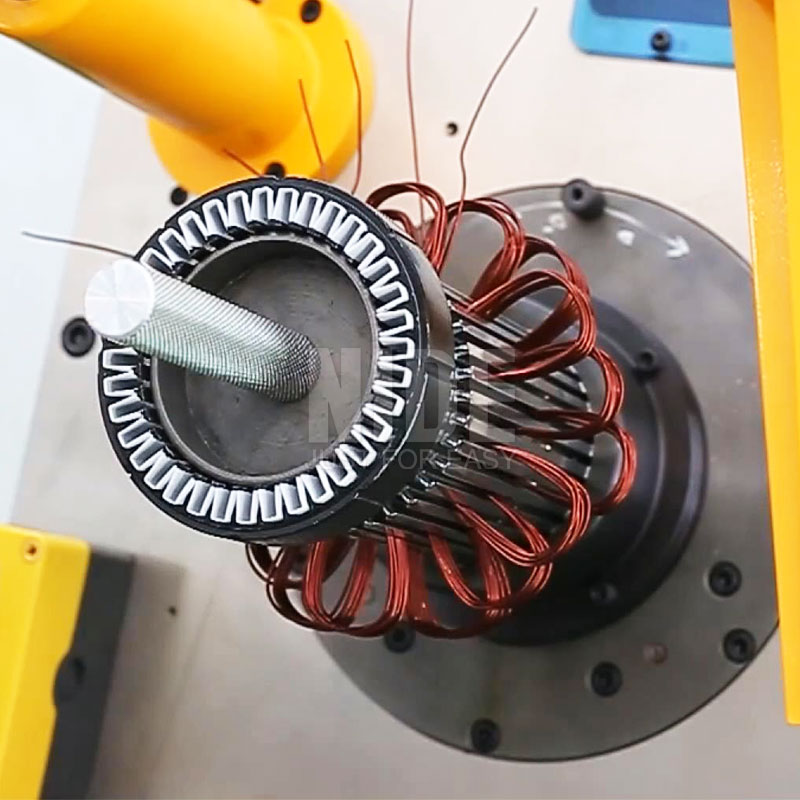
By transitioning to a fully automated motor production line, manufacturers enforce uniform tension control across flyer winders and needle-winding arms. Servo-synchronized stator coil inserters push pre-formed coil bundles and slot wedges (DMD, Nomex, or polyester film) simultaneously into the stator iron core in a single stroke cycle. This mechanical synchronization eliminates slot-edge shear stress and guarantees an optimal slot fill factor (copper packing coefficient), maximizing flux density and cutting total iron and copper losses in compliance with international IE3 and IE4 efficiency standards.

Process Station Conventional Manual Workshop Nakro Automated Turnkey Line Engineering Advantage
Stator Coil Insertion Manual hand-lacing; 12–25 mins/piece; irregular wedge depth Automated push insertion; 18–35 sec/cycle; integrated wedge shearing Zero conductor scraping; consistent wedge protrusion; >99.7% first-pass hipot yield
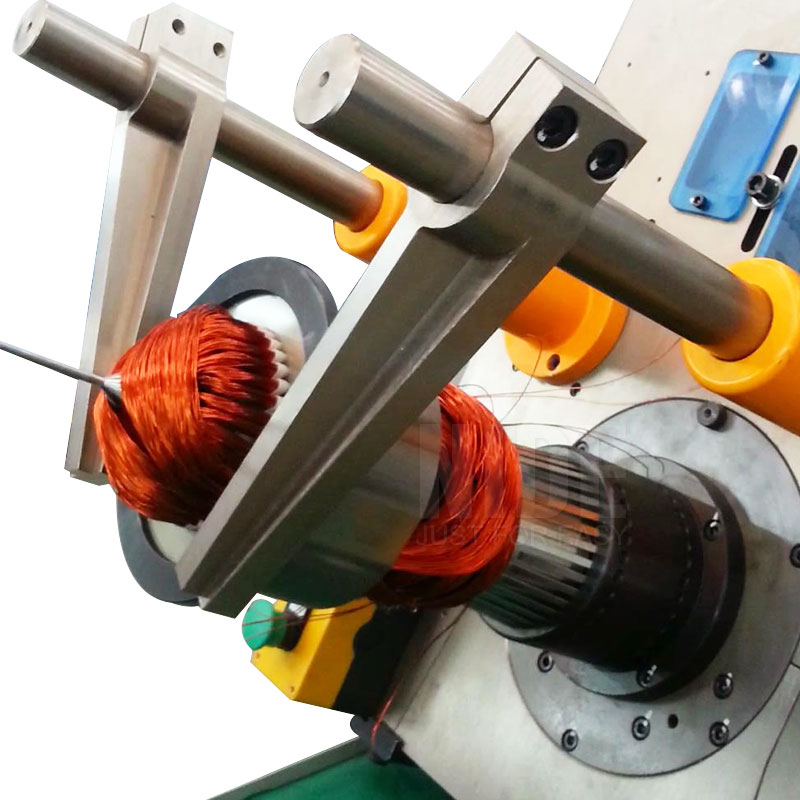
Armature Coil Winding Mechanical flyer; manual indexing and loose loop hooking Dual-spindle servo flyer; precise hook indexing; programmable wire tension Strict dynamic balance; identical resistance per phase segment; zero hook burnouts
Commutator Fusing / Welding Manual soldering iron or open-flame resistance torch Precision pneumatic/inverter hot-staking welding with constant displacement monitoring Diffusion-level bond; low contact resistance; eliminates thermal mica delamination
BLDC Magnet Assembly Manual hand positioning; uneven cyanoacrylate glue application Automated magazine feed; robotic orientation check; calibrated adhesive jetting Perfect magnetic polarity sequencing; balanced back-EMF waveform; zero detached magnets
End-of-Line (EOL) Quality Audit Sample spot testing via basic multimeter & external bench power 100% automated inline audit: Hipot (2.5kV), Surge, Phase Angle, Resistance & Runout Automated barcode traceability; instantaneous rejection of out-of-spec stators

Industrial Modernization Trends in Caloocan (2025–2030)

Key operational drivers driving capital equipment investment among Philippine electric motor producers, assemblers, and plant engineers.

Adoption of IE3/IE4 Energy Standards

With the Department of Energy (DOE) enforcing higher energy performance standards under the Philippine Energy Labeling Program (PELP), legacy motor rebuilders cannot meet the stringent power efficiency ratings required for industrial induction motors. Automated winding lines allow tight control of wire turn counts and eliminate phase imbalance, enabling Caloocan factories to deliver motors compliant with premium efficiency benchmarks.

De-risking Foreign Supply Chains

Recent global maritime bottlenecks have highlighted the vulnerabilities of relying entirely on completely built-up (CBU) electric motors from overseas. Caloocan industrialists are actively setting up CKD (completely knocked-down) assembly lines, combining domestic iron-core stamping and casing fabrication with automated winder lines to gain sovereignty over local lead times.

Rapid CapEx Payback Horizon

High utility power rates in Metro Manila make manufacturing downtime expensive. Automated lines drastically reduce operator dependency from 20 technicians per shift down to 2 automated line supervisors. Factoring in reduced copper scrap rates, copper fill optimization, and continuous 24/7 output capability, regional manufacturers regularly realize full CapEx payback within 14 to 18 months of line deployment.

Ningbo Nakro Intelligent Equipment — Global Manufacturing Credibility

Established in 2010 in Ningbo, Zhejiang, Nakro is an internationally vetted designer and manufacturer of turnkey motor production machinery, armatures, stators, and matching electrical components.

Turnkey System Responsibility

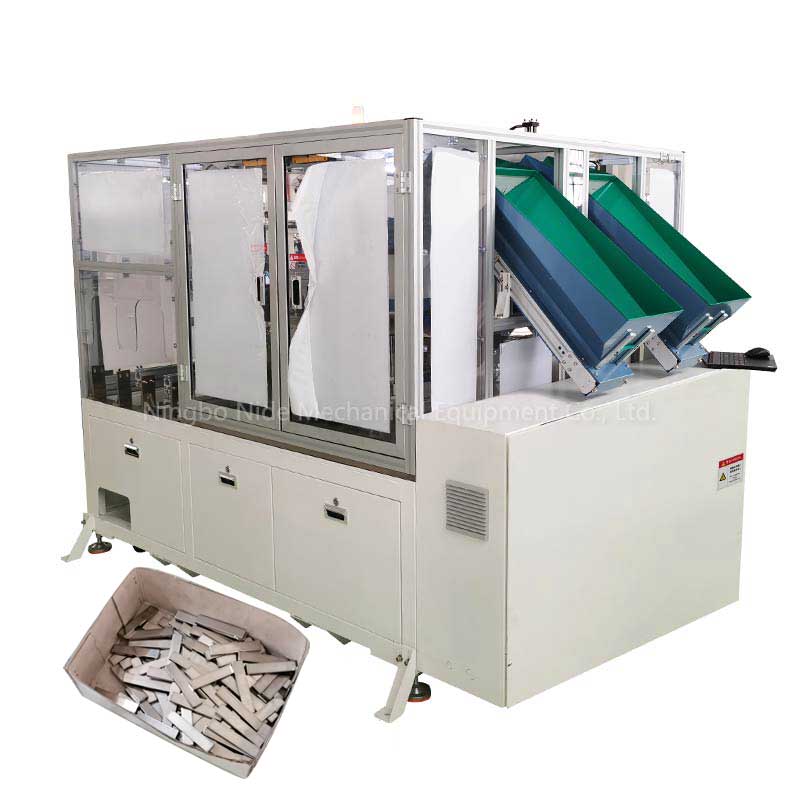
We do not simply export stand-alone tools; we engineer the complete manufacturing ecosystem. From lamination press-fitting, slot paper insulating, flyer/needle winding, to commutator hook fusing, wedge inserting, balancing, and full-load test rigs, Nakro takes singular operational responsibility for producing the first qualified motor off your line.

Integrated Motor Components

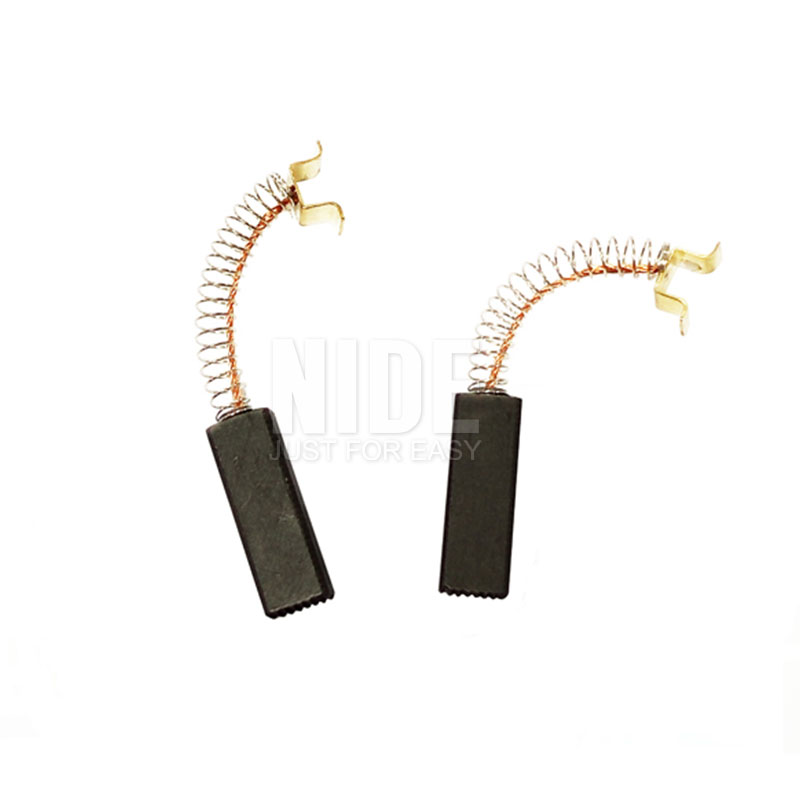
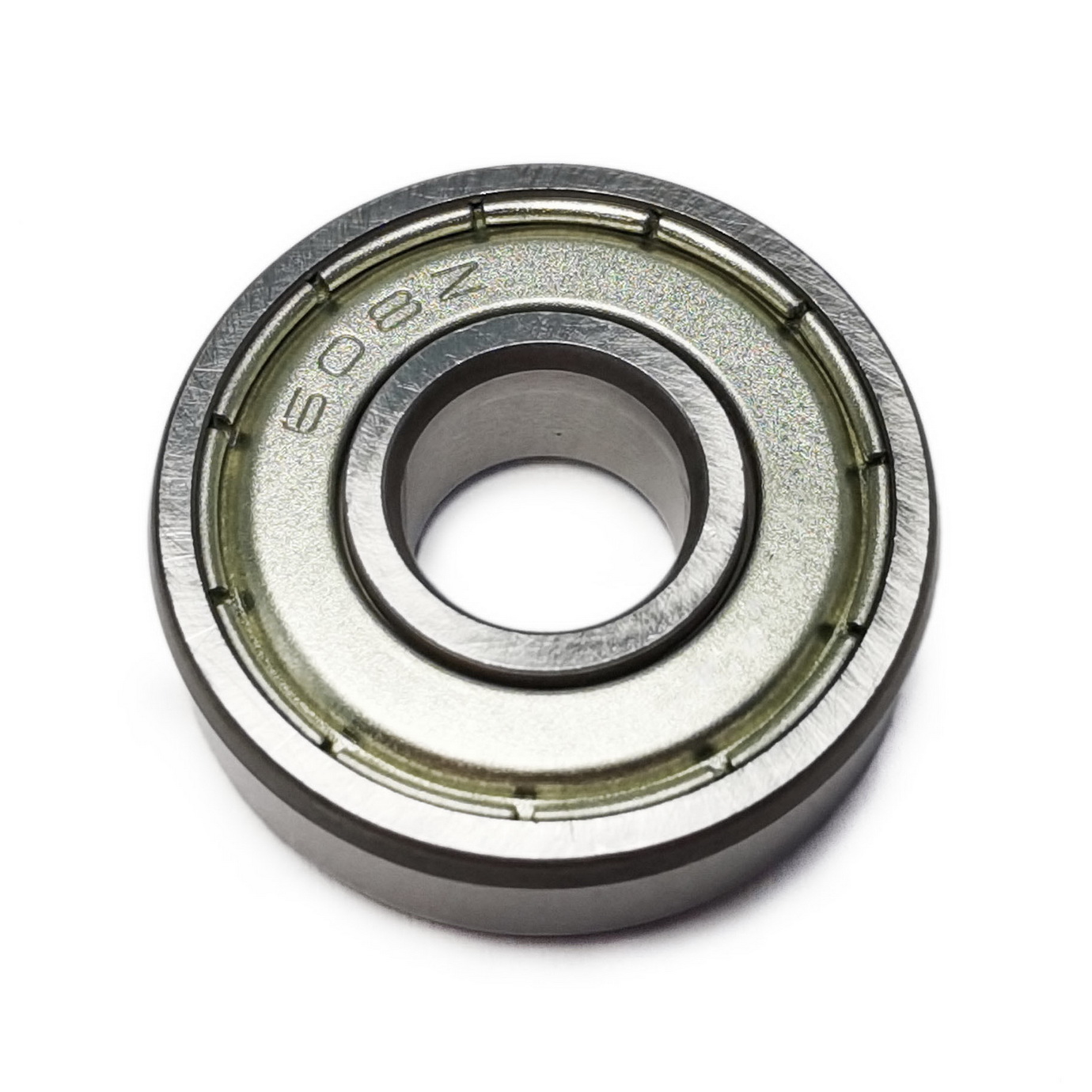
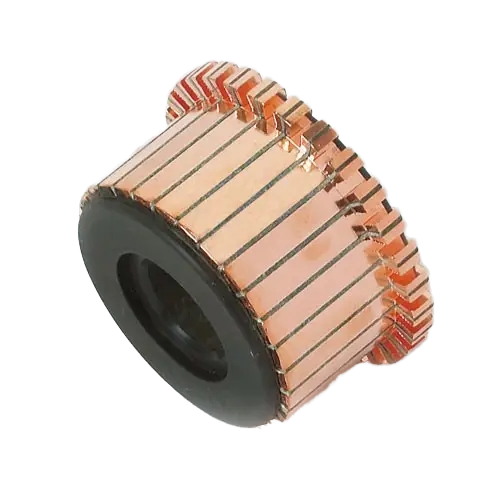
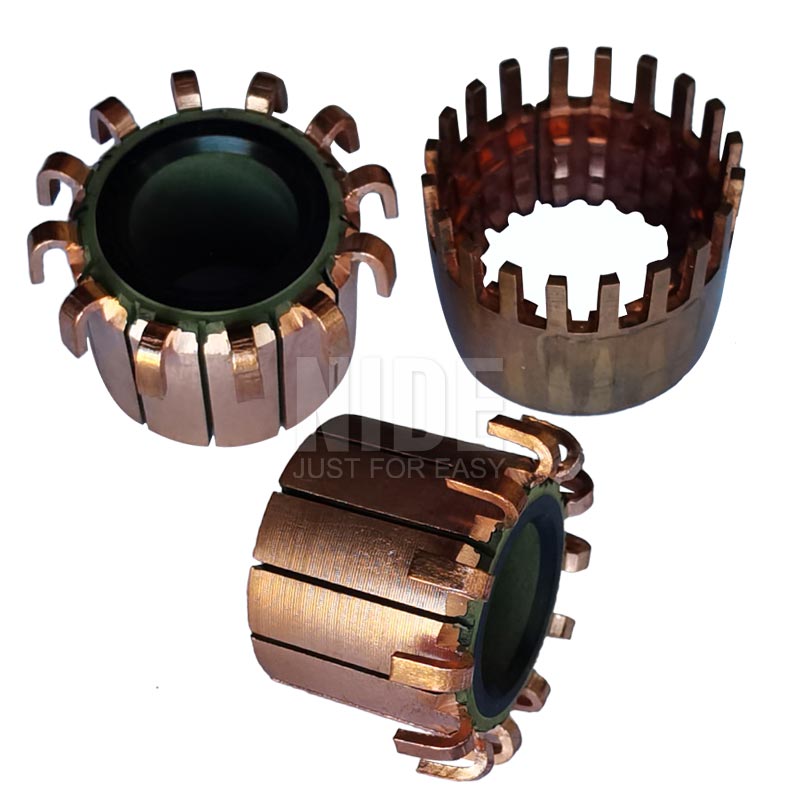
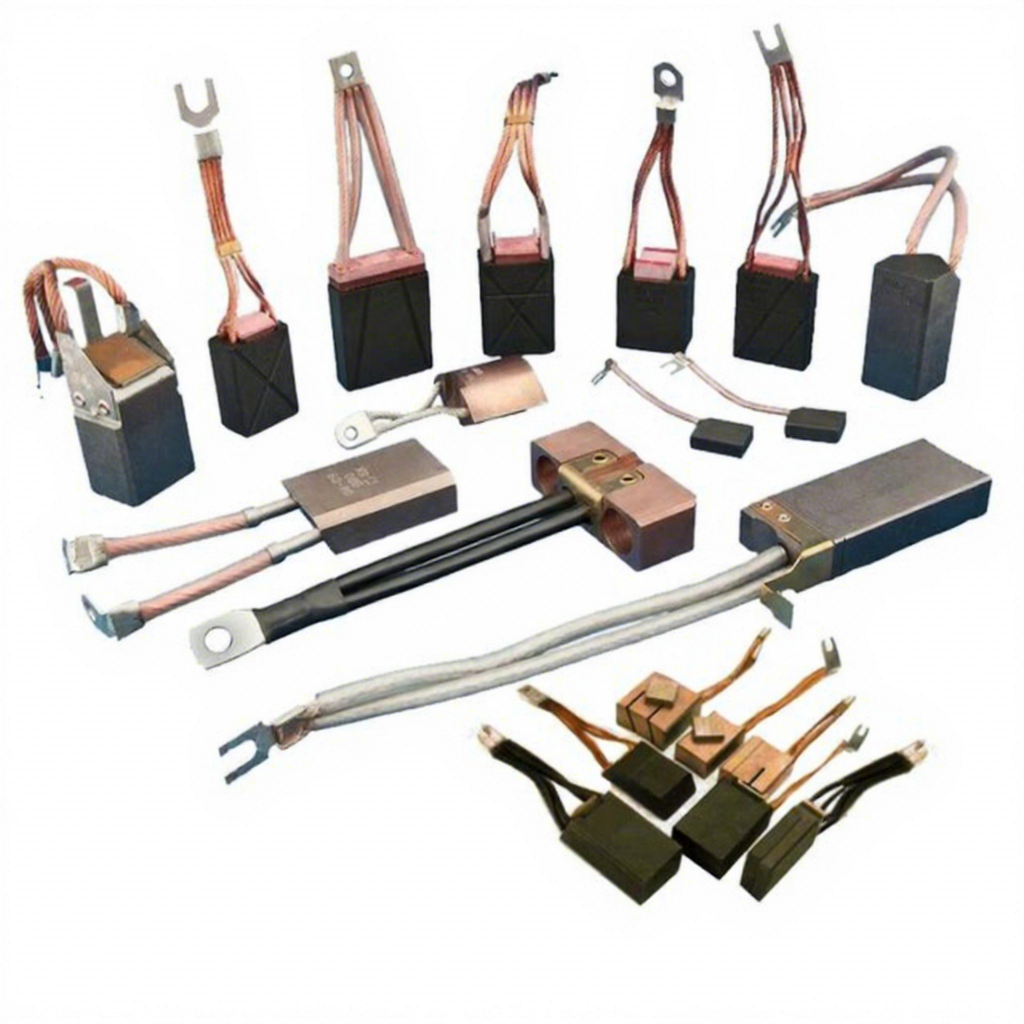
Avoid split-supplier disputes between equipment builders and component vendors. Nakro simultaneously supplies matching precision components: custom silver-copper commutators, 608ZZ precision bearings, automobile-grade carbon brushes, slot insulation papers, shafts, and motor housings tested specifically for automated hopper feeding.

Global Verification & Support

Backed by ISO 9001 certified quality control, CE-compliant construction, and onsite factory audits verified by international third parties. Our dedicated export engineers deliver comprehensive run-off test videos using your real rotor/stator samples prior to packing in vacuum-sealed seaworthy crates.

2010
Year Established
50+
Export Countries
30,000+
m² Facility Space
13+
Years Machine Export

Frequently Asked Questions for Philippine Industrial Buyers

Crucial technical, electrical, logistics, and customs answers for equipment engineers importing into Caloocan, Navotas, Valenzuela, and greater Metro Manila.

Can your motor production machines accommodate the Philippine standard electrical supply?
Yes. While domestic Chinese plants typically utilize 380V 50Hz, our electrical engineering team builds export-grade electrical enclosures specifically configured for the Philippines' industrial standard of 220V–240V 60Hz 3-phase (or 440V 60Hz industrial setups depending on your facility's transformer). Core components including Mitsubishi/Siemens PLCs, Schneider contactors, and Delta/Yaskawa servo drivers are rated and calibrated for 60Hz frequency operation, preventing motor overheating and synchronization timing drift.
How do we manage sea freight shipping and customs clearing into the Port of Manila?
We regularly ship under FOB Ningbo/Shanghai or CIF Manila South Harbor / Manila North Harbor. North Harbor is geographically proximate to Caloocan via R-10, minimizing domestic container haulage costs. All production lines are packed in rigid, fumigated seaworthy wooden cases with rust-inhibiting vacuum foil and desiccant packs to endure maritime transit. We provide all customs documentation—Commercial Invoice, Packing List, Bill of Lading, Certificate of Origin (Form E for ASEAN tariff preferences), and CE declarations—enabling seamless clearance through the Philippine Bureau of Customs (BOC).
How is equipment performance and tooling tolerance verified before shipping?
We follow a stringent Factory Acceptance Test (FAT) protocol. We strongly advise buyers to air-courier their raw stator/rotor laminations, copper wire reels, insulation paper, and shafts to our Ningbo factory. Our engineers execute full-speed operational trials using your materials. We generate high-definition run-off video footage, measure slot fill consistency, check wire tension graphs, and perform hipot and resistance testing on produced samples. Shipment is approved only upon customer sign-off.
What after-sales service and commissioning support are available in the Philippines?
Nakro provides two flexible support tiers. For turnkey automated lines, our senior field engineers are deployed directly to your facility in Caloocan or Bulacan to supervise mechanical alignment, wire termination, calibration, and plant operator training. For modular stand-alone machines (such as single coil inserters or balancing machines), we offer exhaustive English operation manuals, schematics, and secure remote VPN/video engineering diagnostics for real-time troubleshooting.
Can a single coil winding line handle multiple motor models and stack heights?
Yes. Our tooling cells feature modular changeover fixtures. For example, our stator coil inserting machine can handle varying stack heights (e.g., from 18mm to 120mm) and slot counts via pre-configured HMI recipe selection and quick-swap tooling bars. Our R&D department custom-machines insertion blades, wedge guides, and flyer tooling based on your CAD drawings to guarantee minimal re-tooling downtime.
What payment and contractual terms are available for Caloocan industrial enterprises?
We offer transparent international commercial terms, accepting Telegraphic Transfer (T/T) and Irrevocable Letters of Credit at Sight (L/C) denominated in USD, EUR, or CNY. Standard manufacturing milestones typically involve a deposit upon project confirmation, stage payments upon FAT video approval, and final settlement upon B/L release.

Deploy Turnkey Motor Automation in Your Facility

Send your stator/rotor drawings, slot parameters, wire specifications, and daily capacity targets. Our technical team will generate a tailored layout proposal, cycle-time analysis, and quotation within 24 hours.