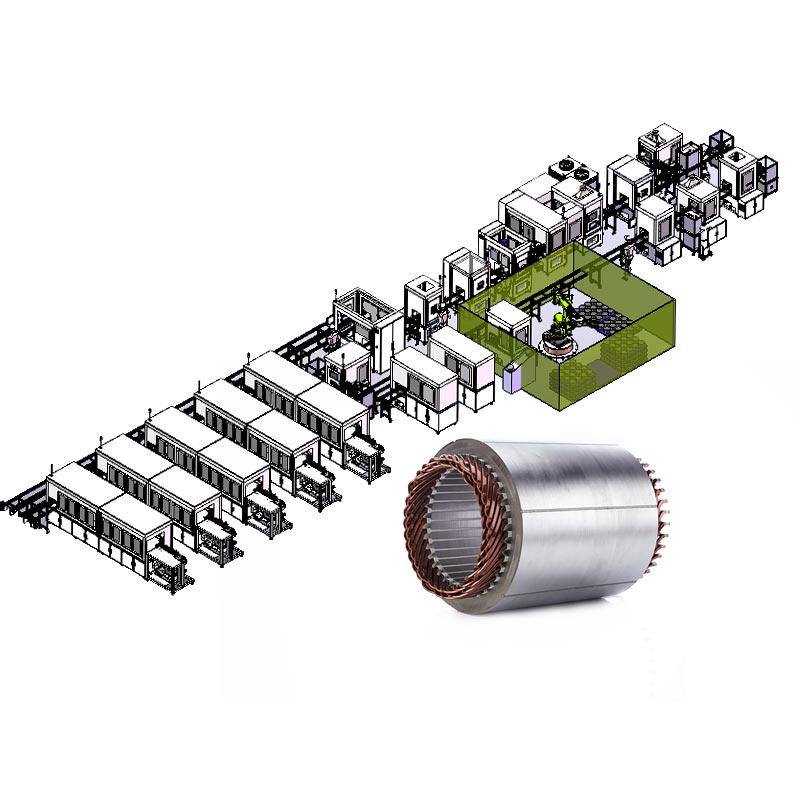
Fully Automatic EV Hairpin Motor Stator Production Line
Specialized flat wire motor manufacturing line integrating hairpin forming, slot insertion, twisting, laser welding, and comprehensive PD testing for high-voltage xEV drives.
Explore our precision-engineered machinery and critical electromagnetic motor components, configured to meet global automotive, industrial, and consumer appliance standards.
Specialized flat wire motor manufacturing line integrating hairpin forming, slot insertion, twisting, laser welding, and comprehensive PD testing for high-voltage xEV drives.
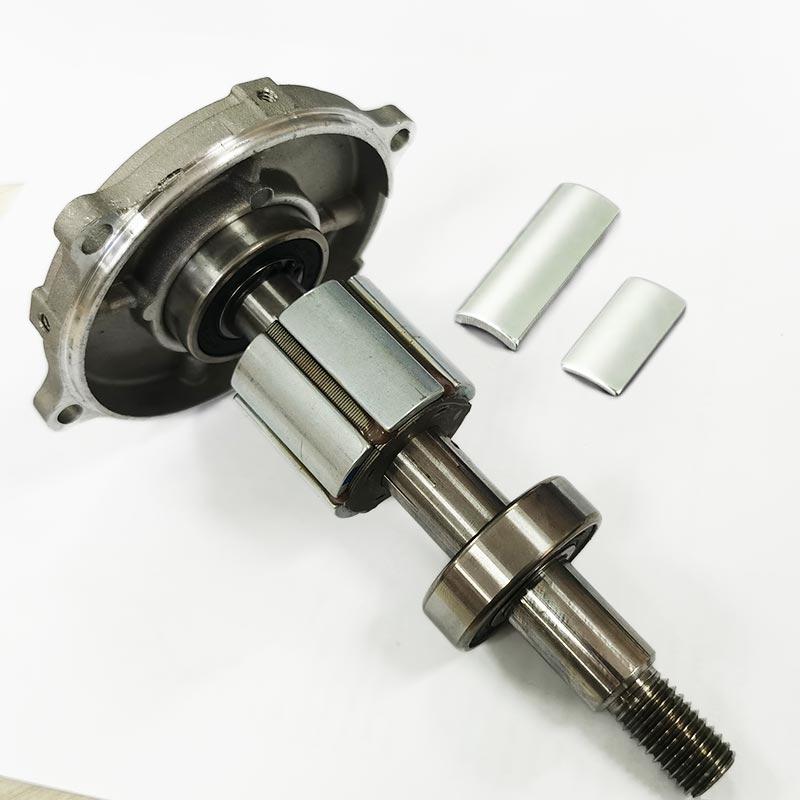
Ultra-high remanence and thermal stability sintered NdFeB rare-earth magnets engineered for EV traction drives, high-torque BLDC motors, and precision servo rotors.
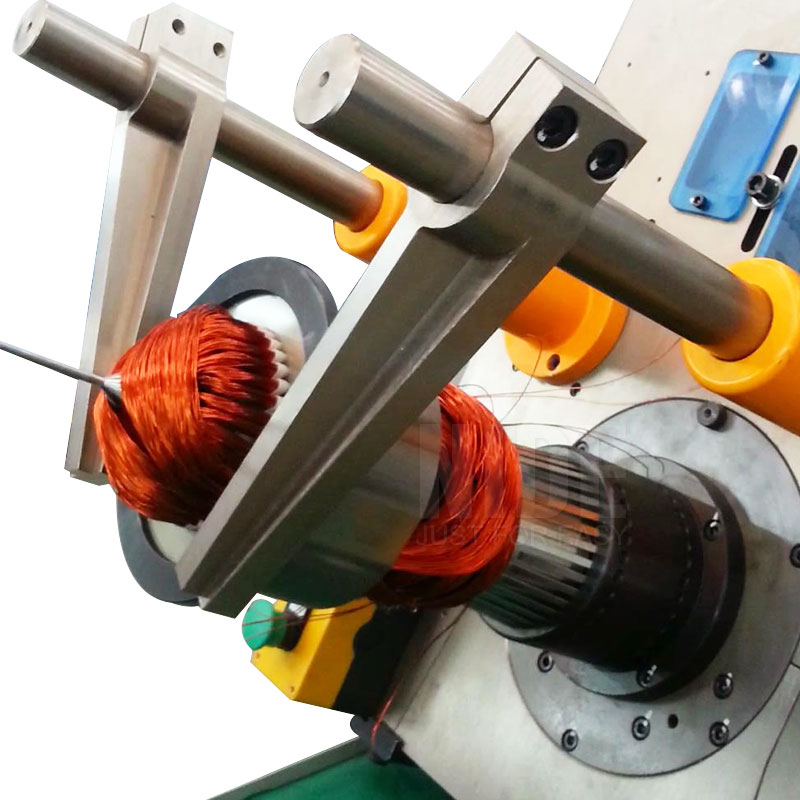
CE-certified single-cycle coil and slot wedge inserter featuring high-rigidity tooling and PLC control for three-phase induction stators, ensuring zero wire scraping.

Silver-copper alloy commutator designed for high-RPM power tools, automotive starter armatures, and universal motors, guaranteeing minimal brush wear and low electrical noise.

Dual-flyer high-speed winding equipment equipped with closed-loop servo tensioning, automatic commutator hooking, and dynamic changeover for fractional horsepower motors.

Automated dispensing, orientation checking, and insertion line for permanent magnets in IPM rotors, guaranteeing sub-millimeter positioning and bond consistency.
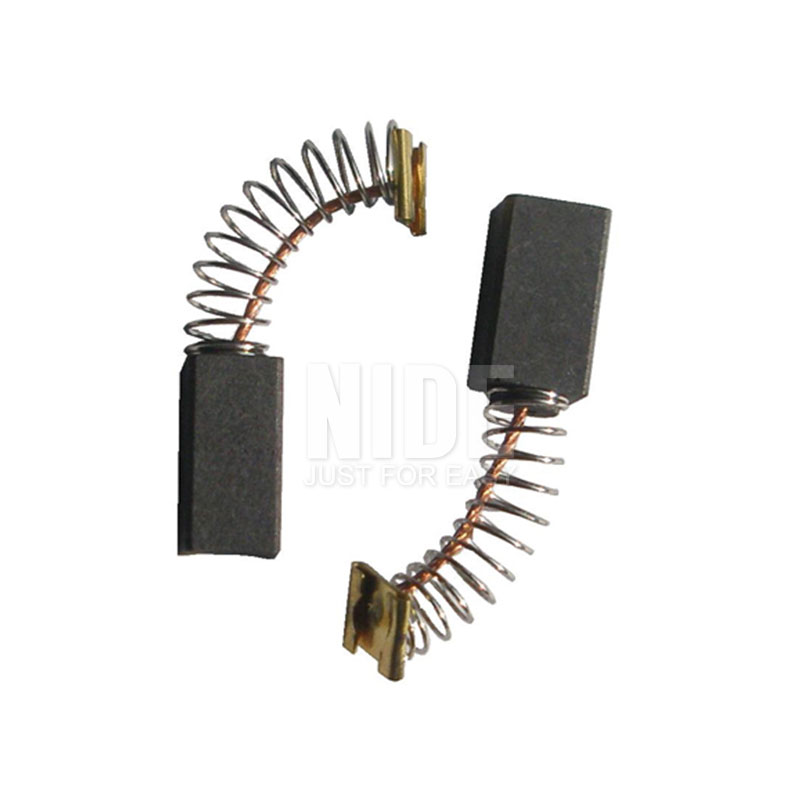
Engineered electro-graphite and metal-graphite contact brushes ensuring optimal commutation, high thermal conductivity, and extended operational lifespans in demanding DC motors.

High-efficiency aluminum rotor casting unit offering controlled shot velocity, cycle stability, and minimal porosity for high-efficiency squirrel-cage induction rotors.
Combining proprietary CNC multi-axis winding kinematics with full-system turnkey integration to eliminate downtime and maximize production OEE.
Operating out of the core manufacturing hub in Ningbo, Zhejiang, our engineering capabilities bridge the critical gap between individual machine automation and end-to-end electric motor manufacturing lines. As an ISO 9001-certified enterprise with verified onsite supplier evaluations, our technical competence spans armature winding machines, needle winding systems, induction motor coil insertion cells, and automated EV hairpin stator assembly platforms.
Unlike standard machinery brokers, we integrate the complete vertical supply chain. Alongside automated machinery, our specialized motor component division supplies precision-matched parts, including sintered NdFeB magnets, hook and groove commutators, high-wear carbon brushes, rotor shafts, and custom laminations. This unique dual-capability ensures our clients experience single-source accountability from coil geometry simulation to factory site commissioning.
An authoritative overview of machine stations, automation kinematics, and process sequences required for Tier-1 electric motor manufacturing.
In the modern electromechanical sector, the stator represents the core electromagnetic boundary determining an electric motor's efficiency, thermal dissipation, torque density, and acoustic profile (NVH). The shift from legacy manual or semi-automated bench tooling toward completely enclosed, PLC-orchestrated automatic stator production lines is driven by stringent global efficiency mandates (IE3, IE4, and IE5 standards), as well as the high-voltage demands of automotive electromobility.
A high-performance stator production cell integrates several tightly synchronized operations: stator core lamination feeding and insulating paper insertion, high-speed multi-spindle or flyer winding, coil insertion, multi-axis intermediate forming, mechanical phase lacing, final hydraulic forming, and 100% inline electrical verification. Each micro-step directly influences the slot fill factor—the ratio of conductive copper to available slot area. Modern automatic lines consistently achieve copper fill factors exceeding 70% to 75% in flat wire configurations, compared to merely 45% to 50% in traditional round-wire random windings.
Servo-driven paper feeding machines cut, fold, and insert Nomex, DMD, or high-dielectric synthetic insulation into stator slots within 0.5s to 1.2s per slot without cuff deformation or dielectric micro-cracking.
Multi-axis CNC servo systems wind copper wire directly into inner or outer stator slots with active tension closed-loop sensors, maintaining uniform wire layering and preventing tensile stress thinning.
Simultaneous push of coil groups and pre-formed slot wedges via high-precision modular tooling fingers. Eliminates enamel scratching while guaranteeing slot entry at high mechanical speeds.
Progressive hydraulic and pneumatic expanding tools reshape end-turns at intermediate and final stations, creating critical clearance for rotor insertion, end shields, and leads without stressing wire joints.
Fully automated single or double-end CNC lacing machines bundle end-windings with variable slot skipping programs, applying tight diamond or cross-stitch knotting to withstand thermal expansion.
Inline automated stations verify DC resistance balance, high-voltage dielectric insulation (Hi-Pot), surge impulse waveform differences, and partial discharge (PD) testing at sub-millivolt accuracy.
Strategic guidance for production managers and procurement engineers planning capital equipment investments over the next 5 to 10 years.
| Manufacturing Dimension | Legacy / Conventional Stator Lines | Next-Generation Smart Stator Lines | Procurement Strategic Impact |
|---|---|---|---|
| Conductor Architecture | Round enameled copper wire, random winding, high phase end-turn bulking. | Hairpin / I-pin continuous flat wire, optimized end-turn heights (<25mm). | Requires ultra-precise CNC wire stripping, 2D/3D bending, and vision laser welding. |
| Slot Fill Factor | 42% – 50% max fill; significant air voids within slots. | 70% – 78% fill; rectangular cross-section maximizing thermal conduction. | Achieves higher motor continuous power with smaller physical frame sizes. |
| Quality Verification | End-of-line manual bench testing; spot audit sampling. | 100% inline electrical, optical vision checks, and partial discharge testing. | Zero-defect delivery for Tier-1 automotive and premium industrial applications. |
| Line Flexibility | Rigid dedicated tooling; 4–8 hour changeover times. | Modular recipe changeovers (<15 mins); quick-disconnect tooling plates. | Lower Capex risk when managing multiple motor models across variable batch sizes. |
| Smart Industry 4.0 | Isolated standalone PLCs; manual shift log reports. | OPC-UA/MQTT protocol output, cloud predictive maintenance, laser-etched QR tracing. | Full component-level traceability demanded by global warranty compliance boards. |
Procurement directors and system integrators must align their line acquisitions with three undeniable industry vectors: Automotive Electrification (800V Architecture), Segmented Stator Topologies, and Sustainable Lifecycle Energy Reduction.
1. The 800V High-Voltage Paradigm: The automotive transition toward 800V drivetrains has made Partial Discharge (PD) mitigation the single most critical quality metric. Standard round wire fails rapidly under high dV/dt inverter voltage spikes. Future-ready stator production lines must integrate corona-resistant insulation insertion, precise copper end-turn stripping without nicking underlying enamel, and advanced optical vision tracking for laser-welded hairpin crowns.
2. Segmented & Concentrated Winding Configurations: In BLDC and drone propulsion motors, segmented tooth stators are rapidly overtaking monolithic laminations. Segmented stators allow direct needle winding on individual teeth with theoretical fill factors approaching 80%, before teeth are assembled into a round stator core via mechanical interlocking or laser welding. Procuring automated segment-handling cells drastically reduces copper cycle times while simplifying tooling complexity.
3. Low-Carbon Footprint Manufacturing: Energy-efficient servo actuators have largely replaced pneumatic cylinders in modern stator assembly lines. Servo-driven inserters and wire formers yield up to 40% reduction in electricity consumption while delivering micron-level positioning repeatability. Procuring all-electric production cells reduces total cost of ownership (TCO) across 10-year depreciation cycles.
Direct technical answers addressing factory floor constraints, lead times, tool customization, and international FAT/SAT compliance.
Connect directly with our senior mechanical and electrical engineers. Submit your stator core dimensions, slot drawings, and target capacity for a complimentary cycle time analysis and comprehensive line layout proposal.
