
Engineering the Hairpin (Flat Wire) Stator: The Definitive Industrial Paradigm
In modern e-mobility architectures, power density, thermal dissipation, and slot fill factor dictate vehicle range and drivetrain efficiency. Conventional round wire pull-in winding methods typically achieve an electrical slot fill factor between 45% and 50%. In contrast, rectangular conductor hairpin stator winding technology consistently exceeds 70% to 75% slot fill density. This monumental shift minimizes stator end-turn overhang height, slashes continuous copper resistive losses ($I^2R$), and streamlines conductive oil-cooling paths.
However, producing hairpin stators at industrial takt times (under 40 to 60 seconds per finished unit) presents immense mechanical and material challenges. Copper work-hardening, enamel insulation cracking during precision 3D CNC bending, slot paper puncture during multiple conductor insertion, and copper-to-copper micro-cracking during blue/fiber laser welding require robust, multi-axis automated kinematics. Ningbo Nakro Intelligent Equipment Co., Ltd. (operating alongside the trusted NIDE brand ecosystem) has architected closed-loop manufacturing cells specifically engineered to conquer these challenges.
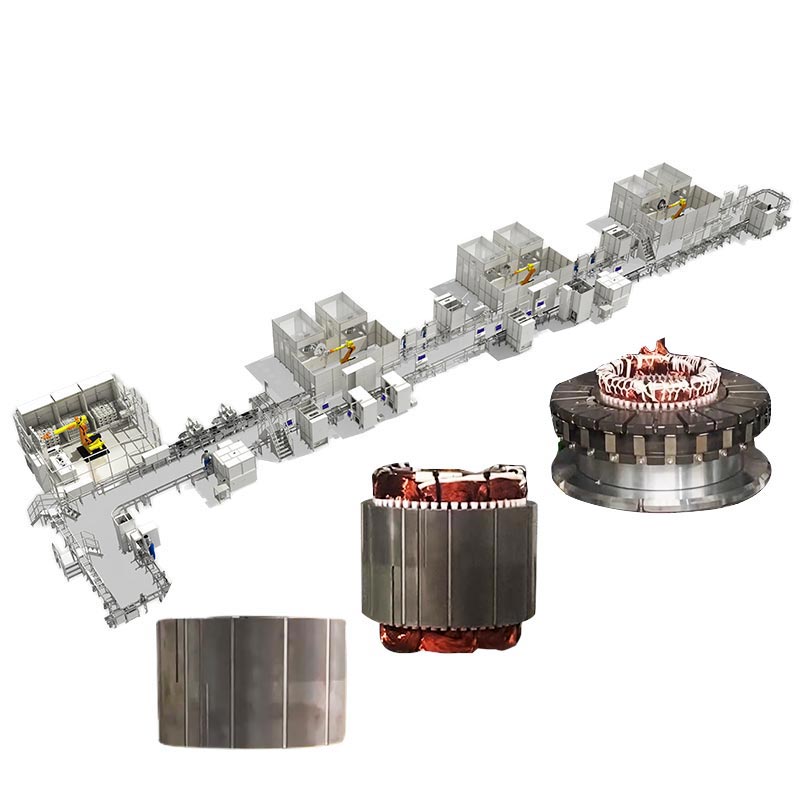
Our turnkey hairpin stator manufacturing architecture seamlessly integrates eight consecutive automated sub-processes:
- Laser Wire Enamel Stripping & CNC Cut-to-Length: Utilizing high-speed multi-axis fiber or pulsed laser systems that volatilize tough PAI/PI enamel coatings without nicking the copper substrate, paired with integrated mechanical chamfering for defect-free slot insertion.
- Continuous Multi-Axis 3D Hairpin Forming: Dynamic servo dies manipulate the flat copper wire into 2D crowns, followed by CNC compound bending into asymmetrical 3D pins without degrading the dielectric layer.
- B-Stage / Nomex Slot Insulation Paper Insertion: High-speed servo insertion units punch, crease, cut, and insert multi-layered insulation papers (such as B-stage aramid Nomex) into multi-slot laminations within milliseconds, verifying slot entry via optical displacement sensors.
- Concentric Layer Wire Nesting & Axial Insertion: Pre-arranging dozens of individual pins into a circular tool cage, executing multi-pin axial insertion into lamination stacks without scratching delicate enameled edges.
- Expanding, Twisting & End-Turn Crowning: Patented multi-layered crown-twisting tooling symmetrically expands inner and outer hairpin conductors to precise pitch spacing, preparing joint pairs for the welding head.
- Integrated Vision-Guided 3D Laser Welding: Ultra-fast galvanometric fiber or blue-wavelength laser systems coupled with coaxial 3D machine vision. The camera measures copper joint gaps and height discrepancies in real-time, auto-correcting laser focus trajectories to yield pore-free, zero-spatter copper melt pools.
- Trickle Impregnation & Induction Curing: Automatic pre-heating, servo nozzle resin dripping (trickling) deep into stator slots, followed by rapid electromagnetic induction curing to ensure total structural cohesion and thermal conductivity without void formation.
- End-of-Line (EOL) Partial Discharge & High-Pot Testing: High-voltage dielectric breakdown (hipot), phase surge testing, and sub-picocoulomb partial discharge (PD) testing to ensure absolute reliability across 800V silicon carbide (SiC) inverter systems.
Localization Profile: Automotive Electrification and Marine Drive Transition in Busan
The southeastern industrial belt of South Korea—anchored by Busan, Ulsan, and Gyeongsangnam-do—serves as the epicenter of East Asia's premier automotive supply chain and advanced marine engineering cluster. Busan's specialized industrial parks, including the Mieum Industrial Complex, Noksan National Industrial Complex, and the Busan-Jinhae Free Economic Zone (BJFEZ), house hundreds of Tier-1 and Tier-2 automotive suppliers. These enterprises are undergoing an aggressive transition from internal combustion engine (ICE) sub-assemblies to dedicated electric vehicle powertrains.
Busan's motor manufacturers cater directly to domestic automotive giants, globally expanding e-mobility brands, and high-spec eco-friendly marine systems. Equipping Busan-based production facilities requires machinery compliant with strict Korean Industrial Standards (KS), rigorous environmental health and safety codes (KOSHA regulations), and intuitive dual-language Korean/English human-machine interfaces (HMI).
EV Traction Motors (800V Architecture)
High-volume manufacturing of high-voltage permanent magnet synchronous motors (PMSM) for modern electric crossovers, sport sedans, and high-performance commercial vehicles requiring ultra-low partial discharge and high copper fill.
Electrified Marine Propulsion & Auxiliary Drives
Busan's world-leading shipbuilding and marine equipment sectors are actively adopting high-torque electric thruster motors, hybrid battery-electric tugboat drivetrains, and cryogenic LNG cargo pump motors requiring rugged stator encapsulation.
Smart Robotics & Industrial Servos
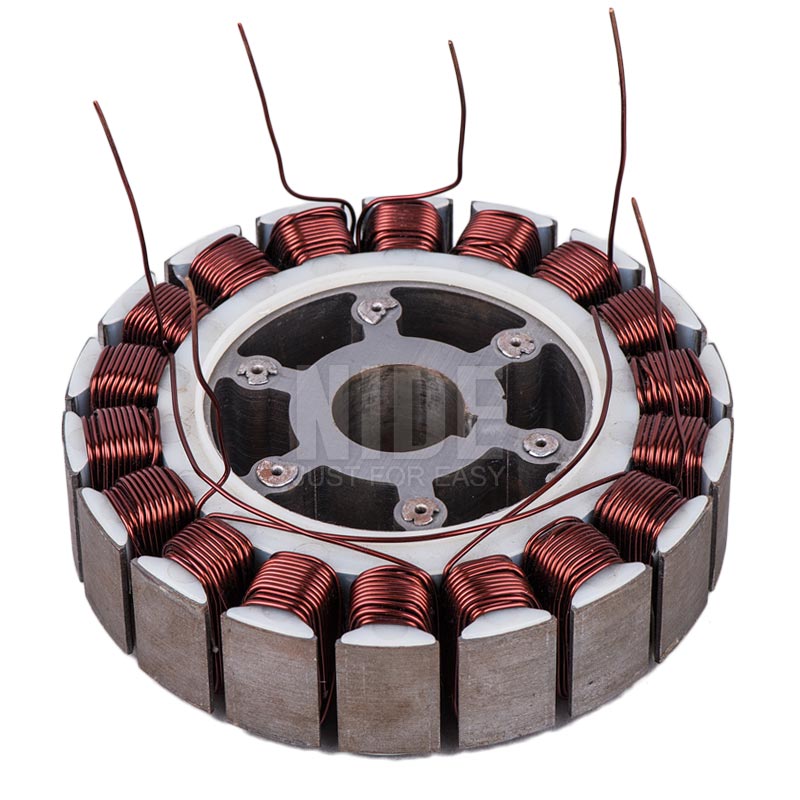
Advanced factories across Gyeongsangnam-do demand high-pole, multi-slot hairpin stators and concentrated-winding BLDC motors for dynamic robotic actuators, logistics automated guided vehicles (AGVs), and heavy-duty precision CNC machinery.
Emerging Technological Trends in the Busan E-Mobility Sector
The manufacturing climate in Busan reflects broader technological disruptions occurring throughout the global EV engineering landscape. Plant managers and procurement directors in the region prioritize three overarching engineering frontiers:
- Transition from 4-Layer/6-Layer to 8-Layer and 10-Layer Designs: To push inverter efficiency beyond 98% and suppress AC eddy current skin-effect losses at rotational speeds exceeding 18,000 RPM, motor developers in the Busan ecosystem are moving towards multi-layer hairpin stators. This migration multiplies the total pin count per slot, requiring exceptionally dense pin-twisting heads, micro-gap tolerances, and high-density coaxial welding systems capable of zero tooling collisions.
- Integrated Multi-Wavelength Laser Welding (Hybrid Blue + Fiber): Conventional infrared fiber lasers can cause spatter and weld porosity due to copper's low absorption rate in the IR spectrum at ambient temperatures. Busan Tier-1 lines are increasingly adopting hybrid laser optical configurations—using high-power blue lasers (approx. 450nm) to liquefy the copper joint instantly, complemented by fiber lasers to control molten pool depth. Our line configurations accommodate both high-frequency wobbling fiber lasers and blue laser heads.
- Full Smart-Factory MES & Traceability Protocols: In line with South Korea's aggressive national Smart Factory funding programs, factories in Noksan and Mieum demand machine controllers that natively interface with corporate MES (Manufacturing Execution Systems) via OPC-UA and SECS/GEM protocols. Every single hairpin's 3D angle, stripping length, insertion force, weld seam visual profile, and surge breakdown trace must be logged against individual stator QR codes for 15-year automotive warranty tracking.
Enterprise Advantages: Why Global Motor Makers Partner with Nakro & NIDE
With operational roots established in 2010 in Ningbo, Zhejiang—one of the world's most concentrated precision machinery clusters—Ningbo Nakro Intelligent Equipment Co., Ltd. (alongside our integrated NIDE brand equipment family) has delivered turnkey automation systems to customers in more than 50 countries. Backed by our modern 30,000+ m² engineering campus and ISO 9001 certified quality infrastructure, we combine machine manufacturing, custom tooling design, and component supply into one cohesive partnership.
Turnkey Line Capability & Custom Tooling
From standalone R&D prototyping cells to complete multi-station turnkey assembly lines, our in-house engineering team designs custom winding nozzles, inserting tools, and forming fixtures matching your precise slot geometry and wire gauge.
Full-Spectrum Component & Magnetic Sourcing
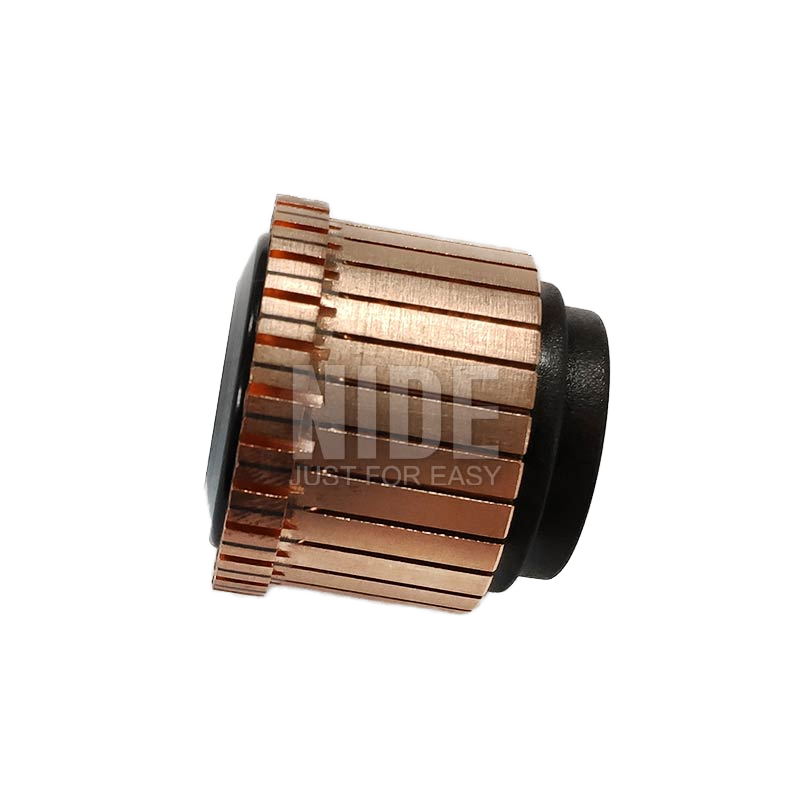
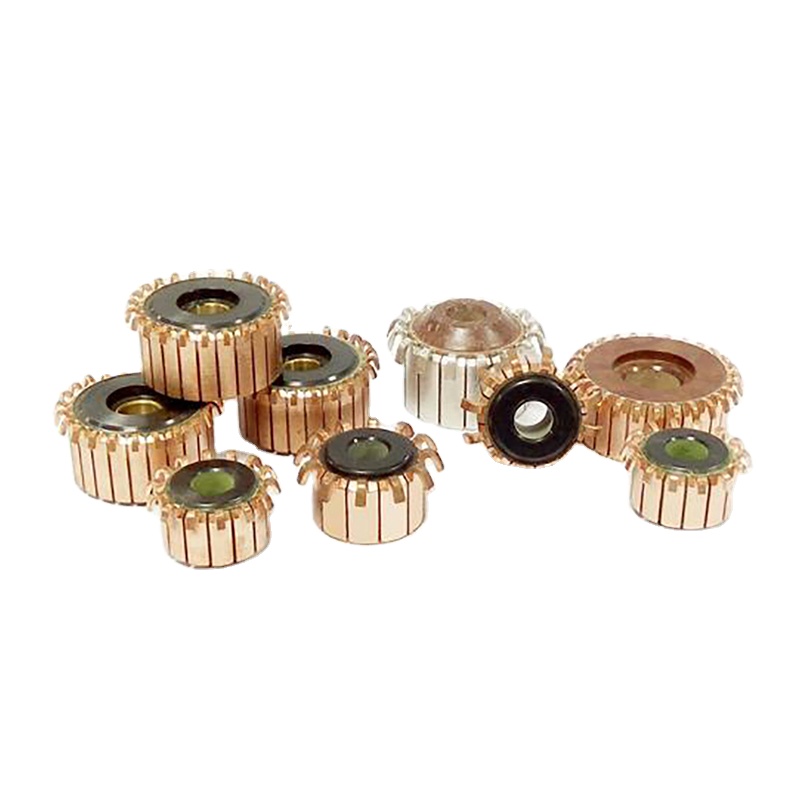
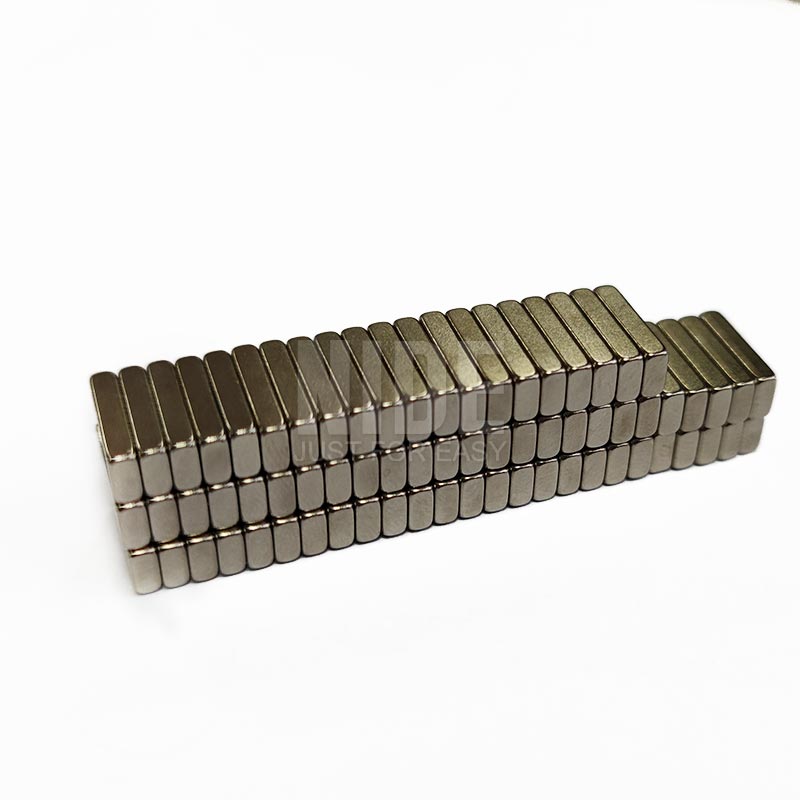
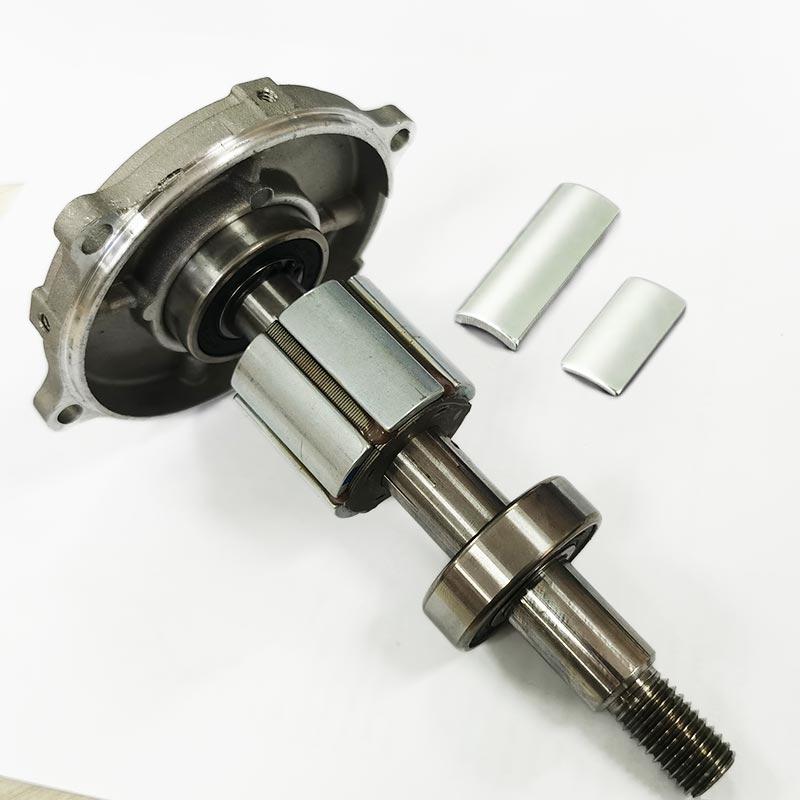
Beyond capital equipment, we eliminate supply friction by supplying certified commutators, precision bearings, carbon brushes, insulation papers, and N52 neodymium rare-earth block magnets, ensuring your mechanical tolerances align before first run-off.
Factory Acceptance Testing (FAT) with Real Parts
We do not ship on theoretical calculations. Every production machine undergoes exhaustive continuous trial runs utilizing your exact customer laminations, magnet wires, and structural components, validated through full electrical surge and insulation checks.
Dedicated Korean & Global Field Support
With over 13 years of machinery export experience, we provide bilingual engineering documentation, remote industrial telemetry, on-site commissioning by field technicians, and rapid tooling turnaround for new vehicle model variants.
ISO 9001 & CE Certified Construction
All core electrical cabinets, high-speed spindles, and servo architectures are built around internationally recognized components (Siemens, Mitsubishi, SMC, Schneider), fully verified by third-party inspection agencies.
Flexible Trade & Delivery Terms
We support standard automotive industrial procurement mechanisms, accepting T/T and L/C payment structures under FOB, CFR, and direct CIF Busan delivery terms, expediting customs clearance at Busan Port.
Frequently Asked Questions: Hairpin Stator Equipment Procurement for Busan Engineers
Q1: How does Nakro prevent copper enamel damage during 3D hairpin forming?
Our hairpin bending cells utilize dynamic servo-driven roll-bending tooling rather than high-impact friction stamping dies. Every tooling contact surface is mirror-polished and treated with specialized diamond-like carbon (DLC) coatings. Combined with multi-axis synchronous servo positioning, tension across the outer bending radius is held well beneath the elongation limit of high-temperature PAI/PI coatings.
Q2: Can the line accommodate different stack heights and multi-model variations?
Yes. Automotive stator platforms in Busan often produce multiple output ratings from a standardized stator diameter. Our tooling features quick-change modular clamping rings and motorized recipe adjustments via HMI. Changing between differing lamination stack heights (e.g., 120mm to 220mm) requires less than 30 minutes, with automatic servo stroke recalibration.
Q3: What welding consistency is guaranteed for high-voltage (800V) stators?
Our welding cells incorporate coaxial high-speed machine vision that registers every individual copper joint's X-Y-Z position prior to firing the laser. The software automatically compensates for micro-variations in pin cut heights or slot gaps up to ±0.2mm. In high-volume production, we achieve first-pass weld acceptance rates exceeding 99.2%, validated by in-line visual and micro-ohm resistance meters.
Q4: What are the lead times and shipping routes to the Port of Busan?
Complete turnkey hairpin stator production lines typically require 4 to 6 months for engineering, assembly, and customer FAT trial runs in Ningbo. Once approved, direct containerized or flat-rack maritime shipping from Ningbo Port (CNNGB) to Busan New Port (KRPUS) takes just 2 to 3 days, providing the fastest cross-border capital equipment delivery window in Asia.
Q5: Are machinery controls compliant with South Korean safety codes?
All exported machinery can be engineered with dual-channel safety relay systems, Category 4 optical light curtains, and safety interlocks compliant with CE and KOSHA (Korea Occupational Safety and Health Agency) industrial machinery directives. HMI operator terminals feature one-touch language switching between Korean and English.
Q6: How is after-sales commissioning and operator training supported in South Korea?
Prior to shipment, your manufacturing engineers are invited to our Ningbo plant for hands-on maintenance and operational certification. Upon machine delivery in Busan, our senior commissioning engineers deploy directly to your facility to supervise uncrating, line anchoring, network integration, and trial production runs through final sign-off.
