2010
Established Year
50+
Global Export Markets
30,000+
m² Production Plant
13+
Years Engineering Export
Magnetic Core
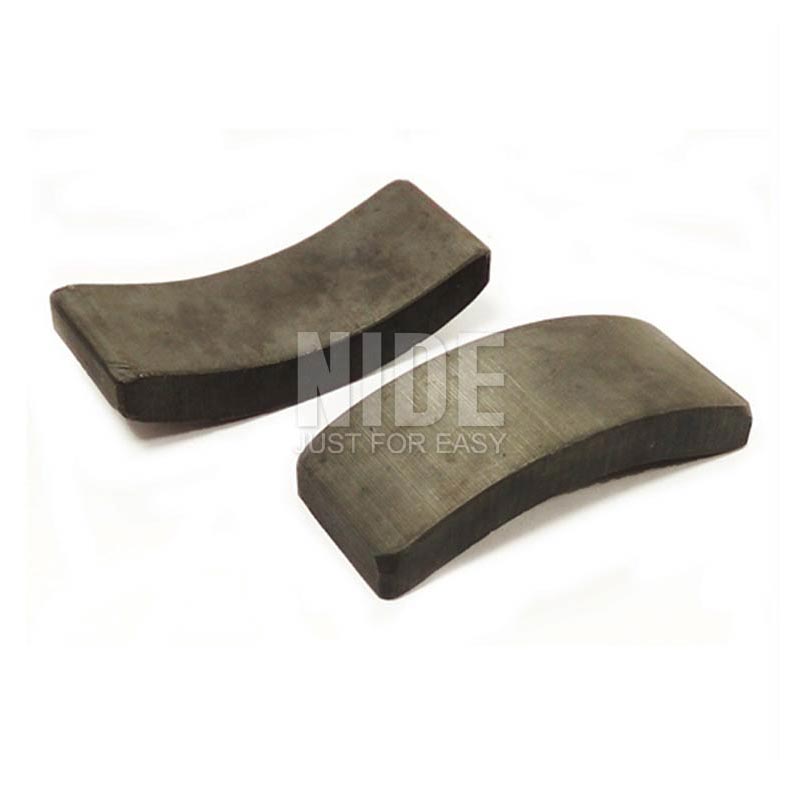
High remanence (Br) and coercivity (Hcb) arc segments optimized for high-flux water pump motors, automotive blowers, and DC motor armatures.
Die-Casting

PLC-controlled high-pressure aluminum cage die casting for engine and motor cores, CE certified with integrated thermal safety monitoring.
Universal Motor
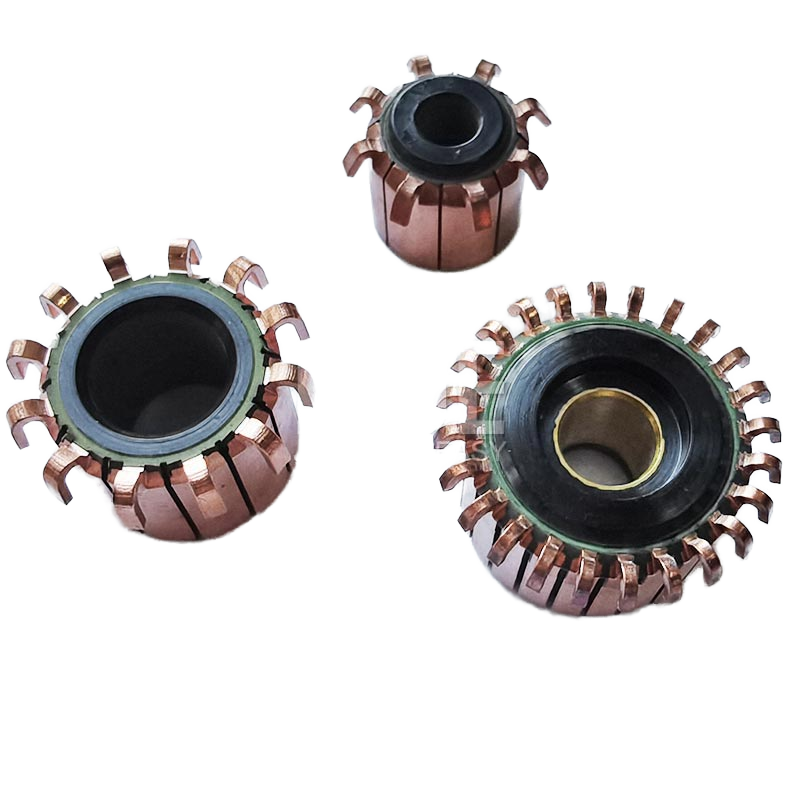
Precision stamped hook commutator NDPJ-HXQ-183 designed for dynamic high-RPM household appliance armatures with reinforced phenolic molding.
Commutator
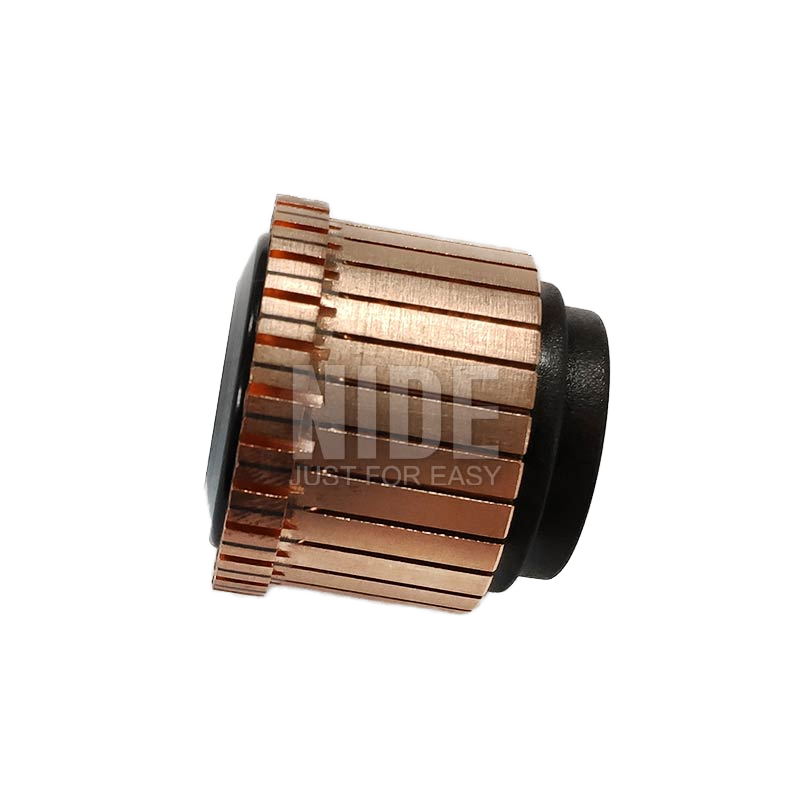
Dielectric mica-insulated collector rings engineered for heavy-duty universal motors, power tools, and high-frequency industrial drives.
Rotor Winder

Dual-flyer high-speed winder with real-time electronic tensioners and automatic hook wire hooking for appliance and starter motor armatures.
Stator Winder
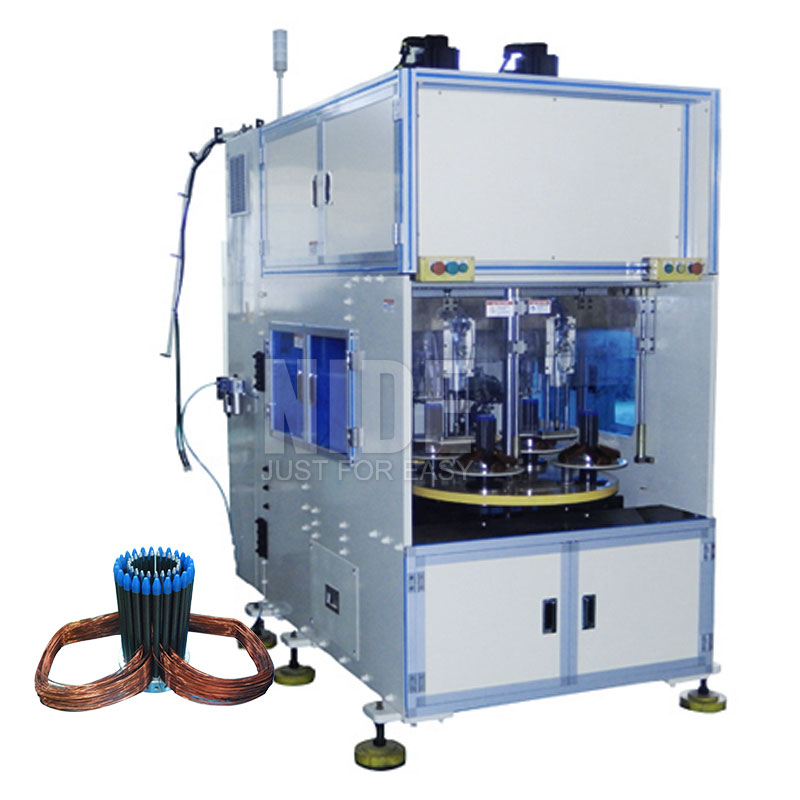
Multi-station CNC coil winder for air cooler, condenser, and HVAC fan stators, enabling multi-strand parallel winding with zero enamel abrasion.
Coil Inserter
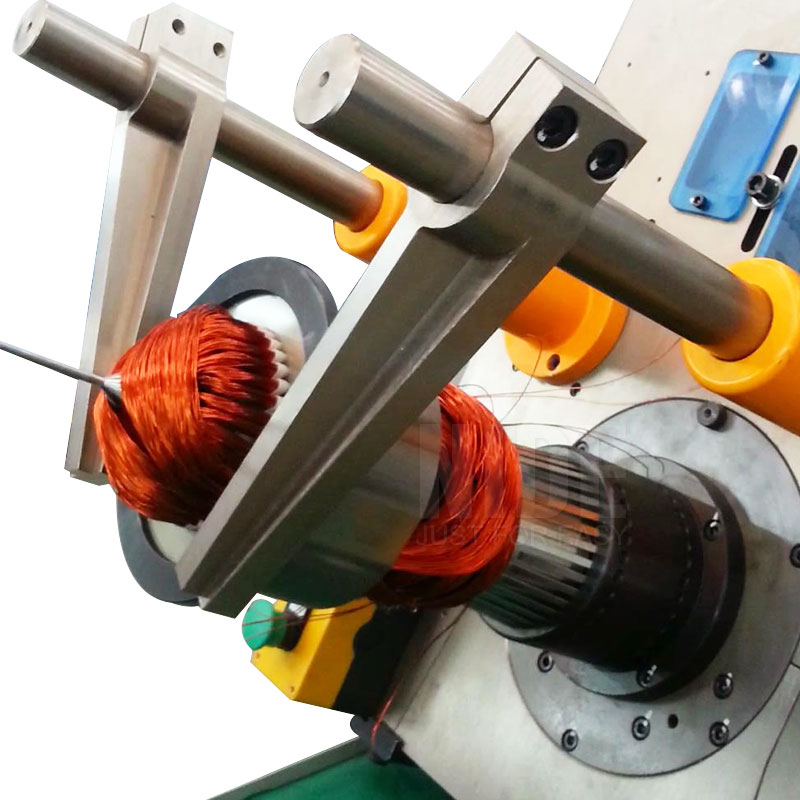
Servo-driven concurrent coil group and slot insulation wedge insertion for induction motors, ensuring up to 82% slot fill factor with no wire pinching.
Bearings
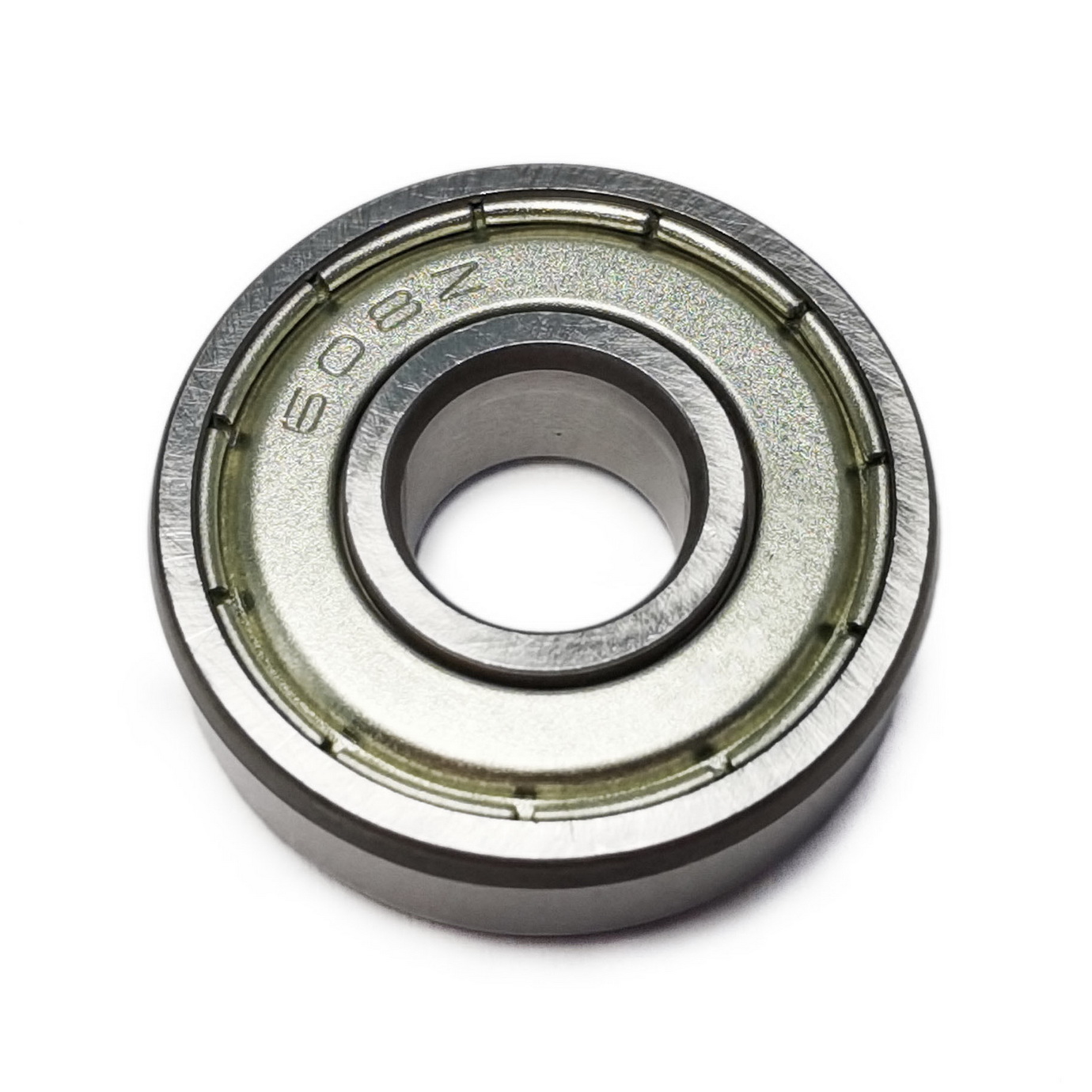
Low-noise, dustproof shielded miniature ball bearings designed for high-RPM electric motors, vacuum cleaners, and high-precision spindle assemblies.
Engineering Overview: Modern Stator Line Architecture for the Bender Market
In modern electromechanical manufacturing, the competitive landscape across the Bender industrial corridor and regional manufacturing hubs demands uncompromising operational excellence. As international regulatory bodies enforce stringent energy classification benchmarks—shifting baseline manufacturing requirements from legacy IEC standards toward IE4 Super Premium Efficiency and IE5 Ultra Premium Efficiency—electric motor manufacturers face unprecedented technical hurdles. Producing high-yield, energy-efficient stators requires replacing fragmented manual or semi-manual assembly cells with fully synchronized, automated stator production lines that maintain micro-millimeter precision across every lamination stack, insulation barrier, and copper winding turn.
Industrial motor builders serving the Bender region must balance diverse product mix requirements with aggressive cycle-time targets. The regional industrial base spans water treatment infrastructure, HVAC refrigeration systems, agricultural pumping installations, automotive auxiliaries, and burgeoning light electric vehicle (e-mobility) powertrains. Achieving consistent electromagnetic output across these varied product lines demands robust line flexibility, rapid tooling changeover systems (SMED protocols), and integrated end-of-line electrical verification. Ningbo Nakro Intelligent Equipment delivers turnkey stator production lines engineered precisely around these high-throughput requirements, pairing deep metallurgical process knowledge with advanced multi-axis CNC servo robotics.
Kinematic Precision in Slot Insulation and Wedge Inserting
The integrity of any high-voltage stator begins with the slot insulation process. Microscopic tears or pinhole punctures in DMD, NMN, or Nomex insulation papers inevitably cause inter-turn shorts or dielectric breakdown under high-inverter dV/dt stresses. Our automated slot insulation machinery utilizes servo-metered paper feeding, cold forming, precision cutting, and dynamic lamination indexing. By matching the tooling die precisely to the stator slot profile (whether semi-closed, open, or parallel-sided slots), our equipment eliminates the risk of paper dislocation during subsequent wire insertion.
Following coil insertion, the simultaneous insertion of slot wedges must achieve a tight mechanical fit to restrain conductors against dynamic electromagnetic vibration and thermal expansion cycles. Our integrated coil inserting machines feature dual servo systems that propel the pre-formed coils and precision-cut slot wedges into the stator slots in a single smooth, continuous stroke. This synchronous motion prevents enamel shearing on enameled copper magnet wire, even at challenging copper fill factors exceeding 78% to 82%.
01. Slot Paper Cell Inserting
Continuous coil paper feeding, automatic creasing, heating, cut-to-length, and bottom-slot push insertion into single-phase or three-phase lamination stacks within 0.5s to 1.2s per slot.
02. CNC Multi-Spindle Coil Winding
High-torque multi-axis flyers or needle winding heads winding continuous copper or aluminum wire across complex stepped tooling forms with automated wire clamping and lead wire trimming.
03. Synchronous Coil & Wedge Inserting
High-tensile alloy insertion blades guide the winding group and insulation wedges concurrently into stator lamination slots, completely mitigating wire crossed-over failures and insulation damage.
04. Intermediate Coil Forming
Hydraulic or servo-driven mechanical expansion and outer-diameter forming dies contour the coil overhangs (end-turns), clearing internal clearance bores for future lacing and rotor clearance.
05. CNC Dual-Head End-Turn Lacing
Automated simultaneous lacing of top and bottom end turns using industrial nylon cord, executing continuous stitch, skip stitch, or custom slot-interval ties to securely immobilize coil overhangs.
06. Final Overhang Dimension Forming
Precise volumetric calibration ensures the stator winding package strictly complies with housing tolerances, inner-bore concentricity, and axial terminal lead routing envelopes.
07. Automated In-Line Electrical Testing & Impregnation Varnish Transfer
100% inline automated electrical quality inspection conducting DC winding resistance, insulation resistance (Megger), high-potential withstand test (Hipot), inter-turn surge impulse wave comparison, and rotational direction verification, interfacing with MES systems for complete batch traceability prior to vacuum pressure impregnation (VPI) or trickle varnishing.
Localized Industrial Applications Serving the Bender Manufacturing Market
The manufacturing ecosystem in and around the Bender region represents a sophisticated cross-section of heavy industrial machinery, fluid dynamics, building technologies, and commercial vehicle electrification. Stator lines supplied to this market must meet exacting international standards, including CE mechanical and electrical safety directives, UL class insulation certifications, and rigorous low-vibration balance requirements.
1. High-Performance Water Pumps & Submersible Agricultural Motors
Fluid delivery systems and multi-stage irrigation pumps manufactured for regional agricultural and municipal water networks require stators capable of sustained operation in high-ambient, moisture-heavy environments. Nakro's three-phase stator coil inserting and forming lines allow pump manufacturers to utilize heavy wire diameters with superior copper slot fill factors. Minimized coil head dimensions reduce total conductor length, slashing I²R copper resistance losses and optimizing heat dissipation under full submerged thermal loads.
2. Commercial HVAC Condensers & Industrial Cooler Systems
Cooler and ventilation motors are subjected to continuous 24/7 run cycles where energy consumption accounts for over 90% of total lifecycle equipment cost. Utilizing our specialized CNC Cooler Motor Stator Coil Winding equipment, regional HVAC motor manufacturers achieve exceptionally balanced multi-speed or inverter-duty windings. The gentle mechanical wire handling system ensures that low-temperature enameled copper and aluminum wires maintain high dielectric integrity across prolonged operational hours.
3. Universal Household Appliances & Cordless Power Tools
High-volume fractional horsepower (FHP) motors for food processors, juicers, vacuums, and construction power tools rely on compact armatures and stators running at speeds exceeding 18,000 to 28,000 RPM. Nakro supplies automated rotor hot chamber die casting, flyer armature winders, and hook commutator fusion welders that maintain exact mass balancing and electrical symmetry, mitigating brush arcing and extending motor lifespan.
4. E-Mobility Light Electric Vehicles & Wheel Hub Drives
The rapid global transition toward electric rickshaws, e-scooters, and light commercial vehicles has stimulated strong localized demand for outer-rotor wheel hub motors and high-torque density BLDC (Brushless DC) traction stators. Nakro's automated BLDC needle winding machines execute synchronized multi-pole winding directly into the internal or external stator tooth contours, guaranteeing uniform wire laydown and optimal phase-to-phase insulation clearance.
| Performance Benchmark Metric |
Manual / Segmented Assembly |
Semi-Automated Cell |
Nakro Turnkey Automated Line |
Operational Impact (ROI Factor) |
| Cycle Time (Stator Core) |
180 – 240 seconds / unit |
60 – 90 seconds / unit |
18 – 28 seconds / unit |
Over 700% throughput increase |
| Slot Fill Factor Density |
62% – 68% maximum |
70% – 75% uniform |
Up to 82% precision fill |
Direct compliance with IE4/IE5 efficiency |
| Direct Operator Headcount |
14 – 18 technicians / shift |
6 – 8 operators / shift |
1 – 2 supervisory technicians |
Drastic reduction in localized labor costs |
| First-Pass Production Yield (FPY) |
91.5% – 93.8% |
96.5% – 97.2% |
≥ 99.4% consistent yield |
Eliminates costly rewinding and copper scrap |
| Copper Enamel Scrap Rate |
2.8% – 4.2% due to hand friction |
1.2% – 1.8% controlled |
≤ 0.25% closed-loop tension |
Massive annual savings in raw magnet wire |
| Line Changeover Time (SMED) |
4.0 – 6.0 hours manual swap |
1.5 – 2.5 hours tooling fix |
≤ 30 minutes quick-clamp tooling |
Enables economical high-mix batch runs |
Strategic Trends in the Bender Motor Manufacturing Sector
Manufacturing plants in the Bender territory and surrounding regions are actively revamping their capital equipment strategies to maintain competitive parity against low-cost imported assemblies. Key trends shaping procurement decisions include:
1. Hairpin Winding vs. Continuous Distributed Wire Automation
While flat-wire hairpin technology garners widespread attention in automotive EV traction motors, its prohibitive capital investment and tooling inflexibility present major drawbacks for general industrial motor manufacturers. Distributed winding automation—elevated by advanced servo-controlled inserting heads—remains the gold standard for versatility. Nakro’s lines allow manufacturers to switch across lamination stack heights (from 20mm up to 300mm) and slot configurations within minutes, achieving up to 82% slot fill factor at a fraction of hairpin capital expenditures.
2. Transition to Copper-Clad Aluminum (CCA) and Optimized Enamel Geometries
Fluctuating base metal commodity pricing has forced engineering teams to explore optimized conductor alternatives, including engineered multi-strand aluminum windings and precision-drawn copper. Ensuring damage-free insertion requires highly sensitive closed-loop tension controllers that dynamically adjust braking force during high-speed flyer rotations. Our machinery integrates optical encoder feedback with magnetic particle brake regulation, maintaining tension stability within ±1.5% of nominal setpoint values.
3. MES Integration & Complete Industry 4.0 Traceability
Tier-1 suppliers serving international pump, automotive, and appliance conglomerates are now mandated to log complete cradle-to-grave production data. Nakro’s industrial control cabinets are built on standard Siemens or Mitsubishi PLC architectures with open OPC-UA communication protocols. Every stator’s slot paper depth, insertion force profile, lacing tension, resistance reading, and surge impulse curve is permanently logged to the factory MES, giving plant managers verifiable audit defense against warranty claims.
ISO 9001 Certified System
Strict quality assurance protocols govern every mechanical assembly step, electrical cabinet wiring verification, and component dimensional inspection.
Exported to 50+ Countries
13+ years of global logistics experience delivering custom machinery, installation engineering, and remote diagnosis to clients worldwide.
In-House Precision Tooling
Dedicated R&D tooling division manufactures hardened Tungsten-carbide insertion blades, winding nozzles, and forming dies tailored to client slot drawings.
Complete Component Supply
Beyond capital machinery, we supply the full spectrum of motor components: commutators, arc magnets, precision bearings, shafts, end covers, and insulation.
Can Nakro stator lines adapt to local factory electrical standards in the Bender market?
Yes. All electrical control systems, servo packs, and pneumatic solenoids are custom-configured prior to assembly according to your facility's exact electrical infrastructure (e.g., 380V, 400V, 415V, or 480V 3-Phase at 50Hz or 60Hz). Control transformer circuits isolate low-voltage safety logic (24VDC), and we utilize CE-compliant switchgear, Schneider circuit breakers, and Schneider/Siemens emergency stop safety relays to comply with industrial safety mandates.
How do you verify machinery accuracy and performance prior to overseas shipment?
Every machine undergoes a strict Factory Acceptance Test (FAT) protocol in our Ningbo facility. We strongly encourage buyers to dispatch their own production lamination stacks, copper magnet wire, and slot insulation paper to our plant. We run continuous batch tests (typically 300 to 500 consecutive cycles) to prove Cpk capability, cycle times, wire tension consistency, and dielectric test pass rates. High-definition multi-angle video audits, dimensional inspection reports, and electrical test logs are provided for final customer sign-off prior to crating.
What is the typical changeover procedure and time for mixed-model stator production?
Our equipment is engineered using quick-disconnect mechanical interfaces and modular tooling assemblies. For stators sharing the same lamination outer diameter and slot geometry but differing in stack height, changeover is accomplished purely through HMI touch-screen program recipe selection and motorized stack height adjustment, taking less than 5 minutes. For complete slot/die changes requiring new insertion blades, push fingers, and forming rings, total physical changeover takes between 25 and 45 minutes using standard quick-clamp hex keys.
What provisions are in place to prevent wire enamel scratching during high-speed insertion?
Wire scratching is prevented through a multi-stage engineering approach: First, our insertion blades and wedge guides are manufactured from high-purity Japanese or European tool steels, vacuum heat-treated to HRC 60-62, and precision mirror-polished to a surface roughness of Ra < 0.05 μm. Second, our multi-axis servo drives synchronize the feed speed of the wedge pusher with the wire pusher, maintaining constant clearance without crushing or wedging conductors against sharp lamination slot tooth corners.
Can your lines integrate into our existing plant Manufacturing Execution System (MES)?
Absolutely. Our electrical engineering department configures native Ethernet/IP, Profinet, or Modbus TCP/IP protocols on our PLC controllers. All individual cycle metrics—including serial numbers, slot resistance values, insulation leakage currents, high-pot test outcomes, cycle times, and fault code histories—are exported via standardized OPC-UA data structures to local factory servers or cloud SCADA databases.
What warranty and overseas after-sales technical support do you provide?
Nakro provides a standard 12-month comprehensive warranty on all machinery, covering all non-wearing mechanical parts and electrical components. We maintain dedicated overseas commissioning teams and service partnerships capable of on-site turnkey installation, factory integration, and technician operator training. Furthermore, every machine is outfitted with secure industrial VPN routers for instant remote software diagnostics, PLC troubleshooting, and firmware upgrades directly from our primary engineering facility.
What lead times should buyers anticipate for customized turnkey lines?
Stand-alone machines (such as individual CNC coil winders or semi-automatic coil inserting units) typically carry a build cycle of 45 to 60 days. Complete customized turnkey automated production lines—incorporating automated conveyance, multi-station winding, paper insertion, wedge insertion, 3D forming, dual-head lacing, and automated electrical test benches—require approximately 90 to 120 days from final approved 2D/3D part drawings to factory dry-run acceptance.
Can you supply matching motor components along with the machinery?
Yes. One of Nakro's core competitive differentiators is our ability to deliver a true one-stop electromechanical ecosystem. Alongside our capital equipment, we regularly supply certified permanent ferrite arc magnets, commutators (hook and mica types), precision 608ZZ deep groove ball bearings, stamped rotor lamination packs, carbon brushes, and specialized slot insulation films, saving buyers extensive multi-vendor auditing and procurement overhead.
Accelerate Your Stator Manufacturing Capabilities
Consult with our senior application engineers today. Send us your stator lamination drawings, stack heights, wire diameters, and target output—we will provide a comprehensive cycle-time analysis, station layout plan, and turnkey quotation.
