Precision Rotor, Armature & Stator Production Machinery
Explore our industrial-grade dynamic balancing systems, automated coil inserting equipment, and precision core components tailored to reduce mechanical vibration, maximize electromagnetic efficiency, and prolong motor operational lifespan.
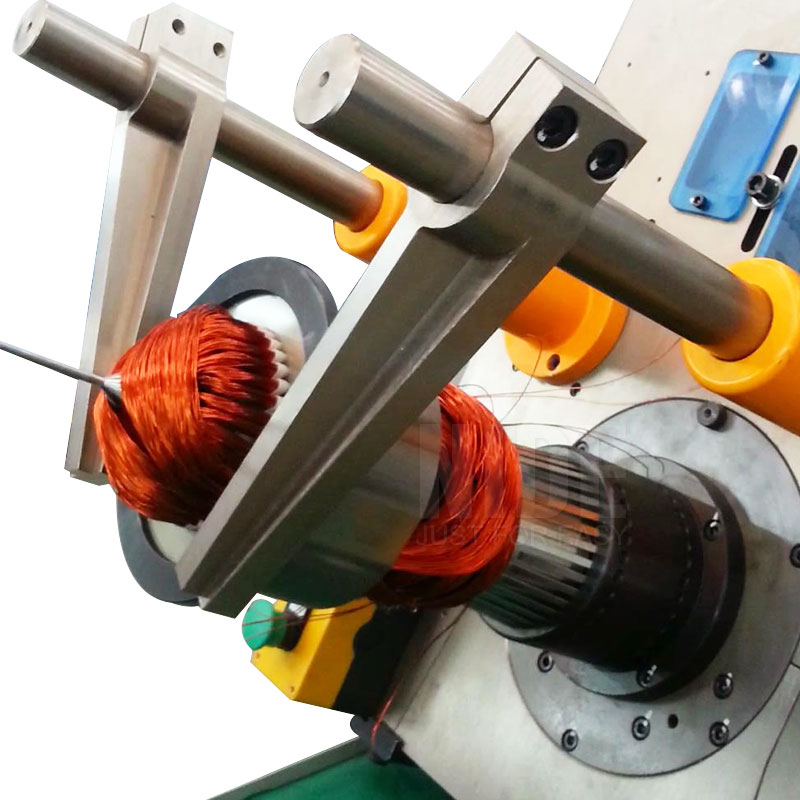
Semi-Automatic Three-Phase Motor Stator Coil Inserting Machine
Engineered with PLC industrial core components and CE certification, this machine executes simultaneous wire coil and wedge insertion into three-phase induction stators with zero insulation rupture.
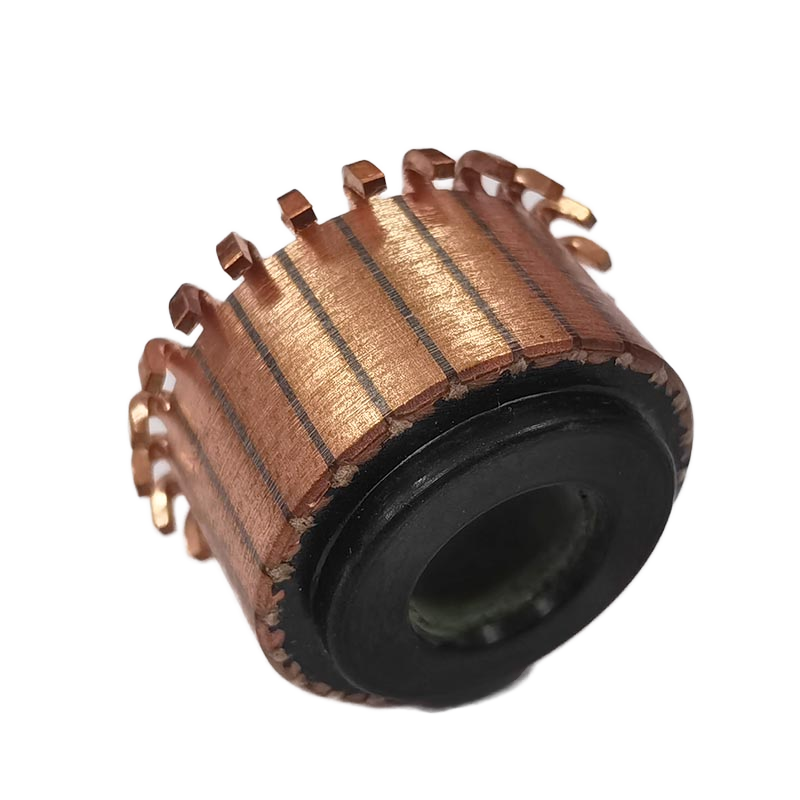
24 Segments Hook Type Angle Grinder DC Motor Commutator
Precision copper-segment hook-type commutator model NDPJ-HXQ-640A designed for high-RPM power tools, universal armatures, and industrial DC cooling fan motor assemblies.
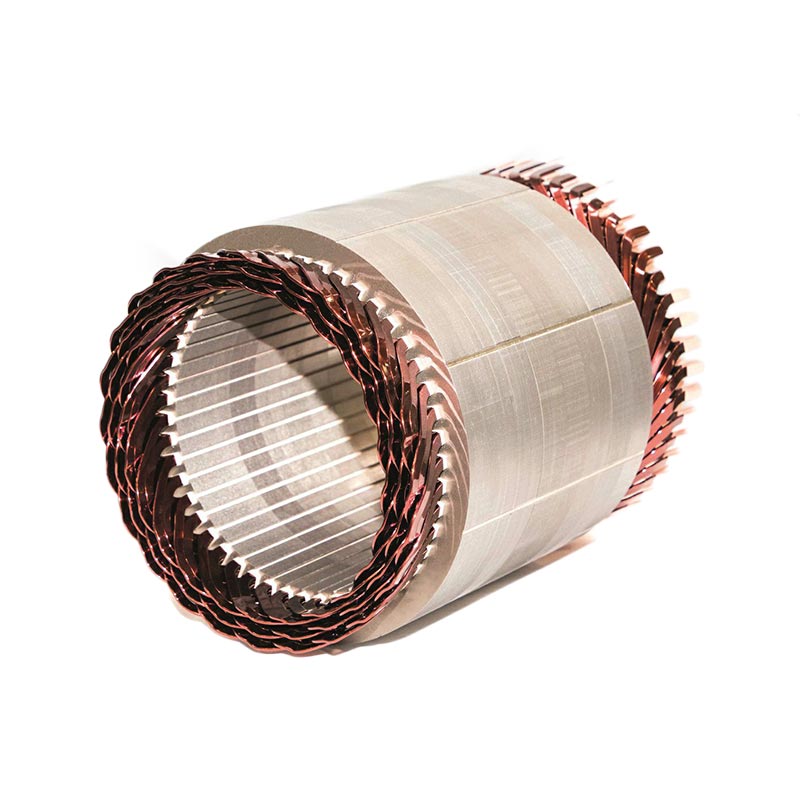
Fully Automatic Hairpin Motor Stator Line for E-Mobility
State-of-the-art flat copper wire automated forming, inserting, twisting, and laser welding production line designed for next-generation electric vehicle traction drive motors.
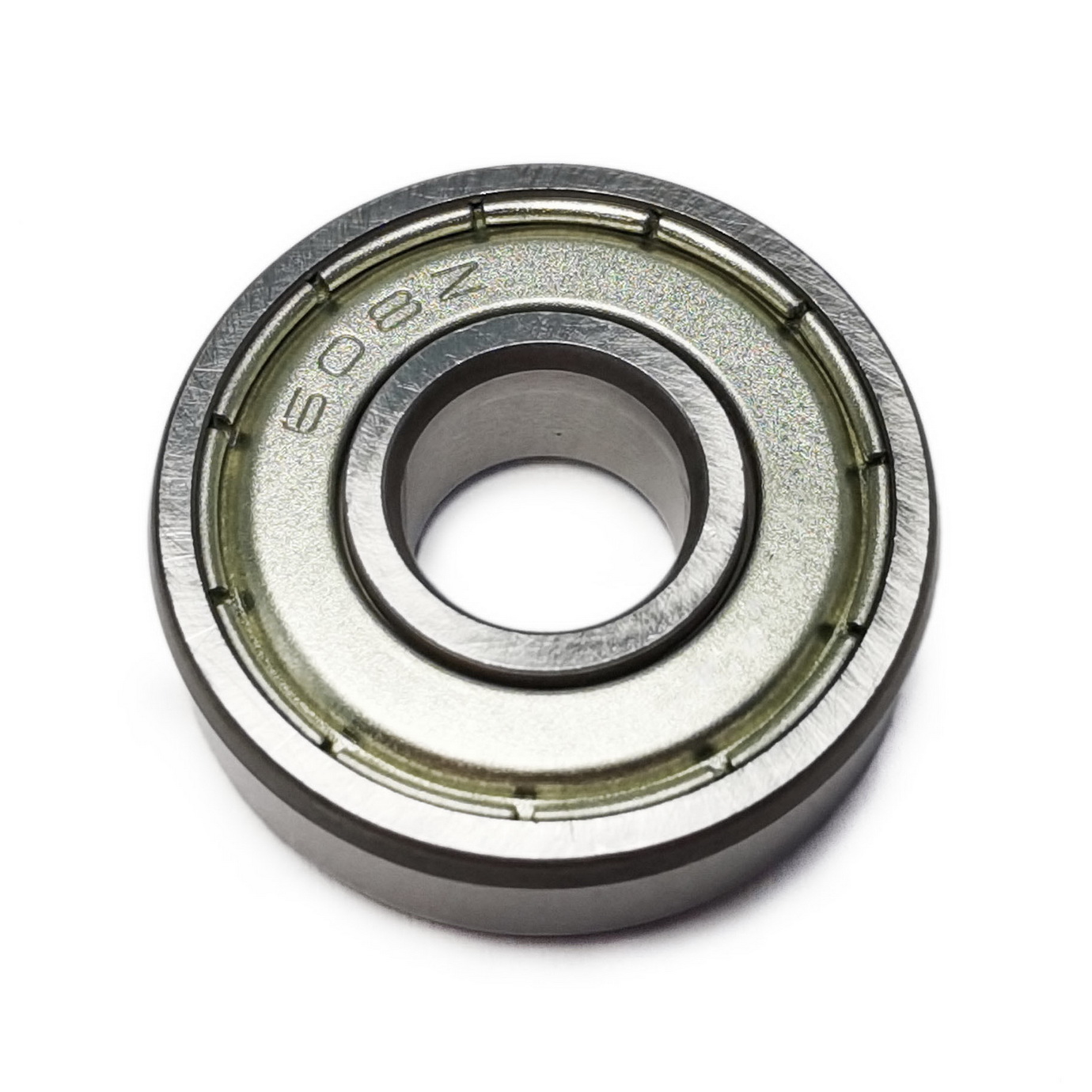
Stainless Steel 608ZZ Deep Groove Rotor Ball Bearing
Corrosion-resistant 10mm ID x 20mm OD single-row bearing with dustproof dual metal shields, optimized to handle high rotor spin velocities with ultra-low frictional thermal loss.
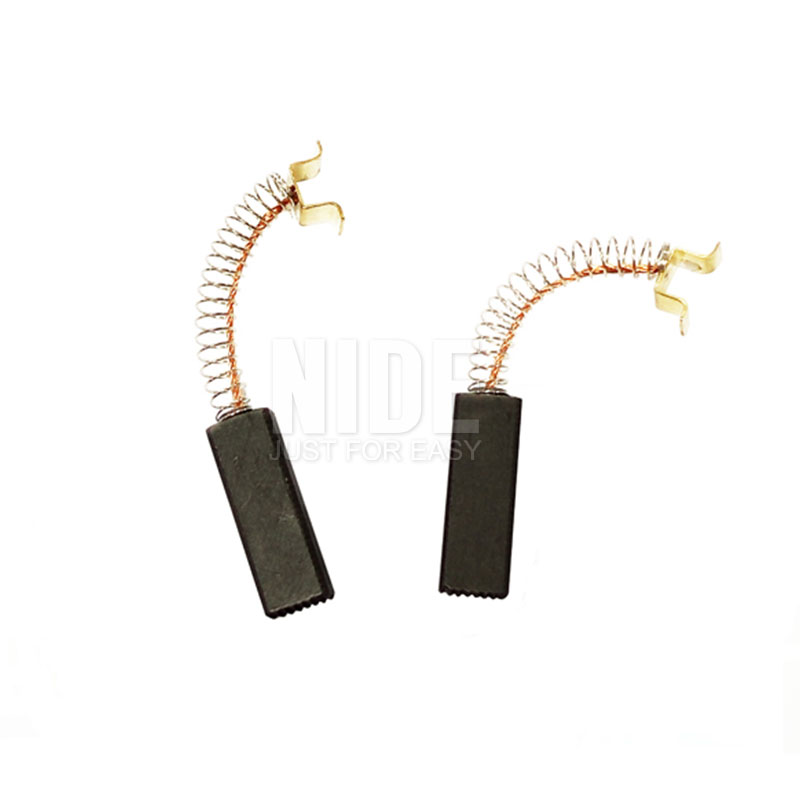
Automobile Electrical Carbon Brush for Heavy DC Motors
Model NDPJ-TS-1 copper-graphite carbon brushes offering exceptional electrical conductivity, minimal spark discharge, and extended operational cycles across demanding vehicular drive motors.
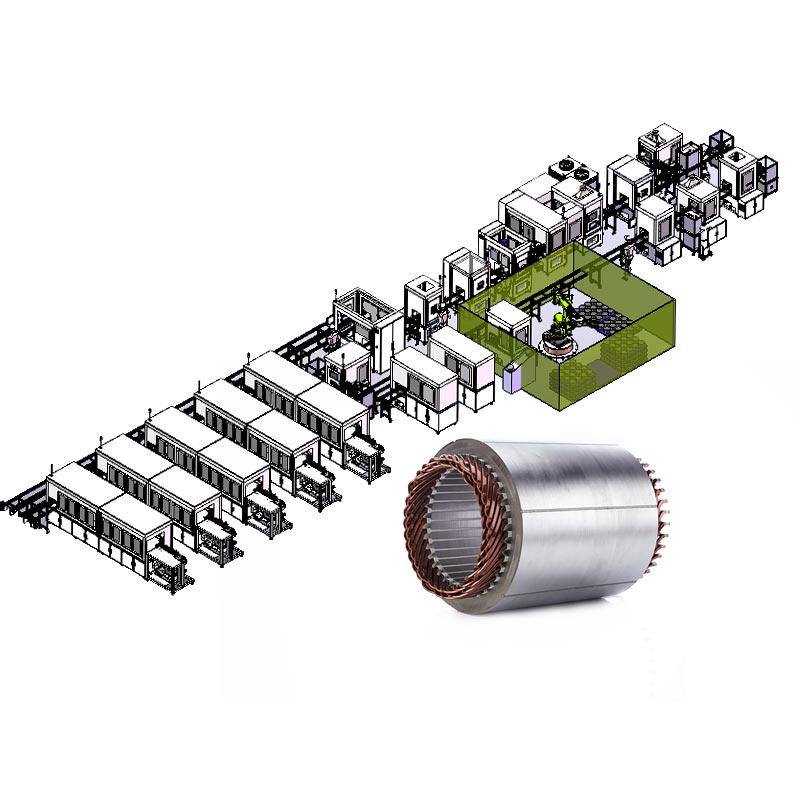
Full EV Hairpin Stator Manufacturing Line
Automated high-density slot-filling hairpin stator line with integrated optical 3D vision inspection, automated paper slot lining, and sub-micron positioning robotics.
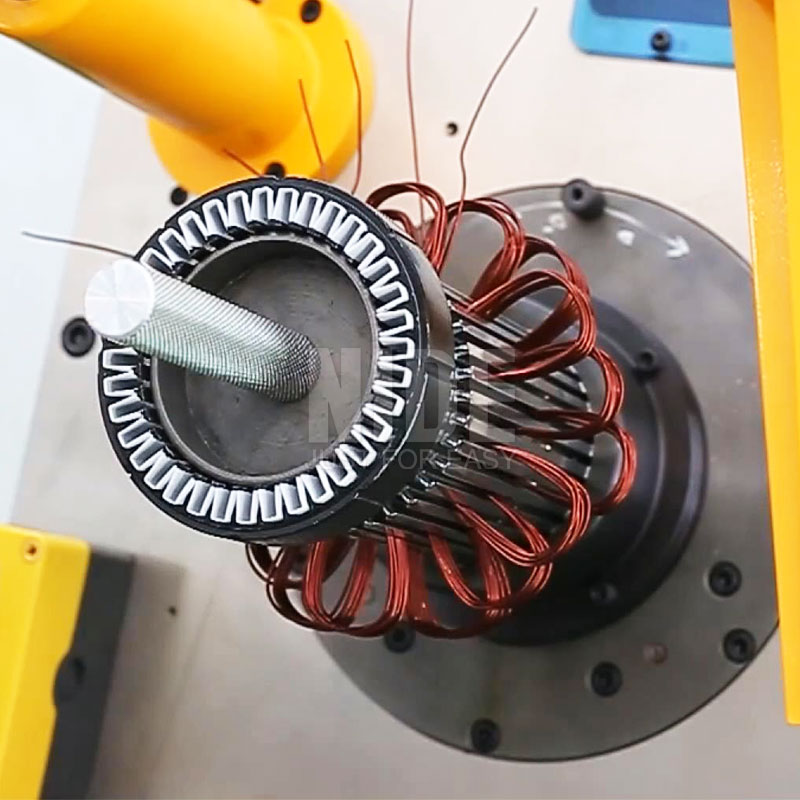
Automatic Single-Phase Motor Stator Coil Insertion Machine
High-precision servo-driven single-phase stator winder and wedge inserting workstation designed for domestic water pumps, centrifugal blowers, and air-conditioning compressors.
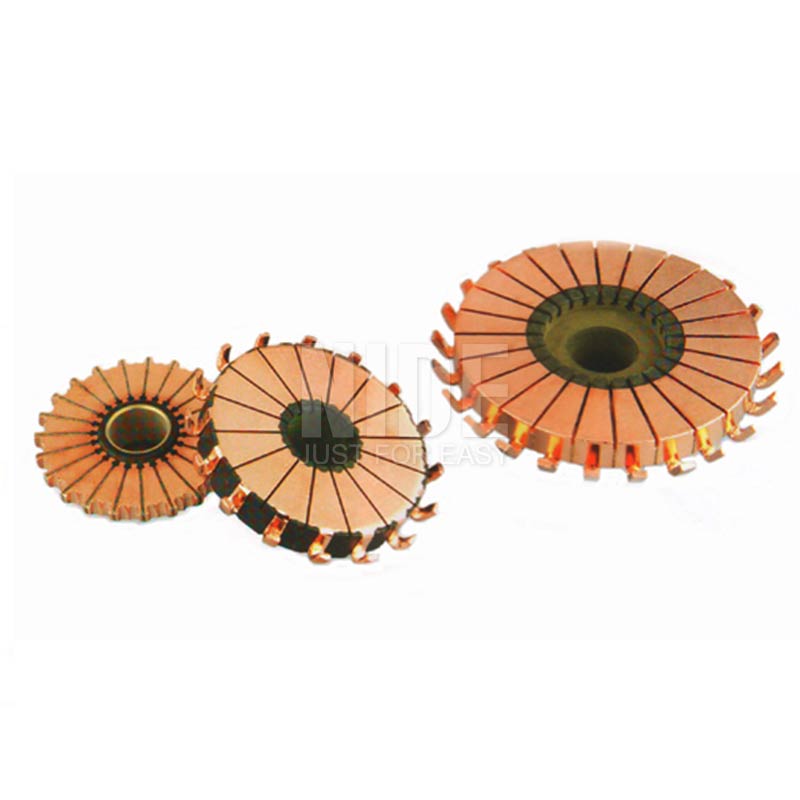
Planar Type Commutator (NDPJ-HXQ-39) for DC Rotors
CE-certified planar face-type commutator offering compact axial installation dimensions, ideal for miniature automotive fuel pumps, throttle body motors, and micro actuator rotors.
Dynamic Rotor Balancing: Mechanical Dynamics & Operational Standards
A comprehensive examination of centrifugal force mitigation, dynamic couple unbalance correction, and ISO 21940-11 grade tolerance calibration for rotating electro-mechanical systems.
Theoretical Foundations of Dynamic Unbalance in Rotating Electromechanical Assemblies
In high-speed electric motor manufacturing and refurbishment, centrifugal force generated by uneven mass distribution is the primary driver of premature bearing failure, mechanical fatigue, acoustic emission, and electromagnetic harmonic distortion. When a rotor turns on its functional axis, any non-concentricity between its geometric center line and principal inertia axis produces an instantaneous radial force expressed by the vector equation F = m · r · ω², where m represents unbalance mass, r indicates the eccentricity radius, and ω signifies angular velocity.
Because centrifugal excitation scales with the square of angular velocity, doubling the rotational frequency quadruples the destructive bearing loads. In industrial settings like Baucau—where electric motors drive heavy water extraction pumps, coastal aggregate processing, and municipal diesel generator exciter units—uncontrolled unbalance leads to swift bearing degradation, rotor-stator rubbing (eccentric air gaps), and eventual winding burnouts. Our hard-bearing dynamic rotor balancing instrumentation measures phase angle and vibration vectors via high-sensitivity piezoelectric force transducers, calculating mass addition or mass removal targets across dual correction planes.
Rigid Rotor Classification versus Flexible Rotor Dynamics (ISO 1940 / ISO 21940-11)
Engineers evaluate rotor behavior by distinguishing between rigid and flexible rotors. A rotor is classified as rigid when its operational RPM remains safely below its first critical resonant bending speed (typically under 70% of the first bending mode frequency). Under these parameters, internal deflection is negligible, and correction can be executed in two selected correction planes via static (force) and dynamic (couple) balancing procedures.
For applications exceeding flexible thresholds—such as multi-stage turbine impellers, high-frequency spindle motors, or electric vehicle traction armatures operating up to 15,000–20,000 RPM—balancing requires multi-speed modal calibration. Our modern automated rotor balancing machine range incorporates digital filtering algorithms (Narrow-band FFT extraction) that isolate mechanical run-out from genuine dynamic unbalance signals, ensuring adherence to strict international vibration severity grades: ISO G0.4, G1.0, and G2.5.
Correction Methodologies: Milling, Drilling, and Weight Addition Automation
Achieving permissible residual unbalance (Uper) demands precise mass modification. Our balancing machines feature optional automated correction modules: polar milling, axial drilling, tangential grinding, or calibrated copper/tungsten putty addition. Integrated CNC servo axes calculate the exact drill depth into rotor balance rings or laminated poles, executing material subtraction without compromising rotor lamination integrity or short-circuiting electrical silicon steel sheets.
Localized Rotor Balancing & Motor Applications in Baucau
As the economic anchor of eastern Timor-Leste, the Municipality of Baucau demands rugged, field-serviceable balancing solutions suited to humid maritime coastal zones, agricultural processing plants, and critical public utility operations.
Agricultural Milling & Coffee Processing Overhaul
The highland and sub-coastal sectors surrounding Baucau rely on centrifugal coffee depulpers, grain grinders, and rice milling drums. These machines suffer severe dynamic mass shift from abrasive bean wear, requiring regular dual-plane rotor rebalancing to avoid bearing destruction during harvest seasons.
Marine Propulsion & Coastal Aquaculture Equipment
Operating near the Wetar Strait and Baucau coastal landings, inboard marine alternator rotors, propeller shafts, and saltwater aeration pump impellers experience aggressive galvanic corrosion. On-site dynamic balancing prevents destructive shaft whipping and saltwater shaft-seal blowouts.
Diesel Genset Armatures & Municipal Power Grids
Due to isolated microgrid conditions across the eastern districts of Timor-Leste, heavy-duty industrial diesel generators (such as EDTL facilities) require precision excitation armature balancing. Periodic rotor recalibration maintains stable frequency output and prevents unexpected regional power blackouts.
Quarrying Aggregate & Roadworks Equipment Motors
Expanding arterial roadways between Baucau, Manatuto, and Lautém demand crushing plants, heavy vibratory screens, and industrial conveyor drives. Balancing these rugged motor rotors eliminates high-amplitude structural vibrations that crack chassis welds.
Emerging Technological & Industrial Trends in Baucau
Strategic modernization plans in Timor-Leste point to rapid mechanization, local remanufacturing self-reliance, and clean energy adoption.
Shift from Equipment Replacement to Local Re-engineering
Historically, failed electric motors in Baucau were either discarded or transported over treacherous roads to Dili or Surabaya for rewind and balancing. Rising freight costs and extended turnaround times are spurring local mechanical service workshops to establish self-reliant, in-house motor rebuilding hubs equipped with dynamic balancing stands.
Adoption of High-Efficiency Induction & BLDC Motors
National energy policies encourage phasing out obsolete low-efficiency electric drives in municipal water pumping and industrial processing. Upgrading to IE3 and IE4 standards requires significantly tighter balancing tolerances (G1.0 instead of legacy G6.3) to minimize parasitic parasitic electrical losses and heat generation.
Smart IoT Diagnostics & Dual-Plane Digital Balancing
Local workshops are moving away from trial-and-error mechanical balancing towards smart computerized balancing instruments with intuitive touchscreens, laser angular positioning, and automated ISO run-off reporting. This allows local Timorese operators to balance complex armatures with minimal initial training.
Engineering Strengths & Factory Capabilities
Combining precision machine tooling, comprehensive component integration, and turnkey motor manufacturing know-how trusted across 50+ countries worldwide.
Turnkey Motor Assembly Lines
From shaft pressing, slot insulation, and precision armature coil winding to commutator hook welding, lacing, dynamic balancing, and electrical surge testing—we engineer fully unified production ecosystems.
Full Component Ecosystem Supply
Beyond capital equipment, we supply matching components including commutators, deep groove ball bearings (608ZZ), carbon brushes, lamination stacks, and slot wedges for single-source procurement security.
ISO 9001 Certified Quality Rigor
Operating within strict quality management frameworks since 2010, every rotor balancing bed, winder, and inserter undergoes rigorous factory acceptance tests (FAT) with actual customer lamination samples before dispatch.
Global After-Sales & Remote Support
More than 13 years of machinery export experience supported by remote telemetry diagnosis, on-site commissioning options, video run-off sign-offs, and expedited spare tooling availability.
Six-Stage Machine Quality Assurance Process
Each balancing machine and motor assembly station undergoes thorough multi-checkpoint quality validation before crating and export dispatch.
Raw Material & Sensor Calibration
Piezoelectric force transducers, hard-bearing support brackets, and drive belts are certified against international calibration standards.
Bed Planarity & Guideway Alignment
Heavy cast-iron machine beds undergo stress-relief tempering and micron-grade precision grinding to eliminate baseline resonance.
Electrical Cabinet & PLC Integration
High-tier industrial PLC controllers, safety relays, and HMI touch panels pass 48-hour continuous thermal endurance tests.
Dynamic Run-Off with Master Rotors
Machines are verified against certified ISO master calibration rotors to validate minimum achievable residual unbalance (Umar).
Optical & Phase Angle Accuracy Test
High-resolution infrared photo-sensors and rotary encoders undergo precision angle indexing checks across varying RPM bands.
Tropicalized Seaworthy Export Packaging
Vacuum-sealed anti-corrosion barrier wrapping, vapor-phase inhibitor (VPI) desiccants, and reinforced timber crating ensure damage-free maritime transit.
Frequently Asked Questions for Baucau Industrial Buyers
Practical answers covering grid volatility, environmental humidity, transport logistics, and technical training for workshops across Timor-Leste.
Q How do balancing machines handle local power grid fluctuations in Baucau?
Our machines can be configured with wide-input voltage tolerance stabilizers (380V/415V ±15%, 50Hz) and integrated uninterruptible power supply (UPS) backups for digital measurement consoles. This prevents measurement data corruption or servo controller lockouts during sudden line voltage dips.
Q How does tropical maritime climate affect calibration and machine life?
Coastal humidity and airborne salt around Baucau can corrode precision guideways and degrade electronics. We treat our machines with conformal anti-fungal PCB coatings, IP54 sealed electrical enclosures, hard-chrome plated bearing pedestals, and precision stainless-steel fasteners.
Q What is the typical freight and shipping transit time to Timor-Leste?
Equipment is packed in heavy-duty seaworthy wooden crates and shipped via container routes to Port of Dili, followed by bonded domestic transport along the northern coastal corridor to Baucau. Sea transit typically spans 18 to 28 days depending on transshipment connections.
Q Can Timorese workshop technicians operate the machine without prior balancing experience?
Yes. The digital interface features step-by-step graphic guidance: input rotor dimensions (A, B, C spacing, correction radii), spin the rotor, and the screen indicates the exact correction angle (polar clock format) and drill depth or weight addition in grams. Comprehensive English operational manuals and video tutorials are provided.
Q Can one balancing machine handle diverse rotor types (pumps, armatures, fans)?
Absolutely. Universal hard-bearing machines accommodate versatile rotor diameters, shaft journals, and bearing spans. Using quick-adjust support roller pedestals and belt-drive tensioners, technicians can reconfigure the bed in under 5 minutes to balance anything from small angle grinder armatures to 50kW pump impellers.
Q What warranty protection and spare tooling support do you provide?
Every industrial balancing system and stator coil inserting machine includes a 1-year comprehensive warranty on core components (PLC, motor, piezoelectric transducers, load cells). Replacement drive belts, optical reflective tape, roller bearings, and calibration weights are readily stocked for immediate dispatch.
Upgrade Your Workshop's Motor Balancing & Winding Capabilities
Contact our engineering sales department today for detailed technical datasheets, machine footprint layouts, and quotation packages tailored to the industrial needs of Baucau and greater Timor-Leste.
