Featured Motor Manufacturing Equipment & High-Performance Assemblies
Explore our industrial-grade automated stator assembly cells, rotor die-casting systems, precision armatures, and OEM components engineered for long cycle lives and rigorous international standards.
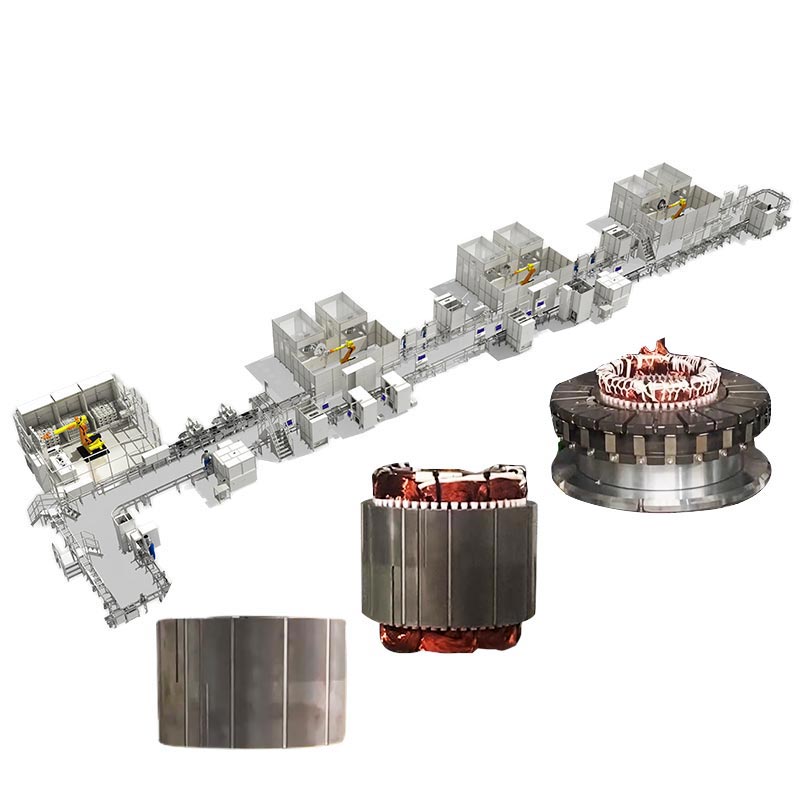
NIDE Automatic EV Stator Production Line 220V/380V
CE-certified turnkey hairpin motor stator line engineered for high copper slot fill factors, featuring automated paper insertion, CNC forming, wire twisting, and laser welding.
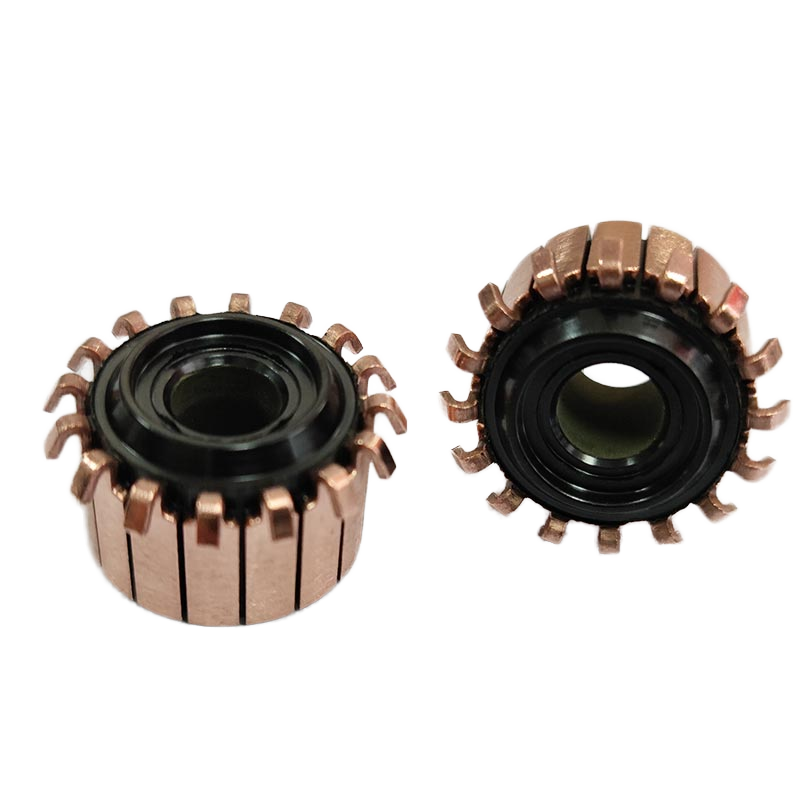
Customized Commutator Armature Hook Model NDPJ-HXQ-871A
Solid electrolytic copper collector hooks designed for automotive cooling blowers, ventilation fans, and fractional-horsepower DC traction motors with superior thermal conductivity.
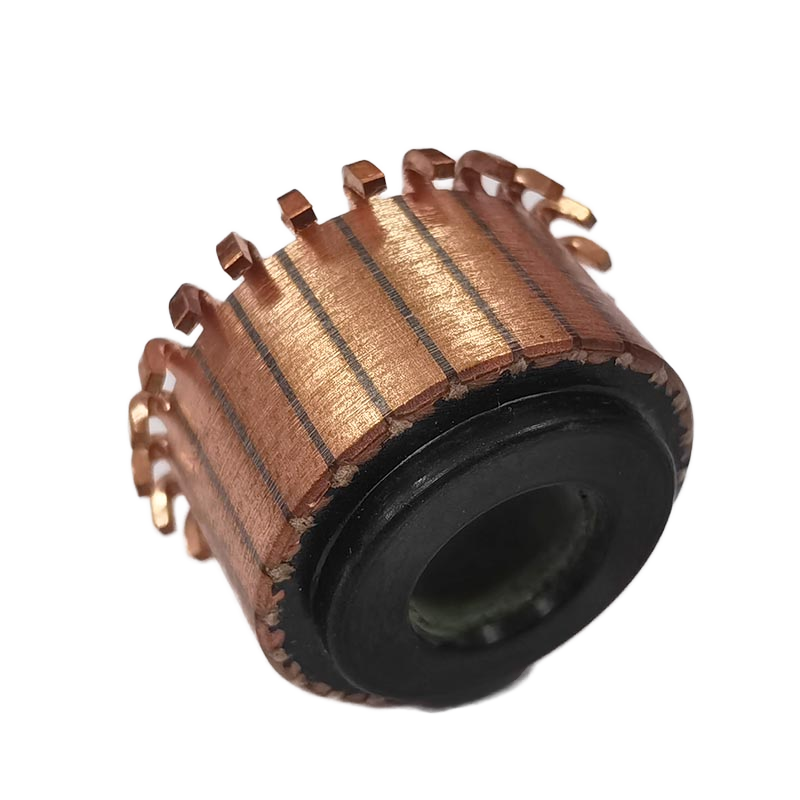
24 Segments Hook Commutator 8.4*25*16 NDPJ-HXQ-640A
Reinforced molded phenolic resin commutator engineered for angle grinders and high-RPM power tools, providing mica undercutting and zero dielectric breakdown under heavy vibration.
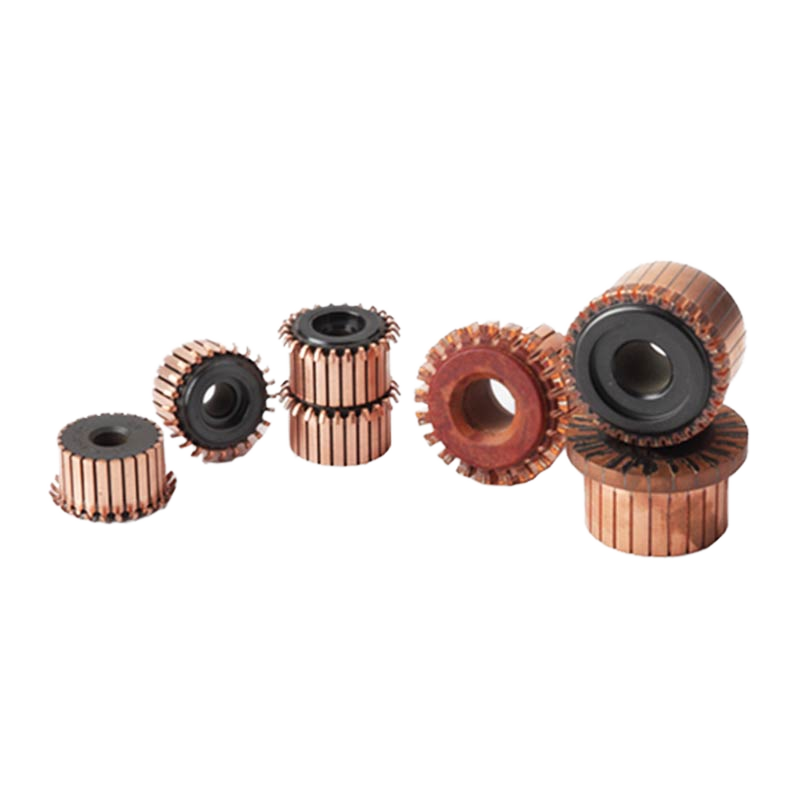
DC Motor Starter Armature Commutator Model NDPJ-HXQ-14
Heavy-duty starter motor commutator engineered for instantaneous peak torque, high current density, and arc-free brush contact in harsh industrial drive applications.
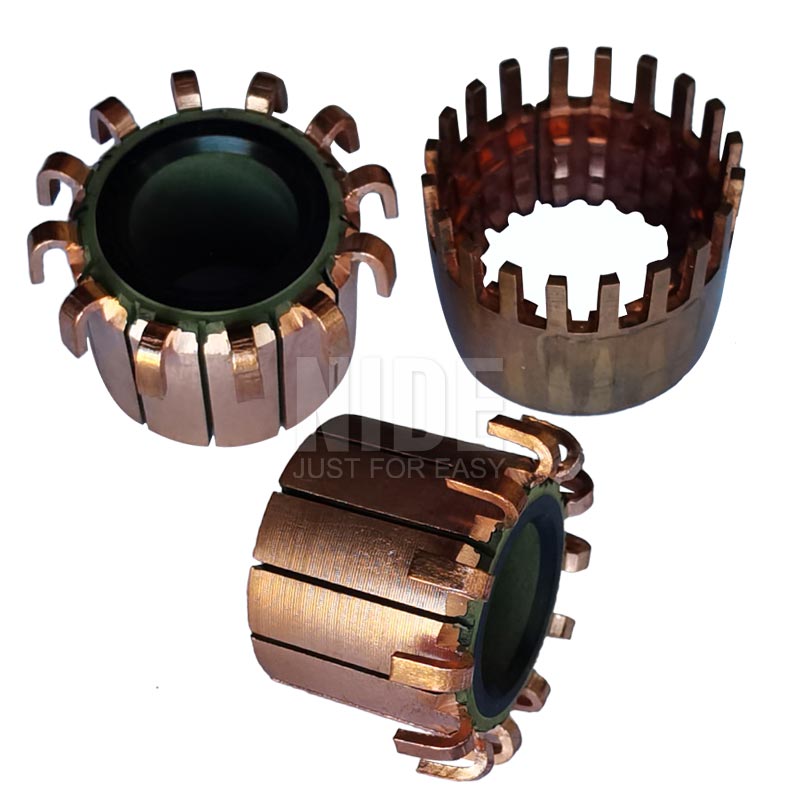
12-Segment Automobile Wiper Commutator NDPJ-HXQ-174
CCC and CE certified automotive wiper motor sub-assembly featuring tight runout tolerances, anti-corrosion surface treatments, and matching low-wear carbon brush pairings.
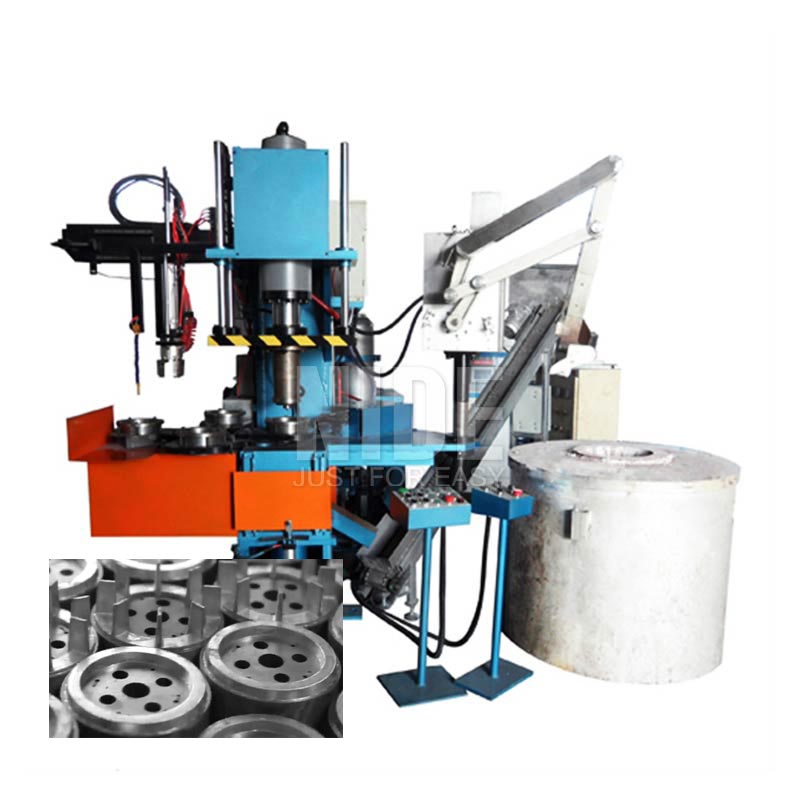
Automatic Rotor Hot Chamber Die Casting Machine PLC
Industrial PLC-governed hot chamber aluminum die-casting machine for squirrel-cage induction motor rotors, guaranteeing zero porosity, low scrap rates, and balanced electrical conductivity.
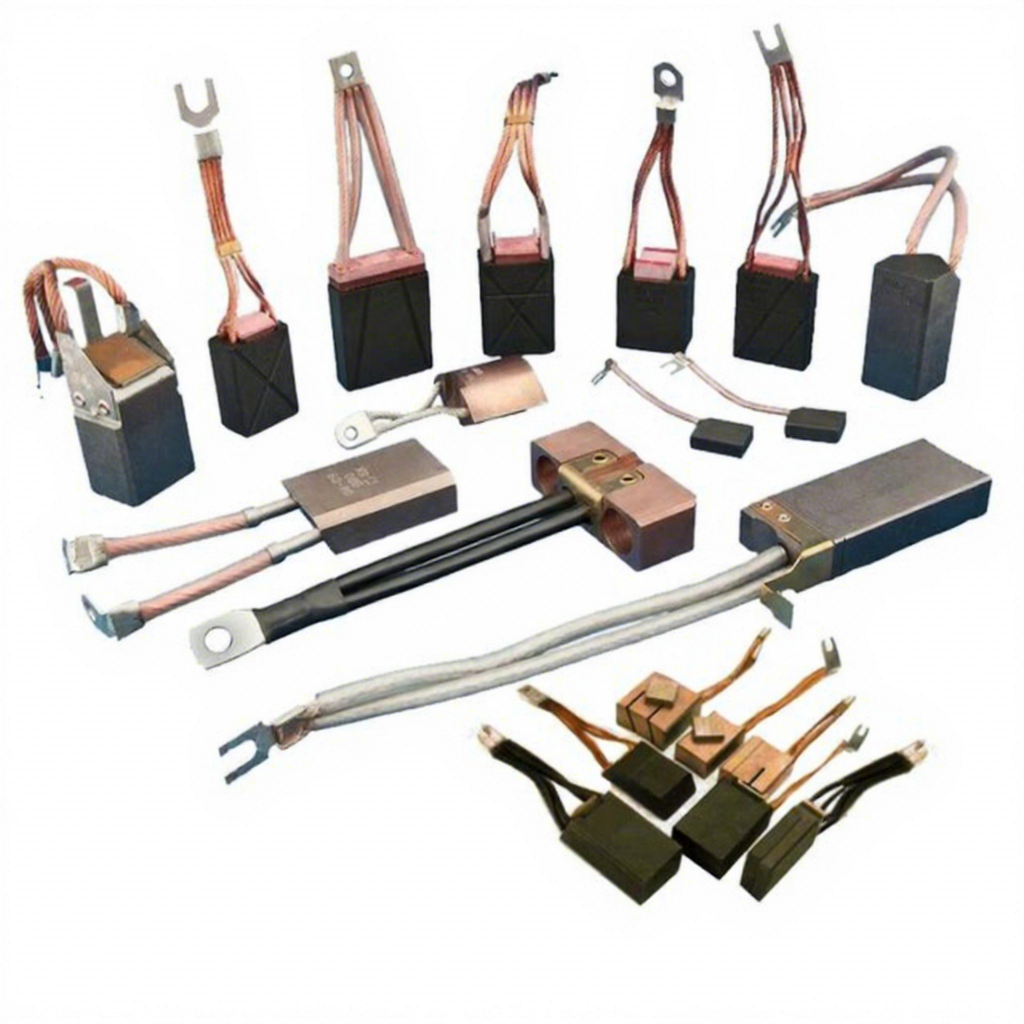
Alternator Carbon Brush AC Starter NDPJ-TS-11 (80-120V)
Precision electrographite brush composition with low electrical noise and optimized coefficient of friction, suitable for marine auxiliaries, standby gensets, and alternators.
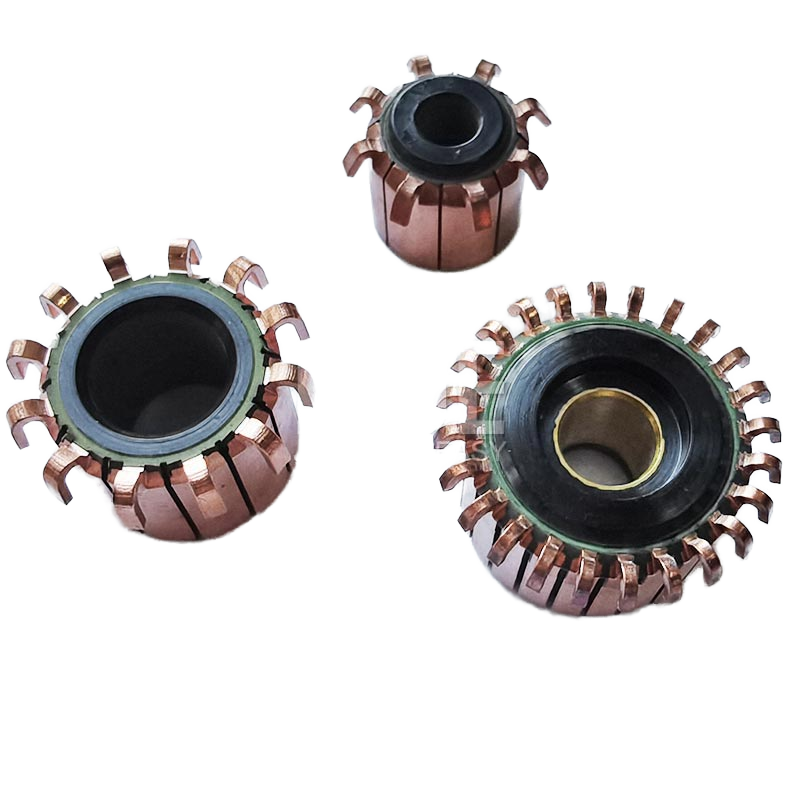
Universal Household Motor Armature Hook NDPJ-HXQ-183
High-precision stamped rotor and stator lamination packs coupled with hook-type commutators, designed for high-torque food processing appliances and variable-load commercial mixers.
Engineering High-Yield Induction Motor Stator Lines: Station Sequences & Quality Parameters
In modern industrial electric motor manufacturing, the stator represents the electromagnetic foundation that dictates energy efficiency, thermal endurance, and acoustic performance. For three-phase and single-phase induction motors (ranging from IEC frame 63 to 315, and NEMA 48 to 449T), automated stator manufacturing is no longer a luxury reserved for multi-million-unit Tier-1 facilities. With the rising costs of enamelled copper wire and electrical silicon steel, automation ensures tight dimensional tolerances, consistent slot fill ratios, zero insulation film scratching, and repeatable coil geometrical shapes.
A fully integrated, high-reliability induction motor stator production line integrates mechanical indexing, servo-driven kinematics, programmable tension controls, and automated pneumatic insertion mechanisms. Below is the breakdown of the six mission-critical automated stations engineered into our turnkey stator manufacturing architectures.
CNC Stator Slot Insulation Paper Inserting
Automated uncoiling, crease-forming, precise mechanical shearing, and simultaneous multi-slot or single-indexing insertion of Nomex, DMD, or polyester insulating papers. Prevents sharp lamination burrs from puncturing phase insulation while guaranteeing uniform cuff margins on both stator stack ends.
High-Speed Multi-Spindle Coil Winding
Utilizes multi-axis CNC flyer or arbor winding heads to wind copper or aluminum magnet wire into nested stepped transfer tooling. Features closed-loop electromagnetic tension regulation to prevent wire elongation or enamel micro-fissures, yielding concentric coil groupings ready for transfer.
Synchronous Coil & Slot Wedge Inserting
The technological core of the stator line. High-hardness tungsten-carbide insertion blades push the pre-wound coil groups and pre-formed epoxy/composite slot wedges into the stator slots simultaneously in a single stroke. Eliminates cross-turns and maintains conductor bundle symmetry.
Intermediate & Final Overhang Forming
Hydraulic or servo-driven expanding expanding mandrels and external shaping collars flare, squeeze, and calibrate the stator coil overhang dimensions on both ends. This guarantees critical rotor air-gap clearance, mechanical housing fit, and uniform end-turn heat dissipation.
CNC Dual-End Simultaneous Coil Lacing
Dual-needle high-speed horizontal or vertical lacing systems knot industrial braided polyester cord around the formed overhang windings. Supports multiple stitching pitch configurations (slot-by-slot, skip-slot, continuous) to mechanically lock the windings against electromagnetic vibration and inrush surge stress.
Integrated Electrical Hipot, Surge & Resistance QC
Fully automated four-in-one or five-in-one stator testing station. Measures DC coil resistance balance (<0.5% deviation), AC dielectric withstand (Hipot up to 3000V), insulation resistance (>500MΩ at 1000V DC), high-voltage pulse surge wave comparison, and rotational direction verification.
Localized Application Scenarios in Grenada: Agro-Industry, Marine & Infrastructure
Understanding how induction motor manufacturing and precision automated rewinding cells solve operational hurdles across the Spice Isle's unique geographic and economic sectors.
Nutmeg & Cocoa Processing Plants
In facilities operated by the Grenada Cooperative Nutmeg Association (GCNA) and local cocoa fermentaries across Saint Patrick and Saint John parishes, three-phase squirrel-cage induction motors drive spice crackers, hammermills, rotary drying drums, and pneumatic bean conveyors. Automated stator production lines enable local agro-industrial maintenance workshops to wind Class H insulated stators with vacuum pressure impregnation (VPI) that resist organic spice dust clogging, high ambient humidity, and continuous seasonal peak loads.
Marine Auxiliary & Commercial Fishing Vessels
Operating out of Saint George's Carenage, Grenville Harbour, and Carriacou, marine fleets require induction motors for electric bilge pumps, high-pressure brine refrigeration compressors, anchor windlasses, and sea-water washdown pumps. Salt-spray corrosion is an existential risk. Stator manufacturing equipment customized for Grenadian service providers allows precision insertion of moisture-proof phase separators and dual-dipped anti-fungal epoxy resins, preventing premature marine stator short-circuits.
Eco-Resort HVAC & Desalination Pumping
Grenada's premier hospitality properties in Grand Anse and Point Salines rely on 24/7 HVAC chilled water circulation pumps, air handling units (AHUs), and reverse osmosis (RO) seawater desalination skids. High electricity costs mandate IE3 and IE4 premium efficiency motor stators. Automated coil insertion ensures maximum slot fill factor (up to 78%), minimizing internal I²R copper thermal losses and drastically cutting kilowatts consumed per gallon of potable water pumped.
GRENLEC Grid Compatibility & Industrial Voltage Stability
Grenada Electricity Services Ltd (GRENLEC) supplies power primarily at 230V single-phase / 400V three-phase at 50Hz. Fluctuations in coastal feeders cause severe voltage unbalance and harmonics. Automated stator winding machines program customized delta/star coil connections with reinforced inter-turn insulation, ensuring rewound or newly manufactured motors withstand local electrical grid surges without phase-to-ground dielectric punch-through.
Municipal Water Distribution (NAWASA)
The National Water and Sewerage Authority (NAWASA) operates deep borehole submersible pumps and surface water treatment stations across mountainous terrain. Submersible pump stators feature ultra-long stack heights and narrow slot openings. Our semi-automatic deep-stack stator insertion machines accommodate stack lengths up to 500mm, providing flawless slot wedge retention against continuous axial hydraulic down-thrust.
Renewable Energy Microgrids & Pumped Storage
Under Grenada's National Energy Policy, solar PV-diesel hybrid systems and micro-hydro projects in Saint Andrew Parish are expanding. Induction generators and bidirectional pump-turbines require specialized low-loss stator laminations. Automated stator lines equip Caribbean engineering contractors to assemble high-efficiency generator stators locally, drastically lowering lead times on replacement capital assets.
Grenada Industrial Trends: Automated Motor Assembly vs. Conventional Rewind Centers
Across the Eastern Caribbean and CARICOM region, heavy dependence on imported replacement electric motors from North America and Western Europe has historically created severe supply chain bottlenecks. When a 75 kW wastewater aeration motor or a 110 kW quarry crusher motor burns out in Grenada, marine air-freight or container vessel shipping times from Miami or Kingston frequently stretch to 6–12 weeks, costing industrial plants tens of thousands of US dollars in lost productivity.
To mitigate this vulnerability, industrial service contractors and governmental utilities are transitioning toward Semi-Automated Flexible Stator Assembly and Re-Manufacturing Cells. Rather than dedicating multimillion-dollar lines strictly to single-frame mass production, regional workshops in Saint George's are acquiring modular CNC stator winding and inserting machines featuring rapid tooling changeovers (<30 minutes between IEC 90 and IEC 160 frame sizes).
| Evaluation Parameter | Manual Workshop Rewinding | Turnkey Semi-Automated Line (Nakro/NIDE) | Fully Automated High-Volume Line |
|---|---|---|---|
| Typical Stator Cycle Time (IEC 112) | 4.5 – 7.0 Hours / Stator | 12 – 18 Minutes / Stator | 45 – 75 Seconds / Stator |
| Slot Fill Factor Uniformity | Variable (52% – 62%) | Precise (72% – 78%) | Ultra-High (up to 82%) |
| Enamel Wire Surface Stress | High friction, manual scrap risk | Constant closed-loop tension control | Servo synchronized, zero slip |
| Electrical Failure Rate (Hipot/Surge) | 3.8% – 6.5% | < 0.2% | < 0.05% (PPM Level) |
| Labor Requirement per Shift | 4 – 6 Skilled Technicians | 1 – 2 Cross-trained Operators | 1 Supervisory Technician |
| Regional Suitability for Grenada | Legacy, high long-term cost | Optimal ROI & Flexibility | Over-capacity for local market |
Furthermore, Grenada's tropical marine atmosphere (C5-M corrosive classification under ISO 12944) demands stator insulation systems with superior dielectric and anti-fungal properties. High-quality Class H enameled wire, dual-layer slot liner papers, and automated vacuum pressure impregnation (VPI) equipment ensure that finished stators withstand constant relative humidity exceeding 85% and airborne chlorides without inter-turn flashovers.
Frequently Asked Questions: Purchasing Stator Production Lines in Grenada
Clear, engineering-grade answers addressing voltage configurations, shipping, installation, and spare tooling for Caribbean industrial operators.
How do Nakro stator production lines accommodate Grenada's 400V 50Hz three-phase power grid? +
What shipping routes and sea-freight protocols are utilized for delivery to Saint George's Port, Grenada? +
Can a single stator line handle multiple motor frame sizes (e.g., IEC 80, 90, 100, and 132)? +
How is operator training and equipment commissioning handled for overseas buyers in Grenada? +
Can Nakro supply matching stator laminations, copper magnet wire, and insulation paper? +
What warranty terms, maintenance intervals, and spare parts support are guaranteed? +
Why International Engineers Choose Our Motor Equipment Solutions
With an established presence across more than 50 export countries and deep motor manufacturing heritage since 2010, Ningbo Nakro Intelligent Equipment delivers proven engineering certainty.
ISO 9001 & CE Certified
All structural chassis, mechanical drives, and electrical cabinets conform strictly to ISO 9001:2015 quality standards and European CE machinery safety directives.
Global Export Footprint (50+ Countries)
Our stator winders and turnkey lines operate continuously across Latin America, the Caribbean, Southeast Asia, the Middle East, and Eastern Europe with proven resilience.
30,000+ m² Modern Facility
Equipped with high-precision 5-axis CNC machining centers, coordinate measuring machines (CMM), and dynamic run-off trial cells ensuring micron-grade tooling precision.
Custom Tooling & R&D Engineering
In-house tooling department designs custom insertion tooling, lacing fixtures, and winding arbors precisely mapped to your stator laminations and slot drawings.
Standard Technical Parameters for Induction Stator Production Line Modules
Before commissioning an automated line for regional Caribbean installation, mechanical and electrical engineering departments must specify core dimensional and operational thresholds. Our standard platform delivers broad versatility across IEC and NEMA motor frames:
| Station Module | Processing Capacity | Wire / Stack Dimensions | Cycle Time Range | Air / Power Utility Req. |
|---|---|---|---|---|
| Stator Paper Inserter | 8 – 72 Slots (programmable) | Stack Height: 20 – 300 mm Stator OD: Φ40 – Φ260 mm |
0.3 – 0.5 sec / slot | 0.5 – 0.7 MPa 3-Phase 380V/400V 2.5 kW |
| Coil Winding Machine | 1 – 6 Spindles (Concentric/Chain) | Wire Diameter: 0.18 – 1.60 mm Enamelled Copper/Aluminum |
1800 – 2500 RPM Flyer Speed | 0.4 – 0.6 MPa 3-Phase 380V/400V 5.5 kW |
| Coil & Wedge Inserter | Single-Phase & Three-Phase Stators | Slot Wedge Material: Nomex, DMD, Epoxy Stack Height: Up to 350 mm |
15 – 28 sec / stator | 0.6 – 0.8 MPa 3-Phase 380V/400V 7.5 kW |
| Intermediate / Final Former | IEC Frame 63 – 200 | Hydraulic Overhang Expansion Adjustable Core Depth |
8 – 14 sec / stator | Hydraulic Pressure: 2 – 7 MPa 3-Phase 380V/400V 4.0 kW |
| Dual-End Stator Lacer | Slot-by-slot, interval, single stitch | Polyester / Dacron Braided Cord Lacing Tension: 20 – 120 N |
0.45 – 0.7 sec / stitch | 0.5 – 0.7 MPa 3-Phase 380V/400V 3.0 kW |
| Integrated QC Test Bench | Multi-channel automated matrix | Hipot: 0–3000V AC; Surge: 5000V Peak Resistance: 0.01mΩ – 20kΩ |
6 – 12 sec / full test | Single Phase 220V/230V 1.2 kW |
Every sub-assembly is built with standardized world-class automation hardware—Festo or SMC pneumatics, THK linear guideways, Mitsubishi or Delta servos, and Schneider circuit breakers—ensuring that field maintenance technicians in Grenada have immediate access to compatible replacement parts worldwide.
Ready to Modernize Your Electric Motor Stator Production Capacity?
Send our senior engineering team your motor core drawings, lamination stack dimensions, slot configurations, and target annual output. We will engineer a custom turnkey production line proposal, plant layout diagram, and comprehensive quotation tailored to your Caribbean operational requirements.
