Specialized Motor Stator & Rotor Production Solutions
From complete automated flat-wire hairpin stator assembly cells to precision component inserters and high-remanence NdFeB magnets, Nakro provides end-to-end manufacturing machinery tailored to strict OEM cycle time, fill factor, and electrical insulation benchmarks.

Automatic PLC Controlled BLDC Motor Rotor Magnet Inserting Machine
Engineered for brushless DC and PMSM motor rotors, featuring servo-driven dispensing, magnetic flux orientation check, and adhesive dosing.
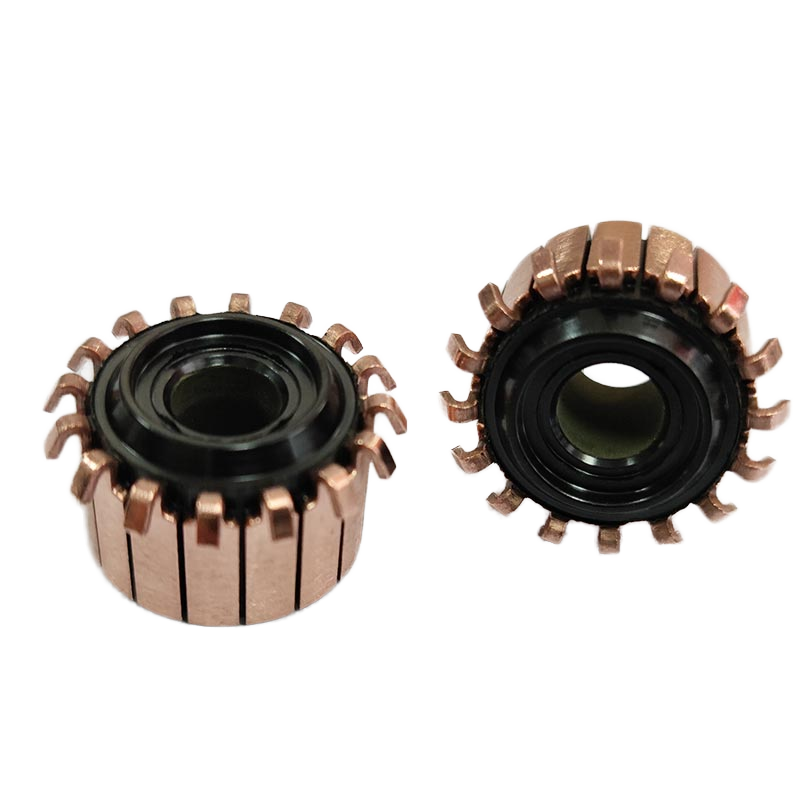
Customized Auto Parts Commutator Armature with Copper Collector Hook
Model NDPJ-HXQ-871A heavy-duty hook-type commutator for DC motors, automotive auxiliary drives, and cooling fan blowers.
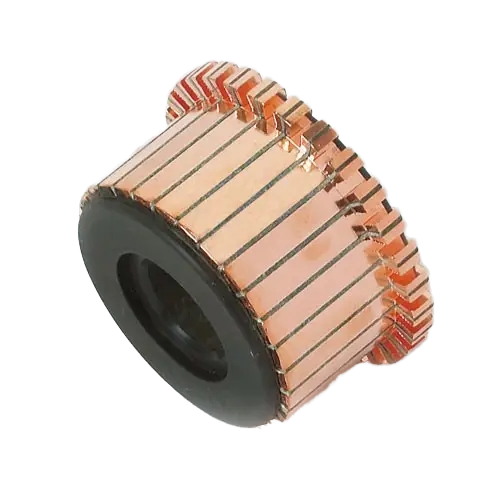
Customized Silver Copper Segmented Commutator Model NDPJ-HXQ-1005
High-precision molded copper segment design ensuring low spark generation, extended thermal fatigue life, and high continuous torque reliability.
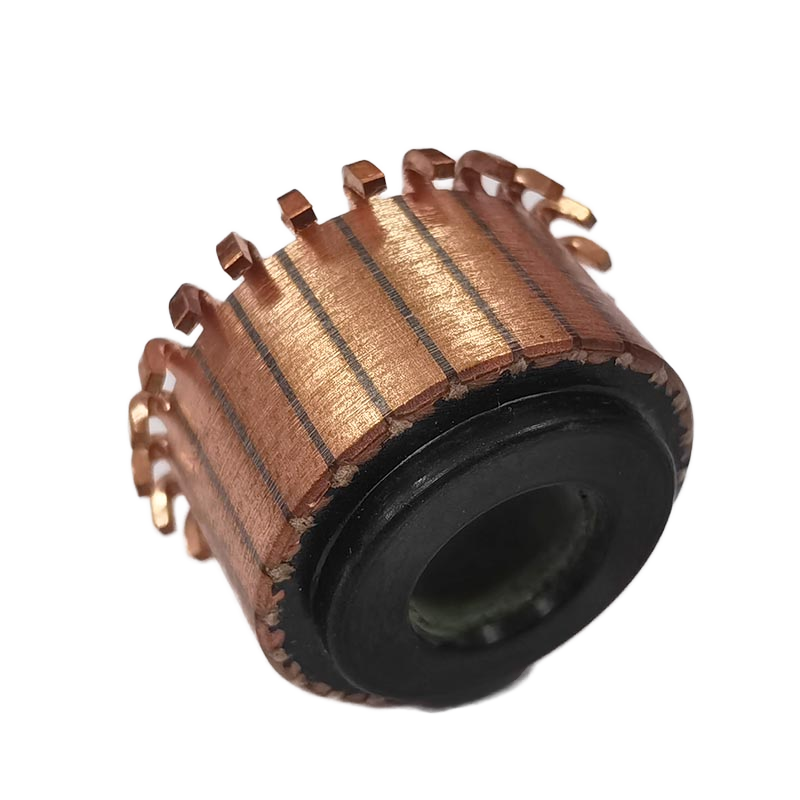
Wholesale 24 Segments Hook Type Angle Grinder Commutator NDPJ-HXQ-640A
Designed for high-RPM universal and DC motors, featuring balanced centrifugal integrity and reinforced mica insulation barriers.
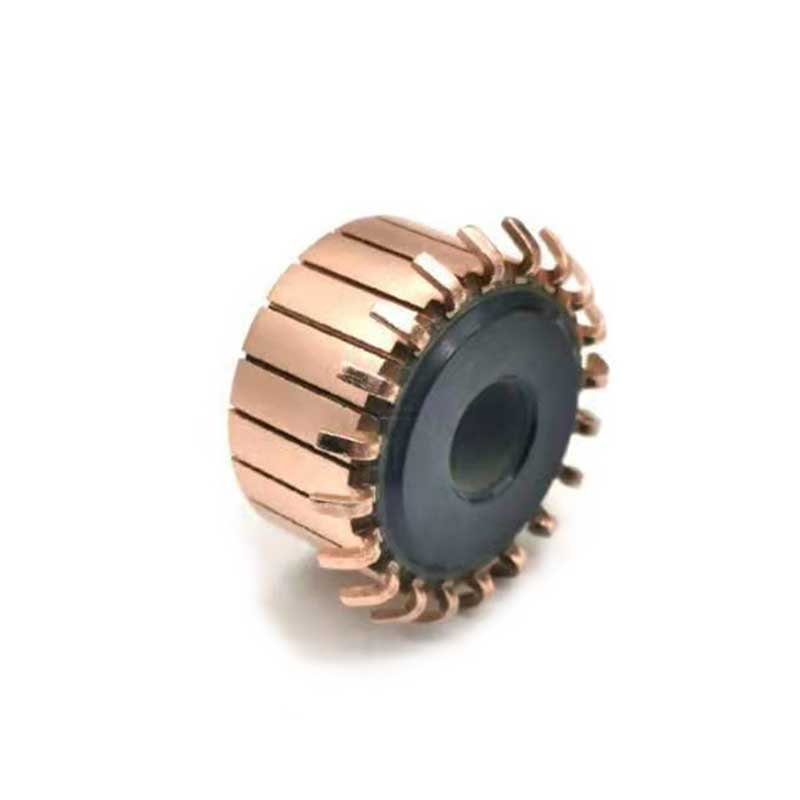
Copper Car Radiator Cooling Fan Motor Armature Hook Commutator
Universal fit automotive radiator fan motor commutator manufactured with high-purity copper bars for heat resilience and continuous operation.
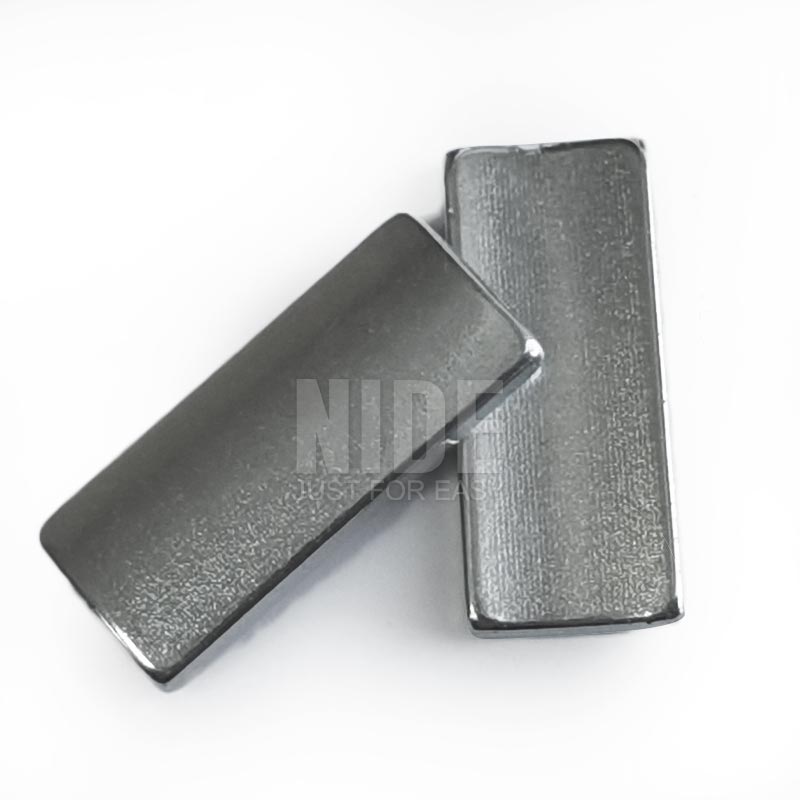
Rectangular N52 NdFeB Neodymium Magnets Model NDPJ-CW-58
High-coercivity sintered rare-earth permanent magnets built for EV traction motor rotors and high-density industrial servomotors.
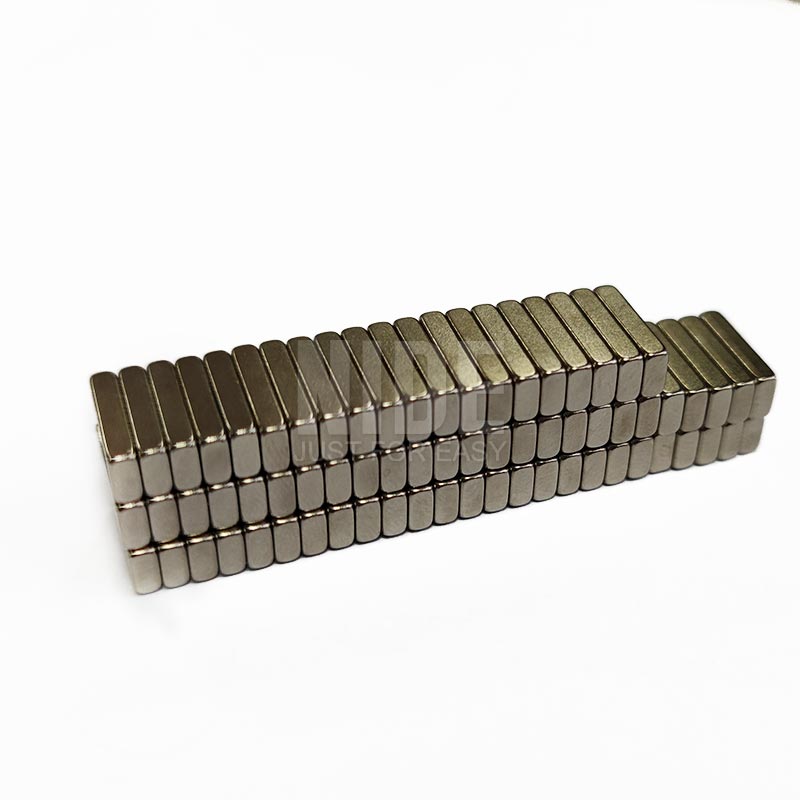
N52 Neodymium Rare Earth Square Block Magnet Model NDPJ-CW-61
Ultra-strong industrial motor permanent magnets with precision nickel-copper-nickel anti-corrosion plating for harsh operating environments.
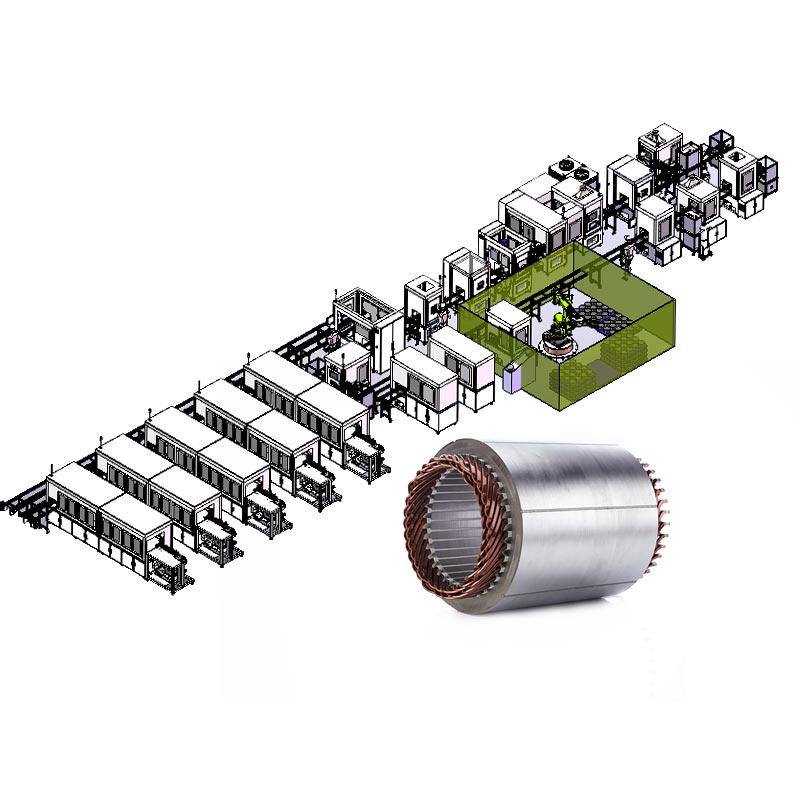
Fully Automatic EV Hairpin Motor Stator Production Line for NEV Flat Wire Motors
Turnkey high-speed flat-wire assembly: continuous 2D/3D bending, slot paper insertion, CNC twisting, 3D laser vision tracking, and fiber laser welding.
The Industrial Paradigm Shift: Why Hairpin Flat-Wire Stator Manufacturing Dominates Central Texas
The automotive and industrial automation landscape across the Greater Austin metropolitan area—spanning Travis, Williamson, and Hays counties—has rapidly evolved into the premier electrification corridor of North America. Anchored by the relentless gigawatt-scale scaling of Tesla’s Gigafactory Texas in Del Valle, alongside tier-one automotive suppliers, high-power battery pack integrators, and robotics disruptors relocating along the SH 130 corridor, manufacturing requirements for electric propulsion systems have transcended conventional round-wire winding.
Conventional distributed round-wire windings present substantial physical limitations in high-performance electric vehicles (EVs). They hit a practical ceiling with a slot fill factor rarely exceeding 45% to 50%, suffer from excessive end-turn overhang that wastes copper and elevates coil resistance, and display erratic thermal dissipation characteristics under sustained peak loads. In contrast, Rectangular Flat-Wire Hairpin (I-Pin / Continuous Wave) Stator Architecture achieves slot fill factors greater than 70% to 75%, slashes end-turn axial height by up to 28%, significantly lowers Joule losses, and facilitates direct oil-cooling channels directly along the slot liners.
For advanced propulsion engineering teams operating in the Austin market, transitioning to or expanding hairpin stator production requires far more than standalone machinery. It demands an interconnected, deterministic automated system engineered around high-precision wire deformation, non-contact enamel stripping, multi-layer slot expansion, sub-millimeter copper crown twisting, and adaptive vision-guided laser welding capable of processing hundreds of pins per stator under strict cycle constraints.
Turnkey Hairpin Stator Production Line: Station-by-Station Engineering Architecture
Each Nakro automated hairpin manufacturing line is divided into synchronized work cells governed by high-speed Beckhoff or Siemens CNC PLCs, linked by pallet transfer conveyors or autonomous mobile robots (AMRs).
1. Wire Payoff & 3D Hairpin Forming
Transforms continuous flat enameled copper spool wire into high-precision U-pins without micro-cracking insulation.
- High-frequency servo payoff with decoiling tension control
- Mechanical or fiber-laser copper enamel stripping (360° stripped ends)
- Multi-axis CNC chamfering, precise cutting, and 3D hairpin bending
- Dielectric varnish integrity testing prior to basket insertion
2. Lamination & Slot Paper Insertion
High-speed preheating and insertion of continuous B-stage or Nomex/Kapton composite insulation paper.
- Servo paper cutting, cuffing, folding, and multi-slot simultaneous insertion
- Integrated camera optical inspection for paper cuff position and fold geometry
- Stator core servo indexing supporting 48, 72, 84, and 96 slot lamination stacks
- Cycle capability under 0.25 seconds per individual slot
3. Hairpin Pre-Assembly & Insertion
Sorts dozens of hairpins into a circular nested fixture and pushes them simultaneously into the stator core.
- Automated magazine nesting supporting 4 to 8 copper conductor layers
- Zero-jam insertion with servo force-displacement curve monitoring
- Protection shoes preventing copper scratching or paper tearing
- Stator end-turn height alignment inspection via laser profilometer
4. CNC Multi-Head Crown Twisting
Simultaneous internal and external twist forming to bend free hairpin ends into welding-ready geometries.
- Multi-ring concentric servo expansion collars with individual torque readouts
- Symmetrical pitch twisting compensating for copper alloy springback
- Pin tip radial and axial leveling within a ±0.08 mm tolerance envelope
- Weld gap optimization reducing air pockets between adjacent copper tips
5. 3D Vision Laser Welding & Fusing
High-speed fiber or green-laser copper welding with coaxial 3D seam tracking and thermal monitoring.
- 4 kW–8 kW continuous-wave fiber laser with wobbling galvanometer head
- Real-time pyrometer and high-resolution camera tracking melt pool physics
- Zero-spatter welding minimizing copper bead splatter onto slot liners
- Automatic weld ball height, diameter, and porosity cross-sectional check
6. Impregnation & End-of-Line (EOL) Testing
Automatic trickling, gelation, and comprehensive electrical qualification up to 800V class standards.
- Preheating, resin trickling / vacuum pressure impregnation (VPI), and infrared curing
- High-voltage surge testing, phase resistance micro-ohm balance verification
- Hipot dielectric withstand (>3500V AC/DC) and Partial Discharge (PD) analysis
- Direct MES/SCADA barcode data serialization matching Tier 1 OEM protocols
Engineering Matrix: Traditional Random Winding vs. Hairpin Flat Wire Technology
For engineering and procurement leadership evaluating capital equipment expenditures (CapEx) in Austin, Texas, the comparative advantages of automated hairpin stator lines are quantifiable across performance, manufacturing efficiency, and packaging envelope.
| Evaluation Parameter | Conventional Round-Wire Inserters | Nakro Automated Hairpin Production Line | Strategic Advantage for Austin OEMs |
|---|---|---|---|
| Copper Slot Fill Factor | 42% – 48% (Theoretical maximum ~52%) | 70% – 76%+ | Over 40% higher magnetic flux density; substantial torque increase in identical lamination diameter. |
| End-Turn Overhang Height | Long, irregular bulges (high parasitic loss) | Compact, structured axial height (-25% to -30%) | Reduces total EV powertrain mass and axial package length; enables dual-motor e-axle packaging. |
| Thermal Dissipation & Cooling | High intra-slot thermal resistance from air gaps | Direct surface contact; optimized oil-cooling slots | Substantially suppresses peak copper hot-spots; facilitates continuous track run without thermal de-rating. |
| Line Cycle Time (Takt) | 120 – 180 seconds (manual lacing/forming) | 45 – 70 seconds fully automated | Accommodates annual capacity of 100,000 to 250,000 traction motors per single automated line layout. |
| Automation Level & Labor | Labor intensive (6–10 operators per shift) | Lights-out compatible (1–2 monitoring techs) | Insulates manufacturers from Austin’s tight technical labor market and elevated regional labor rates. |
| High Voltage Suitability (800V+) | Elevated risk of inter-turn partial discharge | Predictable turn-to-turn dielectric separation | Fully compatible with Silicon Carbide (SiC) fast-switching inverters operating with extreme dV/dt transients. |
Austin & Central Texas High-Tech Application Scenarios
The Central Texas manufacturing economy presents distinct environmental, infrastructural, and volume requirements. Nakro designs hairpin stator lines to directly integrate into this thriving industrial ecosystem.
Tier 1 EV Powertrain Plants
Delivering high-takt, multi-layer (6 to 8 layer) hairpin stators for high-torque dual-motor electric trucks, performance sedans, and commercial electric vans manufactured across Travis and Williamson counties.
Data Center Cooling Compressors
Supplying specialized hairpin winding machinery for high-efficiency variable-speed hermetic compressor motors powering high-density enterprise data center chillers and liquid cooling loops in North Austin and Round Rock.
Next-Gen Aerospace & Defense
Equipping defense contractors and aerospace developers in Central Texas with precision low-inertia, high-flux PMSM flat-wire stators for tactical autonomous drones, eVTOL systems, and mobile robotics actuators.
Clean Energy & Industrial Pumps
Modernizing regional electrical motor manufacturing plants producing continuous-duty immersion pumps, oilfield exploration actuators, and industrial HVAC motors needing premium efficiency (IE4 / IE5) qualification.
Localized Development Trends Shaping Austin's E-Mobility Manufacturing Landscape
1. Accelerated Adoption of 800V and 900V SiC Inverter Platforms: Austin-area EV engineers are rapidly transitioning architectures away from 400V baselines to 800V SiC powertrains to unlock 15-minute ultra-fast DC charging. Under high-frequency SiC switching, high voltage rise rates (dV/dt > 50 kV/μs) generate severe electrical stress across motor windings. Our hairpin lines incorporate patented automated slot liner folding and laser stripping techniques that eliminate microscopic dielectric burrs, safeguarding windings against partial discharge degradation.
2. The Shift from 4-Layer to 8-Layer and Continuous Wave Topologies: To minimize AC skin-effect and proximity-effect copper losses at rotational speeds exceeding 18,000 to 22,000 RPM, motor designers are shifting toward thinner, multi-conductor hairpin configurations. Nakro lines feature modular tooling capable of handling flexible layer architectures (4, 6, 8, or 10 conductors per slot), allowing automotive manufacturers to switch recipes without replacing mechanical stamping presses.
3. Direct-to-Line Traceability and Factory Automation Protocols: Given strict automotive traceability standards, manufacturing lines in Central Texas demand 100% component-level tracking. Every station on our automated line transmits real-time torque profiles, paper cuff inspection imaging, 3D weld bead height metrics, and EOL test datasets straight to plant MES via OPC-UA, MQTT, and standardized REST protocols.
Frequently Asked Questions for Central Texas Sourcing & Engineering Teams
Straightforward, technical answers addressing lead times, UL/NFPA compliance, FAT/SAT procedures, cycle times, and localized support.
Does your equipment meet US and Texas electrical and safety standards (UL 508A, NFPA 79)?
What cycle time (takt) can be guaranteed for an 8-layer, 72-slot automotive stator?
How do your lines control copper wire springback and tight tolerances during crown twisting?
What is the Factory Acceptance Test (FAT) and Site Acceptance Test (SAT) validation protocol?
Can the line handle multiple stator sizes and stack heights on the same automated conveyor?
What ongoing after-sales, tooling, and commissioning support is provided in the United States?
Why Global Tier 1 OEMs and US Manufacturers Partner With Us
Backed by over 14 years of dedicated electric motor equipment R&D, advanced precision assembly facilities, and verifiable international export deployments.
ISO 9001 Certified System & Alibaba Onsite Verified
Our 30,000 to 50,000 m² state-of-the-art production base operates strictly under ISO 9001 quality systems. Every piece of machinery undergoes strict dimensional CMM verification, electrical insulation stress analysis, and factory run-off trials.
Over 13 Years of Global Export Provenance
With equipment deployed across 50+ countries spanning North America, Eastern Europe, South America, Southeast Asia, and the Middle East, we understand the operational rigor, documentation, and international shipping protocols required by top-tier enterprises.
Comprehensive One-Stop Motor Component Integration
Beyond capital equipment, we supply precision-engineered motor components—including commutators, permanent magnets (NdFeB N52), armature shafts, insulation papers, and carbon brushes. One accountable engineering partner from raw material validation to final motor assembly.
