Industrial Engineering White Paper

Commutator Hook Welder Machine Factory & Suppliers in Bruges

High-Precision Hot-Staking Resistance Welding, Automated Rotor Fusing Cells, and Complete Armature Manufacturing Solutions for Flanders & European Motor Plants

OEM & Turnkey Machinery Catalog

Precision Armature, Commutator & Stator Assembly Solutions

Engineered for universal motors, automotive starters, BLDC micro-drives, and heavy-duty industrial electric motors. Discover Nakro's high-stability machinery and verified spare parts ready for shipment to Bruges and across the European Union.

Get Catalog
2010
Established in Ningbo
50+
Global Export Markets
50,000 m²
Modern Production Facility
ISO 9001
TÜV / CE Quality Certified
Engineering White Paper · Chapter 1

Resistance Hot-Staking & Commutator Hook Welding Mechanics

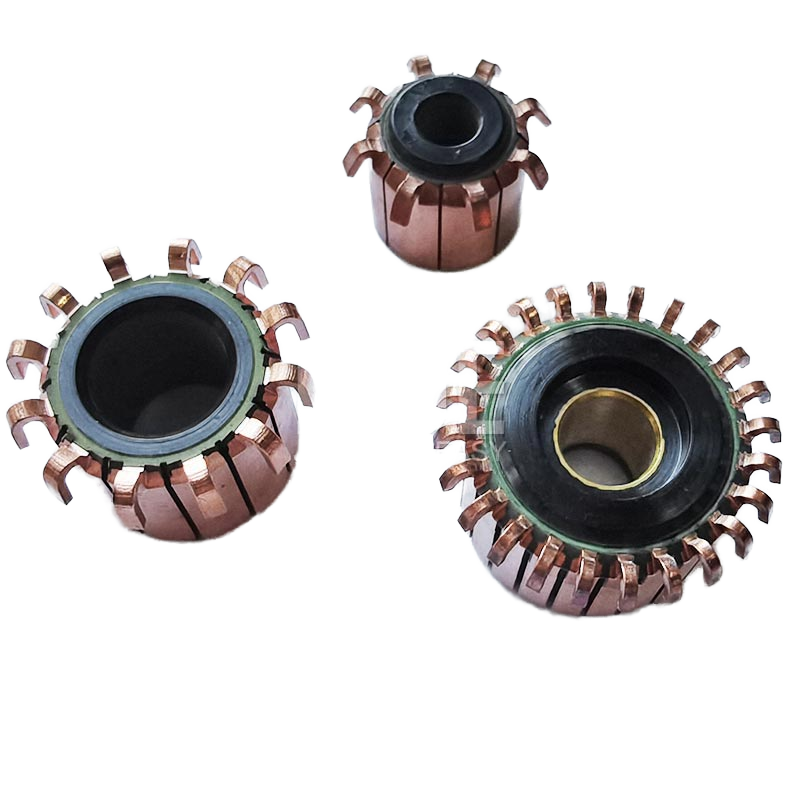
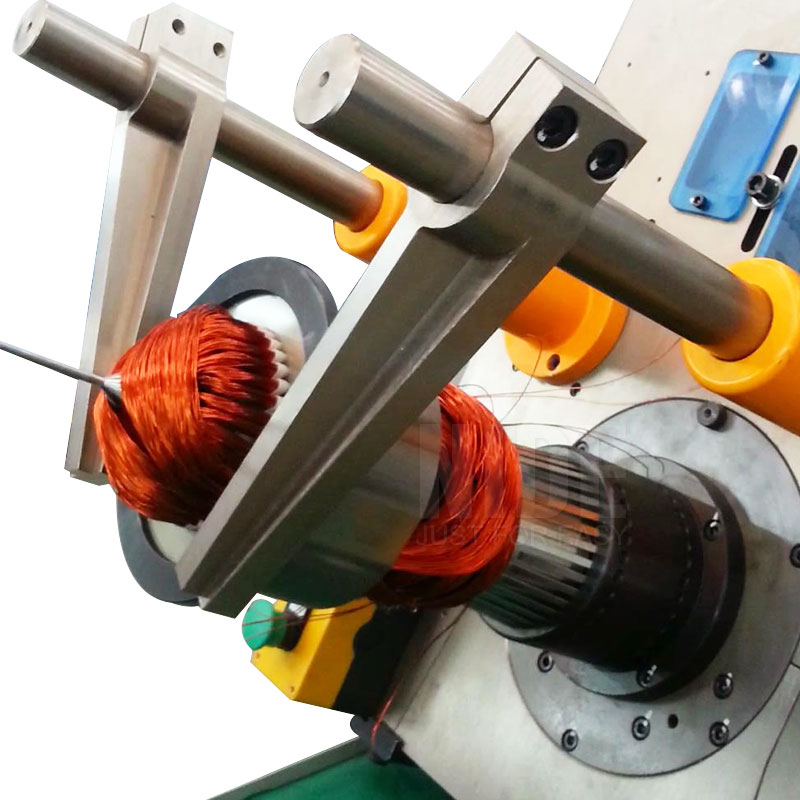
In electric armature fabrication, the joinery between magnet wire leads and copper commutator segments represents the single most critical electro-mechanical boundary. While traditional tin-lead or silver soldering was formerly standard, contemporary industrial norms across Western Europe—strictly guided by the RoHS Directive (2011/65/EU), temperature classifications under IEC 60085, and cyclic thermal stress limitations—mandate the deployment of advanced Commutator Hook Welding (Hot-Staking / Tang Fusing) machines.

Commutator hook welding does not simply melt metal via external thermal radiation. Instead, it relies on resistance hot-staking physics. When a tungsten, molybdenum, or tungsten-carbide electrode descends onto the copper hook with a closed-loop pneumatic or servo-driven force profile, a high-amperage, low-voltage direct current (inverter DC or capacitor discharge) is discharged through the electrode tip. The high electrical resistivity of the electrode generates instantaneous Joule heating ($Q = I^2Rt$).

Process Metallurgy Insight: The thermal energy conducted from the glowing electrode tip volatilizes the polyurethane or polyamide-imide enamel insulation surrounding the copper wire within 80 to 180 milliseconds. Once the enamel vaporizes, direct intimate contact between clean copper wire and the silver-copper alloy commutator hook occurs. Under continuous mechanical clamping pressure, the soft copper segments recrystallize in a solid-state diffusion bond, collapsing the hook into a homogeneous, void-free joint with zero residual flux and negligible contact resistance ($< 5\ \mu\Omega$).

Inverter DC vs. Capacitor Discharge (CD) Power Topologies

Procurement teams and plant manufacturing engineers in Bruges evaluating commutator hook welding systems must scrutinize the electrical delivery architecture. Modern Nakro hot-staking systems integrate high-frequency intermediate inverter technology (typically 1 kHz to 4 kHz) equipped with constant current, constant voltage, and constant power closed-loop feedback algorithms.

Closed-Loop Current Response

1 kHz – 4 kHz inverter control samples secondary circuit impedance every millisecond, dynamically compensating for variations in copper hook lamination thickness, wire enamel variations, and electrode tip oxidation.

Programmable Force Profiling

Dual-stage proportional servo cylinders allow separate pre-pressure, fusing pressure, and cold-forge forging force. This eliminates copper hook splash, burrs, and micro-fractures in high-speed universal motor armatures.

Real-Time Quality Windows

Displacement sensors detect hook deformation down to 0.005mm. Units outside upper and lower deformation thresholds are instantly flagged, preventing defective armatures from advancing to varnish impregnation.

Regional Manufacturing Integration

Localized Application Scenarios in Bruges & the Greater West Flanders Industrial Hub

Bruges is not merely an historic UNESCO World Heritage city; it sits at the strategic nexus of Flemish heavy mechatronics, port automation corridors, and European electric transport routes.

The industrial territory stretching between Bruges, Zeebrugge, Kortrijk, and Roeselare represents one of Northern Europe’s most dense mechatronic manufacturing ecosystems. Often referred to under the umbrella of Flanders Make clusters and coastal logistics infrastructure, local original equipment manufacturers (OEMs) and contract winders require commutator hook welder systems tailored to demanding European industrial scenarios:

Port of Antwerp-Bruges Logistics AGVs & Cranes

Automated Guided Vehicles (AGVs), container straddle carriers, and quay-side gantry systems utilize heavy-duty 24V/48V DC steering actuators, brake releases, and auxiliary winches. Nakro’s hook welders ensure these commutators withstand non-stop salt-fog coastal vibration without lead detachment.

Precision Automotive Sub-Assemblies

Suppliers across West Flanders manufacturing automotive sub-systems—including window lift motors, electric seat adjustment armatures, ABS pump motors, and wiper drive units—leverage high-speed multi-hook indexing fusing cells capable of cycle times under 0.6 seconds per segment.

Heavy-Duty Power Tools & Industrial Cleaners

Universal motors operating in harsh masonry, shipyard polishing, and construction environments demand Class H (180°C) or Class N (200°C) thermal ratings. Resistance hot-staking fuses high-gauge copper magnet wire without anneal-softening the structural copper risers.

Furthermore, regional remanufacturing centers throughout Belgium dedicated to circular economy motor rewinding and railway traction starter refurbishment rely on Nakro’s versatile semi-automatic hook welders. These machines permit rapid tooling changeovers between diverse commutator diameters (from 8mm micro-rotors up to 120mm industrial armature collectors) with programmable CNC radial positioning.

Technological Evolution

Flemish Industrial Trends: Electrification, Energy Efficiency & Smart Factories

How Belgian manufacturers are transitioning from legacy manual fusing to data-driven, traceable, low-carbon assembly environments compliant with European Green Deal mandates.

Manufacturing investments across the Benelux region are heavily steered by high labor costs, demanding zero-defect tolerance, and stringent European sustainability regulations. Four core trends define the procurement requirements for commutator hook welding machinery entering Bruges and Flanders:

OPC UA / Industrial Ethernet Closed-Loop Displacement Control CE Machinery Directive 2006/42/EC EU 2023/1230 Regulation Compliance Scope 1 & Scope 2 Carbon Efficiency Cleanroom-Ready Electrodes

1. Traceability & Digital Quality Passports (OPC UA Integration)

Under Flemish Industry 4.0 guidelines, stand-alone equipment that operates in isolation is obsolete. Modern Nakro hook welders feature Siemens or Beckhoff PLC backbones exporting raw welding parameters—Peak Current ($I_{peak}$), Integrated Energy ($Joules$), Mechanical Collapse Displacement ($\Delta h$), and Resistance Curve ($R_t$)—directly to plant MES via OPC UA or PROFINET. If a single armature segment experiences anomalous copper hardness or poor enamel vaporization, the specific rotor serial barcode is flagged, enabling end-to-end auditability demanded by European automotive and aerospace tier clients.

2. Energy Efficiency & The Phase-out of Inefficient Power Grids

Electricity prices in Western Europe necessitate low standby power and ultra-efficient energy conversion. Unlike older 50Hz single-phase AC welding transformers that inflict asymmetrical reactive power loads on plant electrical distribution, Nakro’s balanced three-phase Inverter DC supplies boast a power factor ($cos\ \phi$) exceeding 0.92, markedly reducing kVA demand charges and heat dissipation within Flanders production halls.

3. Safety Systems in Accordance with European Directives

Supplying production equipment to Belgian manufacturing facilities requires uncompromising adherence to CE Directives, specifically EN ISO 13849-1 (Safety of Machinery - Safety-related parts of control systems). Nakro machines incorporate dual-channel Category 4 / Performance Level e (PLe) safety light curtains, electro-magnetic interlocks, and low-inertia servo drives ensuring full operator protection during rapid armature load/unload sequences.

Technical Specifications

Engineering Benchmark: Resistance Hot-Staking System Topologies

A comparative evaluation matrix designed for plant managers, process engineers, and technical sourcing committees in Belgium.

Evaluation Parameter Legacy AC Line Fusing Capacitor Discharge (CD) Nakro Inverter DC Hot-Staker
Power Conversion Principle 50/60 Hz Transformer Phase-Angle (SCR) High-Voltage Capacitor Bank Discharge 1 kHz – 4 kHz Medium Frequency Inverter
Enamel Stripping Efficiency Slow (Requires High Heat Input) Extremely Fast (Prone to Splatter) Controlled Multi-Pulse (Pre-heat + Fuse)
Joint Micro-Resistance ($\mu\Omega$) Variable ($12 – 35\ \mu\Omega$) Moderate ($8 – 20\ \mu\Omega$) Consistently Ultra-Low ($< 5\ \mu\Omega$)
Thermal Distortion of Hook High Risk (Weakens Copper Riser) Low Risk (Surface Melting Only) Zero Annealing Outside Weld Zone
Process Real-Time Monitoring Coarse Amperage Monitoring Only Peak Current / Voltage Only Dynamic Displacement, Current, Voltage & Energy
Electrode Tip Service Life Moderate (3,000 – 6,000 Welds) Short (Severe Arc Erosion) Extended (15,000 – 30,000 Welds with Auto-Trim)
CE Safety & Grid Compliance Often Violates Harmonic Standards Complex Capacitor Bleed Safety Required Fully Certified CE / EN 60204-1 / Low Distortion
Why Choose Nakro Intelligent Equipment

A World-Class Manufacturing Partner for Turnkey Motor Production Lines

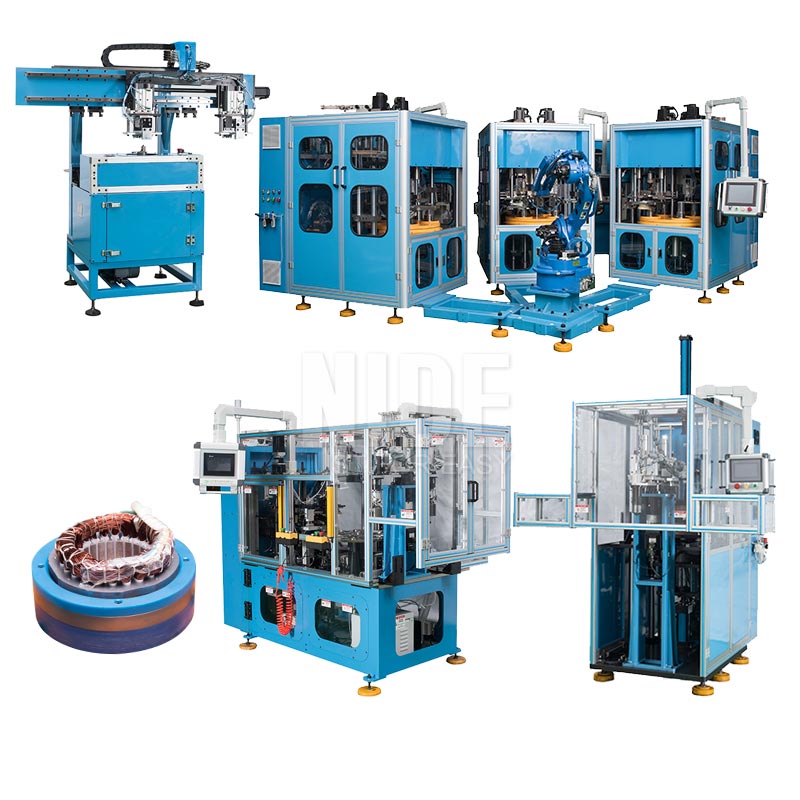
From individual hot-staking fusing workstations to automated 20-station stator and armature lines, we eliminate technical integration risks for European buyers.

Unmatched Process Depth & In-House Tooling R&D

Founded in 2010 in Ningbo, China, Ningbo Nakro Intelligent Equipment Co., Ltd. has grown into an international machinery innovator operating across a 30,000 to 50,000 square meter manufacturing campus. Backed by over 13 years of machinery export experience to more than 50 countries, we maintain an engineering team focused strictly on electric motor manufacturing technologies.

Unlike trading entities that resell off-the-shelf equipment, Nakro controls the full metallurgical, electrical, and robotic process chain. Every commutator hook welder, armature winder, and stator inserting machine is tailored around our clients’ exact lamination drawings, hook geometries, and magnet wire specifications.

  • Pre-Shipment Trial Run with Your Materials: Full operational verification using your copper commutators, laminations, and magnet wire, supported by high-speed run-off video verification and micrographic weld cut reports.
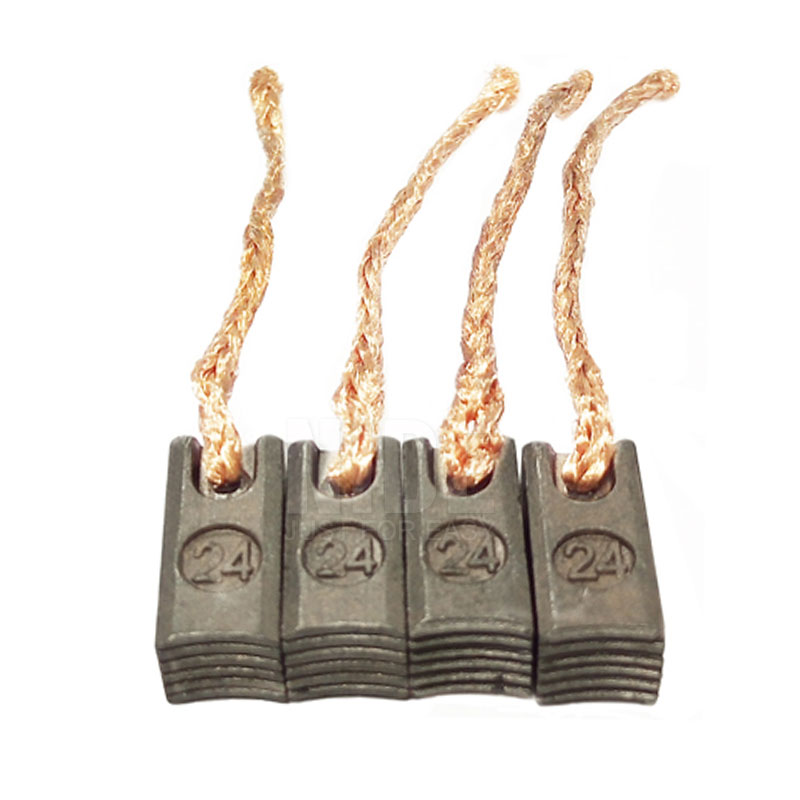
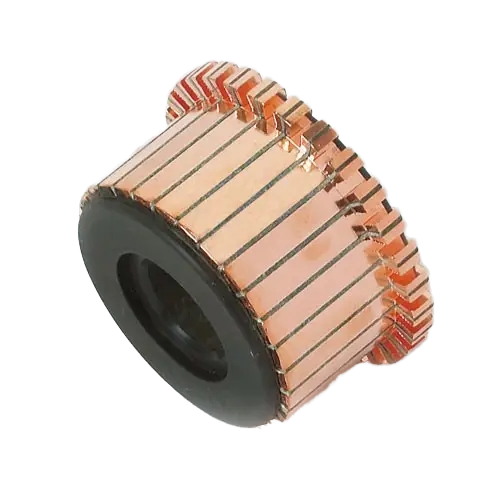
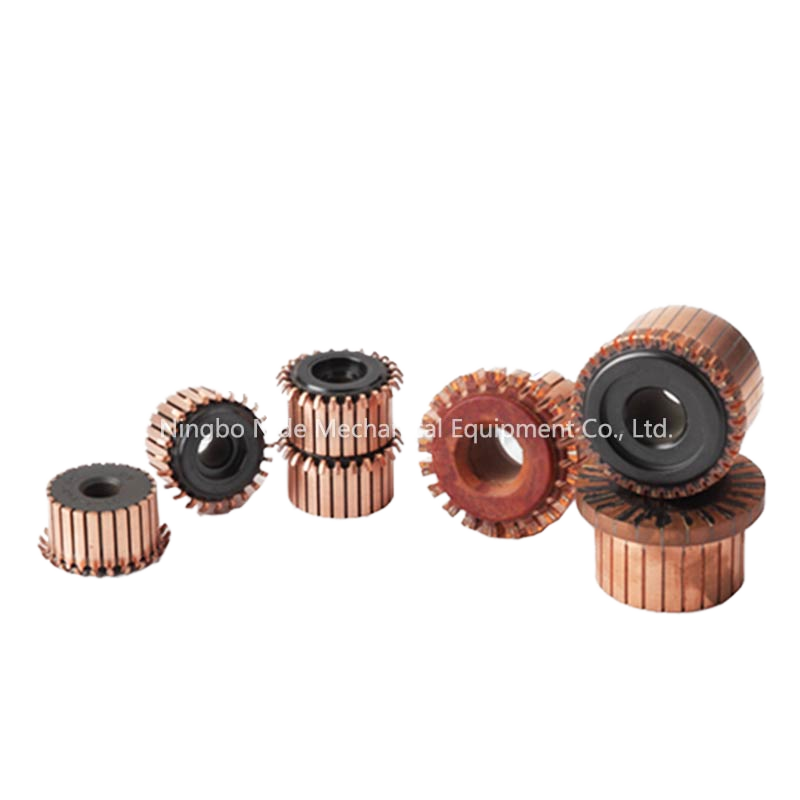
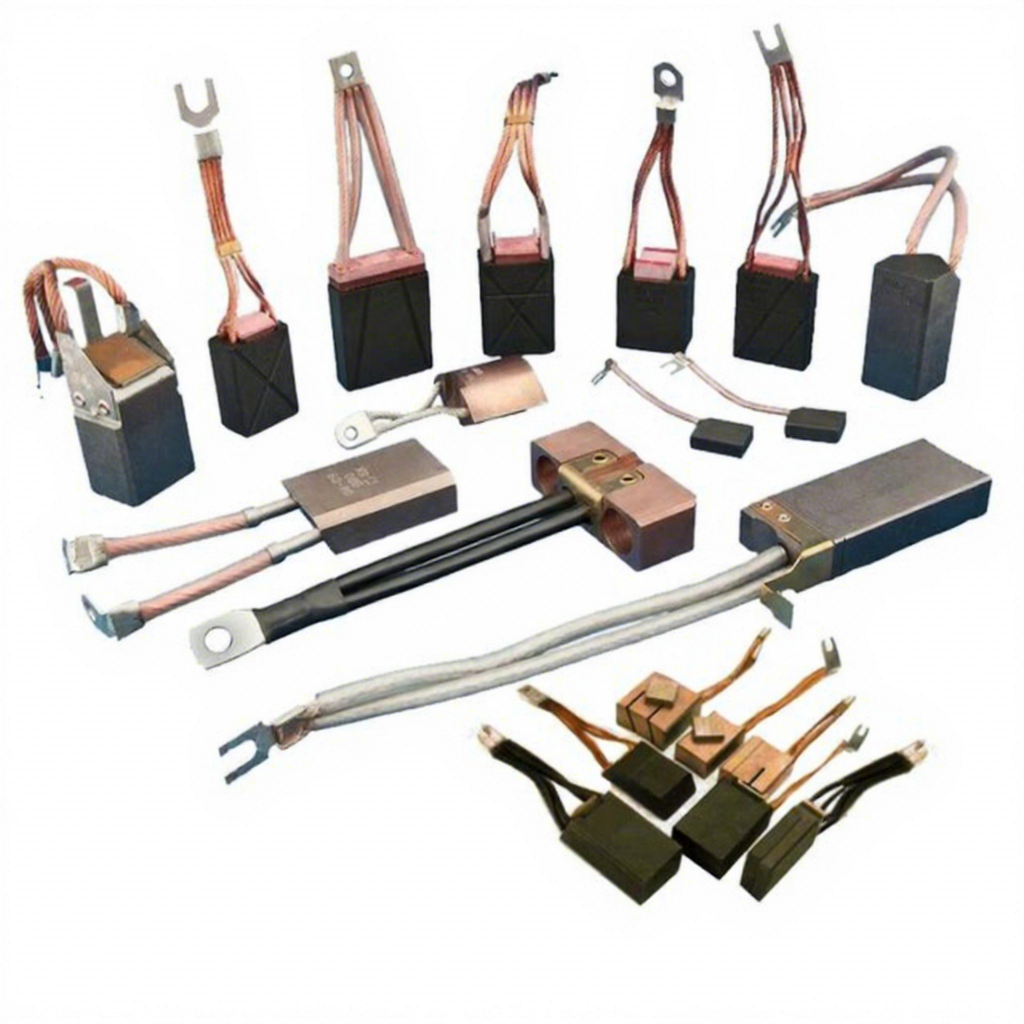
  • Complete One-Stop Motor Component Ecosystem: Access direct factory supplies of matching precision commutators, carbon brushes, slip rings, insulation paper, shafts, and motor covers under single-supplier accountability.
  • European Engineering Support: Remote telemetry diagnostics, rapid spare parts dispatch, and regional service partners assisting with on-site installation, SAT (Site Acceptance Testing), and maintenance training.

Certified Quality Management

Nakro operates under audited ISO 9001 quality systems. Each commutator hook welding machine undergoes an exhaustive 6-stage validation sequence before seaworthy packing:

1. Incoming Material & Component Verification: Premium servo drives, SMC pneumatics, and high-purity tungsten alloy electrode tips verified against strict brand standards.
2. Five-Axis CNC Precision Tooling Machining: Collets, indexing fixtures, and wire guide tooling checked with optical coordinate measuring machines (CMM).
3. Electrical & CE Safety Interlock Audits: High-voltage insulation testing, emergency stop response validation (<20ms), and thermal heat dissipation checks.
4. Micro-Ohmic & Pull-Force Destruction Testing: Welded sample armatures tested to ensure weld tensile rupture occurs in the copper wire body, never at the fused joint interface.
Buyer Technical Guidance

Frequently Asked Questions by European Procurement & Manufacturing Engineers

Detailed technical answers addressing logistics, metallurgy, electrical standards, and operational commissioning for clients in Bruges and greater Belgium.

Can the Nakro Commutator Hook Welder handle double-enamelled and heavy-build Class 200 (Grade 2) magnet wire without prior mechanical stripping? +
Yes. Our medium-frequency inverter DC systems are engineered specifically to eliminate manual or chemical wire stripping. Through programmable multi-pulse firing schedules (Pre-heat Stage $\rightarrow$ High-Energy Fusing Stage $\rightarrow$ Cold Post-Forge Clamping), the initial pre-heat pulse volatilizes high-temperature dual-coated enameled wire (such as polyester-imide base coats with polyamide-imide top coats rated to 200°C–220°C). The secondary pulse fuses the bare copper into the hook recess in a clean, oxidation-free sequence.
What logistical delivery terms (Incoterms) and transit times apply for machinery shipments to Bruges and the Port of Zeebrugge? +
We regularly ship under FOB Ningbo, CFR, or CIF Port of Zeebrugge / Antwerp terms, as well as DDU/DAP directly to your facility in the Bruges region. Ocean transit from Ningbo to Zeebrugge typically takes between 28 and 35 days. For urgently required replacement electrodes, custom indexing chucks, or spare tooling sets, we maintain expedited air courier channels (DHL/FedEx/TNT) delivering to Belgium within 4 to 6 business days.
Does the machinery fully comply with European CE directives and Belgian electrical grid safety norms? +
All Nakro machines supplied to the European Union are constructed in compliance with the EU Machinery Directive (2006/42/EC and transitioning to Regulation (EU) 2023/1230), the Low Voltage Directive (2014/35/EU), and the EMC Directive (2014/30/EU). Machines are configured for 400V / 3-phase / 50Hz electrical supply networks common across Belgium, complete with certified European componentry (Schneider Electric, Siemens, Festo/SMC) and full bilingual CE Declaration of Conformity documentation.
How do you verify weld quality and prevent commutator segment deformation on high-precision micro-armatures? +
Our welders employ digital closed-loop linear displacement sensors that monitor the absolute height of the hook throughout the fusing cycle. If a hook exhibits excessive collapse (indicating thermal softening of the copper segment) or insufficient collapse (indicating incomplete enamel burn-off), the machine immediately freezes the cycle, displays the precise millivolt-drop/displacement reading on the HMI, and segregates the rotor. Furthermore, water-cooled electrode holders prevent thermal accumulation from altering segment spacing.
What after-sales service and commissioning options are available for factories located in West Flanders? +
We provide a hybrid support model designed for maximum uptime: 1) Real-time Industrial IoT telemetry: Our engineering team can securely diagnose PLC parameters, weld curve alarms, and software states via remote encrypted ethernet connection. 2) Field Engineering: For full turnkey lines or high-volume cells, Nakro engineers provide on-site installation, SAT commissioning, and operator training directly at your Bruges manufacturing facility. 3) Tooling & Spares: Wear parts such as tungsten welding tips, collets, and pneumatic seals are cataloged with standardized international part numbers.
Can the machine accommodate non-standard, angled, or riser-type commutators in addition to standard hook types? +
Yes. While tangential hook (tang-type) fusing is most prevalent, Nakro designs specialized tooling suites for slotted-riser commutators (often utilized in heavy traction motors and automotive starter armatures). For slotted commutators, our machines can integrate automated wire stuffing, copper bridge crimping, and high-frequency TIG or micro-resistance fusing heads customized to your rotor shaft dimensions.

Upgrade Your Armature & Stator Production in Bruges

Whether you are establishing a new electric mobility motor line, replacing an obsolete AC welder, or requiring customized copper commutators, Nakro’s engineering team provides fast, drawing-based quotes and technical consultation.