Precision Commutator Welder Solutions & Core Assembly Machinery
Configured specifically for universal armatures, high-torque automotive starters, DC fractional motors, and new energy BLDC assemblies. Reviewed against rigorous mechanical and thermal fusing standards.
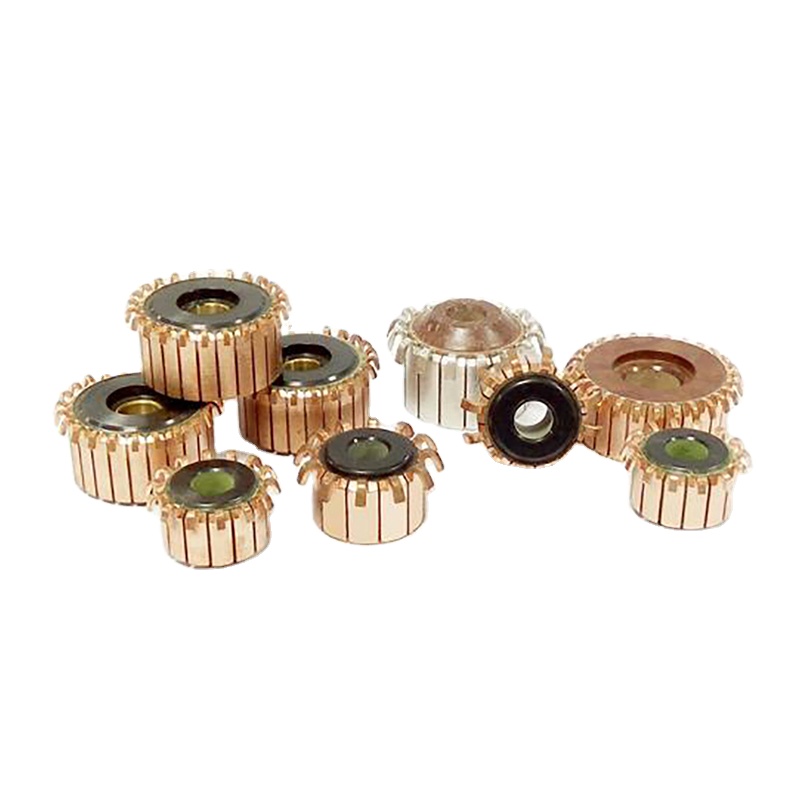
NIDE Brand 12V Commutator for Power Tools & Motors
CE-certified NDPJ-HXQ-03007 carbon brush commutator featuring reinforced copper bar retention, engineered for extreme thermal load tolerance in high-RPM universal motors.
Product Details →
Automatic Armature Rotor Hot Chamber Die Casting Machine
PLC-governed aluminum injection station providing void-free rotor core bar molding, critical for high-efficiency induction and universal armature base balance.
Product Details →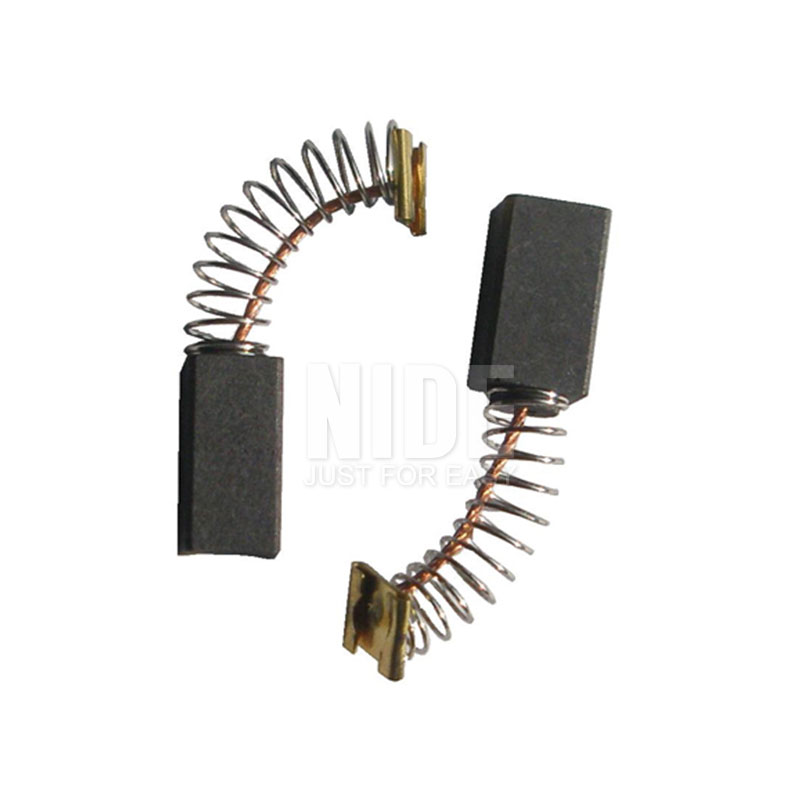
High Precision DC Motor Magnet Alternator Carbon Brushes
Model NDPJ-TS-7 electrical contacts designed with optimal copper-graphite composition to ensure low spark dissipation and uniform commutator hook interface wear.
Product Details →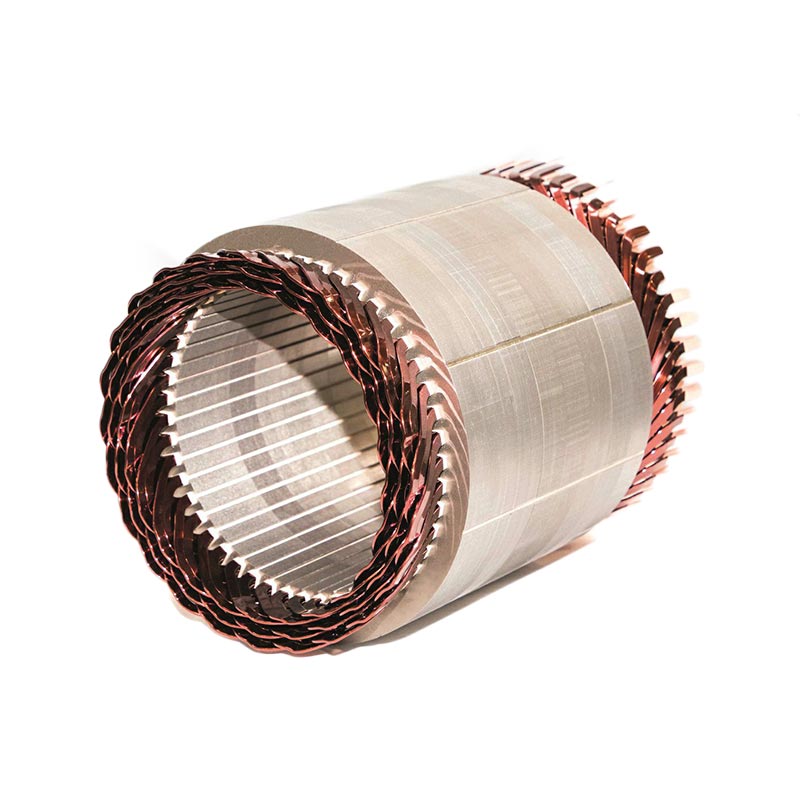
Fully Automatic Hairpin Motor Stator Production Line
Turnkey multi-axis wire forming, CNC paper insertion, and 3D automated laser/TIG welding line engineered for tier-1 electric drive traction motors.
Product Details →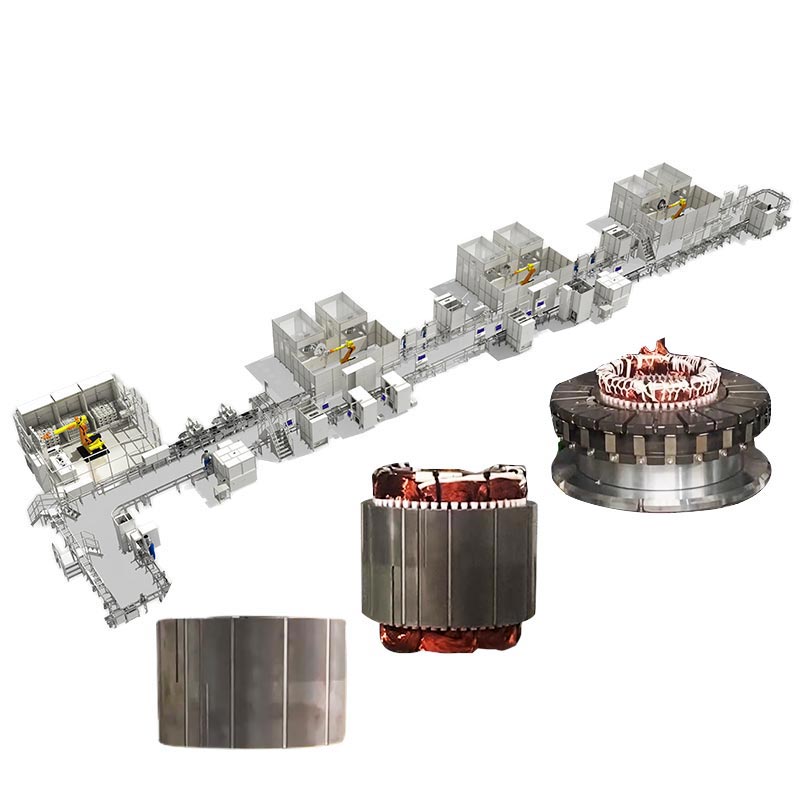
Automatic EV New Energy Motor Stator Production Line
CE-certified 220V/380V multi-voltage hairpin stator manufacturing cell featuring automated slot insulation, crown twisting, and precision weld seam inspection.
Product Details →
PLC-Controlled BLDC Motor Rotor Magnet Inserting Machine
Automated servo-driven permanent magnet insertion cell with integrated glue dispensing and flux verification, preventing magnet displacement during operation.
Product Details →
Rotor Armature Winding Equipment with Engine Core Components
High-speed dual-flyer winder equipped with servo-tension feedback, designed to seamlessly load copper magnet wire directly into commutator tang hooks without necking.
Product Details →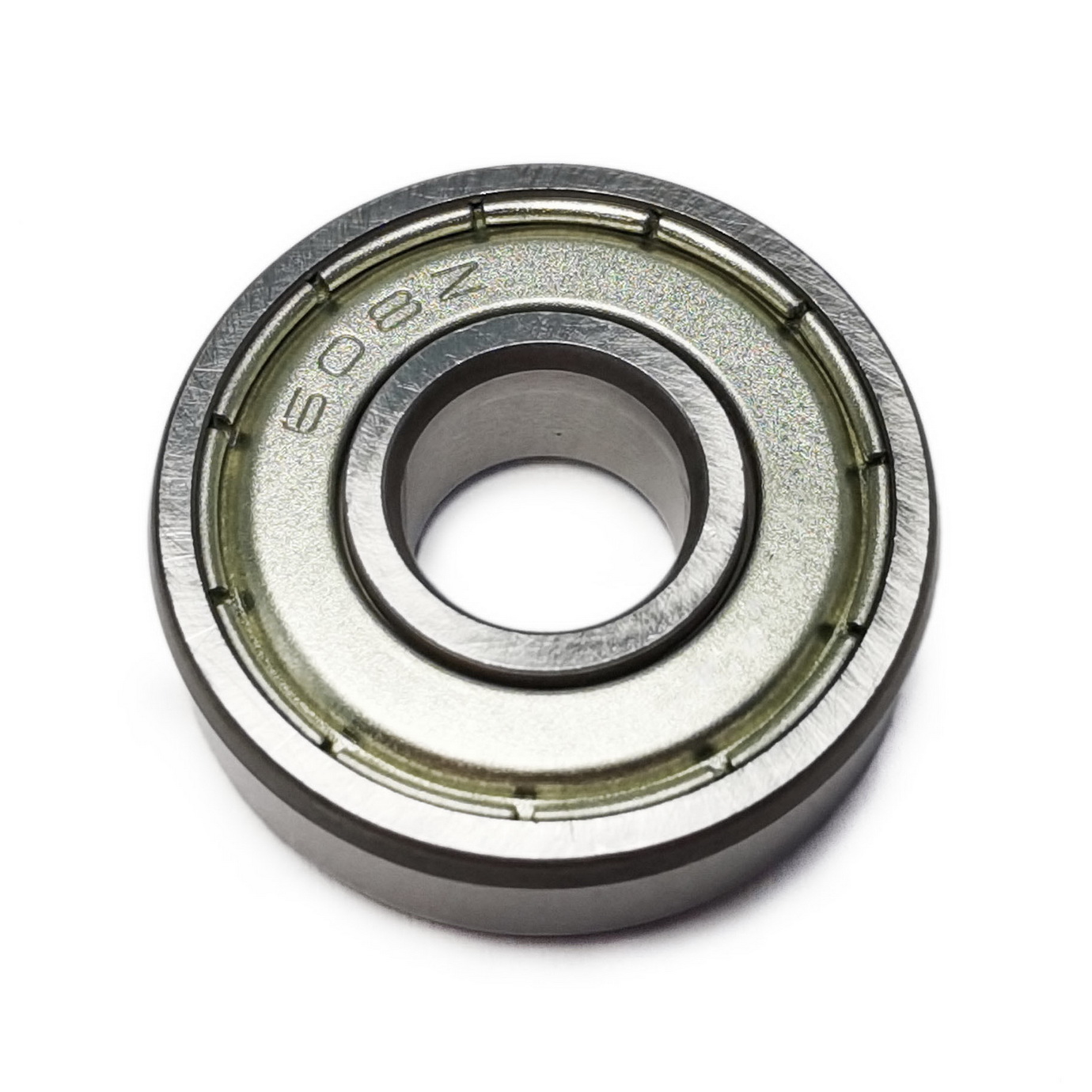
Custom Precision Stainless Steel 608ZZ Ball Bearing
Low-vibration, dust-sealed 10mm ID / 20mm OD CCC-certified deep groove bearing designed for miniature armature shafts and high-temperature motor housings.
Product Details →1. Commutator Hook Welder Technology: Resistance Fusing vs. Modern TIG Processes
In fractional horsepower (FHP) universal motors, automotive starters, and power tool drivetrains, the electromechanical connection between the magnet wire and the commutator riser is the primary failure mode under continuous thermal-mechanical cycling. A commutator hook welder machine (also designated as a commutator hot-stacking or tang fusing machine) creates an atomic-level metallurgical bond. The process simultaneously strips the outer enamel coating from copper wire through controlled joule heating while consolidating the copper hook down onto the conductor strand under pneumatic or servo-mechanical clamp force.
Modern equipment deployed in industrial hubs incorporates closed-loop Constant Current (CC) or Constant Energy (CE) inverter power supplies. Unlike legacy single-phase AC transformers, modern medium-frequency inverter DC (MFDC) welding controllers monitor dynamic dynamic resistance curves ($R(t)$) in real time at millisecond intervals. If a hook presents excess oxidation, defective wire insertion, or dimension shifts across copper tang segments, the system immediately flags the delta in displacement and voltage drop, ensuring consistent weld quality across multi-thousand-unit production shifts.
2. The "West End" Industrial Market Dynamics & Regional Sourcing Drivers
Industrial procurement teams operating within and supplying the broader "West End" manufacturing sectors—ranging from established automotive tier corridors to specialized maintenance, repair, and overhaul (MRO) facilities—face rigorous uptime demands and tight operational margins. As production architectures in these manufacturing districts transition toward decentralized, high-mix low-volume (HMLV) electric drive manufacturing, factories require flexible commutator hook welding stations capable of quick-changeover tooling.
The localized supply ecosystem demands automated armatures that comply directly with European, British, and global CE directives. Furthermore, environmental regulations require clean welding profiles without the heavy lead fumes or hazardous chemical flux residues associated with traditional dipping methods. Consequently, localized manufacturers rely heavily on automated hook welders integrated with closed-circuit water cooling, automated smoke evacuation, and multi-axis CNC rotary indexers.
3. Integration Architecture: From Flyer Winding to Tang Fusing
A commutator hook welder rarely operates as an isolated island of automation. In advanced manufacturing lines engineered by Ningbo Nakro Intelligent Equipment, the fusing machine is structurally synchronized with upstream dual-flyer armature winding machines and downstream turning and dynamic balancing equipment. Following flyer winding—where the enameled magnet wire is looped around commutator tangs with controlled wire tension—the armature transfers via pneumatic walking-beam or servo transfer track directly into the welder's collet chuck.
High-precision optical sensors register the commutator slot position, rotating the armature via an ultra-fine servo indexer to guarantee exact alignment beneath the tungsten-alloy electrode. Once the fusing cycle terminates, real-time laser profiling or linear variable differential transformer (LVDT) sensors measure the final hook compression height. Parts failing the height threshold or exhibiting abnormal thermal weld profiles are rejected downstream prior to the expensive trickling, varnishing, and mica undercutting stations.
Commutator Hook Welder Specifications & Capabilities
Standard engineering configurations across automatic and semi-automatic armature hot-stacking cells.
| Parameter / Feature | Standard Semi-Automatic Cell | Fully Automated Multi-Axis In-Line Cell |
|---|---|---|
| Armature Shaft Diameter Capacity | Φ3.0 mm – Φ15.0 mm | Φ2.0 mm – Φ25.0 mm (Customizable collets) |
| Commutator Outer Diameter (OD) | Φ8.0 mm – Φ45.0 mm | Φ6.0 mm – Φ60.0 mm |
| Hook Segment Count Capacity | 3 to 24 Bars (Mechanical indexing) | 3 to 36+ Bars (Programmable CNC servo index) |
| Welding Power Unit Options | 15 kVA AC Transformer / 25 kHz Inverter | 30 kVA – 60 kVA MFDC / Inverter Controller |
| Wire Diameter Handling Capability | 0.15 mm – 0.85 mm single strand | 0.08 mm – 1.60 mm (Single or bifilar/trifilar) |
| Electrode Force Generation | Pneumatic cylinder (Proportional valve) | Closed-loop Servo actuator with strain gauge |
| Quality Verification Functions | Weld current monitor & cycle timer | Real-time LVDT height, $I/V$ waveform & $R(t)$ trace |
Industrial Applications in the Regional West End Market
Where high-reliability hook fusing directly impacts performance, thermal durability, and production yield.
High-Torque Professional Power Tools
Heavy-duty angle grinders, rotary hammers, and impact drills operating at 20,000+ RPM generate tremendous centrifugal and thermal force. Precision hot-stacking ensures the magnet wire never pulls free from the commutator hook during dynamic braking or sudden stalls.
Automotive Auxiliary DC Motors
Window lifts, electric seat adjustments, radiator fans, and windshield wiper drives demand zero-defect electrical connectivity over a -40°C to +125°C operational envelope. In-line resistance fusing provides certified weld data for automotive quality audits.
Commercial Kitchen & Home Appliances
Universal motor assemblies used in blenders, high-performance vacuum cleaner blowers, and washing machines leverage high-speed automatic indexing hook welders to maintain cycle times under 0.8 seconds per segment, driving down unit production cost.
Regional Market Trends: Digitalization, Inverters, and Hybrid Geometries
Manufacturing plants in the regional West End market are undergoing an operational shift. Rising raw material costs—specifically for high-purity oxygen-free copper and electrical steel lamination grades—force manufacturers to minimize scrap rates. As a consequence, legacy open-loop hook welders that rely on trial-and-error operator tuning are rapidly being replaced by smart Industry 4.0 fusing cells.
Three key technological developments are defining the current procurement cycle:
1. Multi-Frequency Inverter Adoption: By replacing legacy 50/60 Hz mains welding power with high-speed 4 kHz to 20 kHz inverter supplies, energy consumption is reduced by up to 35%, while eliminating the severe thermal degradation of commutator mica insulation that traditionally occurred under prolonged AC current pulses.
2. Optical Quality Gateways: Integration of high-speed machine vision directly into the welding chamber allows 100% automated inspection of copper hook geometry, verifying hook closure angle and absence of copper spatter before the rotor ever exits the cell.
3. Hybrid Production Flexibility: Facilities increasingly produce both legacy brushed armatures and modern brushless (BLDC) motor components under one roof. Modern factory layouts require tool-less quick disconnect mechanisms, allowing technicians to switch collets, electrode holders, and software recipes between varying rotor shaft lengths and pole numbers in under 15 minutes.
Ningbo Nakro Intelligent Equipment Advantages
Integrated engineering mastery spanning complete motor automation lines and precision sub-components.
ISO 9001 Certified Quality
Strict quality control protocols governing mechanical machining, electrical cabinet integration, and automated run-off trial runs with customer laminations prior to export.
13+ Years Export Experience
Supplying production equipment directly and indirectly across 50+ countries including Southeast Asia, Eastern Europe, South America, and the Middle East.
Turnkey Process Coverage
From shaft pressing, slot insulation paper inserting, and flyer coil winding to hook fusing, wedge inserting, balancing, and full electrical hipot testing.
One-Stop Component Supply
Beyond capital machinery, buyers access complete supply streams: precision commutators, 608ZZ bearings, carbon brushes, insulation paper, shafts, and motor housings.
Frequently Asked Questions for Sourcing Managers
Common technical and commercial questions raised by engineering teams sourcing commutator welders.
How does the machine strip the magnet wire insulation without cutting the copper strand?
The commutator hook welder relies on a thermocompression process (hot-stacking). During the initial pre-heat stage, a controlled electric current flows through the tungsten electrode into the copper hook. The rapid generation of joule heat vaporizes the polyurethane or polyesterimide enamel coating on the magnet wire. As the insulation evaporates into a vapor plume, the mechanical electrode cylinder presses the softened copper hook down into intimate, solid-state contact with the bare wire, forming a low-resistance diffusion bond without mechanical nicking.
What happens if the commutator has multiple wires per slot (bifilar or trifilar winding)?
Our programmable inverter hook welders feature multi-stage weld profiles (Pre-heat, Squeeze, Weld 1, Cool, Weld 2, Hold). For multi-wire winding configurations, a prolonged pre-heat phase under moderate pressure evaporates the internal enamel layers between overlapping strands before the primary welding current pulse triggers. This ensures that interior strands achieve the exact same metallurgical bond as the outer wire contacting the hook.
Can the tooling accommodate different armature shaft lengths and commutator diameters?
Yes. The machine design incorporates modular collet holders, adjustable V-blocks, and high-precision quick-clamp tailstock centers. Switching between different shaft stack heights and commutator diameters typically takes less than 15 minutes by swapping the tungsten electrode tip, adjusting the optical positioning sensor, and selecting the corresponding pre-programmed recipe from the Siemens or Mitsubishi touchscreen HMI.
How is the weld quality verified prior to shipping equipment to the buyer's facility?
Every machine manufactured at our Ningbo facility undergoes a rigorous Factory Acceptance Test (FAT). We encourage buyers to ship their actual rotor shafts, laminations, commutators, and magnet wire to our plant. We run continuous batch production trials, record high-speed video verification of indexing, and perform micro-resistance testing, hook pull-force tests, and cross-section metallurgical polishing to certify joint integrity before packing in seaworthy wooden crates.
What international trade terms and payment mechanisms are supported?
We work flexibly under standard Incoterms including FOB Ningbo/Shanghai, CFR, and CIF destination ports worldwide. We support multi-currency commercial invoicing in USD, EUR, and CNY via verified Wire Transfer (T/T) and documentary Letters of Credit (L/C at sight), backed by our comprehensive Onsite Verified credentials and clean credit ratings.
Consult With Our Armature Automation Engineers
Send your motor drawings, commutator specifications, wire gauges, and target line cycle times. We will configure an optimized, turnkey commutator hook welding solution tailored to your plant's exact footprint and output goals.
Inquire Now