Stator Inserting
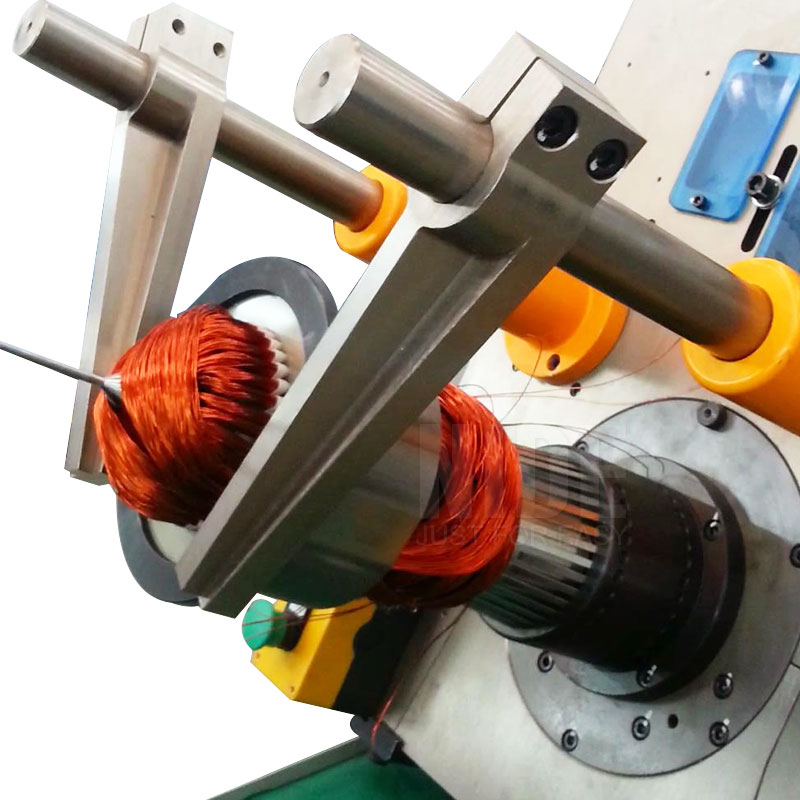
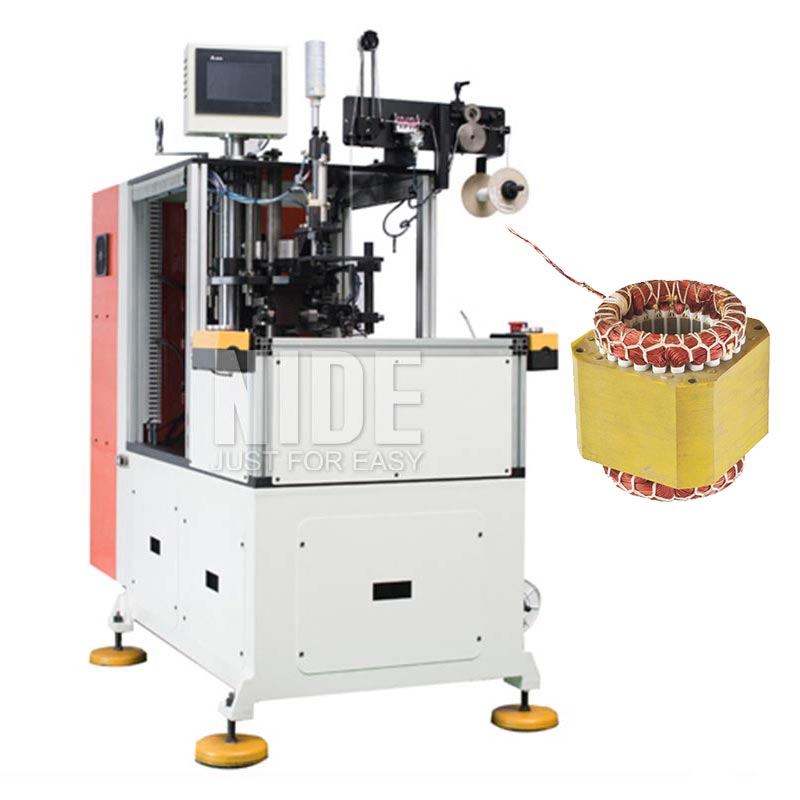
Semi-Automatic Three-Phase Motor Stator Coil Inserting Machine
PLC Controlled
CE Certified
3-Phase Induction
Engineered for high-volume electrical motor fabrication. Fully compliant with CE electrical directives, featuring industrial PLC controllers, digital servo-tensioners, and heavy-duty structural steel tooling for stators, armatures, and brushless DC motors.
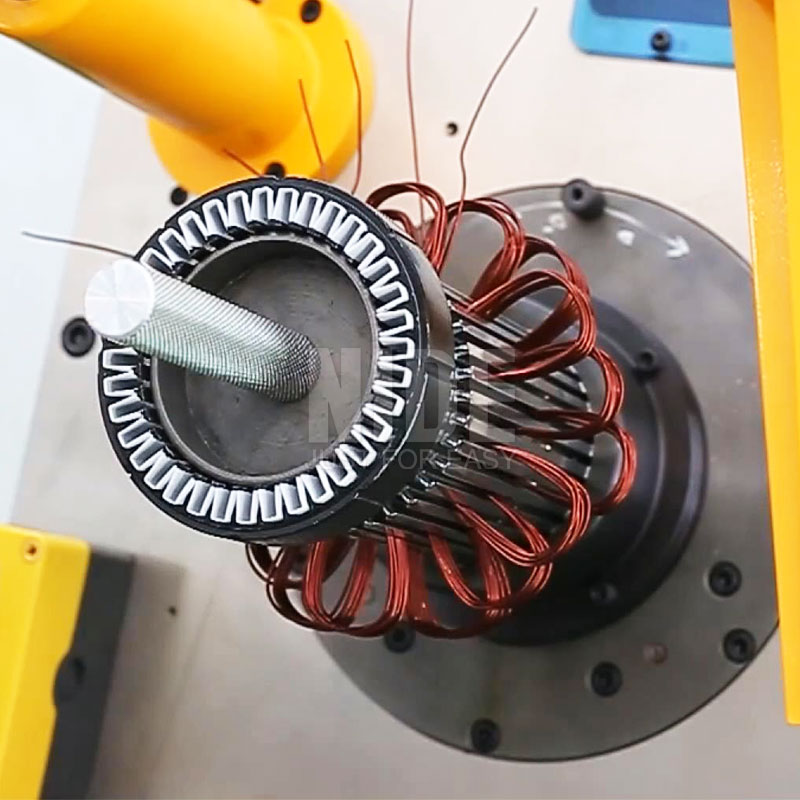
Analyzing modern stator winding geometry, needle winding servo dynamics, and end-of-line electrical verification to empower Ciudad del Este industrial projects.
The global transition toward high-efficiency permanent magnet brushless DC (BLDC) and permanent magnet synchronous motors (PMSM) requires extraordinary precision throughout the mechanical manufacturing cycle. In traditional universal or brushed DC motors, mechanical brush-commutator friction induces heat dissipation, high electromagnetic interference (EMI), and premature mechanical wear. In contrast, modern BLDC configurations transfer the copper windings onto the static armature structure (the stator), delegating polarity rotation to electronic motor controllers and digital hall sensors. For electrical motor manufacturers and assembly operations operating within Latin America, achieving repeatable copper fill factors, minimizing phase-to-phase insulation stress, and ensuring automated takt-time balancing are prerequisites for competitive manufacturing under Mercosur trade regulations.
Our turnkey brushless motor production lines represent the culmination of over 14 years of dedicated electromechanical machine building in Ningbo, China. By integrating automated stack insulation inserting, dynamic multi-axis CNC needle winding, laser terminal fusing, automated wedge placement, robotic rotor magnet assembly, and comprehensive inline high-voltage surge and back-EMF testing, we deliver end-to-end manufacturing resilience. Each cell is constructed using aerospace-grade cast iron base plates, NSK/SKF high-precision bearing carriers, Omron or Mitsubishi PLC architectures, and high-frequency servo tension control to virtually eliminate enamel wire micro-fractures during high-speed coil wrapping.
Traditional flyer winders struggle with internal-slotted BLDC stators. Our CNC needle winders deploy 3-axis to 6-axis synchronous servo coordination, allowing winding nozzles to navigate dense slot apertures with minimal wire bend radius and near-zero scratch incidence.
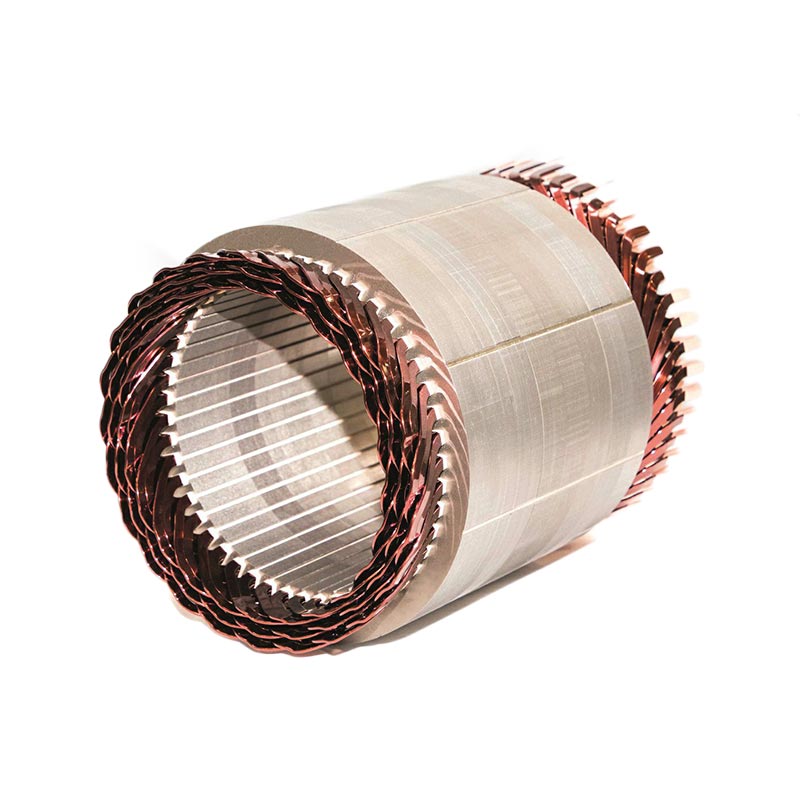
For high-torque commercial applications, electric vehicle drivetrains, and agricultural pump motors, our hairpin lines replace circular wire coils with rectangular insulated copper hairpins. This elevates the slot fill factor from ~45% to over 73%, optimizing thermal conductances.
Quality control cannot be an afterthought in cross-border trade. Every turnkey line includes integrated End-of-Line (EOL) functional stations to guarantee that 100% of manufactured units comply with international insulation and magnetic symmetry tolerances.
A direct performance comparison between standalone semi-automatic machinery cells and our integrated turnkey fully automatic manufacturing systems engineered for regional export factories.
| Production Parameter | Semi-Automatic Workstations | Fully Automated BLDC Line | Hairpin E-Mobility Line |
|---|---|---|---|
| Typical Cycle Time (Takt Time) | 25.0 – 45.0 sec / unit | 8.0 – 15.0 sec / unit | 12.0 – 20.0 sec / unit |
| Required Line Operators | 5 – 8 technicians | 1 – 2 supervisory technicians | 1 automation specialist |
| Slot Fill Factor Capability | 38% – 48% (Round wire) | 48% – 58% (Neat layering) | 68% – 76% (Rectangular copper) |
| Winding Positioning Accuracy | ±0.05 mm mechanical index | ±0.01 mm servo resolution | ±0.005 mm optical vision guided |
| Inline Dielectric Hipot Test | Manual sample loading | 100% Inline automated pass/reject | 100% Multi-point automated flash test |
| Mercosur Maquila Suitability | Initial prototype / low capital | Optimal for regional volume re-export | High-tier industrial & EV traction lines |
Request comprehensive CAD line layouts, cycle time simulation studies, and customized turnkey quotes tailored to your factory dimensions in Alto Paraná.
How Chinese automated manufacturing technology integrates with Paraguay’s clean energy surplus, the Maquila regime, and the multi-billion-dollar Mercosur supply chain.
Ciudad del Este, situated strategically on the western bank of the Paraná River in the Alto Paraná department of Paraguay, is undergoing a profound structural metamorphosis. Long recognized worldwide as one of the planet's busiest international commercial re-export hubs alongside Miami and Hong Kong, the city has evolved into an industrial powerhouse. Supported by the binational Itaipu Hydroelectric Dam—providing the region with virtually limitless, 100% renewable electrical power at some of the most competitive industrial kilowatt-hour tariffs in the Western Hemisphere—Ciudad del Este is now a focal point for precision manufacturing.
Under the framework of Paraguay’s Maquila Law (Ley 1064/97), international manufacturing consortia can import industrial machinery, equipment tooling, and raw raw materials completely free of customs duties and import taxes. Products processed, assembled, or manufactured in Ciudad del Este are taxed under a unified 1% single tax on value added upon exportation. Because Paraguay is a founding member of Mercosur (Southern Common Market), goods achieving the requisite Mercosur Rule of Origin certificate (combining local labor, Itaipu hydro-power, and sub-assembly transformation) enter Brazil and Argentina at 0% internal tariff. This economic corridor makes Ciudad del Este an optimal staging ground for electric motor production lines sourced from China.
Ciudad del Este maquila factories assemble ceiling fans, blenders, residential split air conditioners, and refrigeration compressors for regional retail chains across São Paulo, Paraná, and Buenos Aires. Our single-phase and BLDC stator insertion machines provide the precise coil density required for strict Brazilian INMETRO energy efficiency ratings.
The Alto Paraná region and neighboring Brazilian states (Paraná, Mato Grosso do Sul) lead global soybean and grain production. Heavy-duty three-phase induction stators laced on our automated double-ended machines power deep-well irrigation pumps, automated feeding screws, and high-volume grain storage silo ventilation systems.
With high fuel costs in South America, urban delivery fleets across Ciudad del Este, Foz do Iguaçu, and Asunción are rapidly transitioning to electric two-wheelers and cargo trikes. Our outer-rotor wheel hub motor assembly lines enable local fabricators to wind, assemble, and balance high-torque 48V–72V brushless hub motors locally.
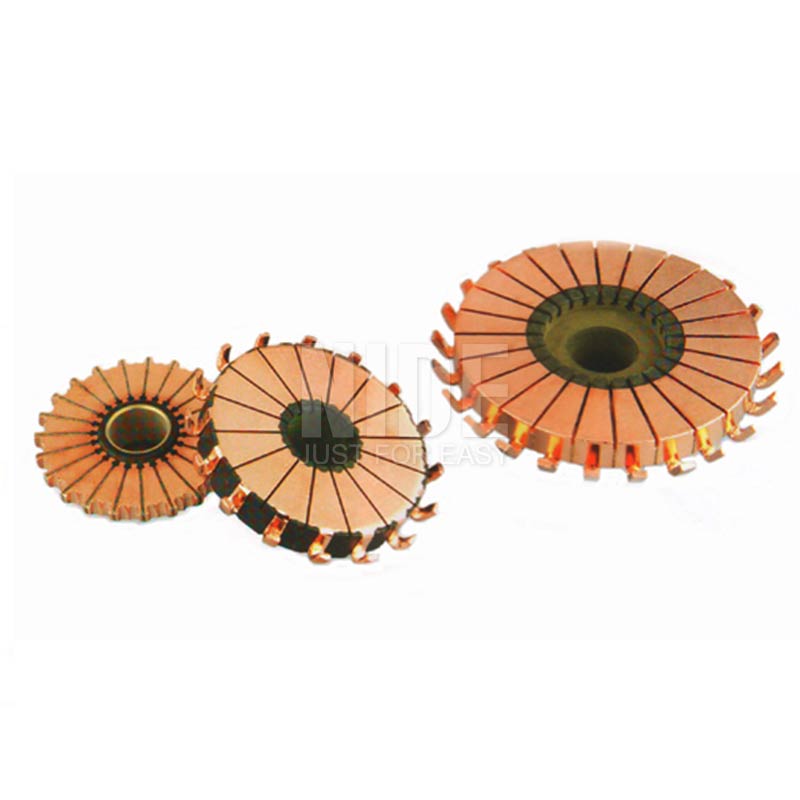
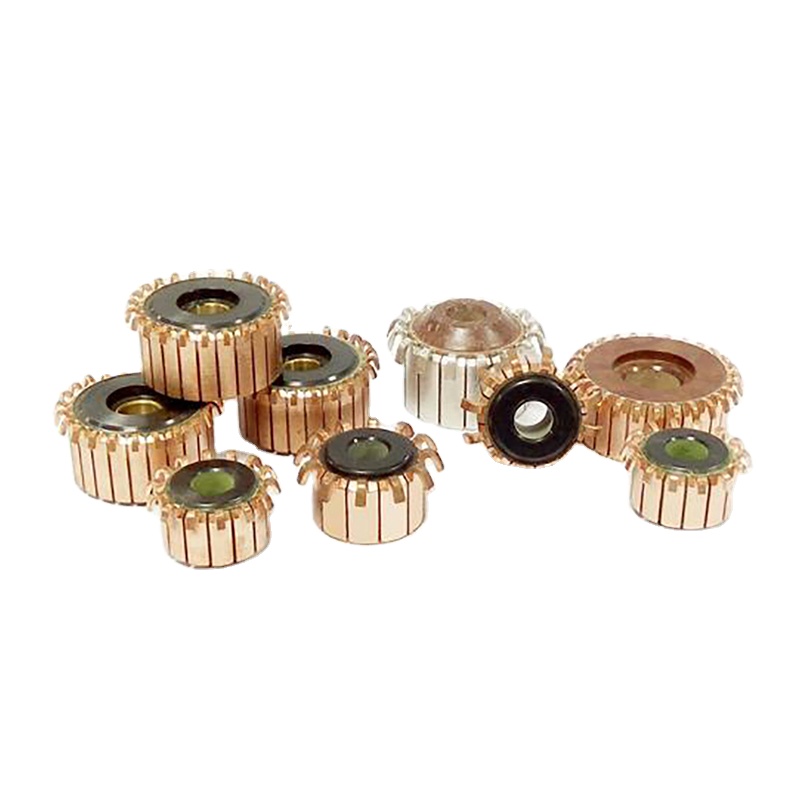
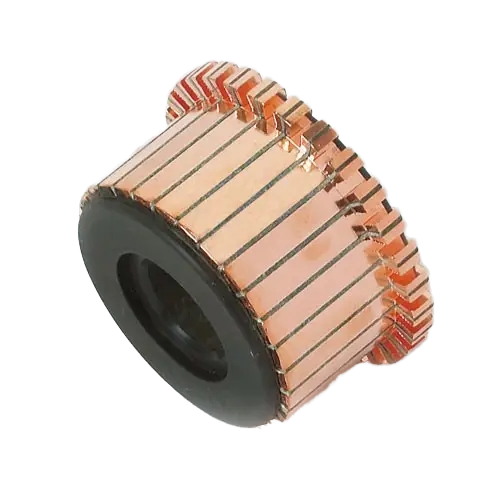
The bustling hardware commercial trading centers of Ciudad del Este demand constant replenishment of high-power universal armature rotors and planar commutators for impact drills, angle grinders, and construction mixers. Our balancing and automated commutator hook welding machines supply domestic repair shops and original brand manufacturers alike.
A crucial engineering consideration for equipment installed in Ciudad del Este: While neighboring Brazil primarily operates at 60Hz with divergent regional voltages (110V/127V/220V), Paraguay's national grid (ANDE) operates strictly on 220V / 380V at 50Hz. All motor production machines supplied by our factories to Ciudad del Este are configured at the factory level with dual-frequency rated servo drives, step-down transformers, and heavy-duty surge suppressors to ensure reliable continuous duty under local power distribution characteristics.
Key drivers accelerating the transition from finished product importation to localized motor fabrication along the Paraná river basin.
The Latin American manufacturing landscape is undergoing a structural realignment characterized by three critical trends that directly impact the demand for Chinese motor assembly technology in Ciudad del Este:
Global supply chain volatility has spurred Brazilian and Argentine industrial brands to compress their procurement cycles. Sourcing finished electric motors from Asia requires 45–60 days of maritime transit, tying up significant working capital in ocean freight. By setting up automated BLDC and induction motor winding plants in Ciudad del Este under the Maquila framework, industrial groups produce finished motors inside the Mercosur customs territory within 72 hours of truck transport across the Friendship Bridge (Puente de la Amistad) to Curitiba, Joinville, or the industrial belts of São Paulo.
The Paraguay-Paraná Waterway (Hidrovía Paraguay-Paraná) is the commercial lifeblood of inland South America. Environmental mandates and operating economics are driving the development of electrified outboard marine motors, solar-powered agricultural irrigation systems, and electric cargo vehicles for logistics warehouses in the Zona Franca Global. These demanding applications necessitate high-torque, brushless permanent magnet stators wound to strict IP67 dust/moisture ingress requirements—capabilities directly provided by our precision needle winding and vacuum-pressure varnishing equipment.
Both Brazil (under Decree 9.864) and neighboring regional markets have legislated minimum energy efficiency standards for induction motors, outlawing standard IE1 and early IE2 configurations in industrial settings. Producing IE3 and IE4 motors requires drastically tighter slot lamination tolerances, higher copper mass insertion without insulation damage, and uniform coil end-turn lacing. Our automated three-phase coil inserting and double-end forming machinery ensures Ciudad del Este maquiladoras pass regional laboratory audits effortlessly.
Backing your Ciudad del Este capital investment with world-class Chinese mechanical fabrication, verified ISO 9001 governance, and comprehensive post-sale support.
Every structural weldment, robotic axis, electrical enclosure, and tooling carriage is fabricated in-house under an ISO 9001 certified quality management system. Machines carry authentic CE certification, ensuring full compliance with international worker safety and electro-magnetic compatibility standards.
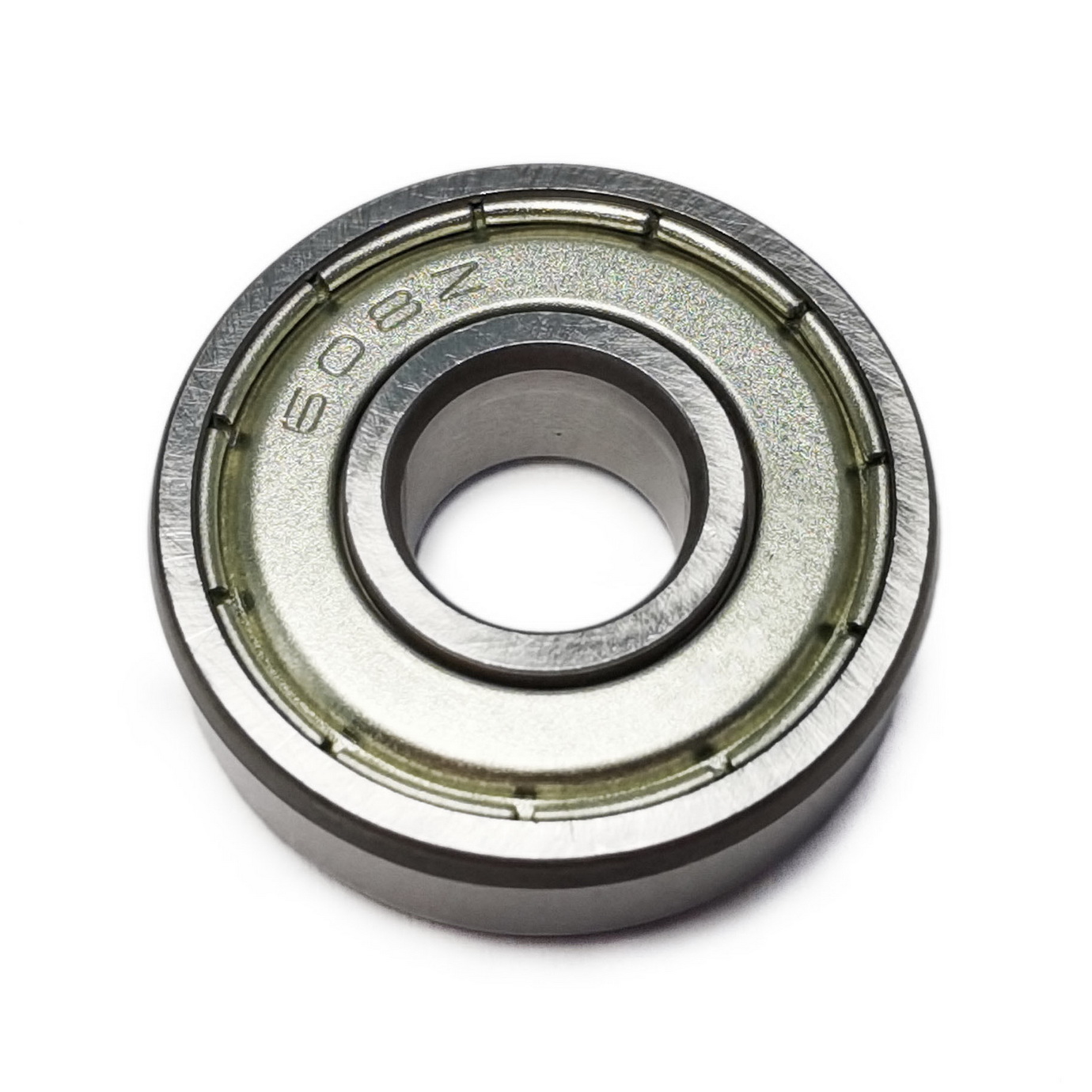
We do not merely supply raw machinery; we solve complete motor production challenges. Buyers can bundle complete turnkey manufacturing cells with high-precision planar commutators, 608ZZ stainless steel bearings, silver copper segmented commutators, slot insulation papers, and rotor shafts directly from one verified source.
Prior to sea loading, we conduct exhaustive dry-run and wet-run factory acceptance tests (FAT) using your own stator laminations, wire gauges, and component geometries, recorded in full HD video. For commissioning in Ciudad del Este, our engineers provide bilingual on-site installation or secure industrial remote telemetry support.
Essential regulatory, logistical, and technical insights for factory directors, plant engineers, and purchasing executives importing Chinese motor production machinery into Paraguay.
Since Paraguay is an inland nation, heavy industrial machinery shipped from Ningbo, Shanghai, or Shenzhen generally moves along one of two primary multimodal routes:
1. Atlantic Ocean Port Entry (Most Common): Container vessels discharge at the Brazilian seaports of Santos (São Paulo) or Paranaguá (Paraná). From Paranaguá or Santos, containers enter bonded transit (DTA - Declaração de Trânsito Aduaneiro) and travel by road via the BR-277 highway directly to Foz do Iguaçu, crossing the International Friendship Bridge (Puente de la Amistad) into Ciudad del Este customs (Aduana de CDE or Algesa dry port).
2. River Waterway Entry: Containers ship on ocean liners to Buenos Aires (Argentina) or Montevideo (Uruguay) and transfer to river container barges navigating the Paraná-Paraguay waterway directly to river ports near Asunción or Villeta, followed by domestic road transport to Ciudad del Este.
We provide comprehensive CIF/CFR terms, complete with Fumigated Seaworthy Packaging, certified Packing Lists, CE declarations, and verified Commercial Invoices formatted for fast customs clearance.
Yes. Production equipment, tooling, spare parts, and raw materials (such as insulated copper wire, ball bearings, and silicon steel laminations) destined for registered Maquiladora operations in Ciudad del Este are exempt from all import tariffs, VAT, and consular fees. Under the Maquila program, capital machinery is temporarily imported under suspended tax status for an indefinite operational duration.
Our export documentation team coordinates closely with your registered Paraguayan customs broker (Despachante de Aduanas) to provide exact HS Codes (Sistema Armonizado), technical catalog sheets, and machinery value declarations that satisfy the requirements of the Consejo Nacional de las Industrias Maquiladoras de Exportación (CNIME).
Paraguay’s national electricity distribution network (ANDE) delivers 220V single-phase and 380V three-phase at 50Hz. In contrast, nearby industrial regions in Brazil run primarily at 60Hz. To guarantee flawless operation without localized overheating of induction motors or servo drives, all Nakro / NIDE equipment engineered for Ciudad del Este features:
The control panel interface (HMI) can be toggled instantly between Spanish, Portuguese, and English, enabling quick operator training for local shop-floor staff in the Triple Frontier region.
Standard standalone equipment (such as semi-automatic stator coil inserting machines or planar commutator welding stations) typically requires 30 to 45 business days from drawing sign-off to factory trial. Turnkey automated BLDC stator lines or custom hairpin production cells typically require 75 to 110 business days.
Upon receiving your stator lamination drawings (OD, ID, slot opening width, stack height) and winding schematics (wire diameter, number of turns, parallel strands, connection diagram), our R&D team produces 3D mold tooling designs within 7 working days. Physical winding nozzles, inserting blades, and coil pushers are machined from hardened Japanese tungsten carbide and Swedish tool steel to guarantee long cycle life.
We maintain an open, transparent Factory Acceptance Test (FAT) protocol. We encourage clients to air-courier samples of their actual silicon steel stator laminations, rotor shafts, and enamelled copper wire to our Ningbo plant. Our technicians assemble the tooling, program the line parameters, and perform continuous trial runs under full operating speeds.
Clients may either send a designated engineering representative or third-party inspection agent (such as SGS or Bureau Veritas) to our factory floor, or participate in high-resolution interactive video acceptance sessions. We provide complete electrical test logs (hipot, surge, winding resistance, and vibration curves) alongside microscopic cross-section photos of completed wire insertions prior to crate crating.
With over 14 years of machinery export experience, we understand that downtime is costly. We support Ciudad del Este and South American operations via three key pillars:
Submit your stator/rotor specifications, target monthly output, and factory dimensions. Our technical engineering team will review your project parameters within 24 hours and generate a detailed line proposal, floor layout schematic, and commercial quotation.
