Featured Stator, Rotor & Winding Production Equipment
Proven industrial machinery, specialized winding stations, and turnkey automated flat-wire cells tailored to European industrial standards (CE/ISO).
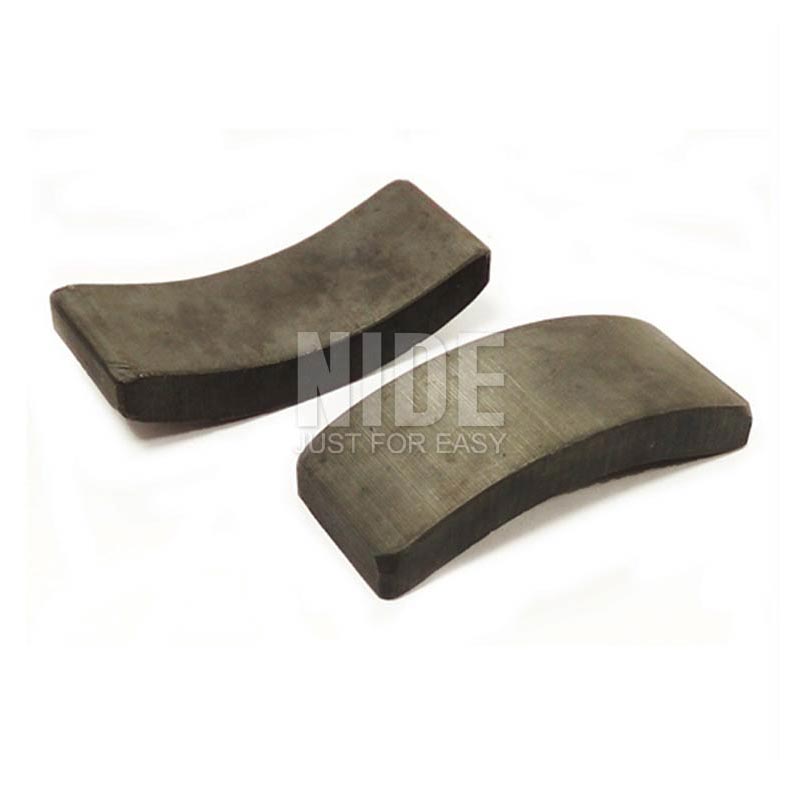
Hot Selling NIDE Brand 12-220V DC Segment Motor Ferrite Magnet Permanent Arc Shape for Water Pump Motor Accessories Model
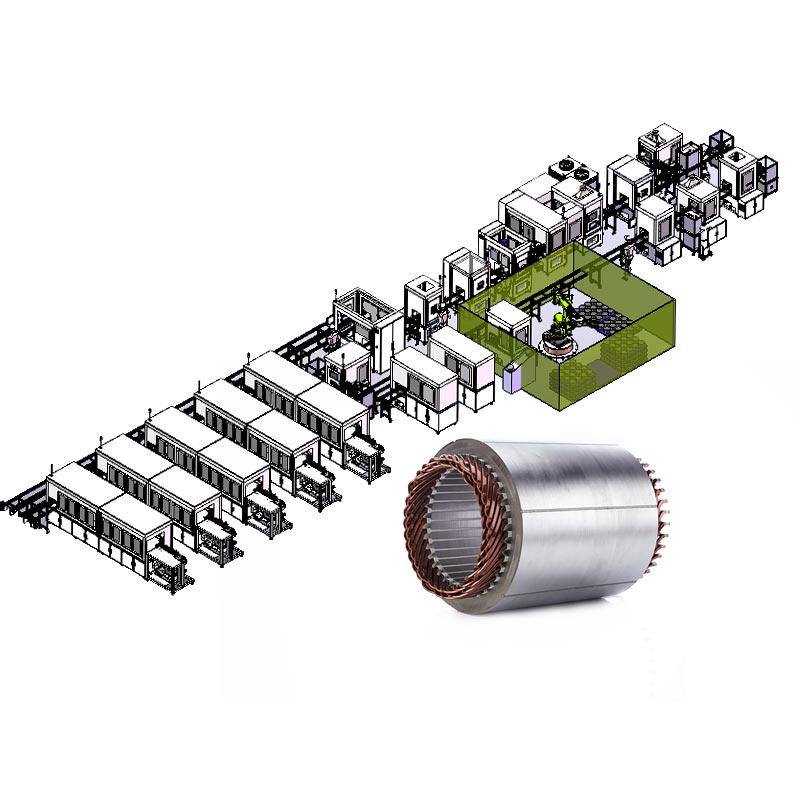
Fully Automatic EV Hairpin Motor Stator Production Line for New Energy Vehicle Flat Wire Motor Manufacturing
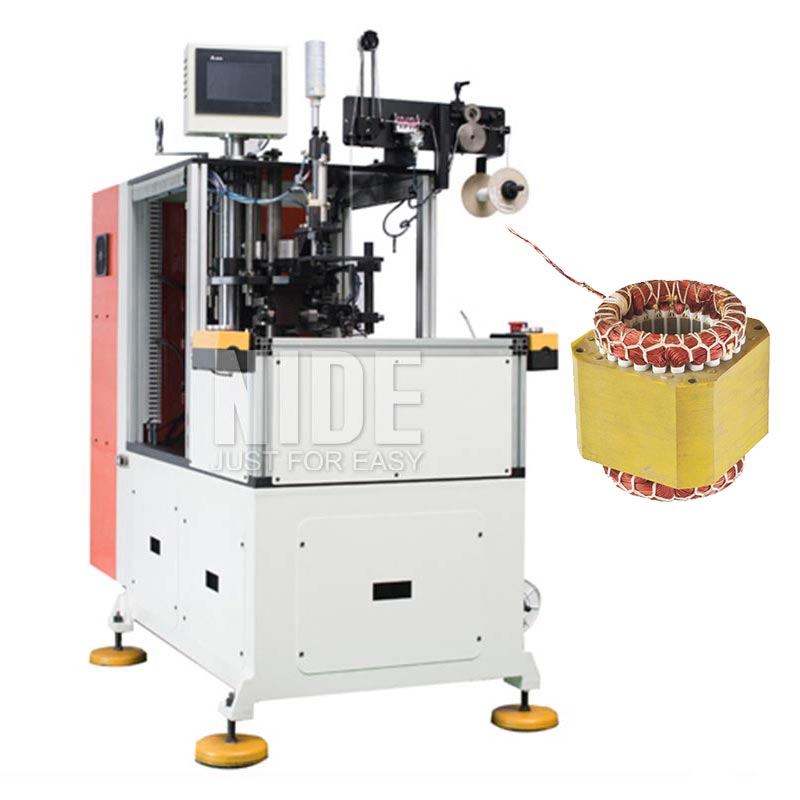
Automatic Double Ends Stator Coil Lacing Machine NIDE Brand Pump Induction Electric Motor Manufacturing Gearbox PLC 10kW 220V

24 Segments Hook Type DC Electric Motor Starter Armature Rotor Commutator Grinder Motor Accessories NIDE Brand Model NDPJ-HXQ-14
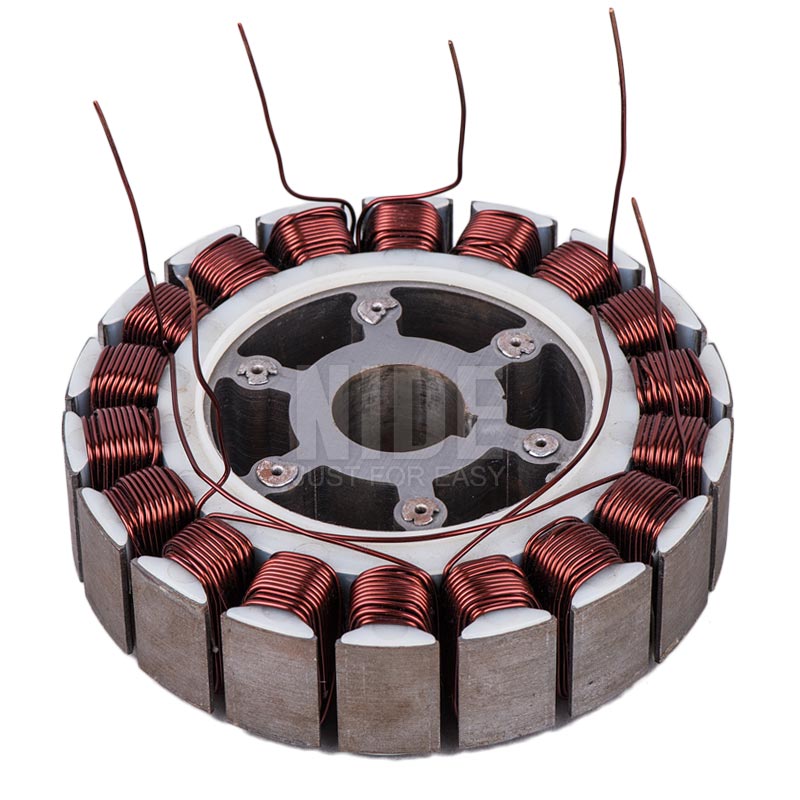
New Automatic BLDC Armature Coil Winding Machine for Wheel Motor Stator Featuring Engine Pump PLC Core Components CE Certified

New Rotor Winding Equipment with Engine & Motor Core Components PLC Controlled Armature Winder Machine 1 Year Warranty
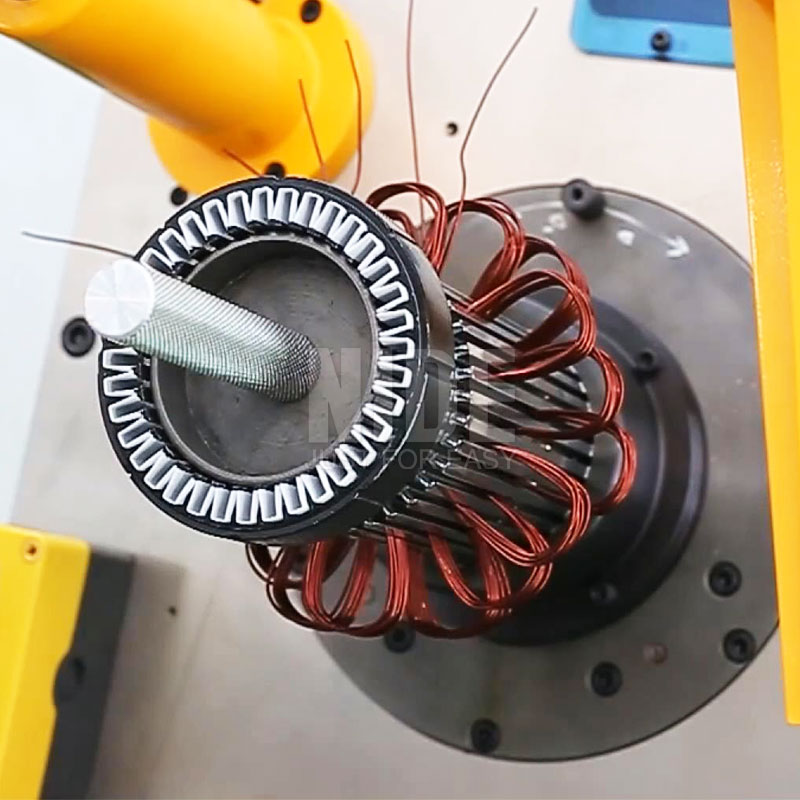
Automatic Single Phase Motor Stator Coil Insertion Machine Industrial Equipment Engine PLC Core Components 1 Year CE Certified
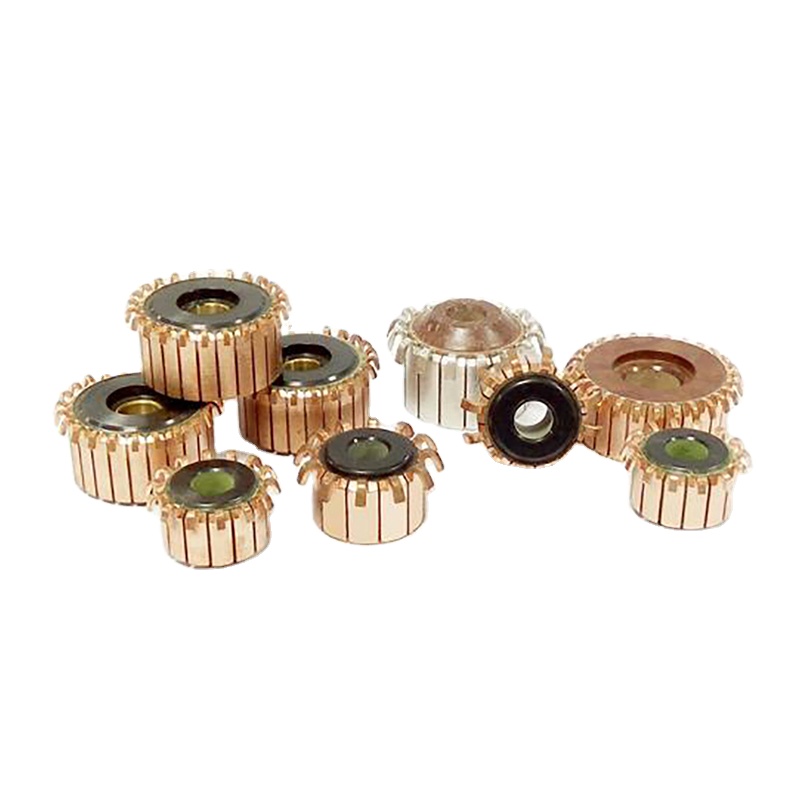
Factory Wholesale NIDE Brand 12V Commutator for Power Tools and Motors CE Certified Model NDPJ-HXQ-03007 Carbon Brush Stator
Hairpin (Flat-Wire) Stator Manufacturing: Technology Architecture
An authoritative engineering guide on high-fill flat wire technology, manufacturing sequence, automated tolerance controls, and thermal efficiency advantages.
The Structural Evolution from Random-Wound Round Wire to Flat Wire Hairpin
In the rapidly advancing e-mobility and high-power industrial machinery segments, traditional random-wound round wire stators face fundamental physical boundaries. Round cross-section copper conductors naturally leave substantial air voids within the stator core slots, limiting the nominal slot fill factor to roughly 40% - 48%. This results in high thermal resistance across the insulation interface, elevated winding end-turn lengths, and significant Joule losses (I²R losses).
Hairpin (flat-wire) technology fundamentally re-engineers electric motor stators by utilizing rectangular cross-section enameled copper conductors. By stacking flat rectangular conductors with geometric precision, slot fill factors exceed 73% to 78%. This technological leap provides several distinct electrical and operational advantages:
Comprehensive Multi-Stage Manufacturing Pipeline
Manufacturing hairpin stators demands an exceptionally rigid, micron-tolerance kinematic automation line. Unlike flexible round wire, rectangular copper wire retains bending stress, behaves anisotropically under forming loads, and requires zero-defect laser stripping to guarantee subsequent electrical welding reliability. Our complete automatic hairpin stator assembly line incorporates an 8-station synchronistic architecture:
Technical Comparison: Round Wire vs. Hairpin Stator Architectures
Critical mechanical, electromagnetic, and manufacturing metrics evaluated under standardized automotive and industrial motor test cycles.
| Performance & Engineering Attribute | Traditional Round Wire Stator | Hairpin (Flat-Wire) Stator Cell | Operational Gain for Manufacturers |
|---|---|---|---|
| Net Copper Slot Fill Factor | 40% – 48% (Random loose winding) | 73% – 78% (Dense geometric array) | +50% more active copper in equivalent lamination slot |
| End-Turn Overhang Length | Standard high-profile arc (38-55mm) | Compact formed end (18-28mm) | 25%–35% reduction in net motor axial length & copper mass |
| Thermal Conductivity & Cooling | Poor; micro air-pockets create hot spots | Direct slot contact; low thermal gradient | Up to 15°C - 22°C lower steady-state winding temperature |
| High-Speed AC Copper Losses (Skin Effect) | Moderate at low frequencies; random crossings | Mitigated via transposed multi-layer pins | Elevated efficiency curve at high operating RPM (>12,000 RPM) |
| Continuous Power / Torque Density | Baseline standard (e.g., 2.5–3.2 kW/kg) | High performance (>4.8–6.0 kW/kg) | Enables lighter drive assemblies for EV and marine drivetrains |
| Automation Repeatability & Traceability | Variable tension; risk of wire crossover nicks | 100% deterministic CNC servo positioning | Zero-defect manufacturing, full QR code batch traceability |
Localized Application Scenarios in Burgas & Southeast Europe
How advanced motor manufacturing systems empower Burgas's transition toward clean marine mobility, automotive nearshoring, and high-efficiency industrial manufacturing.
Black Sea Marine Electrification
Burgas, home to Bulgaria's premier Black Sea commercial port and thriving shipbuilding/repair facilities, is experiencing accelerating demand for hybrid harbor tugboats, electric passenger ferries, and coastal aquaculture patrol vessels. Hairpin motors provide the superior continuous torque density and compact footprint required for direct-drive electric outboard and inboard marine propulsion pods.
Maritime PowertrainsCommercial EV & E-Bus Assembly
With the Municipality of Burgas pioneering clean public transit upgrades across Bulgaria, regional automotive manufacturing centers and Tier-1 sub-assembly plants are setting up production lines for heavy-duty electric bus drivetrains, municipal utility sweepers, and regional logistics delivery vans requiring high-yield flat wire stators.
Public Transit & FleetPetrochemical & Refinery Pumping
Surrounding the Lukoil Neftochim Burgas industrial zone—the largest refining complex in Southeastern Europe—continuous chemical handling, refining pipelines, and industrial water cooling circuits require explosion-proof, IE4 and IE5 super-premium efficiency electric pump motors manufactured with extreme thermal durability.
Industrial Process PlantsAgricultural & Irrigation Drives
The extensive agricultural basin in the Thracian plain connecting Burgas, Sliven, and Yambol depends heavily on high-duty submersible pumps, tractor auxiliary hydraulic motors, and automated grain conveyors. Transitioning local motor plants to automated coil insertion and lacing drives down manufacturing overhead and field failure rates.
Agri-Tech ElectrificationIndustrial Logistics & Intralogistics
In the Industrial and Logistics Park Burgas (ILPB), automated guided vehicles (AGVs), electric forklifts, and automated warehousing stacker cranes demand ultra-compact BLDC and PMSM wheel-hub drive units that utilize high-reliability needle and flat-wire stator tooling.
Robotics & AGVsCommercial HVAC & Refrigeration
Given the expanding food logistics, seafood storage facilities near Burgas Bay, and European hotel cooling infrastructures, compressor manufacturers are upgrading to automated single-phase and BLDC stator assembly cells to comply with EU ecodesign Tier-3 compressor standards.
HVAC CompressorsSoutheast European Manufacturing Trends: The Burgas Gateway
Evaluating economic nearshoring, the EU Fit for 55 decarbonization agenda, and the strategic positioning of Burgas as a manufacturing hub.
Nearshoring Dynamics Along the Black Sea Economic Axis
The European manufacturing sector is actively rebalancing supply chains. Automotive OEMs and industrial conglomerates headquartered in Germany, Italy, France, and Austria are seeking nearshore contract manufacturing within European Union borders to eliminate geopolitical bottlenecks and minimize maritime transshipment volatility. Bulgaria offers one of the EU's most competitive manufacturing business climates, characterized by a flat 10% corporate income tax rate, competitive operational overhead, and a strong tradition of electromechanical engineering originating from regional technical academies like the University "Prof. Dr. Asen Zlatarov" in Burgas.
The Industrial and Logistics Park Burgas, linked with Pan-European Transport Corridor VIII and direct multimodal sea/rail connections at Port Burgas, provides ideal logistics infrastructure for imported capital equipment. By partnering directly with China's leading hairpin line manufacturer, European plant operators in Burgas circumvent intermediary markups while obtaining high-throughput production lines configured directly to European EN safety standards, CE compliance protocols, and Industry 4.0 data exchange interfaces.
EU Ecodesign Directives Driving the Flat-Wire Transition
Under the EU Ecodesign Directive (Regulation 2019/1781) and the European Green Deal, electric motors deployed across European industries must achieve minimum efficiency classes of IE3 (Premium) and IE4 (Super Premium), with high-power industrial motors moving toward IE5 (Ultra-Premium). Traditional round-wire designs struggle to reach IE4/IE5 thresholds without significantly expanding the frame size and laminated steel consumption.
Hairpin stators allow motor designers to achieve IE4/IE5 efficiencies within standard IEC and NEMA mechanical frame sizes. The reduction in active copper loss directly translates into lower operating carbon emissions, making hairpin motor manufacturing lines an indispensable strategic capital investment for companies aiming to meet EU carbon taxation and sustainability mandates.
Enterprise Competence & Factory Engineering Advantages
Over a decade of intelligent machinery engineering, turnkey motor line installations, and comprehensive component support.
Turnkey Process Ownership
From magnetic circuit lamination modeling and winding tooling design to complete automated insertion, laser welding, and inline EOL testing, our engineers manage the total project lifecycle.
Complete Component Supply
Beyond capital equipment, we provide certified raw materials and accessories—permanent ferrite arc magnets, commutators, carbon brushes, insulation papers, and custom copper busbars.
ISO 9001 & CE Certified
All machinery adheres to international quality management systems, incorporating European brand electrical components (Siemens, Schneider, Omron, Festo) and CE safety certifications.
Global Service & Remote Diagnostics
Our intelligent lines integrate Industry 4.0 OPC UA connectivity, allowing our engineers to provide real-time remote diagnostics, software upgrades, and rapid spare-part dispatching to European sites.
Frequently Asked Questions for Burgas & European Motor Makers
Detailed technical answers to common queries regarding line layout, cycle times, customs logistics, and machinery commissioning.
How are machinery shipments and customs handled for deliveries to Burgas, Bulgaria?
Can your hairpin production line accommodate multiple stator stack heights and pin layers?
How does your line avoid copper damage and insulation burnout during laser stripping and welding?
What is the standard cycle time (takt time) achievable on your turnkey hairpin lines?
How is Factory Acceptance Testing (FAT) and Site Acceptance Testing (SAT) executed for European clients?
Are spare parts and emergency technical assistance readily available in Southeastern Europe?
Ready to Modernize Your Motor Assembly Operations in Burgas?
Contact our engineering team with your motor drawings, annual volume targets, and slot geometry. We will deliver a comprehensive engineering line layout, cycle-time simulation, and detailed turnkey quotation.
