Featured Motor Production Equipment & High-Grade Modules
Precision-engineered automated winding machinery, rare earth assemblies, and core tooling built for turnkey electric motor manufacturing in Bandung, West Java.


Axial Flux Permanent Magnet (AFPM) Motor Manufacturing: Technical Architecture
A comprehensive analysis of disc-rotor machine physics, automated winding tolerances, and production line engineering for Bandung’s emerging industrial conversion programs.
Yokeless and Segmented Armature (YASA)
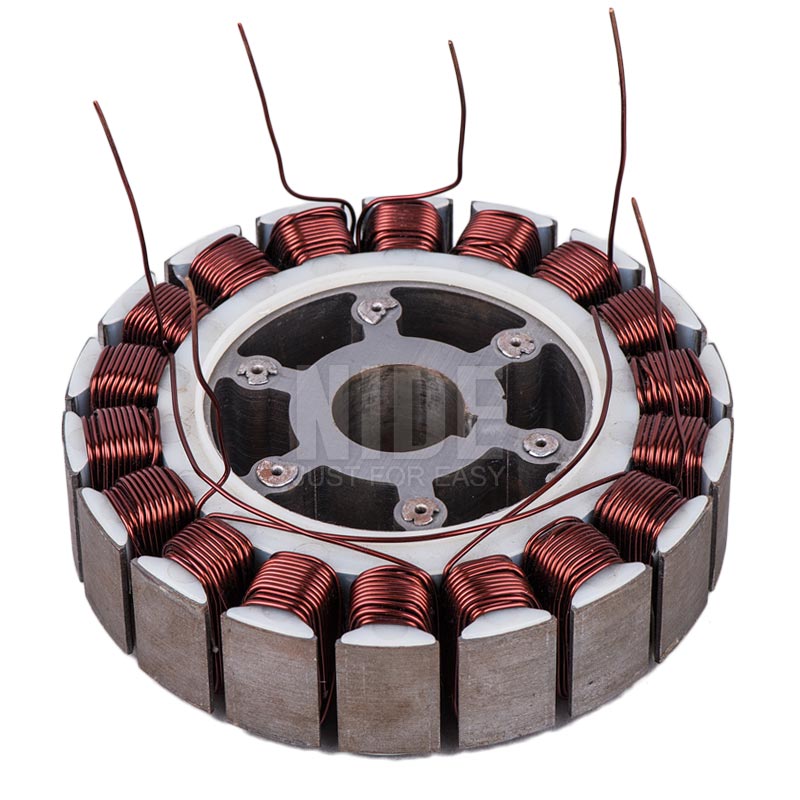
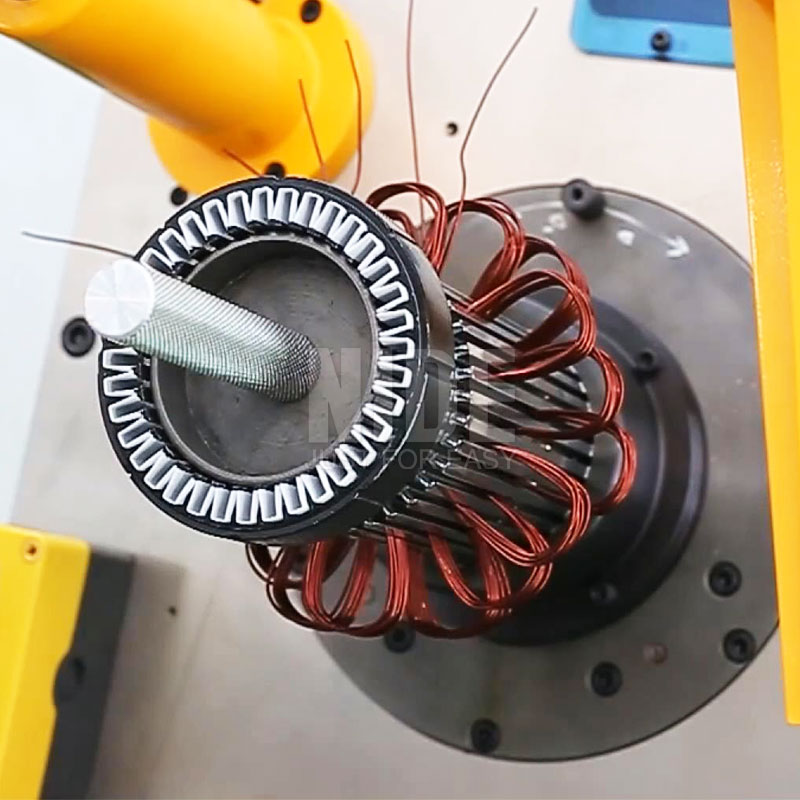
Unlike standard radial flux configurations where magnetic flux travels cylindrical across stator teeth, Axial Flux machines guide flux axially across an air-gap disc. Removing the stator back-iron in YASA topologies slashes iron losses by up to 40%, yielding torque densities exceeding 10 Nm/kg. This requires ultra-precise robotic winding on individual tooth segments rather than continuous slot insertion.
SMC Core Compaction & Grain Alignment
Laminating electrical steel sheets radially produces manufacturing inefficiencies and high eddy currents. Our production lines integrate Somatic Magnetic Composite (SMC) presses and grain-oriented cut magnetic strips. SMC achieves isotropic 3D magnetic permeability, vital for three-dimensional axial end-turn flux loops while maintaining a mechanical structural tolerance within ±0.015 mm across the entire disc diameter.
Dual Rotor Single Stator (Torus-NN / NS)
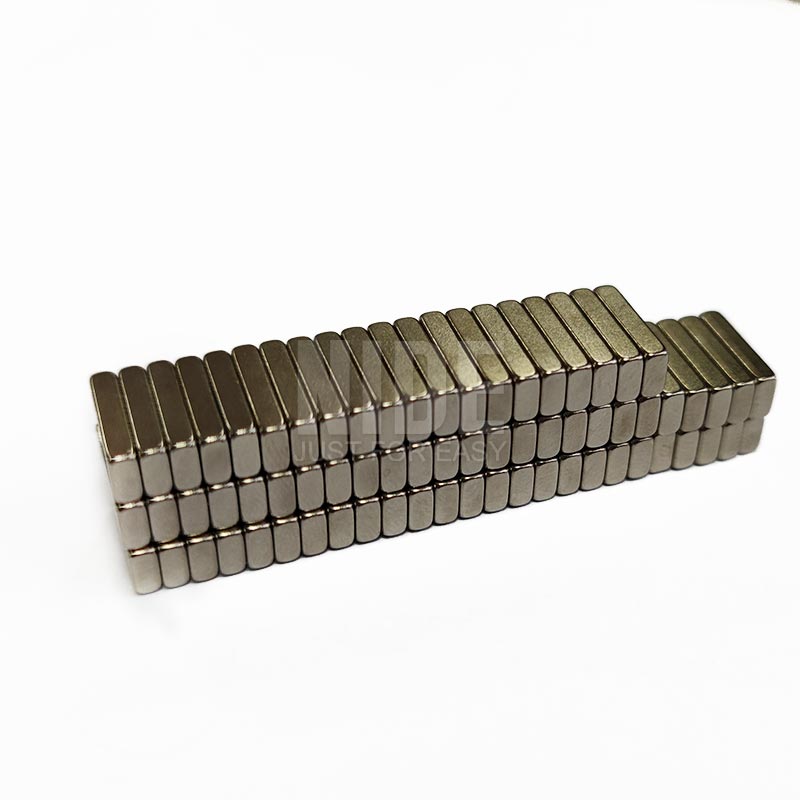
For high-torque commercial vehicles in hilly mountainous terrains, the double-rotor configuration delivers balanced axial magnetic pull forces, relieving bearing thrust loads. Automated magnetic array bonding stations mount N52 grade neodymium trapezoidal blocks in precise Halbach arrays to maximize air-gap flux density up to 1.15T while zeroing back-iron saturation.
Axial Flux Motor Application Scenarios in Bandung & Greater West Java
How the unique topographic, logistical, and manufacturing ecosystem of Priangan Highlands leverages pancake motor density.
Electric Two-Wheeler (E2W) Mountain Climbing
Bandung’s geographical topography features severe gradients (e.g., Dago Pakar, Lembang, Ciumbuleuit slopes exceeding 18°). Standard radial hub motors overheat and saturate under continuous high-torque draw. Axial flux wheel hub and swingarm motors provide up to 2.5x the continuous torque at lower thermal resistance, enabling electric scooters to ascend highland inclines without thermal throttling.
Angkot & Commercial Fleet Conversion
The West Java Provincial Government and Bandung City Transportation Agency (Dishub) are accelerating pilot electric retrofits for public urban minibuses (Angkutan Kota / Angkot). The ultra-compact axial dimension of pancake motors allows direct bolt-on coupling to light differential drives without reconstructing vehicle floor pans or sacrificing passenger cabin headroom.
Cimahi & Majalaya Textile Automation
The Greater Bandung industrial belt (Cimahi, Padalarang, Majalaya) hosts extensive textile processing and yarn spinning machinery requiring high-torque direct drives at continuous operational duty cycles. Replacing complex belt-pulley setups with integrated axial flux motors slashes mechanical transmission losses, factory acoustic noise, and downtime caused by vibration.
Bandung & West Java Regional EV Development Trends
Navigating Presidential Regulations, domestic manufacturing quotas, and R&D commercialization networks in Indonesia.
TKDN Domestic Value Escalation Mandates
Under Indonesian Presidential Regulation (Perpres) No. 55/2019 and Ministry of Industry Regulation No. 6/2022, electric two-wheelers and commercial vehicles must attain a Tingkat Komponen Dalam Negeri (TKDN) minimum of 40% to 60%. Assembling raw knocked-down kits is no longer legally compliant for state procurement subsidies. Installing automated stator coil winding, rotor magnetic potting, and motor balancing equipment locally in West Java satisfies critical domestic manufacturing value steps.
Institut Teknologi Bandung (ITB) & PT Pindad R&D Hub
Bandung is Indonesia’s intellectual core for electro-technical engineering. Collaboration hubs between ITB’s National Center for Sustainable Transportation Technology (NCSTT) and state-owned defense/machinery manufacturers like PT Pindad create immediate demand for flexible, low-to-medium volume, non-standard automated production lines. These allow local developers to iterate specialized axial flux prototypes into mass production.
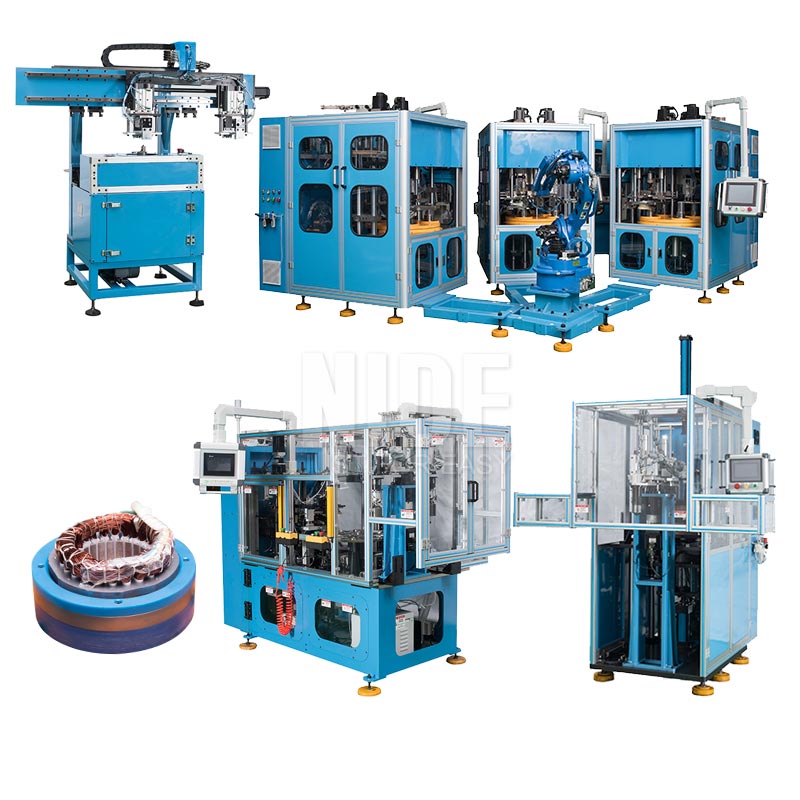
End-to-End Axial Flux Stator & Rotor Assembly Architecture
A precision 5-stage automated cell configuration engineered to maintain dimensional accuracy and insulation stability.
Segment Orthocyclic Winding
Dedicated high-speed CNC spindle winders apply rectangular copper wire directly around SMC tooth segments with a copper fill factor exceeding 62%.
Hot-Staking Laser Termination
Robotic fiber laser welding heads weld coil lead junctions to integrated busbars, eliminating mechanical resistance bottlenecks and high-temperature cold solders.
Vacuum Pressure Potting (VPI)
Automated dual-component epoxy dispensing under vacuum (< 1 mbar) cures the stator ring into a monolithic, vibration-proof, IP67-rated waterproof structure.
Halbach Array Rotor Bonding
Robotic pick-and-place gantry with integrated vision inserts N52 neodymium trapezoidal segments onto carbon-fiber rotor carrier plates with micron glue line control.
Dynamometer & EOL Testing
100% automated electrical safety screening: Hipot (3.0 kV), partial discharge, surge wave test, back-EMF sinusoidal symmetry, and dynamic cogging analysis.
Turnkey Axial Flux Motor Production Line Specifications
Technical benchmarks across our semi-automated pilot cells and fully automated high-volume production facilities.
| Workcell Functional Unit | Pilot Series (AF-Line 500) | High-Volume Automated (AF-Line 3000) | Key Metrology & Quality Threshold |
|---|---|---|---|
| Stator Core Dimension Range | Outer Ø 120 mm – 320 mm | Outer Ø 100 mm – 450 mm | Concentricity within ±0.015 mm (Laser CMM) |
| Copper Slot Fill Factor | 54% – 58% (Round Enamelled Wire) | 60% – 66% (Rectangular Hairpin/Flat Wire) | Zero insulation stripping & optical camera inspection |
| Magnet Array Insertion Rate | 45 sec per rotor disc (Assisted Jig) | 16 sec per rotor disc (Vision Guided SCARA) | Angular positional error < 0.05° |
| Resin Impregnation / Potting | Batch chamber hot-cure vacuum oven | Inline dynamic mixing vacuum potting tunnel | Void ratio < 0.5%, Class H insulation (180°C) |
| Dynamic Rotor Balancing | Single-station manual drill balancing | Dual-plane automated milling balance cell | Residual unbalance ISO 1940 Grade G1.0 |
| Control & SCADA Backbone | Mitsubishi iQ-R / 10-inch Touch HMI | Siemens S7-1500 PLC + Industrial Ethernet | OPC-UA Ready, Complete Barcode & MES Tracking |
Procurement & Technical FAQ for the Bandung Market
Practical answers for Indonesian plant managers, mechanical engineers, and automotive procurement executives.
Under the Ministry of Industry assessment framework, purchasing imported pre-assembled motor blocks gives minimal domestic score. By deploying our coil winding, stator lacing, magnet affixing, vacuum resin potting, and dynamometer testing cells at your Bandung or West Java facility, the entire transformation cycle—from bare copper wire, raw laminations, and resin into a certified motor—is registered locally. This typically contributes 25% to 38% toward your vehicle's overall TKDN valuation.
Yes. Standard Indonesian industrial grid supply across West Java (PLN) runs at 380V three-phase, 50 Hz. Our equipment integrates line reactors, heavy-duty surge suppressors, and active voltage stabilizers to protect delicate servo drives against local grid fluctuations. Furthermore, all control enclosures feature closed-circuit industrial air conditioners to mitigate Bandung’s tropical ambient humidity and prevent internal condensation during seasonal monsoon shifts.
Shipments typically arrive via Pelabuhan Tanjung Priok in Jakarta, located approximately 150 km northwest of Bandung. From Tanjung Priok, containers travel via the Cipularang Toll Road directly to industrial areas in Cimahi, Batujajar, or Padalarang. Nakro provides complete documentation required by Indonesian Customs (Bea Cukai), including surveyor reports (LS), certified Masterlist paperwork for duty exemptions, and Form E preferential certificates under ASEAN-China FTA.
Yes. Our axial flux equipment features modular quick-change clamping fixtures and digital recipe libraries within the HMI software. Transitioning between different tooth lamination heights, disc diameters, or magnet pole counts can be executed in under 25 minutes. Tooling changes require simple exchange of winding heads, slot guides, and balance mandrels without rebuilding mechanical gantries.
Prior to maritime dispatch, complete FAT (Factory Acceptance Testing) is conducted with your specific copper wire and lamination samples, validated by high-resolution video telemetry. Upon equipment arrival in Bandung, our field automation engineers deploy directly to your facility to manage anchor leveling, pneumatic hookup, PLC synchronization, and provide hands-on operator instruction in maintenance and fault recovery.
Why Tier-1 Manufacturers Partner with Nakro Intelligent Equipment
Over a decade of core electro-mechanical automation engineering, backed by verified ISO 9001 systems and global footprint.
ISO 9001 Certified System
Established in 2010, our state-of-the-art facility spans over 30,000–50,000 m² of specialized precision assembly space, operating under rigorous ISO 9001 quality audit standards.
Exporting to 50+ Countries
With more than 13 continuous years of machine export experience, we maintain strategic partnerships and customer installations across Southeast Asia, Europe, and the Americas.
Custom Tooling & R&D Team
Dedicated mechanical and electrical R&D engineers formulate custom slot formers, automated needle nozzles, and computerized test scripts customized to client motor blueprints.
Full Supply Chain Integration
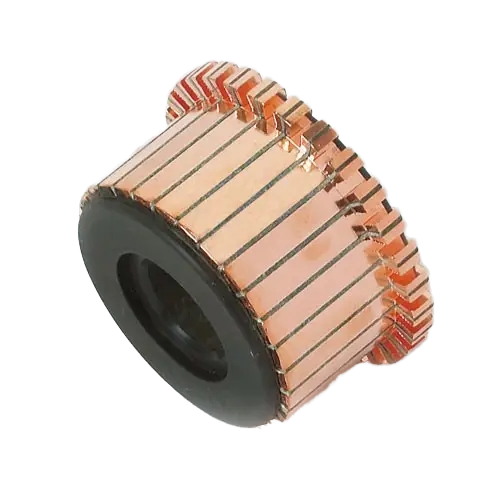
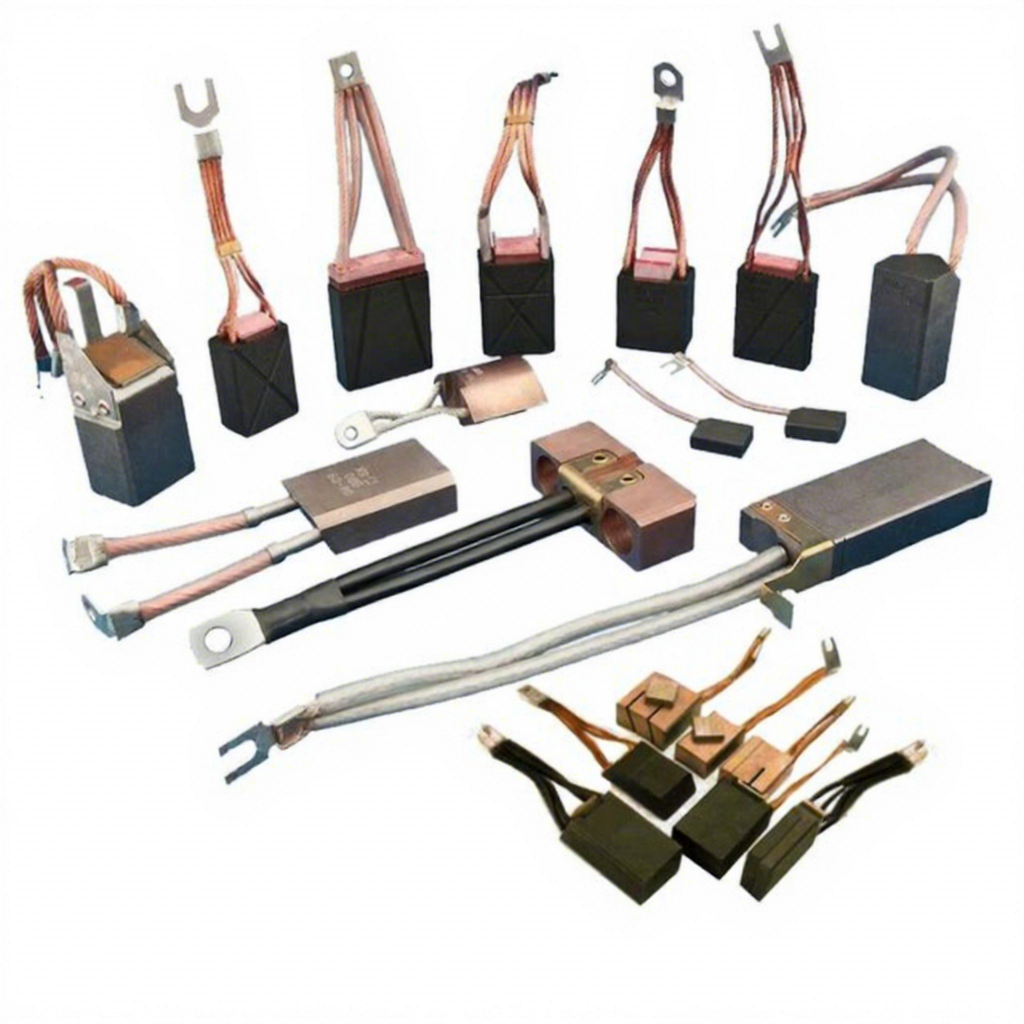
Beyond machinery, source certified copper commutators, N52 magnets, graphite brushes, bearings, and insulation composites through an integrated single-vendor procurement framework.
Scale Your Axial Flux Motor Assembly in Bandung
Consult with our process engineers today. Send your motor schematics, target torque envelopes, and annual capacity goals to receive an optimized production line proposal and cycle-time study.
Send an Inquiry