Featured Stator Assembly & Core Manufacturing Systems
From turnkey hairpin stator lines and servo-driven coil insertion machinery to precision-stamped commutators and segment permanent magnets, our manufacturing solutions optimize electromagnetic slot-fill factors and cycle-time efficiency.

New NIDE Automatic Armature Rotor Hot Chamber Die Casting Machine PLC Aluminum Core
High-pressure horizontal/vertical aluminum induction squirrel-cage casting with automated cycle clamping and PLC parameter control.
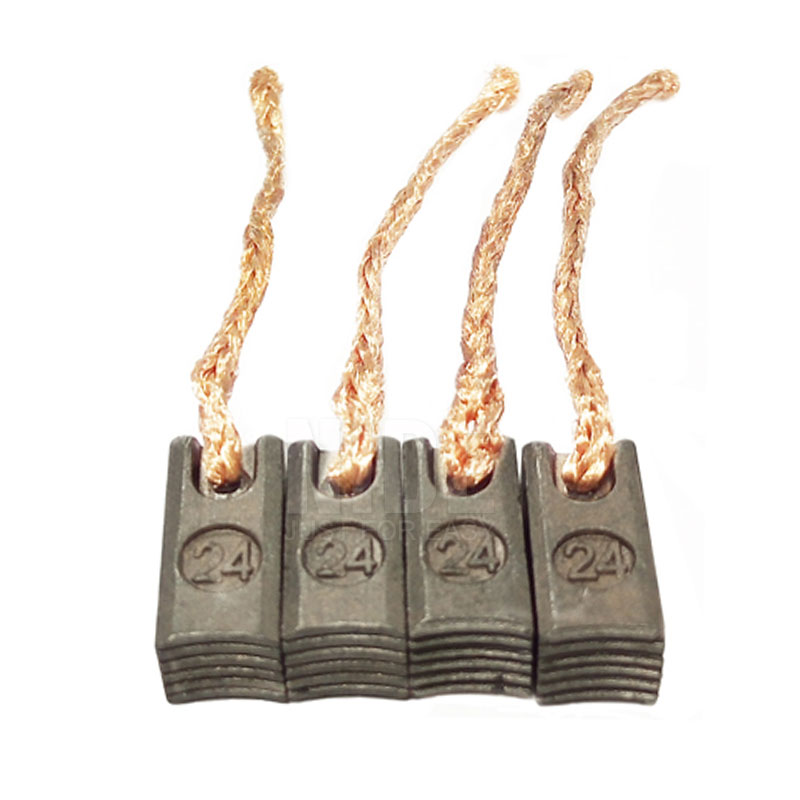
High Precision Motor Carbon Brushes for Small Electric Motors Model NDPJ-TS-9 CE
Custom electro-graphite and copper-graphite brush compositions engineered for low contact voltage drop and prolonged commutator life.
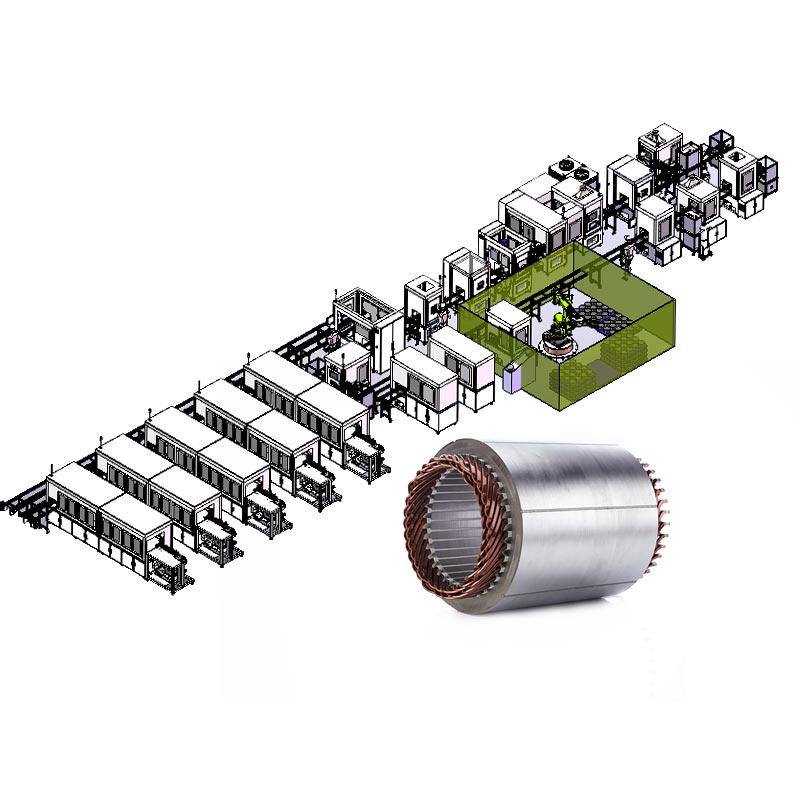
Fully Automatic EV Hairpin Motor Stator Production Line for New Energy Flat Wire
Turnkey flat-wire insertion line featuring CNC wire forming, 2D/3D paper insertion, automated basket nesting, and laser twist-welding.
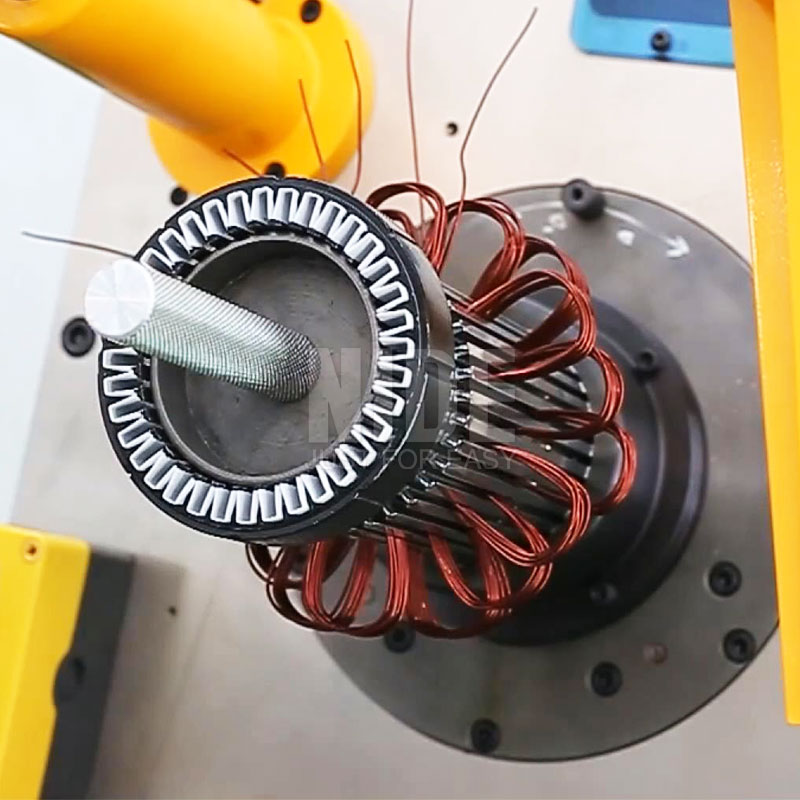
Automatic Single Phase Motor Stator Coil Insertion Machine Industrial PLC 1 Year CE
Simultaneous enameled copper winding and slot-wedge pushing with servo-guided inserting blades, eliminating insulation film abrasion.
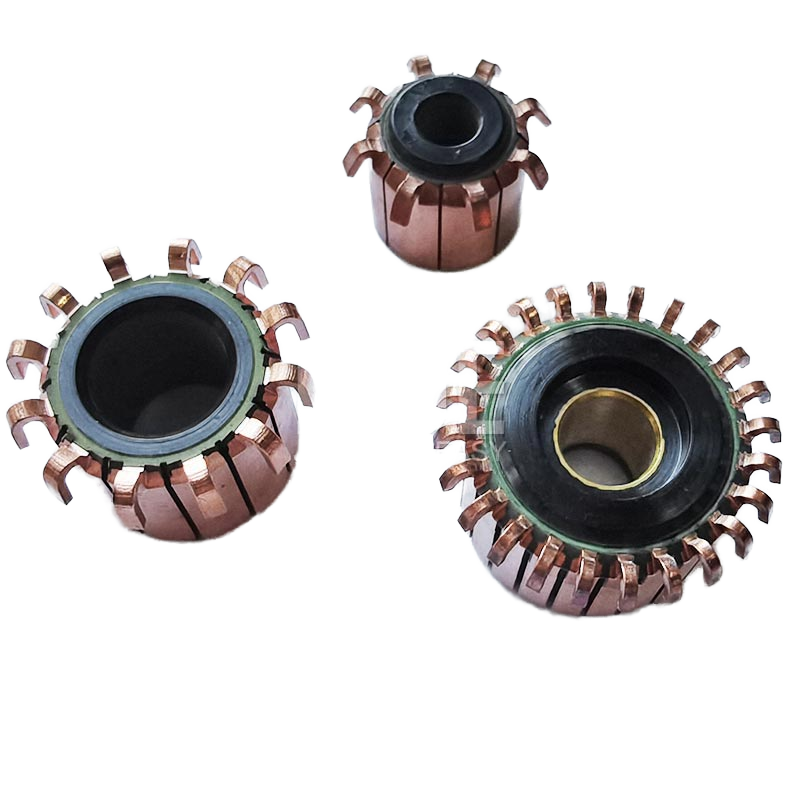
Universal Juicer Mixer DC Motor Armature Hook Commutator Part NDPJ-HXQ-183
High-speed tang-hook copper bar commutators with reinforced phenolic molding for high-RPM universal motors and food processors.
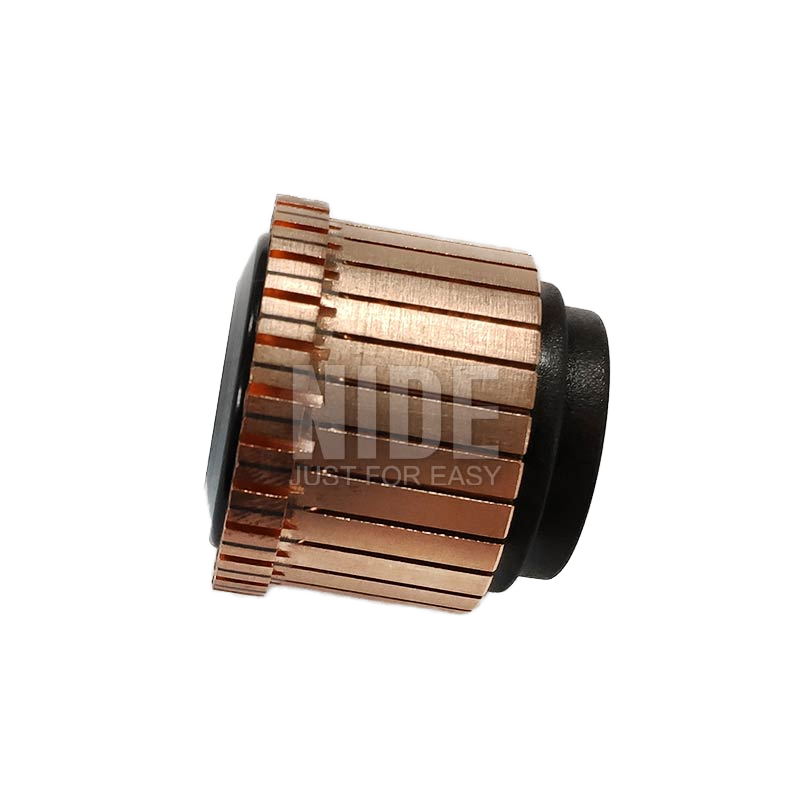
AC Motor Mica Commutator Electric Armature Collector Segment Model NDPJ-HXQ-101
Precision-undercut mica insulation barrier segments engineered to resist high dielectric stress and spark erosion under heavy industrial duty.
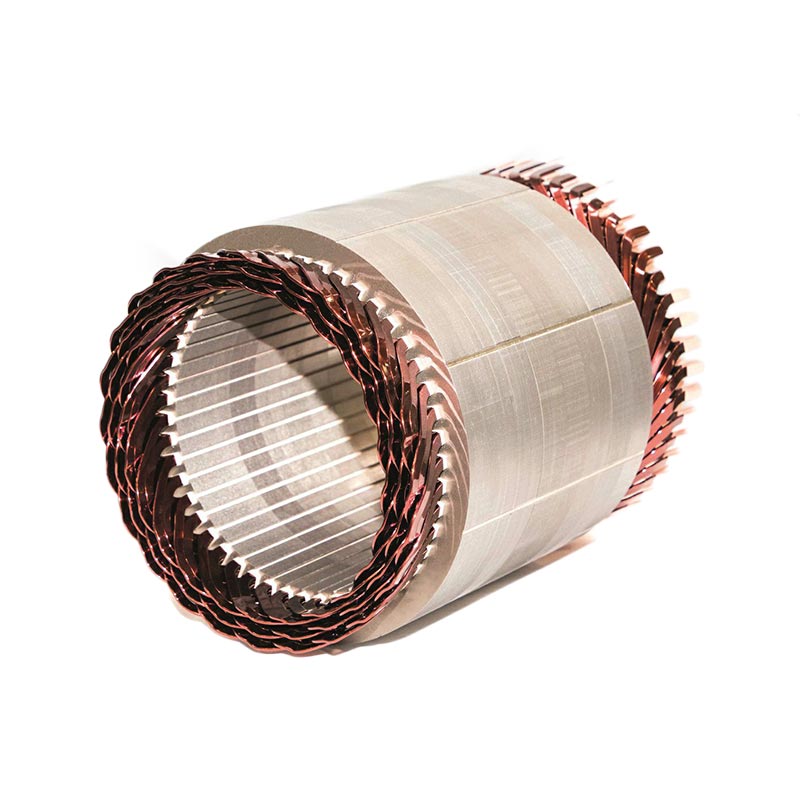
New Fully Automatic Hairpin Motor Stator Production Line for E-Mobility Drive Units
High-slot-fill 8-layer flat copper wire insertion line featuring CNC end-twist bending, automated slot B-side crown expander, and vision QC.
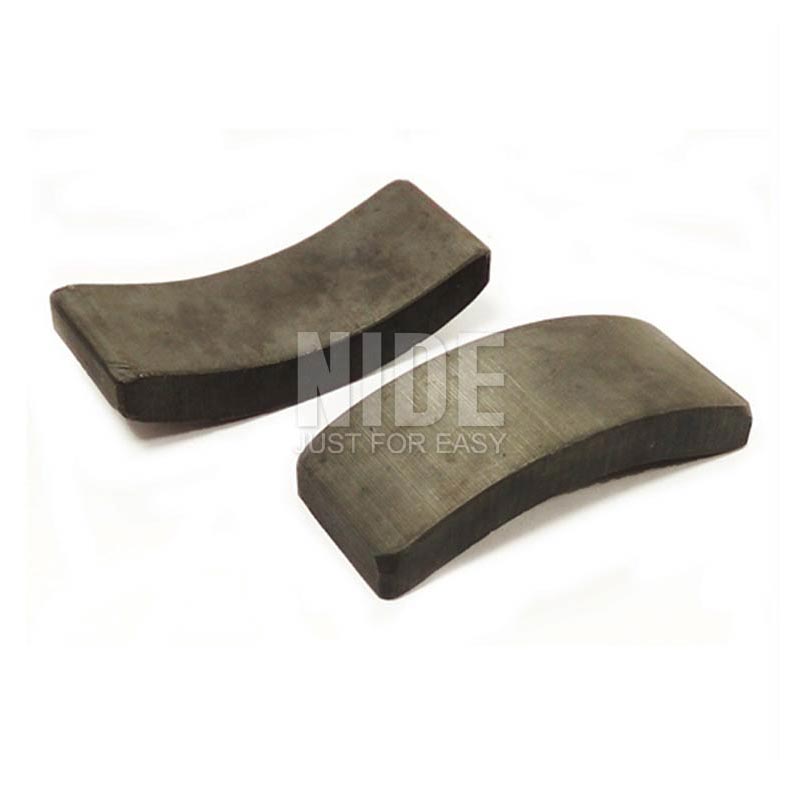
Hot Selling 12-220V DC Segment Motor Ferrite Magnet Permanent Arc for Water Pump Motors
Sintered anisotropic strontium ferrite wet-pressed arc segments providing high coercive force (Hcb) and demagnetization resistance.
Kinematics of Automated Stator Coil & Wedge Insertion
Analyzing the mechanical interplay between copper wire elongation, slot-insulation integrity, and multi-axis servo blade synchronization during high-density stator lamination assembly.
1. The Mechanical Dynamics of Simultaneous Coil & Wedge Insertion
In standard alternating current (AC) induction motors, hermetic compressor drives, and brushless permanent magnet motors (BLDC), stator coil insertion remains the single most critical manufacturing threshold. Modern automated insertion lines execute a simultaneous dual-action cycle: pushing the pre-wound concentric copper coil phase groups from transfer tooling into the stator core slots while simultaneously cutting, forming, and driving dielectric slot wedges (insulation paper made of DMD, Nomex, or polyester film) directly into the lamination slot openings.
The mechanical core of an automated stator coil insertion machine centers on its circular blade array (insertion finger guide magazine). Each slot pitch requires ultra-hardened tool steel blades—typically vacuum-heat-treated Cr12MoV or powder metallurgical high-speed steel (ASP-23/CPM-10V) polished to a mirror finish ($Ra < 0.1\,\mu\text{m}$). As the central servo-driven pushing rod drives upward, the push fingers urge the copper conductors through the narrow opening gap between two adjacent insertion blades. Simultaneously, a parallel-acting lower wedge magazine pushes the precut insulation wedges along the blade guide tracks.
Enamel Abrasion Mitigation
Multi-axis coordinated servo trajectory prevents mechanical contact between the copper wire enamel varnish and the stator lamination teeth edges, maintaining zero insulation micro-cracking under 3.5 kV surge tests.
Precision Wedge Guidance
Dual stepping/servo wedge feed units automatically adjust wedge stroke lengths according to stator stack heights, ensuring complete slot closure without axial overhang protrusion.
Dynamic Slot-Fill Adaptation
Intelligent push force sensing automatically modulates forward thrust velocity when navigating high slot fill ratios (>78%), protecting against strand bunching and blade jamming.
2. Benchmarking Electromagnetic Insertion Methodologies
Selecting the appropriate automated production architecture requires deep alignment with wire cross-section profiles, thermal limits, voltage classes, and projected annual takt-times. The following empirical comparison demonstrates the operational characteristics of modern stator manufacturing cells:
| Manufacturing Technology | Wire Geometry | Max Slot-Fill Factor | Cycle Time (24-Slot Core) | Dielectric Risk Level | Ideal Application Sector |
|---|---|---|---|---|---|
| Simultaneous Servo Inserter | Round Enamelled Copper | 75% – 82% | 12 – 18 sec / stator | Very Low (Guided blades) | HVAC Compressors, Industrial Pumps, IE3/IE4 Motors |
| Hairpin Flat-Wire Insertion Line | Rectangular Copper (I-Pin / U-Pin) | 85% – 92% | 25 – 45 sec / complete basket | Low (Controlled paper bender) | New Energy Electric Vehicles (800V EV Traction Drives) |
| Multi-Spindle Needle Winder | Round Fine-to-Medium Wire | 55% – 68% | 45 – 90 sec / stator | Moderate (Nozzle friction) | BLDC Ceiling Fans, Drone Motors, Power Tool Actuators |
| Flyer Armature Winding Unit | Fine Round Copper Wire | 60% – 72% | 8 – 14 sec / rotor | Low-Medium (Hook stress) | Automotive Wiper/Starter Motors, Kitchen Mixers |
Future Stator Line Procurement Trends (2025–2030)
How international automotive and appliance OEMs are restructuring capital expenditure (CapEx), embracing rapid-changeover tooling, and enforcing digital traceability across Chinese automated equipment supply chains.
Sub-15 Minute Modular Tooling Quick-Change
Procurement teams are aggressively retiring dedicated monolithic insertion stations in favor of flexible, modular quick-change cassettes. Modern production demands shifting between different stack heights (from 20 mm to 220 mm) and slot configurations with pneumatic rapid-clamping, pre-calibrated push pushers, and RFID tool identification that automatically reconfigures PLC servo stroke envelopes without manual recalibration.
In-Line Force Displacement & Optical Vision Inspection
Zero-defect PPM requirements from Tier-1 automotive groups necessitate real-time force-displacement signature analysis. Piezoelectric load cells monitor insertion push force at millisecond intervals to instantly detect bent blades or jammed wires before mechanical damage occurs. High-resolution CCD machine vision arrays inspect slot-wedge symmetry and end-turn flare clearances immediately post-insertion.
Single-Source Turnkey Accountability Over Piece-Meal Cells
Global plant directors are shifting away from buying isolated winders and inserters from separate vendors. Sourcing contracts increasingly demand integrated turnkey responsibility from a single qualified Chinese engineering house: encompassing slot paper insertion, coil winding, simultaneous insertion, intermediate expanding, CNC lacing, final hydraulic forming, and complete dielectric electrical testing.
Technological Frontiers in Stator Assembly Automation
Navigating the engineering migration from traditional round-wire induction configurations to 800V high-temperature hairpin technologies and smart edge-computing factories.
800V EV Hairpin Insulation Integrity
With electric vehicle powertrains transitioning to silicon-carbide (SiC) inverters and 800V bus architectures, partial discharge inception voltage (PDIV) standards are exceedingly stringent. Hairpin insertion tooling now incorporates ultra-smooth CNC guides with robotic end-twist tooling to avoid micro-nicks in the thick polyamide-imide overcoat, preventing corona breakdown across operational lifespans exceeding 300,000 kilometers.
Servo Direct-Drive Push Mechanics
Hydraulic pushing systems are being rapidly phased out in tier-1 stator insertion plants. High-torque direct-drive servo ball-screws and planetary roller-screws eliminate hydraulic fluid contamination, reduce thermodynamic cycle drift, lower line acoustic levels below 72 dB, and achieve repeatable push position accuracies within $\pm 0.02\,\text{mm}$.
OPC-UA / MQTT Smart MES Integration
Stator lines engineered for export now embed unified IIoT protocols (OPC-UA and MQTT natively on Siemens S7-1500 or Omron Sysmac platforms). Stator core bar-coding links each insertion cycle's peak insertion force, wedge cutting stroke, operator ID, and winding batch directly to the client's plant MES cloud for 15-year traceability.
Enterprise Advantages: Precision, Scalability & Reliability
Based in Ningbo, China—the global epicenter of precision electric machinery manufacturing—we bridge high-end machine design with complete component supply chain integration.
Turnkey Engineering Mastery
Over 14 years of dedicated focus on motor manufacturing machinery, turnkey automatic assembly lines, and specialized stator tooling. We review your 2D/3D motor drawings and supply completely matched solutions from pilot lines to high-volume Tier-1 automotive plants.
Integrated Component Ecosystem
Beyond equipment assembly, our industrial footprint supplies matching motor components: commutators, carbon brushes, insulation paper, shafts, permanent ferrite/NdFeB magnets, and aluminum die-cast rotors—eliminating component-machine compatibility friction.
Rigorous Pre-Shipment FAT Testing
Every machine undergoes trial runs using the client's actual lamination steel and magnet wire prior to dispatch. We verify cycle-time stability, slot-fill integrity, and electrical surge/hipot tolerances with unedited run-off test videos for complete peace of mind.
Global Service & Overseas Partners
Exporting to over 50 countries across Southeast Asia, Eastern Europe, South America, and the Middle East. Backed by established overseas service partners, remote VPN diagnostics, and on-site field installation and training engineers.
Frequently Asked Engineering Questions
Expert answers addressing machine design, tooling maintenance, cycle time optimization, and quality assurance for motor manufacturing equipment buyers.
What parameters are required to generate an exact machine quote and tooling design?
To provide a verified technical proposal, our engineering team requires: (1) 2D/3D stator core lamination drawings showing stator outer diameter (OD), inner bore diameter (ID), stack height range, and slot opening geometry; (2) Slot insulation paper specifications (material type like DMD or Nomex and paper thickness); (3) Winding scheme diagrams detailing wire diameter, number of parallel wires, turns per coil, and coil pitch span; (4) Desired cycle time and production capacity per shift; and (5) Operational electrical standards (voltage, frequency, and local safety standards like CE, UL, or CSA).
How does your stator coil insertion machine prevent copper wire scratching and enamel damage?
Enamel protection is guaranteed via a three-tier design protocol: First, our insertion fingers and guide blades are manufactured using vacuum-hardened metallurgical steel polished to an ultra-low surface roughness ($Ra < 0.08\,\mu\text{m}$) and coated with titanium carbonitride (TiCN) or diamond-like carbon (DLC) for reduced friction. Second, the servo pushing profile is electronically mapped with S-curve acceleration/deceleration, ensuring gradual entry without instantaneous shock-loading. Third, slot wedges are formed and driven with continuous guide channels that cradle the conductors securely into the slot cavities without teeth-edge shearing.
Can one machine handle multiple stator stack heights and slot geometries?
Yes. For varying stack heights with the identical slot profile and lamination cross-section, changeover requires zero mechanical tooling swaps: the operator simply selects a pre-programmed recipe on the HMI touchscreen, and the servo drives automatically recalculate the coil pushing stroke, wedge cutting length, and magazine height. For different lamination diameters or slot numbers, we supply modular quick-change tooling cassettes (insertion finger assembly, wedge pusher, and guide core) that can be completely swapped and aligned in under 20 minutes by a single trained technician.
What is the typical lifespan and maintenance schedule for high-wear tooling blades?
Under standard industrial operating parameters with correct lubrication and proper slot-fill margins, our precision-machined insertion blades deliver an operational lifespan of 1,500,000 to 2,500,000 insertion cycles. Maintenance involves daily blow-down cleaning of copper powder particles, weekly inspection of blade alignment gaps with precision feeler gauges, and automatic centralized lubrication of linear guide ways. We supply two complete sets of spare blades and wedge pushers with every production line to ensure uninterrupted production uptime.
How do you handle overseas installation, commissioning, and technical training?
Our global project delivery follows a comprehensive 3-stage protocol: (1) Pre-shipment video FAT (Factory Acceptance Testing) run with your production parts, verifying complete cycle time and electrical safety tests; (2) Dispatch of senior commissioning engineers to your factory site to supervise mechanical anchoring, electrical interconnects, and line integration; (3) Rigorous operator and maintenance team training covering tooling calibration, recipe programming, and fault diagnostics. For ongoing support, our machines feature secure industrial VPN edge routers for remote engineering diagnostics and rapid spare parts dispatch.
