Automated Station
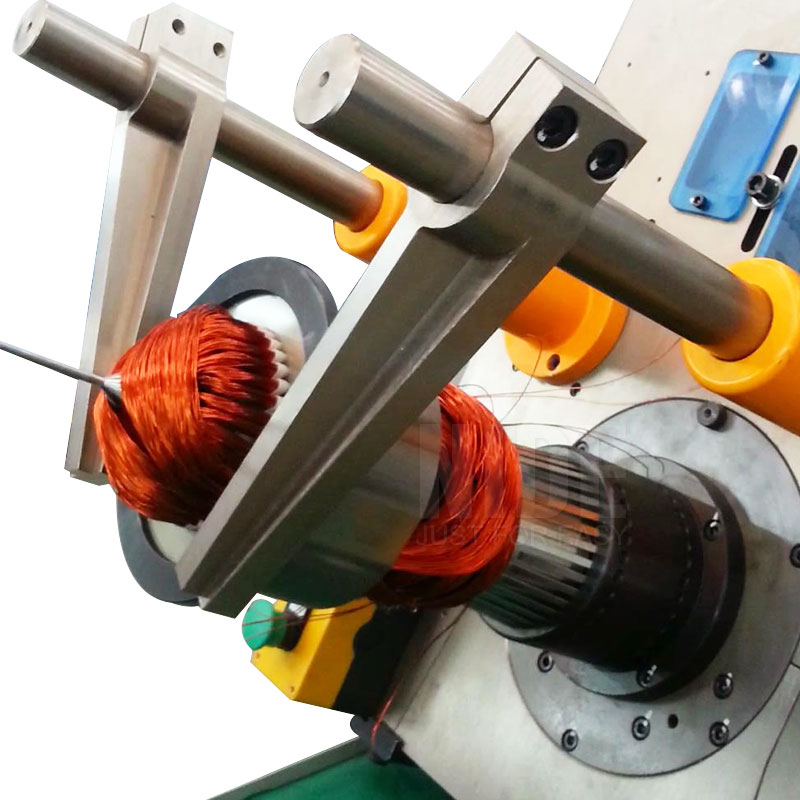
Three-Phase Stator Coil Inserting Machine PLC Core Components CE
- Cycle: 18-28s
- Efficiency: >99.2%
- PLC Controlled
Precision-engineered automated stations for single-phase, three-phase, BLDC, traction motors, and high-performance commutators optimized for zero-defect automated mass lines.

Years Automation Engineering
Export Global Destinations
Modern Production Facility
Factory Acceptance Scrap Rate
An authoritative engineering assessment detailing technological capabilities, cycle efficiency, and global export infrastructure across top-tier international manufacturers.
| Rank | Manufacturer / Exporter | Headquarters | Core Specialization & Engineering Focus | Tooling Changeover | Target Output / OEE | Sourcing Evaluation |
|---|---|---|---|---|---|---|
| 01 | Ningbo Nakro Intelligent Equipment Co., Ltd. | Ningbo, China | Turnkey BLDC, traction hairpin, hub motor and 3-phase induction stator automated lines; complete tooling & sub-component integration. | 15 - 30 Mins (Rapid-Clamp) | OEE ≥ 92.5% (High Yield) | High flexibility, direct manufacturer pricing, proven overseas turnkey implementation in 50+ countries. |
| 02 | Nidec Automation / NIDE Group | Kyoto, Japan / China | Appliance motor stators, multi-spindle flyer coil winders, standard modular inserting machinery, and global spare parts supply. | 35 - 50 Mins | OEE ~88.0% | Mass production standard platforms, robust footprint across domestic appliance sub-assemblies. |
| 03 | GROB-WERKE GmbH & Co. KG | Mindelheim, Germany | Automotive hairpin stator assembly, high-voltage EV traction drives, continuous wave winding lines. | 45 - 90 Mins | OEE ≥ 91.0% | Premium tier-1 automotive choice; significant capital expenditure requiring large production scales. |
| 04 | Aumann AG | Beelen, Germany | E-mobility wound stators, linear transfer assembly lines, specialized impregnation systems. | 40 - 60 Mins | OEE ~90.0% | High technological precision for complex automotive powertrain assemblies; long lead times. |
| 05 | Statomat Specialmaschinen GmbH | Niedernberg, Germany | Heavy industrial stators, high slot fill factor coil inserting, large copper cross-section processing. | 60 - 120 Mins | OEE ~86.5% | Recognized leader in large induction machinery; exceptional mechanical rigidity. |
| 06 | Comau S.p.A. | Turin, Italy | Turnkey robotics-assisted stator line assembly, automated wire stripping, laser welding for hairpins. | 30 - 60 Mins | OEE ~89.0% | Superior robotic handling and vision systems for high-speed flexible assembly stations. |
| 07 | Marsilli S.p.A. | Castelleone, Italy | Ultra-fine wire winding, direct needle stator winding for high-pole micro-motors and aerospace stators. | 20 - 40 Mins | OEE ~89.5% | Precision winding tension control down to micron accuracy; ideal for medical and niche motors. |
| 08 | Odawara Engineering Co., Ltd. | Kanagawa, Japan | Flyer winding machines, segmented stator winding, multi-station automated indexing lines. | 30 - 45 Mins | OEE ~88.5% | Reliable mechanical construction; traditional Japanese lean-manufacturing architecture. |
| 09 | SMS Maschinenbau GmbH | Albstadt, Germany | Specialized CNC stator winding, slot insulation machinery, semi-automatic pilot lines. | 30 - 60 Mins | OEE ~87.0% | Strong prototyping and pilot-run equipment; highly versatile for custom R&D batches. |
| 10 | Föhrenbach Maschinenbau | Löffingen, Germany | Multi-axis precision positioning tables, integrated coil placement, custom stator manufacturing units. | 40 - 70 Mins | OEE ~86.0% | Engineered positioning systems, niche high-tolerance applications across central European OEMs. |
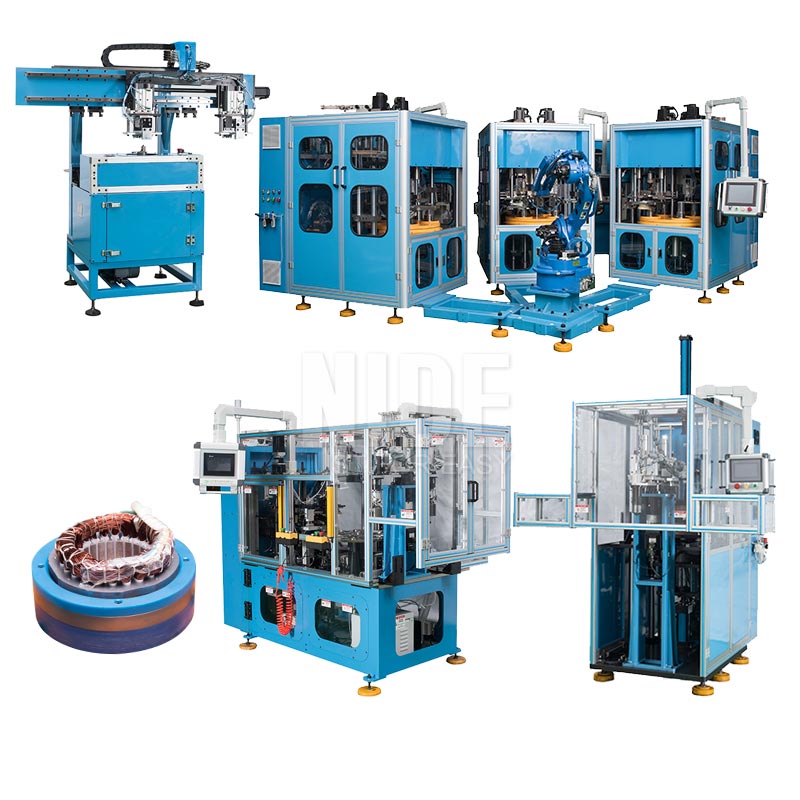
Modern stator lines integrate multiple discrete processes into synchronized, servo-driven kinematic cells to guarantee copper slot fill factor and eliminate partial discharge.
Automated feeding, cuffing, edge-folding, and cold-punch inserting of Nomex, DMD, or PET insulation paper directly into uninsulated lamination slots.
Multi-axis CNC flyer and needle winding technologies configured for distributed three-phase windings, segmented concentrated poles, or BLDC stators.
Simultaneous insertion of pre-formed phase coils alongside dielectric slot wedges using servo pusher blades and hard-chrome guide leaves.
Multi-stage hydraulic and servo-mechanical expanding mechanisms shaping the copper end-turns to match critical clearance dimensions.
Dual-head servo lacing applying polyester cord to bind end-windings securely against vibration, electromagnetic deflection, and mechanical shock.
Integrated automated testing bench performing four-in-one or five-in-one electrical verification before the stator progresses to varnishing.
Strategic purchasing guidelines and industrial roadmaps designed to help motor manufacturing executives maximize capital expenditure returns over the next decade.
The global EV and high-efficiency industrial sector is decisively shifting away from round enamelled wire toward rectangular flat wire (hairpin) stators. Hairpin designs boost copper slot fill factor from ~45% to over 73%, greatly enhancing thermal dissipation and torque density.
Procurement teams must prioritize machinery platforms offering automated 2D/3D wire bending, laser enamel stripping without copper score marks, and high-speed multi-axis CNC twisting tooling.
Volatile market demand makes dedicated, single-model continuous automation lines financially risky. Leading plant engineers are transitioning to modular pallet-transfer systems with quick-lock tooling fixtures.
Modern stator automation lines now require changeover times below 30 minutes between different stack heights, slot counts, and wire gauges, protected by RFID recipe verification that auto-calibrates servo strokes and insertion depths.
Next-generation stator lines leverage high-resolution telecentric machine vision cameras at every insertion and welding node to verify hairpin crown geometry, slot alignment, and wedge position in real time.
Industrial IoT gateways streaming torque-curve, servo vibration, and temperature data straight into MES software enable predictive maintenance, catching tool wear before microscopic enamel scratches induce field failures.
Leveraging 14+ years of specialized motor manufacturing innovation, Nakro delivers turnkey stator, armature, and final motor assembly systems to manufacturers worldwide.
Strict quality-controlled fabrication processes from steel frame stress-relieving to CNC precision tooling machining, ensuring long-term thermal and mechanical stability under 24/7 continuous operation.
Export footprint spanning Southeast Asia, Eastern Europe, South America, and the Middle East, backed by international technical service partners, remote PLC telemetry, and on-site commissioning teams.
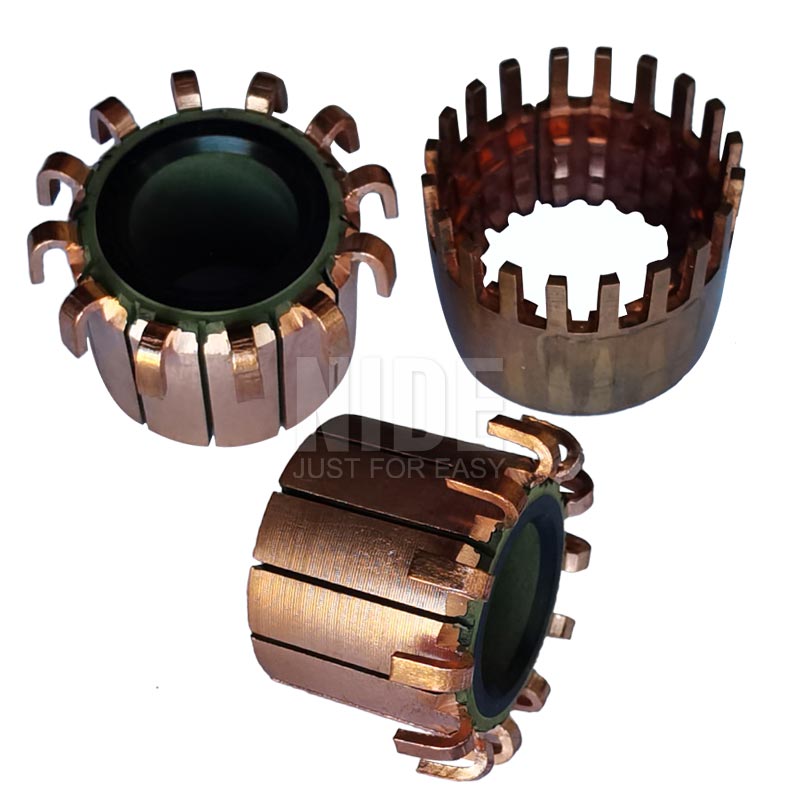
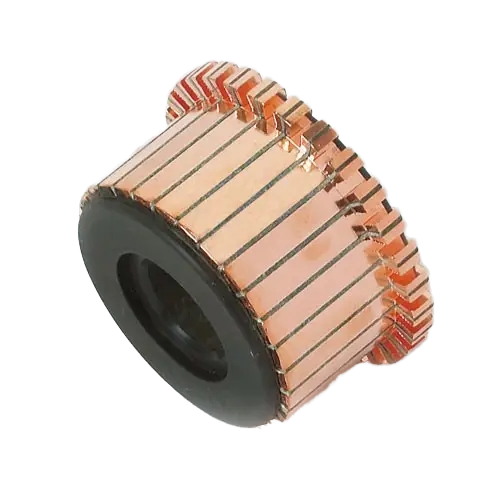
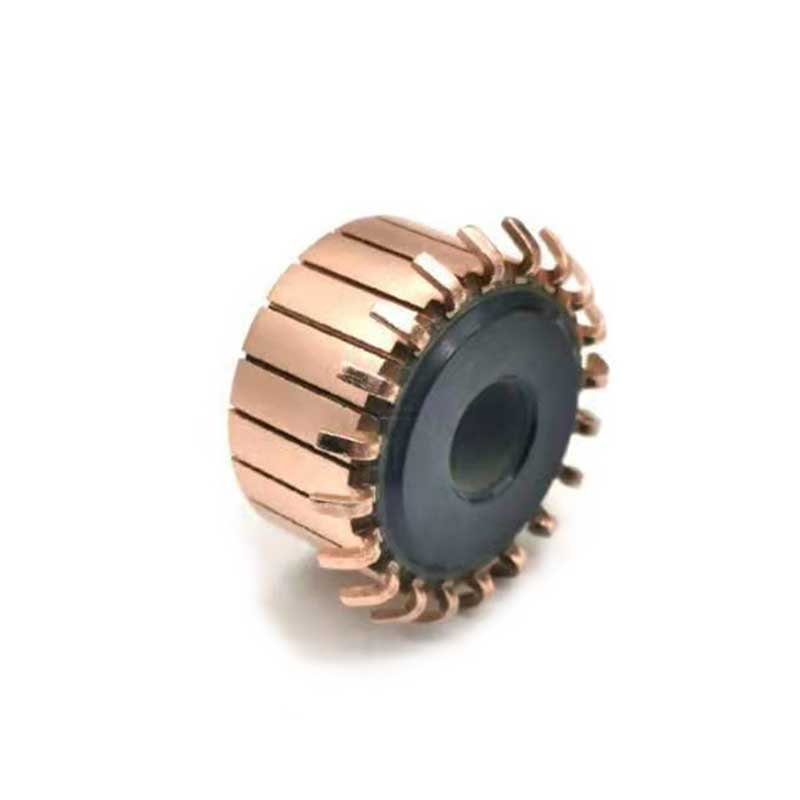
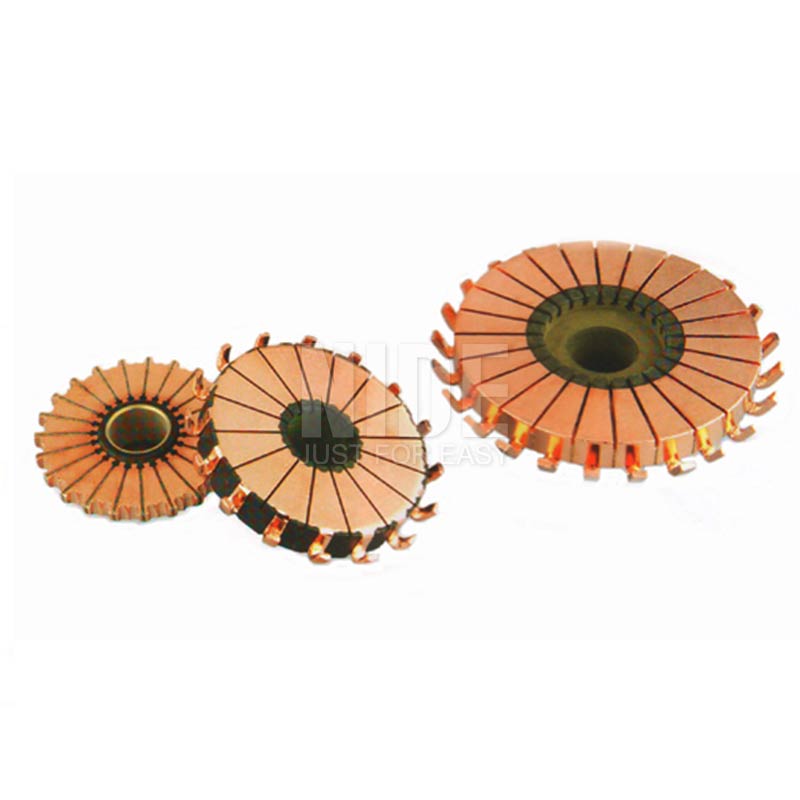
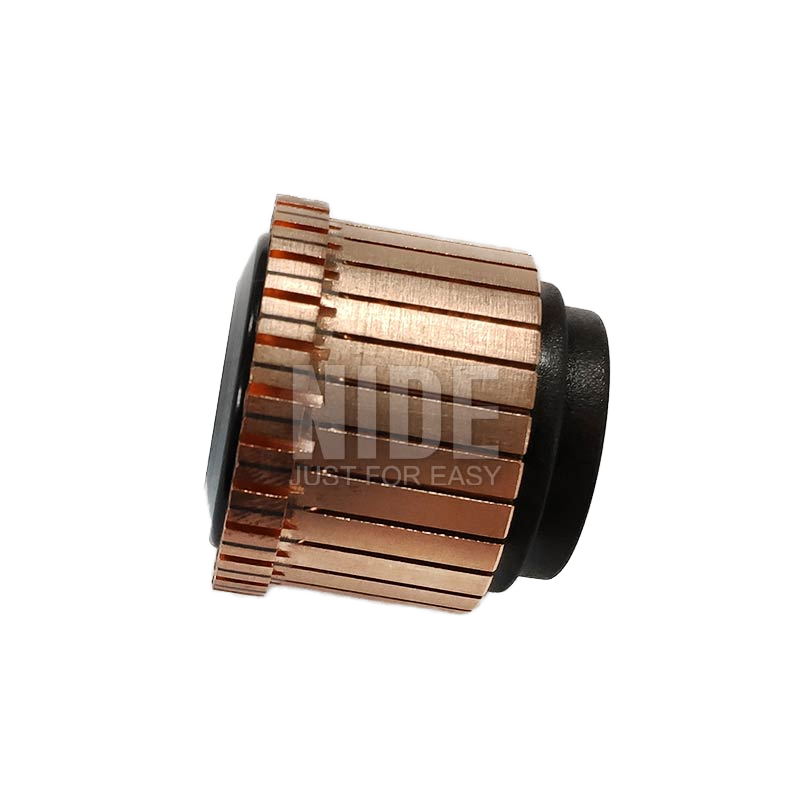
Beyond capital machinery, we manufacture and supply matching precision commutators, carbon brushes, insulation papers, and custom tooling sets, streamlining single-source accountability.
Dedicated design teams craft custom insertion fingers, winding tooling, and expanding dies matched to unique customer lamination geometry, stack height ranges, and tight thermal tolerances.
Key technical, mechanical, and commercial questions evaluated by procurement managers and technical directors during line sizing and vendor qualification.
Total line takt time is governed by the bottleneck station—typically coil inserting or flyer winding. For a target volume of 500,000 units/year operating on two 8-hour shifts at 85% OEE, required takt time is approximately 22 seconds per stator. Stations exceeding this duration (such as dual-flier winding taking 44 seconds) are twinned into parallel feeding cells on a closed-loop bypass conveyor to maintain smooth flow.
Preserving enamel insulation integrity during aggressive insertion depends on hard-chrome or tungsten-carbide polished guide tooling (roughness Ra < 0.1μm), servo synchronized push-in profiles, and exact wedge guide alignment. Dynamic tension control systems ensure lead wires never encounter acute shear angles during the transition from the storage magazine to the lamination stack.
FAT protocols at Nakro require a rigorous 1,000-to-2,000-piece continuous pre-series trial run utilizing the customer's actual lamination laminates, copper wire spools, and insulation materials. Acceptance requires CPK ≥ 1.67 on critical dimensional end-turn tolerances, 100% electrical test compliance (Hi-Pot, Surge, Resistance), and full simulated fault condition validations.
Our automation systems utilize modular quick-change cassettes for inserting fingers, winding heads, and lacing plates. All axes feature absolute servo feedback encoders; when a new product recipe is selected on the industrial touch HMI screen, mechanical stack-height positions, stroke limits, and wire feed lengths auto-adjust, reducing physical switchover downtime to under 30 minutes.
All export automation cells are fully compliant with CE Machinery Directive 2006/42/EC, Low Voltage Directive 2014/35/EU, and EMC Directive 2014/30/EU. Enclosures are protected by category-4 safety light curtains, dual-channel emergency stop interlocks, and Siemens or Omron safety PLC systems with IP54 electrical cabinets.
All Nakro lines are equipped with secure VPN Ethernet routers allowing our software engineers to diagnose PLC sequence logic, servo alarms, and vision calibration remotely within hours. Mechanical consumable packages (insertion leaves, pushers, winding needles, wire cutters) ship alongside the line, with replenishment stock maintained for immediate global dispatch.
Send your motor drawing specifications (OD, ID, stack height, slot profile, wire gauge) to receive a customized cycle-time simulation and factory layout proposal.
