Integrated Motor Production Equipment & Precision Components
A balanced electric motor manufacturing ecosystem demands harmonious synchronization between automated process machinery and Tier-1 certified electro-mechanical components. Below are 8 flagship machines and precision components deployed across leading global motor assembly lines.
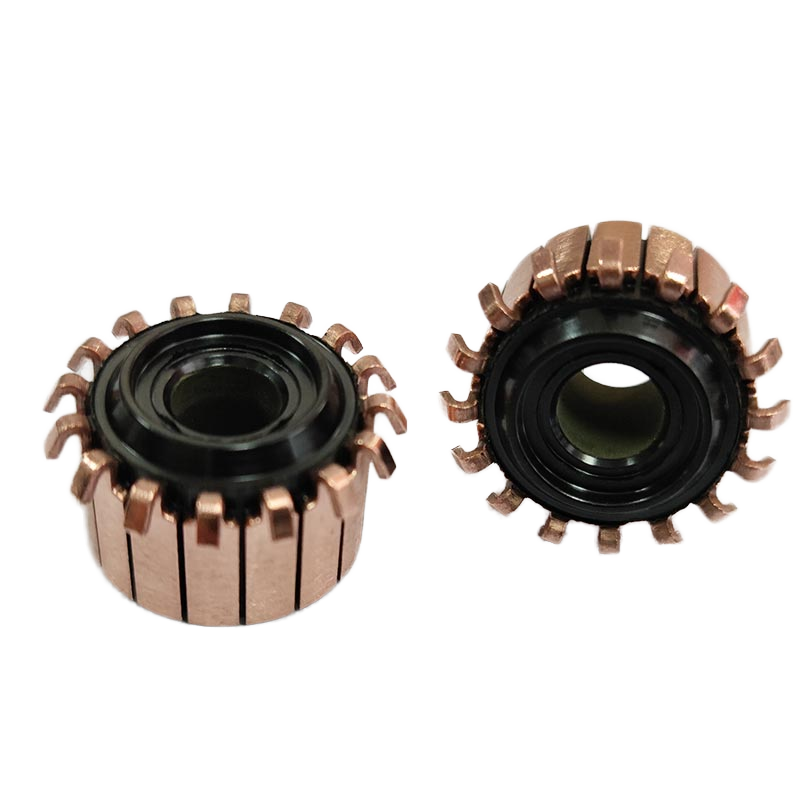
Customized Commutator Armature with Copper Collector Hook
Model NDPJ-HXQ-871A features oxygen-free high-conductivity copper hooks engineered for high-RPM DC motors, fan blowers, and automotive accessory actuators with minimal thermal dissipation.
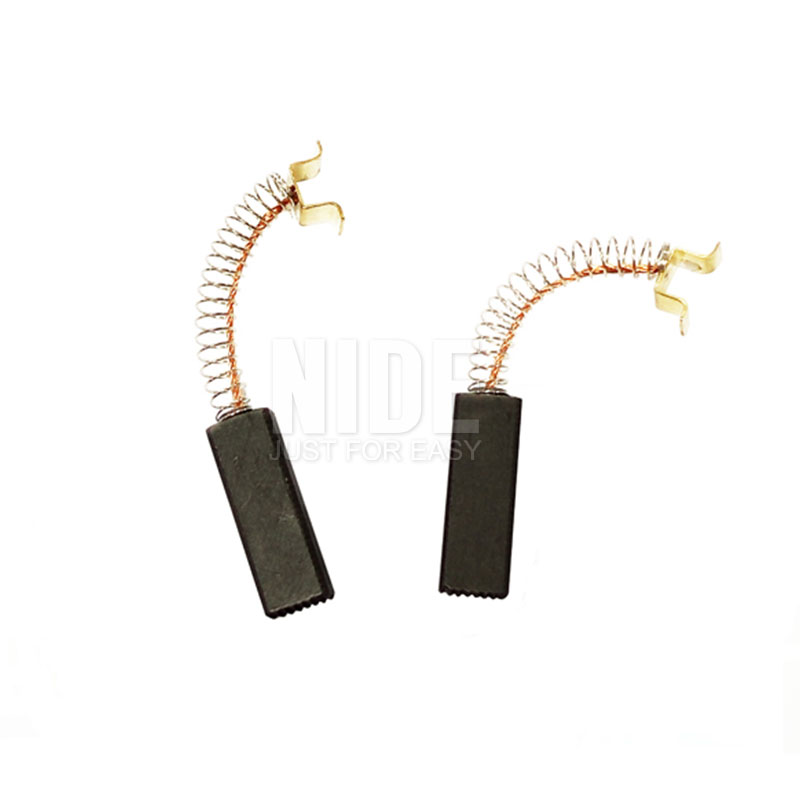
Automobile Electrical Carbon Brush Assembly (NDPJ-TS-1)
Sintered copper-graphite formulation delivering superior electrical conductivity, low friction coefficient, and extended wear cycles for demanding automotive DC motor drives.
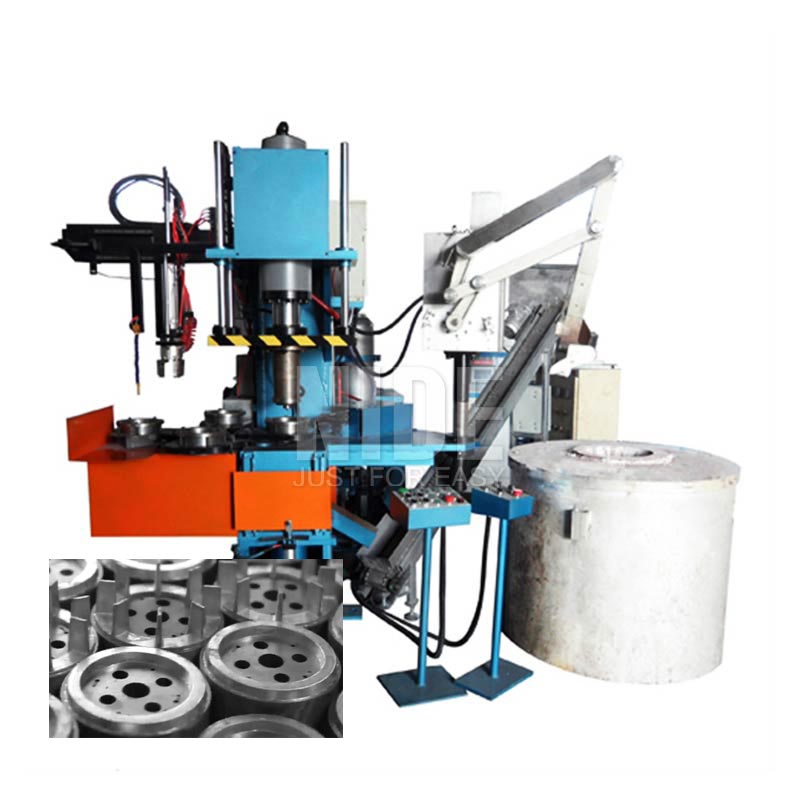
Automatic Armature Rotor Hot Chamber Die Casting Machine
Heavy-duty PLC automated system for high-pressure aluminum induction motor rotor core casting. Incorporates precise thermal stabilization and rapid cycle ejection.
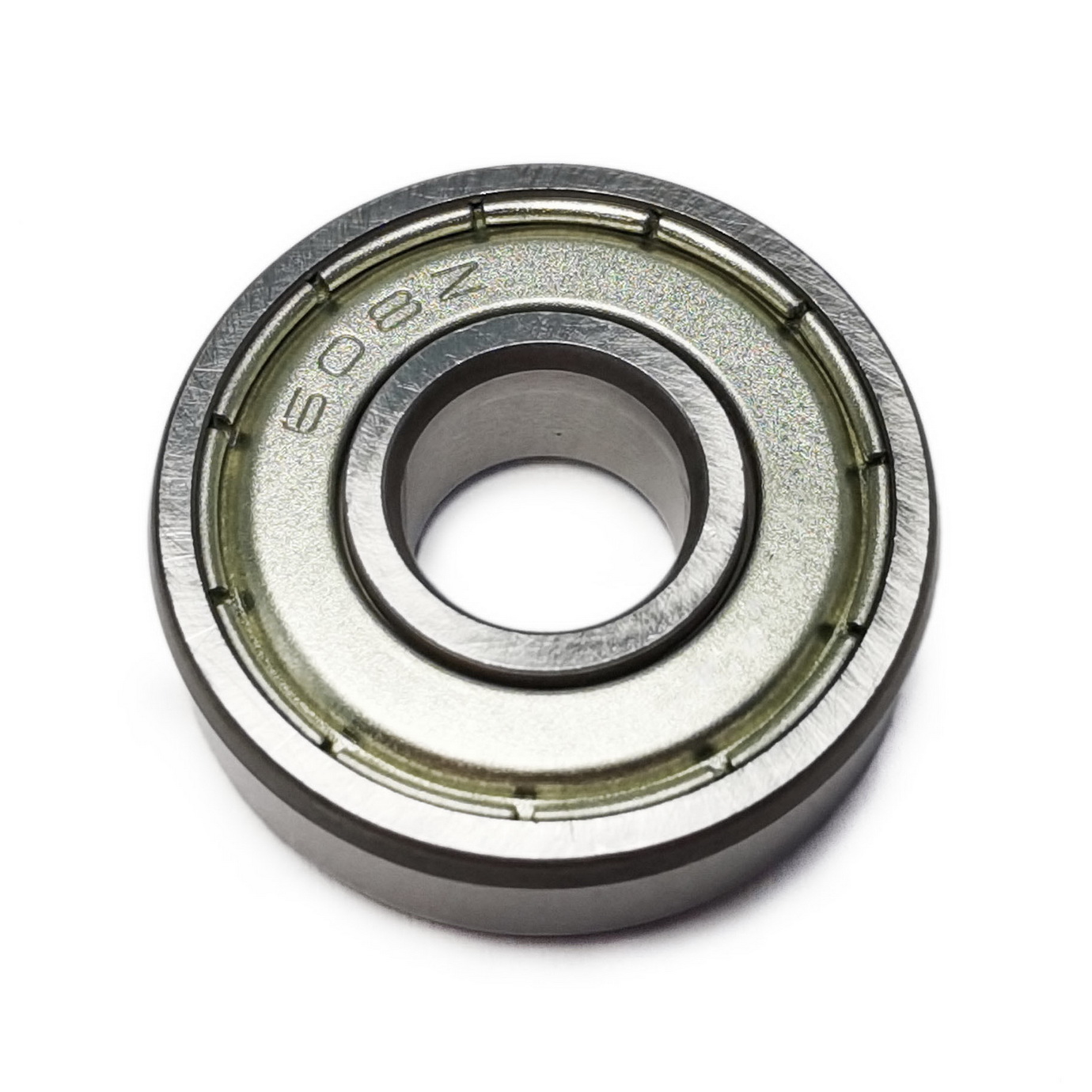
Stainless Steel 608ZZ Deep Groove Ball Bearing
Precision ABEC-5/7 single-row bearings with dual metallic dust shields, micro-honed raceways, and noise-damping low-friction grease for ultra-quiet BLDC and universal motors.
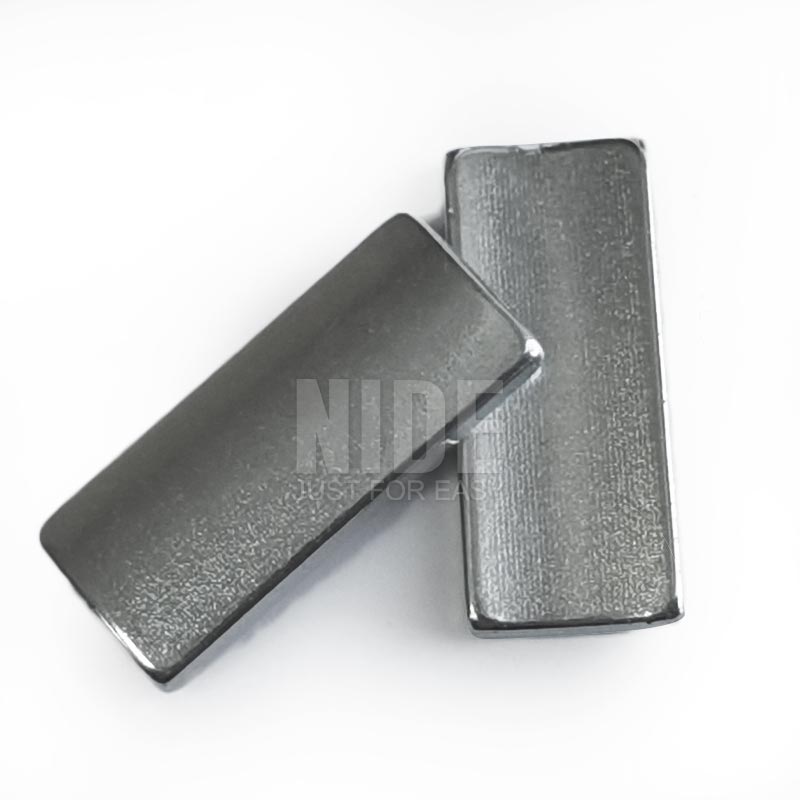
Rectangular N52 NdFeB Neodymium Magnets (NDPJ-CW-58)
Ultra-high energy density sintered NdFeB blocks with triple Ni-Cu-Ni surface passivation, engineered for permanent magnet synchronous motors (PMSM) and high-torque servomotors.
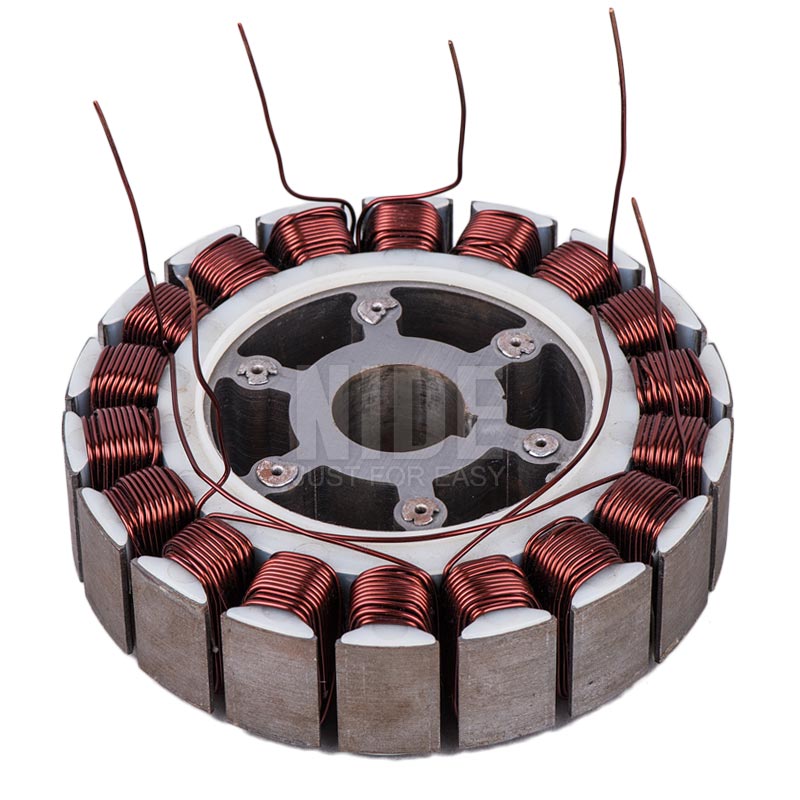
Automatic BLDC Wheel Motor Stator Coil Winder
Multi-axis servo-driven needle winder designed for outer-rotor hub motors. Features active closed-loop wire tensioning, automatic wire clamp/cutting, and zero copper enamel abrasion.
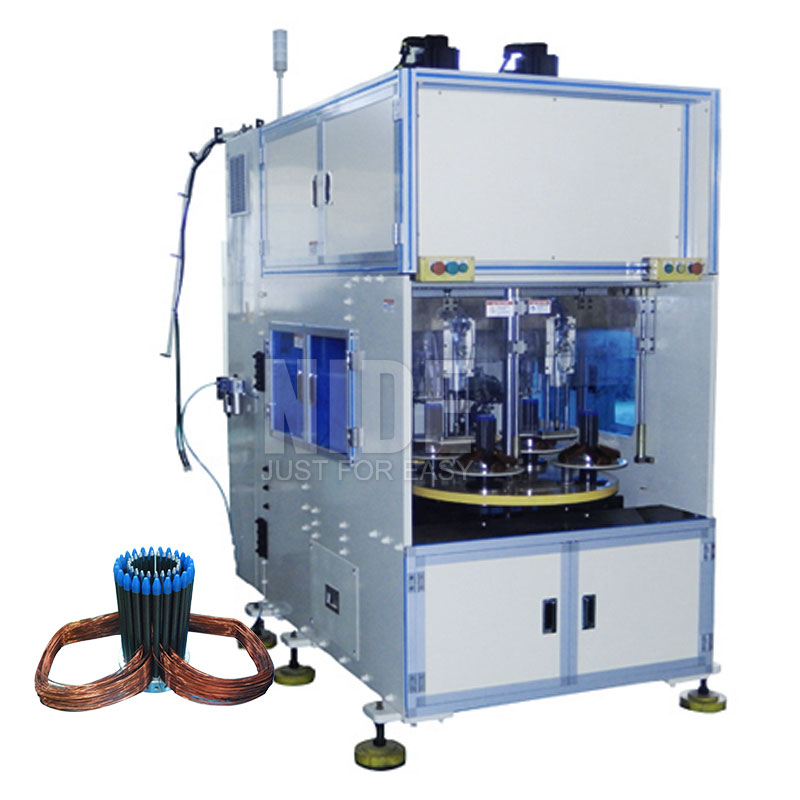
PLC Controlled Cooler Motor Stator Coil Winding Machine
Industrial CNC winder optimized for single-phase and three-phase induction stators. Delivers high-speed continuous multi-strand winding with rapid tooling changeovers under 15 minutes.
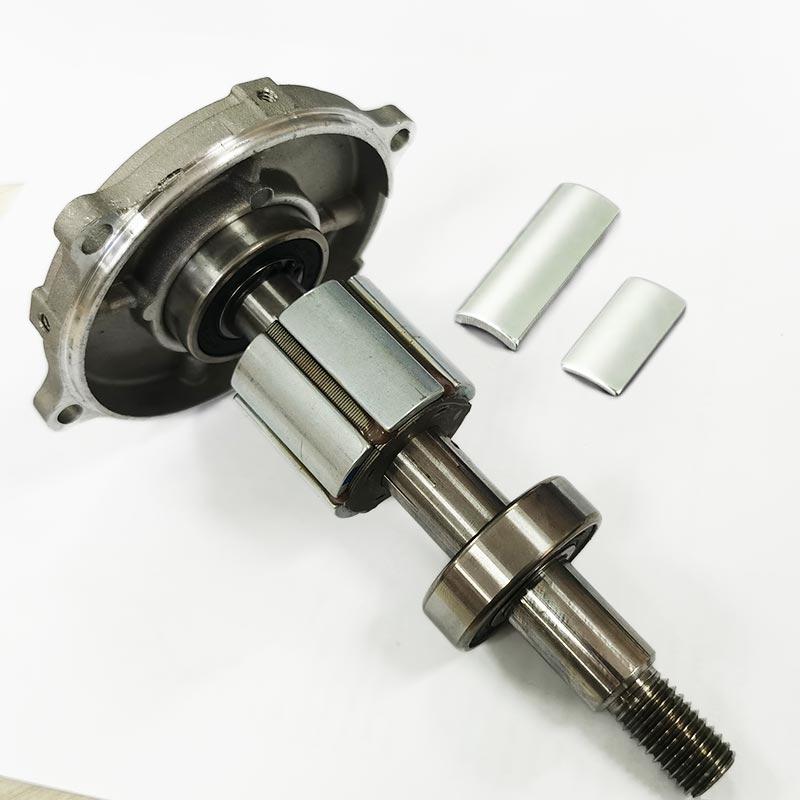
Customized N52 Neodymium Segment Magnets (NDPJ-CW-62)
High working-temperature arc segment magnets customized for brushless traction rotors. High remanence (Br) and intrinsic coercivity (Hcj) designed to prevent demagnetization under heavy overload.
Engineering Turnkey Motor Production Lines: Architecture & Methodology
The manufacturing of contemporary electric motors requires a paradigm shift from fragmented stand-alone equipment to tightly synchronized, cyber-physical production lines. Whether fabricating AC induction motors for industrial compressors, ultra-dense permanent magnet synchronous motors (PMSM) for new energy vehicles (NEVs), or high-speed universal armatures for consumer power tools, line efficiency is governed by total system integration. A custom OEM motor production line engineered by Ningbo Nakro Intelligent Equipment unifies robotic kinematics, precision mechanical pressing, multi-axis automated flyer and needle winding, micro-resistance welding, insulation paper insertion, and comprehensive End-of-Line (EOL) computerized diagnostic stations into a continuous, data-driven workflow.
Modular Station Segmentation in Turnkey Automation
Industrial manufacturing architectures are traditionally segregated into three mission-critical domains: stator fabrication cells, rotor/armature processing lines, and final robotic marriage/testing lines. In stator processing lines, our production cells feature automatic slot cell paper insertion, high-speed single or multi-flyer coil winding, CNC coil inserting coupled with simultaneous wedge insertion, intermediate coil expansion forming, automatic horizontal or vertical CNC lacing, and 3D hydraulic final phase forming. In rotor assembly cells, automated shaft knurling and hydraulic press-fitting are followed by progressive commutator insertion, dual-flyer precision armature winding, optical commutator hook indexing, tungsten-electrode fusing, balancing correction via dynamic milling or putty addition, and diamond-tool commutator turning.
Overall Equipment Effectiveness (OEE)
Targeting >88% continuous plant OEE via MTBF-optimized servo drives, standardized quick-die change tooling, and predictive pneumatic health sensing.
Tooling Precision Tolerances
All coil inserter blades, winding nozzles, and expansion mandrels are machined from hardened tungsten carbide and Cr12MoV vacuum-treated alloys to ±0.003mm.
SCADA & MES Interoperability
Real-time machine status logging using native OPC-UA and industrial Ethernet, linking slot-level insulation surge profiles directly to factory enterprise systems.
Global Sourcing Trends & Next-Generation Manufacturing Shifts
Procurement directors and manufacturing executives across Germany, Japan, North America, Southeast Asia, and South America face significant market realignments. As global energy efficiency mandates accelerate—such as EU Ecodesign IE4 and IE5 efficiency standards and worldwide automotive electrification—the capital procurement criteria for motor production lines are fundamentally transforming.
1. Shift from Distributed Vendors to Single-Source Turnkey Responsibility
Historically, motor manufacturers purchased stator winders from one supplier, hot-chamber die casting cells from another, and balancing machines from a third. This created fragmented accountability, extended commissioning cycles, and interface mismatches between differing PLC controllers. Modern procurement strategies mandate a single turnkey engineering partner capable of supplying both automated machinery and matching high-tolerance components (bearings, commutators, NdFeB magnets, and carbon brushes). This turnkey model guarantees overall line cycle time (takt time), unifies spare parts catalogs, and reduces Factory Acceptance Testing (FAT) risk.
2. The Surge of Flat-Wire Hairpin Technology in Traction and HVAC
Traditional round-wire random winding is rapidly yielding ground to rectangular flat-wire hairpin technology in high-performance automotive and commercial compressor drives. Hairpin stators increase copper slot fill factor from ~45% to upwards of 72%, significantly reducing copper thermal losses and motor footprint. Turnkey production lines must integrate high-precision wire 2D/3D bending, automated CNC slot insertion, robotic wire-end crowning, laser stripping of polyamide-imide insulation, and computerized laser or TIG robotic welding with real-time machine-vision optical bead inspection.
3. Full Digitization and Traceability Down to Individual Motor Serial Numbers
Tier-1 automotive and industrial OEMs now require unbroken digital genealogy. Every single motor leaving our automated production line possesses an etched 2D DataMatrix code recording critical production metrics: lamination pressing tonnage, insertion force displacement curve, hook welding micro-resistance, dynamic unbalance in gram-millimeters, high-potential (hipot) dielectric leakage current at 2500V, and stator surge waveforms.
| Evaluation Parameter | Legacy Motor Production Lines | Nakro Next-Gen Custom OEM Turnkey Lines | Procurement Impact & ROI |
|---|---|---|---|
| Winding Technology | Mechanical cams, manual wire feed, round wire | Multi-axis CNC servo synchronization, hairpin & needle | +22% copper slot fill, zero copper scrape, high yield |
| Tooling Changeover Time | 4.0 to 8.0 hours requiring specialized mechanics | Under 25 minutes via modular quick-release dies & recipes | Reduces batch production downtime by 85% |
| Quality Verification | Manual sample batch inspection at offline benches | 100% Inline Hipot, Surge, Resistance, & Back-EMF testing | Zero-defect shipment guarantee to Tier-1 automotive |
| Supply Chain Model | Multiple component brokers & machine makers | One-stop: Machine design + Precision motor components | 40% faster commissioning; unified warranty accountability |
Why Global Manufacturers Choose Ningbo Nakro Intelligent Equipment
Founded in 2010 in Ningbo, Zhejiang—one of the world’s epicenters for electromechanical engineering and advanced manufacturing—Ningbo Nakro Intelligent Equipment Co., Ltd. has evolved into an internationally recognized builder of armature machines, stator manufacturing lines, and fully automated motor assembly plants. With an operational footprint spanning 30,000 to 50,000 square meters and an engineering corps of over 150 technical professionals, we combine heavy machine-building rigor with microscopic tooling precision.
ISO 9001 Certified System
Every manufacturing phase follows stringent quality protocols, from metallurgical spectroscopic verification to mechanical run-off testing.
Global Presence in 50+ Nations
Exporting turnkey machinery to Germany, Poland, Turkey, Brazil, India, Mexico, Vietnam, and the USA with dedicated regional after-sales support partners.
Complete Component Synergy
Direct supply of precision commutators, deep-groove 608 ball bearings, N52 sintered magnets, carbon brushes, and insulation paper ensures flawless machine matching.
Unlike pure software integrators or component traders, Nakro maintains complete in-house CNC machining, wire EDM, precision grinding, heat treatment, and cabinet wiring facilities. When our overseas clients submit motor laminations and performance target curves, our R&D team builds dedicated tooling sets, conducts physical winding trials, and supplies sample parts along with high-definition Factory Acceptance Testing (FAT) video documentation prior to customs dispatch.
Comprehensive Motor Production Line Procurement FAQ
Detailed technical and commercial guidance compiled by our senior automation and process engineers to address common questions encountered during line specification, procurement, and deployment.
What parameters are needed to quote and engineer a custom motor production line?
- Motor Drawings: 2D and 3D CAD drawings of the stator lamination stack, rotor assembly, shaft, and slot geometry.
- Winding Specification: Wire diameter, number of parallel wires, turns per slot, connection diagram (delta/star), and insulation class.
- Target Output & Automation Level: Annual production volume, target takt time per station (e.g., 8–15 seconds per part), and preferred degree of automation (manual cell, semi-automatic, or lights-out full automatic).
- Component Standards: Preferred controller architecture (Siemens, Mitsubishi, or Omron PLC) and factory voltage requirements.
How does Nakro ensure zero insulation damage during high-speed coil winding and inserting?
Can a single production line accommodate multiple motor stack heights or models?
What electrical and safety standards govern your motor manufacturing machines?
What does the pre-shipment Factory Acceptance Testing (FAT) process involve?
How are international installation, commissioning, and operator training managed?
What are the standard payment terms, production lead times, and shipping packaging?
Accelerate Your Electric Motor Manufacturing Capabilities
Consult with our senior motor automation engineers today. Send your lamination drawings, production volume goals, and technical requirements for a customized layout proposal, cycle-time simulation, and detailed factory price schedule.
