High-Precision Electric Motor Machinery & Core Components
Fully compliant with CE, IEC, and European manufacturing directives, our machinery portfolio powers high-volume production for automotive e-mobility, industrial pumps, and power tools across the Greater Dublin Area and European export hubs.
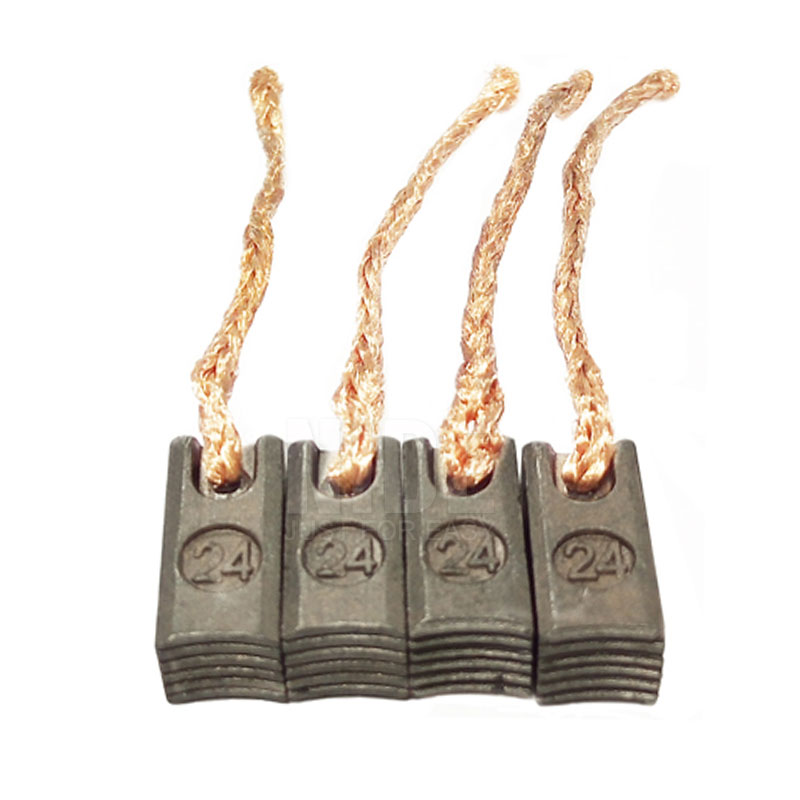
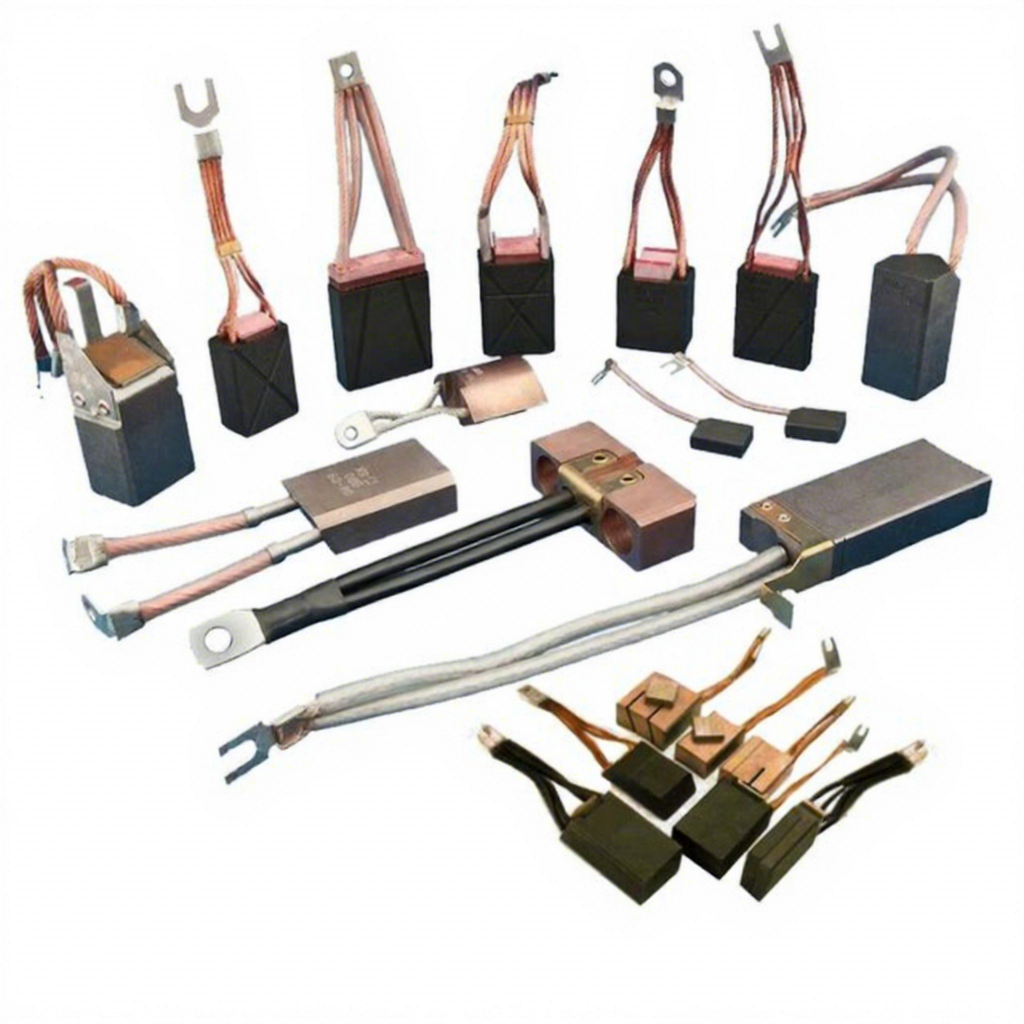
High Precision NIDE Brand Motor Carbon Brushes for Small Electric Motors CE Certified Model NDPJ-TS-9
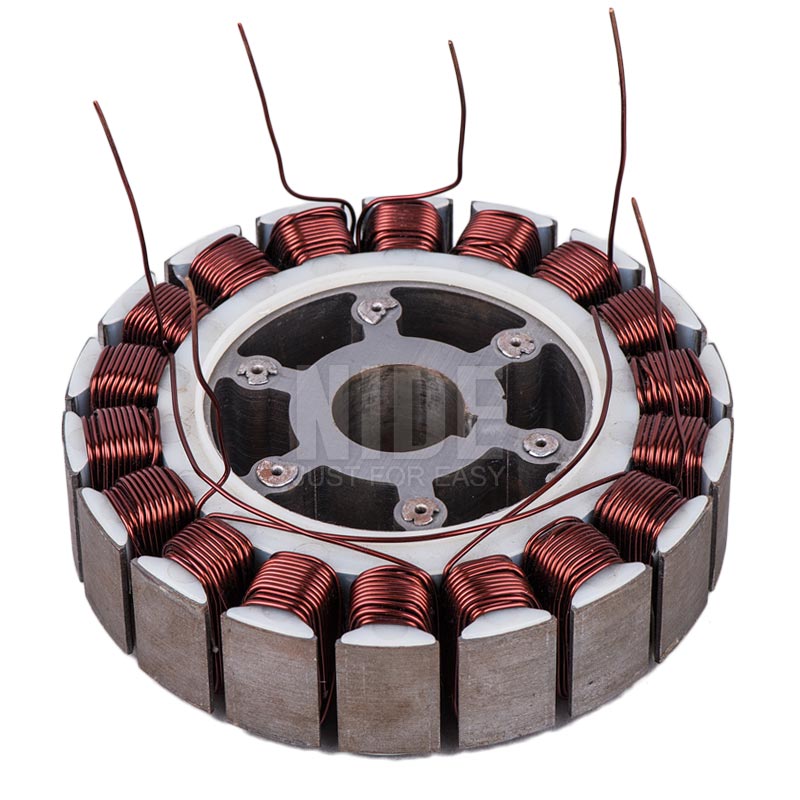

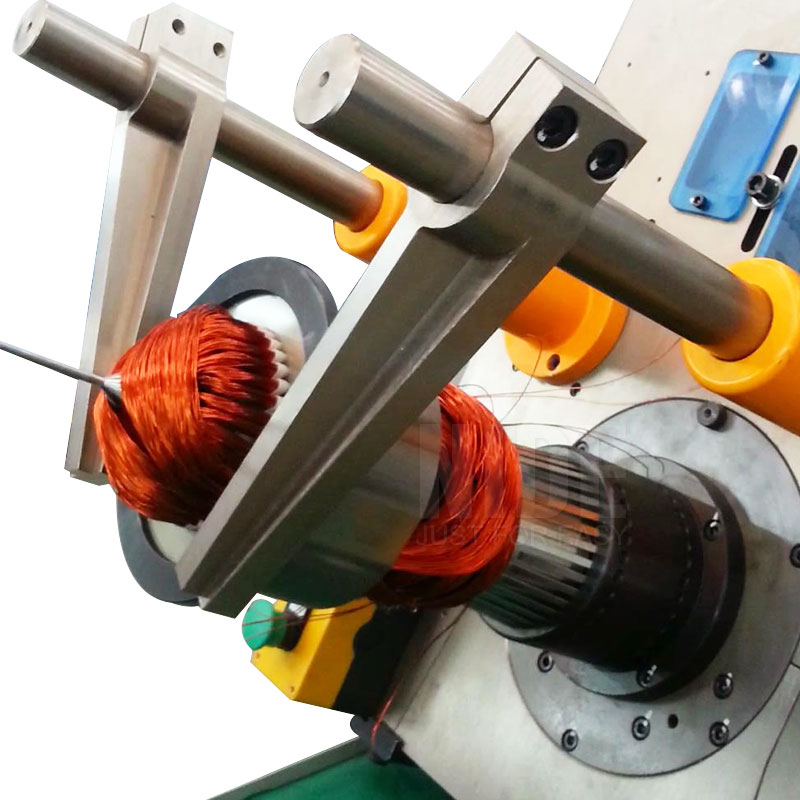
Engineering Paradigm: Hairpin (Flat Wire) Stator Architecture
A rigorous industrial perspective on the shift from random-wound round wire to rectangular continuous hairpin windings, providing high thermal dissipation and maximum electromagnetic flux density.
1. Electromagnetic Superiority and Slot Fill Factor Mechanics
In traditional round-wire distributed stator windings, air voids between circular cross-sections inherently limit the slot fill factor to an effective range of 40% to 50%. This geometric constraint manifests as higher internal phase resistance, increased joule heating ($I^2R$ losses), and poor thermal transfer from the slot interior to the laminated core. In contrast, precision hairpin (rectangular wire) stator production lines increase the net copper slot fill factor to over 73%–76%.
By replacing stochastic stranded wire bundles with pre-formed rectangular solid copper pins, the slot air ratio is minimized. This architectural shift significantly improves thermal conductivity along the stator stack length, enabling higher continuous power ratings without thermal degradation of Class H insulation materials. For industrial vehicle propulsion and high-density traction motors, this mechanical density directly translates to higher torque per unit volume, which is critical for meeting stringent European automotive efficiency directives.
Kinematic Station Sequencing in Turnkey Hairpin Lines
Producing hairpin stators requires exceptional coordination across multi-axis servomechanisms, optical machine vision, and laser diagnostics. The end-to-end production sequence deployed for high-specification projects involves the following distinct physical processes:
2D & 3D Hairpin Forming
High-speed pay-off units de-reel enamelled flat wire with precision closed-loop tensioners. Multi-axis servo benders strip the insulation enamel via mechanical milling or CO2/fiber ablation, straighten the stock, and shape the hairpin into asymmetrical U-shapes and S-bends with zero spring-back distortion.
Slot Paper & Pre-Assembly
Continuous B-stage DMD or Nomex insulation paper is cut, creased into B-shape or S-shape profiles, and inserted into stator core slots at 0.15s/slot. Hairpins are collated into a concentric master tooling basket, forming an interlocking multi-layer ring (4 to 10 layers) before simultaneous insertion.
Twisting & Fiber Laser Welding
The insertion ends undergo servo twisting to achieve phase grouping pitch. The exposed copper tips are laser welded using high-brightness blue laser or oscillating wobble fiber laser technology, generating robust metallurgical joints with zero spatter and void rates below 1.5%.
Parametric Comparison: Hairpin vs. Conventional Windings
Empirical laboratory data reflecting performance deltas in traction-grade permanent magnet synchronous motors (PMSM).
| Performance Metric | Conventional Round-Wire Stator | Hairpin (Flat-Wire) Stator Line | Operational Impact & ROI |
|---|---|---|---|
| Net Slot Fill Factor (%) | 42% – 48% | 72% – 78% | +30% active copper cross-section; decreases copper resistive losses by up to 22%. |
| End-Turn Overhang Length | Long, irregular bundled overhang | Compact, structured axial height (-35%) | Reduces motor axial volume; eliminates copper wire waste and optimizes vehicle packaging. |
| Thermal Resistance Slot-to-Core | High air gap ratio; 1.45 W/(m·K) | Direct contact; > 2.85 W/(m·K) | Significantly improved heat rejection allows continuous high torque without localized hotspots. |
| High-Voltage Partial Discharge Inception | Random positioning causes voltage stress peaks | Deterministic positioning per layer | Essential for 800V silicon carbide (SiC) traction drivetrains; extends dielectric life. |
| Cycle Time (36-Slot Stator) | 120 – 180 seconds (multi-pole) | 50 – 75 seconds (turnkey automated line) | Dramatically higher line OEE (Overall Equipment Effectiveness) in mass manufacturing. |
Localized Applications in the Dublin & Irish Industrial Ecosystem
Empowering local precision manufacturing, zero-emission municipal transit, and clean tech R&D along the Dublin-Belfast economic corridor.
Aligning with Ireland's National Climate Action Plan & Dublin's Electrification
Ireland’s binding Climate Action Plan mandates 945,000 electric vehicles on national roads by 2030, alongside the complete decarbonization of public transport fleets overseen by the National Transport Authority (NTA) in Dublin. Dublin Bus and regional commuter networks are aggressively transitioning from diesel hybrids to pure battery-electric commercial platforms. This shift places immediate operational demands on localized supply chains, electric drive remanufacturing, and e-mobility Tier-1 engineering centers situated throughout Citywest, Park West, Ballycoolin, and North Dublin logistics clusters.
Furthermore, Dublin serves as an engineering launchpad for specialized high-performance industrial equipment. Indigenous Irish precision tooling providers, agricultural machinery electrification developers, and cleantech R&D initiatives require automated stator production architectures capable of transitioning quickly between low-volume prototype development and high-volume serialized manufacturing.
Fleet Remanufacturing & Tier-1 Assembly
Modular hairpin insertion and laser welding equipment designed for high mix flexibility, allowing rapid refitting of stator designs for commercial bus drivetrains, municipal vans, and e-refuse vehicles deployed across Dublin City Council zones.
Cleantech R&D & University Partnerships
Scalable, semi-automatic R&D test cells integrated with National Microelectronics Applications Centers and university technical incubators across Trinity College Dublin (TCD) and University College Dublin (UCD) advancing next-gen axial flux and hairpin topology.
Dublin Port Direct Supply Logistics
Comprehensive ocean and multimodal air cargo pathways via Dublin Port (Terminal 4 / Ringsend) and Dublin Airport Logistics Park, complete with EU Taric classification optimization, full transit moisture barrier preservation, and CE Machinery Directive conformance.
Regulatory Compliance & Grid Integration for Dublin Facilities
All machinery systems destined for the Irish market are built from the ground up to comply with rigorous European Directives including the Machinery Directive (2006/42/EC), Low Voltage Directive (2014/35/EU), and Electromagnetic Compatibility Directive (2014/30/EU). Machine control systems feature standard 400V 50Hz, 3-Phase electrical integration with Pilz safety relays, Siemens TIA Portal or Allen-Bradley architectures, and complete dual-channel emergency interlocks compatible with Irish industrial plant safety codes.
End-to-End Turnkey Hairpin Stator Manufacturing Stations
Explore the complete technological anatomy of our turnkey lines. Every automated module functions under synchronous SCADA line management with individual station traceability.
Station 1: Core Stacking & Lamination Clean
Automated visual inspection of the lamination stack, hydraulic or servo pressing to precise target height tolerances (±0.05 mm), followed by pneumatic high-pressure debris clean-off and automatic thermal skew verification.
Station 2: Continuous Slot Insulation Inserting
Multi-slot servo-indexing mechanism feeds, folds, and inserts high-temperature Nomex / DMD insulation paper into internal stator slots. Integrated vision cameras detect damaged cuffs or incomplete insertions before pin entry.
Station 3: Wire Stripping, Cutting & Hairpin Forming
Precision decoiling with automatic laser enamel stripping on all four wire planes. High-speed CNC forming creates crown bends, pitch steps, and leg cuts with zero micro-fracturing of the primary enamel coating layer.
Station 4: Basket Collation & Simultaneous Insertion
Individual hairpins are inserted sequentially into an indexing cylindrical tooling basket. Once the multi-layer cylindrical formation is complete, dual-action hydraulic/servo rams push all hairpins into the stator core in one seamless stroke.
Station 5: End-Turn Twisting & Expanding
Mechanical expanding tools clamp inner and outer layers of hairpin leg ends. Multi-ring concentric servo drives counter-rotate in opposite directions to form symmetrical twist angles, preparing the pin tips for coplanar welding alignment.
Station 6: Tip Trimming & Height Truing
High-precision circular cutters trim twisted copper pin tips to an exact coplanar datum (±0.03 mm). Vision inspection cameras verify cross-sectional dimensional tolerance, tip spacing, and absence of burrs prior to welding.
Station 7: 3D Vision Tracking Laser Welding
Equipped with a high-power IPG / Trumpf fiber laser or high-absorption blue laser with galvanometer scanning. 3D seam tracking calculates pin pair junctions in real-time, executing high-integrity joints under argon/nitrogen shielding.
Station 8: Trickle Impregnation / Varnish
Stator pre-heating via resistance or induction, followed by servo-controlled trickle dispensing of epoxy or unsaturated polyester resin. Deep capillary action ensures complete air displacement in slots, followed by UV or thermal curing.
Station 9: End-of-Line (EOL) Diagnostics
Comprehensive electrical qualification: DC winding resistance, insulation resistance at 1000V DC, high-voltage AC Hipot testing, impulse surge testing, and partial discharge (PD) inception voltage analysis under European testing standards.
Why Tier-1 Engineers Choose Nakro Industrial Systems
Combining over 14 years of dedicated machine manufacturing with robust European-standard export capability.
Comprehensive Engineering Verification & Turnkey Supply Integration
Established in 2010 in Ningbo, Zhejiang, Ningbo Nakro Intelligent Equipment Co., Ltd. operates state-of-the-art production facilities spanning more than 30,000 square meters. Unlike simple assembly traders, we operate a vertically integrated engineering department consisting of dedicated R&D toolmakers, servo motion control engineers, and metallurgical specialists. We don’t just manufacture winding machines; we engineer complete production ecosystems that bridge machine tooling with precision components.
Every turnkey project destined for Dublin or the broader European market undergoes an intensive Factory Acceptance Testing (FAT) program before shipping. We encourage overseas engineering teams to provide their exact production silicon-steel laminations, flat copper wire spools, and slot liners for empirical run-offs. We provide comprehensive high-speed video verification, optical measurement certificates, and metallographic cross-sections of welded copper joints. This eliminates ramp-up downtime during on-site commissioning.
Full-Spectrum Component Support
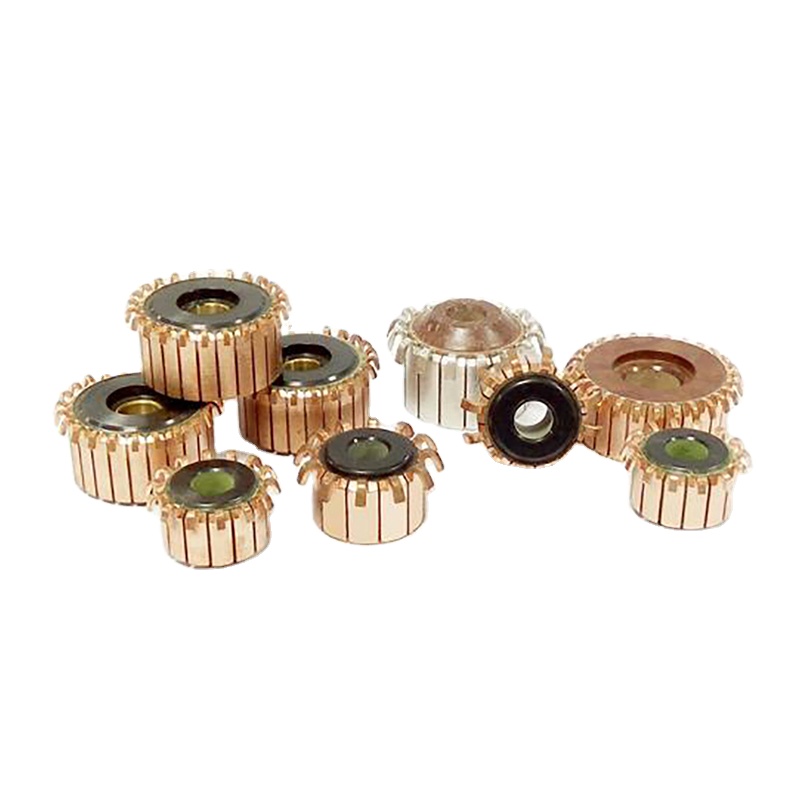
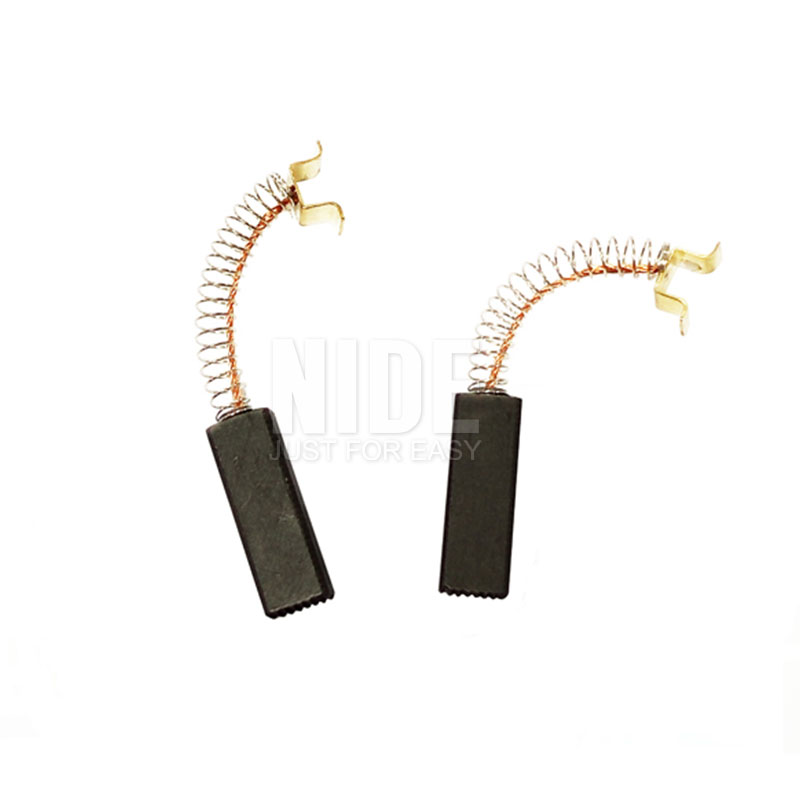
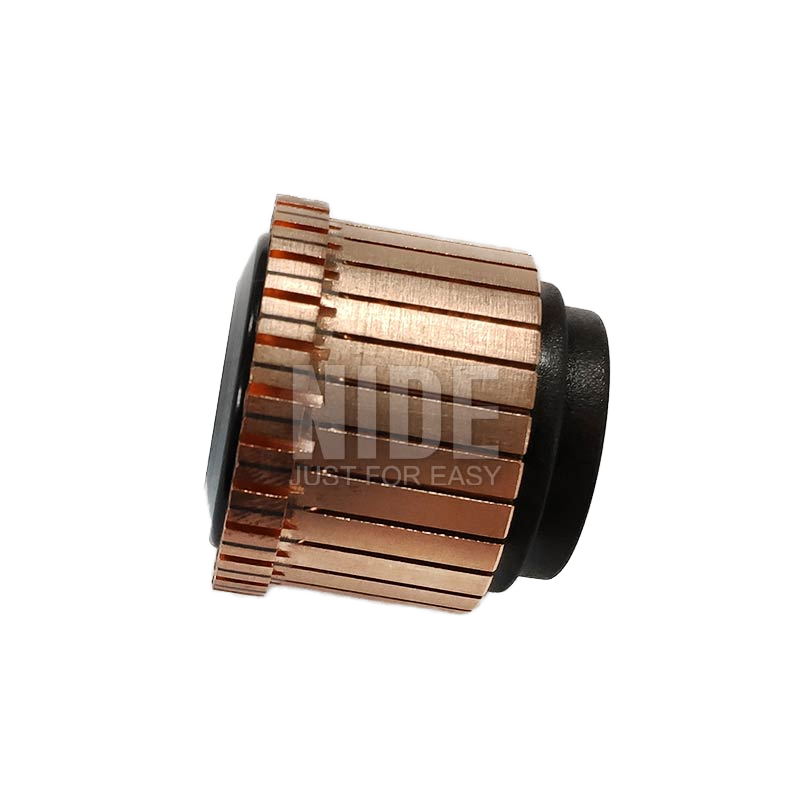
Beyond capital equipment, we supply an extensive catalog of matching components engineered to exact motor drawing specifications. From high-conductivity automobile commutators and carbon brush assemblies to precision ground shafts, rare-earth permanent magnets, dynamic balancing bearings, and molded terminal frames, Nakro provides a unified single-source supply chain that mitigates procurement friction for Irish motor manufacturers.
Frequently Asked Questions for Irish Engineering Teams
Practical operational, regulatory, and engineering inquiries addressable by our technical sales group.
How do Nakro hairpin machines accommodate European CE and Irish safety standards?
What is the typical tooling changeover time between different stator stack heights and slot designs?
How is localized installation and technical support managed in the Dublin area?
Which laser welding source do you recommend for hairpin copper welding: Blue or Fiber?
What are the international shipping terms and delivery lead times to Dublin Port?
Ready to Engineer Your Hairpin Stator Production Line?
Send our senior engineering team your stator lamination drawings, rectangular wire specifications, cycle time objectives, and facility footprint. We will generate a comprehensive station proposal, line layout, and turnkey feasibility analysis.
