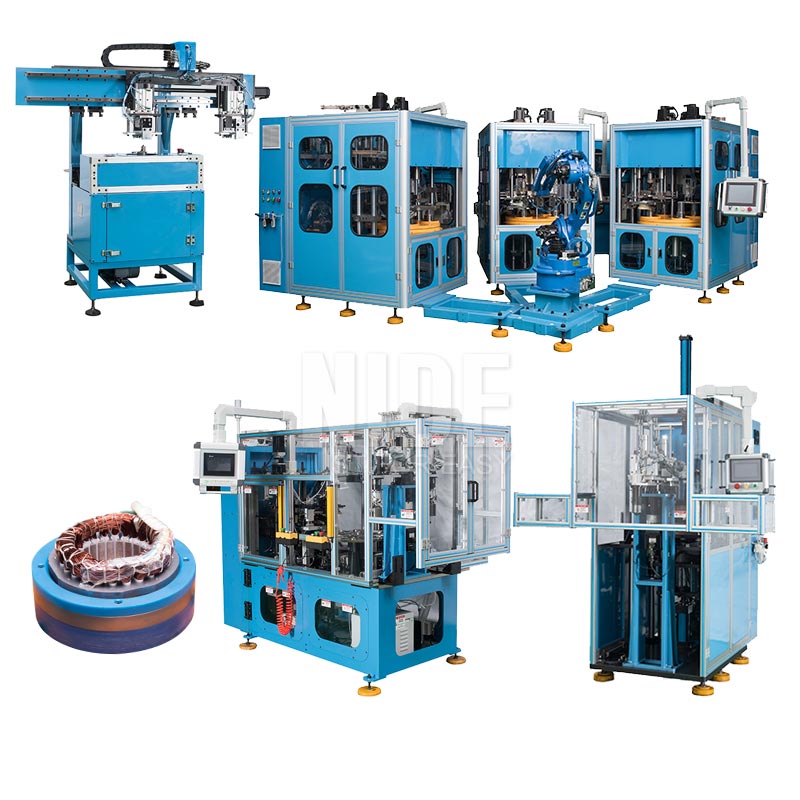
Small-Scale Electric Induction Motor Stator Assembly Line
Integrated non-standard production cell engineered for flexible single-phase and 3-phase induction stators, featuring PLC core architecture and automatic wedge inserting.
Explore our industrial portfolio comprising PLC-automated stator production lines, high-speed armature winders, hairpin systems, and certified sub-assemblies built to withstand demanding industrial standards.
Integrated non-standard production cell engineered for flexible single-phase and 3-phase induction stators, featuring PLC core architecture and automatic wedge inserting.
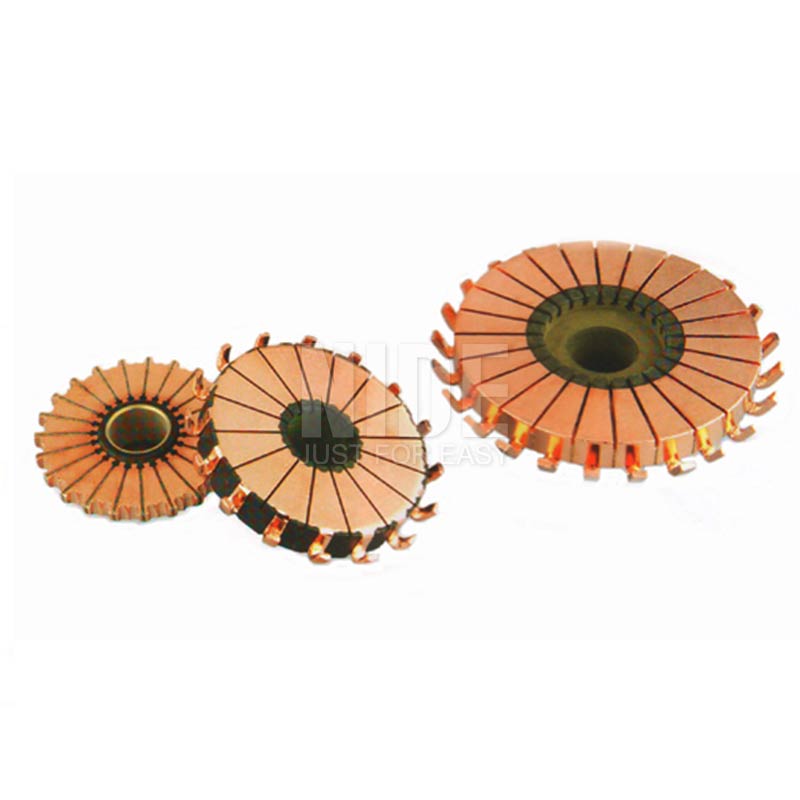
High-precision molded planar commutator for high-speed DC motor stators and rotors, guaranteeing low brush friction and superior thermal dissipation.
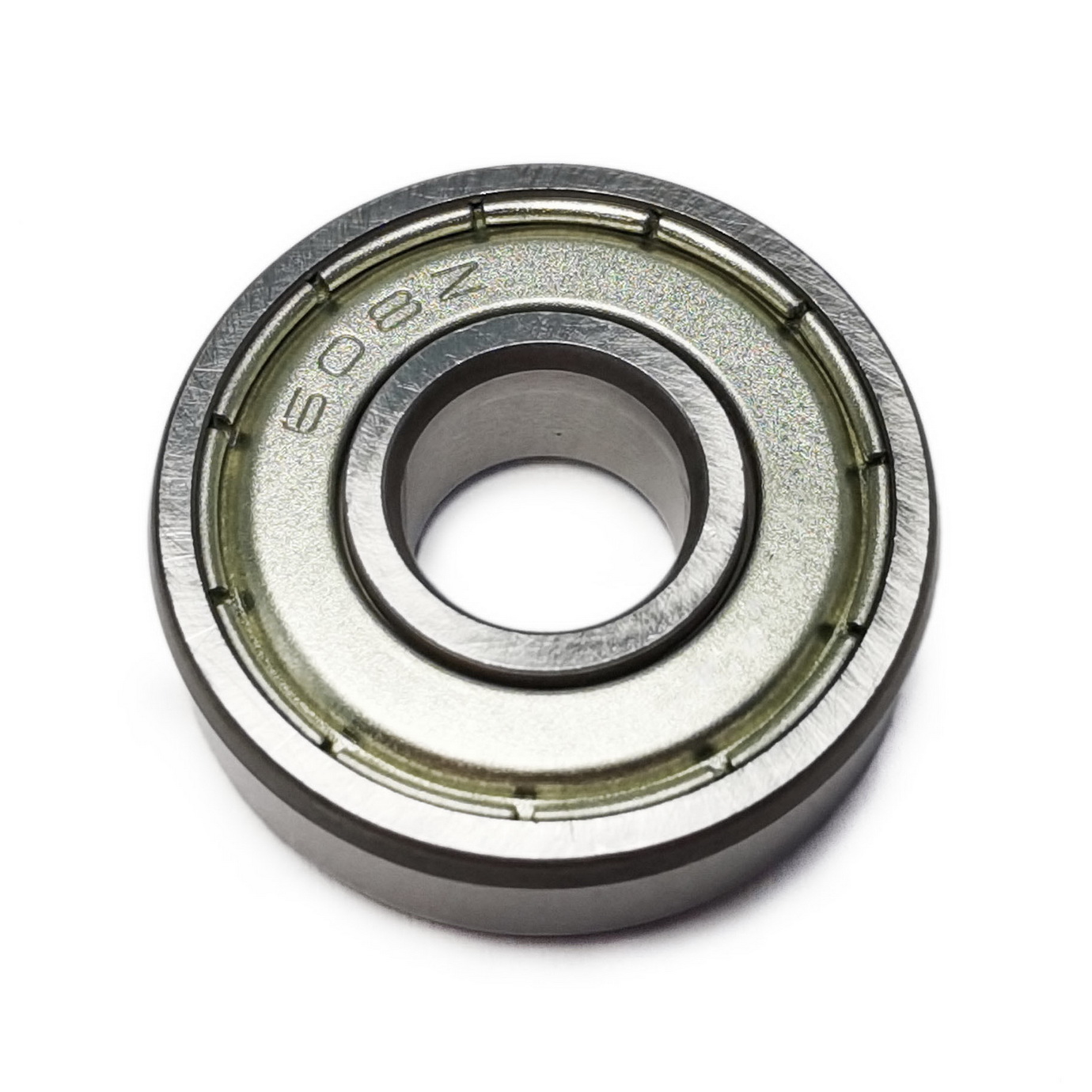
Corrosion-resistant single-row 608ZZ bearing designed for high-RPM motor shafts, offshore auxiliary propulsion systems, and harsh maritime environments.
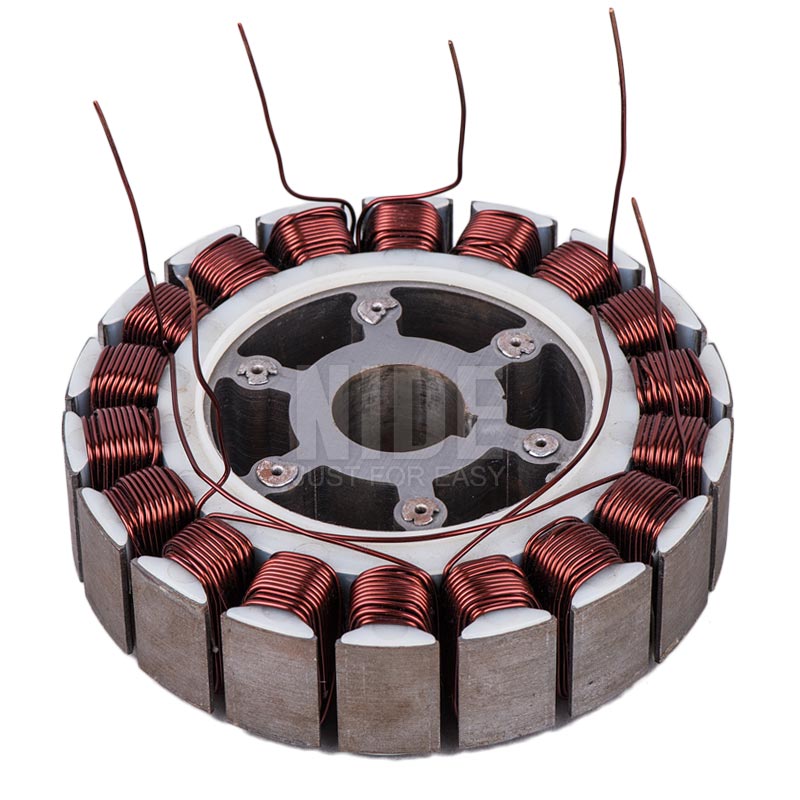
Specialized flyer and needle winder for outer-rotor hub stators and pump drives, delivering programmable multi-layer wire tensioning with zero insulation abrasion.
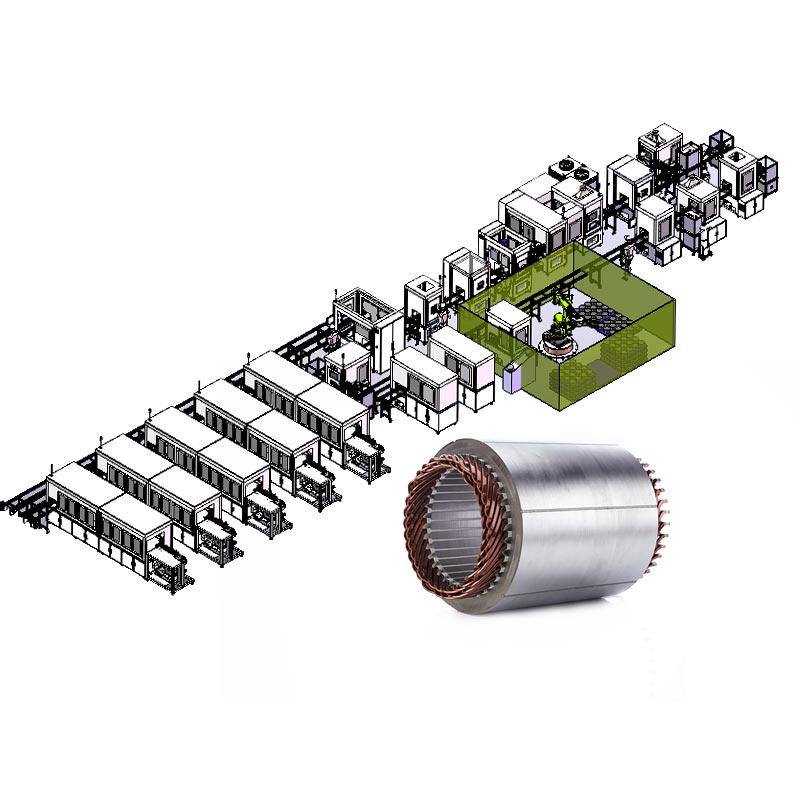
State-of-the-art flat-wire stator manufacturing cell encompassing 3D hairpin forming, slot insertion, paper twisting, laser welding, and automated dielectric testing.
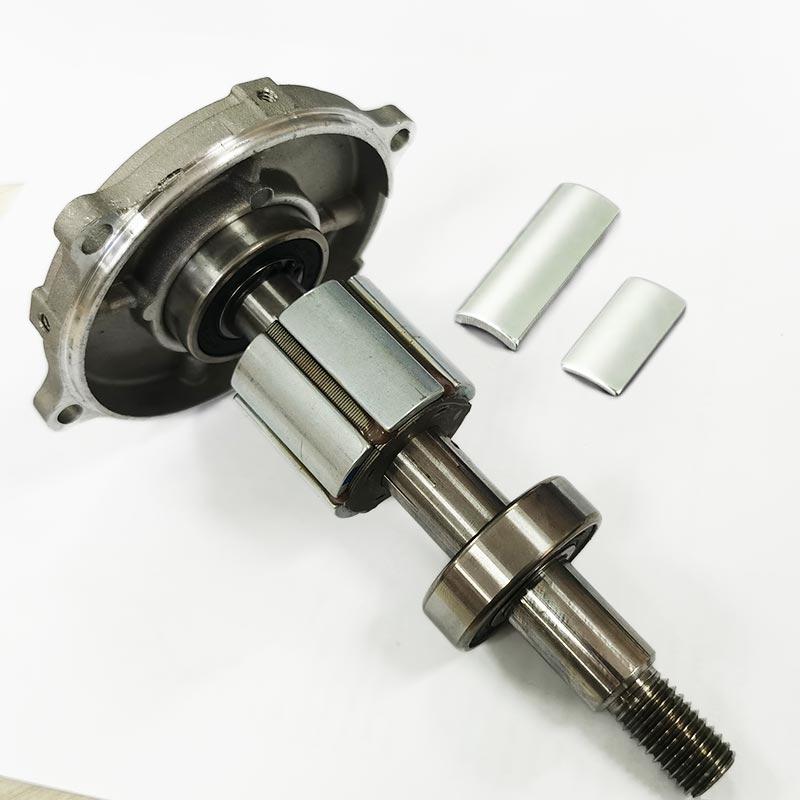
Ultra-high remanence sintered NdFeB segment magnets treated with anti-corrosion nickel-copper-epoxy coatings for subsea and heavy-duty motor applications.
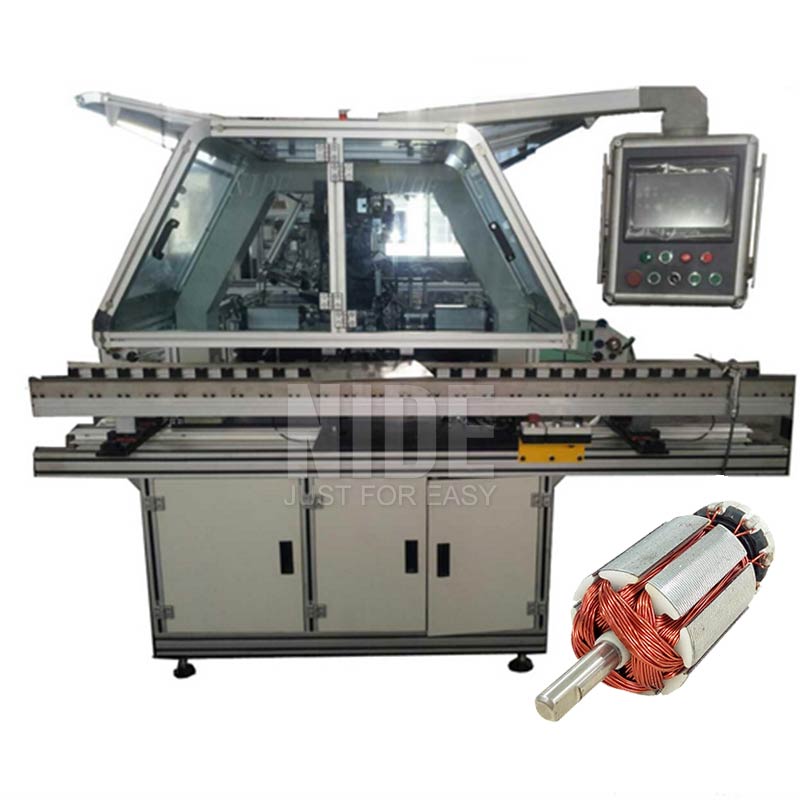
Automated high-capacity flyer rotor winder with dual-spindle tensioning, hook fusing, and integrated dynamic unbalance verification for demanding motor programs.
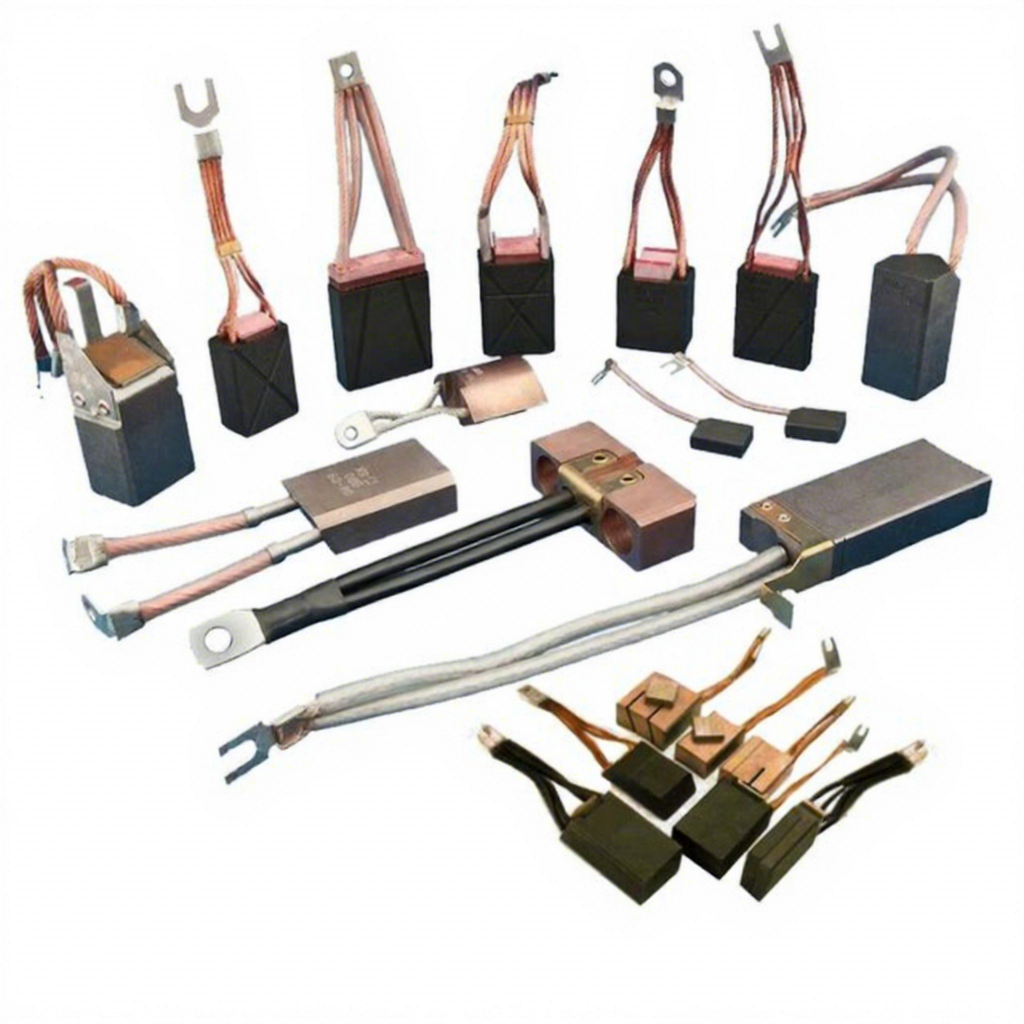
Engineered electro-graphite and copper-graphite brush assemblies providing optimized commutating performance, low spark generation, and extended continuous service life.
A rigorous review of how maritime electrification, offshore energy conversion, and subsea automation are transforming procurement standards for automated motor production lines in Western Norway.
As the primary economic nexus of Western Norway, Bergen and the surrounding Vestland county lead northern Europe's maritime green transition. Driven by Norway’s stringent climate mandates—including zero-emission targets for World Heritage fjords and maritime corridors—traditional vessel propulsion, fish-farming winches, auxiliary offshore thrusters, and subsea pumping units are transitioning en masse to high-torque electric powertrains. This shift places enormous pressure on local equipment integrators, retrofit yards, and machine-building contractors to procure automated motor assembly lines capable of handling diverse stator lamination geometries, extreme slot-fill factors, and tight mechanical tolerances.
In standard consumer motor production, line configurations prioritize cycle speeds measured in fractions of a second. Conversely, in the Bergen industrial ecosystem, the engineering mandate prioritizes dielectric reliability, ingress protection (IP66–IP68), thermal stability, and low unbalance tolerances. Electric motors deployed across maritime environments operate under continuous mechanical shock, high salinity, and extreme thermal cycling. Consequently, regional manufacturers prioritize automated motor production cells equipped with closed-loop servo feedback, laser-verified hairpin welding, and automated end-of-line (EOL) surge and hipot test stations.
Automated assembly of permanent magnet synchronous motors (PMSM) and high-power rim-drive thrusters for all-electric passenger ferries, workboats, and aquaculture vessels operating across Vestland fjords.
Precision coil winding and vacuum resin impregnating systems for motors running deepwater subsea ROVs, oilfield recovery compressors, and dynamic positioning winches operating at extreme hydrostatic pressures.
High-reliability yaw, pitch, and cooling pump motor lines designed for floating offshore wind farms along the Norwegian Continental Shelf, emphasizing maintenance-free lifetimes exceeding 20 years.
Three technological transformations are accelerating capital expenditure on automated motor lines across Bergen-based engineering clusters:
First, the proliferation of Flat-Wire Hairpin Stators: Marine thruster and commercial electric vehicle motors demand higher copper fill ratios (>70%) to reduce core volume and dissipate heat rapidly. Automatic hairpin stator lines—which replace random-wound round wire with rectangular copper conductors—are shifting from automotive mega-factories into specialized maritime propulsion facilities.
Second, Real-Time Traceability & Digital Twin Protocols: Bergen machine buyers insist on open PLC architectures (Siemens TIA Portal, Beckhoff EtherCAT) that log torque-angle curves during shaft pressing, micro-resistance measurements after needle winding, and 3D vision inspection data directly into marine class documentation (DNV, Lloyd’s Register).
Third, Modular "High-Mix, Low-Volume" Production Cells: Because Norwegian industrial orders frequently involve customized batches for specialized vessel builds, automation lines must offer rapid tooling changeovers under 30 minutes, handling varying stack lengths without complete mechanical recalibration.
| Evaluation Parameter | Standard Consumer Motor Assembly Line | Bergen Maritime/Industrial Specification | Nakro Intelligent Equipment Engineering |
|---|---|---|---|
| Target Cycle Metric | Sub-second high-speed output | High accuracy, zero-defect process control | Flexible servo-controlled rate (15–90s cycle time) |
| Stator Winding Method | Standard flyer or multi-station bobbin | Needle winder, hairpin, or single-cycle inserter | Customized needle, hairpin & auto-wedge inserters |
| Environmental Durability | Standard indoor IP20–IP44 rating | High salinity, heavy vibration, IP66–IP68 marinized | Class H insulation compatibility, anti-corrosion tooling |
| Quality Traceability | Basic batch sample testing | 100% individual part telemetry logged to MES | Integrated inline surge, hipot, torque & resistance logs |
| Compliance Standard | Generic CE mark | CE, Machinery Directive, DNV/NORSOK alignment | ISO 9001 certified, CE verified, open PLC platform |
A vendor benchmarking analysis based on technical capability, engineering flexibility, regional support structures, and total cost of ownership (TCO).
Global leader in turnkey electric motor manufacturing machinery since 2010. Combines full-spectrum R&D (hairpin, BLDC, induction stator insertion, armature lines) with matched precision components (commutators, magnets, bearings), offering Bergen buyers turnkey automation at competitive capital cost.
German engineering heavyweight renowned for specialized winding technologies and complete electric traction powertrain lines for European e-mobility Tier-1 suppliers.
North American automation integrator with strong European engineering hubs, supplying high-volume assembly lines for complex mission-critical motors and actuators.
Global industrial robotics and automation company delivering specialized e-Drive assembly, stator hairpin insertion, and flexible rotor stacking cells.
Historic European machine builder specializing in automated insertion tooling, slot lamination insulation, and high-efficiency induction stator forming machinery.
Italian manufacturer focusing on combined stator manufacturing equipment with integrated high-voltage dielectric diagnostic systems.
Flexible assembly solution provider serving Scandinavian automotive, marine electronics, and micro-motor industries with custom automated workstations.
Japanese precision winder manufacturer with strong international reach, providing reliable armature winding machinery for high-RPM motor applications.
Swiss precision engineering group renowned for modular assembly platforms suited for miniature actuators and precision BLDC pump sub-assemblies.
Specialized automation engineering builder known for solar stringing and transmission e-motor test benches with global validation facilities.
Combining 14+ years of specialized motor process R&D with full ISO 9001 certified manufacturing, exporting turnkey excellence to over 50 countries.
From core lamination punching and shaft press-fit, slot paper inserting, needle/flyer winding, and commutator hot-staking, to automated varnishing and 100% surge/hipot testing.
Unlike conventional machine-only builders, Nakro supplies matching high-spec components: planar commutators, 608ZZ bearings, N52 neodymium magnets, and carbon brushes for single-source accountability.
Every line executes a rigorous factory acceptance test (FAT) using the buyer's genuine laminations and magnet wire. Backed by remote diagnostic capabilities and international field engineers.
Expert engineering answers resolving technical, logistical, and standardization inquiries from local plant managers and procurement directors.
