Standard & Custom Stator Production Systems
Explore our core coil winding, servo inserting machinery, and precision electro-mechanical stator/rotor parts configured for synchronous, induction, and brushless motor assembly.
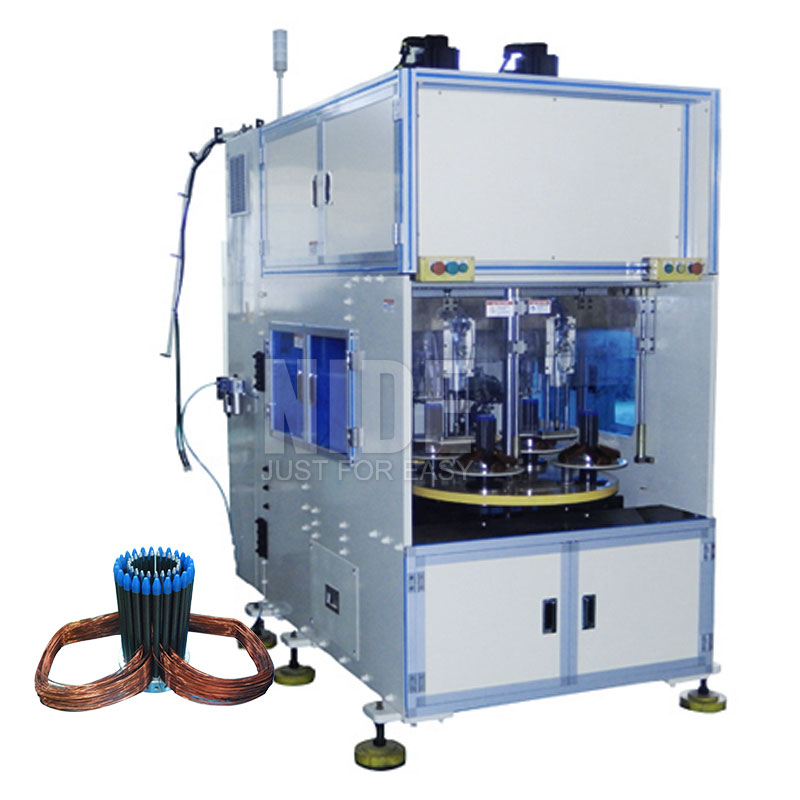
PLC Controlled Cooler Motor Stator Coil Winding Machine NIDE Brand
High-speed automatic winding with constant wire tensioning for cooler and industrial blower motor stators.
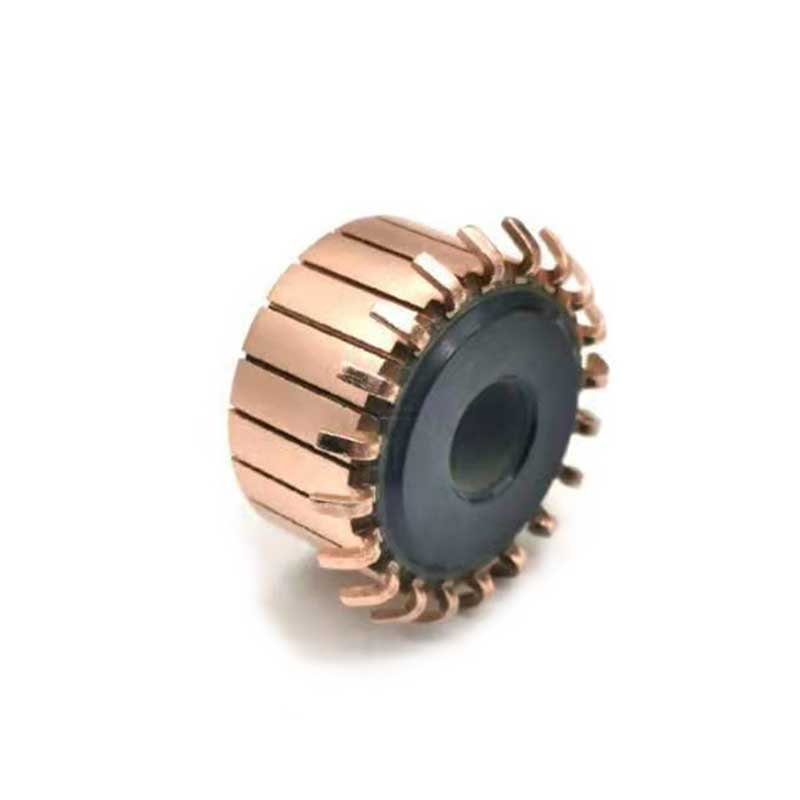
Copper Car Radiator Cooling Fan Motor Armature Hook Commutator
Engineered hook commutator for DC fan armature assemblies with superior thermal resistance.
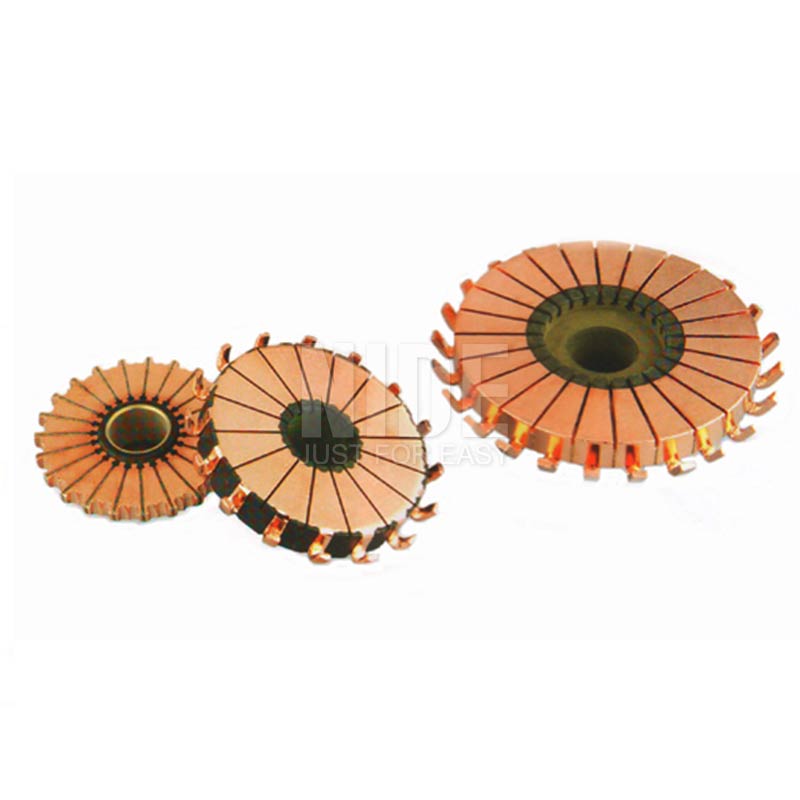
Planar Type Commutator Motor Component (NDPJ-HXQ-39)
Precision-molded face commutator engineered for compact automotive and fuel pump motor applications.
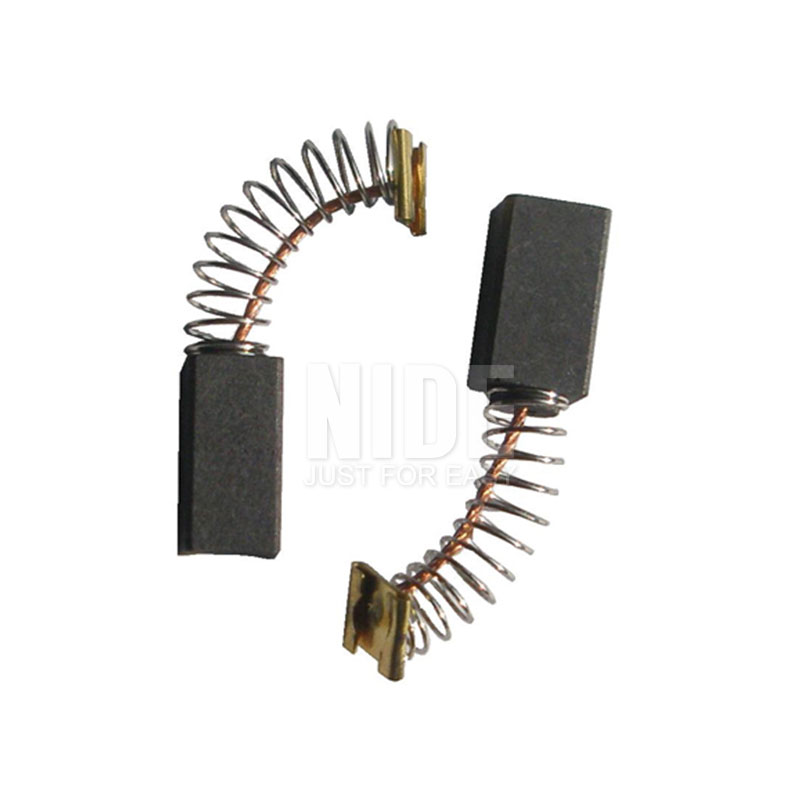
High Precision DC Motor Magnet Alternator Carbon Brushes NDPJ-TS-7
Electrographite carbon brushes offering low friction and extended lifespan in alternators and drives.

24 Segments Hook Type DC Electric Motor Starter Commutator
Segmented hook-type armature commutator dedicated to industrial power tools and automotive starter motors.
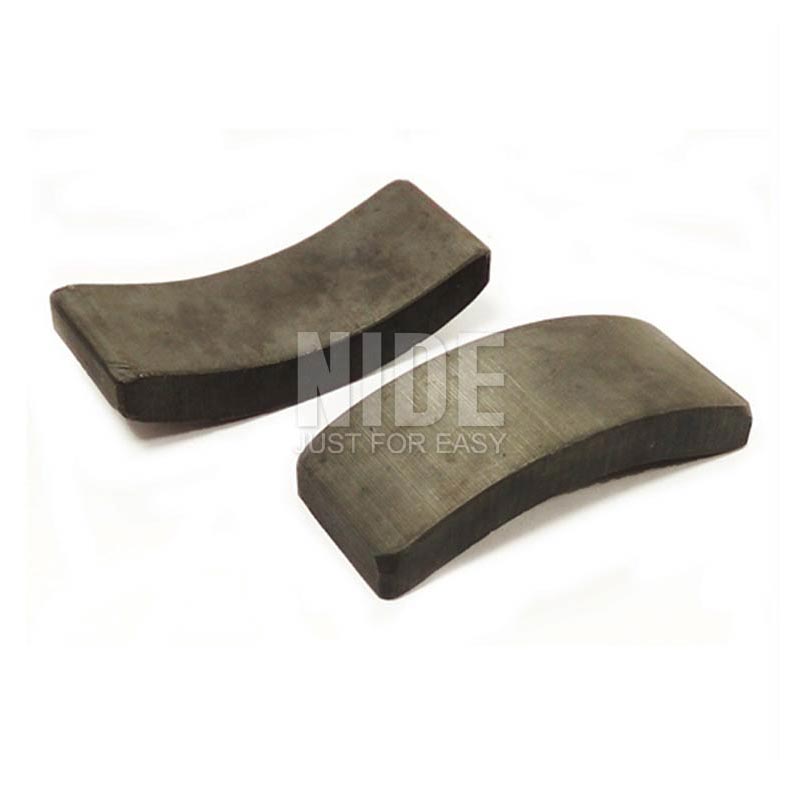
12-220V DC Permanent Arc Segment Ferrite Magnet for Pump Motors
Arc-shaped permanent magnets with stable remanence for circulation pumps and automotive auxiliary drives.
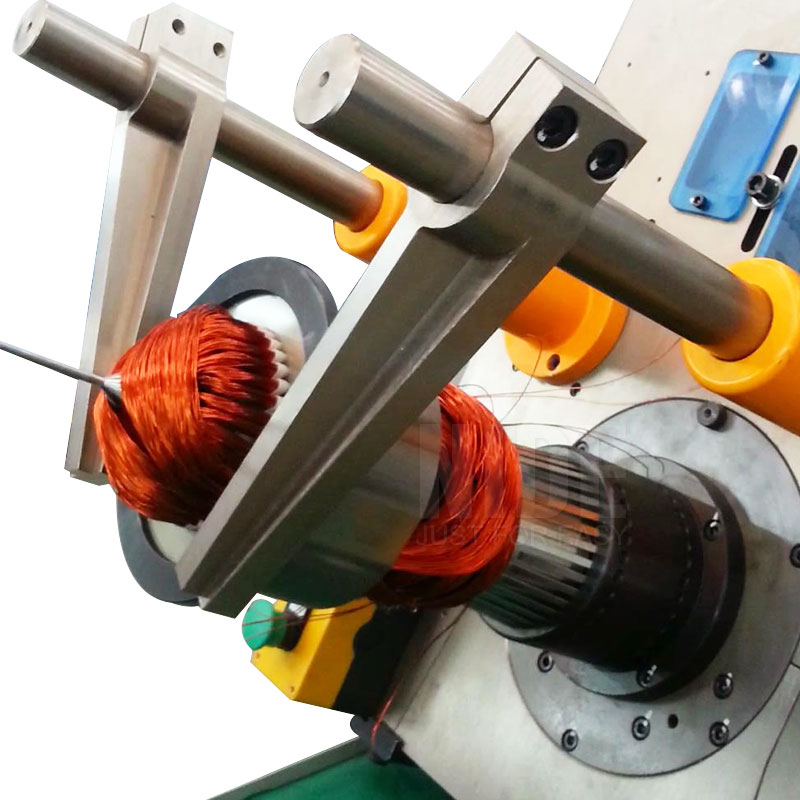
Three-Phase Motor Stator Coil & Wedge Inserting Machine
Simultaneously inserts copper coils and slot wedges into induction stators without wire strand deformation.
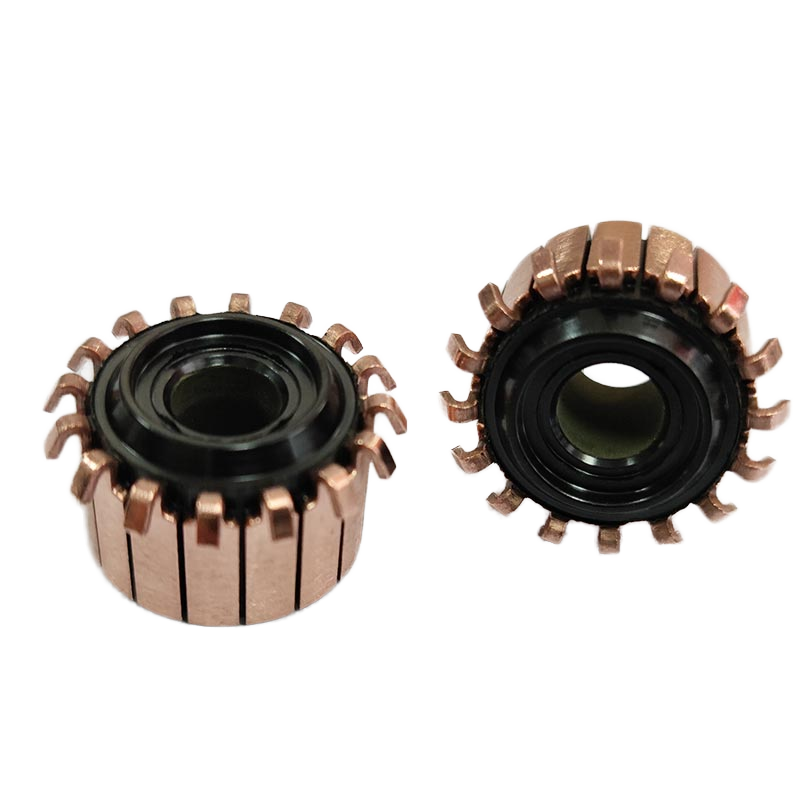
Custom Auto Parts Commutator Armature with Collector Hook
Custom collector hook commutators for high-performance cabin HVAC blowers and cooling fan armatures.
High-Efficiency Stator Insertion Line Engineering for Düsseldorf Industrial Plants
A systematic analysis of kinematics, slot-fill maximization, and zero-defect insulation management in modern electric motor manufacturing lines serving the North Rhine-Westphalia manufacturing sector.
1. The Kinematics of Simultaneous Coil and Wedge Insertion
In electric motor manufacturing, the stator coil and wedge insertion phase represents the single most critical station for determining electrical integrity, slot fill factor, and long-term dielectric performance. When supplying advanced automotive tier suppliers and industrial pump manufacturers in the Düsseldorf, Neuss, and Ratingen areas, equipment must satisfy stringent DIN EN ISO standards alongside rigorous takt-time constraints.
Conventional pneumatic insertion systems frequently cause mechanical pinching, micro-abrasions along the enameled copper magnet wire, and uneven wedge positioning. Our modern automated stator insertion lines utilize dual-axis synchronized servo kinematics. The insertion push rod and the wedge guide shoe move under closed-loop position and torque feedback, ensuring that copper coils and insulating slot wedges (DMD, Nomex, or polyester film) enter the lamination slots in a harmonious motion profile.
Technical Insight: By modulating pushing force based on real-time linear encoder tracking, our insertion tooling eliminates wire elongation and tension spikes. This maintains the enameled coating’s microscopic uniformity, preventing premature partial discharge (PD) failure when stators operate under high dv/dt inverter switching conditions.
2. Solving Slot Fill Factor Challenges in IE4 & IE5 Super Premium Efficiency Motors
The European Union's Ecodesign Regulation (EU 2019/1781) mandates elevated energy efficiency levels across low-voltage induction and permanent magnet synchronous motors (PMSM). Industrial plants across the Rhine-Ruhr corridor are increasingly redesigning their product portfolios toward IE4 (Super Premium Efficiency) and IE5 (Ultra Premium Efficiency) ratings. Achieving these efficiency tiers directly correlates with increasing the copper slot fill factor beyond 75% to 82%.
High fill factors present severe insertion hurdles: narrow slot openings, high wire count per bundle, and the risk of shearing insulation papers. To counteract this, our stator insertion tooling integrates CNC-ground tungsten-carbide-coated blades and progressive wedge-forming channels. During the insertion cycle, the blades guide the wire bundles smoothly below the tooth tips, while servo-driven pre-forming fingers prevent wire cross-over. This allows European drive manufacturers to increase slot copper density without inducing phase-to-phase short circuits or ground faults during subsequent end-of-line hipot testing.
| Machine Parameter | Standard Industrial Cell | Heavy-Duty Servo Line | Customized E-Mobility Cell |
|---|---|---|---|
| Stator Outer Diameter (OD) | Ø 40 mm – 160 mm | Ø 90 mm – 260 mm | Ø 60 mm – 320 mm |
| Stator Stack Height | 15 mm – 160 mm | 30 mm – 300 mm | 20 mm – 220 mm |
| Wire Diameter Range | 0.18 mm – 0.95 mm | 0.40 mm – 1.60 mm | Hairpin or Multi-Strand Wire |
| Insertion Cycle Time | 14 – 22 sec/piece | 18 – 28 sec/piece | 12 – 18 sec/piece |
| Slot Wedge Material Compatibility | Nomex, DMD, Mylar, Kapton | Composite DMD, NMN, Vulcanized Fiber | High-Temp Aramid / PEEK |
| Control Architecture | Siemens S7-1200 / Mitsubishi PLC | Siemens S7-1500 / Beckhoff TwinCAT | Profinet / OPC UA Industrial 4.0 |
3. Full Line Modular Automation: From Lamination Stack to Tested Stator
A true turnkey stator manufacturing line extends far beyond the coil inserting station alone. To ensure maximum Overall Equipment Effectiveness (OEE) and minimize manual handling in high-wage manufacturing regions like North Rhine-Westphalia, our turnkey lines incorporate a standardized six-station architecture:
Paper Inserting
High-speed servo folding, cutting, and insertion of slot insulation liners with edge-cuffing accuracy down to ±0.1 mm.
CNC Coil Winding
Multi-flyer or needle winding transferring pre-arranged coil bundles into transfer tooling magazines with closed-loop tension control.
Simultaneous Insertion
Dual-axis servo insertion pushing copper wire bundles and slot wedges cleanly into lamination slots in a single stroke.
3D End-Turn Forming
Intermediate and final hydraulic/servo expansion forming that establishes precise coil clearance for the motor housing.
CNC Stator Lacing
Single or double-sided diamond lacing securing coil overhangs against vibrational stresses and electrodynamic displacement.
Industrial Application Scenarios in Düsseldorf & Rhine-Ruhr Hubs
How our stator manufacturing machinery integrates directly into the specialized automotive, fluid engineering, and machinery sectors across western Germany.
Automotive Auxiliary & Thermal Management Systems
The automotive supply corridor surrounding Düsseldorf, Krefeld, and Wuppertal focuses intensely on e-mobility thermal management, electric water pumps, radiator fans, and electronic power steering (EPS) motors. Our lines handle high-slot-number, multi-phase low-voltage stators requiring high reliability under harsh automotive thermal cycling (-40°C to +150°C).
Industrial Pumps & Fluid Compression Systems
North Rhine-Westphalia is home to major chemical hubs along the Rhine and prominent industrial pump producers. Stators destined for submersible, chemical processing, and wastewater pumps require void-free slot insulation and ultra-consistent wedge forming to survive continuous duty cycles and harsh fluid immersion conditions without dielectric breakdown.
Machine Tools & Factory Automation Servo Motors
Precision mechanical engineering companies require high-dynamic-response permanent magnet brushless AC servo drives. Our segmented and distributed winding lines deliver exceptional slot slot-fill consistency and minimal coil overhang height, optimizing motor power density and minimizing copper losses in high-acceleration automated factory cells.
Regional Manufacturing Trends Reshaping Stator Assembly in NRW
Analyzing the technological vectors steering capital equipment investments across German drive producers.
Decarbonization & IE4/IE5 Mandate
With industrial energy tariffs in Germany remaining a core operational focus, manufacturing plants are phasing out IE2/IE3 drives in favor of IE4 and IE5 synchronous reluctance and PMSM configurations, necessitating high-fill stator inserting machinery.
OPC UA & Digital Twin Integration
German Industry 4.0 standards mandate equipment interoperability. Our lines feature native OPC UA architectures, Profinet communication, and digital-twin simulated changeover tooling to interface seamlessly with SAP and MES systems.
High-Mix Low-Volume (HMLV) Tooling
Specialized motor manufacturers cannot afford dedicated single-frame lines. Our quick-change tooling modules allow operators in regional workshops to switch stator stack heights and stack diameters within 20 to 35 minutes.
Full Process Traceability & EOL Data
Automotive and aerospace tier clients demand complete part-level traceability. Every stator processed is serialized, linking winding turn counts, insertion torque curves, and final electrical surge/hipot values to a unified QR code.
Why Global Motor Makers & German Engineers Partner With Us
From custom machine design to components supply, discover our integrated engineering infrastructure.
ISO 9001 & European CE Machinery Compliance
Every automated cell leaves our factory fully compliant with the European Machinery Directive 2006/42/EC, Low Voltage Directive 2014/35/EU, and EMC Directive 2014/30/EU. Safety interlocks, Sick light curtains, and Pilz safety relays come standard.
Comprehensive Motor Components Ecosystem
Beyond capital automation machinery, we maintain full-spectrum production of motor components: hook and planar commutators, high-density carbon brushes, permanent arc ferrite magnets, and precision-stamped laminations. A true one-stop partner.
Global Field Service & Overseas Technical Support
With equipment deployed across 50+ countries, we back our systems with extensive technical support, factory acceptance testing (FAT), video-monitored pre-shipment runs using the client's actual wire and cores, and on-site commissioning services in Germany.
Frequently Asked Questions by German Engineering & Sourcing Teams
Direct answers addressing technical parameters, local electrical standards, delivery schedules, and tooling customizations.
Q: How do your insertion machines ensure CE compliance and factory safety in Germany?
All machinery exported to Germany and EU territories is built in strict adherence to CE Machinery Directive 2006/42/EC and electrical safety standards under DIN EN 60204-1. Panels incorporate Siemens or Schneider safety PLCs, dual-channel emergency stop circuits, category 4 safety light curtains, and full technical documentation in German and English.
Q: Can the line handle multi-wire parallel windings without copper crossover damage?
Yes. Our multi-wire coil and wedge inserting tooling incorporates precision-profiled separation blades and floating guide fingers. During the servo downward stroke, parallel strands (even when handling 8 to 16 parallel enamelled wires) are maintained in an orderly orientation, eliminating wire crossing, strand shearing, or insulating wedge deformation.
Q: What is the typical tooling changeover time between different stator stack heights and diameters?
Stack height adjustments within the same lamination profile take under 10 minutes via touchscreen recipe selection and quick-locking mechanical spacers. Complete tooling changeovers for different stator outer diameters (OD) and slot numbers typically require 30 to 45 minutes using our modular locating pins and quick-release insertion blade assemblies.
Q: How do you conduct the Factory Acceptance Test (FAT) prior to shipment to Düsseldorf?
We invite customer engineering teams to attend on-site FAT or participate via multi-camera high-definition live streaming. We require actual client laminations, slot liners, and copper wire. The machine must complete a continuous dry-cycle and a minimum 100-piece live production test measuring cycle time, slot fill, surge test, and dielectric strength before dispatch.
Q: Does your control system integrate with German factory MES and SCADA networks?
Yes. Our lines feature Siemens S7-1500 or Beckhoff controllers with standardized OPC UA industrial protocols. Production metrics, including cycle count, cycle time, insertion peak force, alarm logs, and electrical test data, can be published directly to factory-level SCADA systems and cloud databases for predictive maintenance.
Q: What spare parts availability and wear-tooling backup do you provide?
We supply a comprehensive two-year operational spare parts kit with each machine, including spare insertion blades, push rods, wedge pushers, and pneumatic wear items. Fast-wear tooling parts are machined to exact CNC tolerances, allowing rapid drop-in replacement without manual hand-fitting or secondary adjustments.
Ready to Optimize Your Stator Production Line in Düsseldorf?
Send your motor lamination drawings, wire specifications, and target daily output to our senior application engineering team. We will generate a complete project layout, cycle time simulation, and tailored equipment quotation within 24 hours.
