Does your stator coil insertion equipment meet Swiss and European CE machinery safety directives?
Yes. All equipment exported to the Swiss Confederation and European single market conforms to European Machinery Directive 2006/42/EC, Low Voltage Directive 2014/35/EU, and Electromagnetic Compatibility (EMC) Directive 2014/30/EU. Machine safety systems integrate dual-channel safety relays, monitored interlocked perimeter guarding, category 4 optical light curtains, and accessible emergency stops. We also supply full Declaration of Conformity and technical documentation in English or German upon request.
Can our line handle multiple stator stack heights and slot configurations without lengthy retooling?
Yes. Our stator coil inserting machines are engineered for flexible batch production. Stack height adjustments are digitally configured through the operator touchscreen via precision servo ball screws. When switching to a different lamination bore diameter or slot count, our modular, pre-aligned guide blade assemblies and wedge pusher sets can be changed out in under 25 minutes using quick-release alignment pins.
How is the Factory Acceptance Test (FAT) executed before the machine leaves your production floor?
We require customers to supply a sample batch of un-wound stator stacks, insulating paper, slot wedges, and enamelled copper wire for empirical trials. We conduct full-speed production run-offs under factory conditions to verify cycle times, slot fill factors, insertion depths, and scratch-free wire integrity. Buyers can inspect trials in person at our facility or participate via high-definition, multi-angle video FAT sessions. Finished samples undergo surge, hipot, and phase resistance tests before crating.
What control architecture and component brands are integrated into the machinery?
Our standard automated insertion cells utilize industrial PLCs, color touchscreen HMIs, and multi-axis servo drives from global manufacturers such as Siemens, Mitsubishi, or Omron, depending on customer plant standards. Pneumatic actuators and valves use Festo or SMC components, while electrical control cabinets follow standard IEC conventions with components from Schneider Electric and Phoenix Contact.
What are typical production lead times, and how is overseas logistics managed to Switzerland?
Standard stand-alone stator coil inserting machines have a typical manufacturing lead time of 60 to 75 calendar days from final tooling drawing approval. Fully automated turnkey production lines require 90 to 120 days. Shipments to Switzerland are typically coordinated via ocean freight to Rotterdam or Hamburg followed by bonded rail/truck transport into the Zurich metropolitan zone, or via direct air freight for urgent tooling requirements. All shipments are packed in IPPC-certified treated wooden cases with vapor-barrier moisture protection.
Can you supply both standalone equipment and complete, end-to-end stator assembly lines?
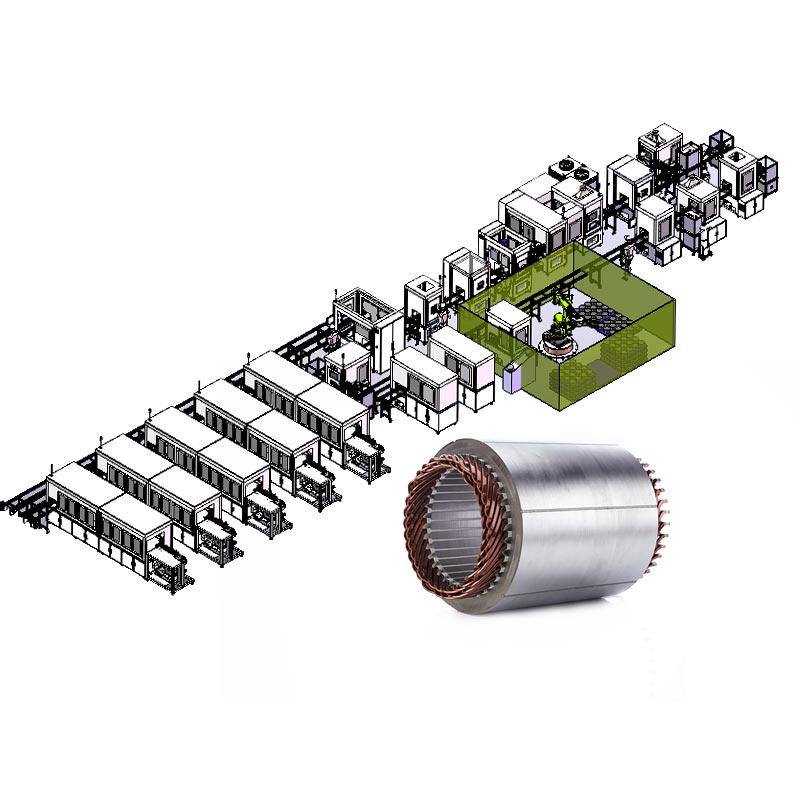
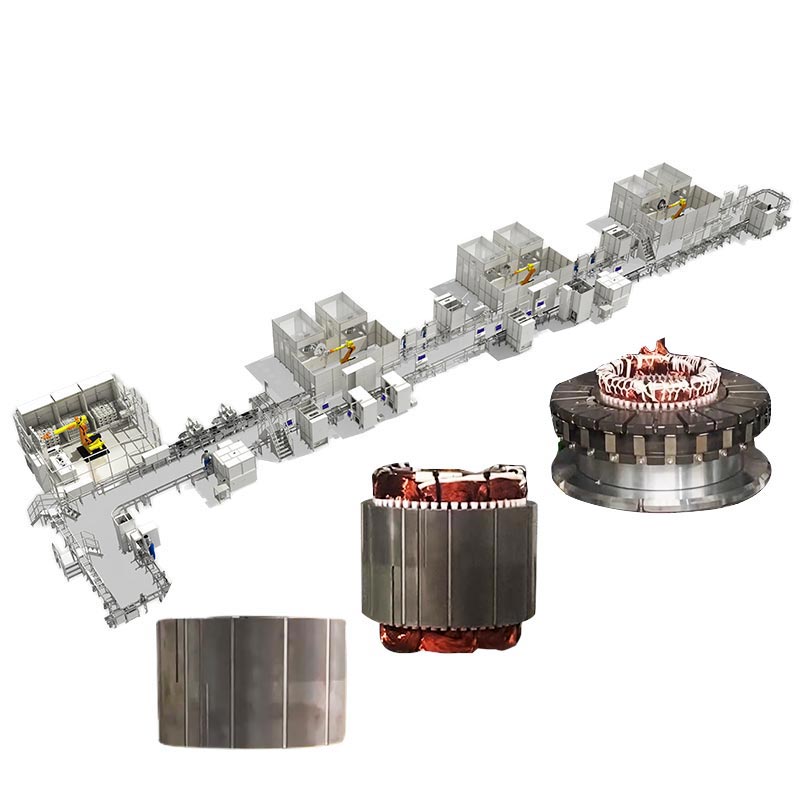
Yes. We provide stand-alone inserting cells as well as integrated turnkey stator production lines. A typical turnkey setup connects automated slot insulation paper inserting, multi-spindle coil winding, simultaneous coil and wedge inserting, intermediate forming, CNC double-sided coil lacing, final forming, and automated 5-in-1 end-of-line electrical testing (hipot, surge, IR, resistance, and rotation direction).