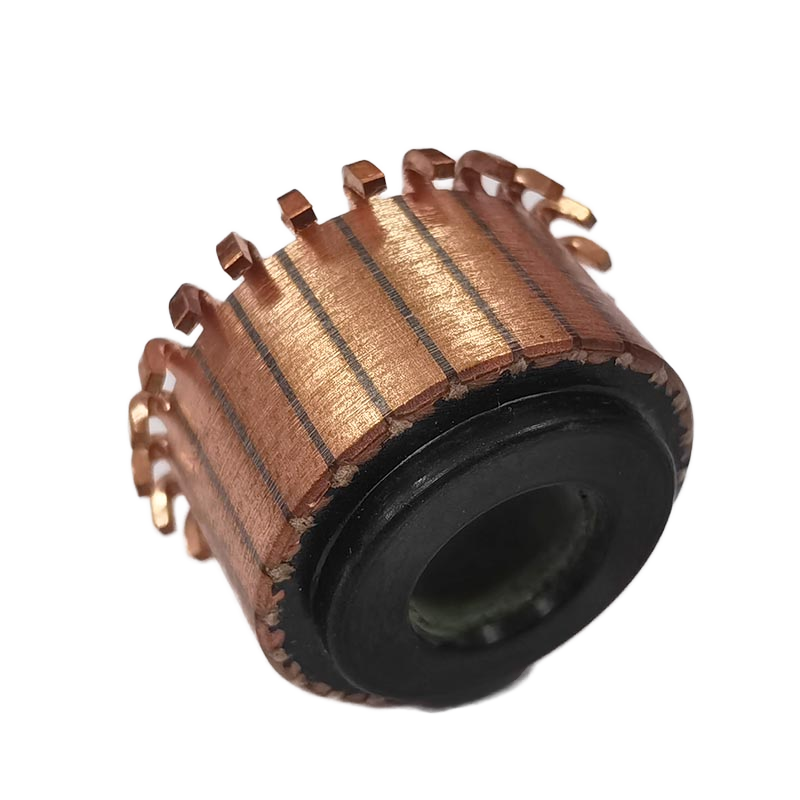
NIDE 24-Segments Hook Commutator (NDPJ-HXQ-640A)
High-speed copper commutator (8.4*25*16mm) built for universal DC motor fan rotors, angle grinders, and industrial cutters requiring extreme centrifugal stability.
Direct supply of precision-matched armature accessories, dynamic rotor sub-assemblies, and specialized stator inserting and winding cells engineered to meet rigorous ISO 1940 G1.0/G2.5 balance grades.
High-speed copper commutator (8.4*25*16mm) built for universal DC motor fan rotors, angle grinders, and industrial cutters requiring extreme centrifugal stability.
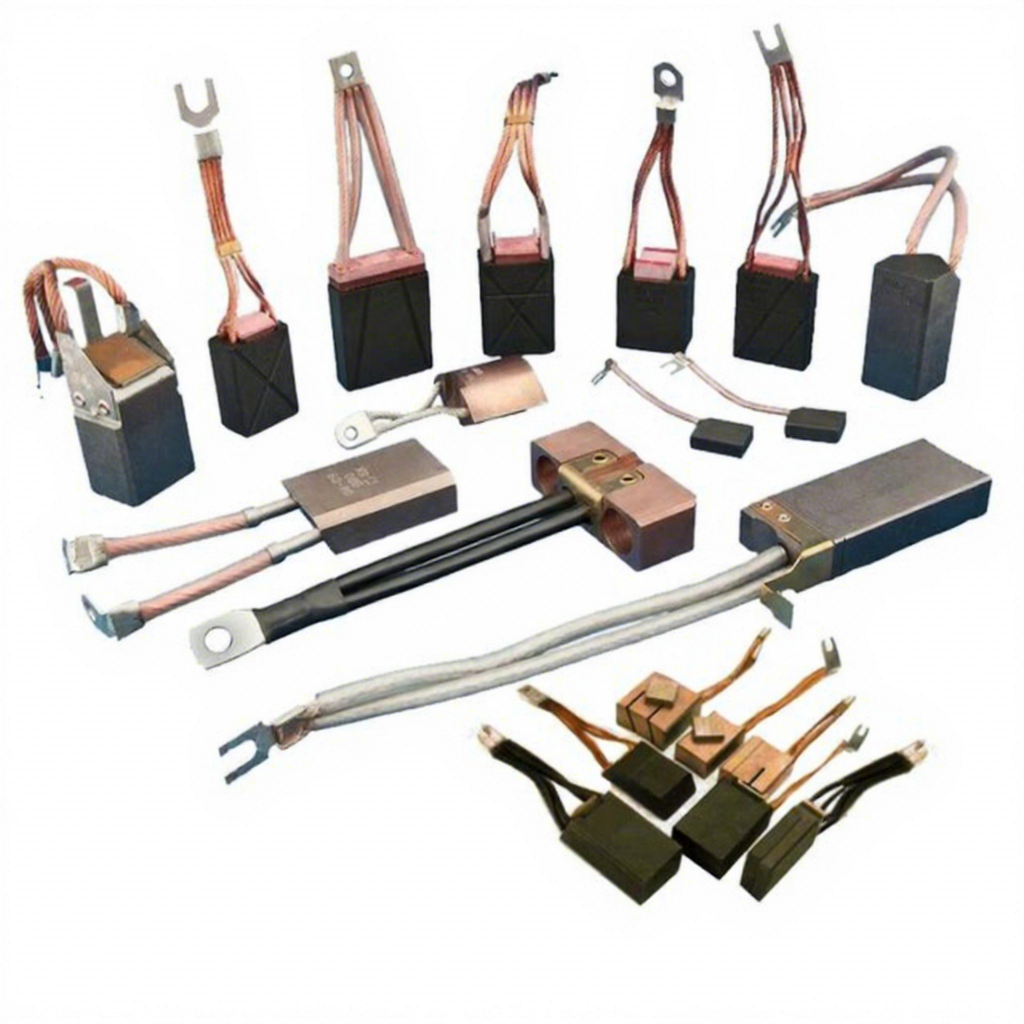
CE-certified 80-120V AC starter motor and automotive alternator brush assemblies delivering low-loss brush contact resistance and 3-year performance reliability.
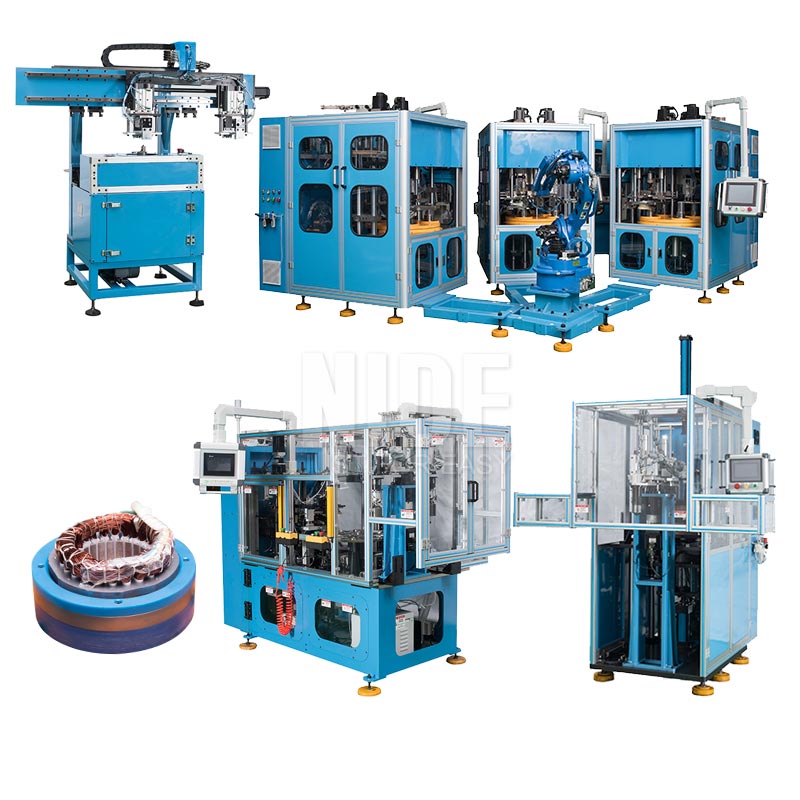
Small-scale, non-standard induction motor stator manufacturing line integrated with core PLC systems for flexible industrial pump and fan rotor production setups.
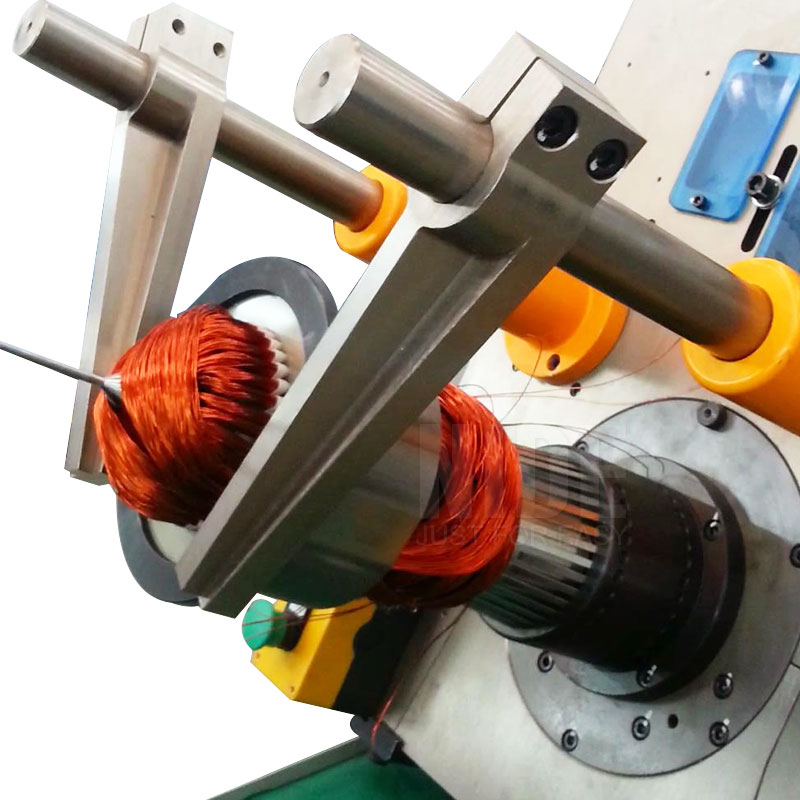
Semi-automatic coil inserting machine utilizing precision tooling arrays and PLC control for uniform slot-wedge and wire insertion with zero wire-enamel abrasion.
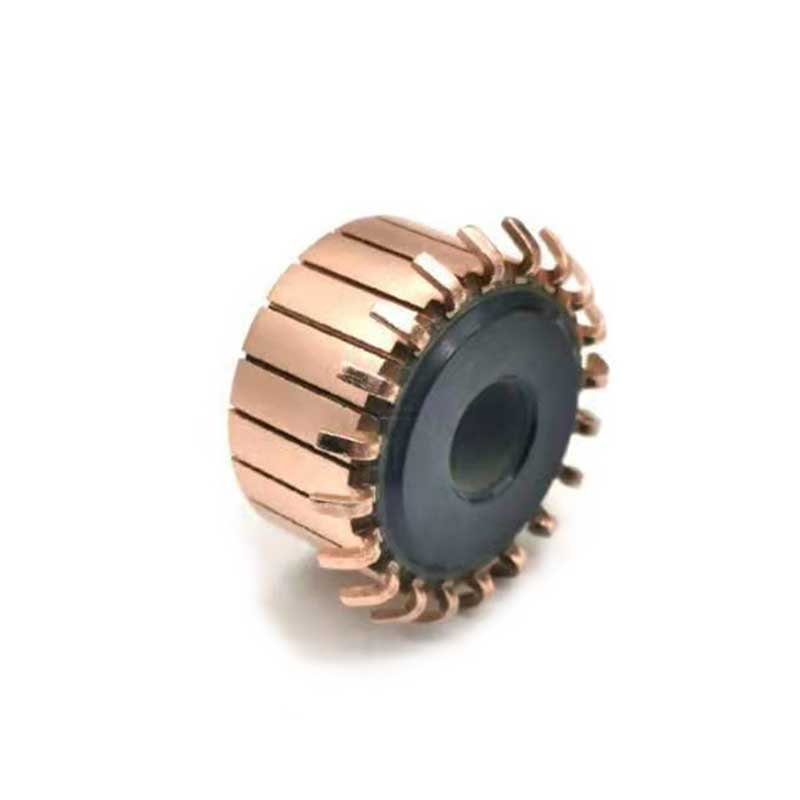
Customized pure copper hook commutator engineered for universal-fit automotive cooling fan armatures subjected to rapid temperature cycling and continuous RPM.
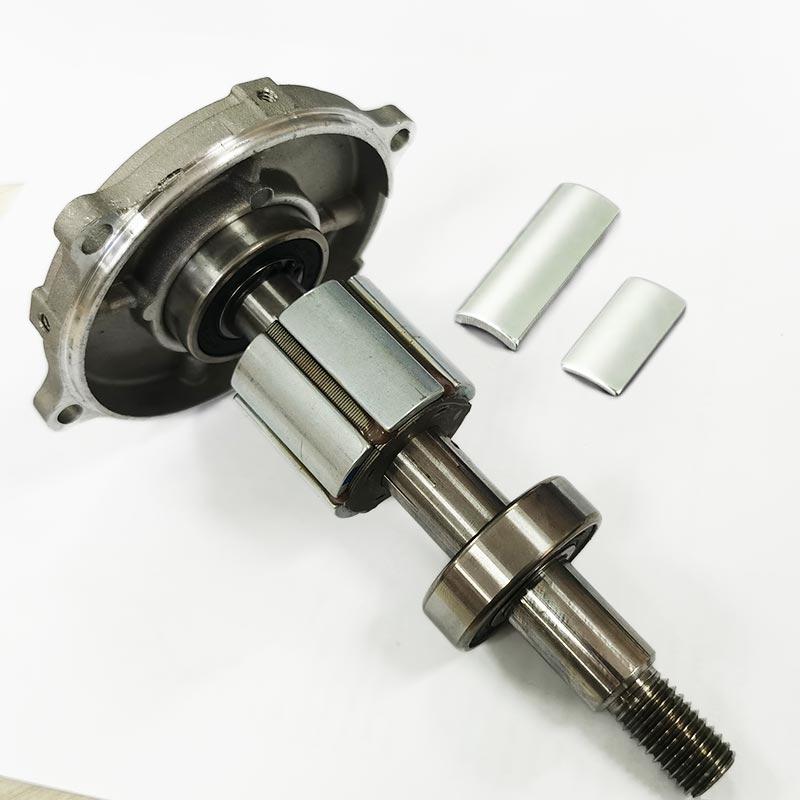
Ultra-high remanence N52 permanent magnets designed for BLDC electric vehicle hub rotors and high-efficiency PMSM drives (NIDE Model NDPJ-CW-62 3).
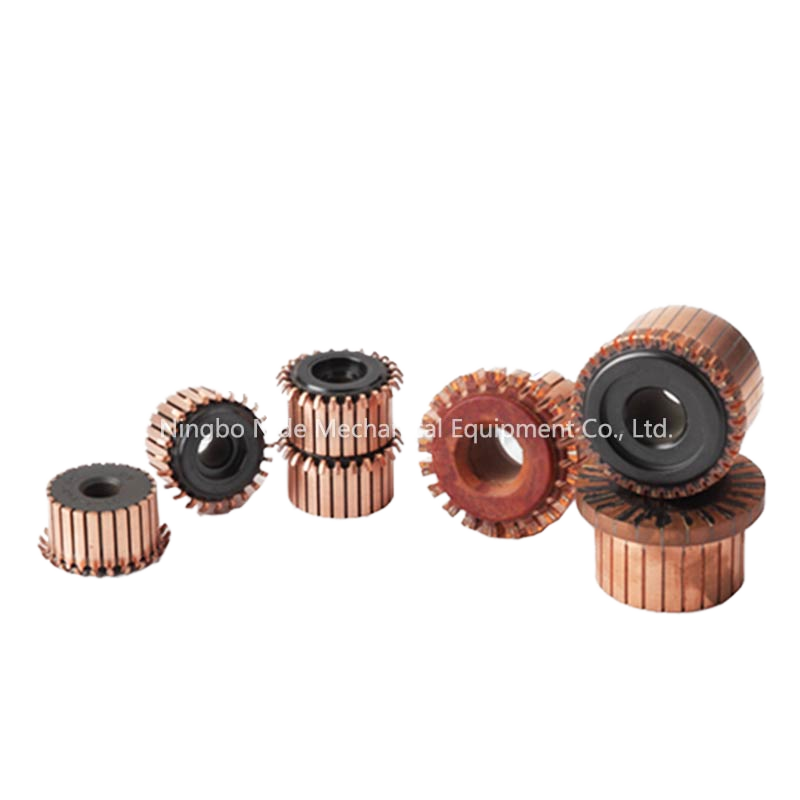
High-precision collector slip ring and commutator assembly with integrated rotor fan balance flange, CE certified for micro-traction and industrial servomotors.
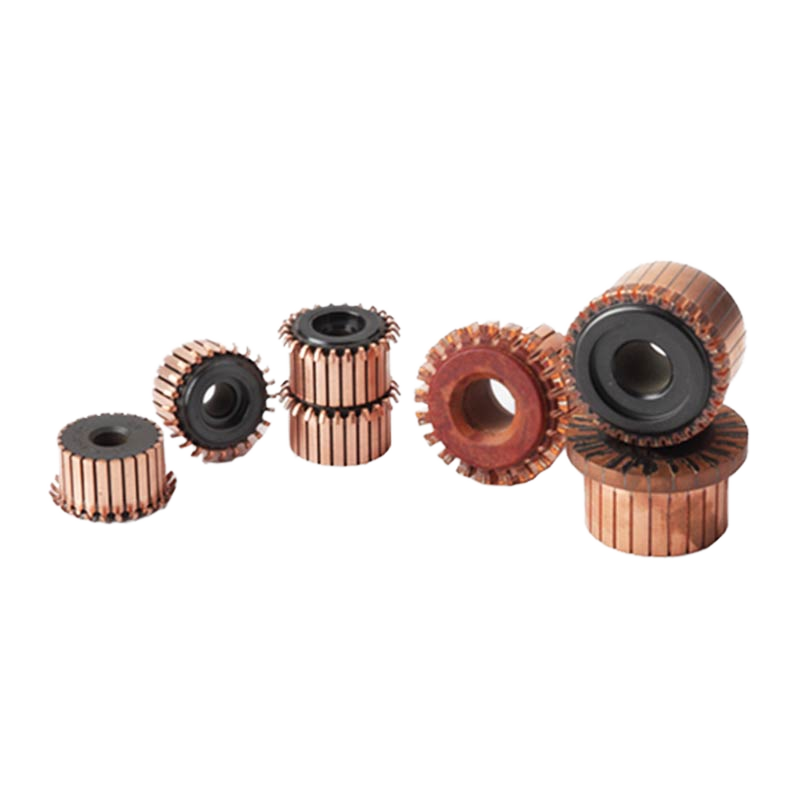
24-segment starter rotor hook-type commutator for heavy-duty DC power tools, grinders, and automotive micro-starters manufactured with superior mica dielectric insulation.
A comprehensive examination of dynamic unbalance mitigation, ISO 21940 compliance, and automated de-weighting methodologies engineered to eliminate rotor harmonic resonance in high-throughput assembly lines.
In modern high-speed electric motors—ranging from 2,800 RPM induction pumps in Binh Duong to 35,000 RPM angle grinder armatures assembled in Bac Ninh—centrifugal force acts exponentially as unbalance rotates around the rotor's principal inertia axis. Centrifugal force follows the physical law F = m · r · ω², where even a minute residual eccentricity (μm) produces immense cyclical stress upon ball bearing races, triggering premature mechanical fatigue, structural chatter, acoustic dB(A) non-compliance, and catastrophic dielectric insulation rupture.
Industrial rotor unbalance is categorized into three physical states:
High-rigidity hard-bearing supports with quartz crystal transducers resolving unbalance mass down to 0.1 mg.
Automated servo-controlled V-cutter or plunge milling calculating precise angle and depth of material removal.
High-resolution rotary encoders tracking angular rotor coordinates to within ±0.2° for zero correction scatter.
Digital signal processing running Fast Fourier Transforms to eliminate shop-floor mechanical noise and line harmonics.
Our automated rotor balancing lines integrate closed-loop measurement-and-correction stations. Depending on rotor lamination geometry and thermal tolerance, Vietnamese OEMs can implement two core balancing approaches:
1. Subtractive De-Weighting (Automated Milling / Drilling): The industry benchmark for wound armatures, automotive alternators, and induction squirrel-cage rotors. Utilizing dual-axis servo milling heads, the machine removes copper or lamination iron directly from non-critical zones, such as rotor tooth tips or specialized balance rings, eliminating secondary bonding agents that could dislodge under intense thermal loads.
2. Additive Correction (Epoxy / Brass Riveting): Preferred for micro-BLDC rotors, sealed can rotors, or encapsulated outer-runner wheel hub motors where milling would compromise electromagnetic flux pathways or puncture hermetic water-resistant coatings. Precision volumetric dispensers apply UV-curing or two-component balancing adhesives with microgram repeatability.
From the industrial corridors of Bac Ninh and Hai Phong to the heavy-manufacturing hubs of Binh Duong and Dong Nai, our balancing automation integrates directly into local manufacturing workflows.
Target Locations: Hai Phong (Dinh Vu-Cat Hai), Hung Yen, Vinh Phuc.
Serving Vietnam's rapid transition toward electrified personal transport (VinFast, Dat Bike, and international Tier-1 suppliers). Outer-rotor BLDC hub motors and mid-drive IPM rotors require rigorous dual-plane dynamic balancing to mitigate wheel-rim vibration, extend bearing life over uneven road terrain, and preserve Hall sensor alignment.
Target Locations: Bac Ninh (VSIP, Yen Phong), Bac Giang, Hai Duong.
High-volume assembly of universal motor armatures for circular saws, hammer drills, and angle grinders. Operating at up to 35,000 RPM, residual unbalance must be held to ISO G1.0 to prevent tool housing heat build-up and operator wrist fatigue during extended industrial usage.
Target Locations: Binh Duong (My Phuoc, VSIP), Dong Nai (Amata, Bien Hoa), Long An.
Continuous-duty three-phase induction squirrel cage rotors driving irrigation pumps, aerators for aquaculture in the Mekong Delta, and industrial factory chillers. Robust balancing suppresses 50Hz line harmonic resonances and minimizes shaft deflection across long continuous operational seasons.
Target Locations: Dong Nai, Binh Duong, Ho Chi Minh City Industrial Parks.
Hermetic compressor motors, ceiling fan rotors, and inverter air conditioner blowers. With consumer demand focused on silent acoustics (sound pressure < 38 dB), dynamic unbalance correction directly eliminates structural hum and cyclical motor cabinet rattling.
Target Locations: Hanoi, Ha Nam, Quang Ninh.
Cooling fan motors, windshield wiper actuators, power seat drives, and EPS (Electric Power Steering) brushless rotors. High component cleanliness, zero metallic swarf contamination during milling, and strict automotive traceability standards (PPAP / IATF 16949 compliance).
Target Locations: Saigon Hi-Tech Park (HCMC), Da Nang Hi-Tech Park.
Specialized micro-rotors operating between 40,000 and 80,000 RPM. Extreme sensitivity to air turbulence and journal runout requires specialized aerostatic or magnetic bearing suspension balancing instrumentation and micro-laser ablation balance trimming.
How global supply chain relocations, energy efficiency mandates, and smart factory initiatives are reshaping balancing equipment procurement across Vietnam.
With multinational motor manufacturers diversifying operations into Vietnam ("China + 1"), Tier-1 suppliers are replacing manual benchtop balancing rigs with automated, inline balancing cells. Foreign direct investment from Japan, South Korea, Taiwan, and Europe demands that Vietnamese production subsidiaries maintain identical Cp/Cpk process capabilities and verifiable cycle times matching parent plants.
Vietnam represents Southeast Asia's fastest-growing electric two-wheeler market, catalyzed by government urban emissions policies and domestic leaders like VinFast. This transition demands high-volume, automated outer-rotor and hub motor manufacturing lines capable of rapid rotor-stack changeovers, zero-magnetic-distortion balancing, and integrated end-of-line electrical testing.
Vietnam's Decision No. 04/2017/QD-TTg has phased out low-efficiency electric motors, mandating Minimum Energy Performance Standards (MEPS) equivalent to IEC 60034-30-1 IE3 and IE4 standards. Reducing parasitic mechanical friction losses caused by rotor vibration is the single most cost-effective mechanical intervention to meet these strict efficiency benchmarks.
Decades of electrical engineering excellence in Ningbo, combining machine tool rigidity, proprietary measurement algorithms, and end-to-end component manufacturing.
Every balancing line, milling head, and servo transport mechanism is built under certified quality management protocols, backed by onsite verification and factory run-off trials.
We supply more than isolated balancing units. We deliver complete turnkey production architectures: shaft pressing, insulation inserting, coil winding, fusing, varnishing, and balancing.
As an integrated motor hardware ecosystem, we produce commutators, carbon brushes, N52 magnets, insulation laminations, and bearings tailored to your rotor shaft tolerances.
Over 13 years of machinery exporting experience backed by localized Southeast Asian technical service partners for on-site commissioning, FAT/SAT trials, and rapid spare tooling.
Comprehensive answers addressing customs clearance, Form E tariff preferences, technical commissioning, and operational maintenance for Vietnamese engineering teams.
Connect directly with our senior application engineers to evaluate your rotor drawings, balance tolerances, cycle time objectives, and factory floor layout.
Contact Us