Engineering Overview: Modernizing Power Tool Motor Manufacturing in Bulgaria
The industrial landscape in the Republic of Bulgaria has undergone a major modernization wave. With its historic heritage in electromechanical fabrication dating back to industrial clusters in Lovech, Gabrovo, Plovdiv, and Sofia, the Bulgarian machine-building and mechatronics sector has repositioned itself as a primary manufacturing nexus for the broader European Union. Today, international original equipment manufacturers (OEMs) and domestic contract manufacturers producing industrial power tools—such as rotary hammer drills, angle grinders, circular saws, cordless impact drivers, and lawn & garden equipment—are transitioning rapidly toward high-efficiency brushless DC (BLDC) motor platforms and next-generation universal motor architectures.
This technical transition demands manufacturing machinery with tighter mechanical tolerances, higher slot-fill ratios, and fully automated, error-proofed (Poka-Yoke) assembly flows. Ningbo Nakro Intelligent Equipment Co., Ltd. (alongside NIDE brand technology) delivers comprehensive manufacturing systems engineered to bridge this gap. Our automated motor production lines handle every stage of rotor armature and stator core processing, ensuring Bulgarian factories fulfill stringent European eco-design guidelines, Machinery Directive 2006/42/EC safety standards, and low-voltage electrical compliance.
Engineering Whitepaper Insight: Power tool motors operate under demanding operational profiles: high transient overloads, rotational speeds frequently exceeding 25,000 to 35,000 RPM, vibration, and thermal cycling. Stator slot insulation integrity, precision flyer winding tension, hot-staking commutator fusing, and dynamic rotor balancing are critical to avoiding premature field failures.
Technical Architecture of Complete Universal Armature Production Lines
For high-demand, corded professional power tools such as heavy hammer drills, marble cutters, and industrial angle grinders, universal series-wound motors remain indispensable due to their outstanding starting torque-to-weight ratio. Nakro builds fully automated, linked armature assembly lines configured around modular, servo-driven stations:
01
Shaft & Core Press-Fit
Multi-ton servo-electric press fitting motor shafts into pre-stacked silicon steel laminations with real-time displacement and force-curve monitoring.
02
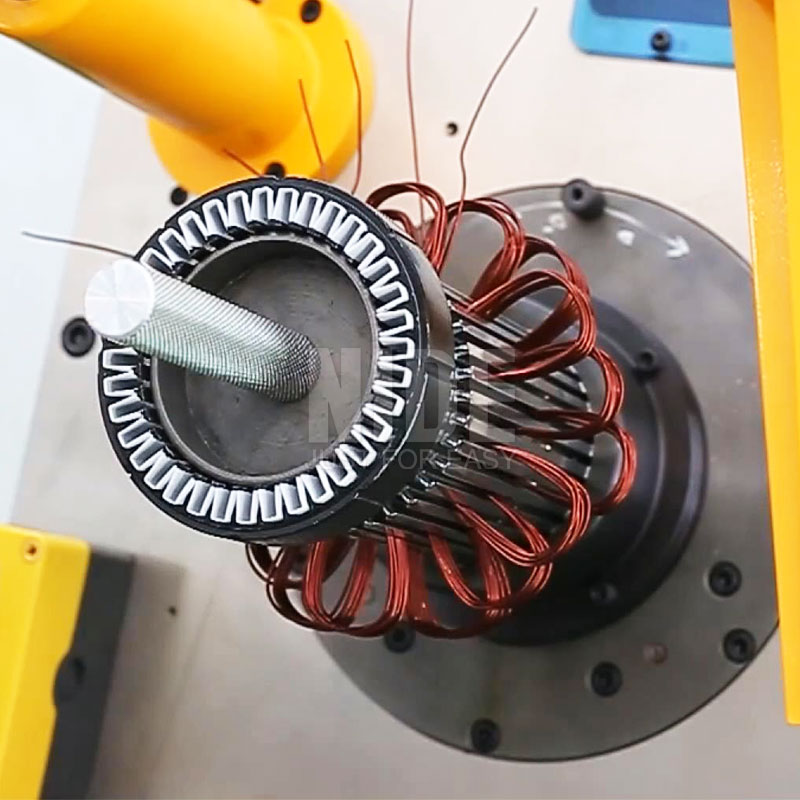
Insulation & Winding
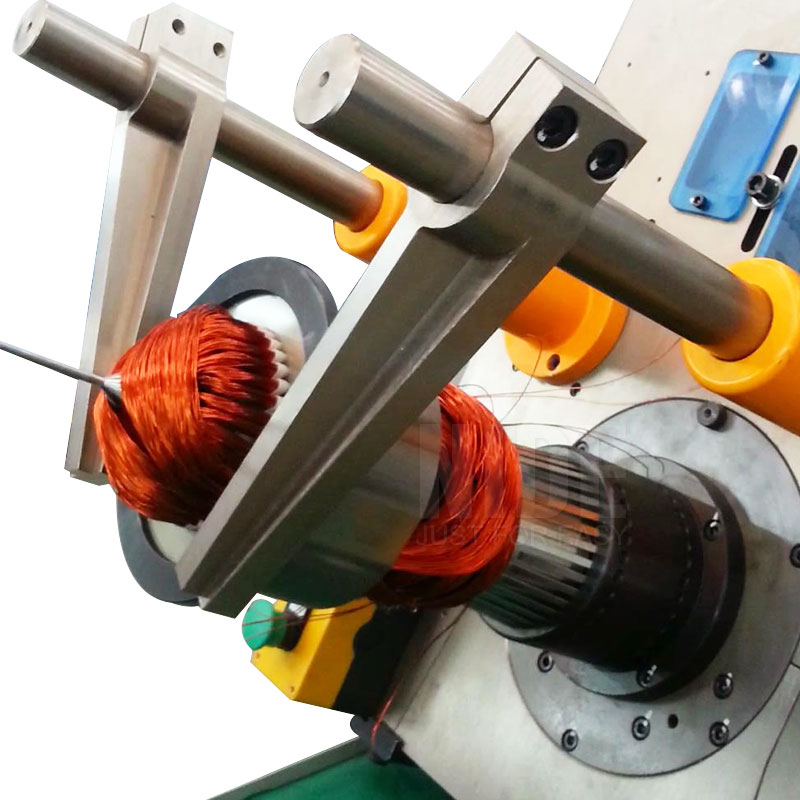
High-speed slot paper insulation inserting followed by dual-flyer servo winding, keeping copper wire tension strictly within ±2% tolerances.
03
Hot Staking Fusing
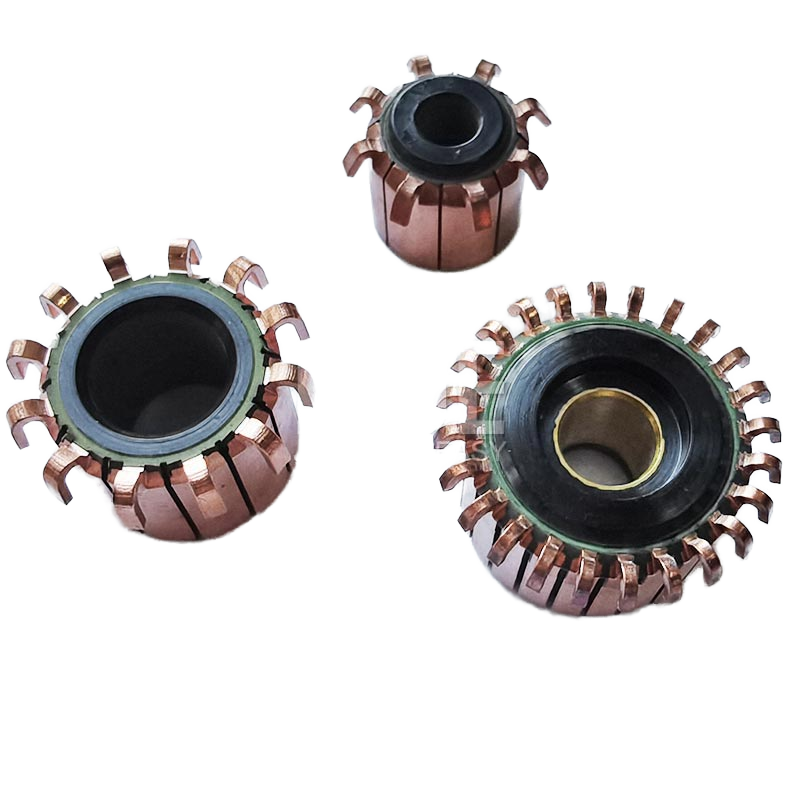
Microprocessor-controlled resistance welding fusing wire leads directly onto copper commutator hooks, with active electrode displacement feedback.
04
Balancing & Testing
Automated two-plane dynamic milling balancing, followed by surge, hipot (dielectric), and bar-to-bar micro-ohm commutator resistance validation.
Each station features independent Siemens or Mitsubishi PLC controllers with human-machine interface (HMI) screens displaying cycle diagnostics, tooling wear alerts, and statistical process control (SPC) data for inline quality assurance.
Brushless DC (BLDC) Motor Automation for Cordless Tools
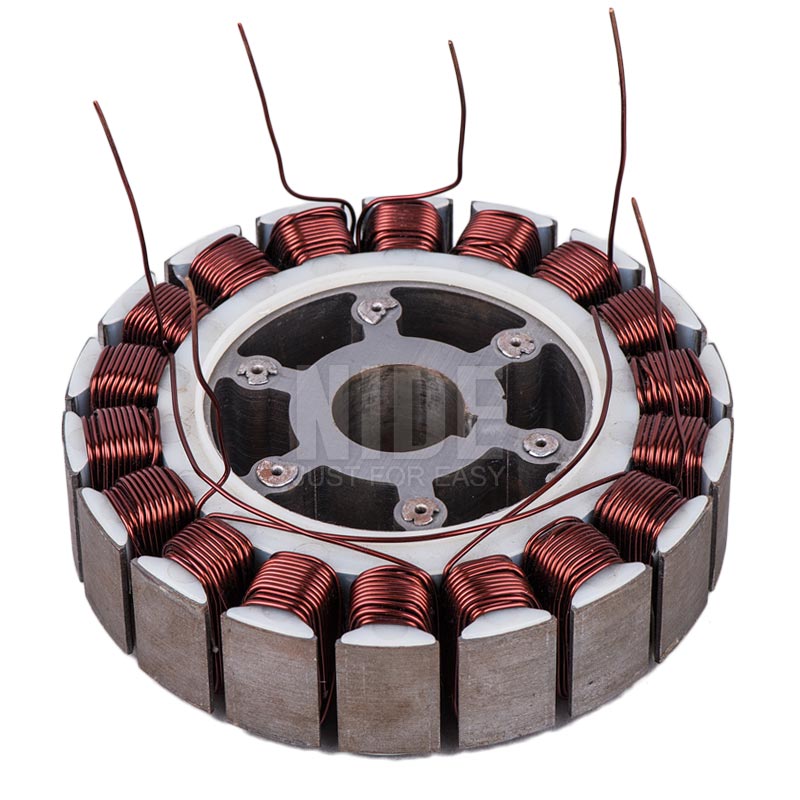
Cordless power tools operating on 18V, 20V Max, and 40V lithium-ion battery platforms have transformed contractor and consumer markets across Europe. In response, Bulgarian electric motor producers are establishing dedicated production lines for slotless and slotted BLDC stators and permanent-magnet rotors. Nakro addresses this with multi-axis CNC needle-winding technology and outer-rotor winding machinery.
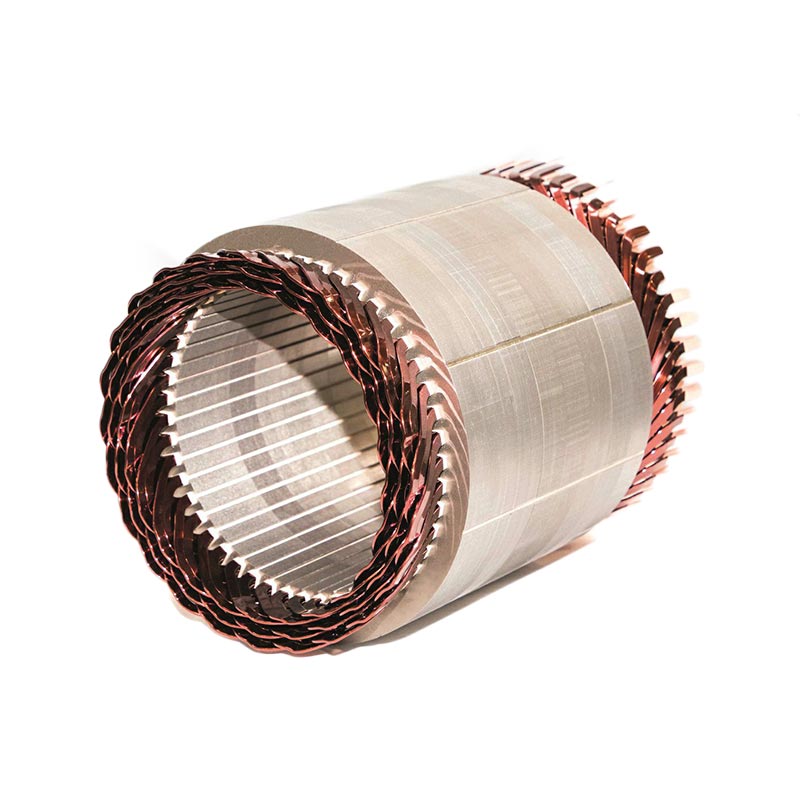
Unlike conventional flyer winding, our needle-winding machines guide the enameled copper wire directly through narrow slot openings with programmable trajectory controls. This process enables high slot fill factors (>60%), minimizing copper resistance and reducing heat generation during high-torque power tool operation. Integrated end-turn forming and automated plastic terminal fusing ensure the resulting stator bundles fit into compact cordless tool housing enclosures.
Strategic Trends Driving Motor Production Automation in Bulgaria
As nearshoring trends accelerate across the European Union, European enterprises seek supply chains closer to continental borders to protect against logistical disruptions. Bulgaria offers an optimal balance: competitive operational costs, an educated technical workforce, a stable currency pegged to the Euro, and full integration within the EU Single Market. However, manual or outdated semi-manual motor assembly lines face distinct economic hurdles:
1. Surging Adoption of Lithium-Ion Cordless Platforms
The global shift from corded electrical tools to cordless Li-Ion battery power requires a parallel pivot from standard brushed universal motors to brushless DC motors. BLDC motors offer 20-30% higher electrical efficiency, zero brush maintenance, and compact physical dimensions. For manufacturing plants in Bulgaria, staying competitive demands automated needle-winding machinery capable of handling multiple wire strands simultaneously without scratching the insulating enamel coating.
2. Tightened EU Ecodesign Directives & Traceability
EU Ecodesign requirements increasingly penalize poor electrical efficiency and excessive harmonic distortion. Power tool motors produced for export to Germany, France, Italy, or Scandinavia must pass stringent thermal and acoustic benchmarks. High-precision automated winding systems eliminate operator variation in coil turn count, reduce phase resistance imbalances, and minimize partial discharge risks through uniform wire packing.
3. Transition to Automated Trickle Impregnation & UV Varnishing
Traditional dip-and-bake varnishing tanks present environmental and VOC concerns under EU chemical regulations, while failing to guarantee penetration deep into high-speed rotor slots. Nakro's automated trickle varnishing and induction heating equipment accurately doses resin directly into armature winding end-turns. The resin flows through capillary action, locking conductors firmly against centrifugal forces up to 40,000 RPM, preventing abrasive dust and moisture ingress.
| Equipment Specification |
Nakro Universal Armature Line |
Nakro BLDC Stator Line |
Conventional Legacy Systems |
| Cycle Time / Unit |
12 – 18 seconds |
22 – 35 seconds |
45 – 70 seconds |
| Winding Tension Stability |
Closed-loop Servo (±1.5%) |
Magnetic / Servo (±2.0%) |
Mechanical Friction (±10%) |
| Commutator Fusing Method |
Pneumatic / Servo Micro-Inverter |
Laser / High-Frequency Fusing |
Manual Soldering / Torch |
| Dynamic Balancing Tolerance |
ISO 1940 Grade G1.0 / G2.5 |
Integrated Pre-balanced Core |
G6.3 (High residual vibration) |
| Traceability & Connectivity |
Ethernet/IP, Modbus, OPC-UA |
MES-ready Barcode / RFID |
Isolated Station Counters |
By implementing these technical capabilities, Bulgarian factories can comfortably achieve high first-pass yield (FPY > 99.2%) and lower unit production costs compared to non-automated competitors.
Why Bulgarian Manufacturers Choose Nakro Intelligent Equipment
With an established presence across Eastern Europe and the European Union, Ningbo Nakro Intelligent Equipment Co., Ltd. (supported by our NIDE brand component division) delivers more than just standalone machinery. We provide integrated manufacturing solutions backed by over a decade of verified export experience.
ISO 9001 Certified System
Every winder, inserting head, and fusing module is engineered under strict ISO 9001 quality management guidelines, incorporating premium Schneider, Omron, SMC, and Mitsubishi core components.
One-Stop Component Sourcing
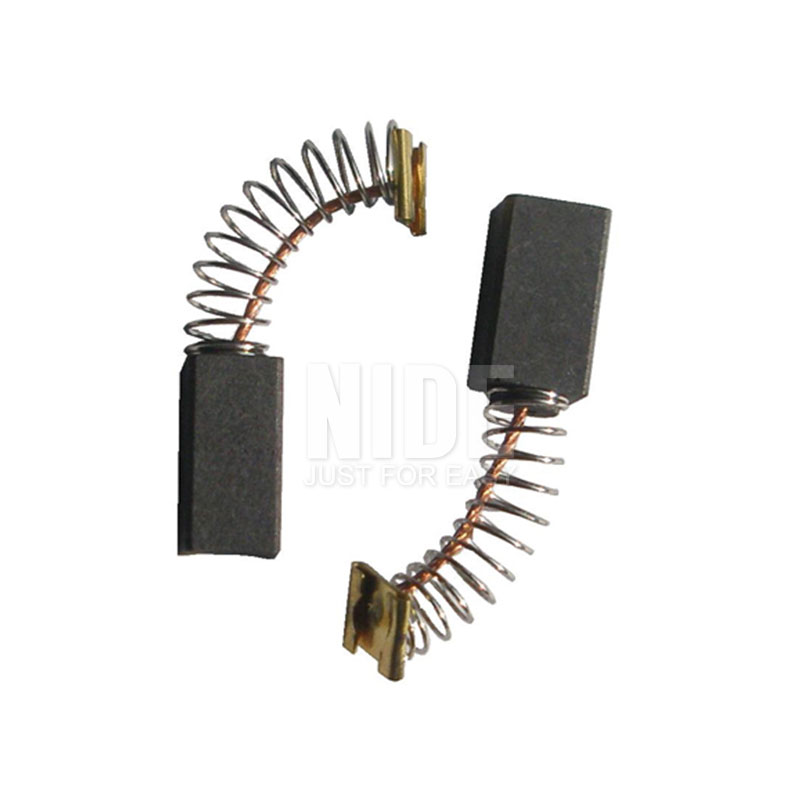
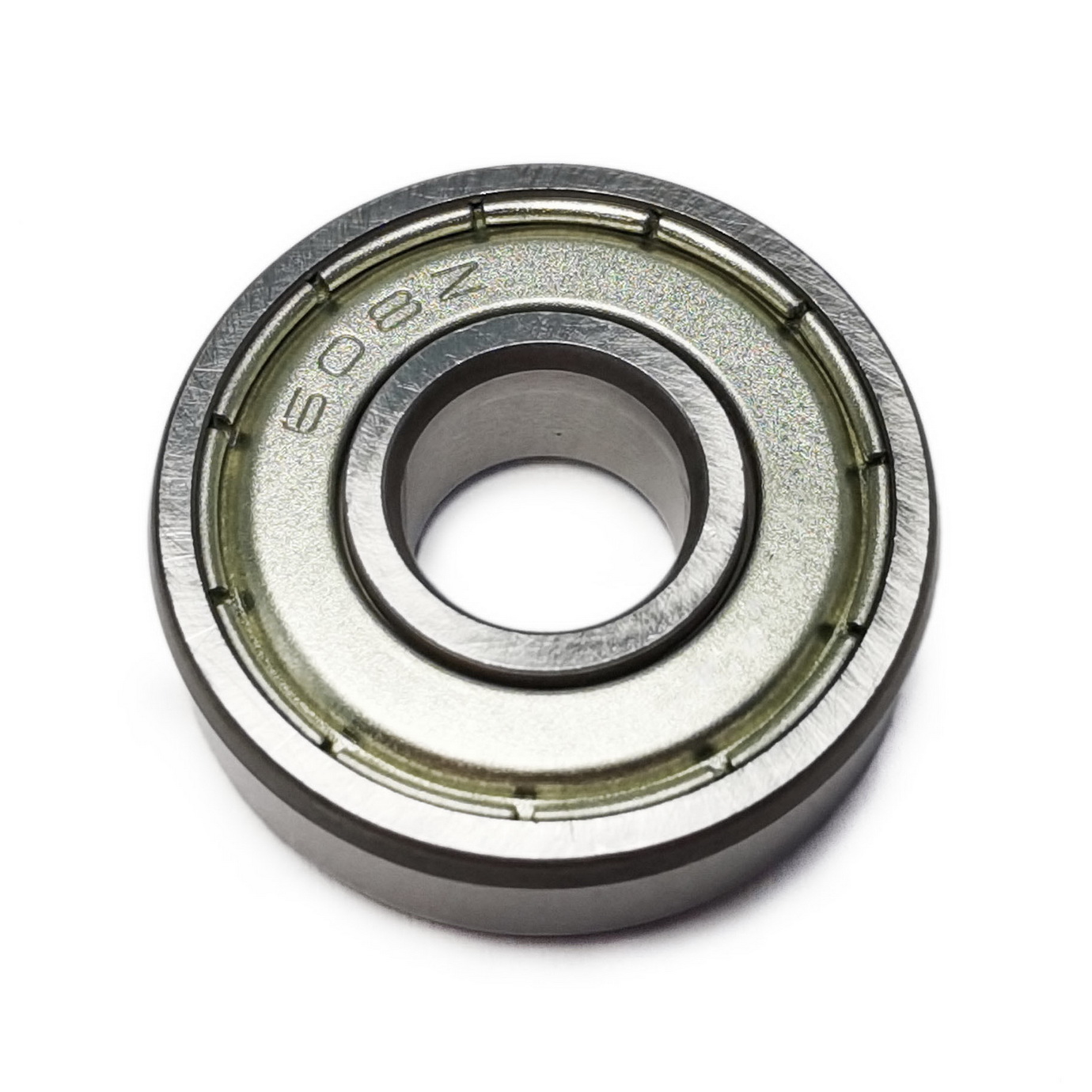
Clients can simultaneously source matching precision commutators, carbon brushes, 608ZZ high-RPM bearings, shafts, end-brackets, and insulating papers directly alongside production tooling.
European Service Delivery
Experienced technical field engineers provide remote commissioning, comprehensive FAT/SAT trial runs with customer steel and wire, rapid spare-part shipping, and localized technical training.
Are your motor manufacturing lines compliant with European CE and Safety Directives?
Yes. All machinery shipped to Bulgaria and the EU conforms strictly to the European Machinery Directive 2006/42/EC, Low Voltage Directive 2014/35/EU, and Electromagnetic Compatibility (EMC) Directive 2014/30/EU. Equipment is fitted with dual-circuit safety interlocks, Pilz or Schneider safety relays, optical infrared light curtains at operator loading zones, sound-dampening acoustic enclosures, and complete bilingual (English/Bulgarian) warning plaques and operating documentation.
What are typical shipping lead times and port logistics from Ningbo to Bulgaria?
We arrange seaworthy ocean freight loading from Ningbo Port (CNNGB) directly to the Port of Varna or Port of Burgas in Bulgaria, with transit times averaging 28 to 35 calendar days. Alternatively, multimodal routing through Piraeus (Greece) with bonded overland truck delivery directly to Plovdiv, Sofia, or Ruse is readily available. All equipment is vacuum-sealed with desiccants inside heavy-duty fumigated wooden crates (ISPM 15 compliant) to prevent maritime humidity and corrosion.
Can our plant conduct a Factory Acceptance Test (FAT) using our own laminations and wire?
Yes, we recommend this. Prior to dispatch, Bulgarian clients can ship batch samples of their specific motor shafts, silicon steel laminations, commutators, and enameled copper wire to our Ningbo facility. We perform continuous multi-hour pilot run-offs to verify cycle times, winding resistance tolerances, fusing strength, and dynamic unbalance limits. The entire FAT process is documented through high-definition video records and dimensional measurement reports for client sign-off before crate closing.
How do you support tooling changeover between different power tool motor models?
Our armature winding and coil insertion stations feature quick-change modular tooling systems. Changing between different rotor stack heights, armature diameters, or stator core sizes typically requires less than 20 to 30 minutes. The operator selects the pre-stored motor recipe on the PLC touchscreen, adjusts the servo-indexed stack height stops, and swaps the quick-release winding flyers or inserting blades without requiring complex mechanical realignments.
What payment currencies and trade terms do you accommodate for Bulgarian transactions?
We regularly accept Euro (EUR), US Dollars (USD), and Chinese Yuan (CNY). Commercial delivery terms include FOB Ningbo, CFR/CIF Varna or Burgas, and CIP Sofia or Plovdiv according to Incoterms 2020. Payment structures typically follow standard industrial engineering milestones: 30% T/T advance deposit upon drawing sign-off, 60% upon successful video/physical FAT inspection, and the remaining 10% against Bill of Lading (B/L) copy or final site commissioning, with Irrevocable Letters of Credit (L/C at sight) also supported.
Can you supply both production machinery and raw motor component materials?
Yes. Through our integrated NIDE brand supply channels, Bulgarian manufacturers can consolidate procurement by sourcing turnkey production machinery alongside high-precision commutators (hook and groove types), custom 608ZZ bearings, electrographite carbon brushes, insulation slot papers (Nomex/DMD), and balanced motor shafts. Consolidating machinery and component supply ensures 100% mechanical compatibility, avoiding integration disputes between machine builders and parts vendors.