Featured Equipment & Electro-Mechanical Components
Direct factory supply of PLC-automated stator manufacturing cells, dynamic rotor winding stations, and high-spec electro-magnetic materials engineered for demanding Japanese industrial cycles.


Executive Summary: Engineering Induction Motor Stator Lines for the Greater Nagoya Industrial Basin
The Greater Nagoya metropolitan area—spanning Aichi, Gifu, and Mie prefectures within Japan’s historic Chubu industrial heartland—represents the world's most dense concentration of automotive tier-suppliers, precision machine tool builders, industrial pump assemblers, and factory automation pioneers. As the home of globally recognized automotive consortia, Denso supply clusters, and premier robotics integrators, Nagoya demands stator production equipment that goes beyond generic high-speed winding. Equipment entering this market must deliver uncompromising thermal discipline, micro-millimeter dimensional repeatabilities, and rapid cycle times compliant with JIS (Japanese Industrial Standards) and JEMA regulations.
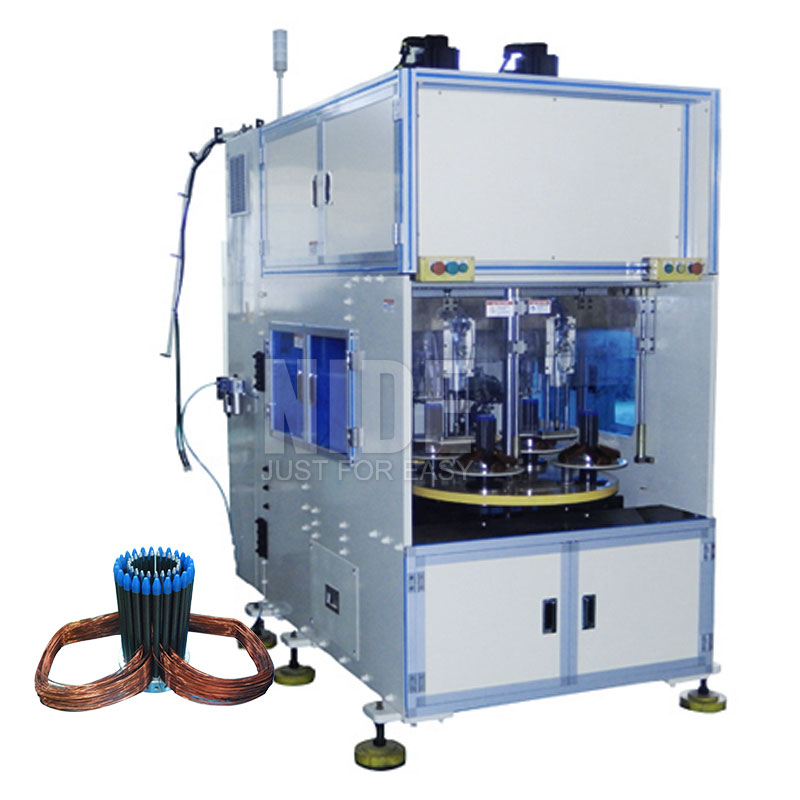
Ningbo Nakro Intelligent Equipment Co., Ltd. (operating advanced engineering units under the specialized NIDE & Nakro manufacturing umbrella) engineers bespoke induction motor stator production lines, stand-alone CNC coil winding systems, and integrated coil-insertion cells tailored specifically to the high-reliability demands of the Nagoya supply chain. By harmonizing heavy-duty structural bed casting, multi-axis servo coordination (supporting Mitsubishi MELSEC iQ-R and Omron Sysmac industrial control frameworks), and rigorous in-line dielectric testing, our production lines bridge the gap between competitive overseas capital expenditure and Japan’s stringent Monozukuri quality expectations.
Whether configuring automated stator fabrication for three-phase premium efficiency (IE3/IE4) industrial pump motors, hermetic refrigeration compressor drives, automotive HVAC blowers, or low-voltage auxiliary drive systems, our turnkey production architectures ensure seamless transition from uninsulated laminated silicon steel stacks to fully varnished, surge-tested, ready-to-assemble stator cores.
Six-Stage Automated Induction Motor Stator Manufacturing Workflow
From cold-rolled non-oriented electrical steel (CRNGO) lamination packs to final HiPot and partial discharge validation, every automated station is synchronized via high-speed industrial fieldbus.
01. Slot Insulation Paper Insertion
High-speed mechanical feeding, cuffing, edge-forming, and cutting of Nomex, DMD, or PET insulation films. Custom profile dies match intricate semi-closed or open stator slot contours with zero edge tearing.
- Cycle speed: 0.35s to 0.5s per slot
- Servo-driven stack height indexing (20–300mm)
- Optical slot-count and misfeed interlocks
02. Multi-Spindle Coil Winding
Flyer and needle-type high-speed winding stations capable of simultaneous multi-strand copper or aluminum magnet wire winding. Electronic closed-loop tensioners eliminate micro-abrasions in polyimide/polyamide-imide enamel coatings.
- Spindle speed up to 3,000 RPM
- Active closed-loop wire tension tracking (±1.5g)
- Transfer tooling for multi-step coil groups
03. Simultaneous Coil & Wedge Insertion
The mechanical linchpin of induction motor manufacturing. High-precision push blades simultaneously guide phase coil windings and pre-cut slot wedges into stator slots without scraping enameled conductors.
- Dual-servo synchronization for wedge & coil stroke
- High slot fill ratio execution (>78% achievable)
- Tungsten carbide coated push teeth for zero wear
04. Intermediate 3D End-Turn Forming
Progressive hydraulic and pneumatic expanding mandrels shape the stator overhang coils outward, ensuring adequate physical clearance for the subsequent insertion of upper coil groups and central rotor installation.
- Internal expanding core + external clamping ring
- Prevents phase-to-phase shorting at coil crossovers
- Precise end-turn axial height restriction
05. Automatic CNC Stator Lacing
Dual-side CNC needle binding stations lace end-turn bundles with high-tensile polyester cord. Supports customizable pitch programs: slot-by-slot lacing, skip lacing, and multi-cross locking configurations.
- High-speed dual-needle simultaneous operation
- Programmable tie-knot tension and cord cutting
- Rotational indexing powered by absolute servo
06. Final Forming & In-Line Diagnostics
Final mechanical calibration of stator end dimensions combined with automated test benches checking DC winding resistance, AC HiPot (dielectric withstand), surge impulse comparison, and insulation resistance.
- 100% automated Pass/Fail pneumatic reject gate
- Surge impulse peak detection up to 5,000V
- EtherNet/IP & CC-Link data upload to plant MES
Localized Application Scenarios in the Aichi Manufacturing Corridor
Deploying robust induction motor production machinery directly into tier-1 and tier-2 supply chains across Nagoya, Toyota City, Kariya, Komaki, and Anjo.
Automotive Auxiliary & Thermal Management Motors
While main traction drives frequently favor PMSM topologies, Nagoya's massive automotive tier cluster relies extensively on three-phase induction and brushless induction architectures for high-durability electric AC compressors, radiator cooling fan assemblies, transmission oil pumps, and power-steering auxiliary drives. Nakro’s coil inserting equipment guarantees that thermal cycling stress does not degrade conductor insulation during continuous 135°C engine compartment operation.
Industrial Machinery & CNC Machine Tool Spindles
Nagoya and neighboring Ogaki are global centers for machine tool builders (Okuma, Brother, DMG Mori supply networks). These machine tools demand specialized induction stators engineered for built-in high-torque motor spindles and dynamic coolant pumps. Nakro lines provide uniform coil insertion into 36-, 48-, and 72-slot heavy iron cores with low harmonic distortion and balanced slot impedance.
Commercial HVAC Compressors & Pumping Systems
With regional manufacturing of heavy centrifugal chillers, industrial refrigeration skids, and agricultural irrigation pumps in Mie and Aichi, manufacturers require induction stators exceeding Japan's Top Runner Energy Efficiency benchmarks. Our production lines maintain pristine phase-to-phase barrier integrity, minimizing partial discharge inception risks under VFD (Variable Frequency Drive) inverter switching harmonics.
Technical Trends Shaping Stator Production Lines in Japan's IE4 / IE5 Transition
1. Strict Compliance with the Revised Top Runner Program & JIS C 4212: Under Japan’s Energy Conservation Act, induction motors deployed in commercial and industrial environments are subject to severe efficiency standards. Moving from IE3 (Premium) to IE4 (Super Premium) induction performance necessitates increasing the net copper mass within restricted stator outer diameters. Nakro addresses this by achieving slot copper fill rates upwards of 78% to 82% through custom-tapered insertion blades and multi-stage intermediate press tooling, drastically reducing Joule heating losses ($I^2R$).
2. Countermeasures Against Inverter-Fed Inrush & Partial Discharge: Modern Japanese industrial plants universally employ high carrier frequency PWM inverters. The rapid $dV/dt$ voltage surges can cause premature dielectric breakdown in standard induction motor stators. Nakro stator manufacturing systems incorporate precision phase-separation insulation inserters and automated slot-wedge folding that guarantee zero mechanical creasing of insulation films, maintaining Class H (180°C) insulation integrity throughout 20,000+ hour operating lifespans.
3. Autonomous Operation to Counter Japan's Demographic Labor Shifts: Facing an aging workforce and shrinking technical labor pools in Japan's manufacturing hubs, plant managers in Nagoya prioritize fully untended “lights-out” operation. Our induction motor stator lines integrate modular linear robot transfer beams, automated basket carousels, and Keyence vision-guided orientation systems that allow single-operator supervisory control across up to four simultaneous stator assembly lines.
Engineering Specification Comparison: Nakro Stator Lines vs. Industry Standard
Quantifiable performance metrics verified through ISO 9001 certified quality testing protocols.
| Performance Parameter | Nakro Automated Stator Line | Conventional Overseas Exporter | Nagoya Industrial Standard (JIS/JEMA) |
|---|---|---|---|
| Stator Outer Diameter Range | Φ40 mm – Φ280 mm (Custom up to Φ500mm) | Φ60 mm – Φ180 mm | Standard IEC / JIS Frame sizes (63 to 225M) |
| Stator Core Lamination Stack Height | 20 mm – 320 mm (Servo Adjustable) | 30 mm – 160 mm (Manual Shims) | Full Frame Match Capability |
| Slot Fill Factor (% Net Copper) | 76% – 82% (High-Density Insertion) | 65% – 72% | ≥75% required for IE4 Top Runner Efficiency |
| Wire Tension Control Resolution | ±1.0 g Closed-loop Magnetic Clutched | ±5.0 g Open-loop Friction Disc | Zero elongation / Enamel scrape tolerance |
| Automation Architecture & Fieldbus | Mitsubishi iQ-R MELSEC / CC-Link IE TSN | Proprietary Board or Generic PLC | Standardized on Mitsubishi / Omron platforms |
| In-Line Dielectric Quality Gate | 100% Surge (5kV), HiPot (3kV), IR & Resistance | Batch Sampling / Manual Bench | Complete Traceability / Barcode Binding |
| Tooling Changeover Duration | ≤ 25 Minutes (Quick-lock modular dies) | 90 – 120 Minutes | Flexible High-Mix Low-Volume (HMLV) Ready |
Why Nagoya Procurement Teams Partner with Ningbo Nakro Intelligent Equipment
Founded in 2010 in Ningbo, Zhejiang—a brief maritime shipping hop from the Port of Nagoya—Ningbo Nakro Intelligent Equipment Co., Ltd. has spent over 14 years refining high-performance motor automation equipment exported to over 50 countries. With a self-owned modern manufacturing campus spanning over 30,000 square meters, our manufacturing floor houses state-of-the-art five-axis machining centers, precision wire EDM stations, and climate-controlled metrology suites dedicated to tooling production.
Turnkey Co-Engineering Capability: We do not simply supply catalog machinery. When quoting projects for Japanese clients, our R&D engineering department accepts raw motor CAD drawings (.STEP / .IGES), CRNGO silicon sheet magnetization curves, and copper conductor specifications. We then simulate slot wedge kinematics, calculate exact needle winding swing envelopes, and machine proprietary inserting blades from premium hardened tool steels (SKD11 / DC53) heat-treated for over 10 million cycles of abrasion-free operation.
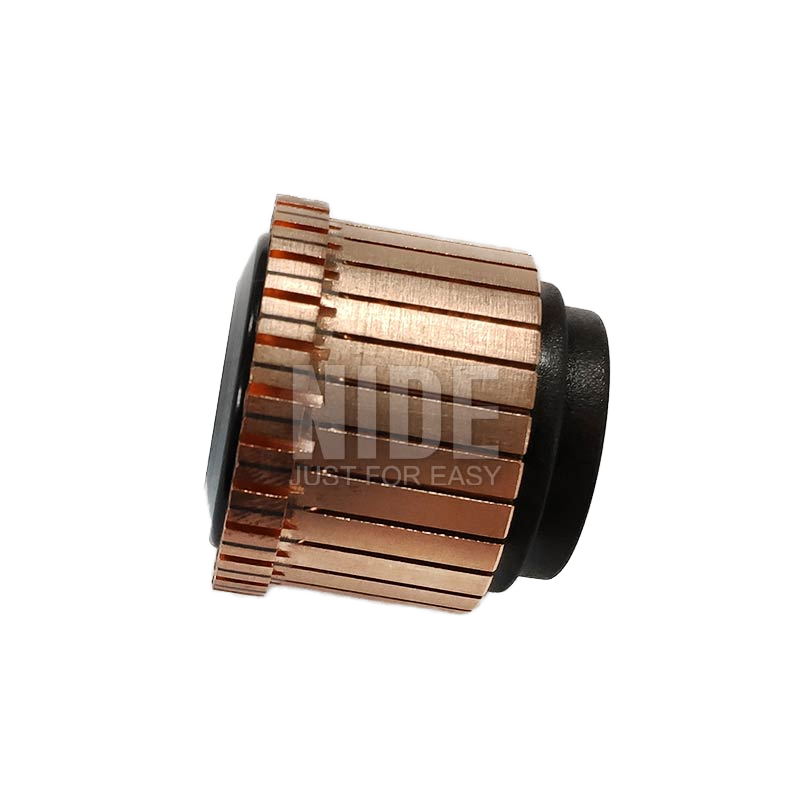
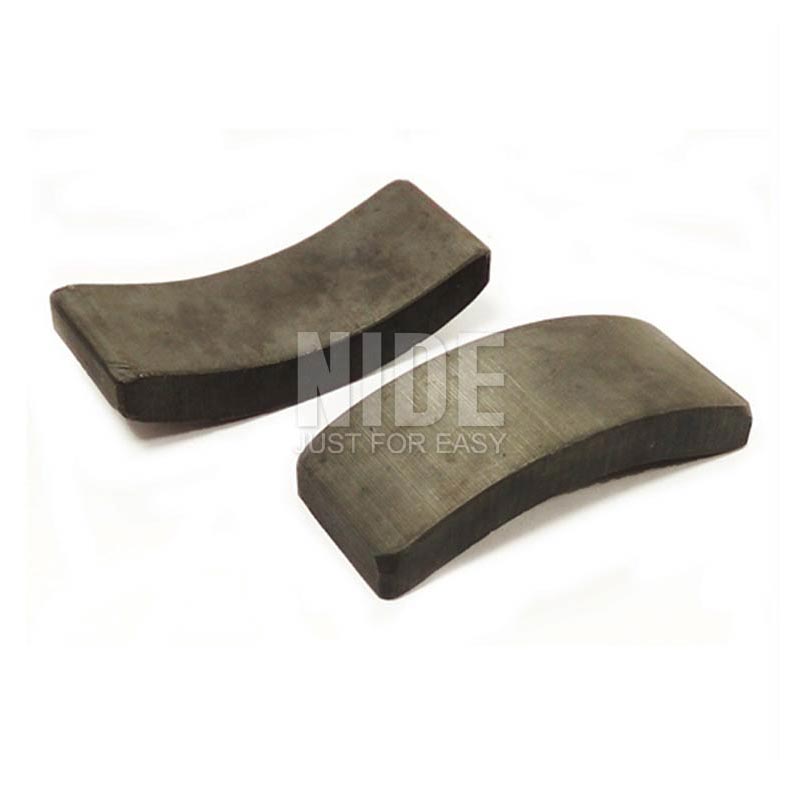
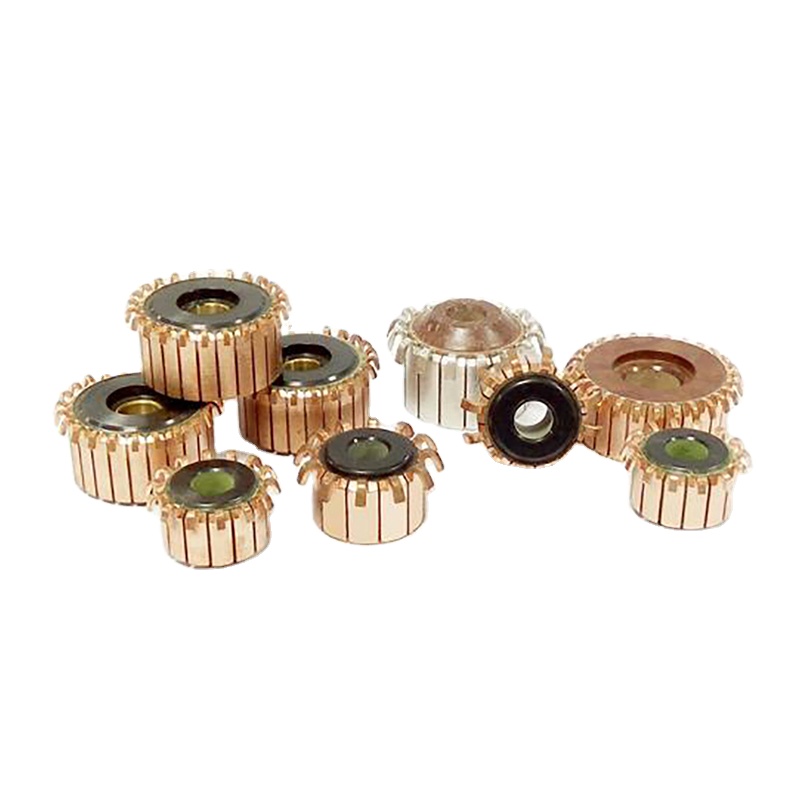
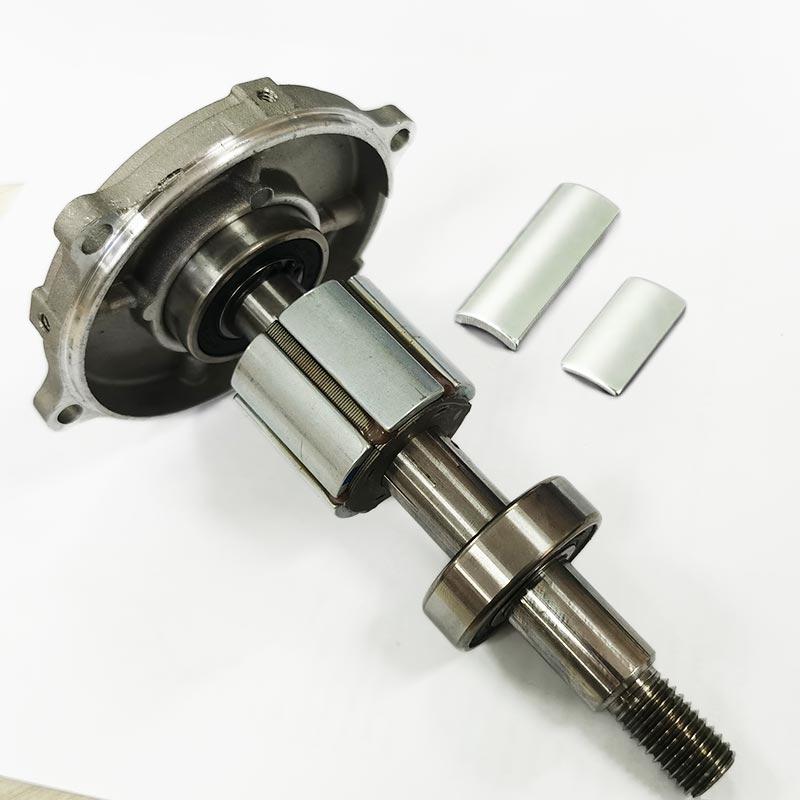
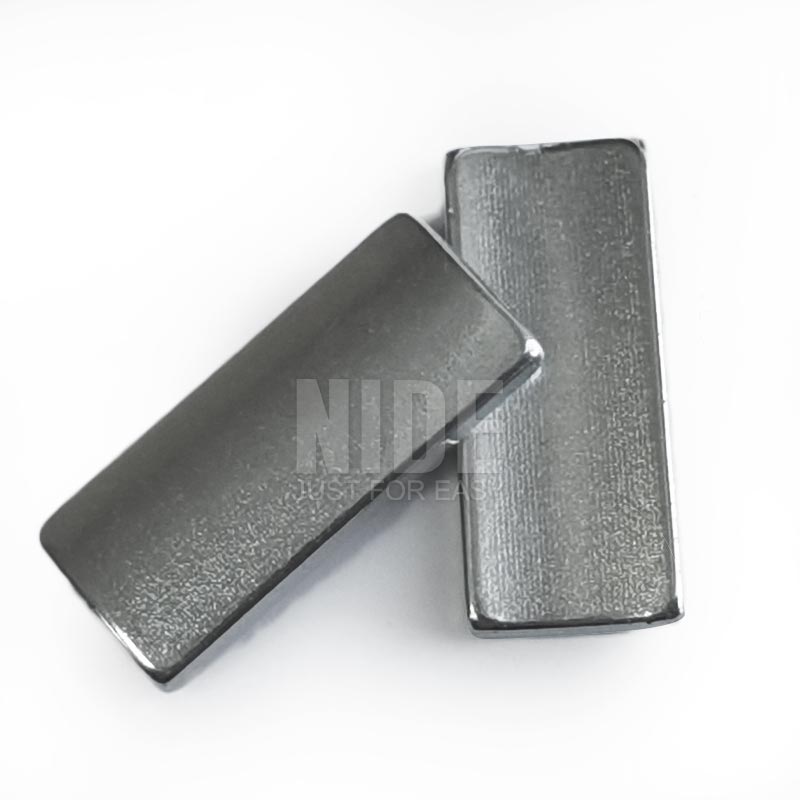
Complete Motor Component Ecosystem: In addition to complete machinery, Nakro supplies matching high-reliability electro-mechanical parts: precision copper commutators, collector rings, Grade N52 NdFeB rare-earth magnets, molded carbon brush assemblies, mica insulation barriers, and dynamic motor end shields. This integrated hardware offering allows engineering managers to validate both tooling and raw materials under single-source accountability.
Pre-Shipment Factory Acceptance Testing (FAT) with Client Silicon Packs: Prior to ocean export, every stator production line undergoes an exhaustive continuous 48-hour dry run and live component trial using the client's supplied laminations and magnet wire. Full high-definition run-off video recordings, CMM dimensional measurement reports of wound stators, and digital oscillograms of surge tests are submitted for engineering sign-off before crate departure.
Frequently Asked Questions for Japanese Engineering Buyers
Clear, direct technical answers addressing controls, standards, FAT procedures, and cross-border after-sales logistics for companies operating in the Chubu region.
Yes. While our standard export configurations frequently utilize Siemens or Schneider automation, over 80% of our systems destined for the Japanese market are built natively around the Mitsubishi Electric MELSEC iQ-R / iQ-F Series or Omron Sysmac NJ/NX controllers, paired with GOT2000 HMI displays and CC-Link IE TSN industrial networking for seamless integration into Japanese factory SCADA architectures.
Our primary facility in Beilun District, Ningbo is located less than 25 kilometers from Ningbo-Zhoushan Port. Ocean transit time from Ningbo to the Port of Nagoya typically takes only 3 to 5 days on direct container feeder services. Including Japanese customs clearance at Nagoya port, sea freight delivery is exceptionally fast and cost-effective compared to European or North American alternatives.
Recognizing that Japanese manufacturing emphasizes lean inventory and flexible batch production, our stator insertion and lacing cells utilize quick-change tooling fixtures with mechanical dial positioning pins and saved recipe parameters in the HMI. Stack height adjustments are fully motorized and recipe-controlled, reducing complete stator tooling changeovers to under 25 minutes.
All Nakro stator production equipment comes with a standard 12-month comprehensive warranty. Critical wear parts (such as inserting guide blades, wedge cutting knives, winding needles, and cord hooks) are machined to precise standardized drawings and can be stocked locally or dispatched via DHL/FedEx courier from Ningbo with 24- to 48-hour delivery directly to your facility in Aichi Prefecture.
Absolutely. In fact, sending client-specific lamination packs, slot insulation paper, and enameled magnet wire to our factory is our standard operating protocol. We run extensive multi-day winding and insertion trials, providing you with real-time video feeds, dimensional CMM verification, and electrical micro-ohm and HiPot reports before authoring the final shipment release.
Yes. All control cabinets are engineered with dual-channel emergency stop circuits (PLe / Category 4 safety relays or Keyence safety PLCs), optical perimeter light curtains, fully enclosed interlocked safety doors, and wire harness labeling compliant with JIS C 0401 and international CE safety directives.
Six-Stage Turnkey Implementation Roadmap for Nagoya Importers
To eliminate capital expenditure risks for overseas purchasing departments, Ningbo Nakro executes a milestone-governed project delivery lifecycle:
Week 1–2: Technical Feasibility & Lamination DFM Review. Our mechanical design team examines your stator stack drawings, slot dimensions, coil wire diameters, target cycle times, and electrical ratings to optimize winding clearances and calculate insertion force thresholds.
Week 3–5: Tooling Design & Layout Engineering. Generation of 3D line layouts, tooling CAD designs, and electrical schematics matching your factory floor footprint and power supply specifications (200V / 220V 3-Phase 50Hz/60Hz).
Week 6–11: Precision Fabrication & Assembly. Heavy base annealing, precision CNC machining of critical parts, control cabinet assembly, and multi-axis servo tuning across each individual module.
Week 12–13: Live Part FAT Run-Off & Certification. Live insertion of your supplied wire and core packs under full automated speed, video verification, and third-party inspection sign-off.
Week 14: Seaworthy Protective Export Packaging. Anti-corrosion vacuum sealing, desiccant barriers, and reinforced solid timber crating engineered for maritime container transit directly to Nagoya Port.
Post-Arrival: On-Site or Hybrid Remote Commissioning. Dispatch of bilingual Nakro field service commissioning engineers to your facility or structured video-linked SAT commissioning with comprehensive Japanese/English operating manuals.
Upgrade Your Stator Manufacturing Efficiency in Greater Nagoya
Connect directly with our senior motor automation engineering group. Submit your stator lamination drawings and annual production capacity targets for a comprehensive technical line layout, cycle-time simulation, and detailed commercial quotation.
Contact Us