Strategic Manufacturing Landscape in Greater Johor Bahru
Decarbonization, JS-SEZ Bilateral Incentives, and High-Throughput Motor Line Engineering
Industrial Context: Johor Bahru as ASEAN’s Premier Electrification Gateway
The manufacturing corridor spanning Johor Bahru, Senai, Pasir Gudang, and Iskandar Puteri has evolved into a strategic hub for high-precision electro-mechanical assembly. Anchored by proximity to Singapore's high-tech R&D ecosystem and fortified by Malaysia’s National Energy Transition Roadmap (NETR) and New Industrial Master Plan 2030 (NIMP 2030), multinational corporations and local Tier-1 automotive suppliers are re-evaluating electric drive manufacturing. The demand for localized, semi-automated, and fully automated EV traction motor production lines—including flat-wire hairpin stators, permanent magnet brushless DC (BLDC) units, and outer-rotor hub systems—is accelerating at a compound annual growth rate surpassing 24% across ASEAN.
Selecting an equipment manufacturer requires rigorous scrutiny of mechanical capability: micro-tension copper wire winding, sub-micron slot-paper insertion, high-frequency continuous fusing, robotic hairpin bending, automated laser welding, and high-voltage dielectric insulation testing. This technical overview synthesizes equipment configurations, localized industrial dynamics, and operational guidelines for production directors operating within Johor’s industrial estates.
Featured Equipment & Precision Components
Engineering-grade production machines, hairpin stator lines, and motor components optimized for localized EV powertrain assemblies.
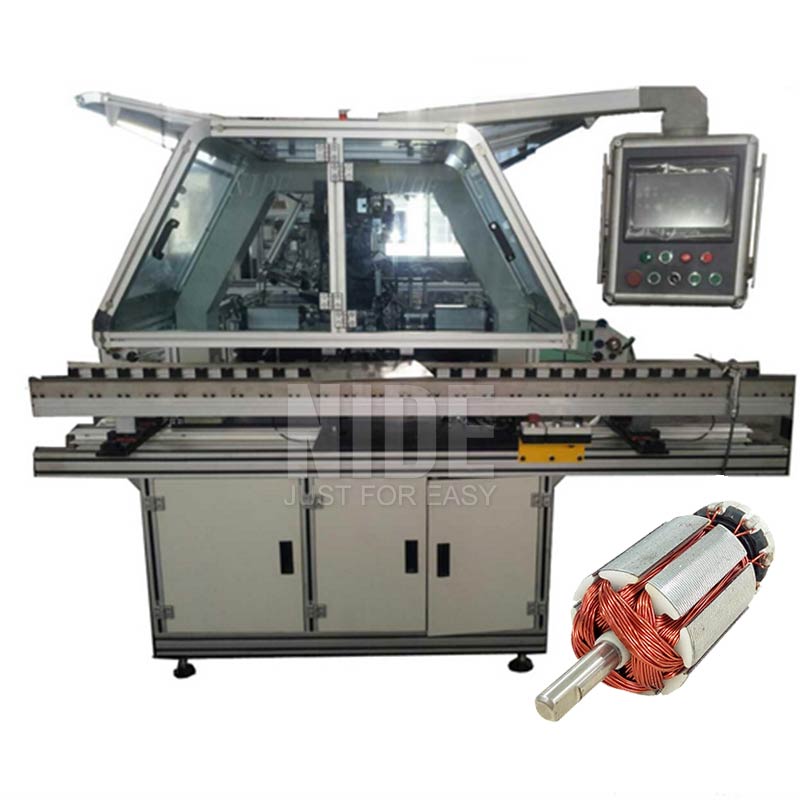
PLC-Controlled Rotor Armature Winding Machine
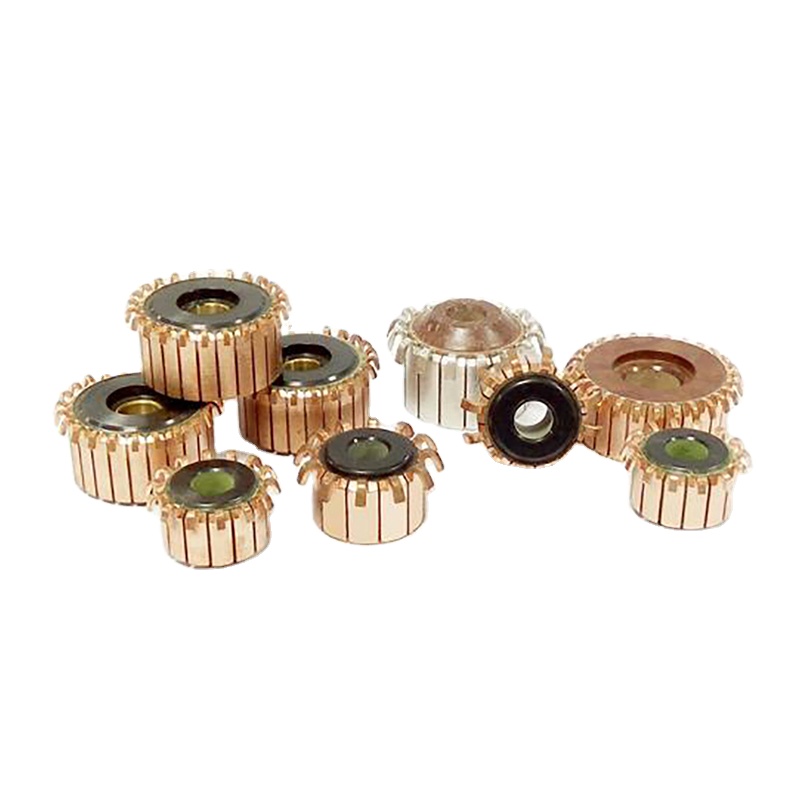
12V Precision Motor Commutator (NDPJ-HXQ-03007)
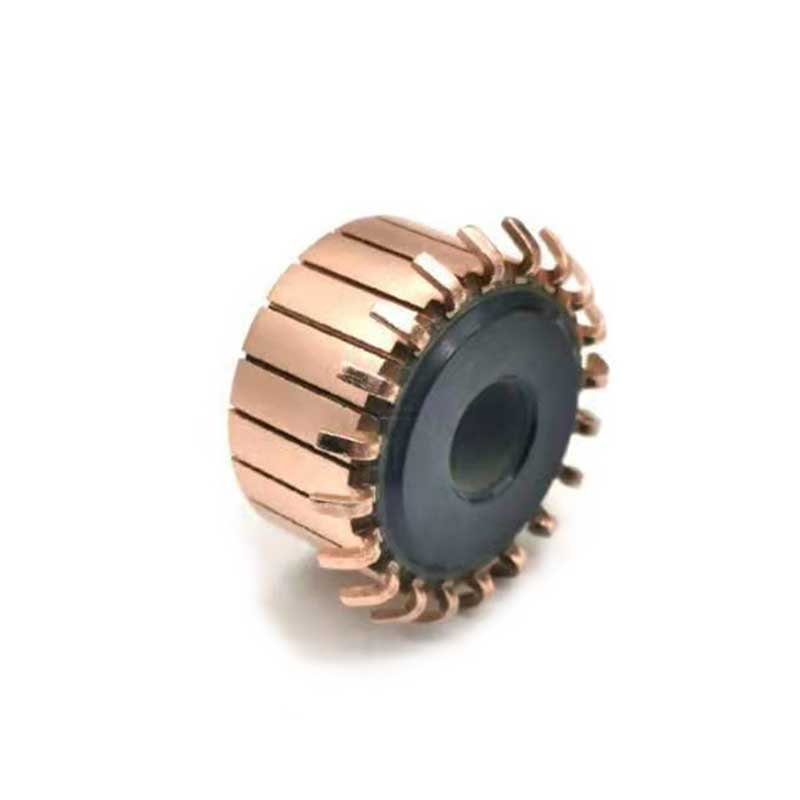
Automotive Radiator Fan Motor Armature Commutator
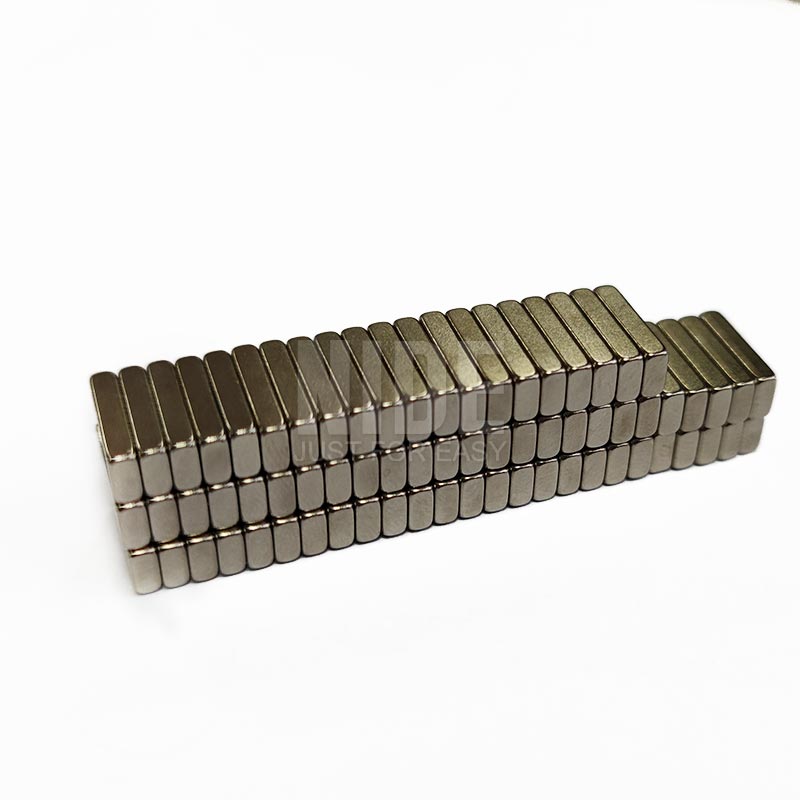
N52 Neodymium Rare Earth Magnet (NDPJ-CW-61)
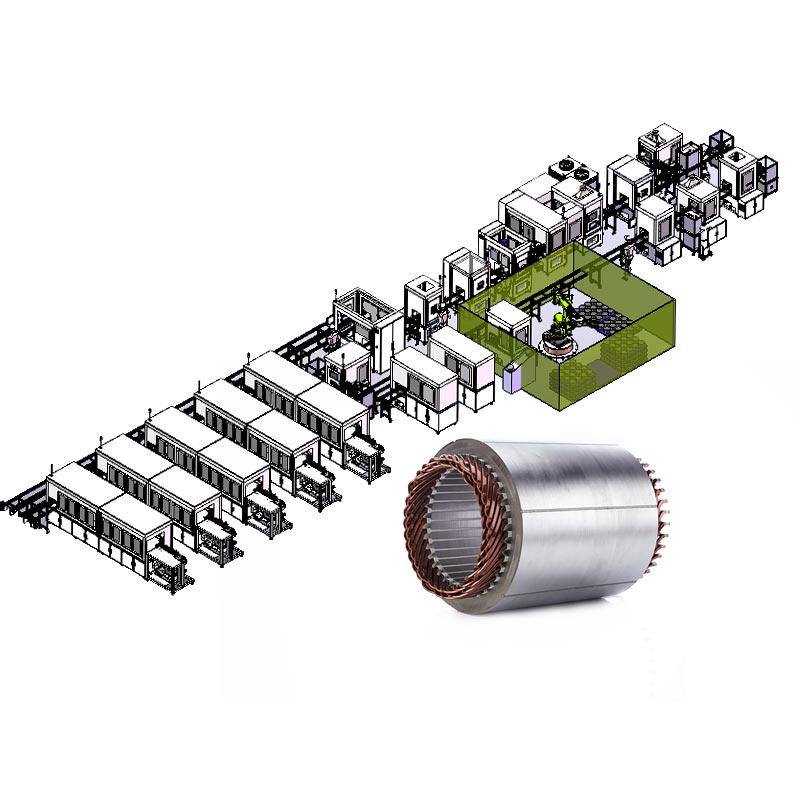
Turnkey Fully Automatic EV Hairpin Stator Line
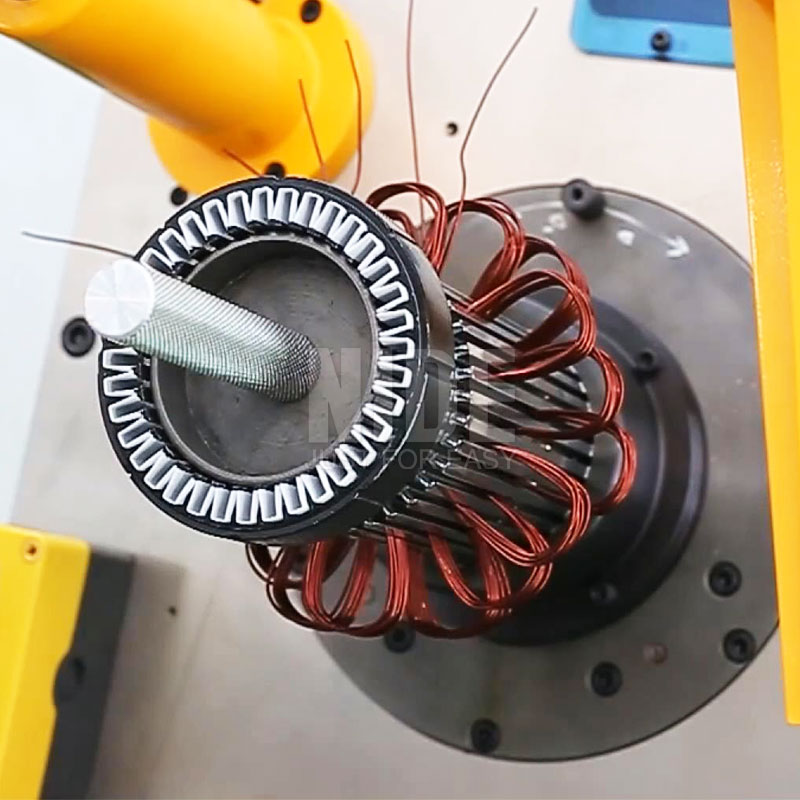
Automatic Single-Phase Stator Coil Inserter
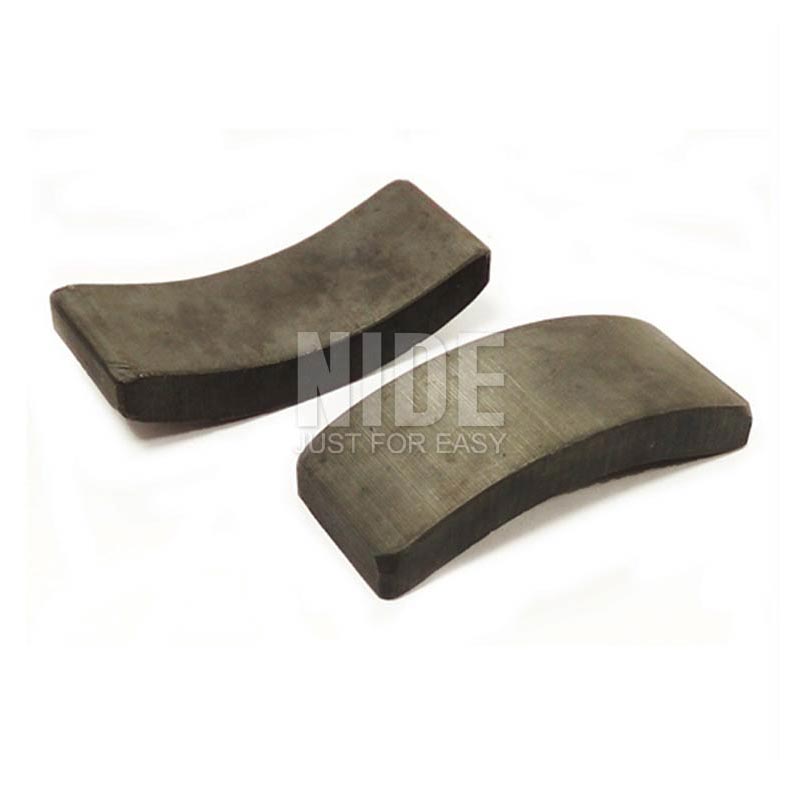
Arc Segment Permanent Ferrite Motor Magnets
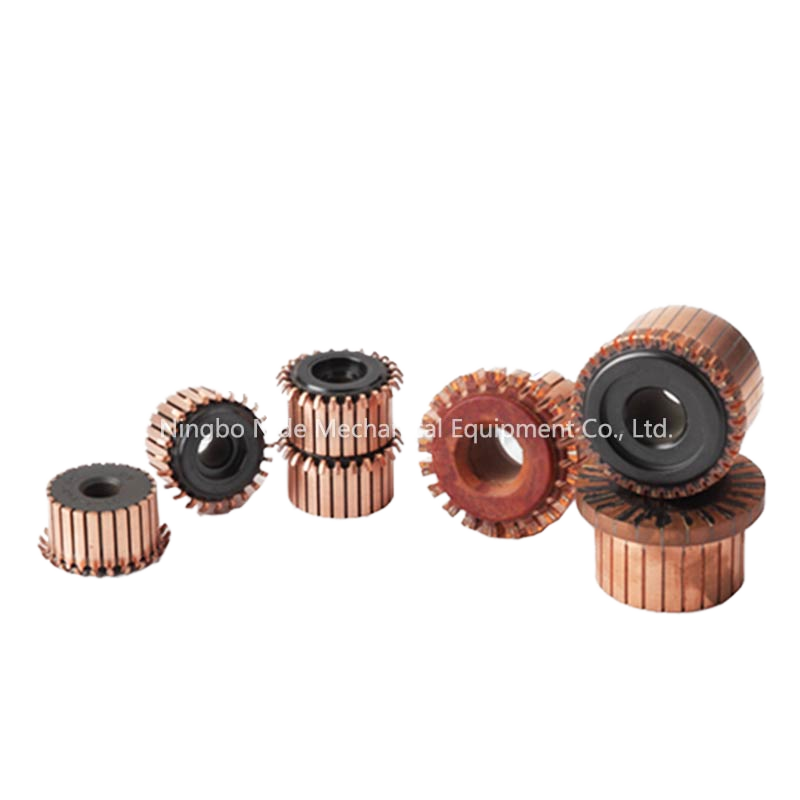
DC Motor Armature Slip Ring Commutator
Evaluating Turnkey Hairpin or BLDC Production Lines for Johor Plants?
Our sales engineering and R&D divisions configure modular, fully customized tooling, winding fixtures, and cycle-time layouts matched to your lamination drawings and annual throughput targets.
Industrial Application Scenarios in Greater Johor Bahru
Engineering deployments across Southern Malaysia's leading manufacturing parks and smart corridors.
I-Park Senai & Senai Airport City: E-Mobility Sub-Assemblies
Plants operating in Senai focus on high-throughput assembly of Tier-1 and Tier-2 automotive electronics. Hairpin stator manufacturing cells and modular needle winders are critical for local production of electric steering motors, active suspension motors, and auxiliary air-conditioning compressors.
- Short setup times for alternating automotive variants
- Direct integration with factory MES via OPC-UA/Ethernet IP
- Closed-loop torque and press-fit inspection protocols
Pasir Gudang & Tanjung Langsat: Heavy Industrial Traction
Southern Johor's heavy industrial and marine engineering zones demand high-power induction motors and traction drives for commercial logistics, heavy electric trucks, and port machinery operating at the Port of Tanjung Pelepas (PTP) and Johor Port.
- Heavy-gauge round wire and copper strip coil winding
- Multi-layer stator lamination stacking and hydraulic wedge insertion
- Vacuum pressure impregnation (VPI) varnishing integration
Tebrau & Kempas: Light Electric Vehicles (E2W & E3W)
To serve rapid urbanization and last-mile electric logistics across Malaysia and Singapore, plants in Tebrau produce outer-rotor wheel hub motors for electric motorcycles, scooters, and cargo trikes. Modular assembly keeps capital expenditure manageable.
- Automated outer-rotor needle winding with programmable flying arms
- Automatic rotor magnet insertion, adhesive dispensing, and curing
- End-of-line back-EMF, hall sensor alignment, and vibration testing
Regional Technology & Supply Chain Trends in Johor
Market dynamics shaping motor equipment specifications across the Johor-Singapore corridor.
Shift to Flat-Wire Hairpin
Automakers are transitioning from conventional stranded round-wire winding to rectangular flat-wire hairpin technology. This increases slot fill factors beyond 70%, sharply reducing copper losses and elevating motor efficiency up to 97% for 800V silicon carbide (SiC) inverters.
Johor-Singapore SEZ Synergy
The JS-SEZ framework accelerates "Singapore R&D + Johor Automated Production" business models. Prototype designs generated in Singaporean technology centers transition rapidly to automated pilot lines and commercial manufacturing runs in Johor Bahru.
NIMP 2030 Local Content Targets
Under Malaysia's New Industrial Master Plan, local content requirements for electric vehicle assemblies incentivize tier-level automotive manufacturers to localize stator core punching, winding, trickling, and dynamic balancing directly inside Malaysian facilities.
Traceability & Digital Twins
Johor EV lines require full serial-number tracking per motor stator. Laser marking, high-resolution visual inspection, welding melt-pool monitoring, and dielectric surge tests link directly to cloud-based manufacturing execution systems (MES).
Turnkey Manufacturing Advantages
Over a decade of dedicated motor machinery engineering, ISO 9001 quality compliance, and comprehensive component support.
End-to-End Line Engineering
From initial stator slot drawings and flux simulations to factory footprint layouts, tooling design, PLC software configuration, and line commissioning, we supply turnkey integrated production workflows rather than uncoordinated standalone equipment.
Integrated Component Ecosystem
Beyond capital machinery, we maintain production pipelines for matching motor components: precision copper commutators, slip rings, high-coercivity N52 NdFeB magnets, permanent ferrite segments, ball bearings, slot insulation paper, and thermal protection devices.
Rigorous Factory Acceptance (FAT)
Every automated cell completes a full-speed trial run in our factory using your specific laminations, copper magnet wire, and terminal connections. Detailed run-off videos, CPK statistical process evaluations, and electrical test data are validated prior to export packing.
Johor Bahru Procurement FAQ
Practical answers to electrical standards, customs clearance, MIDA tax incentives, and local installation across Southern Malaysia.
Are machines configured for Malaysia’s industrial grid standards?
Yes. All production equipment, motor winders, and electrical cabinets are built for Malaysia’s standard industrial 415V, 3-Phase, 50Hz electrical supply (with 240V single-phase control circuits). Control cabinets incorporate Schneider, Siemens, or Omron low-voltage switchgear with CE compliance and tropicalized thermal cooling to handle high ambient warehouse humidity.
Can we import equipment under MIDA Capital Allowance & duty exemption?
Yes. Malaysian entities registered with the Malaysian Investment Development Authority (MIDA) can claim Pioneer Status or the Investment Tax Allowance (ITA). Because our manufacturing machinery qualifies as advanced capital equipment under qualifying CAPEX for e-mobility and automation, buyers can apply for import duty and sales tax exemptions using MIDA Form SPM 1.
What logistics options are available for delivery into Johor industrial zones?
We provide FOB, CFR, and CIF terms directly into Port of Tanjung Pelepas (PTP) or Johor Port (Pasir Gudang). Heavy machinery is packaged in seaworthy, vacuum-sealed, fumigated wooden cases with vapor corrosion inhibitors (VCI) to protect high-precision linear guides and servo shafts from tropical maritime air during transit.
How is on-site line commissioning handled in Johor plants?
We combine on-site mechanical deployment with remote diagnostic support. Field service engineers travel to your facility in Senai, Tebrau, or Pasir Gudang to supervise physical placement, electrical hookups, line balancing, and operator training. All machine PLCs include secure VPN remote gateway modules for continuous real-time troubleshooting.
Can equipment adapt to both round-wire and flat-wire (hairpin) stators?
While specific stations like winding and inserting differ in mechanical architecture, our modular production lines allow shared conveyors and testing stations. We design dedicated flat-wire cells for primary traction motors, alongside flexible flyer and needle winding stations for auxiliary EV DC and BLDC motors.
What is the typical lead time for custom tooling and complete assembly lines?
Standalone winder and inserter units generally ship in 45–60 days. Fully automated turnkey hairpin stator lines or hub motor assembly systems typically require 90–120 days from drawing freeze, allowing time for 3D tooling precision CNC machining, electrical assembly, and pre-shipment trial runs with customer parts.
Are testing stations integrated to meet global automotive standards (IATF 16949)?
Yes. Stator and rotor testing stations execute complete electrical characterizations: DC winding resistance, AC hipot insulation breakdown (up to 5kV), high-voltage impulse surge comparison, inter-turn short-circuit detection, and rotor dynamic balancing with full CSV/database export for IATF 16949 traceability.
What happens when our motor lamination geometry or stack height changes?
Our tooling is engineered modularly. Changing stator stack height requires quick parameter updates on the HMI touchscreen with simple mechanical spacer adjustments. For completely new slot geometries, our engineering team manufactures replacement inserting blades, wedge guides, and winding flyers without re-purchasing the base machine.
Ready to Scale EV Motor Assembly in Johor Bahru?
Send us your lamination drawings, copper wire specifications, and target cycle times. Our senior applications team will deliver an actionable layout, machine quote, and process feasibility assessment.
