Standard & Custom Motor Manufacturing Equipment & Core Assemblies
Engineered to customer lamination blueprints, wire gauges, and annual throughput targets. Our equipment and matching components guarantee low cogging torque, high slot fill factors, and micron-level mechanical tolerances.
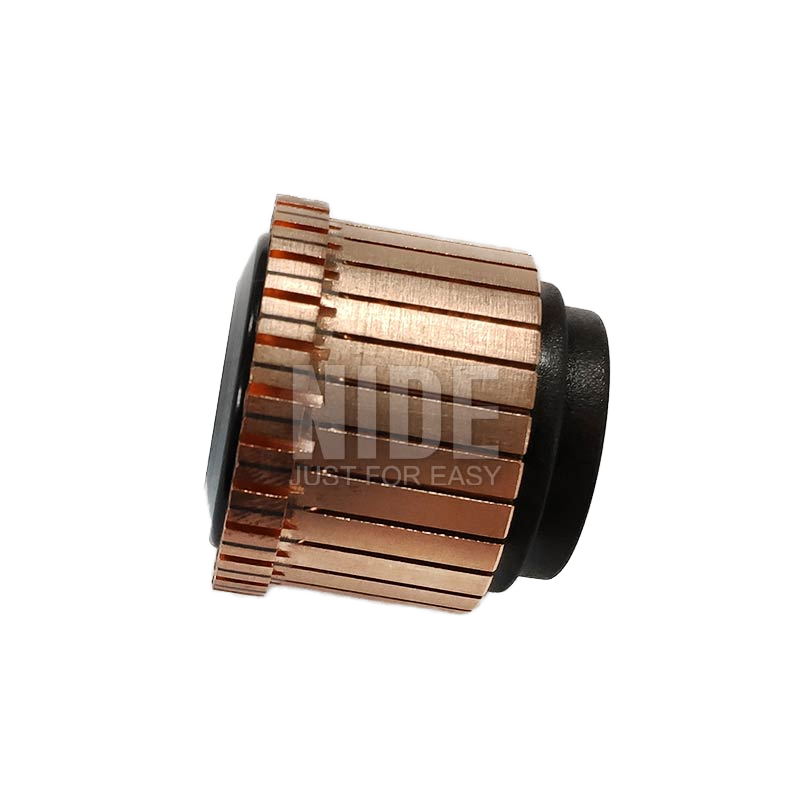
AC Motor Mica Commutator Armature Collector Segment
Model NDPJ-HXQ-101. Premium silver-copper alloy segment with high dielectric-grade mica insulation. Engineered for high-RPM universal motors and power tools, resisting mechanical deformation under extreme thermal cycling.
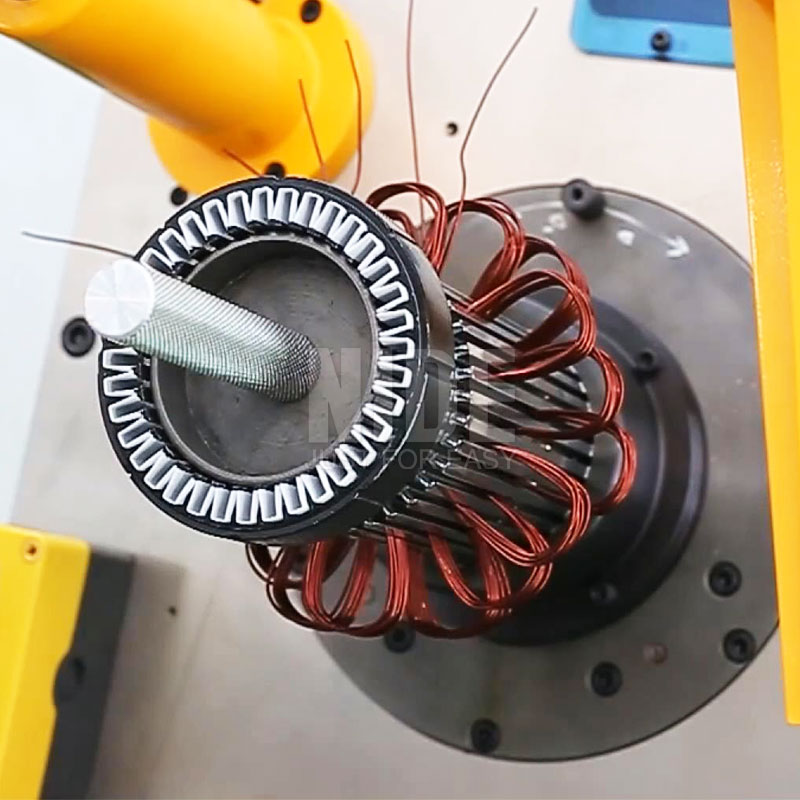
Automatic Single Phase Stator Coil Insertion Machine
High-speed simultaneous insertion of enameled copper/aluminum coils and slot insulation wedges. PLC-controlled servo push system avoids wire damage and ensures slot fill factor up to 78% for HVAC, pump, and compressor stators.
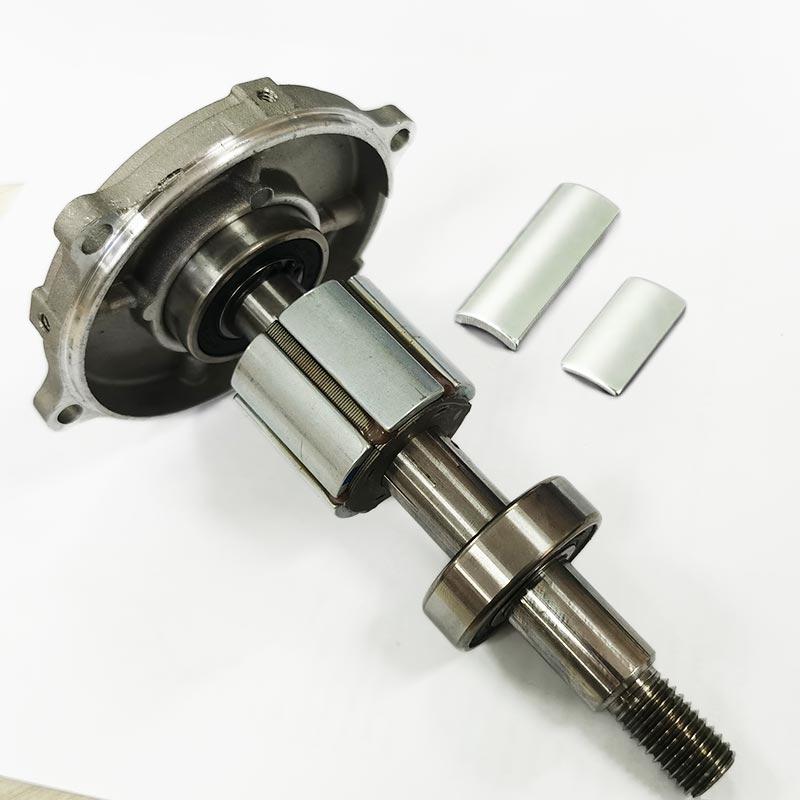
Customized N52 Sintered Neodymium Rotor Magnets
Model NDPJ-CW-62. Ultra-high remanence (Br) and intrinsic coercivity (Hcj) designed for permanent magnet synchronous motors (PMSM) and BLDC drives. Features anti-corrosion triple Ni-Cu-Ni coating and tight magnetic flux consistency.
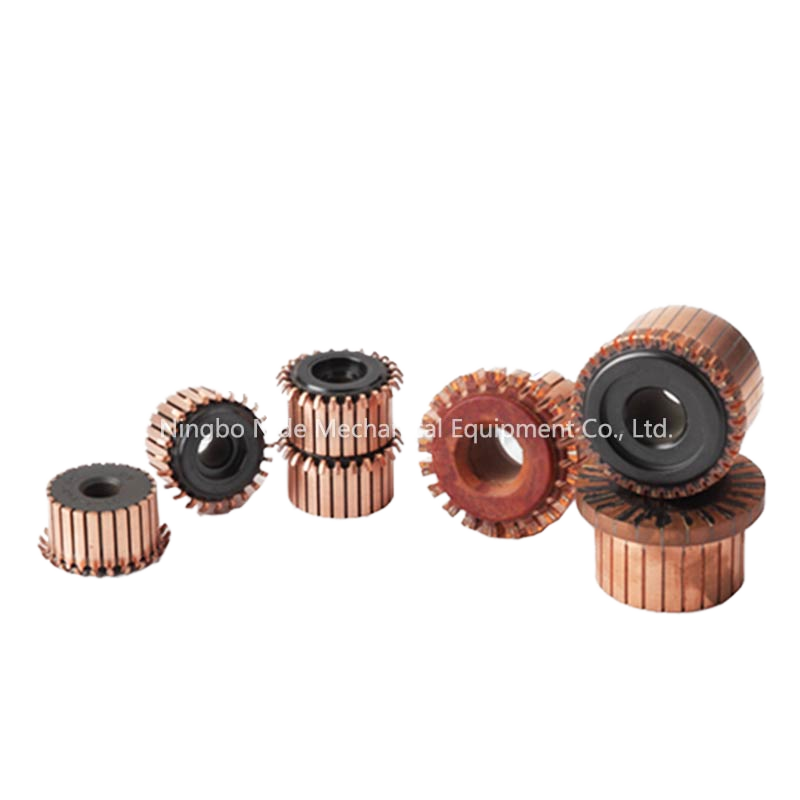
Precision DC Motor Armature Collector Slip Ring
Model NDPJ-HXQ. High-stability slip ring and collector module with dynamic balance testing tolerance within 0.2g·mm. Built for industrial DC motors, automotive auxiliary drives, and precision generators requiring minimal electrical noise.
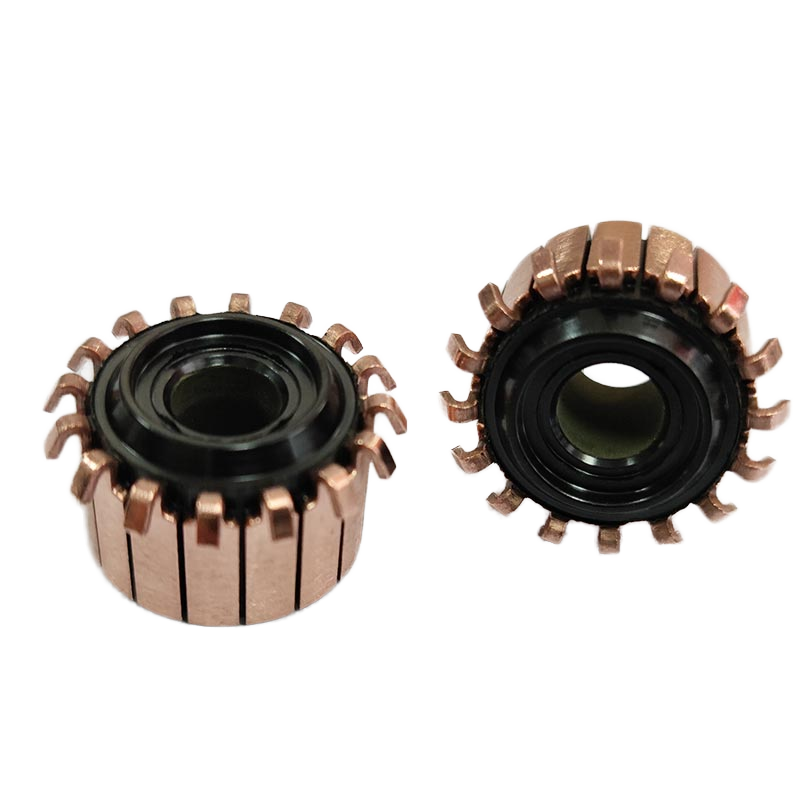
Hook Type Commutator for Automotive DC Actuators
Model NDPJ-HXQ-871A. Precision stamped copper collector hooks optimized for automatic hot-staking wire fusing. Widely utilized in radiator cooling fan motors, wiper assemblies, window lifters, and starter armatures.

24-Segment Hook Type Armature Rotor Commutator
Model NDPJ-HXQ-14. Reinforced thermoset molding with 0.003mm bar-to-bar height tolerance. Designed to withstand severe peripheral speeds in angle grinders, rotary hammers, circular saws, and heavy-duty universal electric drives.
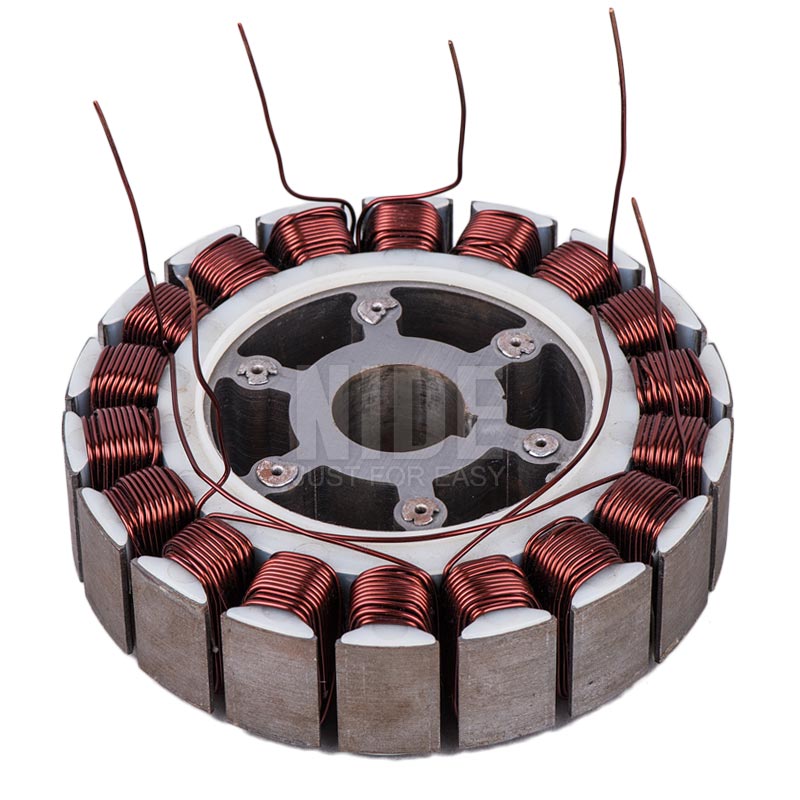
Automatic BLDC Wheel Motor Stator Winding Machine
Dual-station needle winding technology designed for outer-rotor electric motorcycle and e-rickshaw hub motors. Multi-axis CNC synchronization maintains uniform tension, prevents enamel scratching, and delivers high slot fullness.
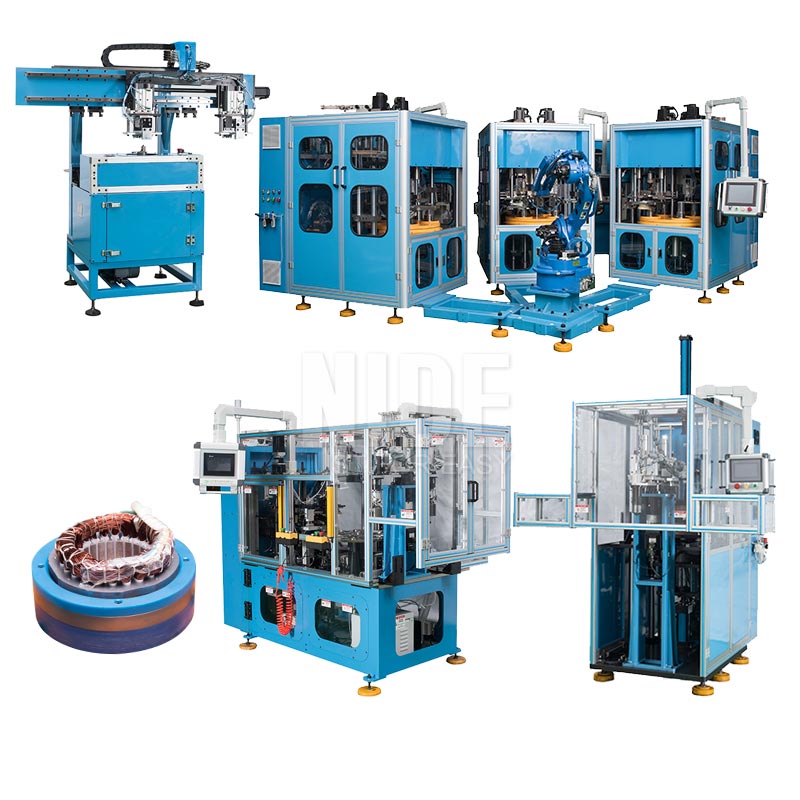
Electric Induction Motor Stator Production Line
Turnkey multi-station assembly sequence: paper inserting, multi-spindle coil winding, simultaneous coil/wedge inserting, intermediate expander forming, 2-side lacing, and automated high-potential (hipot) surge testing.
Modern Electric Motor Assembly: Engineering Rigor, Automation Architecture & Yield Optimization
A technical guide on mitigating manufacturing defects, optimizing electromagnetic performance, and streamlining high-mix low-volume (HMLV) to mass-scale production lines.
The manufacturing landscape for electric motors—spanning fractional horsepower brushless DC (BLDC) units, industrial three-phase induction stators, and multi-kilowatt traction systems for electric mobility—has transitioned from basic mechanical assembly to highly integrated electro-mechanical automation. As international energy efficiency benchmarks (such as IEC 60034-30-1 IE3, IE4, and IE5 standards) become mandatory across global jurisdictions, motor producers face intense pressure to maximize electromagnetic efficiency while driving down scrap rates and line cycle times.
Achieving superior copper slot fill factors (consistently exceeding 75% without compromising magnet wire insulation integrity) requires strict mechanical coordination across every stage of the assembly line. A modern motor manufacturing line is not merely a collection of isolated machinery; it is an intelligent, interconnected production ecosystem where wire tension, slot paper cuffing, coil insertion kinematics, commutator welding thermo-compression, and dynamic balancing communicate via real-time SCADA and MES architectures.
Key Technical Metric: The Impact of Enamel Degradation on Field Reliability
Micro-abrasions during flyer winding or high-speed insertion are the root cause of over 60% of premature inter-turn short-circuit faults in inverter-duty electric motors. Contemporary automation lines must utilize closed-loop, servo-driven active tensioners with ceramic diamond-coated guides and load-cell feedback to restrict wire stretch below 1.5% elongation, ensuring the dielectric breakdown voltage remains strictly above 5,000 Volts.
Armature & Rotor Production
Engineered for high-volume automotive starter motors, universal appliances, and precision DC actuators where dynamic balance and thermal resilience are paramount.
- Automated shaft-to-lamination hydraulic press-fit
- Precision servo flyer winding with auto hook indexing
- Commutator hook fusing (inverter hot staking)
- ISO G1.0 dual-plane dynamic balancing correction
Induction Motor Stator Lines
Complete multi-station systems designed for standard NEMA and IEC frame sizes (63 through 250), supporting multi-speed single-phase and three-phase designs.
- Slot insulation cuffing, cutting, and inserting
- Simultaneous multi-strand coil & wedge insertion
- Hydraulic pre-forming and final expander sizing
- Automated diamond-stitch twin-end lacing
BLDC & Wheel Hub Motor Cells
Specialized automated systems configured for e-bikes, electric motorcycles, micro-mobility, and high-efficiency permanent magnet brushless blowers.
- Dual-nozzle internal/external needle winding
- PCB hall sensor micro-soldering and potting
- Automated magnet gluing, insertion & flux check
- Dynamic no-load Back-EMF & FFT vibration testing
Future Procurement & Technological Trends in Motor Manufacturing
Global supply chain realignments, decarbonization mandates, and the shift from distributed winding to flat-wire hairpin architectures are reshaping CapEx strategies worldwide.
Procuring electric motor assembly systems between 2025 and 2030 involves navigating three critical transformations: total cost of ownership (TCO) vs. initial capital expenditure, technical adaptability for rapid product variants, and end-of-line data traceability. As major OEMs transition their product lines toward high-voltage architectures (400V to 800V for e-mobility and 690V for industrial machinery), legacy winding methods are being challenged by next-generation manufacturing technologies.
Hairpin & Continuous Pin Winding
Flat copper wire hairpin technology is expanding from automotive main traction motors into light commercial vehicles, e-motorcycles, and industrial pumps. By replacing round stranded wire with rectangular conductors, slot fill factor jumps from ~50% to over 75%, substantially cutting I²R thermal losses.
- High-precision CNC wire CNC 3D bending
- Automated paper sleeve B-stage insulation
- Laser stripping of polyamide/imide enamel
- Vision-guided copper hairpin end laser welding
Smart Factory & Digital Twin (MES)
Procurement teams now prioritize line interoperability (OPC UA, MQTT) over isolated machine speed. Digital twin simulations allow zero-downtime retooling, while inline sensors continuously feed torque, temperature, and electrical impedance into supervisory systems.
- 100% component-to-stator barcode traceability
- Predictive maintenance on servo tooling
- Real-time OEE dashboards and cloud diagnostics
- Automated scrap reject station isolation
Turnkey Machinery + Raw Component Consolidation
Procuring lines from machinery builders who also manufacture matched motor components (commutators, magnets, brush cards, and insulation) dramatically eliminates vendor fingerprinting. Single-source validation guarantees tooling fits components from day one.
- Pre-matched tooling clearances for commutators
- Zero friction between supplier tolerances
- Shortened factory acceptance testing (FAT)
- Consolidated sea-freight and customs clearance
| Assembly System Type | Target Motor Topologies | Automation Level | Avg. Cycle Time (Takt) | Key Electromagnetic Yield Driver |
|---|---|---|---|---|
| Armature Production Line | Universal Motors, DC Power Tools, Automotive Aux | Semi-Auto to Fully Automated Cells | 12 – 18 sec / rotor | Hook fusing consistency; <0.003mm commutator TIR |
| Stator Coil Insertion Line | 1-Phase & 3-Phase Induction (IEC 63–160) | Fully Automated Conveyorized Line | 22 – 35 sec / stator | Gentle wedge push; zero copper enamel scratching |
| Outer-Rotor Hub Motor Cell | E-Bikes, Scooters, Electric Rickshaws | Robotic Cell + Multi-Axis Winder | 45 – 70 sec / unit | Precise needle layering; automated magnet skewing |
| Brushless (BLDC) Stator Line | Automotive EPS, HVAC Blowers, Drones | Full Turnkey High-Speed MES Linked | 10 – 16 sec / stator | Direct tooth needle winding; low coil end-turn height |
Why International Motor Manufacturers Partner with Ningbo Nakro
Headquartered in Ningbo's advanced industrial corridor, we combine deep electro-mechanical tooling design with extensive export experience spanning more than 50 countries worldwide.
Full-Cycle Engineering
From component blueprints and stator laminations to final packaging, our engineering group customizes winding tooling, inserting blades, and fixtures matched to your exact product geometry.
End-to-End Ecosystem
We do not just build the assembly machinery. We supply the high-precision commutators, sintered N52 neodymium magnets, shafts, and insulation paper—eliminating cross-supplier dimensional disputes.
Stringent 6-Stage FAT
Every piece of equipment completes rigorous Factory Acceptance Testing using the client’s own wire and stampings. High-speed video, hipot surge testing, and dimensional reports are signed off prior to crating.
Global Field Service
With after-sales service partners across Southeast Asia, South America, Europe, and the Middle East, our field engineers provide on-site commissioning, operator training, and rapid tooling replacements.
Frequently Asked Questions on Motor Production Lines
Detailed technical and commercial answers addressing common engineering challenges, lead times, factory acceptance protocols, and tooling adaptations.
What specific electric motor families can your assembly lines manufacture?
Our automation systems are customized around four core motor topologies: (1) Armatures & Rotors for universal motors, vacuum cleaners, angle grinders, and automotive 12V/24V DC starters; (2) AC Induction Motor Stators covering single-phase capacitor-start and three-phase squirrel-cage motors (IEC 56 through 250 frames); (3) BLDC & PMSM Stators with internal or external tooth designs for home appliances, automotive steering (EPS), and industrial pumps; and (4) Outer-Rotor Wheel Hub Motors for electric bicycles, electric scooters, and electric rickshaws.
How does your engineering team manage Factory Acceptance Testing (FAT) for international buyers?
To eliminate overseas commissioning risks, we request that customers supply sample stacks of their laminations, commutators, and magnet wire during machine build. Our trial-run protocol runs a continuous batch of 200 to 500 units at production speed. We log takt times, inspect wire enamel under microscopic magnification for scratch defects, measure commutator run-out (TIR), and execute 100% hipot, surge, and DC resistance testing. Buyers can attend in person at our Ningbo plant or conduct sign-off via high-definition multi-camera live video streaming.
Can a single stator line accommodate multiple stack heights and frame diameters?
Yes. Our machines are built with quick-change tooling fixtures. Within the same stator outside diameter (OD) and lamination slot geometry, stack height adjustments are executed via programmable HMI recipes and servo-driven stroke settings—taking less than 15 minutes with no mechanical teardown. When changing between different stator diameters (e.g., from frame 80 to frame 90), a modular tooling kit (inserting blades, wedge guides, and lacing clamps) can be swapped out within 45 to 60 minutes.
What measures are integrated to prevent wire enamel scratching during high-speed coil insertion?
Wire protection is paramount for long-term insulation reliability. Our coil and wedge insertion machines utilize high-hardness tungsten carbide or heat-treated Cr12MoV tool steel blades mirror-polished to a surface roughness of Ra < 0.05 μm. Additionally, our servo pushers feature multi-stage speed profiles: entering the slot slowly, accelerating through the body, and decelerating as the wedge cuffs lock into position. This eliminates excessive tensile spikes and keeps wire deformation well within international standards.
What are typical production lead times, and how are machines prepared for sea freight?
Standard standalone equipment (such as single-operator coil winding or insertion machines) typically ships within 45 to 60 days. Fully automated turnkey lines with conveyors, robots, and inline inspection stations have a delivery timeline of 90 to 120 days depending on tooling complexity. All machinery is treated with heavy anti-rust oil, wrapped in multi-layer vacuum foil with industrial desiccant packs, and secured into heavy-duty solid-wood fumigated export cases compliant with ISPM 15 standards.
What after-sales and on-site commissioning services are provided overseas?
We provide two deployment paths: (1) Dispatching a dedicated team of mechanical and electrical commissioning engineers to your plant to perform physical anchoring, line leveling, dry-run synchronization, pilot production, and operator/maintenance maintenance training; or (2) Remote video guidance supported by pre-configured industrial IoT remote diagnosis modules on our PLC control cabinets, allowing our Ningbo software engineers to troubleshoot parameters and update software anywhere in the world.
Accelerate Your Motor Manufacturing Capabilities
Whether you are establishing a new greenfield facility for e-mobility wheel motors or upgrading legacy induction stator production lines, our Ningbo engineering team will review your 2D/3D part drawings and provide a complete line layout, takt-time calculation, and formal quotation.
Inquire Now