Featured Rotor & Stator Assembly Machinery
Explore our engineered lineup of CE-certified automatic rotor assembly machinery, high-speed armatures, commutators, carbon contact systems, and turnkey manufacturing modules tailored for international OEMs.
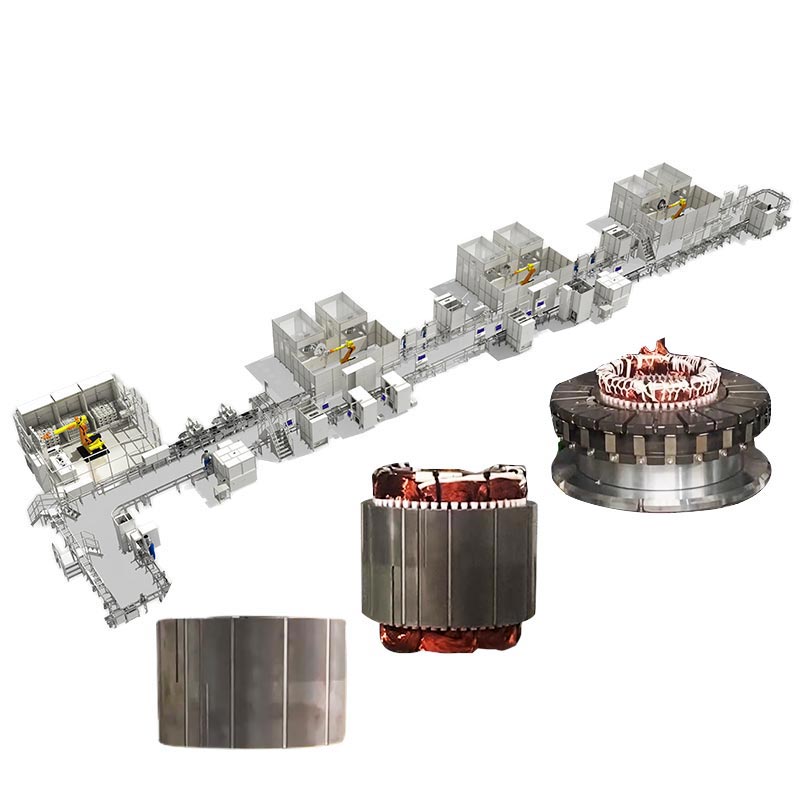

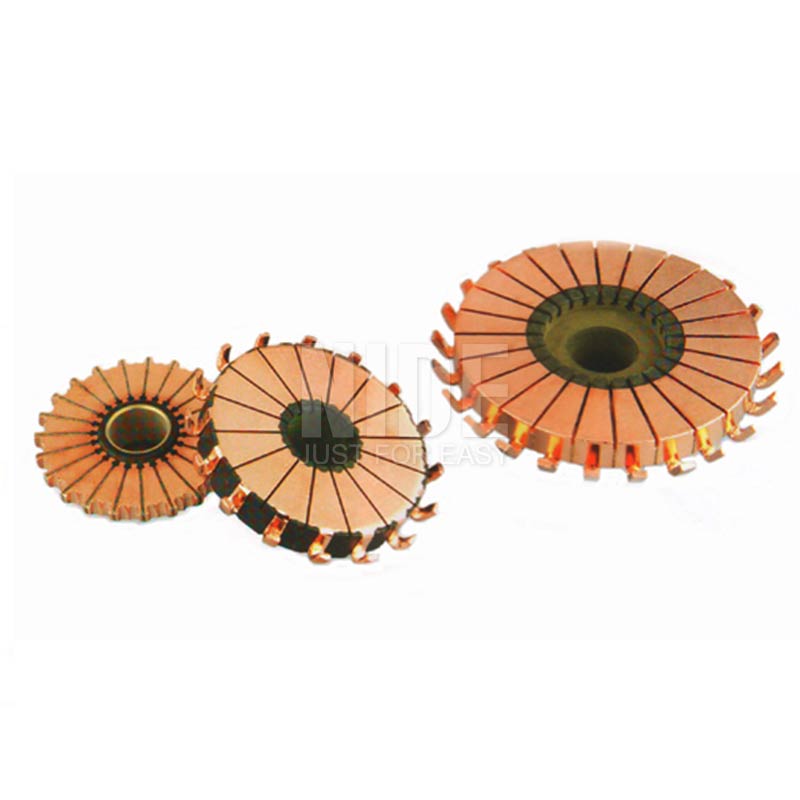
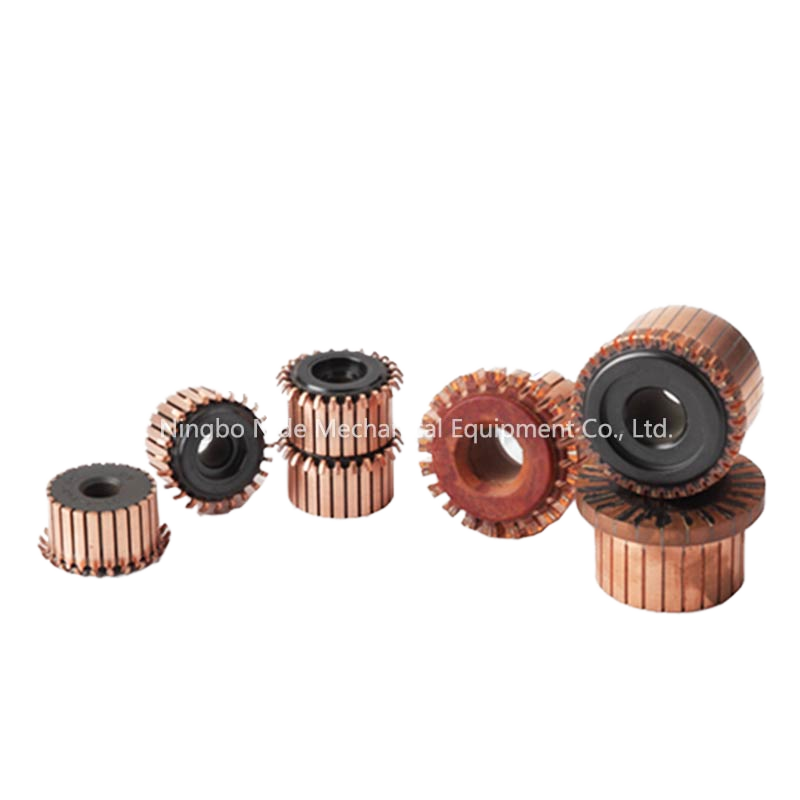

State-of-the-Art Rotor Assembly Automation: Station Breakdown
Industrial-grade rotor manufacturing demands strict cohesion between mechanical press-fitting, thermal management, high-tension copper coil placement, and rotational dynamic balancing. The following process flow defines how modern OEM/ODM turnkey production lines mitigate core distortion, copper scuffing, and mechanical runout.
Shaft & Core Press-Fitting
High-precision servo-electric press stations integrate real-time displacement-vs-force curve monitoring. Ensures interference fits without bending shafts or delaminating silicon steel sheets.
- Load range: 10 kN to 200 kN closed-loop
- Positional repeatability within ±0.01 mm
- Automated stack height optical gauge
Insulation & Commutator Fitting
Automated slot insulation paper feeding, forming, and insertion matched with servo commutator press-fitting. Eliminates slot puncture defects while assuring hook radial alignment.
- Rotary indexing table with vision check
- Nomex / DMD / PET film compatibility
- Servo controlled commutator angular zeroing
High-Speed Flyer Winding
Dual-flyer CNC armature winding with continuous tension modulation prevents wire elongation and necking. Seamlessly routes leads to commutator hooks with programmable delta/wye hook indexing.
- Winding speed up to 3,500 RPM
- Tension fluctuation regulated under ±3%
- Automatic hook indexing & loop forming
Hot-Stack Fusing & Wedge Insertion
Inverter resistance hot-stack fusing welds copper magnet wire onto commutator tangs with closed-loop electrode displacement feedback. Followed by epoxy wedge feeding to prevent winding lift under centrifugal load.
- Electrode collapse control (±0.02 mm)
- Micro-ohm contact resistance verification
- Fiberglass / vulcanized wedge feeding
BLDC Magnet Insertion & Gluing
Specialized for permanent magnet synchronous rotors (PMSM) and BLDC rotors. Dispenses two-part structural anaerobic adhesive, picks segmented NdFeB magnets, and presses them into rotor lamination slots.
- Automated magnet polarity polarity sensor
- Positive displacement micro-metered resin
- Induction curing / UV pre-cure modules
Precision Commutator Turning
Diamond-tool (PCD) lathe finishing shaves commutator outer diameters, correcting concentricity runouts introduced during thermal welding. Cleans copper chips out of mica undercuts with integrated vacuum hoods.
- Commutator circular runout ≤ 0.003 mm
- Surface finish Ra ≤ 0.4 μm
- Optical de-burring and bar-to-bar mica check
Dynamic Unbalance Correction
Dual-plane dynamic balancing unit measures residual unbalance using piezoelectric accelerometers. Automatically removes material via twin-milling cutters or drills into the rotor lamination stack.
- ISO 1940 Grade G1.0 / G2.5 compliance
- Automated dual-plane V-milling / drilling
- Cycle time ≤ 18 seconds including indexing
Electrical & Quality Run-Off Test
End-of-line electrical testing station executes 100% verification across critical parameters: weld resistance, bar-to-bar surge, insulation resistance (IR), and dielectric withstand (Hi-Pot) under 2.5 kV.
- Hi-pot testing: up to 3,000V AC/DC
- Bar-to-bar resistance delta < 1.5%
- Automated industrial MES barcode logging
Rotor Assembly Machine Types: Comparative Engineering Parameters
Reviewing equipment attributes by rotor topology empowers factory managers to align investment with product lifecycle requirements.
| Rotor Classification | Core Assembly Technologies | Balancing Standard | Cycle Time (Pcs/Hr) | Primary Failure Risk | Automation Rating |
|---|---|---|---|---|---|
| Universal Motor Armature (Power Tools / Kitchen Appliances) | Dual flyer winding + commutator hot-stack fusing + PCD diamond turning | ISO 1940 G2.5 (V-Cut milling) | 180 – 320 pcs/h | Commutator bar step rise, slot insulation puncture | Fully Automated |
| Automotive Starter / Alternator (12V–48V Mild Hybrid) | Heavy-gauge strip copper press-fit + TIG welding + heavy shaft broaching | ISO 1940 G1.6 (Counterbore drilling) | 90 – 160 pcs/h | Thermal weld cracking, slip ring eccentricity | Turnkey Cell |
| BLDC Interior Permanent Magnet (IPM) (HVAC / Compressors) | Servo-driven magnet orientation & slot stuffing + epoxy metering | ISO 1940 G1.0 (End-ring drilling) | 120 – 240 pcs/h | Magnet chipped corners, resin void formation | Robotic Cell |
| Outer-Rotor Wheel Hub Motor (E-Bikes / Light Mobility) | Perimeter magnet tile bonding + axle hub spline press + magnetizer ring | Static / Single Plane Dynamic | 45 – 90 pcs/h | Uneven magnetic gap flux, adhesive detachment | Semi-Auto Linked |
| Traction Motor Hairpin EV Rotor (Commercial / Passenger EV) | Skewed lamination stack thermal shrink + robot magnet insertion + sleeve canning | ISO 1940 G0.4 (Laser ablation / Mill) | 35 – 70 pcs/h | Sleeve hoop stress failure, dynamic unbalance at 18k RPM | Full Line Industry 4.0 |
Future Procurement Trends in Rotor Assembly Machinery (2025–2030)
As global electrification expands from mobility into HVAC, robotics, and industrial drives, international buyers are transitioning procurement strategies away from fragmented standalone units toward unified, high-flexibility automated systems.
High-RPM Dynamic Balancing at >18,000 RPM
Next-generation brushless and EV traction motors operate at shaft speeds surpassing 18,000 to 22,000 RPM. This drives procurement demand toward balancing equipment capable of sub-micron precision, utilizing dual-plane laser ablation or fine-pitch CNC multi-axis milling to preserve rotor lamination integrity.
Shift Toward Turnkey Single-Source Suppliers
Procuring individual winding, fusing, and balancing stations from disparate vendors introduces protocol mismatches and finger-pointing during line commissioning. Tier-1 buyers increasingly favor single-source OEM/ODM suppliers like Ningbo Nakro who take total project accountability from mechanical layout to line runoff.
Digital Twin & Closed-Loop Tooling Fast Changeover
Shorter consumer appliance and power tool lifecycles necessitate rapid retooling. Modern rotor lines incorporate quick-change collets, recipes stored in PLC HMI memory, and auto-adjusting flyer stroke axes that reduce stack-height changeover intervals from 4 hours down to under 20 minutes.
Technological Innovations Redefining Rotor Line Automation
AI Vision Optical Metrology
High-resolution telecentric optical cameras verify commutator slot mica depth, hook weld deformation, and wire cross-over counts in real time. Defective components are ejected automatically before proceeding to balancing stations.
Closed-Loop Servo Wire Tensioning
Traditional mechanical spring friction brakes degrade over time. Our lines employ magnetic or servo tensioners maintaining precise gram-level tension even during rapid acceleration up to 3,500 RPM, preventing enamelled wire insulation stretch.
Direct Factory MES / SCADA Uplink
Every station features OPC-UA and Profinet protocols, logging critical torque curves, weld energy joules, and balancing coordinates directly into your enterprise ERP/MES, ensuring full automotive-grade part traceability.
Ningbo Nakro Intelligent Equipment: Engineering Credentials
Headquartered in the manufacturing heartland of Ningbo, China, Ningbo Nakro Intelligent Equipment Co., Ltd. has delivered precision motor production lines, stand-alone winding units, and motor components to clients across more than 50 countries worldwide.
ISO 9001 & CE Certified Quality
Manufactured strictly within ISO 9001 audited quality systems. Structural weldments undergo vibration stress relief, while high-wear tooling uses imported DC53 and cemented carbide steel.
Full In-House Tooling & R&D
Unlike trading intermediaries, our in-house engineering team customizes flyer winding nozzles, insertion finger blocks, and dynamic balancing fixtures precisely matching your stator/rotor slot drawings.
One-Stop Machine + Component Supply
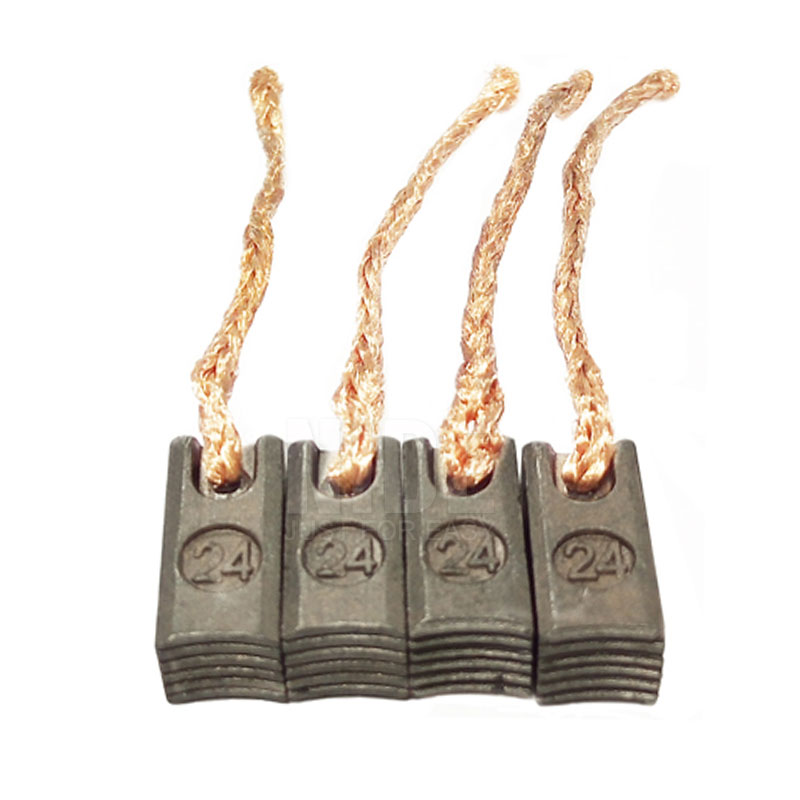
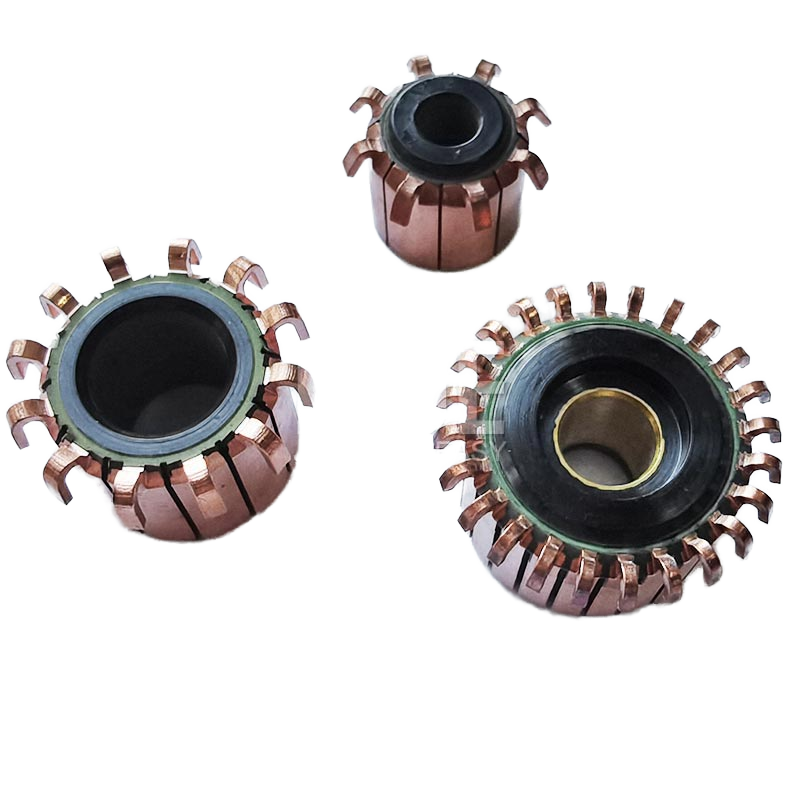
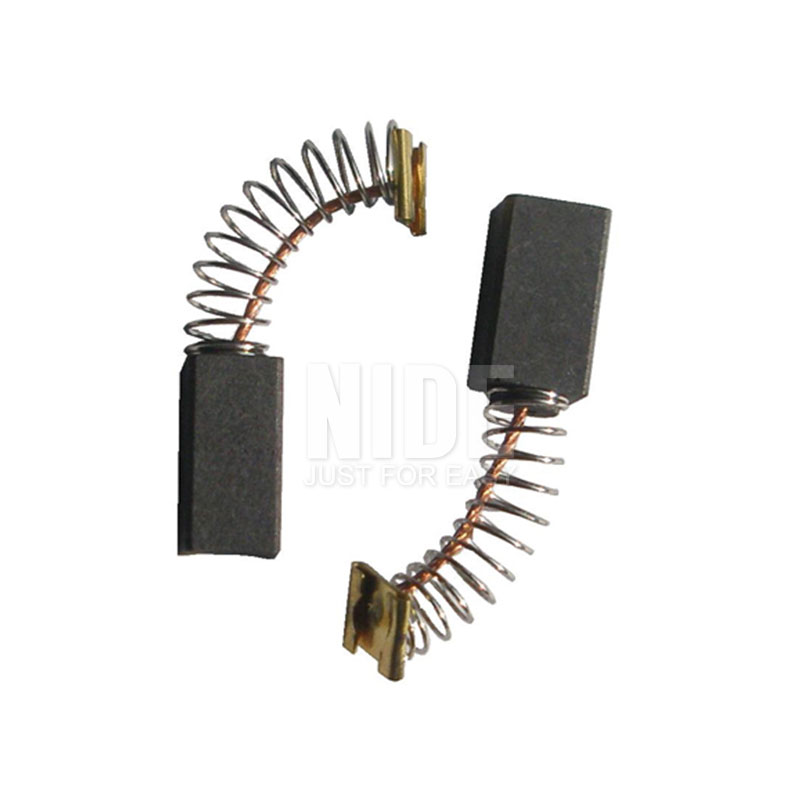
We supply not only high-speed automated equipment but also the high-precision matching components: hook/groove commutators, slip rings, carbon brushes, and shafts for zero-friction production start.
Pre-Shipment Trial Run Protocol
We mandate continuous factory trial runs using customer-supplied raw core stacks, wire, and commutators. Videos, CPK capability reports, and sample parts are dispatched for signoff prior to final dispatch.
Global Deployment & Remote Tele-Diagnostics
Backed by international technical partners, we offer on-site commissioning, electrical engineer training, and secure VPN-based remote diagnostic modules for zero-delay troubleshooting anywhere.
Competitive Total Cost of Ownership (TCO)
By integrating world-class brand core components (Mitsubishi/Siemens PLC, Schneider electrics, SMC pneumatics, NSK bearings) with efficient Chinese manufacturing, we deliver unmatched ROI.
Frequently Asked Questions for Rotor Assembly Equipment Buyers
Detailed answers addressing real-world factory constraints, commissioning timelines, and tooling compatibility for plant managers and procurement directors.
What specific rotor topologies and motor types can your assembly lines accommodate? +
Our automated rotor manufacturing cells cover universal motor armatures (used in portable power tools, high-speed blenders, and vacuum cleaners), low-voltage automotive DC armatures (wiper motors, starter armatures, window lifters), permanent magnet brushless DC (BLDC) internal and external rotors, outer-rotor wheel hub motors (for e-bikes, cargo rickshaws, and e-scooters), and high-voltage permanent magnet synchronous motors (PMSM) for new energy automotive powertrains. Tooling is engineered modularly, allowing lamination stack heights from 10 mm up to 300 mm and rotor stack diameters from Ø15 mm up to Ø250 mm.
How does the dynamic balancing station handle unbalance correction, and what standards are met? +
The dynamic balancing station uses ultra-sensitive hard-bearing or soft-bearing piezoelectric sensors with closed-loop digital signal processing to calculate both amplitude and angular position of residual unbalance across two correction planes. Correction is executed automatically based on rotor structure: for universal motor armatures, integrated twin high-speed milling cutters perform V-cuts on the lamination outer diameter; for BLDC or sealed traction rotors, dual CNC drill heads remove material along designated balance rings. The station routinely achieves ISO 1940 Grade G1.0 or G2.5 conformity with cycle times under 15–20 seconds per rotor.
What is the standard procedure for Factory Acceptance Testing (FAT) before shipment? +
We implement a strict three-phase FAT protocol. First, a dry-cycle mechanical endurance test is executed for 48 hours to confirm zero thermal or pneumatic deviation. Second, the buyer sends authentic production parts (lamination stacks, shafts, commutators, copper magnet wire, and insulation paper). Our engineers run a continuous batch of 300 to 500 completed rotors to evaluate CPK performance, wire tension stability, and dimensional concentricity. Finally, full test data, micrographic weld cuts, and run-off videos are compiled for customer signoff. Overseas clients are invited to attend in person at our Ningbo facility or via high-definition live video conference.
Can one automated line be retooled for multiple rotor models? What is the changeover time? +
Yes. Flexible manufacturing is a core architectural priority. When shifting between rotor models sharing similar shaft and lamination diameters, changeovers require only selecting a pre-programmed recipe from the Siemens/Mitsubishi HMI touchscreen, with servo-driven axes automatically repositioning flyer stroke and press-fit depths within 5 minutes. For major geometry changes requiring different shaft diameters, commutator profiles, or slot counts, our quick-release tooling plates, quick-change flyer heads, and modular press-jigs allow complete mechanical changeovers in 20 to 45 minutes by a trained operator.
What core components and electronic brands are integrated into your machinery? +
To guarantee long-term operational stability and accessible replacement parts worldwide, we strictly integrate tier-1 global standard components. Our lines employ Mitsubishi, Siemens, or Omron PLCs with industrial touchscreens; Panasonic, Yaskawa, or Delta servo drives; SMC or Airtac pneumatic cylinders and solenoid valves; NSK/SKF precision spindle bearings; and Schneider low-voltage electrical switchgear. All critical tooling surfaces undergo vacuum quenching and cryogenic hardening treatment to ensure wear resistance across millions of operating cycles.
What after-sales installation, training, and warranty support do you provide overseas? +
Every equipment contract includes a comprehensive 12-month mechanical and electrical warranty. We provide factory dispatch of qualified mechanical and electrical commissioning engineers directly to your overseas manufacturing plant to supervise line layout, electrical hook-up, pneumatic piping, and trial production. Furthermore, we conduct structured on-site operator and maintenance training. Post-commissioning, our remote diagnostic modules allow our senior software engineers to log into your line via secure industrial gateways to troubleshoot software alarms, adjust control loops, and assist with new recipe configurations within hours.
Ready to Automate Your Rotor Manufacturing Cell?
Consult with our senior motor tooling and automation engineers today. Send your rotor 2D/3D component drawings, slot geometry, target tact times, and annual output targets for an itemized turnkey proposal.
