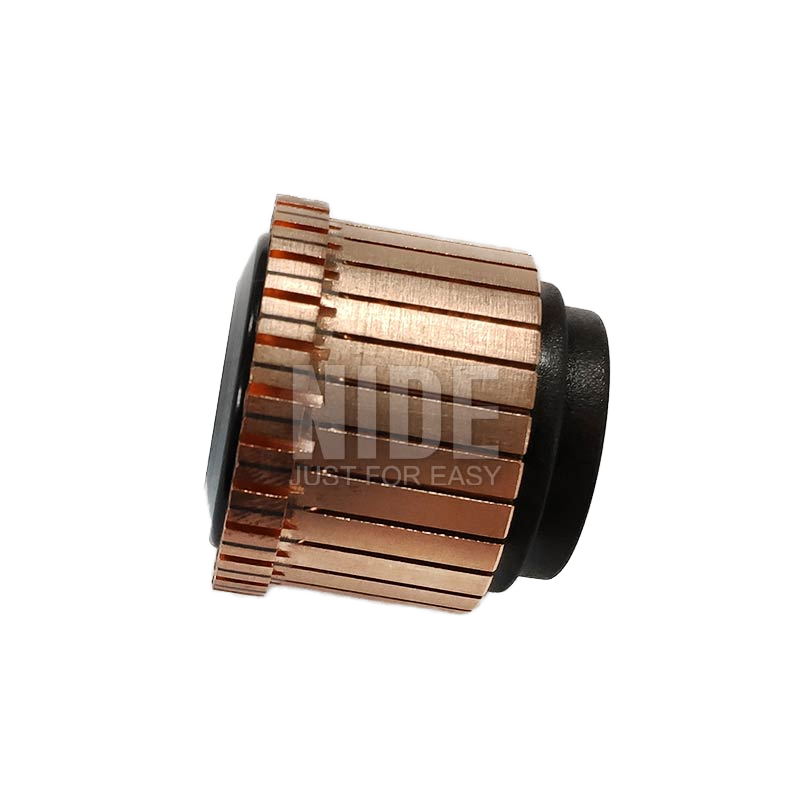
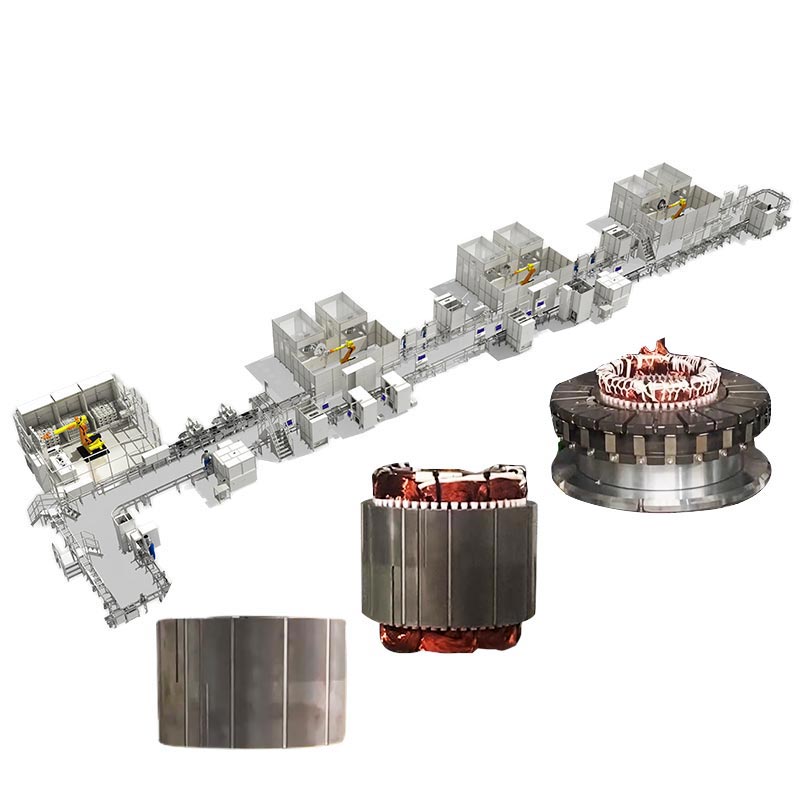
Precision Rotor Machinery & Turnkey Components
Engineered for high-throughput production lines across industrial induction systems, micro-motors, and e-mobility drive units. Each asset delivers strict metallurgical consistency, continuous mechanical stability, and high cycle speeds.



2010
Established Engineering Hub
50+
Global Export Destinations
30,000+
m² Specialized Plant Footprint
< 0.5%
Rotor Internal Porosity Limit
Engineering Evaluation: Vertical vs. Horizontal Rotor Die Casting Architecture
Selecting the optimal rotor die casting machinery configuration requires an in-depth understanding of kinetic injection physics, thermal dynamics of molten aluminum (and high-conductivity copper), and microstructural density controls.
Vertical Centrifugal Die Casting Systems
Best suited for standard induction motor rotors and low-to-medium volume industrial drives. Utilizes gravitational and centrifugal force vectors to displace hydrogen gas out of conductive squirrel cage conductor slots during high-speed molten filling.
- Minimal flash along the outer skew angle
- Compact factory footprint integration
- Ideal for laminated stack heights ≤ 300 mm
- Cost-effective hydraulic mechanical tooling
Automated Horizontal Cold Chamber Cells
Engineered for mass automation, automotive powertrain production, and large-diameter wind turbine or compressor rotors. Employs multi-stage real-time servo shot injection with digital closed-loop velocity regulation.
- Dynamic real-time injection curve control
- Seamless integration with 6-axis loading robots
- High clamping force (300T to 1200T+)
- Ultra-low porosity for IE4 and IE5 standards
High-Conductivity Copper Rotor Casting
Designed specifically to process pure electrolytic copper at melting temperatures exceeding 1085°C. Delivers substantial electrical efficiency gains over traditional aluminum, radically slashing I²R stator-rotor resistive losses.
- Tooling fabricated from specialized high-temp alloys
- Precision vacuum de-airing subsystems
- Maximum electrical conductivity (≥ 98% IACS)
- Crucial for ultra-premium efficiency regulations
Strategic Procurement & Technological Evolution Trends
In response to international IE4/IE5 energy mandates, smart factory protocols, and aggressive carbon zero roadmaps, manufacturing lines are abandoning legacy casting equipment for highly instrumented, automated casting centers.
Real-Time Closed-Loop Injection
Modern procurement prioritizes multi-stage shot sleeves governed by sub-millisecond servo valves. This allows real-time pressure curve tuning to eliminate secondary shrinkage cracks inside the end rings and slot bridges.
Integrated Ultra-Vacuum Evacuation
Evacuating the die chamber to ≤ 50 mbar prior to liquid metal injection reduces trapped hydrogen gas porosity by up to 92%, securing exceptional balancing stability and dynamic rotational equilibrium at high RPMs.
Turnkey Automation Workcells
Global procurement has pivoted from isolated casting machines toward fully autonomous cells: robotic iron/aluminum ladling, automatic shaft insertion, die-release spray, trimming, inline de-gating, and dynamic balancing verification.
Traceability & Smart Factory SCADA
Machine controllers now transmit comprehensive thermodynamic injection files, die thermal profiles, melt temperatures, and cycle data via OPC-UA and MQTT into plant MES suites for life-cycle component auditing.
| Evaluation Parameter | Legacy Atmospheric Casting | Modern Vacuum Die Casting | Turnkey Servo Automated Cell |
|---|---|---|---|
| Internal Gas Porosity (%) | 2.5% – 5.0% Volume Fraction | < 0.8% Micro-porosity | ≤ 0.3% Critical Porosity Index |
| Conductor Bar Electrical Conductivity | 52% – 56% IACS | 58% – 61% IACS (Pure Aluminum) | ≥ 62% IACS (Al) / ≥ 98% (Cu) |
| Cycle Time (Stack Height 150mm) | 55 – 70 seconds / cycle | 35 – 45 seconds / cycle | 22 – 30 seconds (Continuous Automation) |
| Secondary Machining Allowance | 1.2 mm – 2.0 mm on End Rings | 0.5 mm – 0.8 mm Precision | ≤ 0.3 mm Near-Net Shape Design |
| Traceability & MES Interfacing | Manual paper log verification | USB Data Logger Export | Native OPC-UA / MQTT Cloud Protocol |
Ningbo Nakro Intelligent Equipment: Engineering Excellence Since 2010
Headquartered in the advanced machinery industrial corridor of Ningbo, Zhejiang, Ningbo Nakro Intelligent Equipment Co., Ltd. has spent over a decade establishing itself as a Tier-1 innovator for electric motor production systems. Operating from a standardized manufacturing facility encompassing over 30,000 m², our engineering teams deliver end-to-end motor automation solutions spanning rotor die casting, high-precision armature winding, stator coil insertion, and complete motor assembly lines.
Our competitive advantage lies in our holistic process mastery. Rather than supplying standalone, unverified machinery, we engineer comprehensive tooling systems optimized for specific lamination geometries, slot designs, and skew profiles. Every production asset undergoes strict run-off verification utilizing the client's proprietary steel sheets and conductors prior to global shipment.
ISO 9001 Certified System
Standardized 6-stage quality gating protocol from steel incoming to FAT trial runs.
On-Site Verified Facility
Independently audited operational footprint, verified by global inspection bodies.
13+ Years Export Pedigree
Reliable turn-key machinery deployment across 50+ countries globally.
Complete Component Synergies
Full turnkey supply of precision commutators, shafts, slip rings, and laminations.
Full-Service Turnkey Deployment Pipeline
We reduce foreign capital expenditure risks through a rigorous, five-step technical execution protocol:
- Kinetic & Thermal Drawing Review: In-depth slot analysis and alloy fill simulation.
- Customized Tooling & Mold Design: Hardened H13/SKD61 die steel with long-run thermal endurance.
- Factory Acceptance Test (FAT): Physical sample verification using the buyer's genuine parts.
- Global Mechanical Commissioning: On-site engineer setup and comprehensive parameter optimization.
- Life-Cycle Tooling & Spares: Rapid dispatch of replacement nozzles, sleeves, and specialized fixtures.
Procurement & Technical Engineering FAQ
Direct technical answers addressing the critical mechanical, electrical, and commercial parameters encountered when sourcing rotor die casting machinery from China.
What are the key technical parameters required to quote a rotor die casting machine? +
To provide an accurate engineering proposal and cycle time calculation, our technical team requires: (1) Rotor lamination outer diameter and inner bore dimensions, (2) Minimum and maximum laminated stack heights, (3) Detailed rotor slot drawing including conductor bar cross-section and skew angle, (4) Conductor alloy specification (Pure aluminum 99.7%, Al-Si alloy, or Electrolytic Copper), (5) Target production output per shift, and (6) Automation expectations (manual ladling vs. complete automated robotic cell).
How does your machinery eliminate internal air bubbles and shrinkage porosity? +
Porosity is tackled via three integrated engineering vectors: First, we employ high-efficiency multi-stage injection cylinders equipped with fast-response servo valves that transition smoothly from slow filling (preventing molten turbulence) to rapid packing. Second, high-vacuum evacuation systems strip air from the closed die cavity right before the shot stroke. Third, dynamic squeeze pins and intensified hydraulic pressure maintain continuous force on the end rings during solidification, compensating for liquid-to-solid volumetric shrinkage.
Can one casting machine accommodate different rotor sizes and stack heights? +
Yes. Our casting machinery is designed with modular tooling systems. Different rotor stack heights within the same diameter family can typically be produced on the same base mold simply by adjusting the lower ejection stroke and replacing the internal lamination locating mandrel. For rotors with different outer diameters, our quick-change clamping mechanisms enable tool switchovers within 30 to 45 minutes, significantly minimizing production downtime.
How is machine acceptance and performance verified before overseas dispatch? +
We enforce a strict Factory Acceptance Testing (FAT) protocol. Clients are invited to send batches of their actual production lamination stacks and shafts to our facility in Ningbo. We run continuous trials, measure conductor electrical conductivity, balance accuracy, and run-out tolerances, and conduct destructive cross-sectional cuts or X-ray radiography inspections to verify internal density. High-definition video logs and comprehensive inspection certificates are provided for final client sign-off.
What international safety and quality standards do your machines adhere to? +
All our manufacturing operations conform strictly to ISO 9001 quality management guidelines. Our electrical architectures and hydraulic systems comply with European CE safety standards, utilizing certified safety interlocks, light curtains, emergency stops, and dual-channel safety relays. Electrical cabinets feature premium international components such as Siemens or Mitsubishi PLCs, Schneider switchgear, and Rexroth or Yuken hydraulic systems.
What after-sales commissioning and technical support are provided for global customers? +
We provide comprehensive lifecycle support. For new line installations, we dispatch skilled field engineers for on-site mechanical alignment, electrical hook-up, mold commissioning, and operator training. Furthermore, our machines feature industrial IoT VPN gateways enabling our software engineers in Ningbo to perform direct remote telemetry diagnostics, PLC firmware updates, and real-time troubleshooting assistance whenever required.
What are the standard commercial payment terms, build times, and export packaging? +
Standard delivery terms include FOB Ningbo/Shanghai, CFR, or CIF to any major world seaport. Payment is structured around milestones, typically T/T (30% deposit upon order confirmation, 60% after successful trial run video/FAT approval, and 10% balance prior to release or against bill of lading) or Irrevocable Letter of Credit (L/C at sight). Lead time spans 45 to 90 days depending on the level of custom tooling and automation requested. All machinery is sealed in vapor-barrier anti-corrosion film and packaged within solid, ISPM-15 compliant export timber crates.
Ready to Upgrade Your Rotor Manufacturing Efficiency?
Consult with our sales engineering team today. Submit your rotor drawings, slot profiles, and target volume specifications for a tailored technological proposal and formal quotation.
