Advanced Production Systems & OEM Sub-Assemblies
Precision-engineered motor components, copper hook commutators, NdFeB arc segments, and automated winding machine modules serving high-efficiency electric drives and automotive alternators.
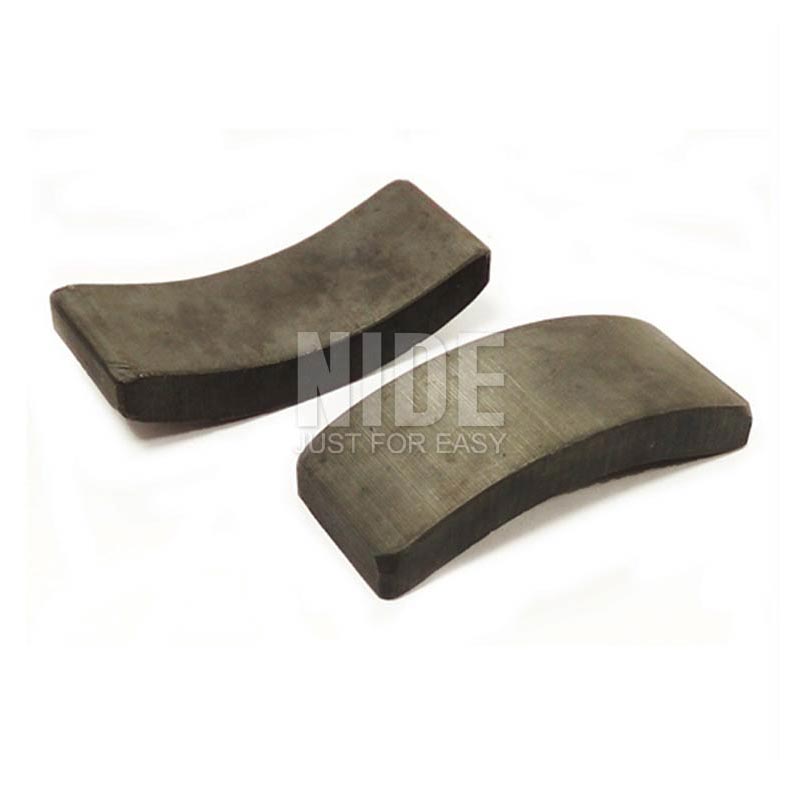
NIDE 12-220V DC Segment Motor Ferrite Magnet Permanent Arc Shape
High-coercivity wet-pressed strontium ferrite arc magnets developed for automotive auxiliary motors, marine bilge pumps, and micro-EV fluid circulation systems.
- Grade: Y30 / Y35
- Flux Density: Br 380-420 mT
- Thermal Range: -40°C to +250°C
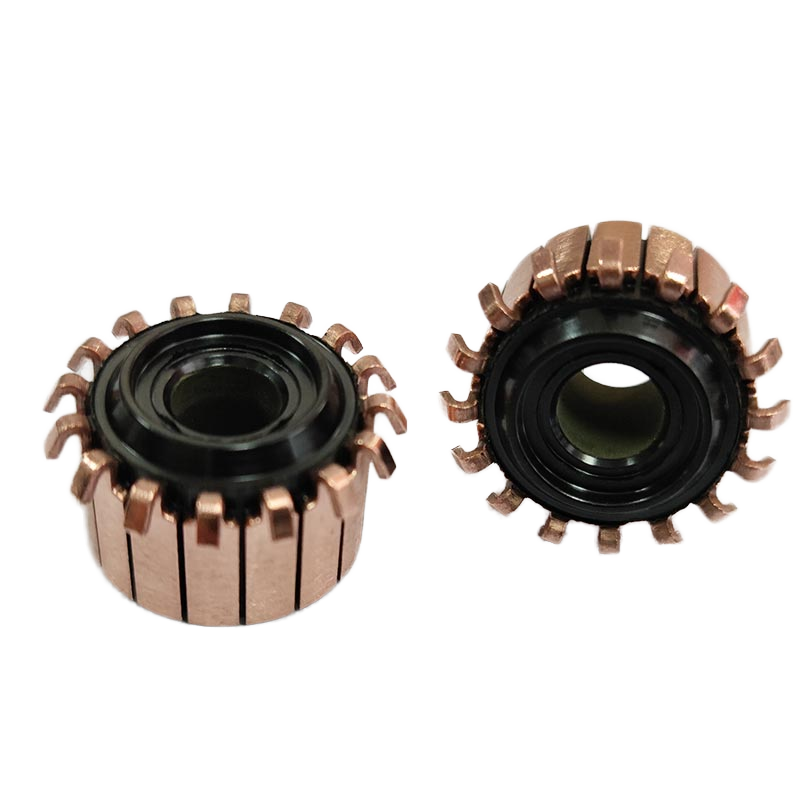
Customized Commutator Armature with Copper Hook NDPJ-HXQ-871A
Precision-machined hook-type copper collector commutator rotor armature designed for heavy-duty electric cooling fans, wiper drives, and 24V commercial vehicle starters.
- Silver-Bearing Copper 0.03%
- Dielectric Class: H (180°C)
- Centrifugal Spin: >35,000 RPM
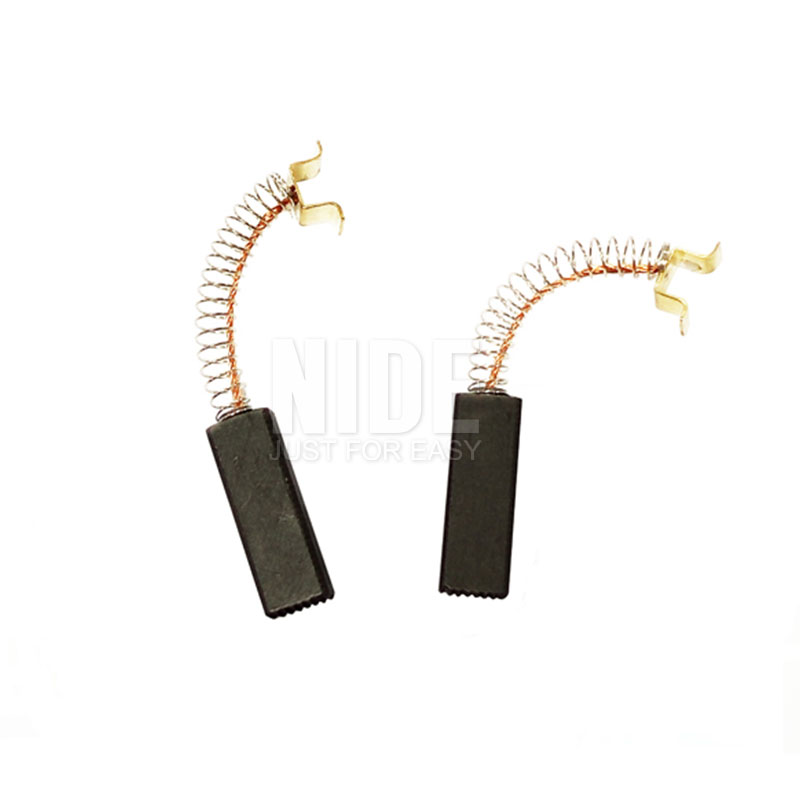
Nide NDPJ-TS-1 Auto Electrical Carbon Brush Parts
Copper-graphite sintered conductive brush elements ensuring ultra-low contact drop, zero commutator scoring, and extended operating cycles under tropical humidity conditions.
- Metal Content: 50% - 75% Cu
- Current Density: <30 A/cm²
- Low Sparking Index (Grade E)
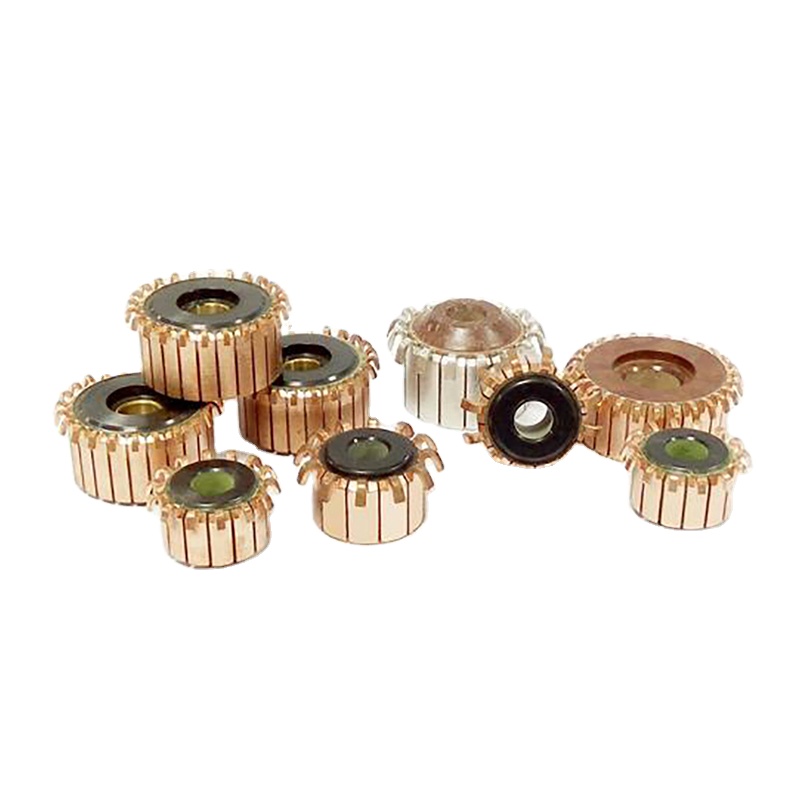
12V Commutator for Industrial Motors NDPJ-HXQ-03007
CE-certified high-precision segmented hook commutator optimized for high-vibration power tools, industrial DC servomotors, and automated linear actuators.
- Molding Material: Phenolic Resin
- Inter-Segment Breakdown: >500V
- Bar-to-Bar Step: <0.002 mm
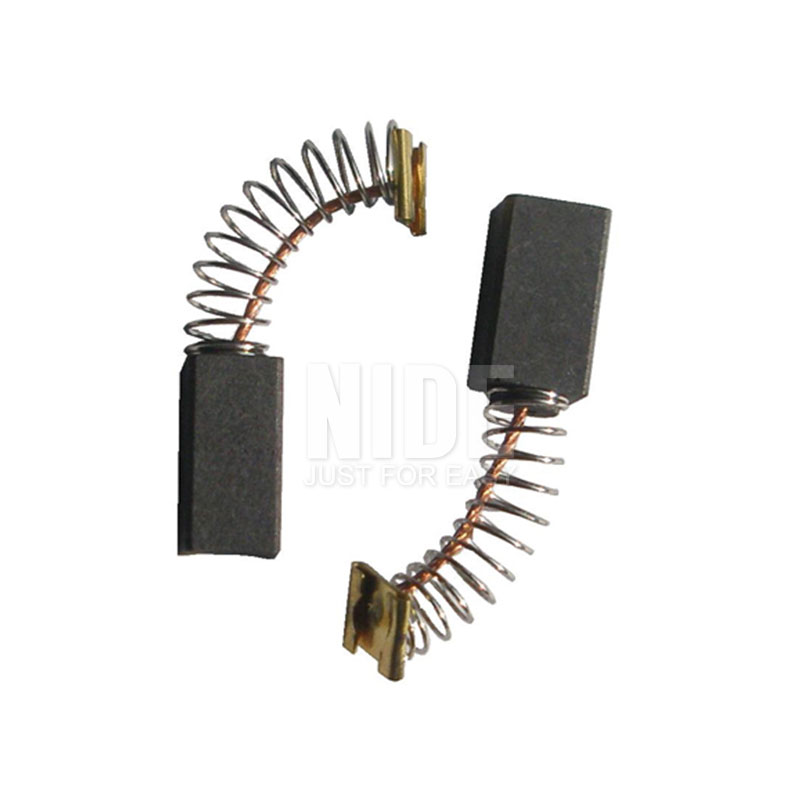
High Precision Alternator Carbon Brushes NDPJ-TS-7
Engineered electro-graphite composition for heavy duty vehicle alternators, regenerative charging dynamos, and industrial crane hoist DC drive units.
- Specific Resistance: 15-30 µΩ·m
- Tensile Strength: >18 MPa
- Lead Wire: Tinned Copper Twist
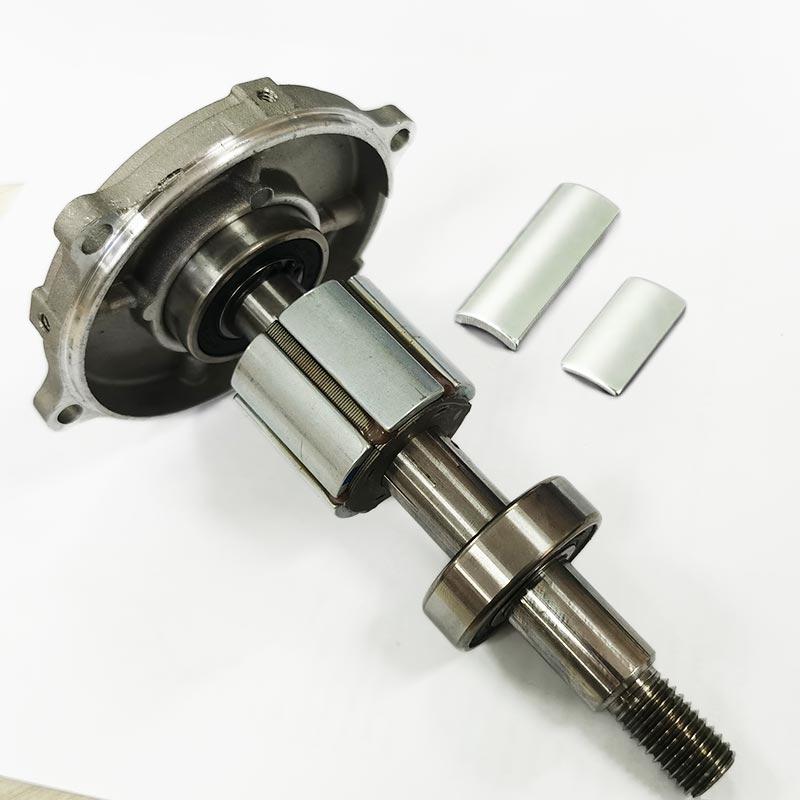
Customized N52 Neodymium Magnets NDPJ-CW-62 3
Ultra-high energy density sintered NdFeB magnets suited for PMSM traction stators, high-speed brushless inner rotors, and electric commercial delivery vehicles.
- (BH)max: 50-53 MGOe
- Plating: Triple Ni-Cu-Ni + Epoxy
- Working Temp: Up to 150°C (SH/UH)
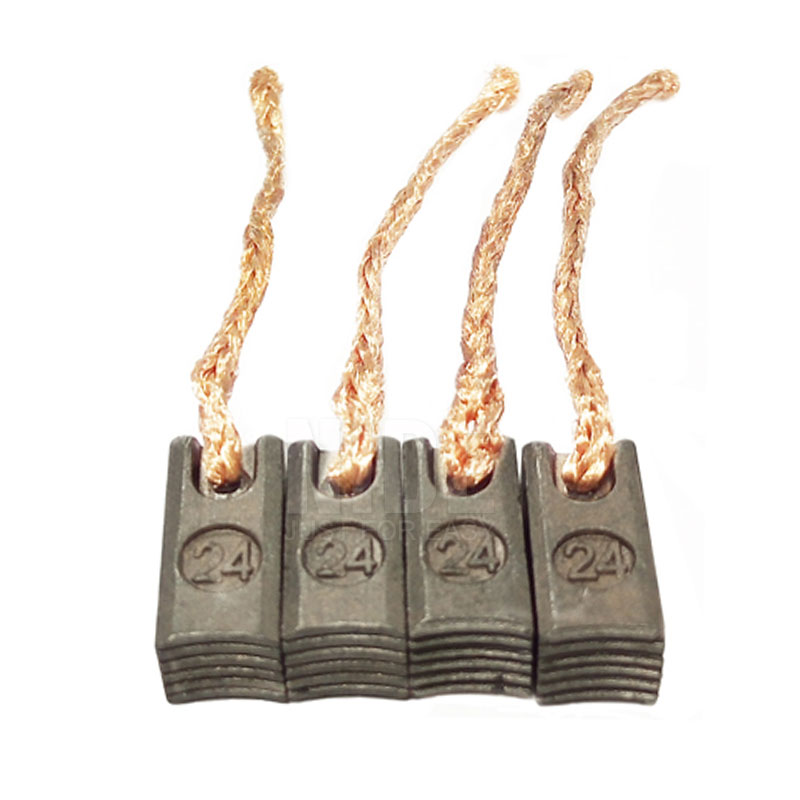
Micro Electric Motor Carbon Brushes NDPJ-TS-9
Sub-miniature self-lubricating carbon contact brushes fabricated for medical servomotors, throttle position actuators, and drone motor auxiliary units.
- Tolerances: ±0.01 mm
- Spring Force: Pre-calibrated
- CE & RoHS Compliant Material
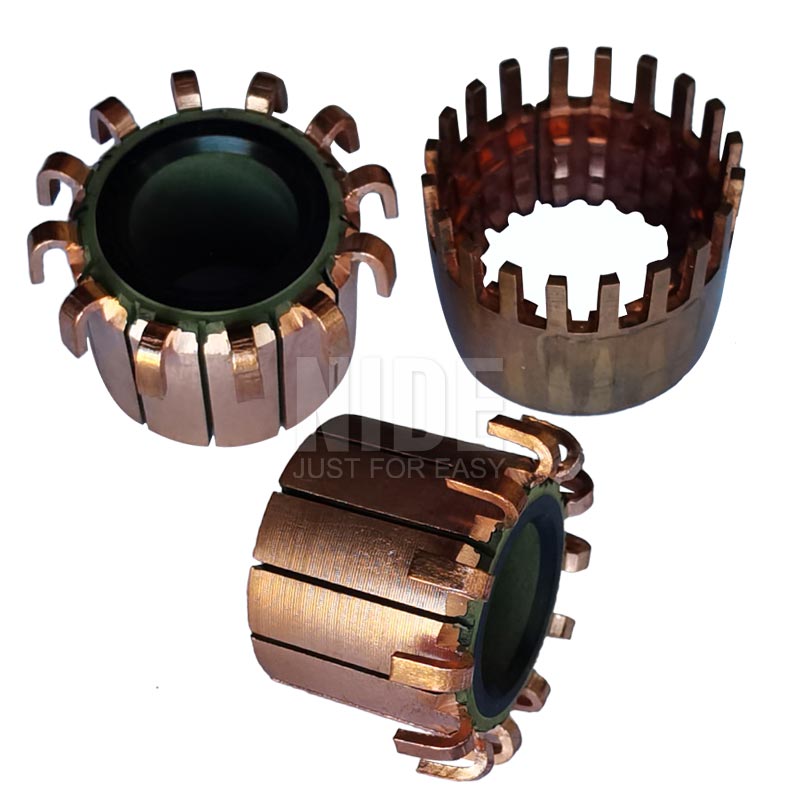
12-Segment Wiper Motor Commutator NDPJ-HXQ-174
Automotive OEM standard CCC certified commutator featuring mica insulation, reinforced steel retaining rings, and automated hot-staking hook terminals.
- 12 Segments / Precision Pitch
- High Temperature Epoxy Core
- Vibration Proof DIN EN 60068
Decarbonization & Electric Machine Manufacturing in Cartagena
As the primary maritime nexus of Colombia and the Northern Caribbean rim, Cartagena de Indias has transcended its historical maritime legacy to become one of South America's most dynamic chemical, naval, and manufacturing corridors. Centered around the Mamonal Industrial Zone (Zona Industrial de Mamonal) and bolstered by world-class deepwater terminal access via the Port of Cartagena (Terminal de Contenedores Contecar & Sociedad Portuaria Regional de Cartagena), the city provides an unmatched geostrategic foundation for automated machinery deployment and clean-technology assembly lines.
Colombia's federal mandate under Law 1964 of 2019, coupled with ambitious municipal transit goals under the CONPES 3991 Policy on National Electric Mobility, has initiated an aggressive transition toward zero-emission urban fleets, commercial freight electrification, and maritime harbor craft conversion. This paradigm shift demands localized, high-throughput manufacturing of core traction assemblies—most notably, permanent magnet synchronous motors (PMSM), alternating current induction motors, and brushless DC (BLDC) stators.
"Integrating automated stator assembly lines in Cartagena bypasses prohibitive import tariffs on finished automotive electric motors, drastically reduces logistical lead times across the Andean Community (CAN) and Mercosur partners, and capitalizes on preferential tax structures within Cartagena's Free Trade Zones (Zona Franca de Cartagena & Zona Franca Parque Central)."
Cartagena's Localized Industrial Use Cases
The operational environment in Bolívar and the broader Caribbean basin imposes distinct environmental and electromechanical criteria on electric machines. High ambient temperatures, excessive saline atmospheric content, and fluctuating utility grid transients necessitate stator manufacturing equipment with unprecedented precision in insulation paper insertion, hairpin welding metallurgy, and trickle varnish encapsulation.
Maritime Auxiliary & Harbor Craft
Automated stator production lines configured for high-torque outboard propulsion, bilge auxiliary pump drives, and port terminal gantry winches operating within Cartagena Bay’s corrosive maritime atmosphere.
Urban Fleet Electrification (Transcaribe)
Heavy-duty hairpin winding lines for transit bus auxiliary air compressors, HVAC thermal loops, and mid-drive traction packages compliant with Colombian topography and elevated stop-and-go thermal cycles.
Industrial Chemical & Mamonal Drives
Class H and Class N explosion-proof induction motor stators custom wound for petrochemical refineries, industrial blending tanks, and fertilizer bulk-handling equipment along the Canal del Dique.
Technical Deep-Dive: Turnkey EV Stator Manufacturing Architecture
Modern electric vehicle traction motors demand stator slot fill factors exceeding 75% to 85% to achieve high continuous power density, superior thermal conductivity, and minimized copper loss ($I^2R$). Traditional round-wire flyer or needle winding techniques, while suitable for low-power auxiliary stators, are increasingly superseded in automotive traction systems by Rectangular Copper Hairpin (Flat Wire) Technology. Nakro’s fully automated Cartagena-bound stator lines encompass six critical, high-precision automation cells.
| Cell Stage | Automation Module | Operational Parameters | Quality Check / Verification |
|---|---|---|---|
| Stage 01 | Slot Insulation Paper Insertion | B-stage DMD, Nomex, or PEEK film; CNC feed & cuffing | Laser positioning; 100% optical slot fill clearance |
| Stage 02 | Hairpin Forming & CNC Bending | Multi-axis servo CNC 3D bending; zero enamel-coat fracture | High-speed vision check of wire stripping and geometry |
| Stage 03 | Nested Hairpin Insertion into Core | Simultaneous multi-wire insertion; precision radial masking | Force-displacement transducers preventing wire crush |
| Stage 04 | End-Turn Twisting & Crown Crowning | Dual-direction servo die rings; calibrated pitch bending | Radial height micrometer sensing; pitch angle check |
| Stage 05 | Fiber Laser Hairpin Welding | High-power fiber/blue hybrid laser with 3D galvanometer | Automated melt-pool visual inspection & pyrometry |
| Stage 06 | Trickle / Vacuum Impregnation (VPI) | Continuous resin trickle with joule heating activation | Weight-gain validation, dielectric dissipation factor (tan δ) |
Hairpin Laser Welding vs. TIG Arc Welding
In high-volume EV manufacturing, traditional TIG arc welding introduces excessive heat affected zones (HAZ), which degrade adjacent slot insulation liners and increase the risk of turn-to-turn short circuits. Nakro integrates continuous-wave (CW) fiber laser welding featuring galvanometer scanning and real-time vision guidance. Copper's low absorption of infrared wavelengths is conquered using dynamic beam oscillation (wobble welding) or hybrid visible-spectrum blue/green laser heads, producing porosity-free weld nuggets with mechanical pull strength matching the virgin copper conductor.
End-of-Line (EOL) Electromechanical Diagnostics
Every stator unit leaving the Nakro production line undergoes exhaustive verification in a climate-controlled diagnostic cell prior to downstream housing integration. Test parameters strictly comply with IEC 60034-18 and IEEE 522 standards:
DC Winding Resistance
Four-wire Kelvin bridge measurement with automatic ambient temperature compensation down to micro-ohm tolerances (accuracy ±0.1%).
Surge & Impulse Stress
High-voltage pulse testing up to 5,000V with fast rise-time waveforms to reveal sub-microscopic insulation weak points and inter-turn flaws.
Partial Discharge (PD) Inception
High-frequency digital partial discharge sensors verifying that the stator operates completely corona-free under full inverter bus voltages.
Why South American Automotive Engineers Choose Nakro Equipment
Since our inception in 2010 in Ningbo, China, Ningbo Nakro Intelligent Equipment Co., Ltd. has established an authoritative international footprint as a premier manufacturer of armature production lines, stator automated cells, and full-turnkey motor assembly plants. Backed by our verified 30,000 to 50,000 square-meter production complex and an annual machine export pedigree spanning more than 50 industrial nations, our engineering heritage is custom-calibrated for turnkey projects in Latin America.
ISO 9001 Certified Systemic Rigor
Our manufacturing and tool-design procedures adhere to certified ISO 9001 quality standards, with rigorous pre-assembly dimensional verification of tungsten steel inserting blades, nozzles, and servo ball-screws.
End-to-End Component Sourcing
Beyond capital machinery, we maintain fully integrated supply pipelines for matching motor hardware: commutators, NdFeB arc magnets, high-density carbon brushes, and insulation slot paper, reducing procurement fragmentation.
Turnkey Factory Acceptance Testing (FAT)
Before shipment to Cartagena, machines undergo complete FAT using the client’s actual lamination laminas, copper magnet wire, and terminal molds, documented via high-resolution telemetry and run-off video verification.
Industrial IoT & Remote Tele-Diagnostics
Every line comes integrated with secure VPN hardware gateways, enabling our senior automation engineers to troubleshoot PLC ladder logic, update motion control algorithms, and assist Colombian operators in real-time.
Custom Tooling & Rapid Changeover
Engineered modular quick-disconnect cassettes allow Cartagena manufacturing facilities to shift production between differing stator stack heights and slot numbers in under 45 minutes.
Electrical Integrity, RETIE Standards & Grid Adaptation
Deploying heavy manufacturing machinery in Colombia requires complete alignment with national technical standards, primarily the Reglamento Técnico de Instalaciones Eléctricas (RETIE). Colombian industrial power distribution typically operates at 440V / 480V 60Hz or 220V three-phase systems, markedly differing from European 50Hz architectures. Nakro machines destined for Cartagena are built from the ground up with premium international automation platforms (Siemens, Schneider, Omron, or Delta) specifically configured for 60Hz utility stability, incorporating surge suppressors and line reactors to withstand Caribbean electrical utility spikes.
Furthermore, each machine console incorporates multi-lingual Spanish/English HMI control interfaces, comprehensive safety relays compliant with ISO 13849-1 (Category 4 / PL e), dual emergency circuits, and CE-marked safety light curtains to ensure maximum operator protection in accordance with local labor and occupational health statutes.
Frequently Asked Questions: Cartagena Sourcing & Deployment
How are machinery shipments routed and cleared through the Port of Cartagena?
Our heavy automated lines are loaded into heavy-duty seaworthy open-top or flat-rack containers with vapor-barrier foil packaging and desiccant packs to prevent maritime oxidation. Cargo transits directly from Ningbo Port to Cartagena’s terminal facilities (Contecar or SPRC). Nakro assists your local customs broker (Agente de Aduanas) with complete packing lists, HS Code classifications (typically 8479.81 / 8479.89 for automated coil winders and assembly cells), certificate of origin documents, and CE declarations for seamless DIAN customs clearance.
Are Nakro stator lines adapted to Colombia’s 60Hz industrial power grid?
Yes. All motors, main drives, servo systems, and chiller packages are engineered specifically for Colombian grid conditions: 220V, 440V, or 480V three-phase at 60Hz. We incorporate active power factor correction and line-filtering chokes to ensure strict adherence to Colombia's RETIE regulations and protect sensitive PLC controls against transient brownouts.
Can a single stator line produce multiple motor diameters and stack heights?
Yes. We design flexible tooling platforms. The insertion blades, wedge guides, and lacing plates are manufactured as modular tooling cassettes. Stacks ranging from 20mm to 200mm in height and diameters from 50mm to 300mm can be processed on the same line with a recipe changeover on the HMI and a mechanical tool swap taking less than an hour.
What is the standard lead time from contract signing to delivery at Cartagena?
Standard semi-automatic cells have an engineering and build cycle of 60 to 90 days. Full turnkey automated lines for EV hairpin or BLDC stators typically take 120 to 150 days, which includes mechanical fabrication, electrical cabinet wiring, PLC programming, and client Factory Acceptance Testing (FAT). Ocean transit from Ningbo to Cartagena typically averages 28 to 35 days.
How does Nakro handle on-site installation and commissioning in Colombia?
We provide two options: (1) Dispatching a dedicated Nakro mechanical and electrical engineering team directly to your facility in Cartagena, Barranquilla, or Bogotá for on-site leveling, mechanical alignment, FAT validation, and full operator training. (2) Comprehensive remote commission assistance through augmented-reality tele-support, detailed bilingual wiring diagrams, and high-definition station step-by-step videos.
Can we test the equipment using our local Colombian raw materials before shipping?
We actively require it. For all custom winding and insertion machinery, clients air-freight samples of their stator stampings/laminations, copper wire (enamelled round or flat hairpin), insulation slot paper, and varnish. We run real-world production runs at our facility, provide detailed dimensional CMM reports, and record unedited high-speed video proof before obtaining final shipping authorization.
What warranty and spare parts availability is provided for Latin American buyers?
All Nakro machinery includes a standard 12-month comprehensive warranty starting from the date of commissioning. We supply a two-year preventive spare parts consignment (including custom winding needles, cutter blades, sensors, and pneumatic seals) inside the machine crate. Critical electronic hardware utilizes universally accessible industrial brands (Siemens, Omron, Festo, SMC), guaranteeing rapid local replacement within Colombia.
What payment terms and financial instruments are supported?
We routinely support international trade finance via Documentary Letters of Credit (Irrevocable L/C at sight) and Telegraphic Transfers (T/T). Contracts can be denominated in USD, EUR, or CNY, with pricing established under Incoterms 2020 on FOB, CFR, or CIF Cartagena basis.
Design Your Custom Stator Production Line for Cartagena
Whether you are establishing a new e-mobility traction manufacturing facility in the Mamonal Industrial Zone or upgrading an existing motor refurbishment plant, our engineering team provides complete cycle time simulations, station layouts, and technical quotations.
