Featured Stator & Armature Manufacturing Machinery & Parts
High-precision motor manufacturing components and core production line equipment engineered for electric vehicle traction, industrial automation, power tools, and high-efficiency household motors.
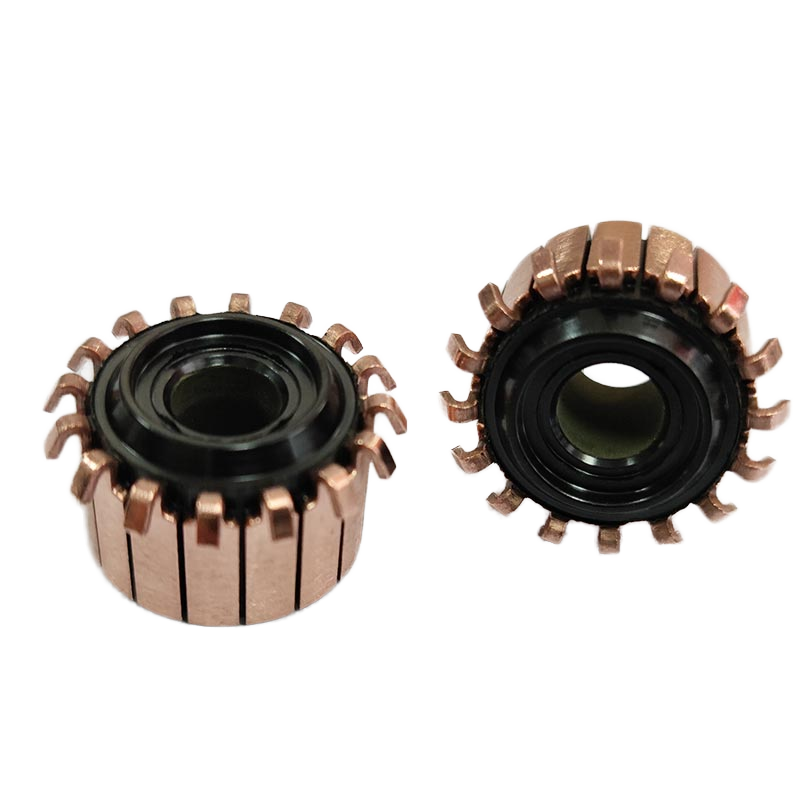
Customized Nide Auto Parts Commutator Armature with Copper Collector Hook NDPJ-HXQ-871A
Engineered for automotive DC cooling fans and starter motors, featuring high-purity oxygen-free copper hooks and Class H epoxy molding compound.
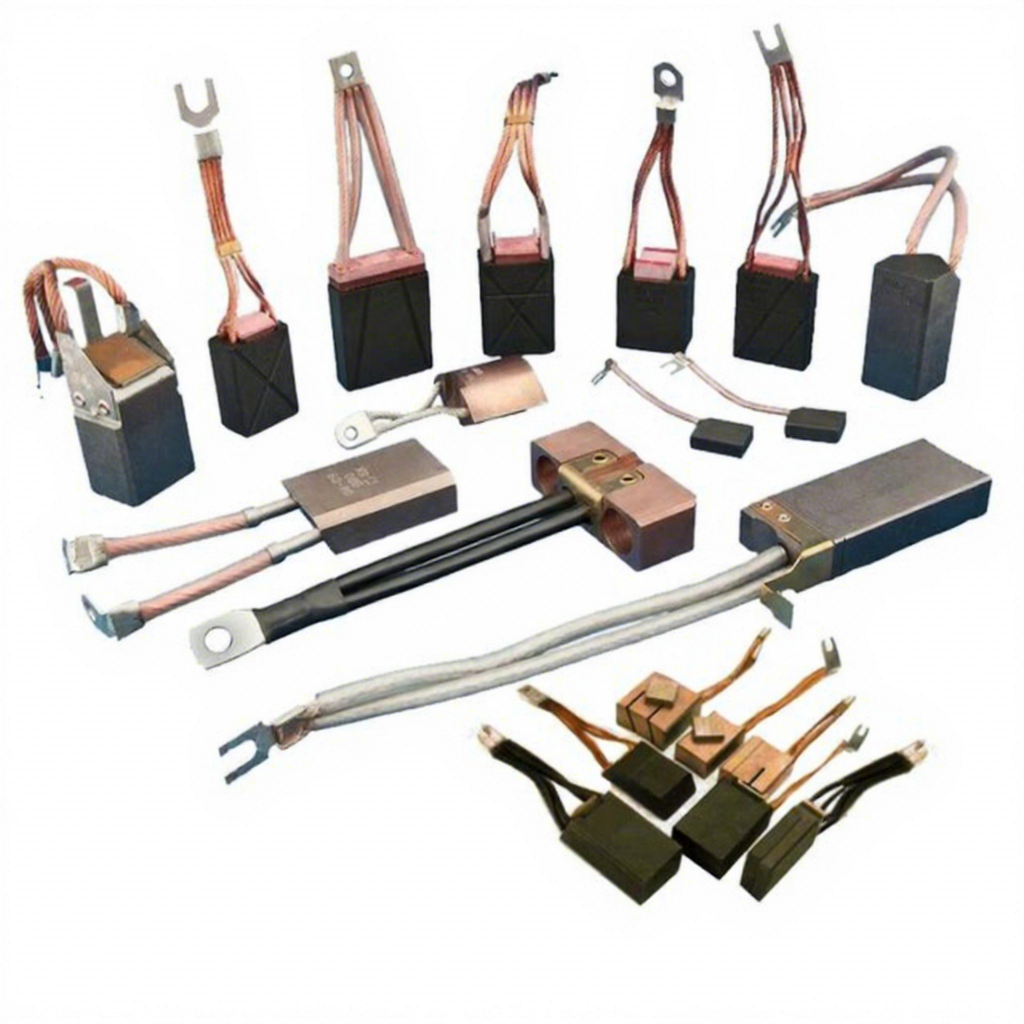
Miniature Alternator Carbon Brush AC Starter Motor Accessories 80-120V NDPJ-TS-11
CE Certified starter brush assembly manufactured from high-density electrographite compound, delivering minimal contact drop and extended duty lifetime.

24 Segments Hook Type DC Electric Motor Commutator NDPJ-HXQ-14
Heavy-duty power tool armature commutator designed with mica undercut insulation and reinforced copper segments for high RPM industrial grinders.
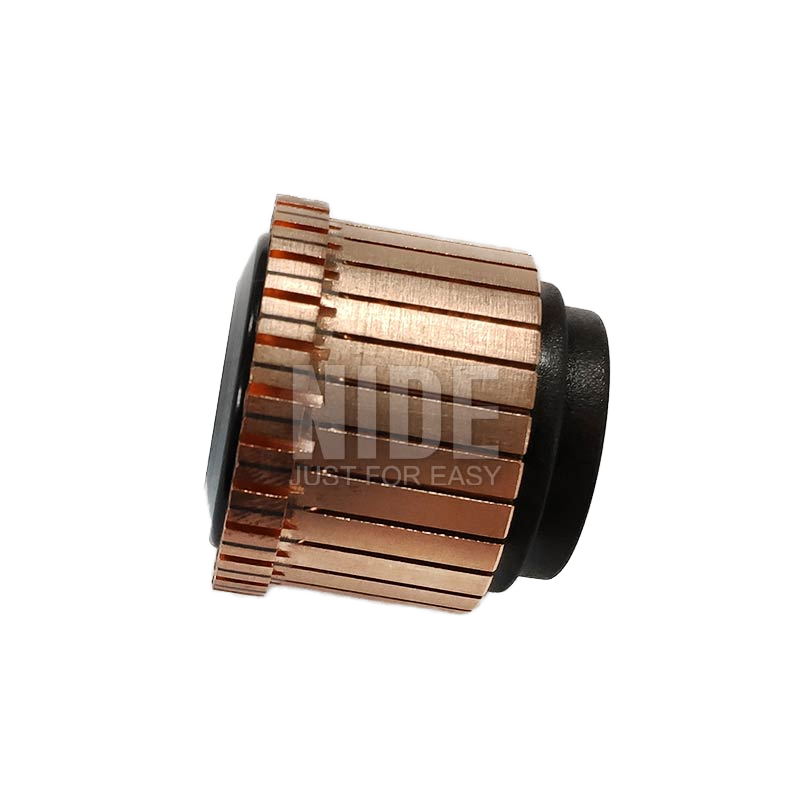
AC Motor Mica Commutator Armature Collector Segment NDPJ-HXQ-101 CCC Certified
Premium mica segment collector offering excellent dielectric breakdown strength, thermal shock resistance, and balanced mechanical stability under load.
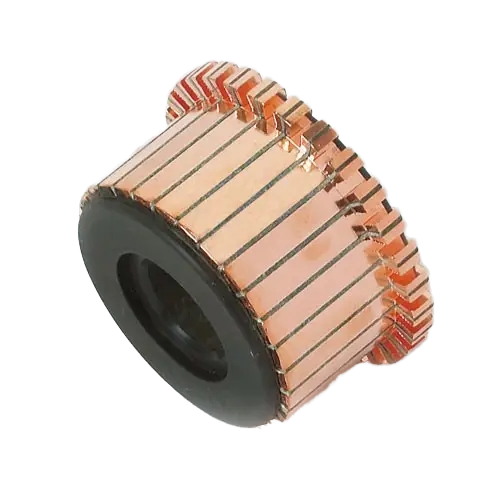
Customized DC/AC Motor Commutator Silver Copper Segmented Model NDPJ-HXQ-1005
Continuous duty treadmill and commercial fitness drive commutator with 0.1% silver-copper alloy formulation to mitigate high-torque sparking and thermal wear.
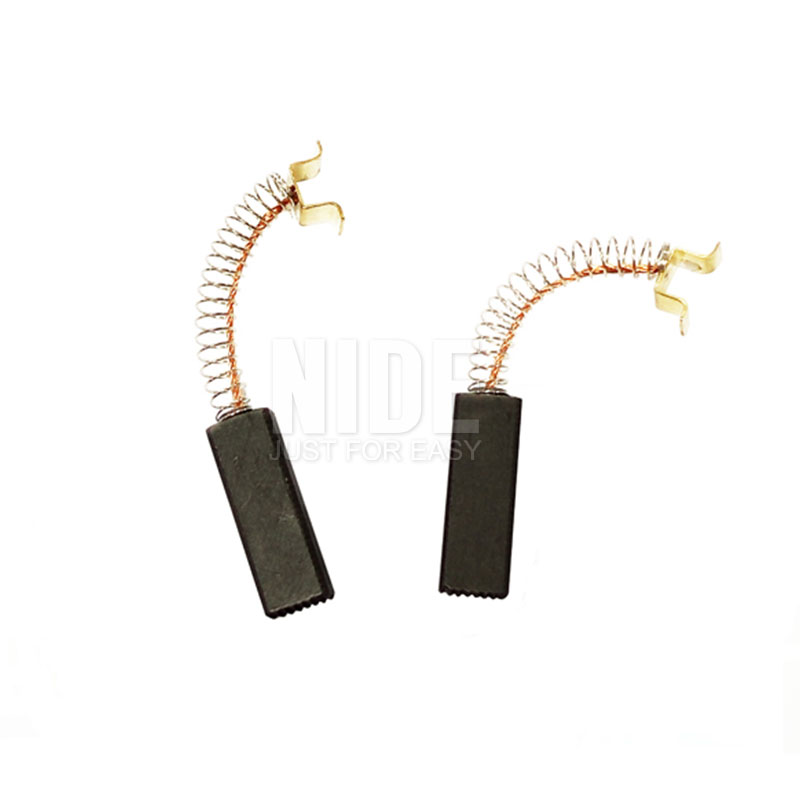
Automobile Electrical Carbon Brush NDPJ-TS-1 Long Lifetime DC Motor Series
Automotive-grade copper-graphite formulation optimizing contact resistance and low-wear characteristics across harsh vibration and temperature operating cycles.

Automatic Armature Rotor Hot Chamber Die Casting Machine PLC Core CE Certified
Fully automated aluminum rotor casting system integrated with hydraulic pressure profiling, automated de-molding, and real-time core temperature monitoring.
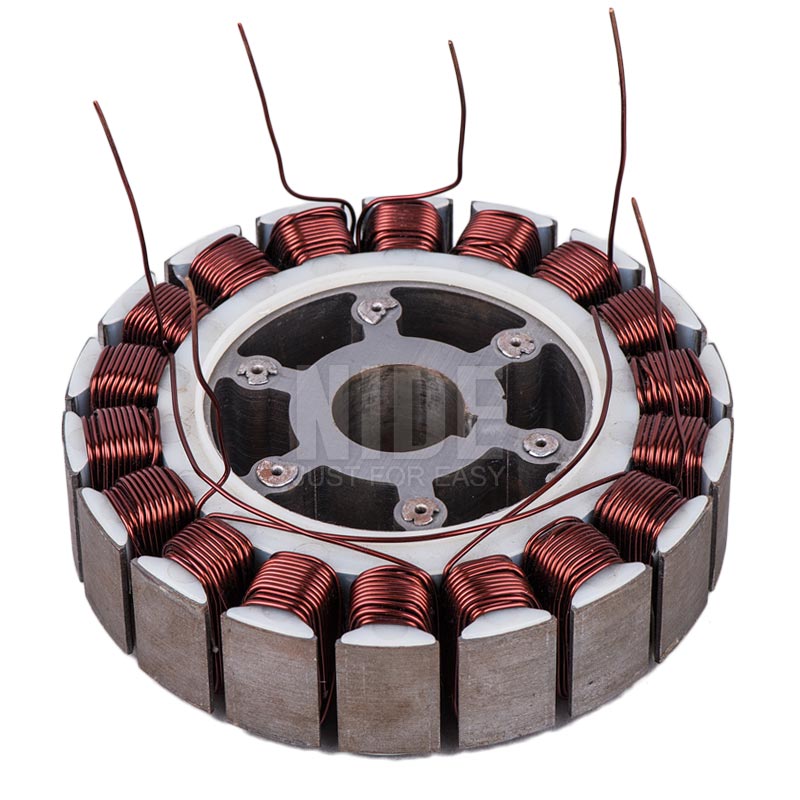
Automatic BLDC Wheel Motor Stator Coil Needle Winding Machine PLC Controlled
Dual-station CNC multi-axis flyer and needle winding machine dedicated for outer-rotor e-bike hub motors and automotive auxiliary brushless drives.
Stator Slot Insulation Line Engineering: Dielectric Physics & Mechanics
In electric machine manufacturing, stator slot insulation is the primary dielectric barrier safeguarding phase-to-ground and phase-to-phase isolation against catastrophic insulation breakdown, partial discharge (PD), and thermal-shear degradation.
Substrate Selection: DMD, Nomex & Polyimide
Modern stator insulation lines process composite multilayer materials including Dacron-Mylar-Dacron (DMD), meta-aramid Nomex® laminates, and polyimide films (Kapton®). For inverter-fed motors, Class H (180°C) and Class N (200°C) laminates must resist thermal corona degradation caused by steep dV/dt voltage pulses from silicon carbide (SiC) and GaN switching circuits.
Continuous Creasing, Cuffing & Cutting
Automated slot cell paper inserters execute precision operations: longitudinal edge cuffing (single or double folding to prevent wire friction shearing), precision creasing to match lamination slot profiles (round, trapezoidal, or semi-closed), and continuous servo knife shearing with a cut-length precision of ±0.10 mm.
High-Speed Inserting Mechanics
High-speed mechanical and servo inserters achieve indexing and push-in cycles under 0.3 seconds per slot. Critical tooling components like push rods, expanding mandrels, and guide fingers must feature mirror-polished carbide or tungsten-coated surfaces to prevent surface micro-scratches on insulation paper liners.
In-Line Dielectric & Vision Verification
Turnkey stator insulation lines integrate real-time optical vision stations to inspect cuff presence, slot liner alignment, and cuff protrusion symmetry. This is coupled with high-voltage dry dielectric test probes to verify partial discharge inception voltage (PDIV ≥ 1.8 kV) before copper winding starts.
Top 10 Stator Insulation Line Manufacturers & Suppliers
Comprehensive benchmark analysis of the world's leading stator automation and insulation machinery suppliers, categorized by engineering focus, line cycle performance, and customization capability.
| Manufacturer / Supplier | Headquarters | Primary Technical Specialization | Typical Slot Insertion Speed | Automation Grade & Customization | Typical End Markets |
|---|---|---|---|---|---|
| Ningbo Nakro Intelligent Equipment | Ningbo, China | Turnkey Stator Lines, Slot Paper Inserters, Winding & Testing | 0.20 – 0.35 s/slot | Fully Automated / Modular Custom Tooling & Components | EV Traction, Industrial Motors, BLDC, Power Tools |
| Statomat Specialmaschinen | Niedernhausen, Germany | Heavy Industrial Stator Winding & High-Voltage Slot Insulation | 0.30 – 0.50 s/slot | High Customization / Heavy Duty Large Stator Automation | Wind Energy, Hydro Generators, Heavy Industrial Drives |
| Aumann AG | Beelen, Germany | Hairpin E-Mobility Stator Assembly & Paper Inserters | 0.25 – 0.40 s/slot | Fully Automated Large Volume Turnkey Lines | Automotive EV OEM Traction Motors |
| Nidec Motor Engineering | Kyoto, Japan | Micro-Motor, Appliance & High-Density Stator Production Cells | 0.22 – 0.35 s/slot | Standardized Modular Automated Cells | Precision Micro BLDC, Consumer Electronics, HVAC |
| Marsilli S.p.A. | Castelleone, Italy | Precision Coil Winding & Direct Stator Tooth Insulation | 0.30 – 0.45 s/slot | Robotic Automated Assembly & Ultrasonic Bonding | Automotive Actuators, EPS Motors, Sensor Coils |
| Schuler Group (Beetz) | Göppingen, Germany | Lamination Stamping to Automatic Stator Interleaving Lines | 0.35 – 0.60 s/slot | Integrated High-Speed Press to Assembly Cell | Global Automotive Tier-1 & Generator Producers |
| Odawara Engineering | Kanagawa, Japan | Standard Single/Three-Phase Stator Inserting & Forming Lines | 0.28 – 0.42 s/slot | Semi to Fully Automated Classic Stator Production Lines | Home Appliances, Air Conditioning Compressors |
| Demmaq | Barcelona, Spain | Medium Stator Rewinding & Slot Liner Automated Equipment | 0.40 – 0.65 s/slot | Flexible Batch Production Systems | Industrial Pumps, Railway Traction Repair & Build |
| Comau (Stellantis Group) | Grugliasco, Italy | Robotic E-Drive Hairpin Stator Cells & Slot Paper B-Stage Units | 0.25 – 0.38 s/slot | Heavy Industrial Robotics & Digital Twin MES Line | High-Volume EV Powertrain Plants |
| SMZ s.r.o. | Nove Mesto, Slovakia | Central European Winding & Stator Insulation Inserting Units | 0.35 – 0.50 s/slot | Customized Tooling & Regional Integration Support | Automotive Ancillary Motors, Pump Equipment |
Future Procurement & Technological Trends in Stator Automation
The electric motor sector is transitioning under the pressure of 800V silicon carbide inverters, hairpin rectangular conductors, and smart zero-defect traceability requirements.
1. 800V SiC Architecture & Zero Partial Discharge
Commercial EV platforms are migrating rapidly from 400V to 800V architectures. Fast-switching silicon carbide MOSFETs generate high dV/dt transients (>50 kV/μs), increasing stress across stator slot liners. Machine procurement now mandates lines capable of folding ultra-pure Kapton-aramid laminates without micro-cracking, preserving high partial discharge inception voltages (PDIV) across extended operating temperature profiles.
2. Hairpin Stator B-Stage Epoxy Slot Liners
In conventional random-wound round wire stators, paper liners are inserted and held by mechanical spring tension. In high-power-density hairpin stators, automated lines must feed, fold, and insert specialized B-stage epoxy-coated insulation. During post-assembly heating, this B-stage coating melts and bonds securely to both copper pins and electrical steel laminations, eliminating air gaps and hot spots.
3. Rapid Toolless Changeover & Servo Flexibility
Factory managers no longer tolerate 4-hour changeover windows between motor frame sizes. Next-generation stator insulation inserters feature full servo axis adjustability for slot depth, stack height (from 20 mm up to 350 mm), and indexing diameters. Digital recipes loaded from the HMI screen complete mechanical adjustments in under 15 minutes.
4. Closed-Loop IIoT Quality & Digital Traceability
Under Industry 4.0 guidelines, every processed stator core receives an engraved laser 2D DataMatrix code. The insulation machine records feed force, paper roll lot numbers, cuff folding thickness verification, and high-pot leakage currents directly into the plant MES via OPC-UA protocols, ensuring complete traceability per unit.
How to Evaluate a Stator Insulation Production Line Supplier
Industrial procurement directors should assess prospective automation suppliers against five rigorous mechanical and lifecycle reliability metrics.
1. Tooling Hardness & Surface Tribology
Abrasive materials like aramid paper wear out standard tool steels quickly. Verify that paper cutting blades and folding jaws use powder metallurgy high-speed steel (ASP-23 or ASP-60) or solid tungsten carbide (WC-Co) hardened to >64 HRC to prevent burrs that cut paper insulation.
2. Lamination Stack Tolerances & Skew Handling
Many stators incorporate helical skew angles (5° to 12°) to reduce cogging torque. Inquire whether the inserter's tooling rotates progressively during insertion to accommodate skew geometry without tearing paper cuffs at exit slots.
3. Servo Synchronization & Feed Tension
Uneven mechanical unwinding introduces paper stretch, causing variable cuff lengths. Look for closed-loop dancer roll tension sensors linked to servo unwinding motors that maintain continuous web tension within ±5% across changing roll diameters.
4. Turnkey Integration Scope
Sourcing the slot inserter separately from coil winding, coil inserting, intermediate forming, lacing, and varnishing often leads to inter-station finger-pointing during line commissioning. Choose a partner capable of turnkey cell integration.
Engineering Authority: Ningbo Nakro Intelligent Equipment Co., Ltd.
Since its inception in 2010 in Ningbo, Zhejiang, Ningbo Nakro Intelligent Equipment Co., Ltd. has established itself as an engineering-driven leader in automated motor manufacturing lines, armature production cells, and comprehensive stator assembly machinery.
Nakro provides turnkey industrial engineering: from analyzing motor drawings, lamination stack geometry, and slot insulation papers to supplying high-speed inserters, coil inserting systems, needle winders, trickling/varnish impregnators, and complete motor component packages (commutators, carbon brushes, bearings, and shafts).
-
ISO 9001 Quality System: Every stator line undergoes rigorous dimensional, electrical, and full-speed run-off tests with actual buyer components.
-
Custom Tooling & R&D: In-house CNC toolroom precision-machines inserting shoes, expanding mandrels, and guide fingers for non-standard slot shapes.
-
Global Service & Field Support: International dispatch of installation engineers, remote video diagnostics, and regional service partners in key markets.
Standard Production Sequence for Induction & BLDC Stator Lines
The slot insulation stage is the foundational process in a seven-station automated stator line.
Station 01: Slot Insulation Inserting
High-speed servo feeding, edge cuffing, profile creasing, cutoff, and insertion into lamination slots in under 0.25 seconds per slot, followed by optical cuff inspection.
Station 02: Coil Winding & Transfer
Multi-spindle flyer or CNC needle winding machines wind copper magnet wire into transfer tooling with precise layer control and dynamic tension compensation.
Station 03: Coil & Wedge Insertion
Simultaneous mechanical insertion of copper coils and top insulation slot wedges into the stator bore without scratching the enameled wire coating.
Station 04: Intermediate Forming
Expanding internal mandrel and outer hydraulic forming shoes shape coil overhangs, clearing the central bore diameter for subsequent rotor insertion.
Station 05: Diamond Coil End Lacing
Dual-head automatic needle lacing ties the winding overhang with cord string (slot-by-slot or skip-slot pattern) to suppress electromagnetic vibration during operation.
Station 06: Final Forming & Calibrating
Final hydraulic or servo-driven pressing establishes exact dimensional tolerances for coil height, lead clearance, and slot wedge retention integrity.
Station 07: Electrical Safety Testing
100% automated end-of-line verification: DC winding resistance, high-voltage dielectric insulation (Hi-Pot), surge impulse (interturn short), and PDIV testing.
Frequently Asked Questions for Stator Line Procurement
Direct technical answers to common queries raised by plant managers, project engineers, and machinery buyers.
Which types of insulation paper can Nakro stator inserting machines process?
How do you prevent insulation paper from jamming or tearing during high-speed insertion?
Can one machine accommodate different stator stack heights and slot numbers?
How is factory run-off and machine performance validated prior to international shipping?
What are the lead times and shipping packaging specifications for export?
What after-sales service and spare parts support is available overseas?
Ready to Upgrade or Build Your Stator Production Line?
Send our senior engineering team your motor drawings, lamination stack dimensions, slot insulation paper specs, and required cycle times. We will deliver a comprehensive project proposal, station layout, and quotation within 24 hours.
Get a Quote