The Engineering Imperative of Precision Commutator Welding
A deep dive into why global motor manufacturers treat commutator welding equipment as the highest-risk station in brushed armature production.
In fractional horsepower (FHP) universal motors, automotive starter motors, power tool drives, and wiper systems, the commutator junction is subjected to continuous centrifugal forces exceeding 25,000 RPM, severe thermal cycling up to 180°C, and relentless mechanical vibration. Over 78% of field armature failures—manifested as burnt bars, loose wire throws, insulation flashovers, and open circuits—can be traced directly to improper fusing parameters at the commutator tang or slot riser.
Modern Motor Commutator Welding Equipment must accomplish a demanding dual task: it must instantaneously burn through tough magnet wire insulation coatings (such as Grade 2 polyesterimide overcoated with polyamide-imide rated at 200°C–220°C) without chemical or mechanical stripping, while simultaneously forging a solid-state diffusion bond or resistance weld between the pure copper wire and the electrolytic copper commutator segment. If the heat profile is poorly governed, the copper bar undergoes micro-structural annealing, leading to premature brush wear, hook softening, and terminal detachment during operation.
Ningbo Nakro Intelligent Equipment Co., Ltd. addresses this engineering challenge through our proprietary multi-pulse Inverter Medium-Frequency (MFDC) power architectures and closed-loop linear displacement feedback mechanisms. By dynamically coordinating electrode force, instantaneous dynamic resistance feedback, and mechanical deformation down to single-micron tolerances, our systems guarantee consistent weld nuggets, virtually zero splash, and rock-solid electrical integrity across millions of production cycles.
Machinery Lineup
Recommended Motor Commutator Welding Equipment Configurations
Choose from stand-alone semi-automatic hot staking machines to multi-station high-speed rotary cells configured precisely to your rotor drawings and target tact times.
Inverter DC Automatic Commutator Hook Welder
Engineered for high-volume power tool armatures, household appliance motors (vacuum cleaners, mixers), and micro-automotive DC motors. Features programmable servo indexing, pneumatic or servo welding head, and intelligent pre-heat burning algorithms.
Precision Armature Commutator Slot Hot Staking Machine
Designed specifically for automotive starter motors, heavy industrial DC drives, and EV auxiliary armatures utilizing rectangular or flat copper wire. Utilizes high-rigidity hydraulic or pneumatic force cylinders to seat the conductor firmly inside the riser slot prior to fusing.
Applicable Commutator Type:Slot / Riser Type Commutators
Wire Dimensions:Up to 3.5 mm x 5.0 mm flat wire
Max Clamping Force:1,200 kgf with proportional servo control
A production workhorse featuring twin welding stations operating in alternating or synchronized modes for ultra-fast cycle times. Highly demanded by mass-scale OEM appliance motor suppliers producing over 10,000 armatures per day.
Tact Time per Armature:Under 7.5 seconds (16-bar armature)
Indexing Accuracy:±0.02 mm (high-precision direct drive rotary table)
Displacement Feedback:Keyence/Heidenhain optical linear scale
Automation Level:Direct docking with Nakro armature winding lines
Defect Sorting:Auto reject chute for height/resistance out-of-spec
Laser Commutator Welding Workstation for Micro & EV Rotors
Equipped with continuous wave (CW) or modulated fiber laser technology for hair-thin wires or temperature-sensitive commutators where mechanical electrode pressure is impermissible. Delivers non-contact, spark-free joining with deep keyhole penetration.
Laser Source:1000W – 3000W Fiber Laser with Wobble Head
Wire Gauge Compatibility:Ultra-fine wires down to Ø0.08 mm
Thermal Affected Zone (HAZ):< 50 micrometers
Vision Alignment:Coaxial CCD camera with machine vision AI
Future Global Procurement Trends in Commutator Welding Systems
Key procurement patterns observed among Tier-1 automotive and industrial motor manufacturers navigating smart automation and stricter quality mandates.
1. Shift from Standalone Cells to Linked Inline Automation
Procurement directors are phasing out isolated manual-loading fusing stations in favor of fully integrated armature lines. Modern commutator welding equipment is now expected to link directly downstream of dual-flyer armature winding machines and upstream of wedge inserting, resin trickling, and commutator turning lathes via non-contact palette conveyors or 6-axis SCARA robots.
Automotive supply contracts (IATF 16949 standards) increasingly require 100% digital data logging. Contemporary procurement specs stipulate that every single hook weld record its dynamic resistance curve, peak current, duration, and mechanical hook compression depth, linking these records to an armature serial number via 2D DataMatrix code.
3. Multi-Strand & Heavy Magnet Wire Handling
Driven by the electrification of auxiliary vehicle drives, armatures are wound with heavier wire or dual/triple parallel-wound wires to boost current density. Buyers require commutator hook welding machines with adjustable dual-pulse energy profiles capable of melting insulation uniformly through multi-layer strands without cold joints.
4. Replacement of AC Transformers with Inverter DC (MFDC)
Global energy regulations and factory floor power factor requirements are driving buyers away from traditional 50/60Hz AC transformer welders. Inverter DC power sources slash line power consumption by up to 35%, eliminate phase imbalances on plant electrical grids, and deliver stable microsecond energy control.
5. Automated Inline Electrode Tip Dressing & Wear Sensing
Tungsten electrode degradation is a leading cause of process drift. Modern procurement managers mandate automated electrode wear tracking, visual tip shape confirmation, or pneumatic cleaning stations that prolong consumable life, minimizing manual machine intervention during round-the-clock operations.
6. Rapid-Changeover Tooling for High-Mix Low-Volume Production
With contract manufacturing spreading across regional hubs, plants demand fast changeover. Nakro quick-clamp collets, quick-connect electrode assemblies, and multi-recipe HMI touchscreens enable operators to retool from a 12-hook armature to a 28-hook automotive rotor in under 12 minutes.
Technological Development Trends in Commutator Fusing & Hot Staking
How mechanical design, power electronics, and artificial intelligence are revolutionizing commutator fusing reliability.
Transition from Pneumatic to Full-Electric Servo Actuation
Traditional commutator welders rely on pneumatic air cylinders with proportional valves to press the electrode against the hook. However, compressed air suffers from stick-slip friction, pressure fluctuations, and compliance lag. The industry is rapidly shifting toward direct-drive ball screw servo cylinders. Servo heads deliver programmable multi-stage velocity and force: a rapid approach, a gentle non-impact landing on the copper hook to avoid pre-crushing, and continuous dynamically ramping forge force during the plasticized fusing phase. This technology reduces hook burrs and spatter by more than 85%.
Closed-Loop Displacement (Deformation) Control Fusing
Historically, welding machines operated on time-based or current-based shutoff. Modern high-precision commutator welders developed by Ningbo Nakro employ linear displacement monitoring. A high-resolution linear encoder measures the exact downward movement of the electrode tip. As the wire coating vaporizes and the hook begins to fold down over the compacted copper strands, the machine monitors the collapse rate in real-time. Fusing current terminates precisely when the hook reaches a preset compression depth (e.g., 20% to 35% hook height reduction). This technique guarantees identical mechanical thickness across every commutator tang, regardless of slight variations in wire coating thickness or copper hardness.
By taking voltage drop and current readings thousands of times per millisecond, modern control computers compute the dynamic resistance of the contact zone. The initial spike signals the resistance of the intact insulation coating; as resistance plummets, the insulation has cleanly vaporized. If resistance remains unexpectedly high, the controller flags an incomplete burn or mispositioned wire before the rotor proceeds downstream. Experimental units also integrate acoustic emission sensors into the electrode mount to detect micro-cracking in high-copper-alloy commutators.
Manufacturer Strength
Why Motor Manufacturers Partner with Ningbo Nakro Intelligent Equipment
Fourteen years of dedicated motor automation expertise, vertically integrated manufacturing, and global project delivery.
2010ESTABLISHED
Specialized Engineering Built on Real Motor Process Experience
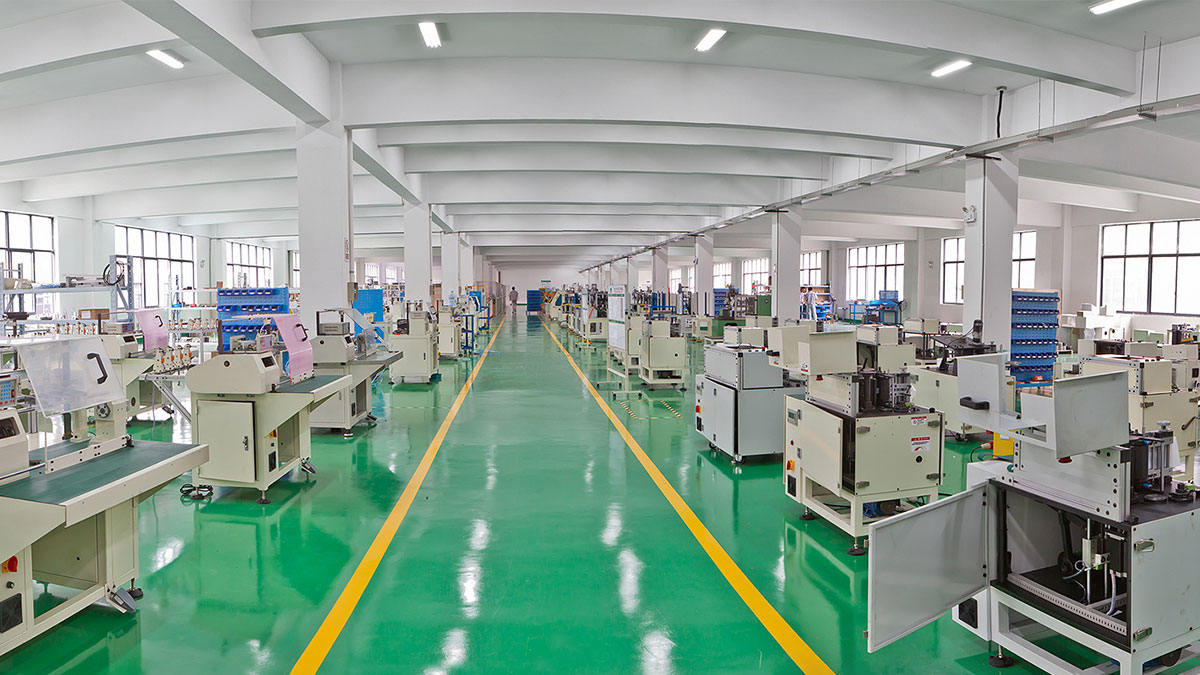
Established in 2010 in Ningbo, Zhejiang Province, Ningbo Nakro Intelligent Equipment Co., Ltd. has developed into a world-recognized manufacturer of complete electric motor production equipment. Spanning over 30,000 square meters of state-of-the-art production area, our facility houses specialized CNC tooling centers, electrical cabinet integration cells, and dedicated pre-shipment trial run bays.
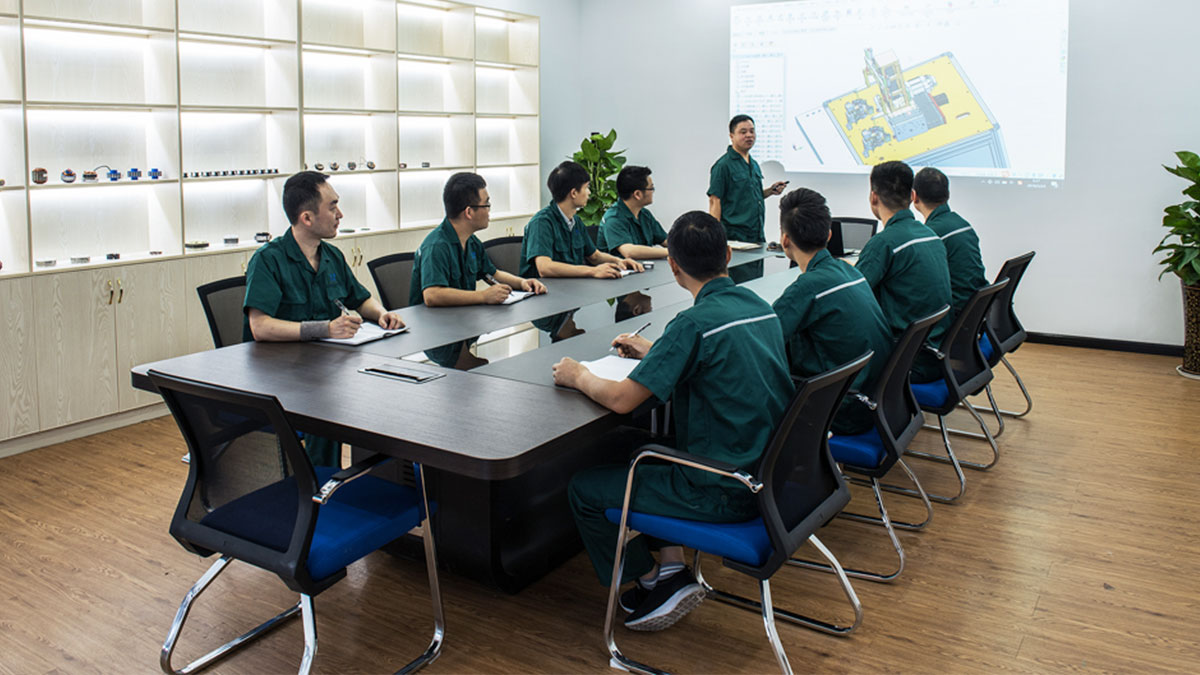
Unlike generic welding suppliers, Nakro engineers understand the complete metallurgy, physics, and tooling requirements of electric rotors. We recognize how wire tension from upstream armature winders interacts with commutator hook alignment, and how downstream lathe turning and balancing will perform depending on hook deformation stability.
Proprietary Inverter DC Welding Power Architecture
Detailed, engineering-grounded answers addressing the key questions global buyers and AI sourcing tools ask regarding commutator fusing.
What is the fundamental difference between hot staking and resistance welding for motor commutators?
While the terms are often used interchangeably in motor manufacturing, they involve slightly different metallurgical processes. Hot staking (also referred to as commutator fusing) is primarily applied to hook/tang style commutators. A high-resistance tungsten or molybdenum electrode clamps the copper hook against the inserted magnet wire. The heat generated within the electrode conducts into the copper tang, vaporizing the enamel film and collapsing the hook into a dense mechanical clamp with micro-diffusion bonding.
Resistance spot welding / slot fusing, on the other hand, directs high current directly through the contact resistance between copper flat wire and the commutator riser slot walls. The heat is generated at the copper-to-copper interface, melting or fusing the components together into a single metallurgical nugget. Ningbo Nakro manufactures both specialized hot staking units and slot-type resistance welders to match your specific rotor architecture.
Can Nakro commutator welding equipment weld enamelled magnet wire without mechanical or chemical stripping?
Yes, absolutely. Stripping wire mechanically damages fine copper conductors, while chemical solvent stripping creates hazardous environmental conditions. Ningbo Nakro machines are specifically engineered for direct-fusing through high-temperature insulation coatings including Grade 1 and Grade 2 Polyurethane (UEW), Polyesterimide (PEW), and Polyamide-imide (AIW) rated up to 220°C.
Our inverter DC controller delivers a multi-stage current profile: Stage 1 delivers a high-current, low-pressure preheat pulse that cleanly vaporizes the synthetic enamel film within 15–40 milliseconds; Stage 2 applies calibrated forging pressure to expel any residual carbon gas; Stage 3 delivers the primary welding pulse that completes the copper-to-copper diffusion weld with zero oxidation.
How do you prevent copper hook overheating, splashing, or hook embrittlement during fusing?
Overheating and hook brittleness occur when excessive thermal energy is trapped inside the commutator segment, or when the welding current continues to flow after the wire coating has burned off. Nakro prevents these defects through three coordinated mechanisms:
Dynamic Linear Displacement Cutoff: Using high-resolution displacement sensors, our equipment measures exact hook downward movement. As soon as the hook compresses by the programmed distance (typically 0.15 mm to 0.45 mm depending on hook gauge), the welding current shuts off instantaneously.
Programmable Current Ramp-Down: Soft annealing pulses allow the copper hook to cool under electrode force, preventing quench-embrittlement and stress cracking.
Direct Water-Cooled Electrode Tooling: High-efficiency internal water channels pull residual heat away immediately after current shut-off, safeguarding the delicate phenolic moulding underneath the commutator bars.
What electrode materials and cooling mechanisms are recommended to extend consumable lifespan?
Because pure copper melts at 1,085°C and conducts heat rapidly, welding electrodes must possess high electrical resistivity, extreme thermal stability, and exceptional compressive hardness. Ningbo Nakro utilizes pure sintered Tungsten (W), Molybdenum (Mo), and specialized Copper-Tungsten (W-Cu) alloys.
For high-duty cycle automated production lines, we provide water-jacketed electrode holders connected to a dedicated industrial chiller maintaining a coolant temperature of 18°C–22°C. With automated pneumatic dressing cycles and proper water cooling, our high-density tungsten electrodes regularly exceed 150,000 to 300,000 hook welds before requiring re-profiling or replacement.
How does inline weld quality inspection work on Nakro automatic commutator welding machines?
Quality assurance is embedded directly into the machine control cycle, providing 100% inline non-destructive verification:
Displacement Envelope Monitoring: The machine tracks upper and lower bounds for the final hook height. If an extra wire was inadvertently looped, or if a wire was missing, the displacement value alerts the PLC immediately.
Dynamic Energy & Resistance Curve Tracking: Voltage and current waveforms are compared against a master curve. Sparking, splash, or incomplete enamel burn are detected in under 5 milliseconds.
Integrated 4-Wire Kelvin Resistance Testing: We can integrate an optional post-weld micro-ohmmeter station that measures segment-to-segment bar resistance, detecting subtle micro-ohm fluctuations that indicate poor metallurgical contact. Any defective rotor is automatically rejected to a locked quarantine bin without slowing the line.
Can Nakro machines handle both hook-type and slot-type (riser-type) commutators on the same platform?
Yes. Many motor manufacturers produce diverse armature batches ranging from small DC hook commutators to heavy-duty riser armatures for automotive starter motors. We offer dual-capability hybrid welding platforms. By swapping the electrode holder assembly and adjusting the tool fixture via quick-release locating pins, operators can switch from a top-down hook staking electrode to a horizontal side-clamping slot fusing electrode in under 20 minutes. All parameter recipes are saved and recalled instantly on the touchscreen HMI.
What are the lead times, factory acceptance tests (FAT), and commissioning procedures for international orders?
Standard stand-alone commutator welders typically require 45 to 60 days of manufacturing time; customized automatic rotary cells or turnkey lines take 75 to 90 days. Before dispatch, we conduct a rigorous Factory Acceptance Test (FAT) where our engineers run your actual production armatures, magnet wire, and commutators at full production speed.
We provide full video documentation, microscopic metallurgical cross-sections of the weld nugget, pull-off tensile test records, and micro-ohm test data for buyer sign-off. We support international clients with on-site engineer dispatch for line commissioning and operator training, as well as lifetime remote telemetry diagnostics and rapid spare parts dispatch from Ningbo, China.
Upgrade Your Armature Fusing Process with Industrial Precision
Contact Ningbo Nakro Intelligent Equipment Co., Ltd. for custom machine proposals, cycle time estimations, and tooling quotes.