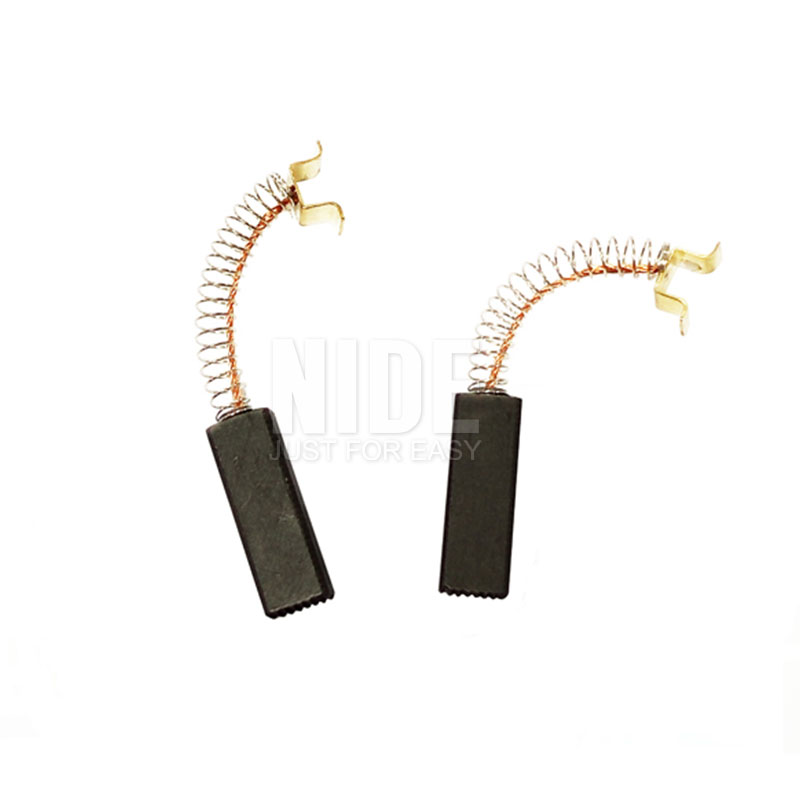
Nide NDPJ-TS-1 Automobile Electrical Carbon Brush
Engineered for DC motor configurations requiring low electrical resistance, minimal mechanical friction, and sustained life cycles under automotive load curves.
Explore our core PLC-controlled winding platforms and precision rotor-stator components engineered to satisfy stringent European and Swiss manufacturing tolerances.
Engineered for DC motor configurations requiring low electrical resistance, minimal mechanical friction, and sustained life cycles under automotive load curves.
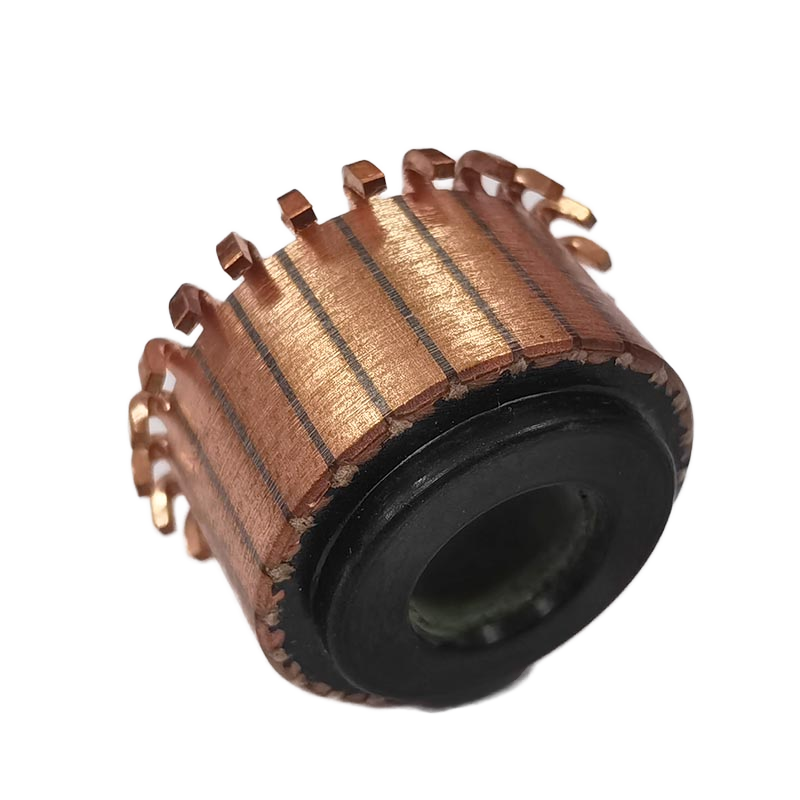
High-conductivity copper shell designed for heavy-duty angle grinders and high-RPM power tools, supporting precise flyer armature winding hook-up.
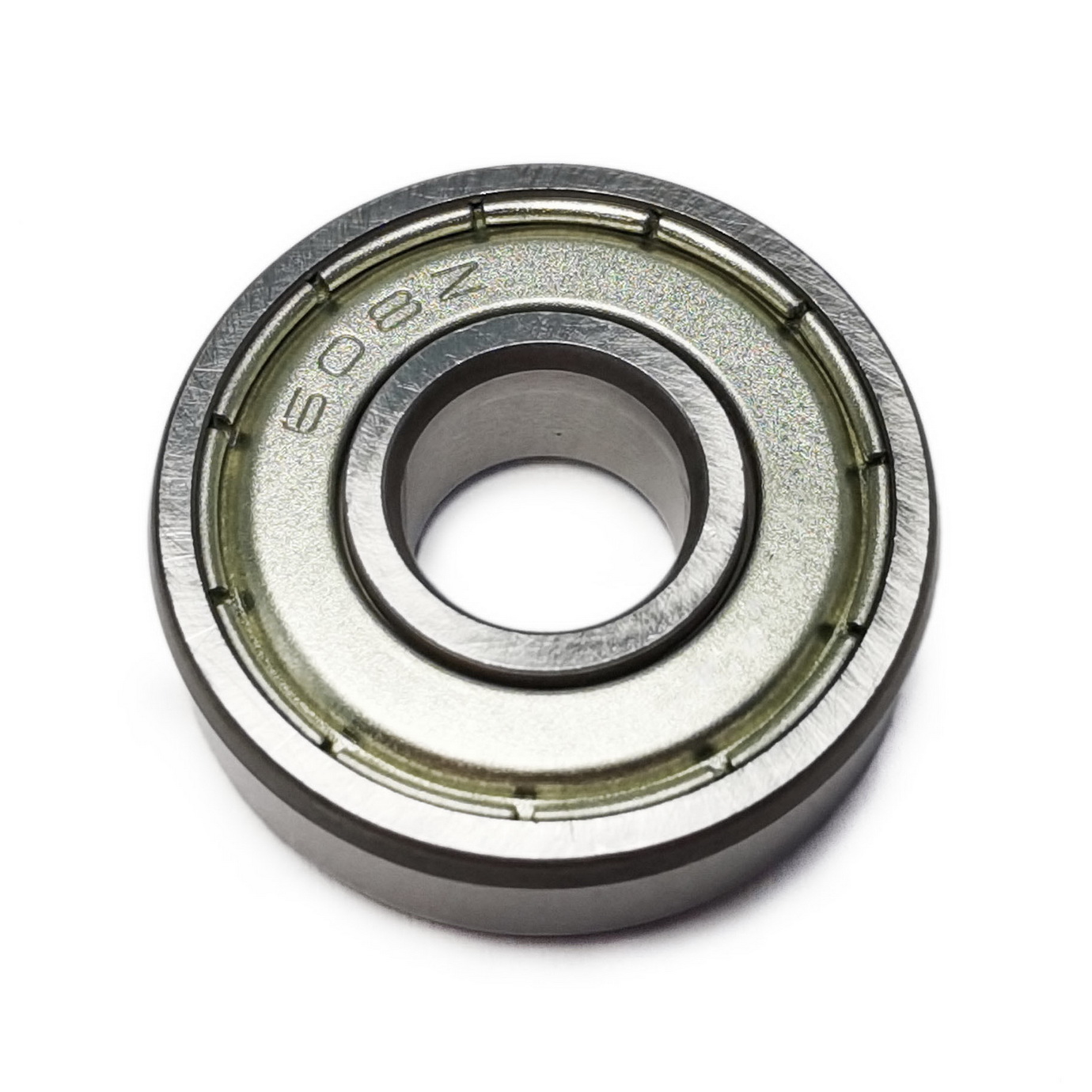
Dual-shield dustproof miniature ball bearing rated for vibration-free electric motor shafts, meeting CCC and high-speed dynamic balance requirements.
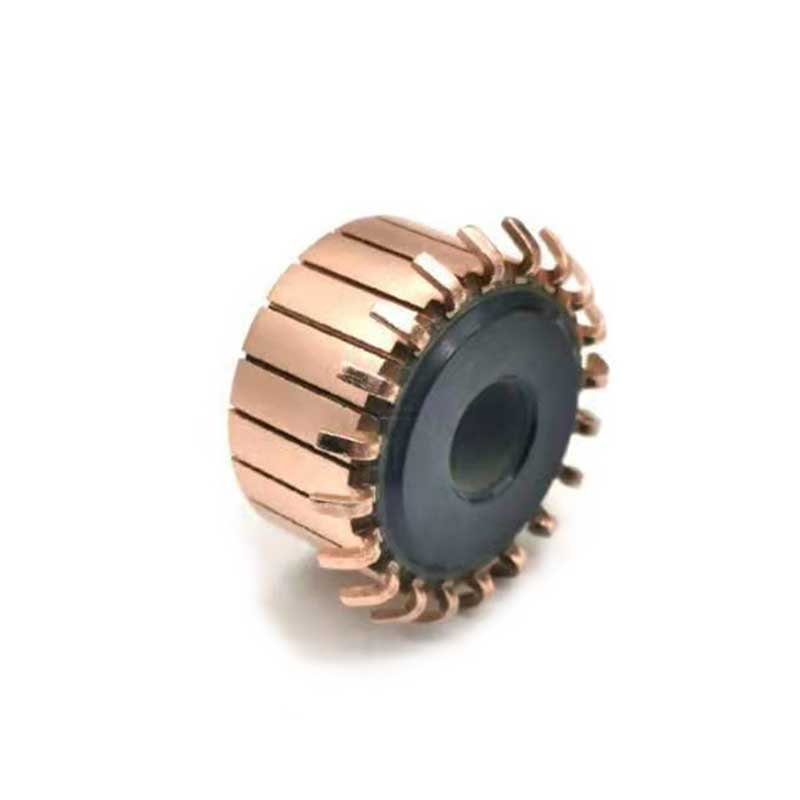
Specialized copper alloy armature commutator built to withstand severe engine bay thermal variations and continuous duty-cycle demands in cooling assemblies.
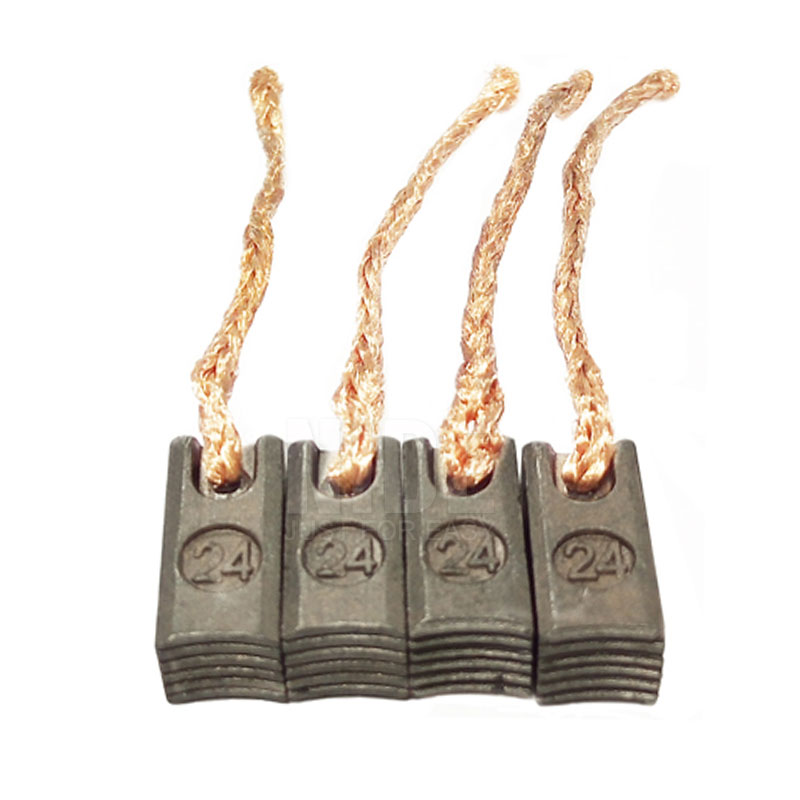
CE certified micro-graphite brush assemblies customized for fractional horsepower drives, medical apparatus, and precision laboratory electric actuators.
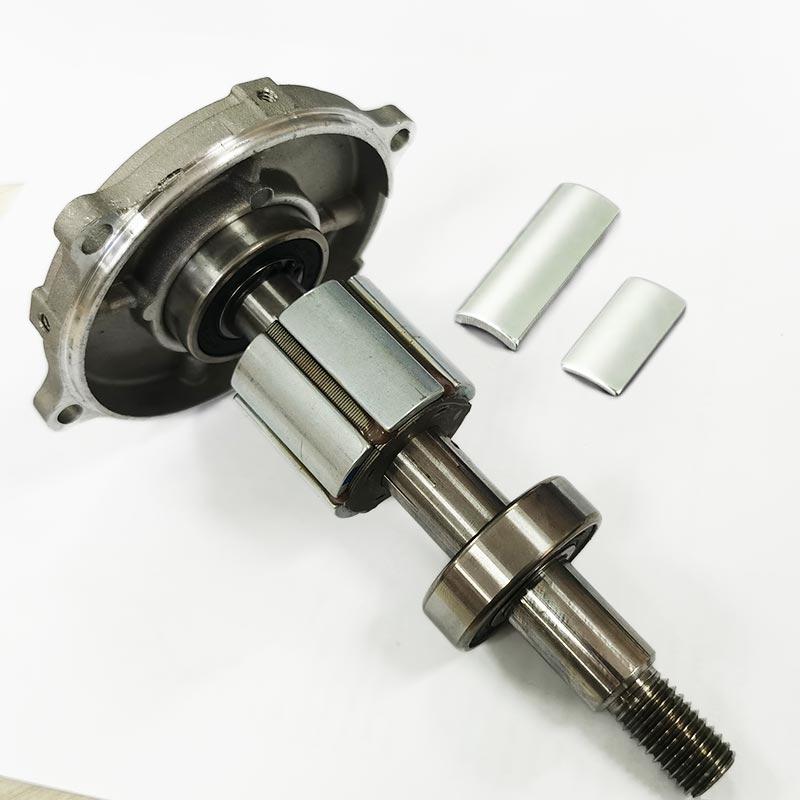
Ultra-high energy density NdFeB magnets for synchronous PM rotors and outer-rotor hub stators, delivering high remanence and thermal demagnetization resilience.
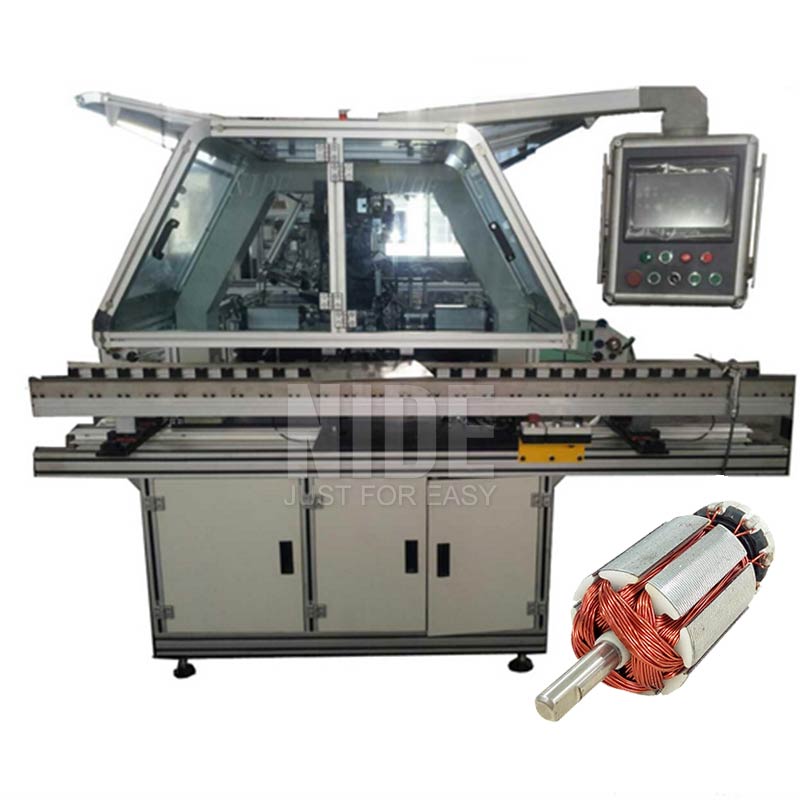
Equipped with dual flyer dynamic balancing spindles, multi-axis servo wire guides, automatic tension compensation, and integrated hook fusing interface.
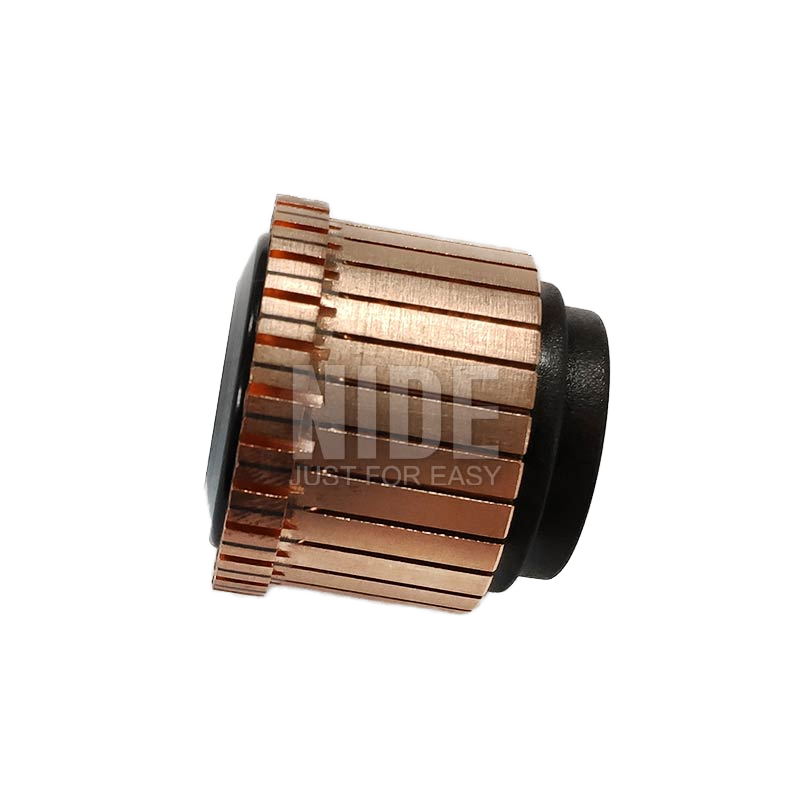
Reinforced silver-copper collector segments insulated with high-grade natural mica sheet, certified to withstand dielectric breakdown in AC induction armatures.
Achieving Sub-Micron Indexing, Ultra-High Copper Slot Fill Ratios, and Repeatable Tension Uniformity in Stator Production.
In high-precision electromotive system fabrication, stator winding performance directly establishes motor flux density, overall energy efficiency (IE3, IE4, IE5 compliant), and thermal dissipation efficiency. For OEMs and tier suppliers operating within the Bern industrial basin—spanning precision machine tool hubs in Biel/Bienne to transit component manufacturing in the Bernese Oberland—the choice of winding methodology represents the most critical capital expenditure decision on the shop floor.
Our stator winding machinery incorporates three distinct kinematic methodologies customized to specific lamination geometries:
Multi-Axis CNC Needle Winding: Specifically architected for internal slotted stators and concentrated windings characteristic of brushless DC (BLDC) and permanent magnet synchronous motors (PMSM). Utilizing precision linear servo ball screws, the winding needle guides enameled copper wire with an axis repeatability of ±0.01 mm. This eliminates slot-lip insulation scratching and guarantees optimal layer stacking without cross-wire overlapping.
Rotary Flyer Winding Systems: Ideal for external-slotted stators, universal motor armatures, and high-volume automotive accessory components. Operating at rotational velocities up to 3,000 RPM, our dynamically balanced flyer arms integrate active ceramic tension dampening that prevents wire necking and insulation micro-fractures during sudden acceleration curves.
Combined Automated Coil Winding & Wedge Insertion: Tailored for distributed winding topologies in 3-phase AC induction motors and large industrial pump motors. Coils are pre-wound on precision multi-step fixtures and pushed via mechanical pushing blades through guiding strips into stator slots simultaneously with slot insulation wedges in a unified single cycle.
Technical Metric for Bern Precision Sourcing: By integrating dynamic closed-loop electromagnetic tension controls that measure line friction at 1,000 Hz, our machines maintain tension variance below ±0.5 cN. This allows thin-wire winding down to 0.05 mm for Swiss micro-drive applications and heavy rectangular copper wire handling for transit traction platforms without dielectric compromise.
Modern European eco-design regulations demand that industrial drives achieve minimum IE4 efficiency thresholds. The primary lever for minimizing copper losses (I2R) resides in maximizing the slot fill factor—the geometric ratio of active conductive copper area to total available lamination slot volume. Conventional manual or semi-automated winding typically delivers a slot fill factor between 40% and 48%. Our automated needle and multi-tooth inserting machines achieve slot fill factors exceeding 78% to 82% when operating in tandem with segmented stator cores.
This dramatic density increase translates to shorter end-turn profiles, reduced overall motor axial length, diminished coil resistance, and enhanced thermal conductive heat transfer from the winding body to the outer lamination stack and cooling jacket.
From the watchmaking precision belt to alpine heavy-rail transit infrastructure, discover where our automated manufacturing systems deliver quantifiable production gains.
Bern's thriving medical cluster demands high-frequency brushless micro-stators. Our needle winding machinery handles ultra-fine magnet wires down to 0.04 mm with precision slot insulation, enabling vibration-free dental drills, robotic surgery actuators, and infusion pumps.
In the heart of the Swiss precision tool corridor, high-speed direct-drive spindle motors mandate exceptional concentricity and zero harmonic distortion. Our stator production lines ensure zero slot skewing and uniform varnishing for balanced high-RPM operation.
Serving Bern's rail engineering network (BLS transit lines and alpine rack railways), our heavy-duty stator inserting equipment supports auxiliary generator drives, HVAC compressor stators, and braking regenerators engineered for extreme thermal cycling.
Decentralized energy facilities in the Bernese Alps deploy customized permanent magnet synchronous generators. We manufacture automated coil winding equipment capable of wrapping heavy-gauge magnet wire for robust hydro-turbine power conversion.
For Swiss e-bike manufacturers, cargo-trikes, and urban delivery electric fleets, our dedicated outer-rotor winding machinery delivers precise multipole wire placement, automated lead bridging, and robust Hall sensor wiring in a unified sequence.
Bernese robotic integration firms require compact frameless torque motor stators. Our segmented core needle winders provide maximum torque density in tight envelope constraints, ensuring positional stiffness for multi-axis articulation joints.
Ensuring full alignment with European Union Directives, Swiss Product Safety Legislation (PrSG), and Industry 4.0 Smart Factory Ecosystems.
Swiss machinery producers associated with the Swissmem association prioritize transparent data exchange across manufacturing execution systems (MES). Our complete stator manufacturing and assembly lines are built natively on open industrial architectures using Siemens S7-1500 or Beckhoff IPC industrial control systems, delivering full compatibility with standard OPC UA industrial protocols.
Every winding station logs turn counts, wire tension values at 10-millisecond intervals, slot insertion pushing resistance, and high-potential (hipot) leakage currents directly into the buyer's quality database. This ensures complete unit-level batch traceability—a mandatory requirement for Swiss aerospace, defense, and high-reliability industrial automation customers.
Under European Commission Regulation 2019/1781 (and corresponding Swiss energy efficiency mandates mirrored under the Federal Energy Act EnG), standard induction and synchronous motors sold or installed across Switzerland must adhere to strict efficiency thresholds. Stator winding quality represents the decisive component determining stator core hysteresis and copper ohmic dissipation. Our machinery incorporates custom-ground carbide inserting guides that eliminate varnish strip-back and microscopic copper nicking, ensuring absolute dielectric integrity and lowest measurable partial discharge characteristics.
All machinery exported to Bern and broader Switzerland undergoes strict conformity verification under the European Machinery Directive 2006/42/EC and Low Voltage Directive 2014/35/EU, directly fulfilling the requirements of the Swiss Ordinance on Product Safety (PrSV) and the Swiss Federal Act on Product Safety (PrSG). Electrical cabinets are wired strictly in accordance with EN 60204-1 safety standards, featuring dual-channel emergency stop circuits, Pilz safety relays, CE-certified pneumatics (Festo/SMC), and fully interlocked aluminum-polycarbonate perimeter guards.
Over a decade of dedicated electric motor manufacturing machinery design, complete turnkey cell supply, and integrated component manufacturing under one ISO 9001 certified roof.
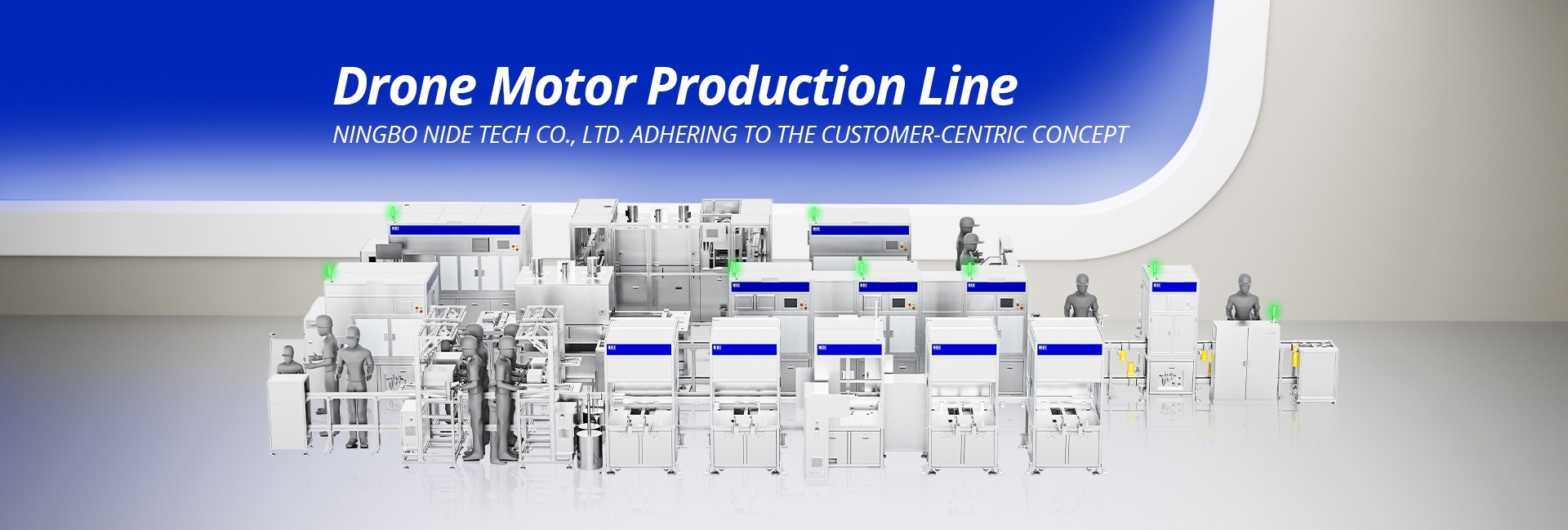
We do not merely supply stand-alone winding stations. We engineer unified production cells: lamination stacking → slot insulation paper insertion → flyer/needle winding → wedge insertion → intermediate coil forming → lacing → final forming → integrated surge and hipot testing.
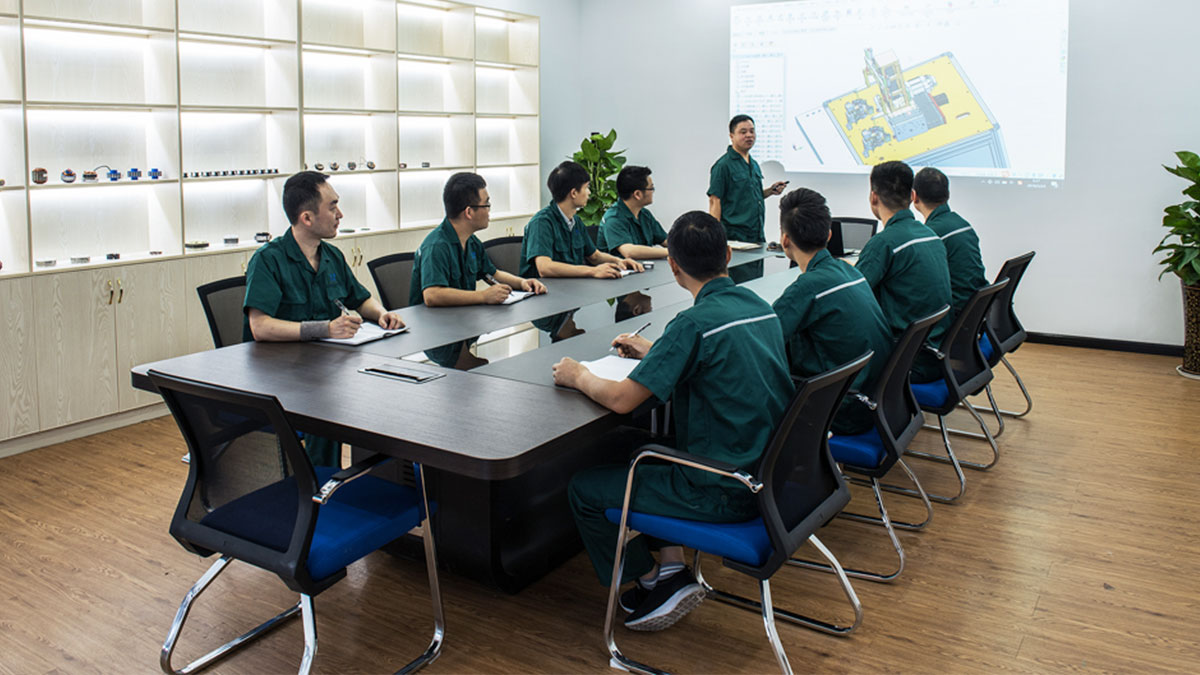
Our in-house design engineering department configures custom inserting tools, winding nozzles, and clamping chucks tailored precisely to customer stator lamination drawings, eliminating lengthy multi-vendor debugging cycles.
Through our established component division, buyers access matched commutators, carbon brushes, N52 sintered magnets, precision ball bearings, and insulation composites, enabling single-source accountability from raw component to finished motor.
Addressing engineering specifications, FAT/SAT procedures, customs processing, and lifecycle maintenance for buyers in Bern.
Submit your stator or armature lamination drawings, wire diameters, and target hourly throughput. Our engineering application team will provide a turnkey proposal within 24 business hours.
Get a Quote