Featured Rotor Systems & Motor Accessories
High-performance electric motor components and testing systems calibrated to meet strict DIN EN standards. Explore our precision-manufactured magnets, commutators, and carbon brush assemblies engineered for electric drivetrains and industrial rotors across Berlin and the wider European Union.
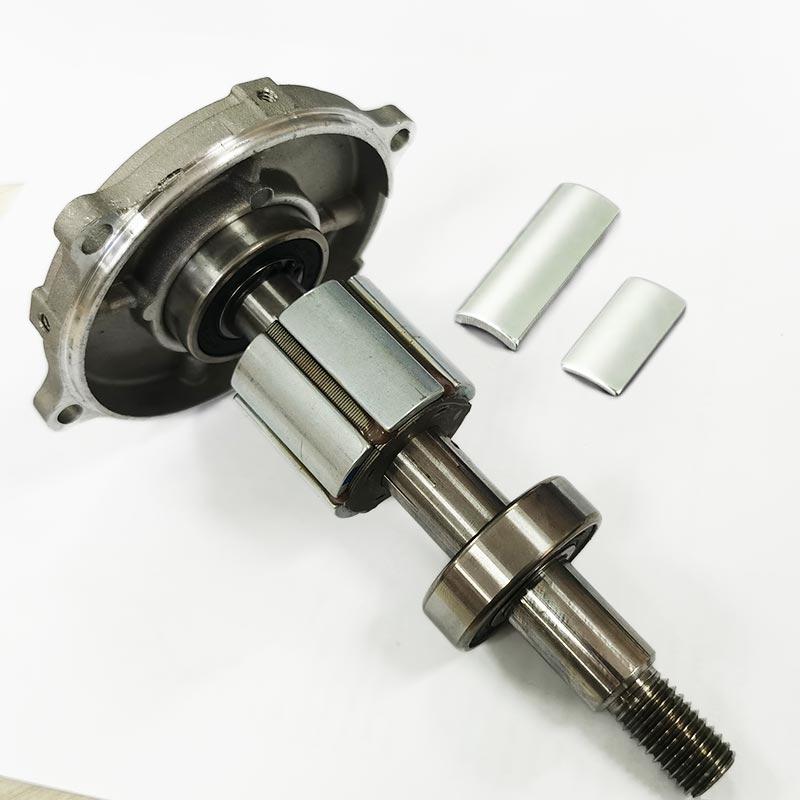
Wholesale Customized N52 Neodymium Magnets for Electric Motor Rotor Model NDPJ-CW-62 3
Sintered NdFeB permanent magnets featuring ultra-high remanence and coercivity for brushless DC (BLDC) and PMSM rotors in Berlin’s high-efficiency traction systems.
- Grade: N52 Sintered
- High Thermal Stability
- Low Demagnetization
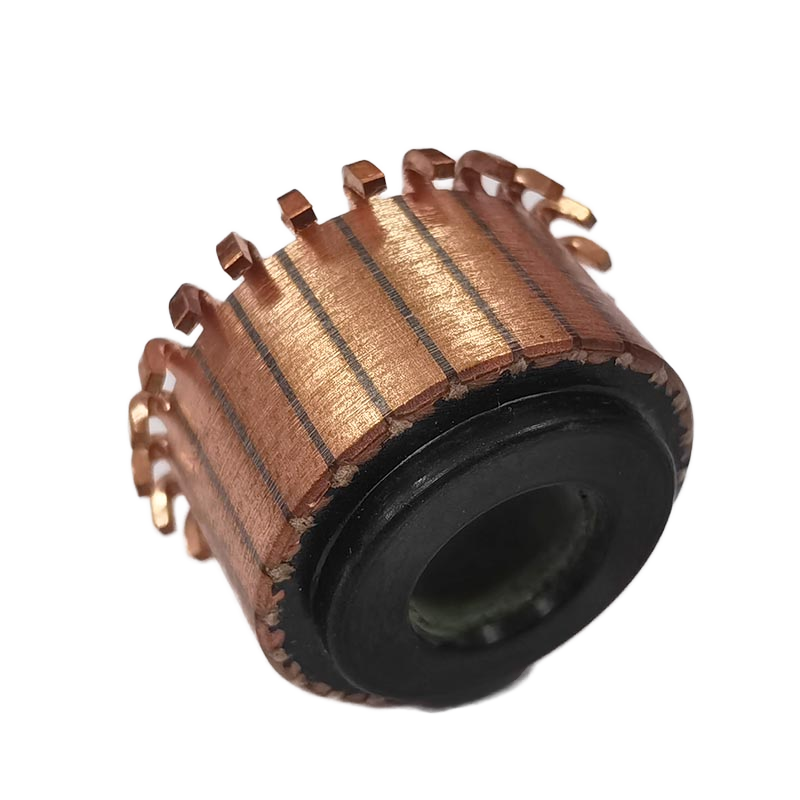
24 Segments Hook Type Angle Grinder Commutator Model NDPJ-HXQ-640A
Engineered for dynamic stress resistance and minimal peripheral runout on heavy-duty DC motor and angle grinder armatures subject to high RPM operation.
- Dimensions: 8.4*25*16mm
- Reinforced Copper Hook
- Class H Insulation
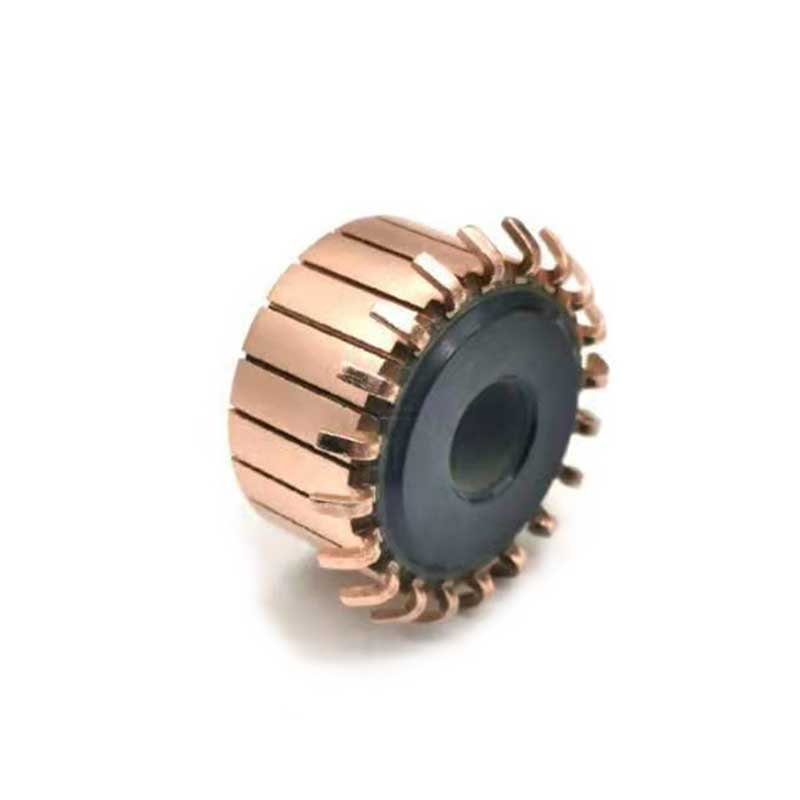
Copper Car Radiator Cooling Fan Armature Hook Commutator
Automotive-grade copper hook commutator delivering consistent contact performance in extreme engine compartment heat and variable load duty cycles.
- Electrolytic Tough Pitch Copper
- High Dielectric Strength
- Universal Fit Spec
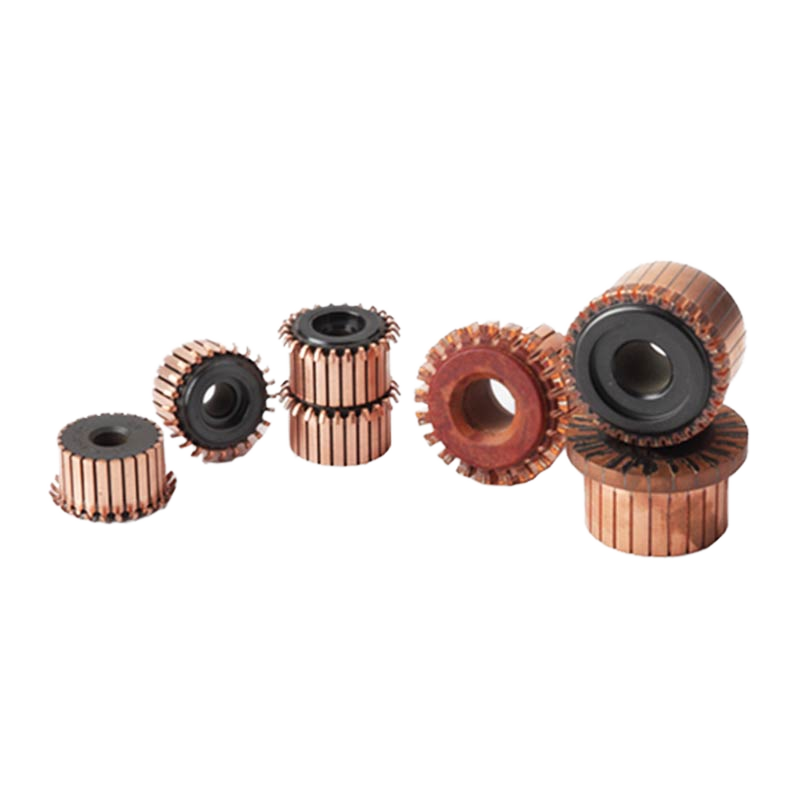
24 Segments Hook Type DC Starter Armature Rotor Commutator NDPJ-HXQ-14
Heavy-load commutator designed to endure high starting torque transients and surge currents without bar lifting or premature segment erosion.
- Model: NDPJ-HXQ-14
- High-Amp Welding Hooks
- Zero Arc Profile
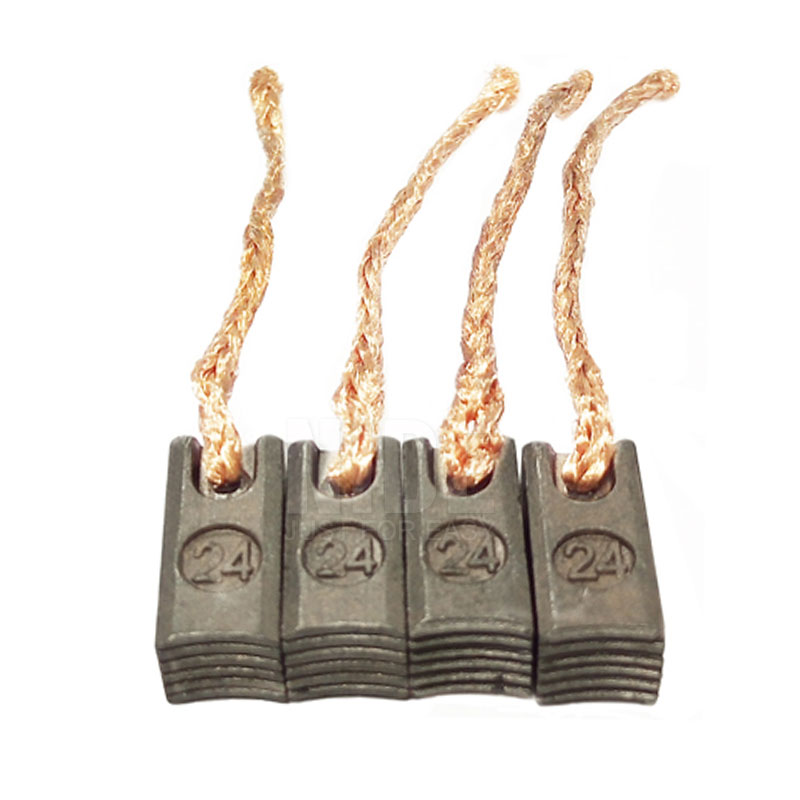
High Precision Motor Carbon Brushes for Small Motors Model NDPJ-TS-9
Electrographite and resin-bonded carbon brushes optimized for low radio interference (EMC), minimal mechanical friction, and prolonged commutator life.
- CE Certified
- Low Friction Grade
- DIN 43000 Standard Match
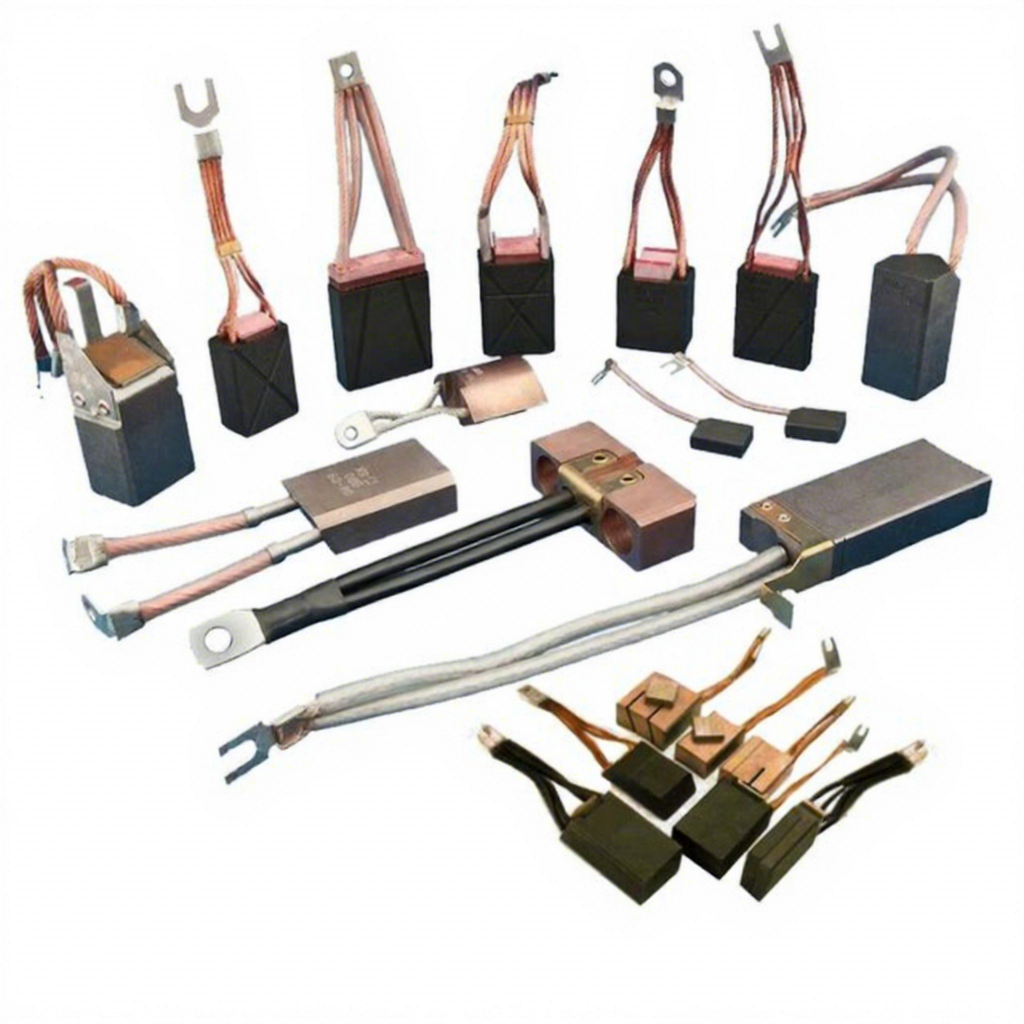
Miniature Alternator Carbon Brush 80-120V Model NDPJ-TS-11
Precision current collection brushes for auxiliary vehicle alternators and aerospace fractional motors, backed by comprehensive trial test logs.
- Operating: 80-120V
- Model: NDPJ-TS-11
- Extended Service Life
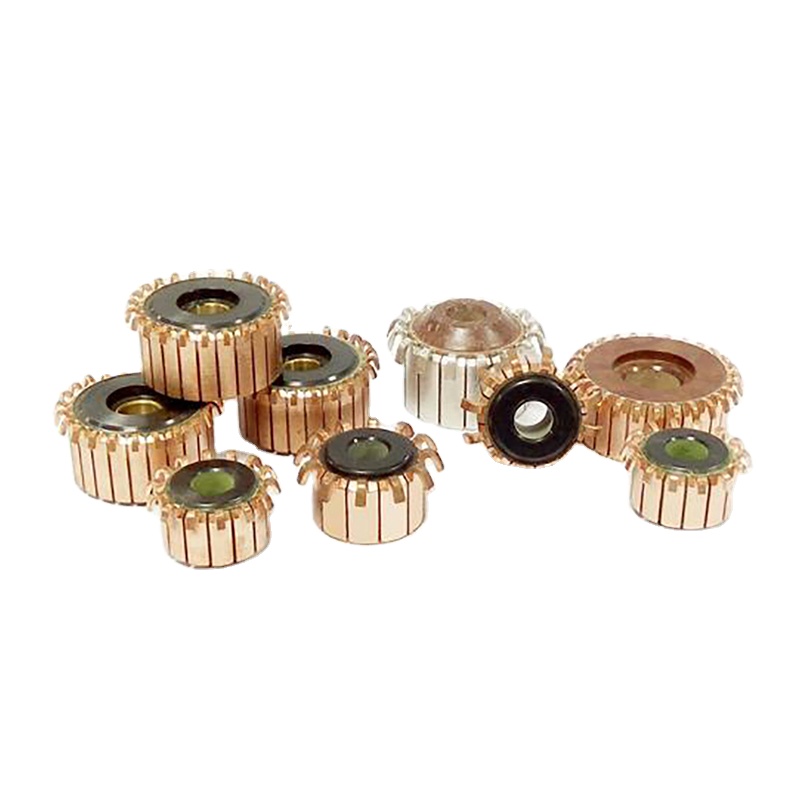
12V Commutator for Cordless Power Tools Model NDPJ-HXQ-03007
Compact commutator design tailored for modern brushless conversion hybrids and high-speed DC cordless tools requiring minimal rotational inertia.
- 12V DC Voltage Rating
- High-Density Copper
- Precision Bar Spacing
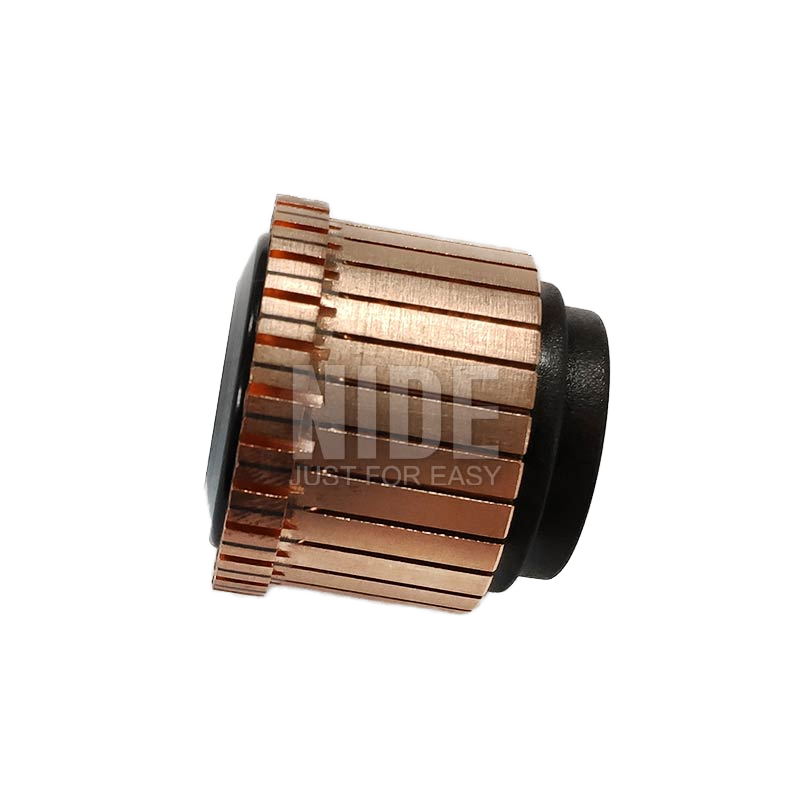
AC Motor Mica Commutator Segment Collector Model NDPJ-HXQ-101
Mica-undercut segmented collector rings engineered for high-voltage dielectric insulation on heavy industrial AC pump and traction armatures.
- Natural/Synthetic Mica
- Model: NDPJ-HXQ-101
- High-Temp Bonded
Rotor Quality Assurance: Verification Architecture for Modern Drivetrains
High-performance electric rotordynamics require stringent End-of-Line testing to isolate sub-micron mechanical unbalance, microscopic turn-to-turn insulation degradation, and permanent magnet flux inconsistencies before integration into finished machinery.
Impulse Surge & Hi-Pot Testing
Insulation breakdown remains the leading cause of rotor failure in inverter-fed electric drives. Our testing architecture deploys high-voltage impulse comparison testing (up to 5,000V programmable peak) to reveal corona discharges, enamel micro-cracks, and weak inter-turn insulation in wound armatures.
- Area differential (ΔS) and corona discharge detection
- Conforms to IEC 60034-15 and IEEE 522 surge specs
- Programmable ramp-rate DC / AC Hipot leakage diagnosis
Dynamic Balancing (ISO 21940-11)
Rotational speeds in modern EV and high-speed spindles routinely surpass 18,000 RPM. Our dynamic balancing workstations integrate dual-plane piezoelectric force sensors with laser phase tracking to resolve dynamic unbalance down to Grade G 1.0 or G 0.4 tolerances.
- Automatic weight subtraction (milling/drilling) modules
- Real-time Fourier transformation (FFT) harmonic filtering
- Sub-micron displacement resolution via optical encoders
Kelvin Bar-to-Bar Resistance
Commutator armatures demand four-wire Kelvin micro-ohmmeter testing across 100% of consecutive segments. Our automated EOL stations verify welding hook integrity, identifying high-resistance joints, partial cold-solder fusions, or wire pinching with 0.05% measurement repeatability.
- Continuous 360-degree pneumatic indexing testing
- Detects open circuits, cross-slots, and coil inversions
- Direct fieldbus interface to central MES factory systems
Rotor Testing Solutions Serving the Berlin-Brandenburg Corridor
Berlin has evolved from a historic electro-technological cradle into one of Europe's most dynamic smart-manufacturing and cleantech capitals. Our specialized rotor inspection systems and turnkey production lines address the rigorous demands of the region's diverse industrial clusters.
Rail Traction & Rolling Stock (Pankow & Hennigsdorf)
With regional transport giants producing light rail, subways, and commuter trains across Greater Berlin, our heavy-duty armature testing rigs support multi-ton traction motors. We guarantee compliance with EN 50343 and DIN EN 60349 standards, assessing commutator bar height uniformity, dielectric strength under vibration, and high-current fusing integrity.
E-Mobility & Tier 1 Electric Drive Systems
As the Berlin-Brandenburg automotive belt scales up synchronous and asynchronous e-axle manufacturing, our automated rotor lines perform permanent magnet back-EMF waveform analysis, multi-pole cogging torque characterization, and high-speed centrifugal burst testing to validate structural rotor integrity before powertrain assembly.
Siemensstadt 2.0 & Industrial Automation
Serving the revitalized industrial corridors of Spandau and Adlershof, our compact test fixtures empower manufacturers of servomotors, robotic actuators, and CNC drives with automated bar runout checking, commutating profile analysis, and fast cycle times (<8 seconds per rotor) optimized for lean cell setups.
Rotor Testing Systems: Comprehensive Technical Comparison
Compare functional parameters and measurement domains across our core rotor test benches, designed to seamlessly synchronize with European SCADA and Siemens S7 PLC industrial environments.
| Inspection System Class | Test Parameters Checked | Voltage / Current Range | Accuracy & Sensitivity | Target Local Standards | Standard Cycle Time |
|---|---|---|---|---|---|
| EOL Armature Master Station | Surge, Bar-to-Bar Res., Hipot, Runout | 0–5 kV Surge, 0.1 mΩ–200 Ω | ±0.2% Reading (Kelvin 4-Wire) | DIN EN 60034-1 | 6 – 12 sec / unit |
| Dynamic Dual-Plane Balancer | Static, Dynamic & Couple Unbalance | Variable Speed: 600–24,000 RPM | Residual Unbalance < 0.1 g·mm/kg | ISO 21940-11 G 1.0 | 8 – 15 sec / unit |
| BLDC / PMSM Rotor Flux Rig | Peak Back-EMF, Harmonic Distortion, THD | Drive Speed: 500–6,000 RPM | Hall Array Accuracy: 0.1 Gauss | VDE 0530 / CE | 10 – 18 sec / unit |
| Laser Commutator Profiler | Segment Step, Mica Depth, Total Runout | Optical Triangulation Sensor | Radial Resolution: 0.05 μm | DIN 43000 Series | 4 – 7 sec / unit |
| Induction Cage Die-Cast Tester | Broken Rotor Bars, Porosity, End-Ring Voids | Induced Eddy Current Array | Void Detection Threshold: >1.5% | IEC 60034-2-1 | 5 – 10 sec / unit |
Why European Manufacturers Trust Nakro & NIDE
Founded in 2010, Ningbo Nakro Intelligent Equipment Co., Ltd. operates over 30,000 m² of modern industrial workshop space. We bridge precision machine manufacturing with complete component ecosystems, enabling engineering firms across Berlin and Germany to reduce lead times and eliminate vendor finger-pointing.
- Pre-Shipment Run-Off: Trial runs conducted with buyer's actual lamination steel and wire.
- Turnkey Integration: From single test rigs to complete automated armature lines.
- CE & Safety Compliance: Pre-fitted with Pilz safety relays, Siemens PLCs, and Festo pneumatics.
- Global Spare Parts Support: Guaranteed supply of rapid-wear tooling, blades, and sensors.
Frequently Asked Questions for Berlin Sourcing Teams
Direct, technically detailed answers regarding importation, regulatory conformity, CE documentation, and calibration traceability for German operations.
How do your rotor testing systems comply with CE and German machinery safety regulations? +
Are measurement sensors traceable to DAkkS or international standards? +
Can testing parameters be integrated into our factory MES and Industry 4.0 architecture? +
What is the standard factory acceptance testing (FAT) process prior to dispatch to Berlin? +
What are the lead times, shipping logistics, and customs clearance procedures for Germany? +
Do you provide local technical commissioning, on-site training, and maintenance support in Berlin? +
Can equipment handle custom motor geometries, such as outer-rotor hub motors and IPM traction rotors? +
What warranty, software updates, and remote diagnostic guarantees are included? +
Modernize Your Rotor Quality Assurance in Berlin Today
Connect with our sales engineering team to receive customized station layouts, cycle time analyses, and comprehensive technical specifications tailored to your motor production requirements.
