0%

China’s motor industry spans automated assembly plants, specialist equipment builders, and suppliers serving markets from household appliances to electric vehicles. Choosing a partner is not just a matter of comparing machine prices. A production line may include stator winding, rotor assembly, balancing, testing, and material handling. Each station affects output, quality, and the space needed on the factory floor.

Taiichi Ohno, a leading architect of the Toyota Production System, observed, “Having no problems is the biggest problem of all.” That idea suits motor manufacturing: a smooth demonstration does not prove stable production. This guide to the Top 10 Motor Production Line Manufacturers in China considers equipment capabilities, integration experience, customization, and after-sales support. It also highlights practical questions buyers should ask, such as how a supplier handles model changes or verifies test results. A quoted cycle time matters, but so does performance across a full shift.

There is no single best manufacturer for every project. A line built for high-volume appliance motors may not suit low-volume industrial motors. Rankings can also shift as companies expand or technologies change. Treat this list as a starting point, then verify references, sample data, and service arrangements directly. Small details matter. A test station’s calibration record, for example, can reveal more than a polished showroom. Manufacturers’ claims still need checking; that is worth saying plainly.
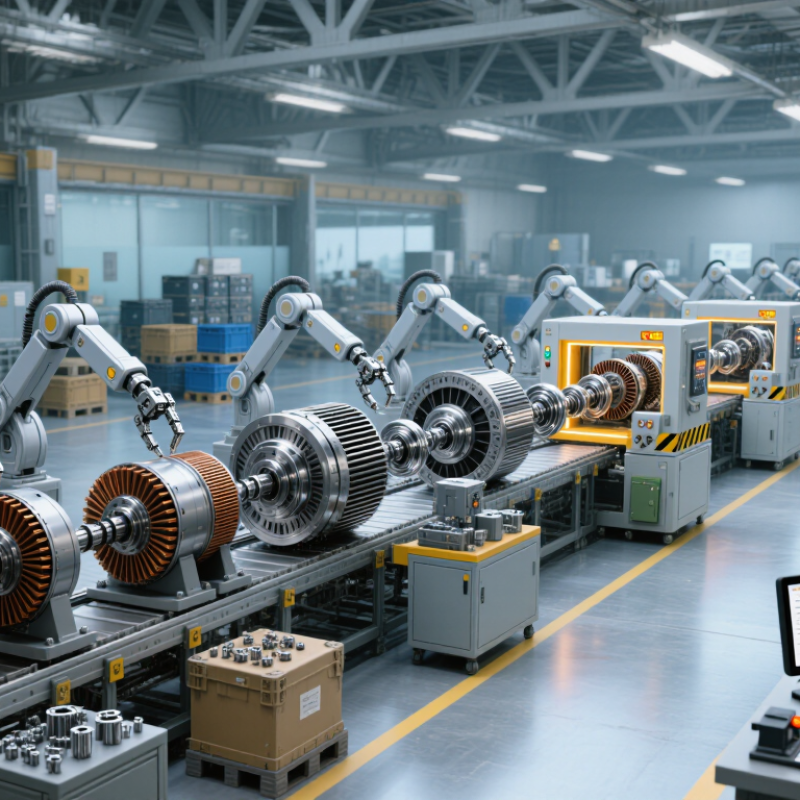
Top 10 Motor Production Line Manufacturers in China

What Motor Production Line Manufacturers Do

Motor production line manufacturers design and integrate equipment that moves a motor from component preparation to final testing. Their work can include lamination stacking, winding, rotor assembly, shaft fitting, and automated fastening. They select machines around the motor’s size, output target, and required process controls. Small details matter. A winding station, for example, must place copper wire consistently without damaging its insulation. Sensors and control systems help detect missed steps, while fixtures keep parts aligned during assembly.

Manufacturers also plan material flow, operator access, and inspection points. They may connect stations with conveyors, then add tests for electrical resistance, noise, vibration, and balance. Data systems can record results by unit, making defects easier to trace. Commissioning is part of the job: engineers adjust timing, verify measurements, and train production staff on changeovers and routine checks. No layout is perfect on the first pass. A line that meets its cycle-time target may still create awkward reach distances or too much work-in-process. Those issues deserve review before they become daily habits. The right design depends on the factory, product mix, and maintenance skills available.

How Motor Production Lines Are Designed and Delivered

A motor production line is designed around the motor, not a catalogue layout. Engineers review drawings, annual output, product variants, and critical tolerances before selecting stations. A rotor press-fit may need controlled force and displacement. A winding station may require recipe changes for different stator sizes. These details shape the line’s cycle time, tooling, and inspection points. Small choices matter.

The design is then checked against the factory floor. A 3D layout can reveal blocked walkways, awkward material routes, or space needed for maintenance. It cannot predict everything. Even a careful plan can miss a few millimeters, so real parts should be tested early. During delivery, suppliers typically assemble and run equipment before shipment, then install it on site and verify safety, cycle time, and product quality. Clear acceptance criteria help both teams resolve gaps. Operators also need hands-on training, not just a manual. A line may pass a factory test yet need adjustments after utilities, fixtures, and actual components are connected. That is normal, though it should be documented. Spare parts, changeover instructions, and a practical response plan help keep production stable.

Criteria for Evaluating Manufacturers in China

When evaluating motor production line manufacturers in China, look beyond quoted price and headline capacity. Ask how the supplier defines output: motors per hour, product size, and shift length all matter. Request a process layout showing winding, assembly, testing, and material flow. Check whether the proposed equipment fits your motor specifications, rather than assuming one line suits every design. A neat brochure proves little.

Tips: Ask for sample test records, equipment specifications, and a clear list of included services. During a factory visit, watch a production cycle and inspect cable routing, guarding, and work instructions. Small details matter.

Review the engineering team’s experience with similar motor types and production volumes. Discuss installation, operator training, spare parts, and response times before signing a purchase agreement. Confirm how acceptance tests will measure cycle time, product quality, and line stability. I would not rely on a single demonstration; a prepared sample can hide everyday bottlenecks. Compare written commitments with what the equipment can show in operation. Also consider communication: unclear answers about changeovers or maintenance may signal gaps that a low price cannot fix. No checklist is perfect, so record open questions and verify them with evidence.

Top 10 Motor Production Line Manufacturers in China

Top 10 Motor Production Line Manufacturers in China

China’s motor production-line market spans suppliers of winding, rotor balancing, assembly, testing, and full-line integration equipment. A useful top-ten comparison should focus on verified capabilities, not promotional rankings. The International Federation of Robotics reported 276,288 industrial robots installed in China in 2023, about 51% of global installations. That scale reflects a mature automation ecosystem, but it does not guarantee every line will meet a factory’s needs. Ask for cycle-time data, changeover records, and sample test results from comparable motor models.

Tips: Check the whole process. A neat winding station means little if downstream testing creates a bottleneck. Request a trial using your own stator, rotor, and quality limits. Inspect fixtures, guarding, sensor placement, and how operators clear faults. Small details matter. Confirm spare-part lead times and training arrangements before accepting a quotation.

For the ten manufacturers under consideration, compare traceability, software integration, and support for different production volumes. The IFR report describes robot installations, not motor-line performance, so treat it as industry context rather than proof of supplier quality. Published performance figures are often difficult to compare; even a detailed specification can miss real factory variation. Pilot runs may expose awkward handling steps that a proposal never mentions.

Key Industry Trends and Buyer Considerations

Motor production lines are moving toward flexible automation, digital monitoring, and tighter process traceability. These changes can help manufacturers handle varied motor designs without rebuilding an entire line. But flexibility has limits. A system still needs defined product dimensions, output targets, and changeover requirements.

Buyers should look beyond the equipment list. Ask how winding tension, rotor balance, and end-of-line testing are controlled, and request sample production data. During a factory acceptance test, observe a full changeover, not only a smooth demonstration run. Small details matter: tool access, sensor placement, and whether operators can clear a jam safely. Check spare-part availability, training plans, and response times for technical support. A lower purchase price may become costly when a line sits idle.

Digital dashboards are useful, but only when measurements are reliable and teams know how to act on alerts. Keep the questions practical. Can the line meet the required cycle time with the actual product mix? Can test records be traced to each unit? Automation is not a cure-all; I would be cautious about assuming every manual step should disappear. Some processes may need further review after real production begins.

FAQS

What information is needed before designing a motor production line?

Engineers need motor drawings, expected annual output, product variants, and critical tolerances. A press-fit process may need precise force and displacement controls.

Why should the factory floor be checked before equipment is built?

A 3D layout can reveal blocked walkways, awkward material routes, and limited maintenance space. It may still miss a few millimeters.

How can buyers check whether a proposed line fits their motor?

Ask for a process layout covering winding, assembly, testing, and material flow. Confirm that the equipment matches your motor sizes and specifications.

What should be checked during a factory visit?

Watch a full production cycle. Inspect cable routing, machine guards, work instructions, and how materials move between stations.

How should a supplier’s production capacity be evaluated?

Ask how output is measured, including motors per hour, product size, and shift length. A headline capacity figure alone proves little.

What acceptance tests should be agreed on before purchase?

Set clear measures for cycle time, product quality, and line stability. Use actual components where possible, not only prepared samples.

What support is needed when the line is installed?

Operators need hands-on training, changeover instructions, spare parts, and a practical response plan. A manual alone is not enough.

Can a line pass testing and still need adjustment?

Yes. Utilities, fixtures, or real components may reveal issues after installation. Document any changes; a factory test cannot predict everything.

Conclusion

Motor Production Line manufacturers design and deliver integrated systems that transform individual components into finished motors through coordinated processes such as assembly, winding, testing, and inspection. Their work can include production planning, equipment selection, line layout, automation, installation, commissioning, and operator training. A well-designed line should match the motor type, expected output, available space, and required quality standards while allowing practical maintenance and future adjustments.

When evaluating manufacturers in China, buyers can consider engineering capability, experience with comparable projects, equipment reliability, quality control, technical support, delivery schedules, and total ownership costs. Comparing suppliers on consistent criteria helps identify solutions suited to a specific production goal rather than focusing on equipment price alone. Industry trends such as greater automation, digital monitoring, energy efficiency, and flexible manufacturing are also shaping purchasing decisions. Careful assessment of these factors can help businesses choose a production partner and plan a line that supports dependable, efficient motor manufacturing.

Amelia

Amelia

Amelia is a professional marketing specialist with a strong understanding of the company’s products, their practical applications, and the needs of the customers they serve. She regularly contributes expert articles to the company website, turning product knowledge and industry insights into clear,......